

Discover authentic Sherpa culture and panoramic Everest views on this short, quiet journey through the lower Himalayas.

Unbeatable Holiday Offers – Save Up to 20% on Your Next Adventure!
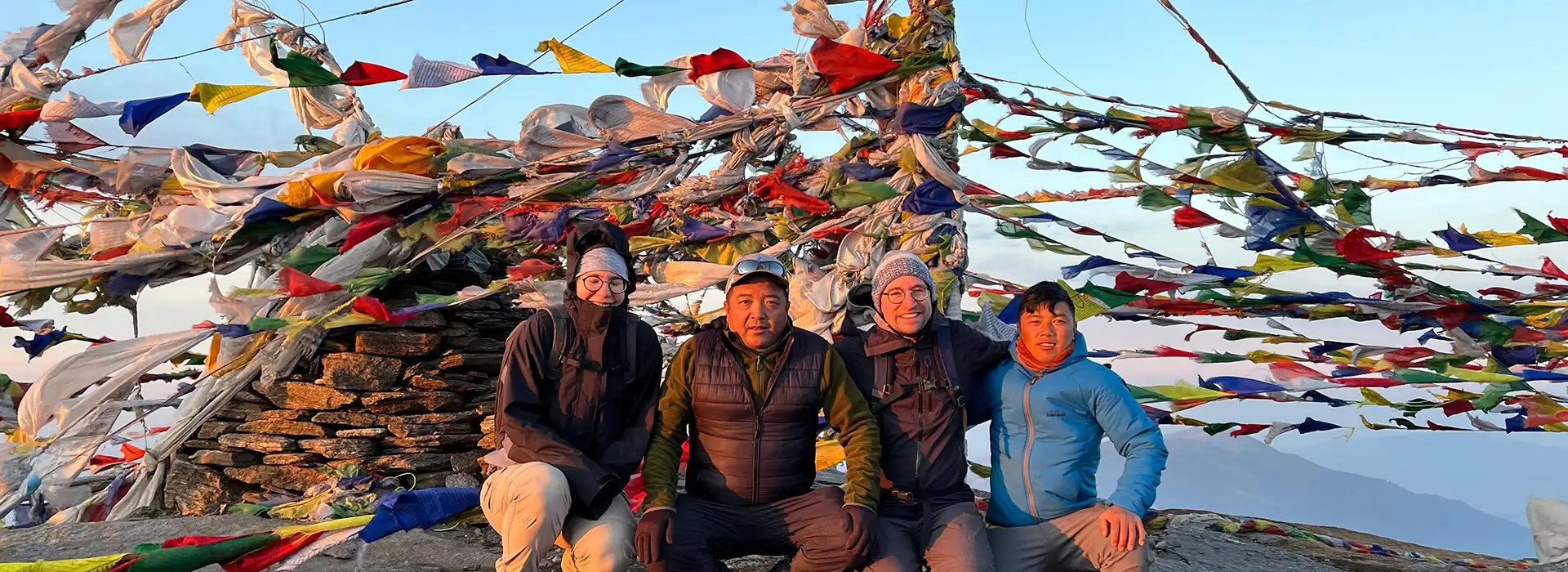

Discover authentic Sherpa culture and panoramic Everest views on this short, quiet journey through the lower Himalayas.
The 9-day Pikey Peak Trek delivers a massive Himalayan panorama from a 4,065-meter ridgeline summit without requiring a volatile Lukla flight. This itinerary utilizes reliable, road-based transport from Kathmandu, driving to Dhap and returning from Phaplu. By eliminating aviation uncertainty, travelers completely avoid the weather delays common to mainstream Khumbu routes. The trail winds through dense rhododendron forests, open ridges, and traditional Sherpa villages, culminating in a spectacular pre-dawn summit hike for sunrise.
Our comprehensive itinerary extends well beyond the summit to capture the cultural heart of the Lower Everest region. The route guides you through the historic village of Junbesi, the active spiritual community at Thupten Chholing Monastery, and the scenic ridge of Taksindu. Shorter five-day alternatives focus almost exclusively on the peak, bypassing these cultural landmarks entirely. Our 9-day itinerary offers the best of both worlds, with sweeping alpine vistas and an authentic encounter with the Sherpa heritage of the Solu region.
Pikey Peak occupies a unique geographic position directly opposite the main Himalayan wall. Clear mornings offer unobstructed views stretching from Gaurishankar all the way to Kanchenjunga, with Everest’s iconic black pyramid appearing prominently. Best of all, because this trail sees a fraction of the foot traffic found in the upper Khumbu corridor, the mountain viewpoints remain genuinely quiet, even during peak trekking seasons.
Our all-inclusive package manages all logistical details seamlessly. It includes airport transfers, hotel stays in Kathmandu, private road transport, six nights of teahouse accommodation, full-board meals, a licensed, English-speaking guide, and all necessary regional permits.
Quick Answer: What Is the Pikey Peak Trek?
The Pikey Peak Trek is a 9-day trek to Lower Everest, starting in Kathmandu. The route covers Dhap, Jhapre, Pikey Peak Base Camp, Pikey Peak summit (4,065 m), Jase Bhanjyang, Junbesi, Thupten Chholing Monastery, Taksindu, and Phaplu. The trek offers Everest sunrise views, Sherpa culture, Buddhist monasteries, rhododendron forests, and road-based access without Lukla flight risk. Hotel Thamel Park, guided trekking, permits, transport, and full board trek meals are included.
The Pikey Peak Trek holds a unique position in the Nepal trekking market. It delivers the signature mountain views of the Everest region through a road-accessible trail that bypasses the Lukla flight entirely. For travelers who want to avoid the anxiety of weather delays affecting international connections, the overland approach to Dhap removes the most unpredictable logistical element of a traditional Khumbu trip. While the drive from Kathmandu takes a full day, a long road journey represents a predictable schedule rather than an uncertain aviation window.
The cultural component of this route extends well beyond the summit panorama. Junbesi village is one of the most traditionally preserved Sherpa settlements in the Lower Everest region. It provides an authentic base for exploring the area and serves as the starting point for a day hike to Thupten Chholing Monastery. As one of the largest and most active Buddhist sanctuaries in the Solu region, the monastery houses a significant community of monks and nuns dedicated to daily puja ceremonies and traditional arts.
Our 9-day structure perfectly balances scenic rewards with cultural depth. Shorter five-day packages rush to the summit and back, missing Junbesi and Thupten Chholing entirely. Our format includes both the breathtaking sunrise at Pikey Peak and the rich traditions of the Solu valley, justifying the extra days with complementary experiences. Rated moderate, the trek suits a wide range of fitness levels. With a maximum altitude of 4,065 meters and daily walking times of five to seven hours, fit beginners can comfortably complete the journey with just a few weeks of walking preparation.

Included Meals

Trip staff

Transport

Accommodation

Trip Grade
Group Size
You arrive at Tribhuvan International Airport. Our representative meets you at the arrival hall and transfers you by private vehicle to Hotel Thamel Park in the Thamel tourist district. Check in, rest after your flight, and use the afternoon and evening to prepare for the trek. Thamel offers easy access to trekking gear shops, pharmacies, money exchange, and restaurants, all within walking distance of the hotel.
Our guide visits your hotel in the evening to walk through the full 9-day Pikey Peak Trek itinerary, explain the logistics of the Dhap road transfer, discuss the requirements for the Day 4 summit hike, and answer questions about the Junbesi cultural day and the Thupten Chholing Monastery visit. Confirm your travel insurance covers trekking activity and emergency evacuation before the meeting ends.
Meals: Not included – many restaurant options in Thamel
Accommodation:
Hotel Thamel Park, Kathmandu (twin sharing)
Difficulty
The Day 2 road journey from Kathmandu to Dhap takes approximately 5 to 7 hours by jeep or local vehicle, with the road improving significantly in the lower sections and becoming rougher on the final approach to Dhap. The drive follows the Kathmandu-Jiri Highway before branching toward the Solu-Khumbu district. Pack a light daypack with snacks, water, and entertainment for the road section—the full travel day ends with the first hour of trekking from the Dhap road terminus to Jhapre.
The trek from Dhap to Jhapre takes approximately 1 to 2 hours and involves uphill walking through lower forest and farmland. Arrive in Jhapre in the late afternoon, check into the local teahouse, eat dinner, and rest early for Day 3’s longer forest approach to Pikey Peak Base Camp.
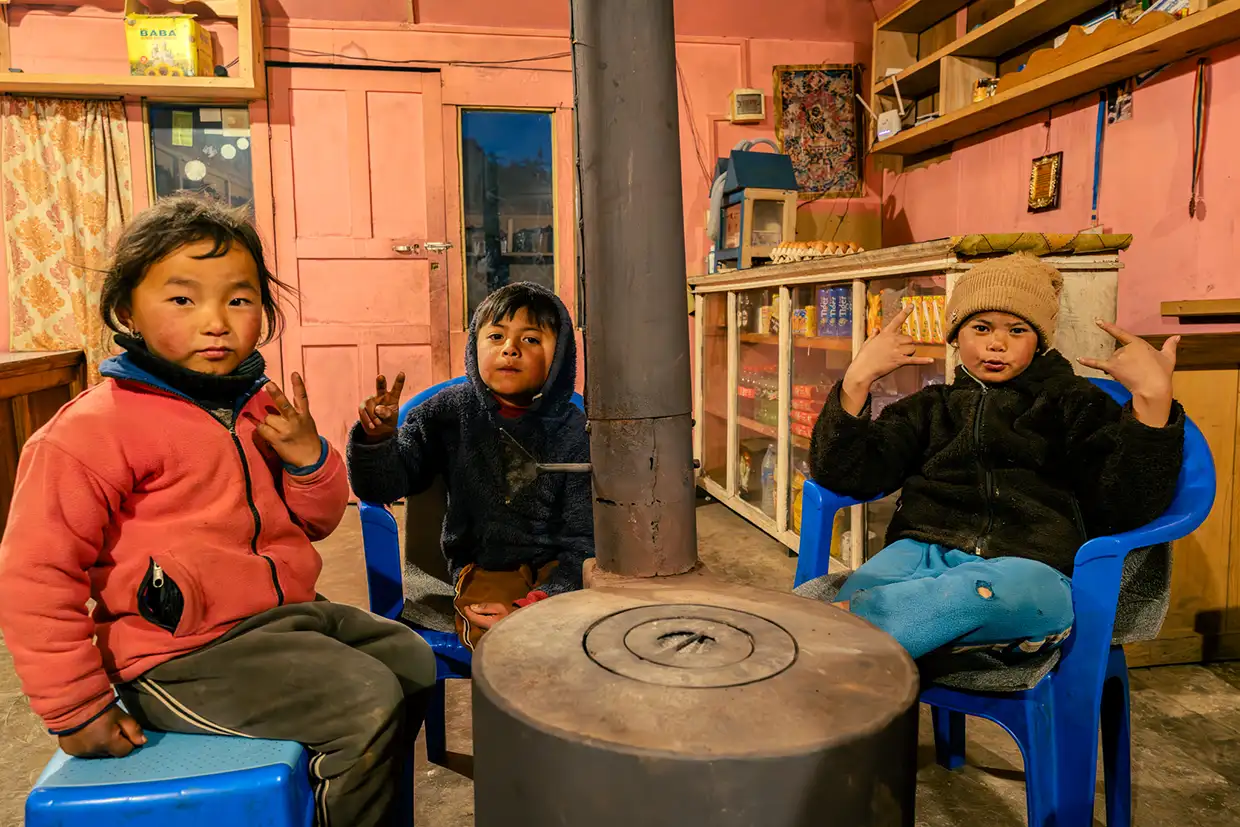 Accommodation:
Teahouse in Jhapre
Meals Breakfast, Lunch, Dinner
Difficulty
The Day 3 trail from Jhapre to Pikey Peak Base Camp climbs through rhododendron forest, open ridge sections, and yak pasture, with views expanding as the trail gains altitude. Walking time is approximately 5 to 6 hours, with consistent uphill gains through the forest zone before the open ridge above the treeline, approaching the Base Camp area.
Pikey Peak Base Camp sits at approximately 3,640 meters above the treeline on an open ridge with early evening views toward the northern Himalayan wall. The teahouse at Base Camp offers basic facilities appropriate to its remote ridge-top location: simple rooms, a limited menu, and shared bathrooms. Arrive in the late afternoon, with enough time to eat a full dinner, pack your summit-day pack, and sleep by 8 PM for the 4 AM Base Camp departure on Day 4.
Accommodation:
Teahouse at Pikey Peak Base Camp
Meals Breakfast, Lunch, Dinner
Difficulty
Your guide wakes the group at 4 AM. Dress in full warm layers—down jacket, gloves, and hat—before leaving the teahouse. The trail from Base Camp to the Pikey Peak summit climbs approximately 400 meters over 60 to 90 minutes on a clear ridge path. Carry your headlamp, water, and camera. The approach in darkness ends as the summit viewpoint opens above the final rocky section, and the pre-dawn mountain silhouettes appear against the lightening eastern sky.
At the Pikey Peak summit at approximately 4,065 meters, the full Himalayan panorama from Gaurishankar to Kanchenjunga spreads across the northern horizon.
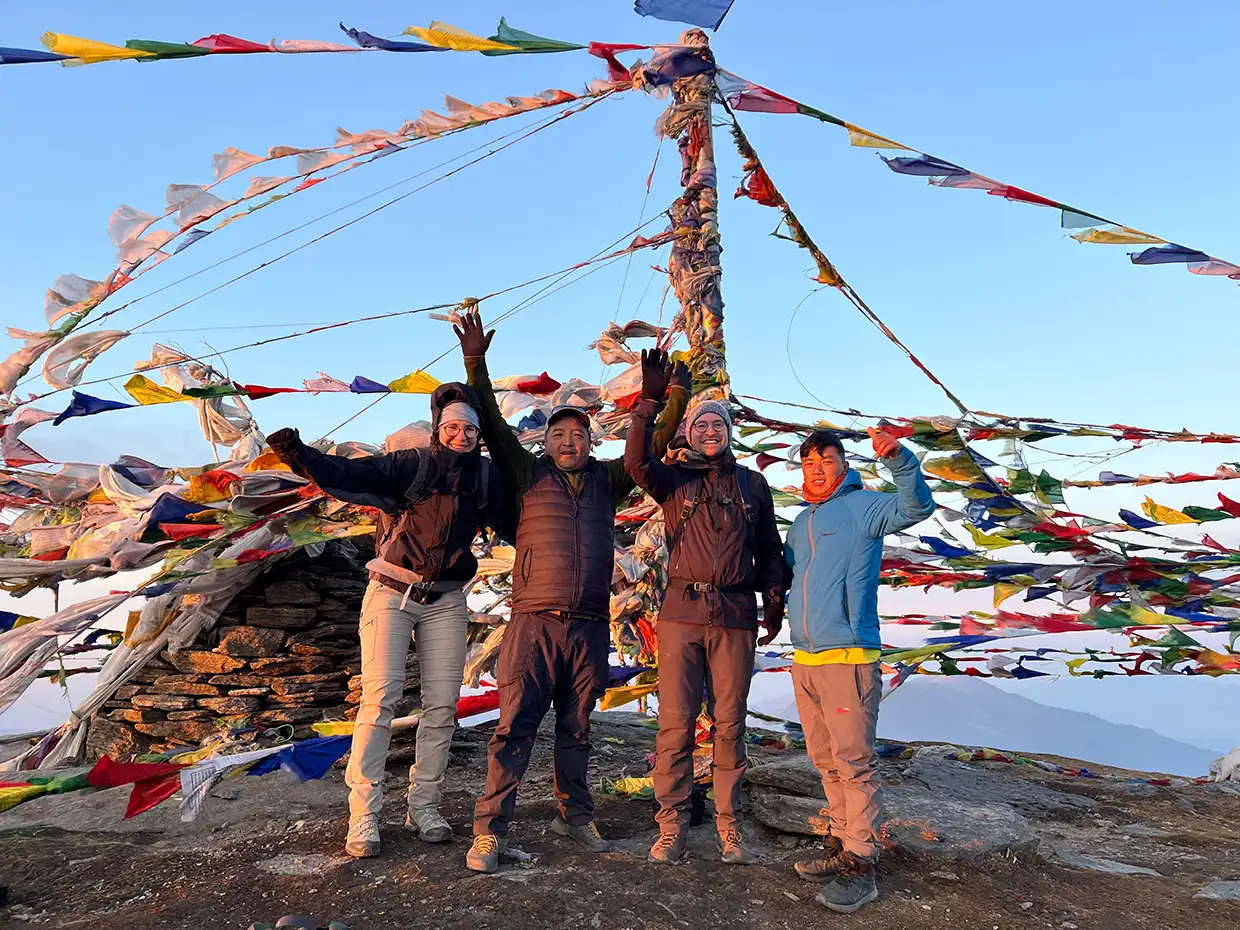
Everest’s black pyramid rises above the Lhotse-Makalu ridge line. Numbur Himal stands directly above the southern valley. The complete sunrise color sequence takes approximately 20 minutes before the direct morning sun reaches the valley floor below. Return to Base Camp for breakfast, pack your main bag, and begin the long descent through forest and pasture toward Jase Bhanjyang.
The descent from Base Camp to Jase Bhanjyang involves a significant altitude loss over approximately 3 to 4 hours. The trail moves through forest sections below the ridge and crosses several pastureland zones before the Jase Bhanjyang saddle area. Trekking poles protect the knees during steeper descent sections.
Accommodation:
Teahouse at Jase Bhanjyang
Meals Breakfast, Lunch, Dinner
Difficulty
The trail from Jase Bhanjyang to Junbesi descends through forest and rural village settlements over approximately 4 to 5 hours of walking. The route moves from the open ridge zone at Jase Bhanjyang through progressively lower and more forested terrain before reaching the upper Junbesi valley. Sherpa homesteads and small farming settlements appear regularly along the Day 5 trail sections, providing a ground-level view of the Lower Everest agricultural economy.
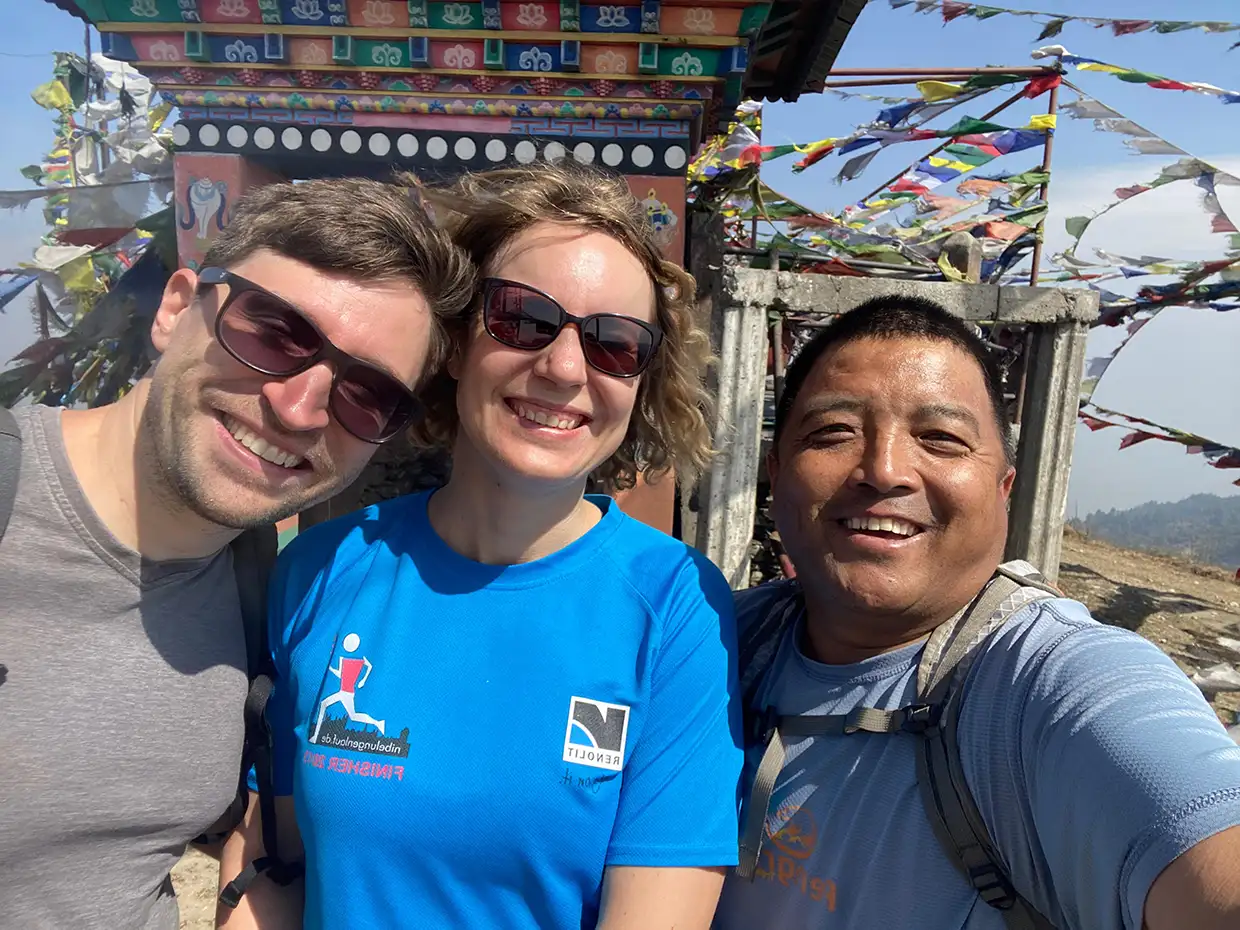
Junbesi village, at approximately 2,675 meters, represents the cultural center of the entire Pikey Peak Trek route. Arrive in the early afternoon to allow time for village exploration before dinner. Walk the main Junbesi lane, visit the village monastery, and use the afternoon to recover energy before Day 6’s full monastery day hike to Thupten Chholing. Junbesi’s teahouse offers better facilities than the higher trail stops—a broader menu, reliable electricity, and more developed bathroom infrastructure.
Accommodation:
Teahouse in Junbesi
Meals Breakfast, Lunch, Dinner
Difficulty
Day 6 leaves overnight bags at the Junbesi teahouse and hikes to Thupten Chholing Monastery with daypacks only. The monastery sits approximately 2 to 3 hours above Junbesi on a trail that climbs through forest and open hillside toward the monastery complex. The round-trip hike takes approximately 5 to 6 hours, with adequate time at the monastery for exploration, attending ceremonies if the puja schedule aligns, and photography.
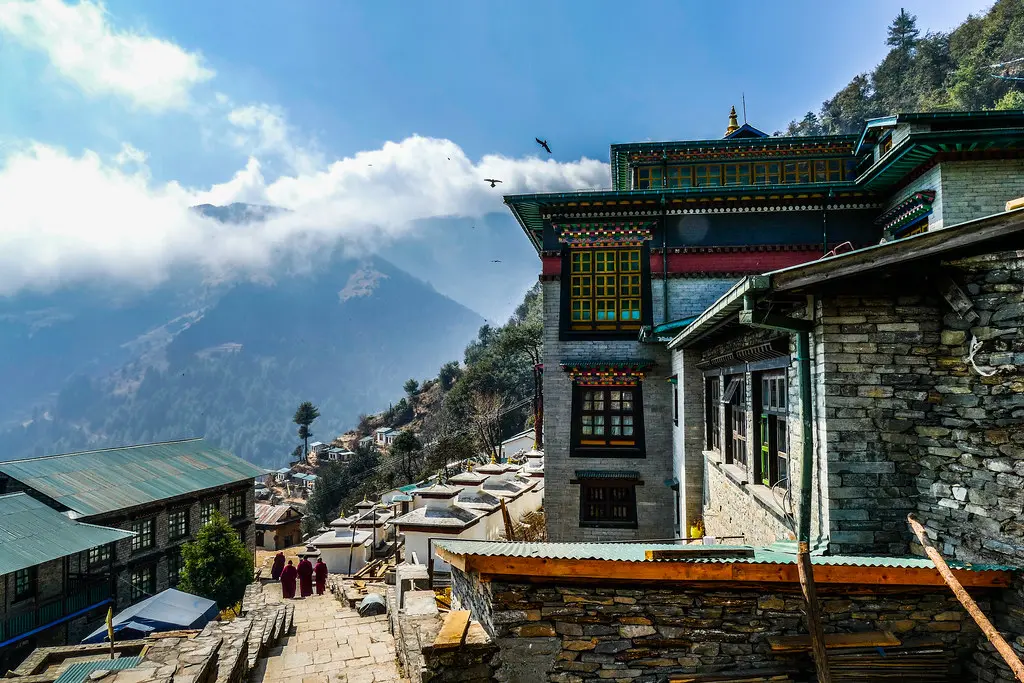
Thupten Chholing Monastery houses several hundred monks and nuns in a self-contained religious community that includes temple buildings, study halls, monk and nun residences, and a library of Tibetan Buddhist texts. The monastery’s Nyingma school affiliation connects it to one of Tibet’s oldest Buddhist traditions. Morning ceremonies at the main temple begin before the trekking groups typically arrive from Junbesi—departing Junbesi before 7 AM gives you a chance to attend the end of the morning puja before the main monastery tour.
Return to Junbesi for dinner and an overnight stay. Day 6 represents the cultural climax of the Pikey Peak Trek itinerary—the combination of Junbesi’s village setting and Thupten Chholing’s monastery depth creates a cultural experience that no shorter Pikey Peak package provides.
Accommodation:
Teahouse in Junbesi (second night)
Meals Breakfast, Lunch, Dinner
Difficulty
The trail from Junbesi to Taksindu follows forest paths, open ridge sections, and rural village approaches, taking approximately 5 to 6 hours to walk. The route crosses several smaller stream valleys and forest sections before the Taksindu area appears on the final ridge approach. Views of the Dudh Koshi Valley and lower Khumbu ridges appear through the forest canopy on the clearer sections of the trail.
Taksindu Monastery stands on a ridge above the village, with views back toward the Junbesi valley and forward toward the lower Khumbu approaches. If the monastery is open and your arrival time allows, your guide will arrange a brief visit before dinner. The Taksindu teahouse provides the final community overnight before the Phaplu road exit on Day 8.
Accommodation:
Teahouse at Taksindu
Meals Breakfast, Lunch, Dinner
Difficulty
The final trekking section from Taksindu to Phaplu covers approximately 2 to 3 hours of downhill walking on a clear trail that brings you to the road access town and airstrip settlement of Phaplu. A pre-arranged jeep or local vehicle departs Phaplu for the return journey to Kathmandu, approximately 6 to 8 hours depending on road conditions.
You arrive at Hotel Thamel Park in the late evening. The Day 8 road return is long—the same road reality that characterizes the Day 2 approach applies in reverse. Prepare with snacks, comfortable clothing, and a fully charged device for the road journey. Arrive at the hotel, check in, and rest before the Day 9 airport departure.
Accommodation:
Hotel Thamel Park, Kathmandu
Meals Breakfast, Lunch
Difficulty
Our driver transfers you from Hotel Thamel Park to Tribhuvan International Airport at the agreed pickup time. Allow at least 3 hours before international departure for check-in, immigration, and security. If your international flight departs in the afternoon or evening, store your luggage at the hotel after checkout and use the free morning to visit Boudhanath Stupa or Swayambhunath—both are within 15 minutes of Thamel by taxi.
Accommodation:
Not included – hotel checkout at standard time
Meals Breakfast
Difficulty
The Pikey Peak Trek offers a brilliant combination of features that no other short Nepal itinerary can match. It provides a sweeping Everest panorama from a 4,065-meter summit, complete with overland transport, and an authentic cultural route through Junbesi and Thupten Chholing Monastery. This combination creates a well-paced 9-day journey with far greater depth than hurried, summit-only versions or standard viewpoint circuits that depend heavily on volatile aviation links.
By removing the Lukla flight, this itinerary addresses the primary logistical headache of trekking in the region. Mountain weather frequently triggers multi-day flight closures during peak April and October seasons, disrupting international departures. While the drive to Dhap requires a full day on the road, it swaps unpredictable aviation windows for a reliable, manageable schedule.
Furthermore, dedicating days to Junbesi and Thupten Chholing adds genuine cultural depth to the trip. Junbesi maintains a beautifully preserved Sherpa character and agricultural lifestyle that mainstream, commercialized trails have largely lost. The hike to Thupten Chholing reveals a thriving monastery of immense scale, housing hundreds of monks and nuns engaged in active daily rituals and traditional education rather than serving as a simple roadside tourist stop.
Finally, the 9-day framework optimizes physical pacing. Rushed five-day alternatives force trekkers to sprint up the peak and back to the road, leaving little room to connect with the landscape. Our format treats each village and monastery with proper care, keeping daily walking stages comfortably within a moderate fitness level.
The Pikey Peak summit at 4,065 meters faces a magnificent, unobstructed viewpoint corridor. On clear mornings, the panoramic view spans the entire eastern Himalayan wall, extending from Ganesh Himal and Gaurishankar in the west to Kanchenjunga in the far east. Right in the center of this arc, Everest’s iconic black pyramid rises proudly above the sharp Lhotse-Nuptse-Makalu ridgeline. Looking south, the twin peaks of Numbur Himal, the sacred guardian mountain of the Solu-Khumbu region, dominate the valley skyline.
To catch this spectacle, the morning hike begins at 4:00 AM from the Base Camp teahouses. The trail climbs steadily for about 1 to 1.5 hours along an open, windy ridge. Because pre-dawn temperatures routinely drop below freezing, trekkers should wear thick insulating layers, warm gloves, and a beanie. The path itself is clear and well-defined, though the final rocky stretch leading to the summit demands careful footing with a headlamp.
The color sequence unfolds progressively as dawn approaches. Kanchenjunga’s massive ice face catches the very first rays of direct light, followed quickly by the sharp peak of Makalu. Within moments, Everest and Lhotse illuminate simultaneously as the sun clears the horizon, while Numbur Himal glows in deep shades of amber and gold. This stunning light show lasts about 15 to 20 minutes, allowing photographers to capture dramatic mountain silhouettes as they shift into vibrant morning colors.
Many travel guides frequently note that Sir Edmund Hillary considered this summit to offer one of the finest views of Everest in Nepal. While we share this well-known story to highlight the ridge’s legendary reputation, the scenery speaks for itself. Standing on the summit on a crisp, clear autumn morning, watching the giant peaks light up from east to west, is an unforgettable experience in its own right.
The Solu-Khumbu district encompasses both the Upper Khumbu and the Lower Solu region, where the Pikey Peak Trek travels. The Solu region’s Sherpa communities share the same Tibetan Buddhist heritage as their upper-valley relatives but maintain a more traditional lifestyle. Their economy still revolves around potato farming, yak herding, and local trade rather than the heavy trekking tourism that dominates the north.
Sacred mani walls line the approach trails to every village. You must always walk to the left of these monuments, keeping the stone structures on your right. This same clockwise convention applies to chortens at every trail junction. Colorful prayer flags flutter at ridge crossings, village boundaries, and monastery entrances, increasing significantly around major spiritual hubs like Jhapre, Junbesi, Thupten Chholing, and Taksindu.
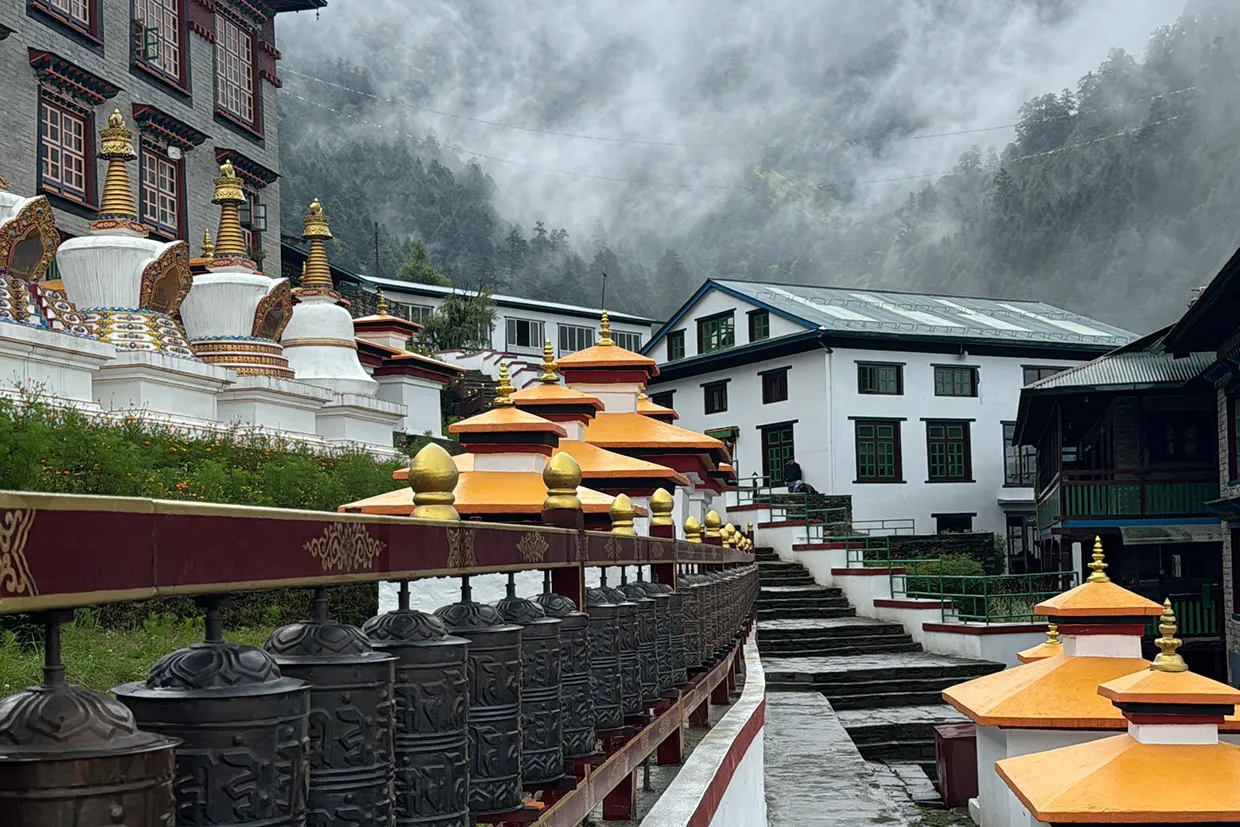
Thupten Chholing Monastery, located high above Junbesi, stands as one of the largest and most active sanctuaries in Solu. This thriving community includes several hundred monks and nuns dedicated to a structured program of Buddhist philosophy, ritual practice, and traditional arts. The founding lama established the monastery to preserve the ancient Nyingma school of Tibetan Buddhism, which serves as the spiritual bedrock of the district.
To ensure respectful encounters, travelers follow standard cultural protocols when visiting these sacred sites. You must remove footwear before entering the temple interiors and keep your voices low during active prayer services. Always ask for permission before photographing monks, nuns, or ritual objects, and remember to walk clockwise around all central shrines.
The Pikey Peak Trek suits:
Be honest before confirming the Pikey Peak Trek:
| Trek | Duration | Difficulty | Highest Point | Main Style | Best For |
|---|---|---|---|---|---|
| Pikey Peak Trek | 9 Days | Moderate | 4,065 m | Road-based Everest view trek | Quiet trails, sunrise views |
| Everest View Trek | 7–9 Days | Easy–Moderate | ~Tengboche area | Lukla-based Everest view | Short Everest experience |
| Everest Cultural Trek | 10 Days | Easy–Moderate | ~Tengboche | Sherpa villages, monasteries | Cultural Everest route |
| Everest Base Camp Trek | 12–16 Days | Mod–Challenging | 5,364 m (EBC) | Classic high-altitude trek | Base camp seekers |
| Dudhkunda Trek | 10–13 Days | Moderate | High sacred lake | Remote lower Everest route | Lake and culture trek |
Hotel Thamel Park sits in the heart of the Thamel tourist district with walking access to gear shops, restaurants, money exchange, and airport transfer pickup points. The hotel provides clean twin-sharing rooms with private bathrooms, hot water, Wi-Fi, and daily breakfast. Two nights at Hotel Thamel Park—one before the trek and one on the return. Day 8—give the Pikey Peak package a comfortable, consistent city-accommodation frame.
Trekking Route – Teahouses
On the trail, you stay in locally run teahouses at Jhapre, Pikey Peak Base Camp, Jase Bhanjyang, Junbesi (two nights), and Taksindu across six consecutive trekking nights. Teahouse quality varies along the route—Junbesi offers the most developed facilities, with better rooms, broader menus, and more reliable electricity than the higher stops. Pikey Peak Base Camp and Jase Bhanjyang provide the most basic accommodation—simple rooms, limited menus, shared bathrooms.
Hot showers cost extra at most trail teahouses—typically NPR 200-500 per shower, payable directly to the teahouse. Wi-Fi connectivity is unreliable above Junbesi and does not work at the Base Camp teahouse. Device charging is available at most stops except Base Camp—carry a fully charged power bank from Kathmandu.
The Pikey Peak Trek uses simple mountain teahouses on the trail. Guests should expect warm hospitality, basic rooms, shared bathrooms, and simple local meals—not city hotel standards. The Junbesi teahouse offers the most comfortable overnight stop on the route.
First Trekking Village After Dhap
Jhapre provides your first genuine cultural introduction to the Lower Everest Sherpa world after leaving the Dhap trailhead. Perched beautifully in a mid-elevation zone, the village features traditional monastery structures on the surrounding ridges and sweeping views of the lower Solu valley. The walk here covers a smooth transition from the road-accessible lower hills into the quiet forest trails that characterize the lower portion of the route. The local teahouses in Jhapre are basic, authentic, and welcoming, offering a clear preview of the community character that defines this entire trek: rich agricultural terraces below and quiet ridges above leading toward Base Camp.
Junbesi – Cultural Center of the Lower Everest Route
Junbesi holds the most developed cultural character of any village along the Pikey Peak route. The community maintains traditional Sherpa stone architecture, active potato and grain cultivation, and a prominent central monastery. Because its economy relies primarily on farming and herding rather than commercial tourism, Junbesi represents Sherpa life at its most intact and complete, escaping the commercial transformation seen in the main Khumbu corridor. Our itinerary grants you an afternoon to explore its terraced lanes and meet the locals before your monastery day hike, while the local teahouses offer the highest accommodation quality on the route with reliable electricity and broader menus.
Taksindu – Final Cultural Stop
Before Phaplu Taksindu serves as your final cultural encounter before descending toward the trail exit. The active monastery complex commands a spectacular ridge position with views stretching back across the Solu valley and forward toward the lower Khumbu ridges. It operates as a vital religious center for the surrounding settlements, providing a deep spiritual connection to the broader region. If the doors are open during our afternoon visit, your guide will arrange an interior exploration to observe the beautiful ritual art.
Phaplu – Road Access Point and Trek Exit
Finally, Phaplu serves as the primary road access point and trek exit. Arriving here on Day 8 concludes your walking journey through the Lower Everest region. Although Phaplu houses a small airstrip, weather patterns mean that road transport remains our reliable standard exit route back to the capital. You will have the entire afternoon to rest, celebrate the completion of your trek with your guiding team, and relax before the private jeep departs the following morning for the long drive back to Kathmandu.
Full board meals cover all six active trekking days from Day 2 through Day 7. Hotel Thamel Park breakfast is included on Day 2 morning. Day 8 includes breakfast and lunch before the return drive to Kathmandu. Lunch and dinner in Kathmandu on Days 1 and 9 are not included in the package.
Trail food on the Pikey Peak route reflects the standard Nepali mountain teahouse menu with some local Solu variations. Dal bhat—steamed rice, lentil soup, vegetable curry, pickles, and papadum with free refills—provides the most reliable energy food at every stop. Other common options include noodle soup, potato-based dishes using locally grown Solu potatoes, egg preparations, fried rice, porridge with honey for breakfast, and tea and instant coffee.
Food variety decreases with altitude. Junbesi offers the broadest menu on the route due to its larger size and better access to supplies. Pikey Peak Base Camp provides the most limited menu—simple, hot, high-calorie fuel appropriate to the remote ridge position. Buy dal bhat whenever it appears on the menu at Base Camp—it typically provides the most energy per portion at that altitude.
Bottled water, soft drinks, alcohol, hot drinks beyond basic tea and coffee, snacks, and desserts carry additional fees at all trail stops. Carry a refillable water bottle with purification tablets from Kathmandu to reduce both plastic waste and daily water spending throughout the six trekking days.
The Pikey Peak Trek avoids Lukla flight dependency entirely by using road transfer for both the approach and return. The Kathmandu to Dhap drive takes 5 to 7 hours, with roads ranging from good highways to rough mountain tracks on the final approach. The return from Phaplu to Kathmandu takes a similar amount of time. Prepare for full travel days on Days 2 and 8 with snacks, comfortable seating, and patience for road conditions.
The package covers airport pickup and drop-off in Kathmandu, jeep or local vehicle from Kathmandu to Dhap on Day 2, and jeep or local vehicle from Phaplu to Kathmandu on Day 8. Private jeep upgrades are available for added comfort and scheduling flexibility on both road segments—contact our team before booking to add one.
Road conditions on the Kathmandu-Dhap-Phaplu circuit vary with the seasons. During the monsoon season, the worst road surfaces are on the mountain sections. Spring and autumn generally deliver passable and sometimes good road conditions. The Day 2 drive passes through several scenic sections of the Solu-Khumbu approach—prepare for mountain scenery along the way.
The Pikey Peak Trek permit requirements depend on the specific route taken and the current Nepal government policy. The TIMS card applies under most current trekking registration frameworks. Depending on whether the route passes through the Gaurishankar Conservation Area or approaches the Sagarmatha National Park boundary, additional conservation area entry permits may apply. Our team confirms the exact permit requirements before your departure based on the current route plan.
All required permits are included in the package price. Our team arranges all documentation in Kathmandu before your Day 2 departure. Bring two passport-size photographs and a clear copy of your passport photo page to provide to our team on Day 1. Your guide carries permit documentation throughout the trek and manages all checkpoint interactions.
The Pikey Peak Trek rates as moderate—accessible to fit beginners with preparation, but not without genuine physical demand on specific days. The maximum altitude of 4,065 meters at the summit is below the threshold where serious altitude acclimatization is essential, but the early morning summit hike in cold, dark conditions and the extended Day 3 forest climb both require steady physical effort.
Daily walking time ranges from 4 to 7 hours across the six trekking days. The most demanding day is Day 4—the pre-dawn summit push from Base Camp, a full breakfast, and then the long descent to Jase Bhanjyang, spanning a total of 8 to 10 hours of cumulative activity. Day 3’s sustained forest climb to Base Camp and Day 5’s descent to Junbesi both represent moderate multi-hour walking sections.
Beginners with 3 to 4 weeks of regular hill walking preparation can comfortably complete the route. Trekkers who exercise regularly in their daily life find the daily distances and elevation changes within their capacity without specific trekking preparation. Trekking poles provide clear benefits on the descent sections from Pikey Peak Base Camp to Jase Bhanjyang on Day 4 and from Junbesi toward Taksindu on Day 7.
| Season | Months | Conditions | Best? |
|---|---|---|---|
| Spring | March to May | Rhododendron forests bloom red and pink on the lower ridges. Clear morning views, mild daytime temperatures. One of the two best windows for the Pikey Peak sunrise hike. | Yes |
| Autumn | Sep to Nov | Best visibility of the year after the monsoon. Blue-sky mornings offer the clearest views of Everest, Makalu, and Kanchenjunga from the Pikey Peak summit. October is the peak month. | Yes – Best |
| Winter | Dec to Feb | Cold mornings near the Pikey Peak summit area. Possible frost and light snow on upper ridges. Fewer trekkers on the trail. Clear-sky days deliver excellent views when the weather holds. | Possible |
| Monsoon | Jun to Aug | Daily clouds, rain on lower trail sections, leeches on forest paths, and poor road conditions on the Dhap approach. Not recommended for most travelers on this route. | No |
Spring and autumn offer the strongest trekking conditions. Spring’s rhododendron blooms along the Jhapre to Base Camp trail section add visual reward to the forest approach that autumn lacks. Autumn’s superior visibility from the Pikey Peak summit delivers the clearest panorama of Everest, Makalu, and Kanchenjunga of any season. Book October departures at least 4 to 5 weeks in advance—peak season fills available teahouse slots in Junbesi and Pikey Peak Base Camp quickly.
Porter service is optional in the base package and available as a paid upgrade. The Day 3 climb to Pikey Peak Base Camp and the Day 4 summit day represent the two sections where the main bag weight most directly affects walking comfort—arriving at the Base Camp teahouse with energy remaining for dinner and a 4 AM start requires not carrying excess weight through the Day 3 forest climb. One porter carries a maximum of 20 kilograms shared between two trekkers. You carry your own daypack with water, snacks, a camera, a rain jacket, and personal items.
Adding a porter creates direct employment income for a worker from the Solu-Khumbu community along the trail. Contact our team before booking to add porter service and receive current pricing.
Add any of the following to your base package at extra cost:
Travel insurance is compulsory for all trekkers on the Pikey Peak Trek. The route reaches 4,065 meters at the summit, above the altitude caps of some basic travel policies. Confirm your policy specifically covers trekking activity in Nepal, emergency helicopter evacuation, medical treatment, trip cancellation, road delays, and lost baggage before purchase.
The Pikey Peak Trek avoids the risk of the Lukla flight, but road travel, altitude exposure, and the remote trail location create scenarios where insurance coverage provides essential protection. A helicopter evacuation from the Pikey Peak Base Camp area costs USD 1,500 to USD 3,000, depending on conditions. Purchase your policy before you fly to Nepal and carry both printed and digital copies.
Pack for the temperature range from warm lower valley afternoons at 2,000 meters to sub-zero pre-dawn conditions at the Pikey Peak summit at 4,065 meters:
Always walk to the left of all mani walls and chortens throughout the route, keeping the stone structures on your right. This clockwise Buddhist convention applies to all religious monuments from Jhapre through Taksindu. When encountering prayer flag lines at ridge crossings or monastery entries, walk under rather than over them whenever the path allows.
Eat at local teahouses for every meal rather than carrying pre-packaged commercial food from Kathmandu. Because the Solu region lacks the high-volume trekking tourism of the main Khumbu corridor, teahouses are a primary source of income for Sherpa families. Your spending at Jhapre, Junbesi, and Taksindu feeds directly into household economies that benefit measurably from each trekking group’s presence.
Carry a refillable water bottle and use purification tablets throughout the six trekking days. The Lower Everest trail sees fewer trekkers than the main Khumbu corridor, meaning plastic waste accumulation is less severe than at Namche. However, this remoteness also makes waste removal and recycling significantly more difficult logistically, so using a personal bottle keeps your plastic contribution to zero.
Dress modestly in all village settings, ensuring you cover your shoulders and knees at Jhapre, Junbesi, Taksindu, and during the Thupten Chholing Monastery day hike. Always remove footwear before entering monastery buildings. Finally, follow your guide’s specific instructions at Thupten Chholing regarding ceremony attendance, photography restrictions, and interaction protocols with the resident monk and nun community.
Your licensed guide manages safety across all six trekking days. Safety responsibilities include maintaining an appropriate walking pace on the Day 3 forest climb, monitoring your physical state at Pikey Peak Base Camp altitude before the Day 4 summit departure, managing teahouse bookings in advance for the Base Camp stop, where room availability is limited to a small number of groups, and maintaining emergency communication with our Kathmandu office throughout the trek.
The Pikey Peak summit altitude of 4,065 meters does not require a dedicated acclimatization day for most healthy adults trekking at the moderate pace the guide sets on Days 2 and 3. Mild headache and fatigue on the Base Camp first night represent normal altitude adjustment, and full dinner, adequate hydration, and an early sleep resolve it before the Day 4 summit departure. Inform your guide immediately of any symptoms that worsen rather than improve overnight at Base Camp.
Cold and wind at the summit before dawn represent the main weather-related safety factor on the Pikey Peak Trek. The temperature at 4,065 meters between 4 and 6 AM typically ranges from -5°C to -10°C in October and April. Dress in all available warm layers before leaving the Base Camp teahouse, regardless of the teahouse temperature at departure time—the ridge at 4,065 meters carries significantly more wind chill than the protected teahouse setting.
Pikey Peak Trek vs Everest View Trek
The standard Everest View Trek routes through Lukla and the main Khumbu corridor, sharing the busy infrastructure of the Everest Base Camp trail. Conversely, the Pikey Peak Trek operates outside this zone in the Lower Everest Solu region, utilizing a road-accessible approach that eliminates flight dependency. While the Khumbu route offers closer proximity to Namche’s commercial facilities, Pikey Peak’s 4,065-meter summit provides a wider east-to-west Himalayan panorama than most classic Khumbu viewpoints.
Why Pikey Peak Earns Its Reputation for Wide Himalayan Views?
The summit’s specific ridge position faces northeast across an unobstructed view corridor stretching from Gaurishankar to Kanchenjunga. This expansive arc covers more named Himalayan peaks from a single vantage point than almost any other accessible, lower-altitude trek in Nepal. The combination of its orientation and the total absence of blocking ridges creates a distinctive panoramic quality that lower viewpoints simply cannot replicate.
Why the Junbesi and Thupten Chholing Days Justify the Longer Itinerary?
A truncated five-day Pikey Peak Trek rushes to the summit and returns to Kathmandu, completely bypassing Junbesi and Thupten Chholing. While this saves time, it strips the journey of its cultural identity. Junbesi village showcases Lower Everest Sherpa life in its most intact, traditional form, while Thupten Chholing Monastery reveals the active spiritual community that sustains the region’s Buddhist heritage. Keeping these days ensures a complete cultural experience rather than a basic viewpoint excursion.
Why Road Access Removes One of Nepal Trekking’s Biggest Variables?
Mountain weather delays disrupt a significant percentage of Lukla flights during peak season, forcing operators to build buffer days into standard Khumbu itineraries. The Pikey Peak Trek removes this stress entirely. The overland drive to Dhap requires a full day, but road transport remains manageable and predictable in conditions that ground aircraft. For travelers with strict international connections, this road-based approach provides absolute schedule security.
Honest Comfort Note – What to Expect on the Trail
Teahouse facilities along this route range from basic to adequate. Junbesi offers the most comfortable overnight stays, featuring better room quality, reliable electricity, and varied menus. In contrast, Pikey Peak Base Camp and Jase Bhanjyang offer highly rustic amenities, including thin mattresses, shared cold bathrooms, and simple, energy-focused meals. Trekkers who arrive with realistic expectations find the local mountain hospitality genuinely warm and entirely acceptable.
A: The full package runs 9 days from arrival in Kathmandu on Day 1 to final airport departure on Day 9. The active trekking section covers 6 days from Day 2 through Day 7. Day 2 combines the Kathmandu to Dhap road transfer with the first trekking section to Jhapre. Day 8 combines the Taksindu to Phaplu final trek section with the Phaplu to Kathmandu road return.
A: The trek starts at Dhap after the Day 2 road transfer from Kathmandu and ends at Phaplu before the Day 8 road return to Kathmandu. Both access points use road transport—no Lukla flight is required for either the approach or the return.
A: Pikey Peak summit sits at approximately 4,065 meters (13,337 feet) above sea level. You reach the summit on Day 4 during the pre-dawn sunrise hike from the Base Camp teahouse at approximately 3,640 meters.
A: The trek rates as moderate. Daily walking time runs 5 to 7 hours across the six trekking days. The most demanding section is Day 4—the pre-dawn 4 AM summit push from Base Camp, breakfast, and then the full descent to Jase Bhanjyang across a combined 8 to 10 hours of activity. Fit beginners with 3 to 4 weeks of regular hill walking preparation complete the route comfortably.
A: No. The Pikey Peak Trek uses road-based access throughout—jeep or local vehicle from Kathmandu to Dhap on the approach, and jeep or local vehicle from Phaplu to Kathmandu on the return. No Lukla flight is required at any point in the 9-day itinerary.
A: From the Pikey Peak summit on clear mornings, you see Everest (8,849 m), Makalu (8,485 m), Kanchenjunga (8,586 m), Lhotse (8,516 m), Numbur Himal (6,959 m), and Gaurishankar (7,134 m) across a panorama that extends from west to east across the full eastern Himalayan wall.
A: Yes, with adequate preparation. The moderate difficulty rating suits healthy beginners who prepare 3 to 4 weeks of regular hill walking before departure. No technical terrain or high-altitude acclimatization days are required. The guide sets the pace based on group fitness throughout all six trekking days.
A: You stay at Hotel Thamel Park in Kathmandu for two nights—one before the trek and one on the Day 8 return. On the trail, you stay in locally run teahouses at Jhapre, Pikey Peak Base Camp, Jase Bhanjyang, Junbesi (two nights), and Taksindu. Teahouse rooms provide basic twin beds with shared bathrooms. Hot showers cost extra at most trail stops.
A: Yes. Full board—breakfast, lunch, and dinner—comes included on all 6 trekking days from Day 2 through Day 7. Hotel Thamel Park breakfast comes included on Day 2 morning. Day 8 includes breakfast and lunch before the Kathmandu return. Lunch and dinner in Kathmandu are not included.
A: Porter service is optional in the base package and available as a paid upgrade. One porter carries a maximum of 20 kilograms shared between two trekkers. We recommend adding a porter for the Day 3 Base Camp climb and Day 4 combined summit and descent section.
A: Permit requirements for the Pikey Peak Trek depend on the specific route and current Nepal government policy. TIMS card and possibly route-specific conservation area entry permits apply. Our team confirms current permit requirements at booking inquiry time and arranges all documentation before your Day 2 departure.
A: Spring (March to May) and autumn (September to November) offer the best trekking conditions. Spring adds rhododendron blooms on the Jhapre to Base Camp trail. Autumn delivers the clearest Himalayan views from the Pikey Peak summit. October and November provide the most reliable clear morning weather for the Day 4 sunrise hike.
A: Yes. Contact our team before booking if you want to adjust the route length, add extra days at Junbesi, extend the Thupten Chholing visit, or modify the Phaplu exit logistics. We accommodate customization requests for both shorter and longer itineraries based on your specific availability and interests.
A: Yes. Travel insurance is compulsory. Your policy must cover trekking in Nepal, emergency helicopter evacuation, medical treatment, road delays, and trip cancellation. The route reaches 4,065 meters—confirm your policy’s altitude coverage before purchase. Carry both printed and digital copies throughout the trek.
A: The Pikey Peak Trek uses road access—no Lukla flight required. The Everest View Trek typically uses the Lukla flight and routes through Namche Bazaar and the main Khumbu corridor. Pikey Peak offers a wider east-to-west Himalayan panorama from a quieter trail. Everest View gives closer proximity to the upper Khumbu setting and Namche’s facilities. Both routes provide Everest views—the choice depends on whether you prioritize flight-free logistics or the classic Khumbu trail experience.