
Venture deep into a restricted, trans-Himalayan wilderness to discover ancient Bon culture, cross formidable high passes, and witness the breathtaking turquoise waters of Phoksundo Lake.

Unbeatable Holiday Offers – Save Up to 20% on Your Next Adventure!

Venture deep into a restricted, trans-Himalayan wilderness to discover ancient Bon culture, cross formidable high passes, and witness the breathtaking turquoise waters of Phoksundo Lake.
The Upper Dolpo Trek delivers a remote 27-day camping expedition through the restricted high-altitude terrain of western Nepal. This rugged loop traverses Shey-Phoksundo National Park, visiting Shey Phoksundo Lake, Shey Gompa, the Crystal Mountain area, and the ancient villages of Saldang and Dho Tarap. Navigating this wild terrain requires crossing two serious high passes, the Kang La and Jeng La. Culturally isolated from mainstream tourism, the region’s high-altitude communities practice Bon, Tibet’s pre-Buddhist religious tradition, alongside Tibetan Buddhism.
Villages like Ringmo, Saldang, and Dho Tarap operate above 3,600 meters on a subsistence economy of barley, buckwheat, potato cultivation, and yak herding. The 27-day framework includes 21 walking days and two exploration rest days at the lake and Shey Gompa. Because no commercial teahouse network exists, a full expedition support structure is required, including a licensed guide, cook, kitchen crew, porters, and mule transport for self-sufficient wilderness camping.
Restricted-area permit costs USD 500 per person for the first 10 days, plus USD 50 per additional day, along with a park entry fee of NRs. 3,000. While these permit fees, domestic flights, and extensive camping logistics make the package significantly more expensive than standard teahouse treks, they directly protect Upper Dolpo’s fragile environment and unique cultural heritage through controlled visitor management.
Quick Answer: What Is the Upper Dolpo Trek?
The Upper Dolpo Trek is a 27-day remote camping trek in western Nepal’s restricted area. The route covers Kathmandu, Nepalgunj, Juphal, Dunai, Shey Phoksundo Lake, Shey Gompa, and Crystal Mountain, Saldang, Yangze Gompa, Jeng La Pass, Dho Tarap, Tarakot, and Juphal. The trek combines restricted-area camping, Bon and Tibetan Buddhist culture, two high passes above 5,000 m, ancient trans-Himalayan villages, and expedition-style logistics across 27 days.
Important: The Upper Dolpo Trek is a serious remote camping expedition. It requires prior multi-day high-altitude trekking experience, physical fitness for long days at altitude, mental readiness for basic camping conditions across 20+ consecutive nights, and full acceptance of weather-dependent flight delays that may affect both the departure and return schedules. Not suitable for first-time or beginner trekkers.
The Upper Dolpo Trek is one of Nepal’s finest expedition-scale routes, rivaling the Kanchenjunga circuit. Its unique cultural identity is anchored in the pre-Buddhist Bon tradition and ancient trans-Himalayan trade routes. The 27-day circuit from Juphal loops through Shey Phoksundo Lake, Shey Gompa, Saldang, and Dho Tarap, exploring pristine terrain untouched by mass tourism. The trek’s cost and logistical complexity match its profound remoteness.
Upper Dolpo’s restricted permit fee of USD 500 for the first 10 days regulates visitor numbers, preventing the region from becoming a commercialized tourist hub. This controlled access ensures that high-altitude villages like Ringmo and Dho Tarap continue to function on their own terms, in their own authentic cultural ways.
A self-sufficient camping infrastructure provides the operational foundation for over twenty nights in the wilderness. The package includes a full kitchen crew, dining tents, and mule teams for heavy transport. Our specialized team includes regional guides, experienced high-altitude cooks, and local handlers who guide pack animals safely through demanding trail sections.

Included Meals

Trip staff

Transport

Accommodation

Trip Grade
Group Size
You arrive at Tribhuvan International Airport. Our representative meets you and transfers you to your hotel in Kathmandu. Rest after the flight and prepare questions for the Day 2 permit briefing.
Accommodation:
Meals: Not included
Difficulty
Day 2 covers the full logistical preparation. Our guide conducts a comprehensive briefing covering the 27-day itinerary, permit documentation, gear review, flight delay contingency planning, and high-pass safety protocols. Submit a passport photo and a copy of your passport for permit processing.
Accommodation:
Hotel in Kathmandu (second night)
Meals Breakfast
Difficulty
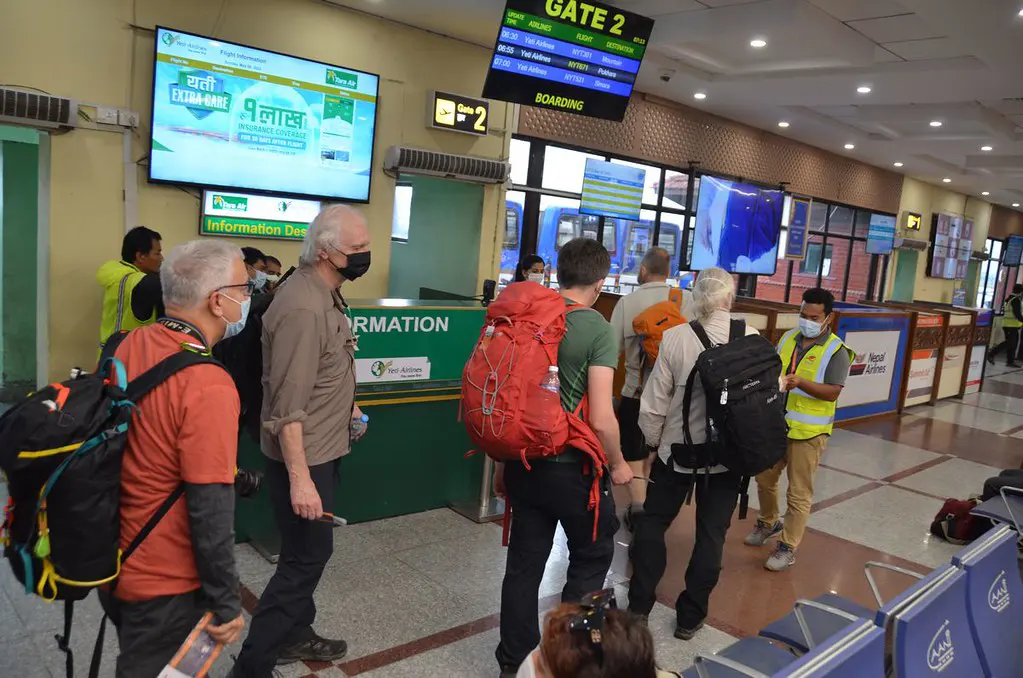
The Kathmandu to Nepalgunj domestic flight takes approximately 50-60 minutes. Nepalgunj serves as the gateway for all Dolpo region flights. Rest in Nepalgunj and prepare for the early-morning flight to Juphal tomorrow.
 Accommodation:
Hotel in Nepalgunj
Meals Breakfast
Difficulty
The Nepalgunj to Juphal STOL aircraft flight takes approximately 50 minutes over the Himalayan foothills to the Juphal airstrip at approximately 2,475 meters. Trek begins immediately toward Dunai, the Dolpo district’s administrative center.
Accommodation:
Teahouse or camp at Dunai
Meals Breakfast, Lunch, Dinner
Difficulty
Follow river valleys, forest trails, and village paths northward through the lower Dolpo valley system toward Chhepka at approximately 2,840 meters. The walking time is approximately 6 to 7 hours.
Accommodation:
Tented camp at Chhepka
Meals Breakfast, Lunch, Dinner
Difficulty
Continue through forested trails and remote settlements on the approach route toward the Phoksundo Valley entrance. The walking time is approximately 6 to 7 hours.
Accommodation:
Tented camp
Meals Breakfast, Lunch, Dinner
Difficulty
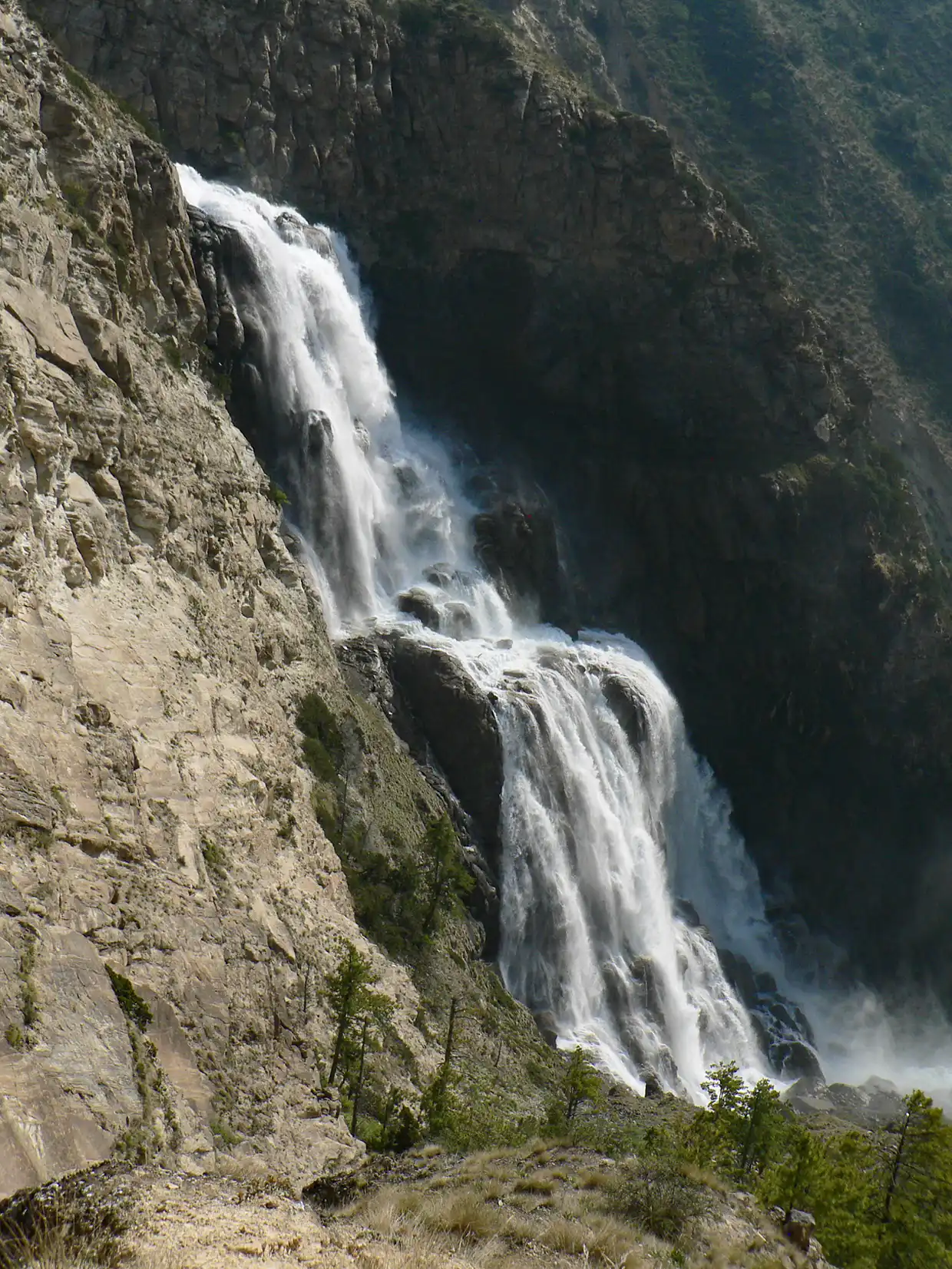
The trail passes the multi-stage Phoksundo waterfall before the canyon opens onto the lake’s turquoise southern shore. Ringmo Village sits at the lake’s eastern edge with the monastery visible above the main village cluster.
 Accommodation:
Tented camp near lake
Meals Breakfast, Lunch, Dinner
Difficulty
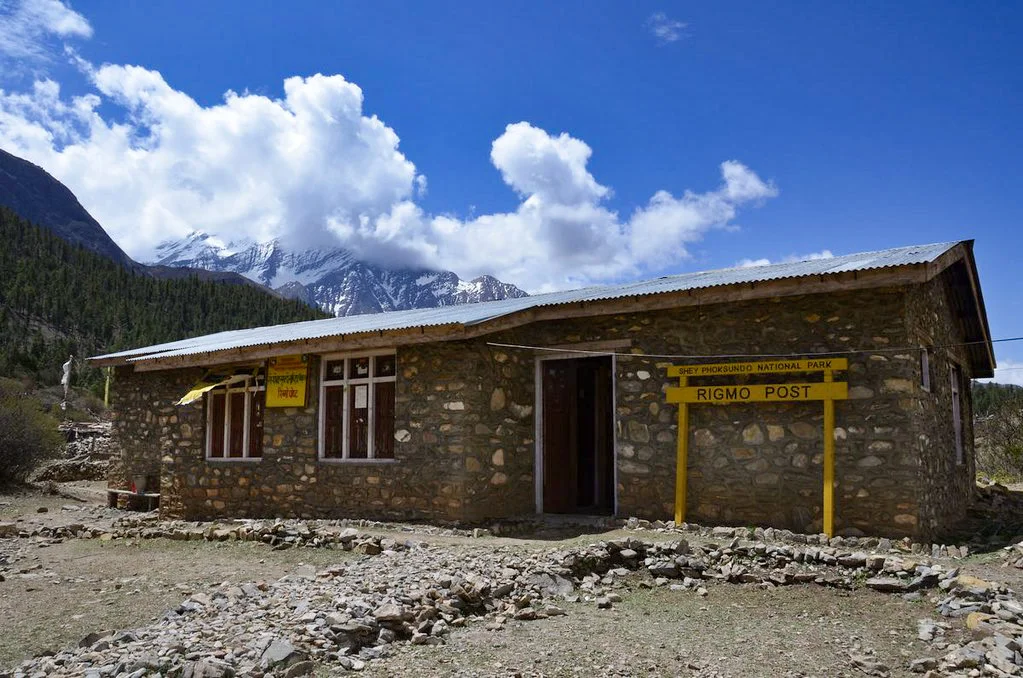
Full rest and exploration day. Visit Ringmo Village’s Bon-influenced monastery, walk the lake viewpoint trails, and use the day for photography, cultural engagement, and physical rest before the demanding section ahead.
 Accommodation:
Tented camp near lake (second night)
Meals Breakfast, Lunch, Dinner
Difficulty
Leave the lake and begin the approach toward Kang La Pass base. The terrain shifts from the enclosed lake-canyon environment to the more open trans-Himalayan valley approach of inner Upper Dolpo.
Accommodation:
Tented camp at Phoksundo Khola
Meals Breakfast, Lunch, Dinner
Difficulty
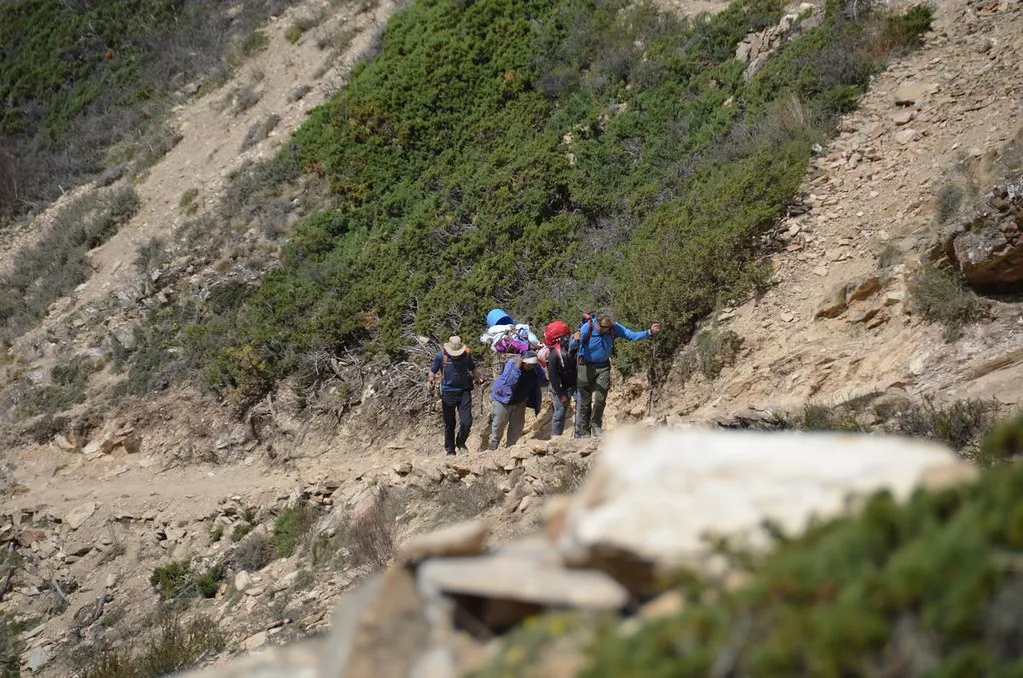
Climb toward Phoksundo Bhanjyang through remote highland valleys. Arrive, eat a full dinner, pack the daypack for the pre-dawn pass departure, and sleep early for the 4 to 5 AM start.
 Accommodation:
Tented camp at Phoksundo Bhanjyang
Meals Breakfast, Lunch, Dinner
Difficulty
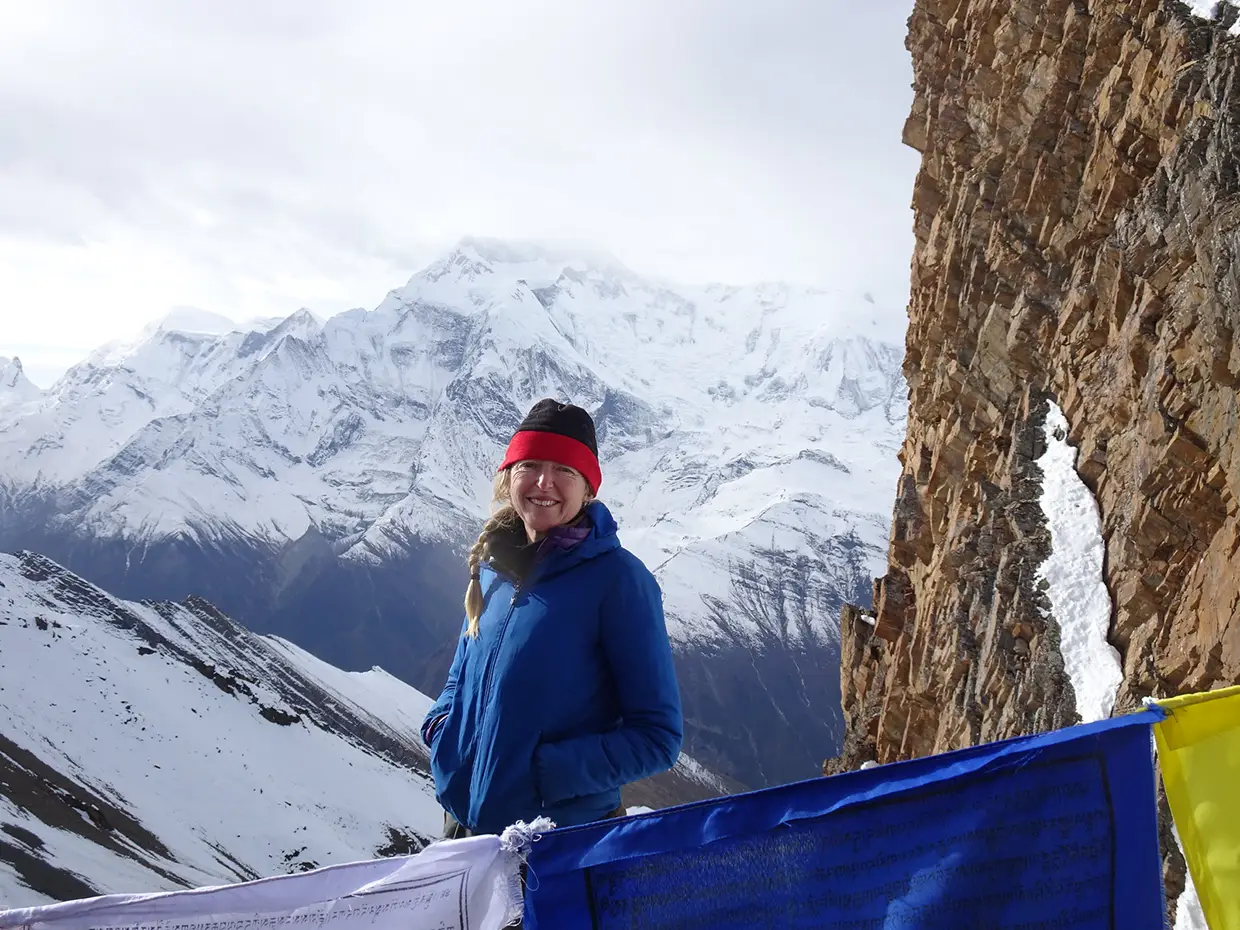
Pre-dawn start from the camp. Ascent to the Kang La summit at approximately 5,000 to 5,100 meters takes 4 to 6 hours. Descent through dry inner Dolpo terrain toward Shey Gompa. Total walking time: 8 to 12 hours.
 Accommodation:
Tented camp near Shey Gompa
Meals Breakfast, Lunch, Dinner
Difficulty
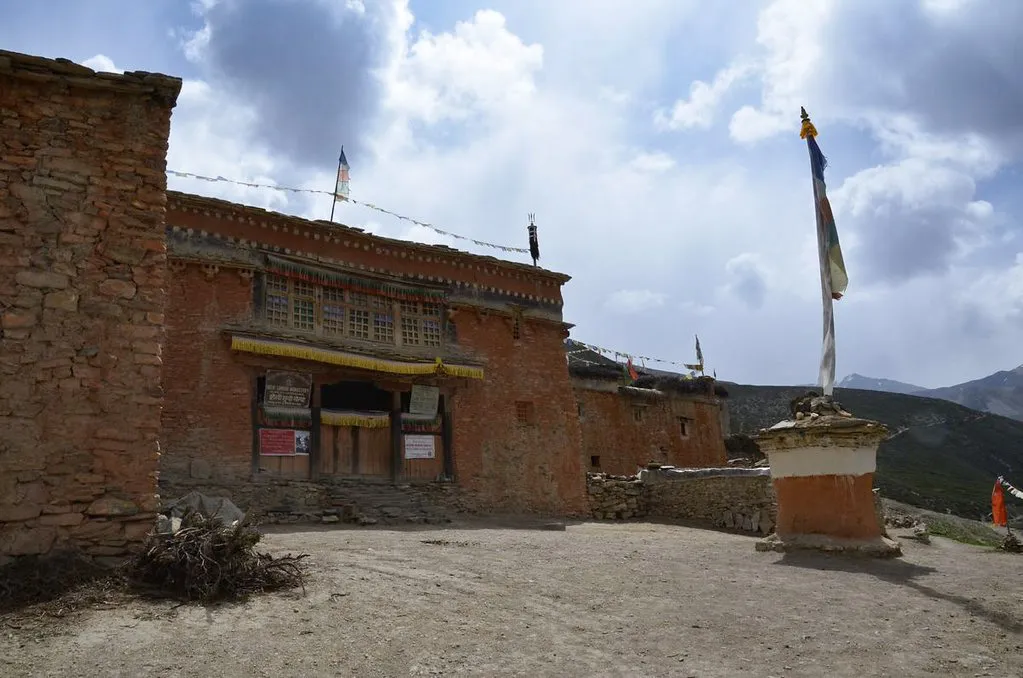
Full day dedicated to Shey Gompa’s monastery complex and the Crystal Mountain sacred area. Guide coordinates monastery interior visit with the resident monk community and leads a walk toward Crystal Mountain’s lower approach.
 Accommodation:
Tented camp near Shey Gompa (second night)
Meals Breakfast, Lunch, Dinner
Difficulty
Cross highland terrain through dry inner Dolpo valleys and ridgelines toward Namgung. Walking time runs approximately 6 to 7 hours.
Accommodation:
Tented camp at Namgung
Meals Breakfast, Lunch, Dinner
Difficulty
Trek to Saldang—the most significant village destination in the Upper Dolpo circuit. The extensive flat-roofed stone settlement and Bon monastery compound appear on the valley approach.
Accommodation:
Tented camp at Saldang
Meals Breakfast, Lunch, Dinner
Difficulty
Full day in Saldang with an optional half-day hike to Yangze Gompa on the ridge above the village. The guide leads the monastery visit and village cultural walk with full cultural context.
Accommodation:
Tented camp at Saldang (second night)
Meals Breakfast, Lunch, Dinner
Difficulty
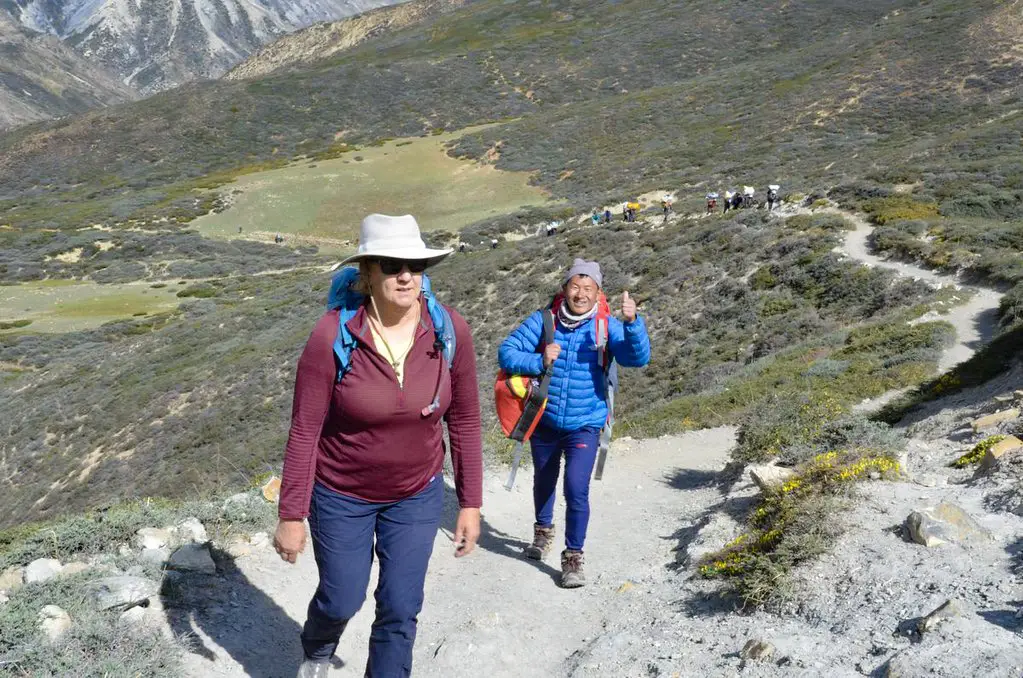
Continue through remote Dolpo highland terrain, traditional village settlements, and dry trans-Himalayan landscape toward Sibu. The walking time is approximately 6 to 7 hours.
 Accommodation:
Tented camp at Sibu
Meals Breakfast, Lunch, Dinner
Difficulty
Climb steadily through open highland terrain toward the Jeng La Pass base camp. Prepare all gear for the Day 18 pre-dawn departure on the evening.
Accommodation:
Tented camp at Jeng La Phedi
Meals Breakfast, Lunch, Dinner
Difficulty
Pre-dawn start. Ascent to Jeng La summit at approximately 5,100 to 5,130 meters. Careful descent through rocky terrain toward Tokyu Gaon in the upper Tarap Valley. Total Day 18 walking time: 8 to 11 hours.
Accommodation:
Tented camp at Tokyu Gaon
Meals Breakfast, Lunch, Dinner
Difficulty
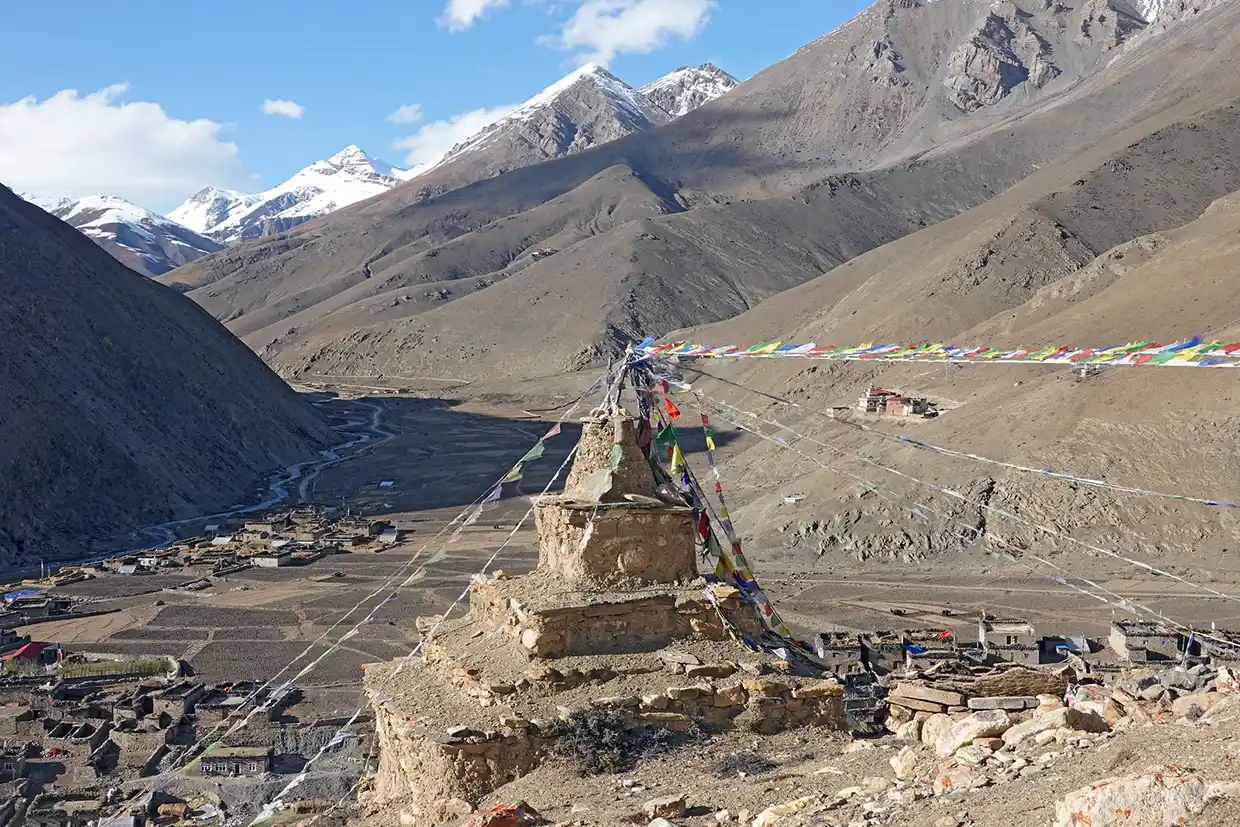
Descend through the upper Tarap Valley to Dho Tarap at approximately 4,080 meters—the final major highland village destination of the Upper Dolpo circuit. Walking time: approximately 4 to 6 hours.
 Accommodation:
Tented camp at Dho Tarap
Meals Breakfast, Lunch, Dinner
Difficulty
Full exploration day covering Dho Tarap’s monasteries, village lanes, and surrounding valley landscapes. Monastery interior visit and village walk in the morning. Rest and photography in the afternoon.
Accommodation:
Tented camp at Dho Tarap (second night)
Meals Breakfast, Lunch, Dinner
Difficulty
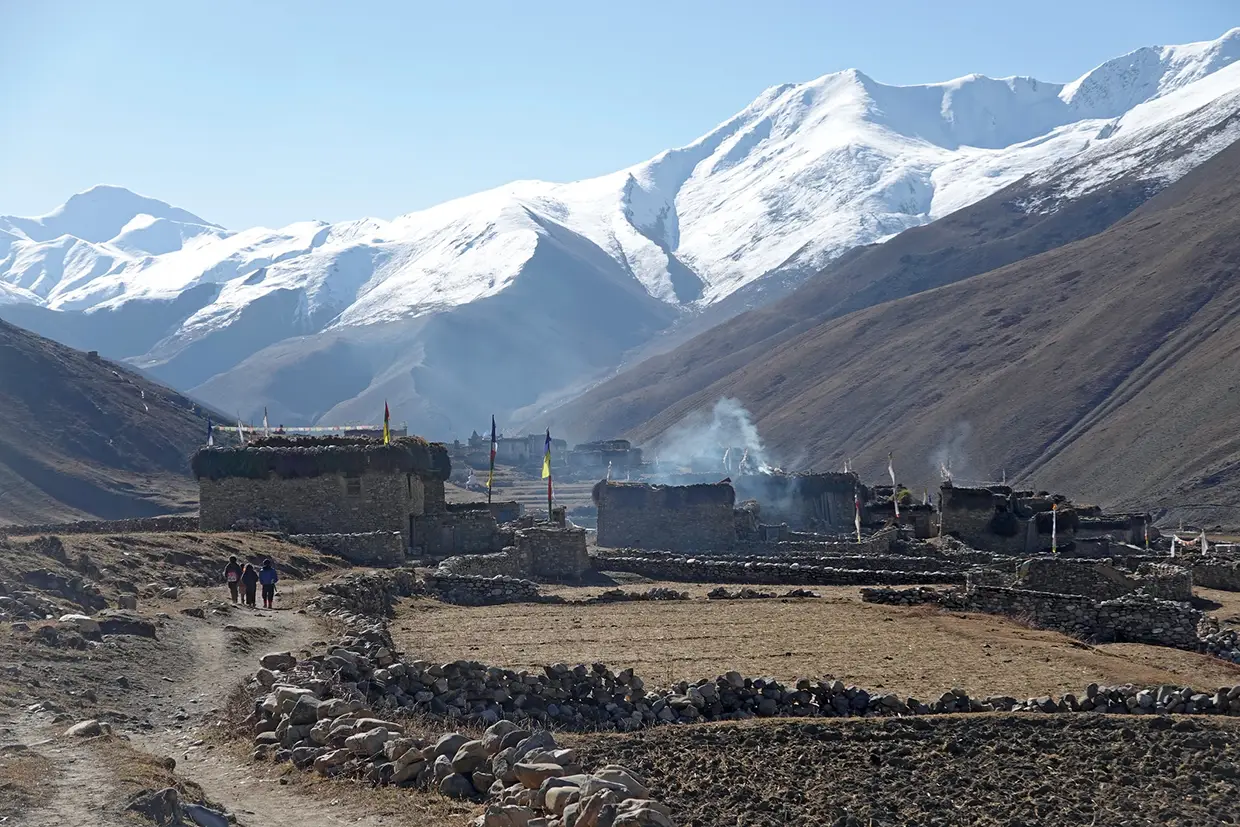
Begin the long Tarap Valley descent toward lower elevations. The river valley trail covers approximately 6 to 7 hours with consistent altitude loss through the lower Tarap Valley sections.
 Accommodation:
Tented camp at Tarap Khola
Meals Breakfast, Lunch, Dinner
Difficulty
Continue the river valley descent through narrow Tarap Valley sections and remote lower valley settlements. Walking time: approximately 6 to 7 hours.
Accommodation:
Tented camp
Meals Breakfast, Lunch, Dinner
Difficulty
Reach Tarakot—a historic lower Dolpo settlement on the Bheri River at approximately 2,540 meters. Tarakot marks the end of the deep Upper Dolpo circuit and the return to basic teahouse facilities.
Accommodation:
Teahouse or camp at Tarakot
Meals Breakfast, Lunch, Dinner
Difficulty
Return from Tarakot to Dunai through the lower Dolpo valley system. Walking time: approximately 5 to 6 hours.
Accommodation:
Teahouse or camp at Dunai
Meals Breakfast, Lunch, Dinner
Difficulty
The final trail section from Dunai to Juphal completes the full Upper Dolpo circuit on foot. Celebrate the completed expedition with the guide and camping team. Organize crew tips before departure day.
Accommodation:
Teahouse or lodge at Juphal
Meals Breakfast, Lunch, Dinner
Difficulty
Morning STOL flight from Juphal to Nepalgunj, then connecting flight to Kathmandu. Our team monitors flight status and communicates any weather-related changes before departure.
Accommodation:
Hotel in Kathmandu
Meals Breakfast
Difficulty
Our driver transfers you to Tribhuvan International Airport at the agreed departure time. Allow at least 3 hours before international flights.
Accommodation:
Not included
Meals Breakfast
Difficulty
The Upper Dolpo Trek delivers a rare Nepal experience that the Everest or Annapurna regions cannot match. Its cultural foundation is rooted in the ancient Bon tradition rather than mainstream Hinduism or Buddhism. The terrain features a dry, trans-Himalayan landscape rather than monsoon-fed forests, and strict permit controls keep visitor numbers low enough to prevent commercialization. Shey Phoksundo Lake serves as the stunning visual centerpiece of the journey. Its brilliant turquoise water, framed by dramatic red-cliff canyon walls, creates a striking alpine setting.
Nearby, the community of Ringmo Village maintains the traditional Bon-influenced lifestyle that defines Dolpo’s unique regional identity. While Upper Mustang is the closest comparison point due to its restricted status and Tibetan-influenced culture, the two routes differ significantly. Upper Mustang tops out at 3,840 meters with no technical passes, offering accessible cultural depth with less physical strain. Upper Dolpo crosses two passes above 5,000 meters, demanding greater physical fitness, a longer duration, and full camping infrastructure for a true wilderness expedition.
The trek suits:
| Trek | Duration | Difficulty | Main Style | Camping | Best For |
|---|---|---|---|---|---|
| Upper Dolpo Trek | 27 Days | Challenging/Strenuous | Restricted camping, high passes, Bon culture | High | Experienced trekkers |
| Lower Dolpo Trek | 16–20 Days | Mod–Challenging | Phoksundo and lower Dolpo villages | Medium–High | Remote trek beginners |
| Shey Phoksundo Trek | 8–12 Days | Moderate | Lake-focused short trek | Low–Medium | Short Dolpo experience |
| Dolpo to Jomsom Trek | 28–35 Days | Strenuous | Long expedition crossing | High | Expedition trekkers |
| Upper Mustang Trek | 12–17 Days | Moderate | Restricted-area culture trek | Low | Culture-focused trekkers |
Hotel accommodation in Kathmandu (Days 1, 2, 26) and Nepalgunj (Day 3) provides city-standard comfort at both ends of the expedition. Teahouse or basic lodge accommodation is available at Dunai, Tarakot, Juphal, and at some lower-valley stops. The majority of the 21 active trekking nights use tented camp accommodation in the remote sections.
Our camping system includes mountain-quality two-person tents with ground-insulating sleeping pads, a separate dining tent for group meals, a kitchen tent for the cook team, and basic toilet tent arrangements. The tent setup crew sets up the camp before the trekking group arrives—hot tea and a warm dining tent greet the group at each arrival. Cold nights above 4,000 meters require a sleeping bag rated to -15°C plus a down jacket used as supplemental insulation within the sleeping system.
Upper Dolpo is a full camping trek. No commercial lodge infrastructure serves the inner circuit between Phoksundo Lake and Tarakot. The quality of the camping experience depends entirely on the professionalism of the crew, the quality of the equipment, and operational logistics, which our team specifically manages for this remote multi-week expedition.
Shey Phoksundo Lake sits at 3,611 meters within Nepal’s largest protected area, Shey-Phoksundo National Park. With a maximum depth of 145 meters, it is the deepest lake in the country. Its unique turquoise-blue color is produced by the specific limestone and mineral composition of the surrounding bedrock, remaining vibrant regardless of shifting light conditions.
The approach from the Juphal trailhead takes three days of walking through Dunai, Chhepka, and the lower Phoksundo Valley. Along the way, the dramatic multi-stage Phoksundo waterfall cascades down a red sandstone cliff, offering a spectacular preview before the lake suddenly opens up behind the canyon walls.
Ringmo Village, located on the eastern shore, provides a deep cultural context to this scenic highlight. This traditional Bon-influenced Buddhist community features flat-roofed stone houses and barley terraces along the lakeside. The Day 8 rest day allows ample time
Shey Gompa sits at 4,200 meters in remote inner Dolpo behind the Kang La Pass, near the sacred Crystal Mountain. The active monastery complex connects to the dual Bon and Tibetan Buddhist heritage that makes the region’s spiritual landscape unique.
Crystal Mountain, a striped rock pyramid above the monastery, holds deep sacred significance. Its layered quartz and limestone geological structure catches the morning sun, creating a distinct, powerful reflection of light that defines its cultural name.
The Day 12 exploration dedicates a full day to the monastery and the lower approach to the mountain. Your guide coordinates an interior visit with the resident monks and explains the coexistence of the religious traditions, turning this remote outpost into the true cultural centerpiece of the circuit.
Bon, Tibet’s indigenous shamanistic and cosmological tradition, predates Buddhism and has survived by retreating to geographic margins, such as western Nepal’s Dolpo region. Rather than competing, local communities seamlessly blend Bon rituals with Tibetan Buddhist forms into a single integrated tradition. The first major cultural encounter occurs at Saldang (3,710 meters), a functioning highland community of flat-roofed stone houses and agricultural terraces. The Day 15 exploration here offers a deep look into local life and includes a half-day hike option to Yangze Gompa, a ridge-top monastery featuring unique Bon-influenced ritual objects and panoramic valley views.
Further along the circuit, Dho Tarap sits at 4,080 meters in the Tarap Valley, serving as the trek’s second major cultural hub. The scheduled Day 20 exploration day ensures ample time to visit the monastery interior, walk through the traditional village, and explore approaches to the surrounding valley. Because the region receives a strictly controlled number of annual visitors, both Saldang and Dho Tarap retain an exceptional level of cultural authenticity, allowing genuine, unhurried engagement with local community life.
Kang La Pass (5,000–5,100 meters) connects the Phoksundo Lake basin to the inner Dolpo terrain above Shey Gompa. The Day 11 crossing requires a pre-dawn departure around 4 to 5 AM to allow sufficient time for the steep ascent and long descent. The route navigates rocky moraine, potential snow sections, and demanding high-altitude conditions. Similarly, Jeng La Pass (5,100–5,130 meters) links the Sibu valley to the Tarap Valley on the return leg. The Day 18 crossing follows the same early morning schedule over loose rock, leading to a long, careful descent toward Tokyu Gaon that requires steady footwork.
The trans-Himalayan terrain between these passes defines Upper Dolpo’s distinct visual and physical character. This high-altitude landscape is dry, wind-exposed, and entirely treeless above the village irrigation zones. Dominated by a color palette of ochre, brown, and grey beneath a deep blue sky, the open ridgelines and sparse vegetation feel decidedly more Tibetan than Nepali, offering a stark contrast to the green forests and snowy peaks of Nepal’s lower mountain regions.
High Pass Safety: Both Kang La Pass and Jeng La Pass require early starts, full warm-up layers, and a guide-managed pace throughout. The weather can change rapidly at these altitudes. Your guide holds authority over pass-crossing timing and may delay, adjust, or reroute based on conditions. Travel insurance must cover trekking above 5,000 m and helicopter evacuation from remote restricted terrain.
Full board covers all 21 active trekking days. The kitchen crew carries sufficient food from Juphal and Dunai for the complete circuit with local supplementation at Saldang and Dho Tarap, where available. Camp meals include dal bhat, vegetable soups, noodle and pasta dishes, rice preparations, egg dishes, porridge, and hot drinks three times daily. Long high-pass days receive packed lunches prepared the previous evening.
Hot drinks are available throughout each camping day. The cook team understands the high-altitude cooking adjustments—water boils at approximately 87°C at 4,000 meters rather than 100°C—which affect pasta cooking times, rice preparation, and dal bhat preparation, leading to poor results without specific altitude adjustments. A dedicated, experienced cook prevents the degradation in food quality that amateur high-altitude camp cooking consistently produces.
The package covers airport pickup and drop-off in Kathmandu, hotels in Kathmandu and Nepalgunj, the Kathmandu to Nepalgunj domestic flight, the Nepalgunj to Juphal domestic flight, the Juphal to Nepalgunj return, and the Nepalgunj to Kathmandu return. Baggage restrictions on domestic mountain flights limit checked luggage—our team provides specific weight and bag requirements at the time of booking confirmation.
Flight Notice: Juphal Airport operates weather-dependent STOL flights from Nepalgunj. Flights are canceled or delayed due to morning clouds, reduced visibility, and wind conditions at the mountain airstrip. Our team monitors flight status and coordinates rebookings. Do NOT book international departure flights within 3 days of your planned Juphal return—weather delays can extend Dolpo departure by 2 to 4 days.
Two permits apply. The Upper Dolpo Restricted Area Permit costs USD 500 per person for the first 10 days in the restricted area and USD 50 per person per day beyond 10 days—making a standard inner circuit with 14 to 17 restricted days cost USD 700 to USD 850 per person for the permit alone. The Shey Phoksundo National Park Entry Permit costs NRs. 3,000 for foreign nationals.
Both permits come included in the package price and require arrangement through a registered agency; individual independent entry is not permitted. Our team processes all documentation in Kathmandu before the Day 3 Nepalgunj flight. Your guide carries complete permit records and manages all checkpoint inspections throughout the trek. Permit fees are government-mandated and subject to annual revision—our team confirms the exact pricing at the time of the booking inquiry.
The Upper Dolpo Trek rates as challenging to strenuous. The combination of 21 active trekking days, two high passes above 5,000 meters, full camping across 20+ nights, remote terrain with limited rescue infrastructure, weather-dependent flight logistics on both ends, and cold high-altitude nights creates a difficulty profile among Nepal’s most demanding non-technical trekking expeditions.
The most demanding individual days are Day 11 (Kang La crossing, 8 to 12 hours) and Day 18 (Jeng La crossing, 8 to 11 hours). The 27-day duration demands sustained physical effort, and accumulated fatigue affects it in ways shorter treks do not. Previous multi-day high-altitude trekking experience—ideally including at least one crossing of a 5,000-meter pass—provides the most relevant preparation.
| Season | Months | Conditions | Best? |
|---|---|---|---|
| Late Spring | May to Jun | Improving pass access after winter. Good Phoksundo Lake and village sections. Possible late snow on Kang La in early May. Pre-monsoon clouds building by late June. | Yes |
| Summer/Monsoon | Jul to Aug | Dolpo’s rain shadow reduces monsoon impact vs eastern Nepal. However, Nepalgunj flight delays and access road issues still occur. Doable with flexibility. | Possible |
| Autumn | Sep to Oct | Best mountain visibility, most stable weather, strongest pass-crossing window. October delivers the clearest skies across all three route sections. | Yes – Best |
| Winter | Nov to Mar | Deep snow on Kang La and Jeng La makes crossings extremely difficult or impossible. Extreme cold at high camps. Very limited rescue options in restricted terrain. | No |
September and October provide the strongest single-month combination of visibility, weather stability, pass-crossing conditions, and flight reliability. May and June offer a reliable spring alternative with good pre-monsoon morning clarity. Dolpo’s rain shadow effect makes July and August more viable than eastern Nepal—but domestic flight delays and approach conditions still affect the schedule.
The camping crew represents the operational backbone of the entire Upper Dolpo expedition. The team includes porters familiar with the specific route’s trail conditions, mule handlers for sections where mule transport efficiently carries heavy camping equipment, and a dedicated cook with high-altitude expedition cooking experience. All crew members receive fair wages calibrated to the demands and duration of the Upper Dolpo trek, adequate cold-weather gear for high-altitude camping nights, and full insurance coverage in accordance with Nepal trekking industry employment standards.
Insurance Requirement: Travel insurance must explicitly cover trekking above 5,000 m, emergency helicopter evacuation from remote restricted terrain, medical treatment in Nepal, domestic flight delays, trip cancellation, and personal accident on a camping expedition. Standard policies capping altitude at 3,000 or 4,000 m are inadequate. Show proof of adequate coverage at permit processing on Day 2.
Helicopter evacuation from the inner Upper Dolpo section between Phoksundo Lake and Tarakot costs USD 3,000 to USD 8,000, depending on the specific pickup location and weather conditions. The remote restricted area has no road access for any section between Juphal and Tarakot—helicopter evacuation is the only emergency extraction option.
Pack for the full temperature range from warm Nepalgunj to -15°C at high camps:
Bon and Buddhist sacred sites throughout Upper Dolpo require clockwise circulation around chortens and monastery circuits, the removal of footwear before entering monastery buildings, and respectful behavior during active puja ceremonies. Your guide provides specific cultural protocols before each monastery visit.
The Leave No Trace principles apply throughout the Upper Dolpo circuit, with particular rigor at Shey Phoksundo Lake and Shey Gompa. Our crew packs out all non-biodegradable waste from every campsite. The cultural and ecological sensitivity of both sites makes waste management a specific responsibility. Support the local crew through fair tips at the expedition’s end in Juphal.
Upper Dolpo’s safety management centers on altitude awareness, high-pass weather assessment, and the remote terrain’s limited rescue infrastructure. Your guide monitors altitude symptoms daily from the Phoksundo Lake elevation onward and manages the pace on both pass-crossing days based on the group’s physical condition and morning conditions. The guide holds full authority over pass-crossing timing and may delay or adjust the departure based on conditions.
Emergency communication is handled via satellite phone equipment and direct contact with our Kathmandu operations office. Helicopter evacuation is the primary emergency extraction option from all sections between Juphal and Tarakot. Our guide provides exact GPS coordinates for the specific camp location during any evacuation request. Altitude sickness management follows standard protocol: monitor symptoms at every meal stop and overnight, maintain hydration, and descend immediately if neurological symptoms appear.
A: The full package runs 27 days from arrival in Kathmandu on Day 1 to final airport departure on Day 27. The active trekking section covers 21 days from the Juphal trail start on Day 4 through the Juphal return on Day 25. Days 3 and 26 cover domestic flight legs. Days 1, 2, and 26 cover Kathmandu hotel stays.
A: The trek rates as challenging to strenuous. The combination of 21 active trekking days, two passes above 5,000 meters, full camping across 20+ nights, remote terrain with limited rescue infrastructure, and weather-dependent flight logistics places this route among Nepal’s most demanding non-technical trekking expeditions. Previous multi-day high-altitude experience is required.
A: Yes. Nepal’s Department of Immigration classifies Upper Dolpo as a restricted trekking area requiring special permits arranged through a registered agency. Independent trekking without agency facilitation is not permitted. The restricted area designation manages visitor numbers to protect the cultural and ecological environment of the inner Dolpo region.
A: Two permits apply: the Upper Dolpo Restricted Area Permit and the Shey Phoksundo National Park Entry Permit. Both come included in the package price. Our team arranges all documentation in Kathmandu before the trek begins.
A: The Department of Immigration charges USD 500 per person for the first 10 days in the Upper Dolpo restricted area and USD 50 per person per day for each day beyond 10 days. For the standard circuit with approximately 14 to 17 days in the restricted section, the permit cost per person typically ranges from USD 700 to USD 850. Our team confirms exact calculations at booking inquiry.
A: Yes. Full camping with tents, kitchen support, cook team, and mule load support covers the majority of the 21 active trekking nights. Teahouse or basic lodge accommodation is available at Dunai, Tarakot, and Juphal. No commercial teahouse network serves the inner restricted area circuit between Phoksundo Lake and Tarakot.
A: No. Previous multi-day high-altitude trekking experience including at least one high pass crossing is required. Upper Dolpo’s 27-day duration, two 5,000-meter passes, remote camping conditions, and limited rescue infrastructure all demand experience that fitness alone cannot substitute.
A: September and October provide the best combination of weather stability, mountain visibility, and pass-crossing conditions. May and June offer a reliable spring alternative. July and August are possible due to Dolpo’s rain-shadow position but carry flight delay risk.
A: Weather delays at Juphal Airport are common and unpredictable. Our team manages rebooking coordination and Nepalgunj accommodation for delayed situations. Extra hotel nights due to weather delays fall outside the base package. Travel insurance with domestic flight delay and trip interruption coverage provides the most practical protection.
A: Hot meals three times daily prepared by the dedicated cook team: dal bhat, vegetable soups, noodle and pasta dishes, rice, egg dishes, and hot drinks throughout each camping day. Long pass days receive packed lunches prepared the previous evening.
A: The primary highlights are Shey Phoksundo Lake with its turquoise color and canyon setting, Shey Gompa and Crystal Mountain, the villages of Saldang and Dho Tarap with their Bon-influenced cultural heritage, the Kang La and Jeng La Pass crossings above 5,000 meters, and the trans-Himalayan landscape of the inner restricted zone.
A: Lower Dolpo covers Phoksundo Lake and accessible lower valley villages without restricted area permits. Upper Dolpo continues beyond the lake into the restricted zone, crosses Kang La Pass, reaches Shey Gompa and Crystal Mountain, and includes Saldang and Dho Tarap. Upper Dolpo requires restricted area permits, full camping infrastructure, longer duration, and more physical fitness.
A: Yes—and the policy must explicitly cover remote trekking above 5,000 meters, emergency helicopter evacuation from restricted terrain, domestic flight delays in Nepal, and trip cancellation. Standard adventure policies without adequate altitude and remote-area coverage are insufficient.
A: Yes. Porter and mule support come included in the standard package. Porters carry personal bags at a maximum of 20 kilograms per two trekkers. Mules carry heavy camping equipment on sections where mule logistics are more efficient. Each trekker carries a daypack with daily trail essentials.
A: Yes. Contact our team before booking if you want to add the Upper Dolpo to Jomsom extension, include additional rest days, or adjust the pace schedule. We accommodate reasonable customization within the permit schedule and safety framework the restricted area requires. Book at least 6 to 8 weeks in advance for permit processing and crew assembly.