


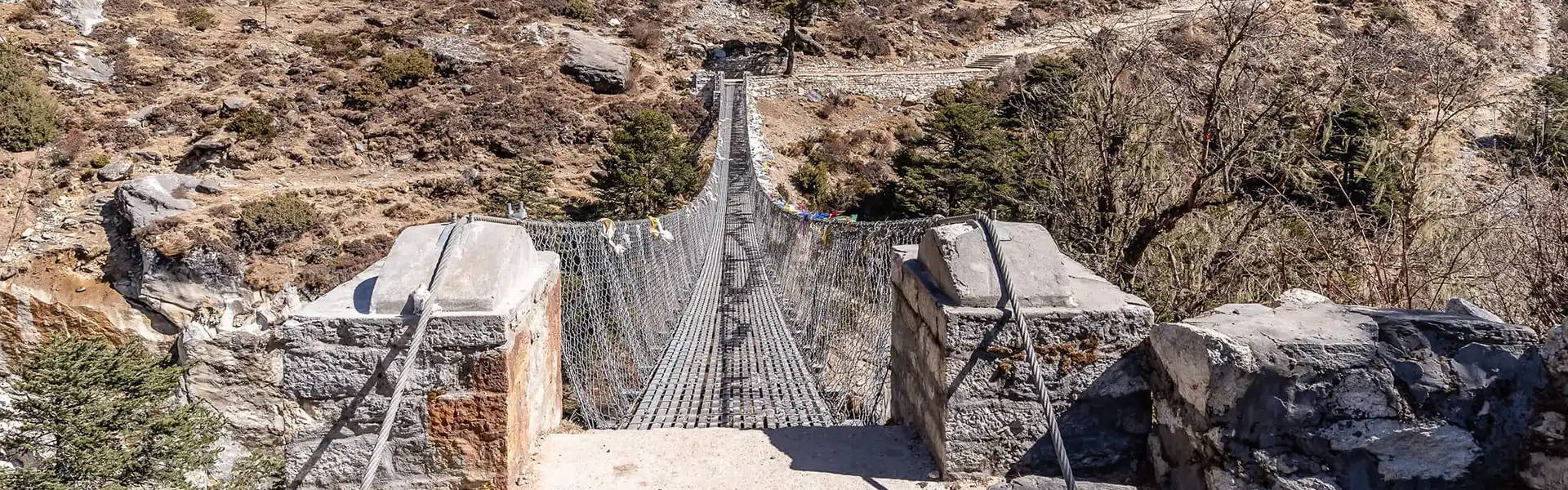

Autumn hiking in Nepal gives travelers the clearest mountain views, stable weather, dry trails, and the widest choice of trekking routes. The season runs from September to November. October offers the best overall conditions. November offers crisp skies and excellent lighting for photography. Late September works best for travelers who want greener trails and fewer crowds.
Post-monsoon air clears dust and haze from the atmosphere. Mountain peaks appear sharp and close. Trails dry out steadily as the season progresses. High passes open reliably. Teahouses, guides, porters, and flight services run at full capacity. The article covers autumn weather month by month, the best autumn treks, packing tips, festival logistics, permits, booking advice, and answers to common questions about Nepal’s peak trekking season.
Quick Answer: Why Hike Nepal in Autumn?
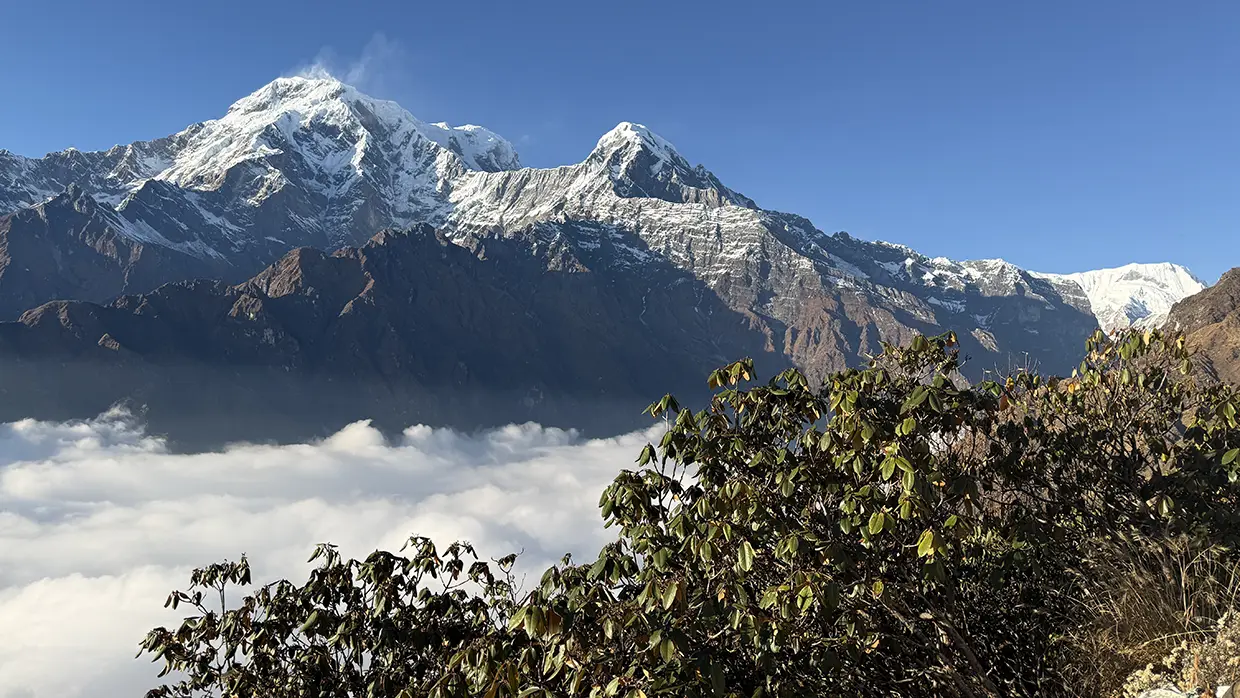
Autumn ranks as the best hiking season in Nepal for most travelers. September, October, and November offer clear skies, dry trails, strong mountain views, and comfortable daytime walking temperatures. October gives the best overall balance. November suits photographers. Late September is a good time for travelers who want green trails and fewer crowds.
| Factor | Autumn Hiking in Nepal |
|---|---|
| Season | September to November |
| Best month | October |
| Best for | Clear views, dry trails, high passes, photography |
| Crowd level | High in October and early November |
| Weather | Stable and mostly dry after the monsoon |
| Best routes | Everest, Annapurna, Langtang, Manaslu, Mardi Himal, Gokyo |
| Main challenge | Peak-season crowds and advance booking |
| Booking window | 3 to 6 months ahead for popular routes |
Why Autumn Ranks as the Best Season for Hiking in Nepal
Autumn starts after the monsoon. Weeks of rain wash dust and haze from the air. Mountain views become sharper than in any other season. Trails are dry as September transitions into October. Days feel comfortable at mid-altitude elevations between 2,000 and 3,500 meters. High-pass routes become more reliable than during the monsoon or winter. Thorong La, Larke Pass, and the Everest region passes open with better snow conditions. Domestic flights to Lukla and Jomsom run on tighter schedules to meet high demand.
Nights grow cold above 3,000 meters, especially in November. Temperature drops about 6 degrees Celsius for every 1,000 meters of elevation gain. A warm valley afternoon turns into a cold mountain evening. Pack layers for the full range. Cultural festivals add depth to autumn treks. Dashain and Tihar bring family gatherings, lights, and rituals across Nepal. Mani Rimdu at Tengboche Monastery adds a Buddhist cultural layer to the Everest region trek.
Why hike in Nepal in autumn?
Autumn offers the clearest skies, driest trails, the strongest mountain views, and the widest route access of any season. Post-monsoon air creates sharp visibility across Everest, Annapurna, Langtang, and Manaslu.
Autumn Hiking in Nepal by Month
Hiking in Nepal in September
September bridges the monsoon and autumn seasons. Early September still brings rain and clouds to many regions. Mid to late September improves steadily. Trails look green and fresh from monsoon moisture. Lower forest trails may feel damp in early September. High passes need current trail condition checks. Crowds are lower than in October, and teahouse availability feels easier to come by.
Best September treks: Poon Hill, Mardi Himal, Langtang Valley, Annapurna Base Camp, Lower Mustang, and short hikes near Kathmandu and Pokhara.
Choose September if you want fewer crowds, greener scenery, and lower peak-season pressure. Pick late September over early September if clear views matter most.
Good for hiking in September?
September works well from mid- to late-month. Early September may still bring rain, but trails become greener, and mountain views improve as the monsoon clears.
Hiking in Nepal in October
October ranks as Nepal’s peak trekking month. The weather stays stable across most regions. Mountain views appear clear and sharp after the monsoon. Trails dry out and become fully active. Daytime temperatures feel comfortable at mid-altitude. Popular teahouses fill fast on Everest, Annapurna, and Manaslu routes. Lukla flights and key domestic services face high demand. Book guides, porters, lodges, and flights early.
Best October treks: Everest Base Camp, Annapurna Base Camp, Annapurna Circuit, Manaslu Circuit, Langtang Valley, Mardi Himal, Gokyo Lakes, Poon Hill, and Kanchenjunga Base Camp.
Best month for autumn hiking?
October ranks as the best month for autumn hiking in Nepal. Stable weather, clear skies, dry trails, and excellent mountain views make it the top choice.
Hiking in Nepal in November
November stays dry and clear across most trekking regions. Mountain views remain excellent, and the light turns sharp and golden—ideal for photography. Temperatures drop, especially at night, above 3,000 meters. Crowds thin after mid-November. Late November may bring early snow on some high passes. Hikers heading above 5,000 meters need stronger cold-weather gear and updated pass condition reports.
Best November treks: Everest Base Camp, Gokyo Lakes, Annapurna Base Camp, Langtang Valley, Mardi Himal, Poon Hill, Lower Mustang, and Manaslu Circuit (with pass condition checks).
Choose November if you want clear views, colder but crisp conditions, and fewer crowds than October. Carry extra warm layers for high-altitude routes.
Good for hiking in November?
November offers dry trails, sharp mountain views, and fewer crowds later in the month. Nights above 3,000 meters can get cold, so pack warm layers.
Autumn Hiking Weather in Nepal
Autumn weather changes sharply with altitude. A warm valley morning feels completely different from a cold high-altitude evening. Pack for the full range—not just one condition.
| Elevation Zone | Daytime Feel | Nighttime Feel | Autumn Notes |
|---|---|---|---|
| 1,000–2,000 m | Mild to warm | Cool | Good for short hikes and city stays |
| 2,000–3,500 m | Comfortable | Cold at night | Ideal for most teahouse routes |
| 3,500–5,000 m | Cool to cold | Very cold | Needs a down jacket and warm sleeping gear |
| Above 5,000 m | Cold | Freezing | High passes need weather checks |
Start walking early each morning. Autumn skies often look clearest before noon. Afternoon clouds build at lower elevations, especially in September and early October. Mountain views improve with early starts.
Autumn weather for hiking?
Autumn weather brings dry trails, clear mornings, and comfortable walking conditions. High-altitude nights become cold, especially in November. Layered clothing works best.
Best Autumn Treks in Nepal
Everest Base Camp Trek in Autumn
Duration: 12 to 14 days | Max altitude: 5,364 m | Best months: October and November
Everest Base Camp ranks as the most popular autumn trek in Nepal. The route passes through Lukla, Namche Bazaar, Tengboche, Dingboche, Lobuche, and Gorak Shep. Clear post-monsoon skies make Everest, Lhotse, Nuptse, and Ama Dablam look sharp and close.
Sherpa culture, Tengboche Monastery, and the possibility of seeing Mani Rimdu (a Buddhist festival linked with the lunar calendar) add depth to the trek. Lukla flights need buffer days—weather delays happen even in peak season.
Annapurna Base Camp Trek in Autumn
Duration: 7 to 12 days | Max altitude: 4,130 m | Best months: October and November
The Annapurna Base Camp trail leads into a dramatic natural amphitheater surrounded by Annapurna peaks, Machhapuchhre, and Hiunchuli. Autumn clears the monsoon moisture and opens sharp views inside the sanctuary.
Lower trail sections stay green after the monsoon. The route suits moderate hikers and works well for heli-return packages that save descent days. October and November both deliver strong conditions.
Annapurna Circuit Trek in Autumn
Duration: 12 to 18 days | Max altitude: 5,416 m (Thorong La Pass) | Best month: October
The Annapurna Circuit crosses green valleys, mid-hill villages, high desert terrain, and the Thorong La Pass at 5,416 meters. Autumn gives the most reliable weather for the pass crossing. October works best. Early November still works, but needs colder-weather preparation. The route covers diverse terrain—from lush forest near Chame to dry Mustang-like ground near Muktinath. Long-distance trekkers rank the Circuit among Nepal’s classic routes for good reason.
Manaslu Circuit Trek in Autumn
Duration: 14 to 18 days | Max altitude: 5,106 m (Larke Pass) | Best month: October
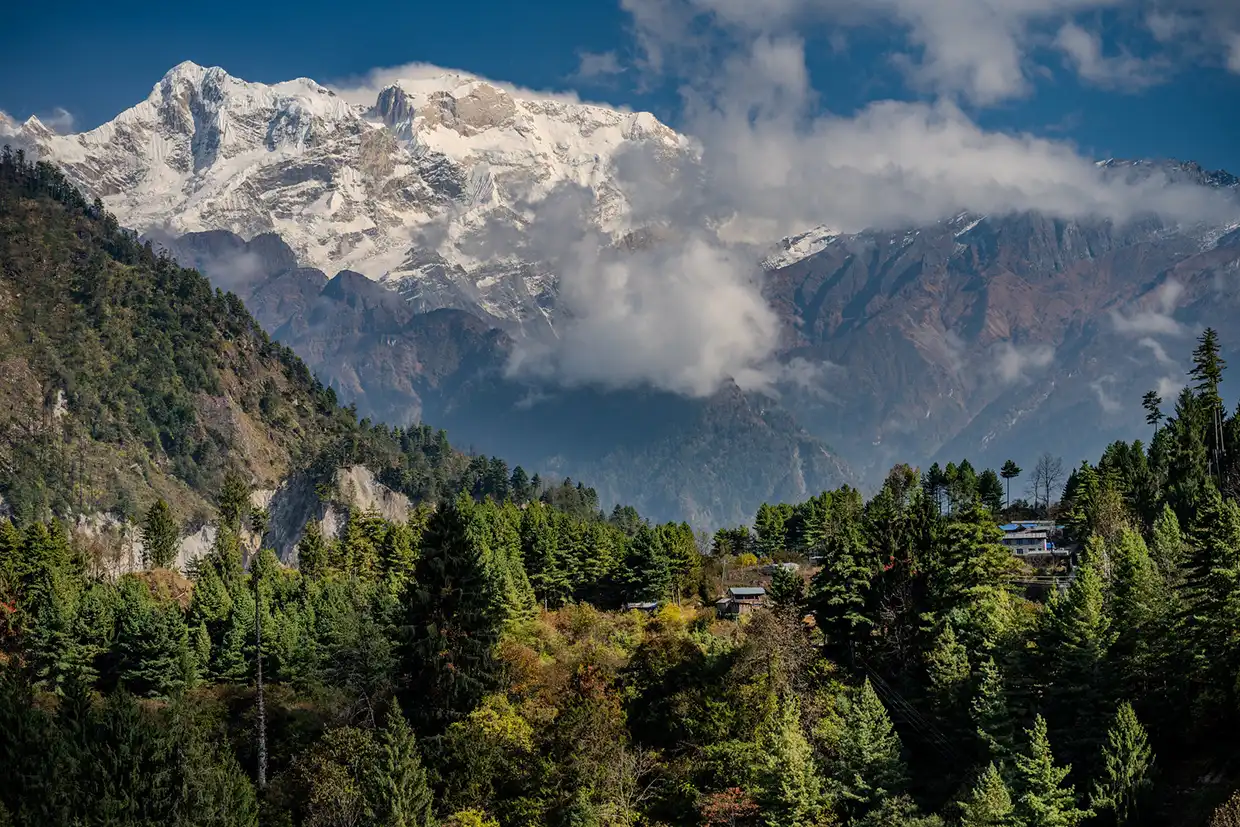
Manaslu offers a remote alternative to the Annapurna Circuit. The trail passes through Soti Khola, Jagat, Namrung, Samagaon, Samdo, and crosses Larke Pass before descending to Bimthang. Autumn gives better conditions for the high pass. Fewer trekkers visit Manaslu compared to Everest or Annapurna. The route requires a restricted-area permit, conservation permits, and a licensed guide. It suits experienced hikers who want mountain culture and a challenging high pass.
Gokyo Lakes and Gokyo Ri Trek in Autumn
Duration: 12 to 15 days | Max altitude: ~5,357 m (Gokyo Ri) | Best months: October and November
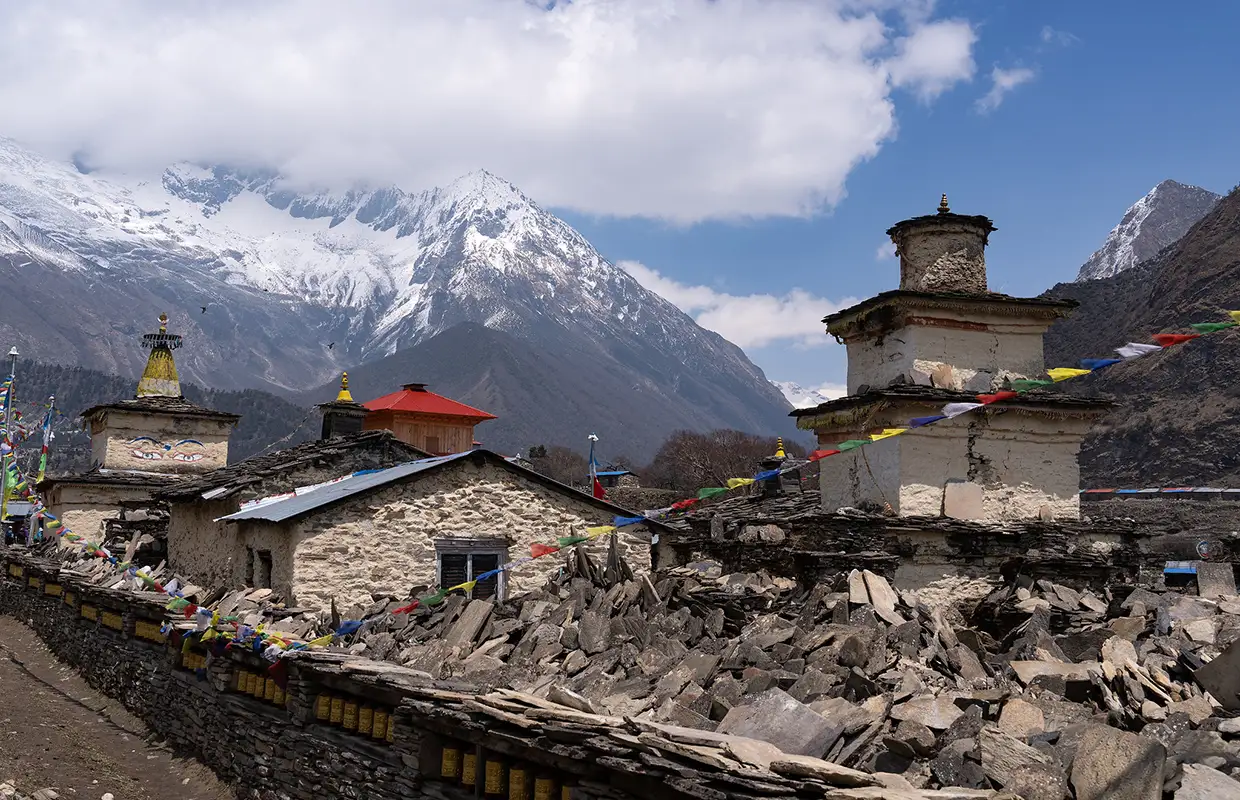
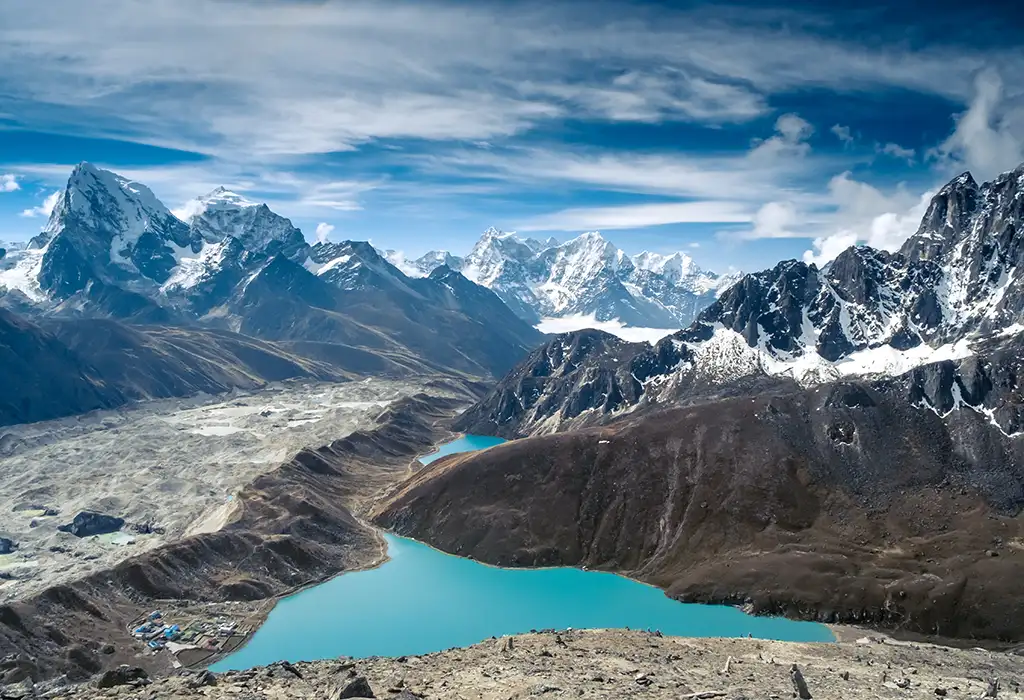
The Gokyo Lakes route runs through the Everest region but avoids the main crowds on the EBC trail. Turquoise alpine lakes sit at the base of Ngozumpa Glacier. The climb to Gokyo Ri gives panoramic views of Everest, Cho Oyu, Lhotse, and Makalu. Autumn clears the air and fills the lakes with vivid reflected color. Photographers rank Gokyo among the best viewpoints in Nepal. The route works well for repeat Everest visitors who want a different angle.
Langtang Valley Trek in Autumn
Duration: 7 to 10 days | Max altitude: ~3,870 m (Kyanjin Gompa) | Best months: October and November
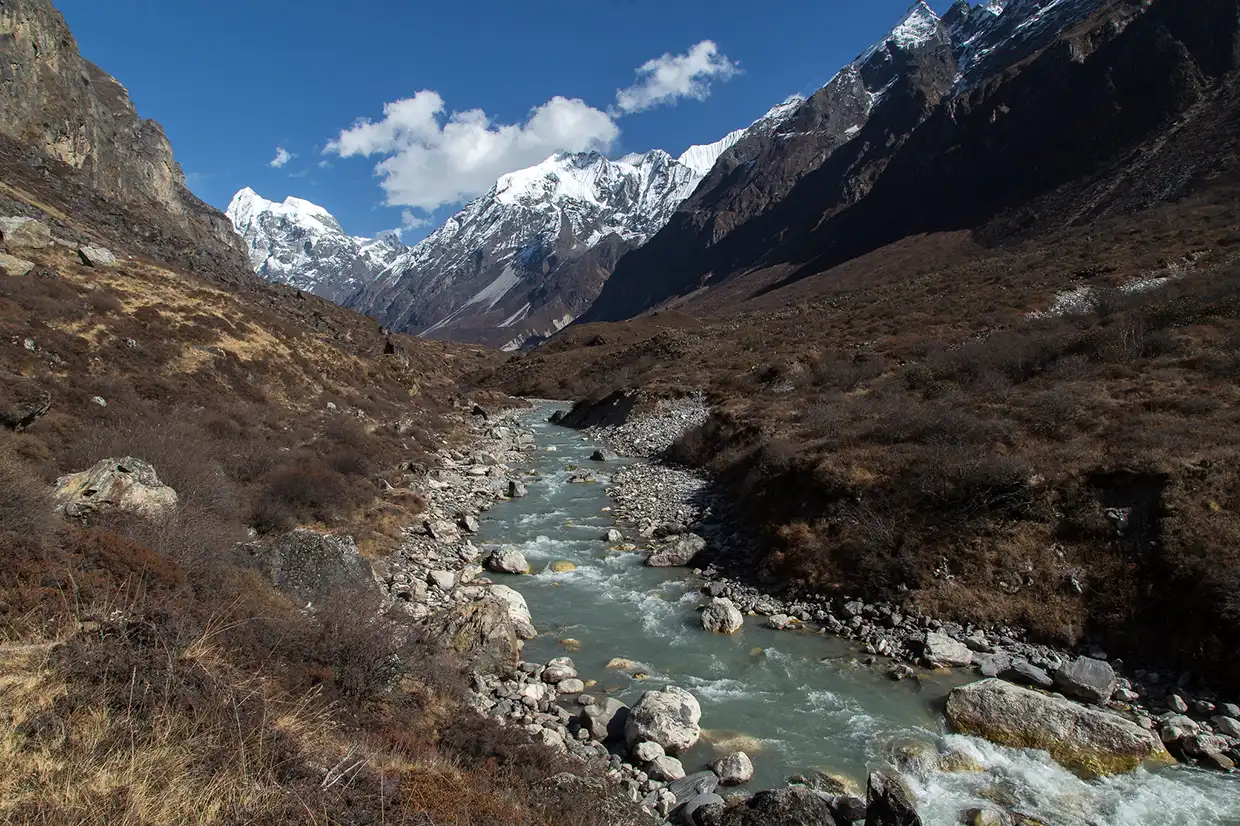
Langtang sits closer to Kathmandu than Everest or Annapurna. The trail runs through forests, passes Langtang Village, and reaches Kyanjin Gompa. Optional side hikes to Kyanjin Ri or Tserko Ri add higher viewpoints. Tamang culture adds warmth to the trek. No mountain flight needed—the route starts by road from Kathmandu. Langtang suits travelers with limited time who want a real Himalayan experience without Lukla flight logistics.
Mardi Himal Trek in Autumn
Duration: 5 to 7 days | Max altitude: ~4,500 m | Best months: October and November
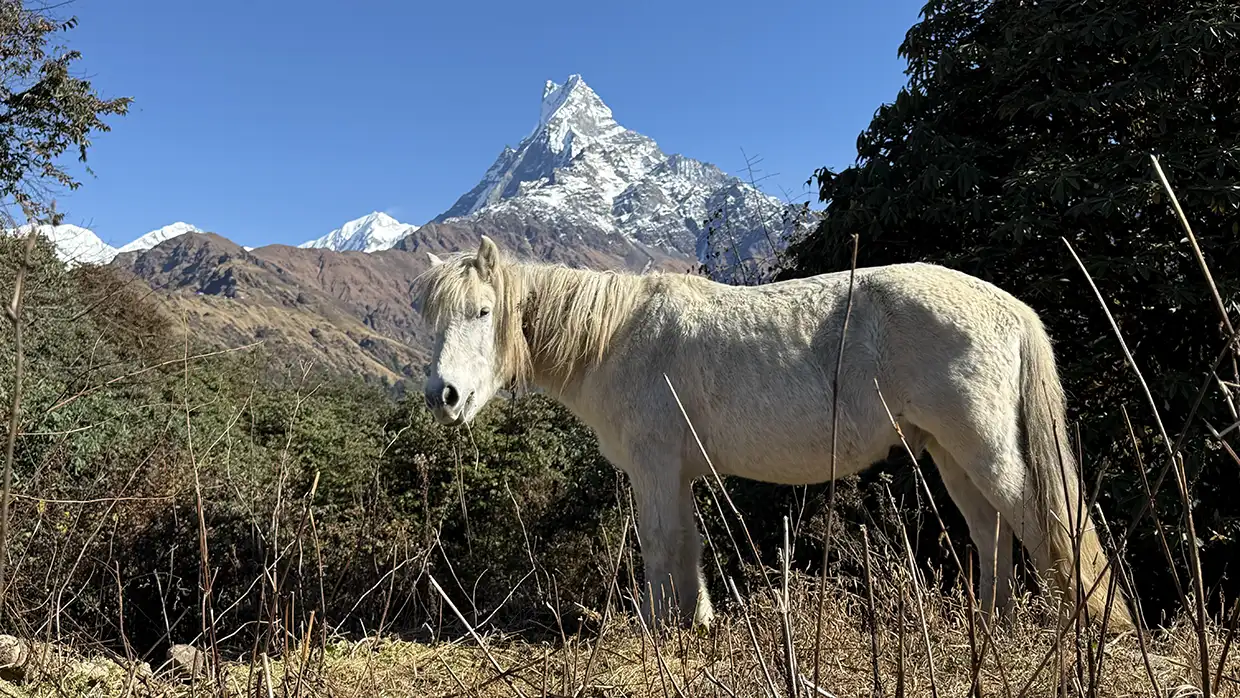
Mardi Himal offers close-up views of Machhapuchhre, ridge walking, and a compact itinerary starting in Pokhara. The route stays quieter than Annapurna Base Camp. Autumn gives clear views of the Annapurna range from the ridge sections. The trek suits fit hikers and photographers who want strong mountain scenery in fewer days.
Ghorepani Poon Hill Trek in Autumn
Duration: 4 to 5 days | Max altitude: 3,210 m | Best months: October and November
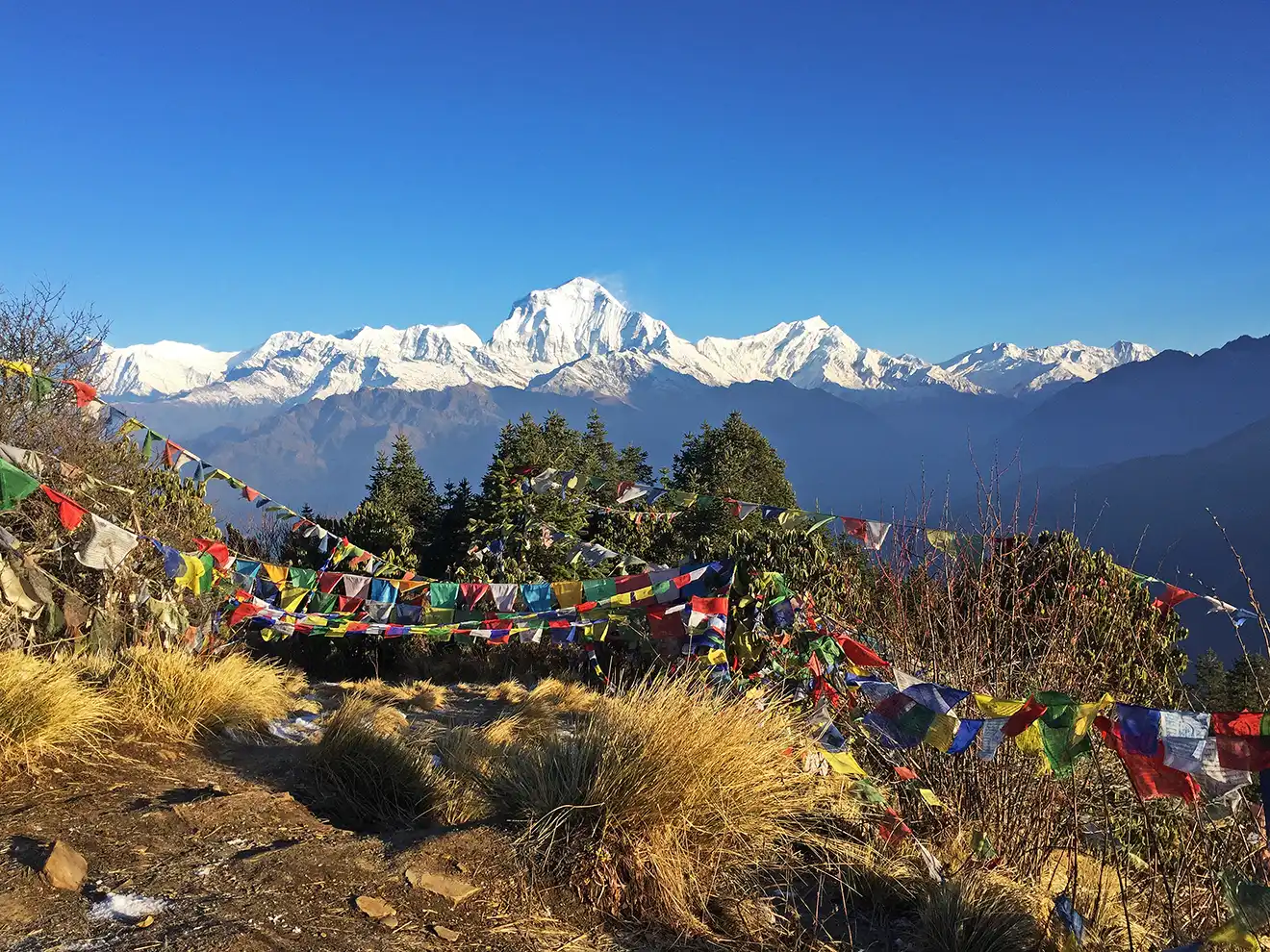
Poon Hill ranks among Nepal’s best short autumn hikes. The sunrise viewpoint delivers wide views of Annapurna South, Dhaulagiri, Machhapuchhre, and surrounding peaks. The lower altitude keeps the trail accessible for beginners and families. Autumn gives clearer sunrise conditions than most other seasons. The route starts and finishes near Pokhara with easy logistics.
Best Autumn Treks: Quick Comparison
| Trek | Duration | Max Altitude | Difficulty | Best Month | Best For |
|---|---|---|---|---|---|
| Poon Hill | 4–5 days | 3,210 m | Easy–Moderate | Oct, Nov | Beginners, families |
| Mardi Himal | 5–7 days | ~4,500 m | Moderate | Oct, Nov | Short scenic trek |
| Langtang Valley | 7–10 days | ~3,870 m | Moderate | Oct, Nov | Culture, shorter trek |
| Annapurna BC | 7–12 days | 4,130 m | Moderate | Oct, Nov | Annapurna Sanctuary |
| Everest BC | 12–14 days | 5,364 m | Challenging | Oct, Nov | Classic Everest trek |
| Gokyo Lakes | 12–15 days | ~5,357 m | Challenging | Oct, Nov | Lakes, photography |
| Annapurna Circuit | 12–18 days | 5,416 m | Challenging | October | High-pass trekking |
| Manaslu Circuit | 14–18 days | 5,106 m | Challenging | October | Remote, high pass |
Autumn Festivals and Cultural Experiences
Dashain During Autumn Hiking
Dashain ranks as Nepal’s biggest Hindu festival. Families gather for blessings, meals, and rituals across the country. Transport demand rises during Dashain. Some teahouse staff and lodge owners travel home for celebrations.
Travelers should book early and stay flexible during Dashain weeks. Trekking routes stay open, but some services may slow down. The festival follows a lunar calendar, so dates shift each year.
Tihar During Autumn Hiking
Tihar celebrates lights, color, and family. Houses, hotels, and streets shine with oil lamps and decorations. Urban areas like Kathmandu and Pokhara feel warm and festive during Tihar. Trekkers passing through villages sometimes see local celebrations on the trail.
Mani Rimdu in the Everest Region
Mani Rimdu ranks as one of the most important Buddhist festivals in the Khumbu region. Monks perform ritual dances at Tengboche Monastery. The festival follows a lunar calendar—dates change each year. Trekkers heading to Everest Base Camp in late October or November sometimes witness the Mani Rimdu festival. Check dates before planning if the festival is part of your itinerary.
Autumn vs. Spring Hiking in Nepal
Nepal’s two peak seasons each offer different strengths. The right choice depends on your priorities.
| Factor | Autumn (Sep–Nov) | Spring (Mar–May) |
|---|---|---|
| Best month | October | April |
| Mountain views | Clearer after the monsoon | Good, sometimes hazy |
| Flowers | Less floral color | Rhododendrons bloom |
| Weather | Dry and crisp | Warmer, slightly humid later |
| Crowds | Peak in October | High in April |
| Photography | Excellent | Good, especially with flowers |
| Best for | Clear views, first-time hikers | Flowers and warmer days |
Choose autumn for the clearest mountain views and the most stable trail conditions. Choose spring if you want warmer weather and blooming rhododendron forests.
Autumn Hiking: Advantages and Challenges
| Advantages | Challenges |
|---|---|
| Clear mountain views | Busy trails in October |
| Dry and stable weather | Teahouses fill quickly on popular routes |
| Good high-pass conditions | Higher demand for guides and porters |
| Strong photography conditions | Flights sell out early |
| Cultural festivals add depth | Festival travel affects logistics |
| Wide route choice | Cold nights in November |
What to Pack for Autumn Hiking in Nepal
Clothing
- Moisture-wicking base layers
- Fleece jacket
- Light down jacket
- Waterproof and windproof shell
- Trekking pants
- Warm hat and sun hat
- Light gloves and warm gloves for high routes
- Buff or neck warmer
Footwear
- Broken-in trekking boots
- Warm trekking socks (3–4 pairs)
- Camp shoes or sandals for evenings
Gear
- Daypack
- Trekking poles
- Headlamp with spare batteries
- Sunglasses with UV protection
- Power bank (20,000 mAh minimum)
- Reusable water bottle
- Water purification tablets or a filter
- Dry bag for electronics
- Sleeping bag for high-altitude routes
Health and Comfort
- Sunscreen (SPF 50+) and lip balm
- Personal medicine
- Blister care kit
- Electrolytes
- Hand sanitizer
- Small first-aid kit
Autumn mornings and nights feel cold at altitude. Pack layers you add and remove throughout the day. A warm evening layer matters more than a single heavy jacket.
Autumn Hiking Safety Tips
- Book flights, guides, and lodges early for October trips
- Add buffer days for Lukla flights and weather delays
- Start walking early each morning for clearer views
- Drink at least 3 to 4 liters of water per day at altitude
- Acclimatize properly above 3,000 meters—do not rush
- Gain no more than 300 to 500 meters of sleeping altitude per day above 2,500 m
- Carry insurance covering trekking altitude and emergency helicopter evacuation
- Check the weather before crossing Thorong La Pass, Larke Pass, Cho La, Renjo La, or Kongma La
- Hire a licensed guide on remote or restricted routes
- Watch for headache, nausea, dizziness, and unusual fatigue—descend if symptoms worsen
Altitude safety in autumn?
Autumn offers Nepal’s most reliable trekking conditions, but altitude sickness still affects hikers. Follow a steady pace, acclimatize well, and never rush high-altitude sections.
Permits and Guide Rules for Autumn Hiking
Many protected trekking areas require a licensed guide and agency-issued TIMS card. Permit requirements depend on the route and conservation area.
| Route | Common Permit Needs |
|---|---|
| Annapurna routes | ACAP and applicable local permits |
| Everest routes | Sagarmatha National Park permit and local permits |
| Langtang routes | Langtang National Park permit |
| Manaslu Circuit | Restricted-area permit, MCAP, ACAP, licensed guide required |
| Upper Mustang | Restricted-area permit and ACAP |
Permit rules change periodically. Confirm current requirements before booking. Recent reports suggest Nepal eased certain solo trekker restrictions in restricted areas, but guide-based controls remain in place. Verify updated rules through your trekking operator.
How Early Should You Book an Autumn Trek?
October and early November are Nepal’s peak trekking season. Guides, porters, teahouses, and flights fill fast on popular routes. Early booking prevents last-minute problems.
| Route Type | Recommended Booking Time |
|---|---|
| Everest Base Camp | 4 to 6 months ahead |
| Manaslu Circuit | 4 to 6 months ahead |
| Annapurna Circuit | 3 to 5 months ahead |
| Annapurna Base Camp | 2 to 4 months ahead |
| Langtang Valley | 1 to 3 months ahead |
| Poon Hill and short hikes | 1 to 2 months ahead |
| Luxury treks or heli-return trips | 4 to 6 months ahead |
Festival travel during Dashain and Tihar increases domestic transport demand. Premium hotels in Kathmandu and Pokhara also fill during peak autumn weeks.
Best Autumn Hikes by Traveler Type
| Traveler Type | Best Autumn Routes | Best Month |
|---|---|---|
| First-time hikers | Poon Hill, Mardi Himal, Langtang Valley | October |
| Families | Poon Hill, Australian Camp, Kathmandu Valley hikes | Oct, Nov |
| Photographers | Gokyo, Poon Hill, EBC, ABC, Langtang | Oct, Nov |
| Luxury travelers | EBC luxury trek, ABC heli return, Pokhara hikes | Oct, Nov |
| High-pass trekkers | Manaslu, Annapurna Circuit, Three Passes | October |
| Culture lovers | Langtang, Manaslu, Everest villages, Mustang | Oct, Nov |
| Short-time travelers | Poon Hill, Mardi Himal, Nagarkot, Dhulikhel | Oct, Nov |
| Budget travelers | Late September or late November | Shoulder edges |
Best Short Autumn Hikes in Nepal
Short autumn hikes suit travelers without time for Everest or Manaslu. Nepal offers strong options near both Pokhara and Kathmandu.
Short Autumn Hikes from Pokhara
- Ghorepani Poon Hill Trek (4–5 days)
- Mardi Himal Trek (5–7 days)
- Australian Camp hike (1–2 days)
- Sarangkot sunrise hike (half day)
- Ghandruk village hike (2–3 days)
- Khopra Danda Trek (5–7 days)
- Sikles Trek (3–4 days)
Short Autumn Hikes from Kathmandu
- Chisapani–Nagarkot hike (2–3 days)
- Nagarkot to Changunarayan hike (half day)
- Dhulikhel to Namobuddha hike (1 day)
- Shivapuri day hike (1 day)
- Helambu Trek (5–7 days)
- Langtang Valley Trek (7–10 days)
Sustainability Tips for Autumn Hiking
- Carry a refillable water bottle and use purification instead of plastic bottles
- Take batteries, wrappers, and waste back to the city
- Respect local festival rituals—ask before photographing people or ceremonies
- Support local teahouses and buy food from trail lodges
- Avoid wasteful hot showers where fuel sources remain limited
- Stay on marked trails to reduce erosion
- Tip guides and porters fairly—they make the trek possible.
FAQs About Autumn Hiking in Nepal
Q: Does autumn rank as the best hiking season in Nepal?
A: Yes, autumn ranks as the best hiking season for most travelers. September, October, and November offer clear skies, dry trails, strong mountain views, and wide route access. October gives the best overall balance.
Q: Which month works best for autumn hiking?
A: October works best for autumn hiking in Nepal. Stable weather, clear mountain views, dry trails, and good conditions across Everest, Annapurna, Langtang, Manaslu, and other major routes make October the top pick.
Q: Does September work for trekking in Nepal?
A: September works well from mid to late month. Early September may still bring rain and muddy trails. Late September gives greener scenery, fewer crowds, and improving mountain views as the monsoon clears.
Q: Does November stay good for hiking?
A: November stays excellent for hiking. Clear skies and dry trails continue through the month. Nights become colder at high altitude. Late November may bring early snow on some high passes. Pack warmer layers.
Q: Which autumn treks rank highest in Nepal?
A: Everest Base Camp, Annapurna Base Camp, Annapurna Circuit, Manaslu Circuit, Langtang Valley, Gokyo Lakes, Mardi Himal, and Poon Hill all rank among the best autumn treks in Nepal.
Q: Does October feel too crowded for trekking?
A: October brings crowds to popular trails such as Everest Base Camp, Annapurna Base Camp, Poon Hill, and Manaslu. Book early, start walking early each day, or choose quieter routes such as Khopra Danda, Gokyo Lakes, or Langtang Valley.
Q: Do hikers see Everest clearly in autumn?
A: Autumn offers some of the clearest views of Everest, especially in October and November. Post-monsoon conditions create better visibility than most other months. Weather still shifts, so clear views never come with a guarantee.
Q: What goes in an autumn trekking pack?
A: Pack layered clothing, a fleece jacket, a down jacket, a waterproof shell, trekking boots, warm socks, gloves, a sun hat, sunglasses, sunscreen, a headlamp, a water bottle, and a sleeping bag for high-altitude routes.
Q: Do hikers need a guide in autumn?
A: Many protected trekking areas require a licensed guide and agency-issued TIMS card. Restricted areas need special permits. Confirm the latest rules before booking. A guide helps with pace, altitude safety, permits, and logistics.
Q: Do teahouses stay open during Dashain and Tihar?
A: Many teahouses stay open on major trekking routes during festivals. Some staff or owners travel home for celebrations. Book through a reliable operator and confirm food and lodging arrangements before your trek.
Plan Your Autumn Hike in Nepal
Autumn hiking in Nepal suits travelers who want clear skies, dry trails, strong mountain views, and the widest choice of trekking routes. October gives the best overall conditions. Late September offers greener trails and fewer crowds. November brings crisp views but colder nights.
Choose your route based on time, fitness, altitude comfort, and travel style. Book early for October trips—guides, flights, and teahouses fill fast during peak season. Pack layers for changing temperatures from valley trails to high mountain villages.
Planning an autumn trek? Choose your route early, confirm permits, book your guide and flights in advance, and add buffer days for weather. A well-planned autumn trip delivers Nepal’s finest mountain experience.