


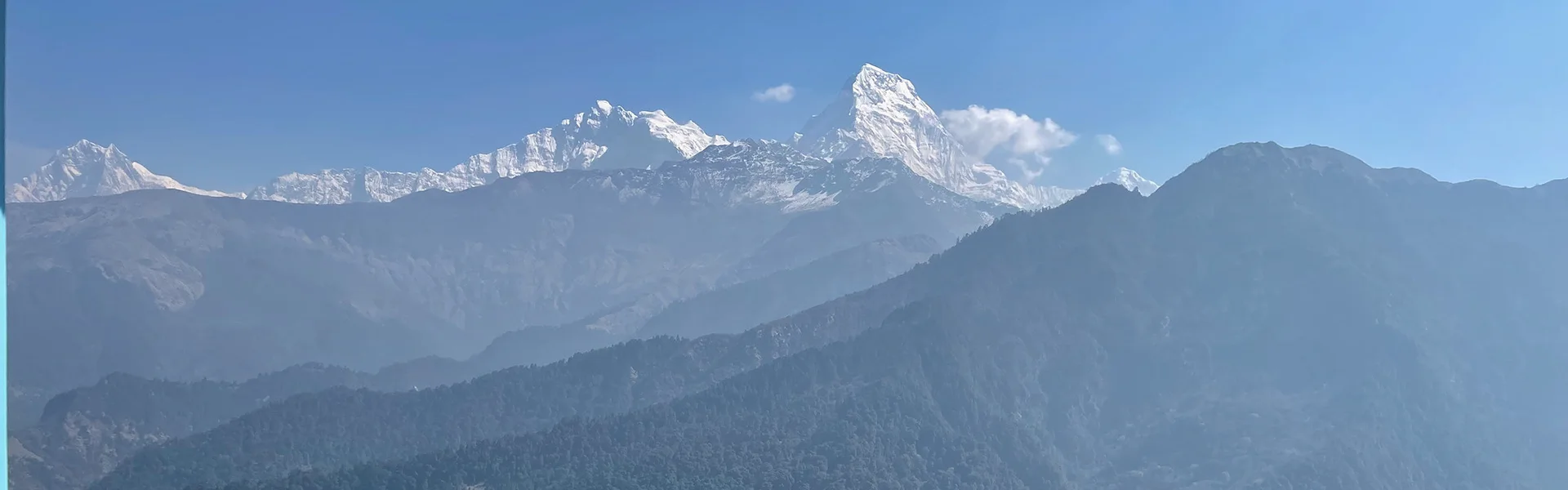

Nepal offers trekking year-round, but the best time to hike depends strongly on your chosen route, altitude, and travel style. For most classic trails, spring and autumn deliver the most reliable conditions. Other seasons work well for specific regions and trail types. The same trail feels completely different in October versus July. Snow, rain, mud, heat, and visibility all shift across the four seasons. Low-altitude valley hikes near Kathmandu follow a different calendar from high-altitude passes on the Everest or Manaslu circuits. Use this guide to match your hiking dates to the right region, route, and trail type.
Quick Answer: What Is the Best Time for Hiking in Nepal?
- Best overall seasons: Spring (March to May) and Autumn (September to November).
- Best for clear mountain views: October and November, right after the monsoon clears.
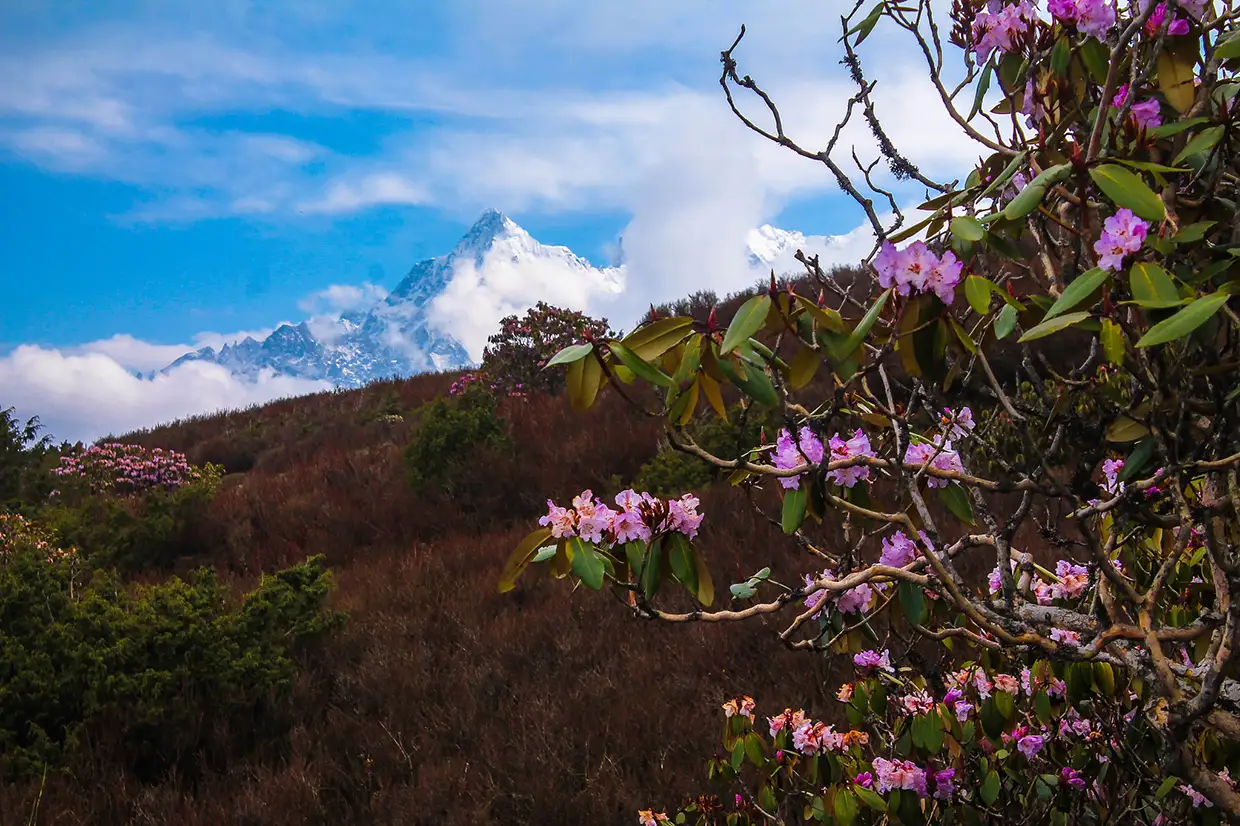
- Best for rhododendrons and flowers: March to mid-April between 2,000m and 3,500m.
- Best for monsoon hiking: Rain-shadow areas like Upper Mustang and Manang (June to August).
- Best for quiet, lower-altitude hikes: December to February for Kathmandu Valley and lower hill routes.
- Worst season for most classic trails: June to August (heavy rain, leeches, cloud cover).
Why Timing Matters So Much in Nepal?
Nepal’s altitude range runs from under 100 meters in the Terai to 8,849 meters at Everest’s summit. Weather conditions change dramatically across that range. A warm October morning at 1,400 meters in Pokhara means something very different at 5,000 meters on the Three Passes route. Visibility directly affects the trekking experience. Clear skies in October reveal sharp mountain profiles. Monsoon cloud cover hides the same peaks for weeks at a time.
Snow on high passes can close routes entirely in winter or after unexpected late-season storms. Domestic flight delays to mountain airstrips like Lukla compound every weather challenge. Private Nepal tour benefits help here. A good operator monitors trail and weather conditions, adjusts acclimatization days, and knows when a specific route faces seasonal risk. Premium vs budget Nepal tour planning both benefit from a guide who understands how the season affects your specific itinerary.
Nepal Hiking Seasons at a Glance
| Season | Months | Visibility | Trail Condition | Crowd Level | Best For | Best Regions | Main Drawback |
|---|---|---|---|---|---|---|---|
| Spring | Mar-May | Good to excellent | Dry and clear | High (April peak) | Flowers, mountain views, and most trails | Everest, Annapurna, Langtang | Some haze in May, crowded April |
| Monsoon | Jun-Aug | Poor on most trails | Wet, muddy, leeches | Low | Rain-shadow treks only | Upper Mustang, Manang, Dolpo | Rain, landslides, clouds on most routes |
| Autumn | Sep-Nov | Excellent | Dry and firm | Very high (Oct-Nov) | All classic trails, best visibility | All major regions | Very crowded in October |
| Winter | Dec-Feb | Clear and crisp | Cold, snow at altitude | Low | Short low-altitude hikes | Kathmandu Valley, Pokhara foothills | High-pass routes closed or dangerous |
Best Time for Hiking in Nepal by Season
Spring Hiking in Nepal: March to May
Spring ranks among the two best seasons for hiking in Nepal. Temperatures rise after the cold winter months, skies stay mostly clear, and the forest below 3,500m bursts with rhododendron flowers from mid-March through April. Nepal Tourism Board highlights the rhododendron bloom as one of spring’s strongest seasonal features. March and April give the clearest conditions on most trails. Annapurna, Everest, and Langtang all perform well. May remains good at high altitude, but afternoon haze increases as the pre-monsoon moisture builds. Mornings stay clear in May, offering strong mountain views before clouds build.
- Best spring months: March and April.
- Best for: Flowers and forest color, strong mountain views, and most classic trails.
- Crowd level: High in April. March and May are slightly quieter.
- Main risk: Late spring storms can bring short-duration snowfall above 4,000m. Afternoon haze reduces visibility on some days in May.
Autumn Hiking in Nepal: September to November
Autumn gives the best overall conditions for hiking in Nepal. The monsoon ends in mid-September, leaving the air completely washed and clear. Nepal Tourism Board confirms that the best mountain views are after the monsoon, in October and November. Blue skies, stable temperatures, and firm, dry trails make every major Nepal hiking route perform at its best.
October and November attract the highest trail volumes of any season. Booking lodges, guides, and domestic flights in advance is essential for popular routes like Everest Base Camp and Annapurna Base Camp. September and early November offer the same clear conditions with noticeably fewer trekkers.
- Best autumn months: October (maximum clarity) and early November.
- Good alternatives: Late September (less crowd, still clear) and mid-November (quiet, still accessible).
- Best for: All classic trails, first-time visitors, photographers, and families.
- Main drawback: Very crowded on popular routes in October.
Winter Hiking in Nepal: December to February
Winter brings cold temperatures and shorter daylight hours, but also some of the clearest skies of the year. Low-altitude hikes near Kathmandu and in the Pokhara foothills stay accessible and pleasant. High passes above 4,500m collect heavy snow and become dangerous or fully closed.
Trails below 3,200m stay manageable through most of winter. Ghorepani Poon Hill works in December and January with proper layers. The lower sections of Langtang Valley remain open. Everest Base Camp and Annapurna Base Camp remain technically possible but cold and uncomfortable, especially at night.
- Best winter months: December for early-winter clarity, and February for warming conditions.
- Best for: Lower-altitude day hikes, quiet tea-house treks, budget travelers.
- Best winter routes: Poon Hill, lower Annapurna foothills, Kathmandu Valley hikes, and Dhampus.
- Main drawback: High passes on Manaslu, Kanchenjunga, and the Three Passes routes close or become risky.
Monsoon Hiking in Nepal: June to August
Monsoon season brings heavy daily rain to most Nepal trekking regions from June through August. Cloud cover reduces mountain views. Trails turn muddy and slippery. Leeches appear on forest paths below 2,500m. Landslides disrupt road access to several trailheads. Classic trails such as Everest Base Camp, Annapurna Base Camp, and Langtang Valley are subject to reduced conditions during this period. Most first-time trekkers should avoid standard tea-house routes during the full monsoon.
- Exception 1: Upper Mustang sits in a Himalayan rain shadow. June to August stays dry. The walled city of Lo Manthang and the desert canyon trails are well-suited to monsoon months.
- Exception 2: Manang and parts of the upper Annapurna Circuit also sit in the rain shadow. Some sections stay drier than the main Annapurna trails.
- Exception 3: Upper Dolpo and certain western Nepal routes also stay more accessible during the monsoon for experienced trekkers with full camping support.
- Best for: Experienced trekkers on rain-shadow routes only. Not suitable for most beginners on classic routes.
Best Time for Hiking in Nepal by Region
Everest Region
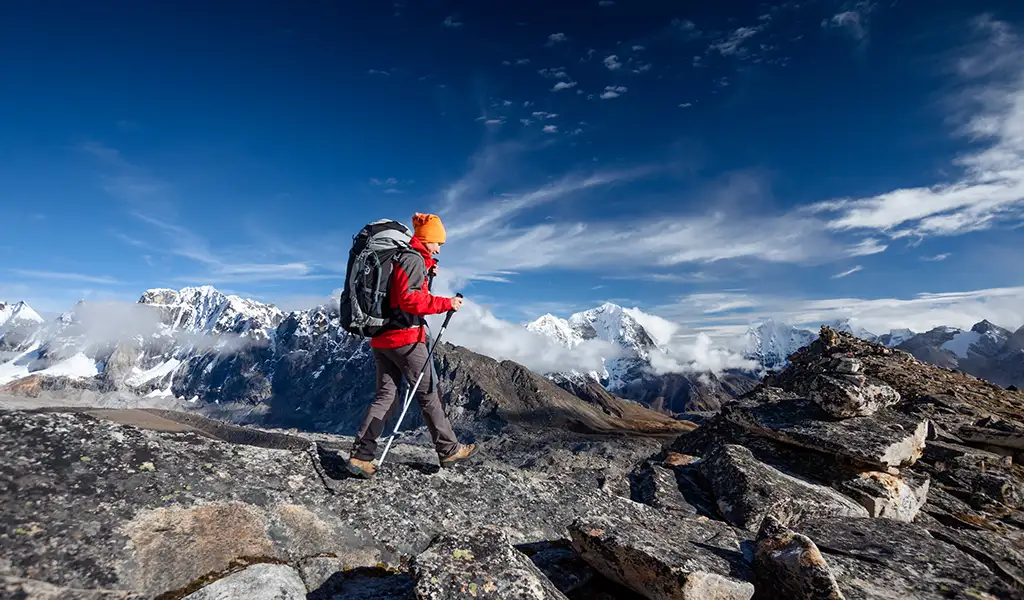
The Everest region performs best in spring and autumn. October and November give the clearest glacier views, the sharpest Ama Dablam profile, and the driest trail conditions on the approach to Everest Base Camp. April offers favorable conditions with the rhododendron forest along the lower Phakding to Namche section.
- Best months: October, November, April, March.
- Avoid: June to August (cloud, wet trails, flight delays at Lukla).
- Winter note: January and February are suitable for Everest Base Camp, but temperatures drop below -15 °C at the high camps.
- Crowd level: Very high in October. April and November are slightly less crowded.
Annapurna Region
Annapurna region trails span a huge altitude range from 800m at the Modi Khola valley floor to 5,416m at Thorong La Pass. This range means different parts of the region work in different seasons. The southern slopes of the Annapurna range facing Pokhara receive heavy monsoon rain. The northern Manang side sits in a rain shadow.
- Best months overall: October, November, April, March.
- Monsoon option: Upper Annapurna Circuit above Manang (rain-shadow effect).
- Short hikes near Pokhara (Dhampus, Australian Camp): Work October to May. Avoid June-August for the clouds.
- Annapurna Base Camp: Best in April and October. Avoid January-February for cold nights.
Langtang Region
Langtang Valley sits north of Kathmandu at a moderate altitude. The region is well-suited to spring and autumn. The closed road access from Kathmandu makes it one of the most convenient trekking regions. The Tamang Heritage Trail adds a cultural layer that pairs well with the spring flower season.
- Best months: October, November, March, April.
- Avoid: June to August (heavy rain, landslide risk on access roads).
- Winter note: The lower sections of Langtang Valley remain open in December and January. The Gosaikunda Pass closes with snow.
Kathmandu Valley Short Hikes
Kathmandu Valley hikes operate year-round with the most consistent conditions. Nepal Tourism Board notes that there are over 50 hiking trails in Kathmandu Valley alone. Shivapuri, Champadevi, Nagarkot, and Pulchowki all work from October through May. The monsoon months reduce views, but do not close these trails.
- Best months: October to April for clear views and comfortable walking.
- Accessible year-round: Most valley hikes stay open even in the monsoon. Expect cloud and reduced mountain visibility from June to August.
- Winter: December and January give clear mornings and crisp air. Good for short day hikes.
Upper Mustang and Manang
Upper Mustang and Manang both sit north of the main Himalayan rain barrier. These areas receive less than 300mm of annual rainfall and stay dry while the rest of Nepal floods. The monsoon months between June and August offer dry trekking conditions and empty trails.
- The best months for Upper Mustang are March to May and June to August.
- Best months for the Manang area: October to November and April to May.
- Restricted area: Upper Mustang requires a special permit and a licensed guide. Arrange through a registered agency.
- Winter: Upper Mustang remains accessible, but road access to Jomsom can close after snowfall.
Remote Western and Trans-Himalayan Routes
Kanchenjunga, Dolpo, and far-western Nepal routes follow the same spring and autumn pattern as other Himalayan trekking regions. These areas add remote logistics, amplifying the seasonal impact of weather. Flight delays, washed-out trails, and limited rescue access make seasonal planning even more critical.
- Best months: April-May and October-November.
- Upper Dolpo exception: Some sections are suitable for experienced campers in June and July.
- Kanchenjunga: Avoid the monsoon entirely. Landslide risk on access routes is high.
Best Time for Hiking in Nepal by Trail Type
Best Time for Short Hikes Near Kathmandu
Short valley hikes near Kathmandu work best from October through May. Clear autumn mornings give sharp Himalayan views from Nagarkot and Champadevi. Spring brings rhododendrons to Pulchowki and Shivapuri. Winter mornings stay cold but clear.
- Best months: October, November, March, April.
- Avoid July and August due to reduced visibility on the mountain and slippery paths.
Best Time for Beginner Treks
Beginner trekkers do best in autumn. October and November give stable weather, clear views, and fully dry trails. Ghorepani Poon Hill, Australian Camp, and Langtang Valley all perform at their best in this window. Spring works equally well for beginners who want flowers and milder daytime temperatures.
- Best season for beginners: Autumn (October-November) and Spring (March-April).
- Avoid for beginners: Monsoon (June-August) on classic routes. Winter for high-altitude first attempts.
Best Time for Classic Tea-House Treks
Tea-house trekking infrastructure on routes like Everest Base Camp, Annapurna Base Camp, and Poon Hill runs at full capacity in October, November, March, and April. Lodges open, food stays consistent, and trail signage stays maintained. Winter and the monsoon reduce the availability of tea houses on some higher routes.
- Best months: October to November and March to April.
- Booking tip: Reserve lodges two to four weeks ahead for popular October routes.
Best Time for High-Pass Treks
High-pass routes like Thorong La on the Annapurna Circuit (5,416m), Larkya La on the Manaslu Circuit (5,106m), and the Three Passes in the Khumbu (5,535m maximum) require specific seasonal windows. Snow closes these passes from December to February and again after late-season storms.
- Best months for high passes: October-November and April-May.
- Riskiest period: December to February (snow). Late May (pre-monsoon instability).
- Check conditions: Always verify current pass status through your guide or lodge network before attempting.
Best Time for Rain-Shadow Treks
Upper Mustang, Upper Manang, and parts of Upper Dolpo sit in Nepal’s Himalayan rain shadow. These areas stay dry during the June to August monsoon when other routes flood. Luxury travel Nepal notes that Mustang ranks among the most sought-after monsoon-season alternatives for travelers who cannot hike in autumn.
- Best months: June to August for rain-shadow advantage.
- Also good: March-May and October-November for any weather preferences.
Best Time for Hiking in Nepal for Beginners
Beginners need stable weather, reliable trail conditions, and easy access to tea-house accommodation. Autumn gives all three the most consistently. September to November delivers post-monsoon clarity across all major beginner-friendly routes. Spring works equally well for beginners who travel in March and April. Rhododendron forests add a visual reward to trails like Poon Hill and lower Langtang. May remains good, but demands earlier morning starts before afternoon haze builds.
- Best beginner season: Autumn (October-November).
- Second choice: Spring (March-April).
- Winter option for beginners: December to February for lower-altitude routes only. Avoid attempting Everest or Annapurna for the first time in winter.
- Avoid for beginners: Monsoon on classic routes. Snow conditions in January-February at altitude.
Best Time for Famous Hiking Routes in Nepal
Best Time for Everest Base Camp
Everest Base Camp runs best in October and November for maximum clarity and post-monsoon stability. March and April give strong spring conditions with a rhododendron forest on the approach. May remains viable, but afternoon cloud builds from mid-month onward.
- Strongest months: October and November.
- Good alternative: March and April.
- Best views: October for the sharpest Ama Dablam and Lhotse profiles.
- Practical note: Lukla flights are canceled regularly in poor weather. Build buffer days into any Everest itinerary.
Best Time for Annapurna Base Camp
Annapurna Base Camp gives its clearest views of Machhapuchhre and Annapurna South in October and November. The forest below 3,000m shows strong rhododendron color in March and early April. April and October both attract peak crowds on this trail.
- Strongest months: October and April.
- Good alternative: March and November.
- Avoid: June-August (heavy monsoon rain on the southern Annapurna slopes).
- Winter note: January-February stays possible, but cold nights at base camp.
Best Time for Ghorepani Poon Hill
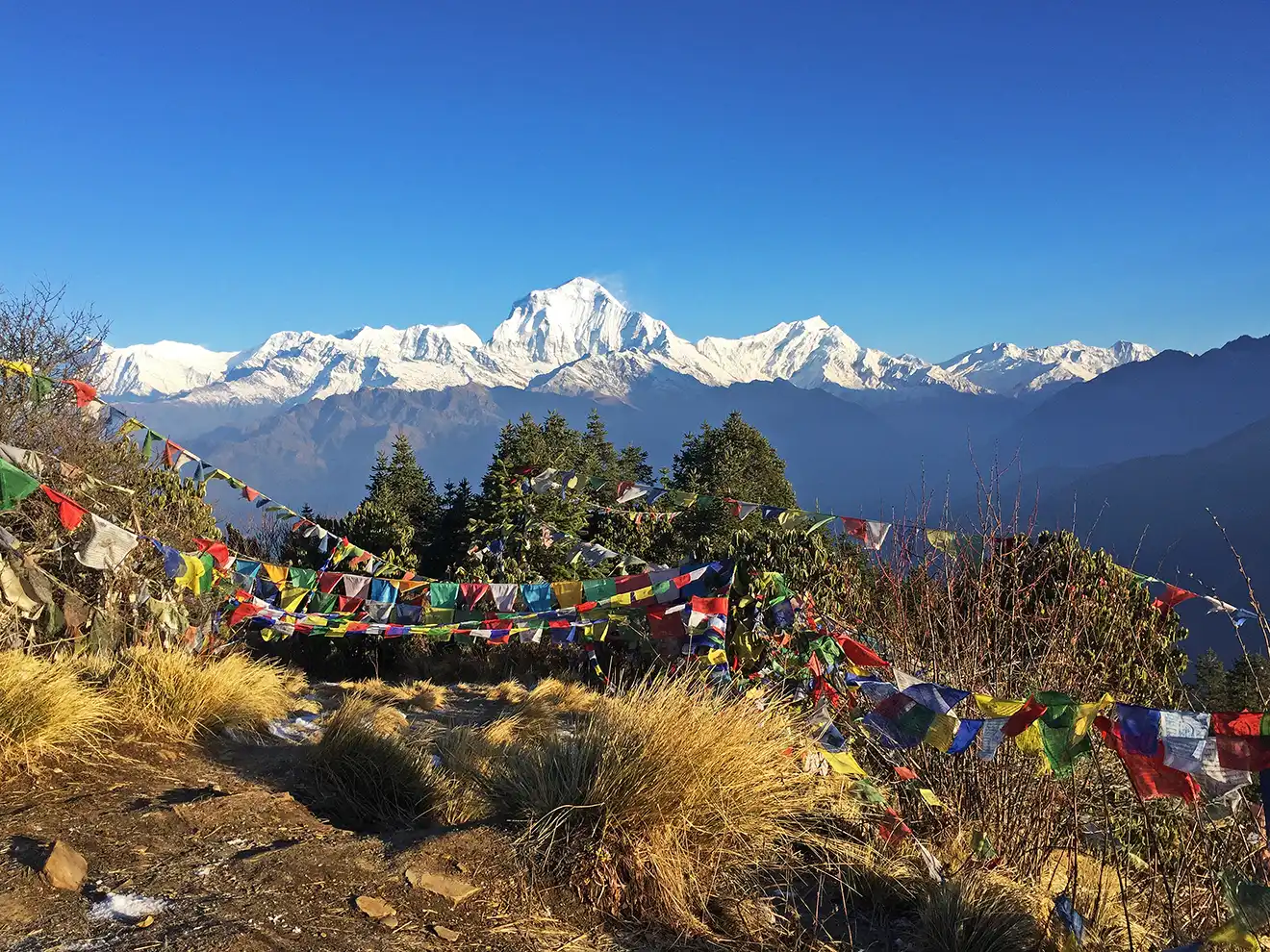
Poon Hill offers its most iconic sunrise panorama in October and November, when the post-monsoon air remains completely clear. The rhododendron forests along the Ulleri-Ghorepani section bloom red and pink in March and April, making spring the most visually rich season for this trail.
- Best for views: October and November.
- Best for flowers: March and April.
- Winter option: December and January work well below Ghorepani. Snow at the summit adds beauty.
- Crowd note: Peak crowd in April and October. Go in November for quieter conditions.
Best Time for Mardi Himal
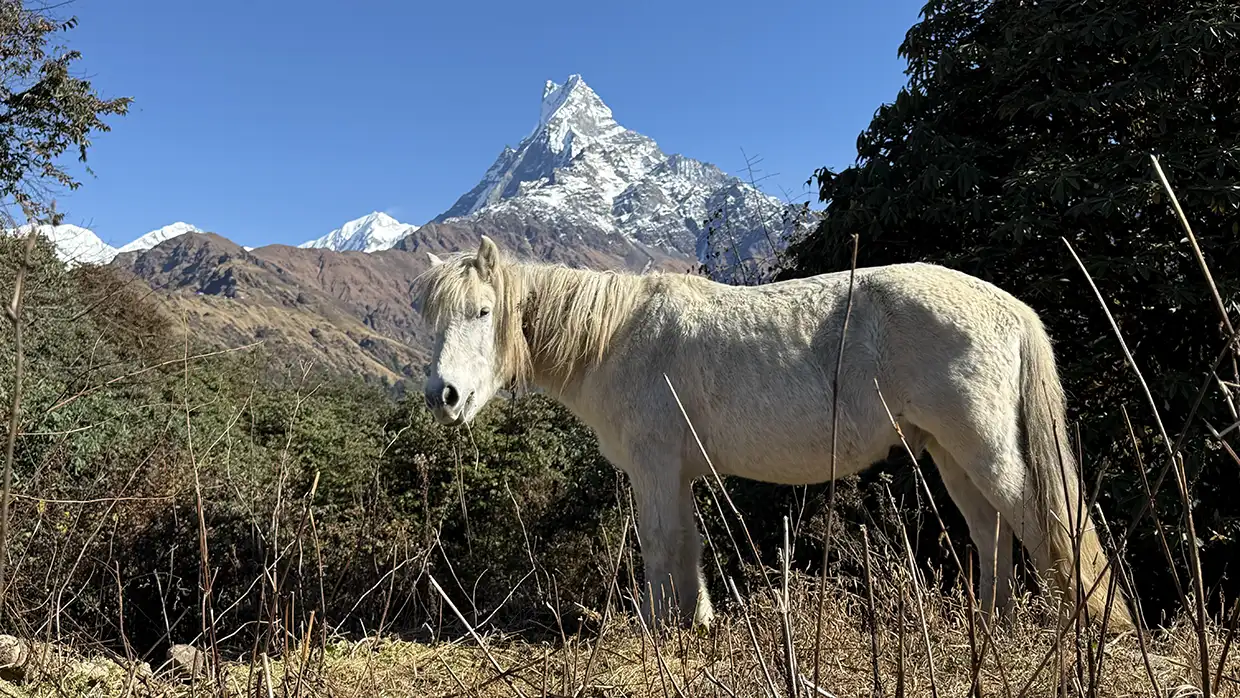
Mardi Himal High Camp gives the closest view of Machhapuchhre in the Annapurna region. October and November give the sharpest possible conditions. April offers strong spring conditions, with flower forests along the lower trail.
- Best months: October, November, April.
- Avoid: June-August (heavy rain and poor visibility on southern Annapurna slopes).
Best Time for Langtang Valley
Langtang Valley works best in October, November, March, and April. The autumn season gives the clearest views of Langtang Ri and the surrounding peaks. Spring adds rhododendron color to the forest sections below Kyanjin Gompa. Close access from Kathmandu makes Langtang practical for short hiking windows.
- Best months: October, November, March, April.
- Avoid: June-August (rain and potential road closures on the Syabru Besi access road).
- Winter: Lower Langtang stays accessible December-January. Gosaikunda Pass closes.
Best Time for Upper Mustang
Upper Mustang breaks the usual Nepal seasonal rules. The rain-shadow effect means June, July, and August offer dry trekking conditions, while the rest of Nepal receives monsoon rain. Many experienced trekkers time their Mustang visit to the monsoon months to avoid peak-season crowds on other routes.
- Best months for the rain-shadow advantage: June, July, August.
- Also strong: March-May and October-November for any-weather travelers.
- Restricted area: Requires a special permit, a licensed guide, and a minimum group of two.
Best Time for Hiking in Nepal by Month
| Month | General Feel | Visibility | Best Regions | Best For | Caution |
|---|---|---|---|---|---|
| January | Cold, crisp, quiet | Excellent | Kathmandu Valley, Pokhara foothills, lower Langtang | Budget travelers, quiet seekers | High passes closed, cold nights above 3,000m |
| February | Warming slowly | Very good | Same as January, plus Poon Hill | Beginners on short treks | Some high-pass instability in late February |
| March | Mild, rhododendrons begin | Very good | Annapurna, Langtang, Everest approach | First-time visitors, flower lovers | Pre-monsoon haze builds by late March |
| April | Warm, peak flowers | Good to very good | All classic routes | Families, first-timers, photographers | Peak crowd on popular trails |
| May | Warm, pre-monsoon | Good morning, hazy afternoon | High Himalaya, Everest upper sections | Experienced trekkers finishing routes | Afternoon cloud, late-season storms possible |
| June | Monsoon starts | Poor on most trails | Upper Mustang, Manang | Rain-shadow trekkers only | Landslides, leeches, cloud on most classic routes |
| July | Heavy monsoon | Poor on most trails | Upper Mustang, Upper Dolpo | Experienced trekkers on dry routes | Road closures, high landslide risk |
| August | Monsoon continues | Poor on most trails | Upper Mustang, Manang | Rain-shadow treks | Same risks as July |
| September | Monsoon clears late | Improving quickly | All regions (clearing) | Quiet autumn hike seekers | Trails may still be wet in early September |
| October | Post-monsoon peak | Excellent | All classic routes | All trekker types, peak season | Very crowded, book everything in advance |
| November | Crisp, clear, quieting | Excellent | All classic routes | All trekker types, second peak | Some high trails are getting cold in late November |
| December | Cold and clear | Very good | Kathmandu Valley, lower Annapurna, Poon Hill | Quiet seekers, budget travelers | High passes risky, cold nights |
What Can Affect a Hike Even in the Best Season?
Choosing the right season removes most major weather risks. But several factors still affect a hike even in peak spring or autumn conditions.
Altitude and Acclimatization
Altitude sickness can affect any trekker above 2,500m regardless of season. Nepal Tourism Board recommends limiting the daily altitude gain to around 300-500 meters above 2,500m. October sunshine does not prevent altitude illness if the ascent pace moves too fast.
- Plan at least one rest day at Namche Bazaar on the Everest routes.
- Plan acclimatization days at Manang on the Annapurna Circuit.
- Descend immediately if symptoms worsen. Do not continue climbing with a bad headache.
Late Storms and Snow on High Passes
Late-season storms arrive unpredictably in October and November. A sudden snowstorm at 5,000m can close Thorong La or Larkya La for one to three days. Build buffer days into any high-pass itinerary, even in the best trekking months.
Domestic Flight Delays
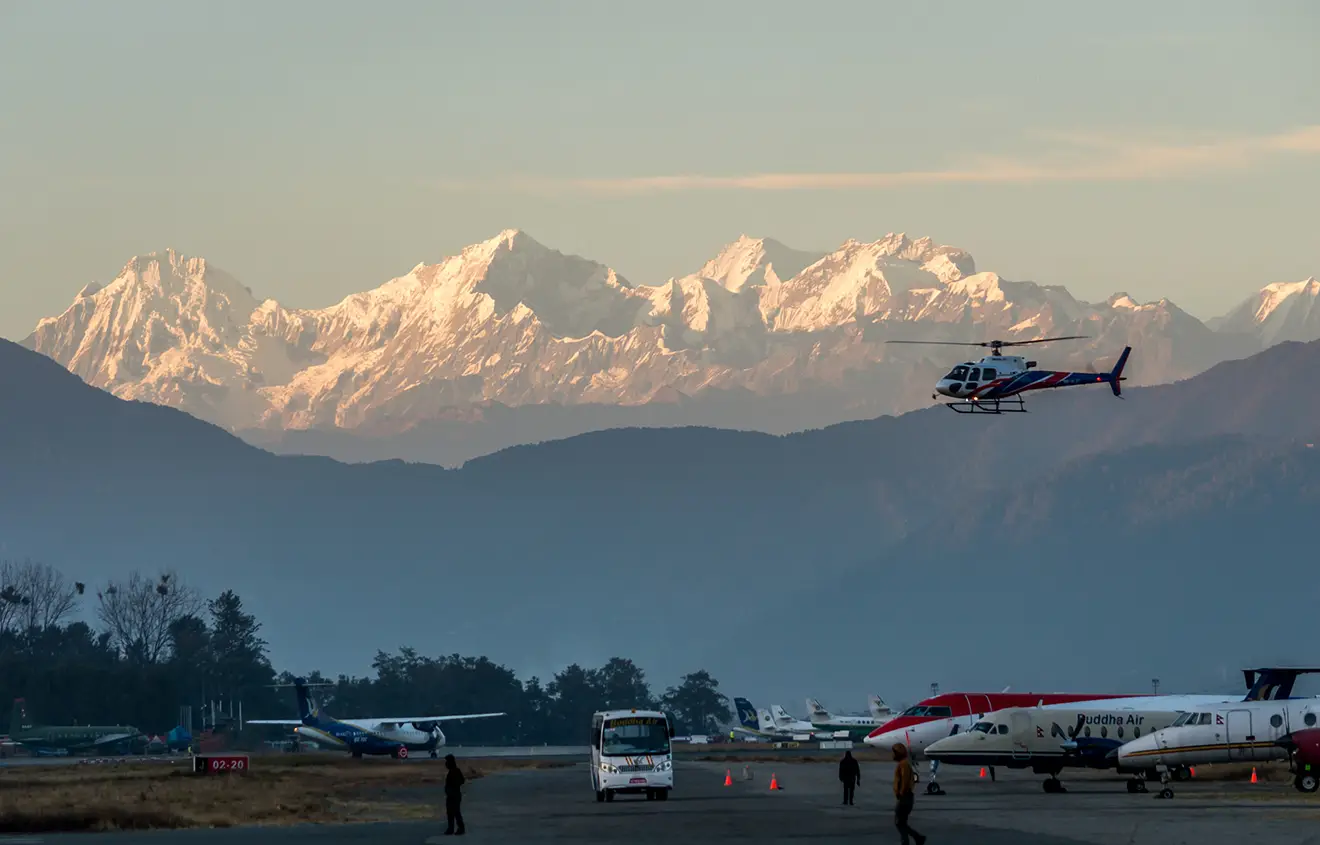
Flights to Lukla, Jomsom, and Jumla are frequently canceled when clouds sit below the landing threshold. Delays of one to three days occur even in optimal seasons. Always build an extra day into your Kathmandu departure schedule when your trek uses a mountain airstrip.
Crowd Pressure in Peak Months
Popular lodges at Namche Bazaar, Dingboche, and Machapuchare Base Camp fill up in October. Arrive early at each lodge to secure a room. Private Nepal tour benefits include pre-arranged accommodation, which removes the pressure of lodge-hunting entirely in peak season.
Current Trekking Rules That Matter When You Plan by Season
Nepal updated its trekking regulations in 2023. Many major protected-area routes now require a licensed guide and trekking-agency-issued TIMS card. Restricted areas require a special permit, a minimum group of two trekkers, and a licensed guide at all times. Only trekking on designated routes is permitted. Peak season demand means permits, guides, and domestic flight seats book out weeks in advance. Plan and book earlier for October and April departures than you would for shoulder-season dates.
| Route | Best Season | Licensed Guide Required | Special Permit | Beginner-Friendly |
|---|---|---|---|---|
| Everest Base Camp | Oct-Nov, Apr | Yes (mandatory) | Sagarmatha NP permit | Fit beginners with good preparation |
| Annapurna Base Camp | Oct-Nov, Apr | Yes (mandatory) | ACAP permit | Yes (moderate fitness) |
| Ghorepani Poon Hill | Oct-Nov, Mar-Apr | Yes (mandatory) | ACAP permit | Yes (best beginner classic) |
| Mardi Himal | Oct-Nov, Apr | Yes (mandatory) | ACAP permit | Yes (moderate) |
| Langtang Valley | Oct-Nov, Mar-Apr | Yes (mandatory) | Langtang NP permit | Yes |
| Gosaikunda | Apr-Oct, Sep-Nov | Yes (mandatory) | Langtang NP permit | Moderate (high altitude) |
| Manaslu Circuit | Oct-Nov, Apr-May | Yes (mandatory) | MCA + Restricted Area permit | No (experienced only) |
| Upper Mustang | Jun-Aug, Apr-May | Yes (mandatory) | ACAP + Restricted Area permit | No (permits expensive) |
| Kanchenjunga | Oct-Nov, Apr-May | Yes (mandatory) | KCA + Restricted Area permit | No (remote, long) |
| Kathmandu Valley hikes | Oct-May | Recommended, not mandatory | NP entry fee only | Yes (all levels) |
How to Choose the Right Season for Your Fitness and Experience
For First-Time Hikers
Choose October for maximum certainty. Clear skies, dry trails, and full lodge availability combine to give the most comfortable first Nepal hiking experience. April works equally well with the added reward of a flowering rhododendron forest on most approach trails.
For Photographers
October and November give the sharpest light and clearest mountain profiles. Sunrise shots from Poon Hill, Mardi Himal High Camp, and Nagarkot reach their best in post-monsoon clarity. Spring adds flower color but comes with occasional afternoon haze.
For Experienced Trekkers
Experienced trekkers have more flexibility. Late September gives excellent conditions with lower crowds than October. November into early December works for high-altitude routes before passes close. Monsoon-season Mustang and Dolpo routes give unique experiences unavailable at other times.
For Travelers with Limited Time
A traveler with 5 to 7 days gets the best return in October or November. Short routes like Poon Hill and Mardi Himal are at their best in these months. Spring in March and April works just as well for travelers who prefer milder daytime temperatures.
For Travelers Who Dislike Crowds
Late September, early November, and February give the best combination of good conditions and lower trail volumes. Upper Mustang in the monsoon months stays almost empty. Remote routes like Kanchenjunga and Ganesh Himal stay uncrowded year-round.
For Travelers Who Want Flowers Over Maximum Clarity
Mid-March to mid-April gives the strongest rhododendron bloom on Annapurna, Langtang, and Everest approach trails. Forest paths between 2,000m and 3,500m turn red and pink. Visibility stays strong in the morning hours, even if some afternoon haze develops. Luxury travel Nepal comparison places spring flower trekking among the most photographically rewarding experiences in Nepal.
Best Time for Hiking in Nepal: Frequently Asked Questions
Q: What is the best month for hiking in Nepal?
A: October gives the best single-month conditions across most Nepal hiking trails. Post-monsoon clarity, dry trails, and comfortable daytime temperatures combine. Book lodges and guides several weeks in advance for October departures.
Q: Is spring or autumn better for hiking in Nepal?
A: Both work excellently. Autumn gives sharper mountain visibility. Spring gives rhododendron flowers and milder daytime warmth. First-time visitors often prefer autumn for reliability. Repeat visitors often choose spring for the color.
Q: Can you hike in Nepal during the monsoon?
A: Yes, but only on specific rain-shadow routes. Upper Mustang, Upper Manang, and parts of Upper Dolpo stay dry while most of Nepal floods. Avoid classic routes like Everest Base Camp and Annapurna Base Camp during June to August.
Q: Which regions work best in the rainy season?
A: Upper Mustang gives the most reliable dry conditions during the monsoon. Upper Manang and parts of the Annapurna Circuit above Manang also stay drier. These regions lie north of the main Himalayan rain barrier.
Q: Is winter good for hiking in Nepal?
A: Winter suits lower-altitude hikes well. Poon Hill, Dhampus, and Kathmandu Valley hikes all work in December and January with the right clothing. High passes like Thorong La and Larkya La close or become dangerous in winter.
Q: What is the best season for Everest Base Camp?
A: October and November offer the best conditions for the Everest Base Camp. April ranks as the second-best choice. May works, but afternoon clouds build from mid-month onward. Avoid June to August and January to February for this route.
Q: What is the best season for Annapurna hiking?
A: October and April both give strong conditions on the Annapurna trails. October gives post-monsoon clarity. April gives rhododendron forests. The northern Manang area works year-round due to its rain-shadow position.
Q: Does the season affect guide and permit planning?
A: Yes, significantly. Peak seasons in October and April fill up guide availability and domestic flight seats faster. Restricted-area permits, such as those for Upper Mustang, require advance arrangements through a registered trekking agency regardless of the season. Plan and book at least four to eight weeks ahead for October departures.
Conclusion
Spring and autumn are the best times for hiking in Nepal, across most classic routes and regions. October and November deliver the clearest skies and most stable trail conditions of the year. March and April bring rhododendron blooms and milder temperatures, along with strong mountain visibility. Winter and monsoon both work for specific trail types. Lower-altitude hikes near Kathmandu and Pokhara stay accessible in December and January. Upper Mustang and Manang give exceptional dry-season alternatives during the June to August monsoon.
Choose your season by region, altitude, and trail type rather than by a single month. A beginner on Poon Hill in April performs equally well as in October but encounters different conditions. An experienced trekker targeting Upper Mustang in July gets empty trails and unique cultural access unavailable in any other season. Private Nepal tour benefits give you a guide and operator who understands these nuances and builds your itinerary around your actual dates, fitness, and expectations.