



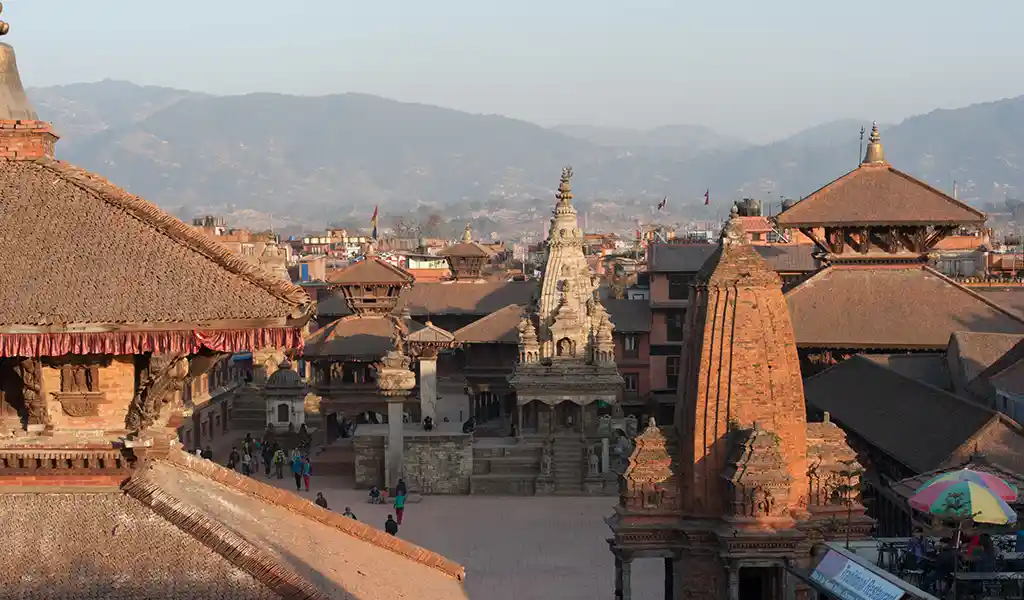
At the centre of the Bhaktapur city, sits the historic royal plaza of Bhaktapur Durbar Square. This complex is famous for its Newar architecture and living culture. You can walk through the brick lanes that open into grand stone-paved courtyards with towering pagoda temples and palaces. The air carries the scent of innocence and the lingering temple bell sounds. Bhaktapur is famous for its pottery and yogurt. You’ll enter a museum of centuries-old art, devotion, and daily life. UNESCO calls this complex a masterpiece, a testament to the golden age of Newar royalty.
Historical Background
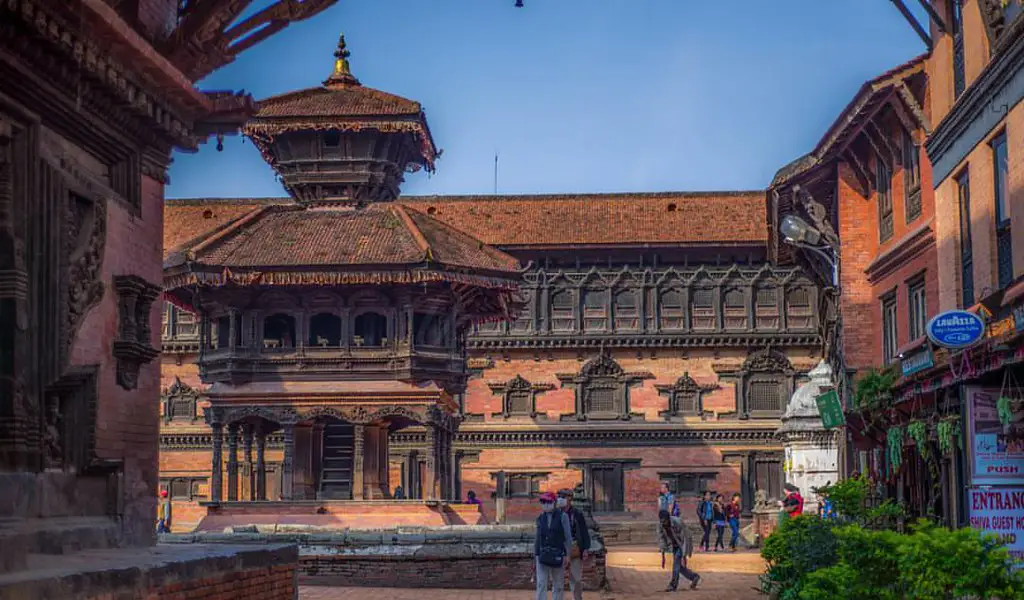
Bhaktapur was previously known as Bhadgoan. It was the capital of the Malla dynasty between the 12th and 18th centuries. Kings like Jayadeva and Bhupatindra Malla invested in the arts and religion of the city. They built the Bhaktapur Durbar Square, including the iconic 55-Window Palace and Nyatapola Temple.
Bhaktapur maintained its independence for centuries, which gave the Durbar Square a unique character. Its architecture and layout are different from those of Kathmandu and Patan. The 55-Window Palace features an elaborate arrangement of carved wooden windows above the royal balcony. You won’t find anything like it in any other city squares. Bhaktapur is also famous for its pottery, weaving, and crafts, which are still visible around the square today.
The city endured many invasions and earthquakes. The 1934 earthquake damaged many temples, and the 2015 earthquake destroyed part of the square. People rebuilt the fallen temples quickly using the traditional method to restore the palace’s glory. Bhaktapur Durbar Square is a testament to resilience, artistry, and centuries of history.
Architectural and Artistic Significance
55-Window Palace: Named for its 55-wooden windows, each with a unique lattice design, this palace was the home to Patan’s kings. The brick walls have small ornate balconies. The courtyards held the royal audience and festivals. Today, visitors can explore the palace museum and see the carved windows and royal halls showcasing the Malla era grandeur.
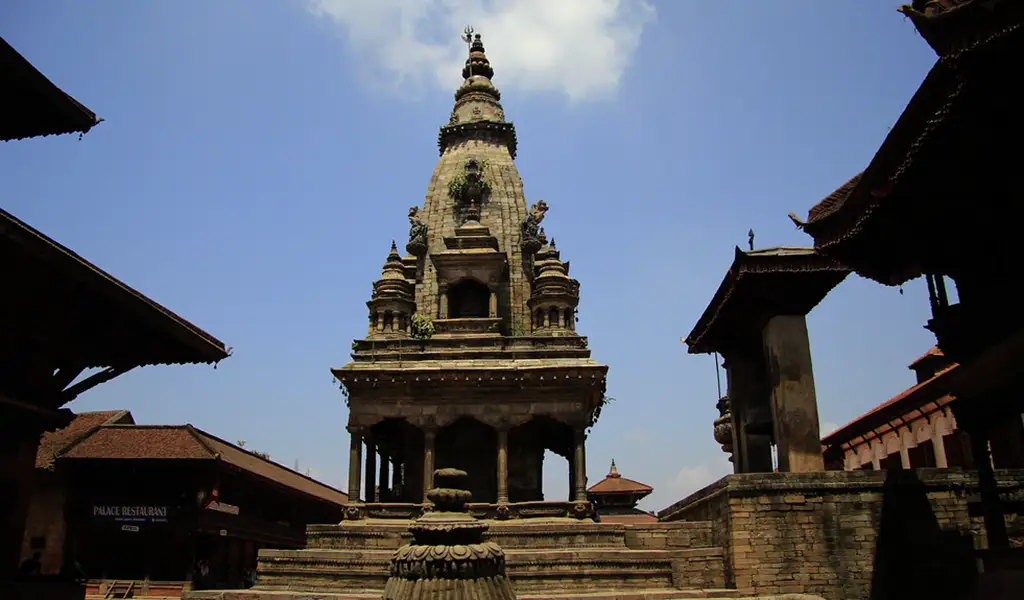
Vatsala Temple: This temple is a stone Shikhara Temple dedicated to the goddess Vatsala. It’s a solid stone pyramid with four intricately carved doorways. The temple’s highlight is the large bronze bell in the front, the Taleju Bell, built in 1701 and one of Nepal’s largest historic bells. Traditionally, people rang it to announce royal births and the deaths of nobles. The 2015 earthquake heavily damaged the temple, and it is now under restoration.
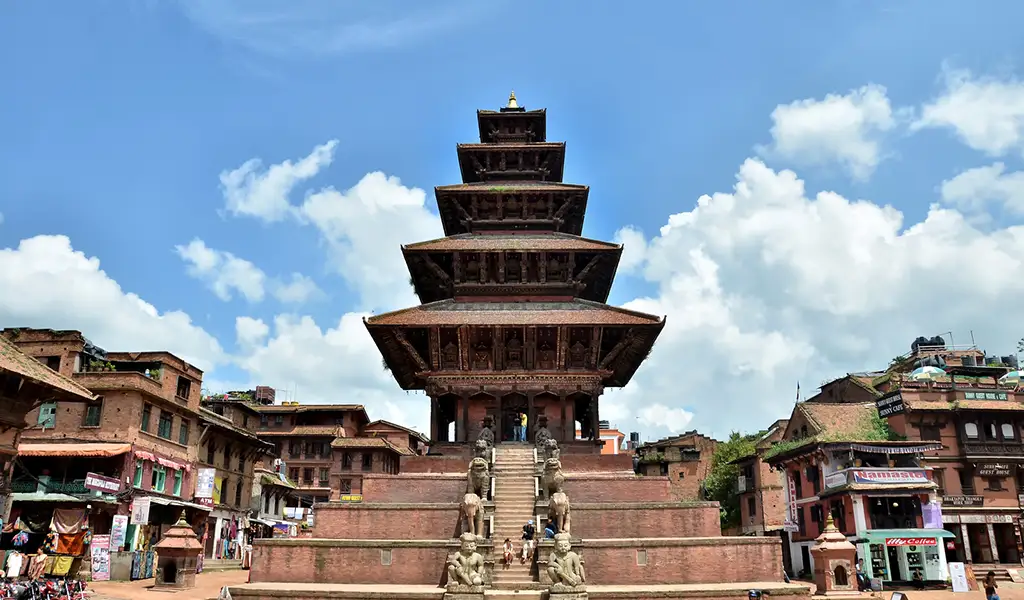
Nyatapola Temple: Built in 1702 by Bhupatindra Malla, this temple is one of the tallest pagoda temples in Nepal at 30m. It has five tires, each one smaller than the one below. Stone sculptures of wrestlers, elephants, lions, and griffins guard the base. According to legends, each pair of these guards is twice as strong as the one below. Dedicated to Siddhi Lakshmi, a form of goddess Ganga, Nyatapola survived the 1934 earthquake and had minimal damage from the 2015 one. You can climb its stone stairs to see its carvings on the wooden beams above.
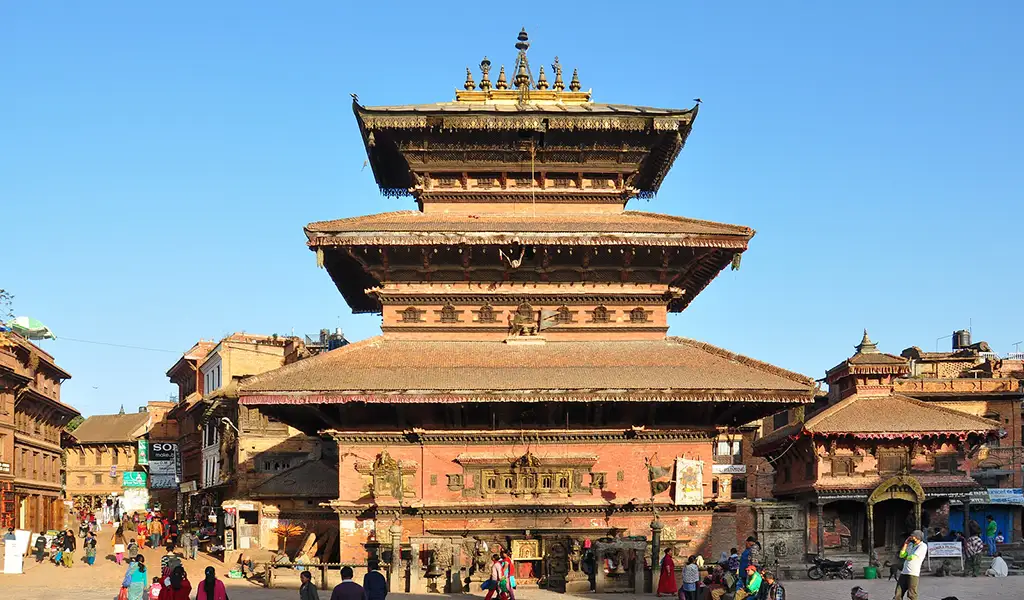
Bhairavnath Temple: Dedicated to Bhairav, a fierce form of Shiva, this three-storey pagoda is near the royal palace. The balcony above the entrance was once the place for royal announcements, while the upper walls have terracotta panels depicting Hindu deities and tantric figures. The Taleju Drum in the nearby tower still gets struck at dusk to preserve the ancient ritual.
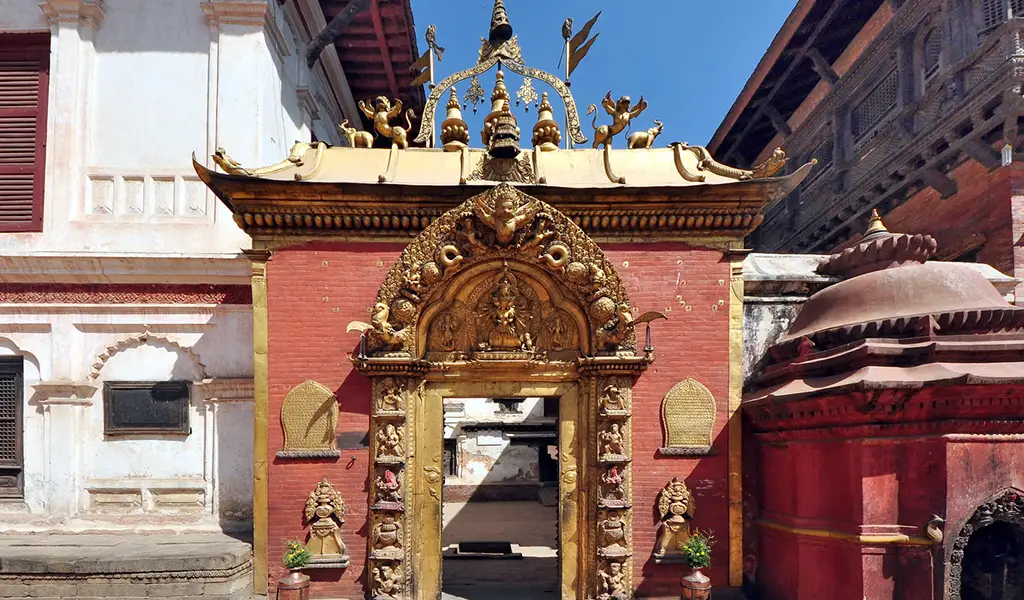
Golden Gate (Sun Dhoka): The main entrance of the royal palace, the Golden Gate came into existence in 1753 under King Bhupatindra Malla. While it’s not gold, the name comes from the gilded copper covering the surface of the gate. Copper depicts gods and goddesses in detail, while brass panels illustrate scenes from the Ramayana and the Bhagwat Purana.
Cultural Importance
History, culture, and everyday life coexist in Bhaktapur. It makes the Durbar Square more than a monument to the past, but a space where transitions actively live and get shared.
Bisket Jatra (Nepali New Year): This festival is the largest one in the city and happens in mid-April. Teams of men compete to move the massive chariot carrying their snake god as dancers wear elaborate masks and headgear to ward off evil spirits. The highlight is erecting a tall wooden pole (lingo) in the square’s centre. Locals and visitors celebrate the new year and generate huge crowds in the complex.
Gai Jatra: Bhaktapur celebrates Gai Jatra like Kathmandu and Patan. Families who lost their loved ones in the past year parade a real or symbolic view through the streets of the square. Traditional music, satire, and processions help mourners cope with loss and bring joy uniquely.
Pagal Bhangyang (Hari Siddhi Jatra): This festival is a lesser-known but significant Newari festival. It honors the local deity Hari Siddhi. Mask dancers and devotees carry the deity’s image on a palanquin to parade around the square. It demonstrates Bhakatpur’s strong community involvement and dedication to indigenous traditions.
Artisan Heritage: Bhaktapur is popular for pottery and wood carving, with Pottery Square just a few steps away from the Durbar Square. Woodcarvings, metalworks, and textiles are equally popular and essential. Visitors can watch a potter or a mask-maker crafting their art. The complex is a living showcase of Newari artistry.
Daily Life: Beyond festivals, Durbar Square is lively and full of life. Elders gather at midday on stone benches or steps to exchange news. In the evening, the square quiets down and pigeons enjoy themself. You can try juju dhau, the popular king yogurt of Bhaktapur. Vendors wrap up their day, pilgrims worship at the temples, and the living forum of the square sleeps for the night.
Religious Significance
Hindu Temples: Major highlights like Nyatapola, Bhairavnath, and Vatsala Temples are all dedicated to Hindu deities. Worshippers offer water and flowers to Shiva while the priest performs homa (fire ritual) in the palace courtyards during Shivaratri. Many locals also follow Tantric practices. The central banyan tree in Taumadhi Square is a sacred tree where pilgrims tie threads for blessings.
Buddhist Influence: Bhaktapur is the center for Newar Buddhism. Small chaityas and prayer wheels are all around the square and the streets. Locals decorate the temple with white and saffron flags and light butter lamps during Buddha Jayanti. The Dattatreya Temple complex is also a Buddhist monastic courtyard where monks are circumambulating a Buddha statue. You can see Buddhist and Hindu ceremonies happening side by side.
Ritual Practices: Daily life revolves around ritual acts in the square. Priests sprinkle holy water and chant Sanskrit mantras at temple entrances every morning. People light bitter lamps in the dusk and fast or offer prayers on auspicious days like Teej. Statues have garlands, and donation boxes have coins. These acts of devotion fill the complex’s daily life.
Pilgrimage: The square attracts many worshippers every day. Some pilgrims travel hours to perform pujas as they believe the Malla kings’ temples carry extraordinary spiritual power. Couples pray at Nyatapola to seek blessings from Siddhi Lakshmi so they can have children. Many mourners also gather at family shrines on funeral days. Even casual visitors can participate in the rituals by lighting incense or spinning prayer wheels. Bhaktapur Durbar Square is a local shrine and a national landmark that sustains centuries of faith and tradition.
Bhaktapur Durbar Square, a UNESCO Site
Like other Durbar Squares, Bhaktapur joined the list of UNESCO World Heritage Sites in 1979. This listing gave the square global recognition for its medieval art and architecture.
The 2015 earthquake destroyed some structures, like the Vatsala Temple and other shrines. Local artists and international experts began the restoration shortly after the quake. They recreated the lost sections of the temple using the original 17th-century brick molds with great precision. The Nyatapola temple didn’t face damage, but people must restore the Golden Gate.
Visitors watch carpenters shape wood daily, students learn ancient techniques, and families observe rituals. The restorable is as much about people as it is about the buildings. The community didn’t give in to modern shortcuts, so the complex could maintain its ancient glory just as the Malla artisans intended.
The UNESCO label deepens local pride. People celebrate festivals and ceremonies in the Durbar Square and visit the complex without hesitation. Bhaktapur Durbar Square is a historical monument reflecting resilience, culture, and community.
Visitor Experience
Clothes and Etiquette: Wear modest clothes in temples. You should cover your shoulders and knees, wear a scarf, and remove shoes at temple entrances. You can click pictures throughout the square, but remember no flash in some small shrine rooms. A local guide can teach you more about the square. They talk about how King Bhupatindra built Nyatapola to honor his mother, or the story of the Kumari. You should agree on their fees in advance to avoid problems later. You can visit the square early or late afternoon for softer light and milder crowds.
Nearby Attractions: A Lion Temple and the 55-Window Palace are south of the complex. You can visit Taumadhi Square and circle Nyatapola, or watch local artisans work in the east. If you want breaks from the visits, plenty of rooftop cafes over the square serve local specialties like jjulo or sicha.
Sensory Highlights: You can smell the incense burning at Tayegul tiles and sweet ghee from the bitter lamps at dusk. Hear the temple bells and the rhythmic calls of potters at work in Pottery Square. Feel the smooth stone of temple steps or the cool water in multi-spout fountains and taste juju dhau, Bhaktapur’s famous rich yogurt. All these sights, sounds, smells, and tastes combine to make visiting Bhaktapur Durbar Square an unforgettable experience.
Social and Economic Impact
Pottery and Crafts: Bhaktapur is famous for its pottery and traditional crafts. Clay potters in Pottery Square spin their wheels while mask-makers carve and paint them in nearby lanes. You can buy these creations directly from them. Local tailors weave the ari brocade patterns, and artists display textile and metalwork. Many tourists purchase these arts, which helps preserve skills that might otherwise fade.
Local Businesses: Restaurants and cafes around the square thrive with the steady flow of visitors and serve traditional Newari dishes like Chhoila, bara, and sweets. Guesthouses also advertise the pagoda roofs, and you can join pottery or thangka painting classes just around the square. Most of the local economy depends on the square.
Festivals and Community: Durbar Square is a key stage for the local festivals. Lodges fill up and regional vendors sell festive treats while musicians and performers earn their fees. The square becomes a communal stage. Children dance in Sundari Chowk, elders feed the crowds from a communal stove, and everyone contributes to the celebration.
Education and Preservation: Local schools bring students to the square. It teaches them the history, art, and architecture of their people. Many young people learn pottery, wood carving, and metalwork directly from the artisans. Organizations like Bhaktapur Municipality and the Kathmandu Valley Preservation Trust also run artistic programs. It ensures the square preserves its living tradition for generations to come.
Challenges and Modern Dynamics
Bhaktapur Durbar Square faces pressures from modern society. The 2015 earthquake crumbled the terracotta of the Vatsala Temple and smaller statues.
Urbanization adds another layer to ongoing challenges. Dust from the roads settles on temples, and tour buses park too close to the square, blocking key views. The local government considered pedestrian zones, but vehicles still go through narrow lanes. Not all projects receive sufficient funding for the already costly conservation programs.
Balancing tradition with modernization is an ongoing debate. Locals sometimes set stalls for extra income, and holiday crowds can clutter the space. At the same time, modern shops also serve tourists, which helps the economy.
The community does commit to preserving the square. Volunteers clean and maintain temples, coordinate garbage collection during festivals, and children continue learning folk dances in the palace squares. This collective care ensures the preservation of Bhaktapur’s heritage.
Conclusion
Bhaktapur Durbar Square is a story of the golden age of Nepal’s Newar kings. Each carved window and statue tells a story of a time of inseparable artistry and devotion.
The square survived earthquakes and regime changes. Yet, it is still loved and cherished by the local people. It offers more than monuments with a sense of stepping into something timeless. You can wander among these temples, try local cuisines, and meet artisans.
The cultural pride of Bhaktapur reflects on every structure, courtyard, and festival. Visiting the Durbar Square is witnessing a living tradition that has inspired generations of Nepalese and will continue to do so.