


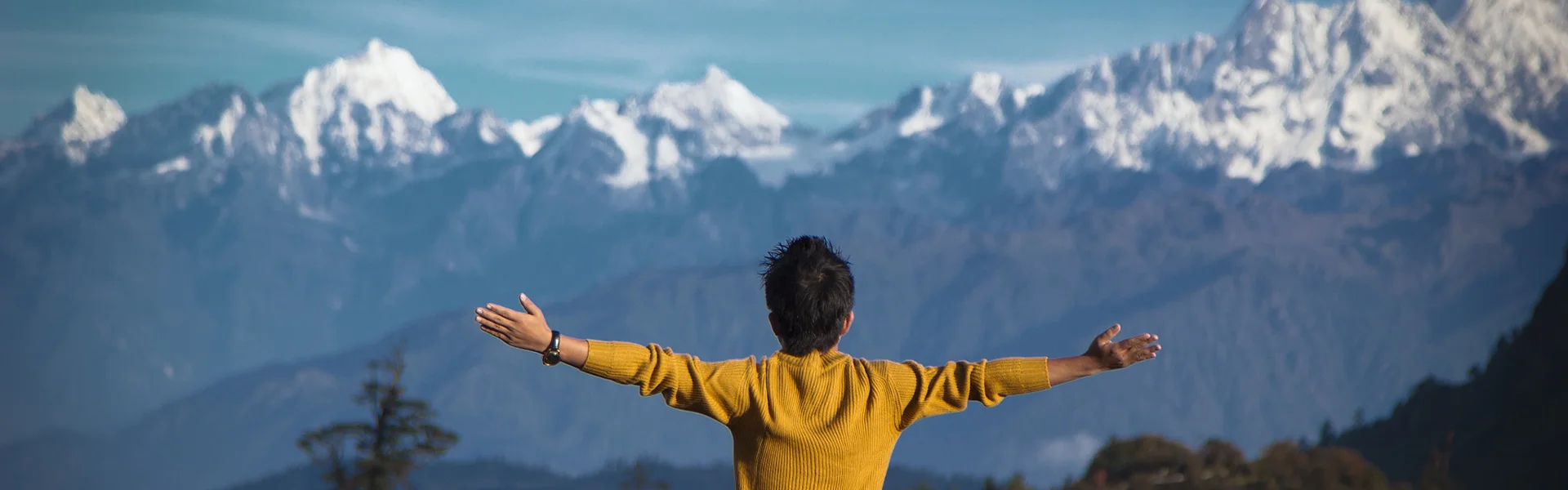

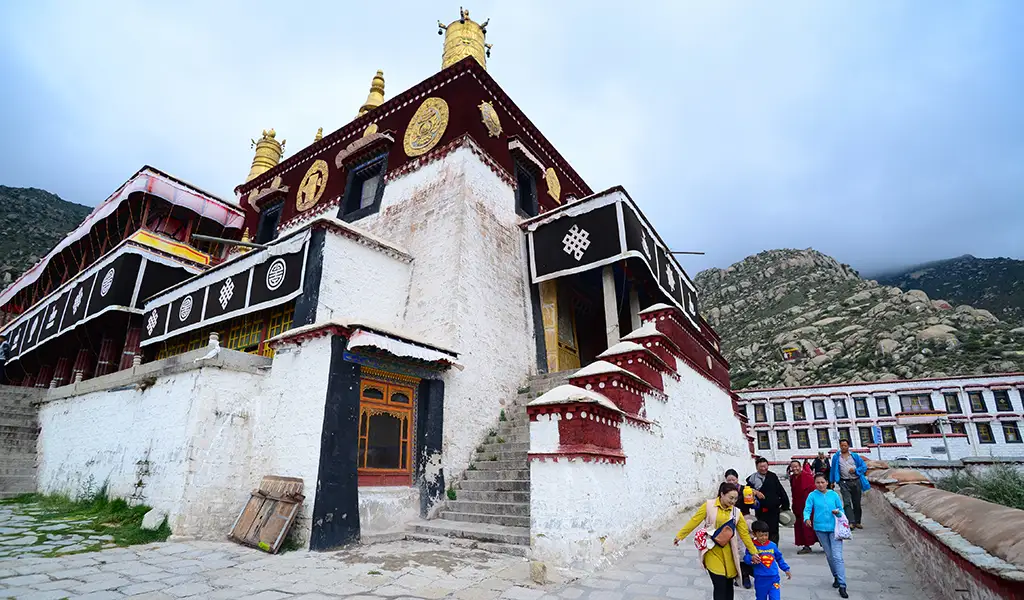
Drepung Monastery is a major center of Tibetan Buddhism. It lies along the slopes of Mount Gephel on the outskirts of Lhasa. This monastery complex stretches down the mountainside and was once the largest monastery in the world. It housed thousands of monks who studied, debated, and performed religious rituals across this white-walled complex. The name “Drepung” means “Heaps of Rice” in Tibetan. The name came from the clustered white buildings on the hill, symbolizing the prosperity and abundance of Buddhist teaching.
Founded in 1416, Drepung played a significant role in Tibet’s spiritual and political life. It’s part of the “Great Three” Gelugpa monasteries, along with Sera and Ganden. Entering Drepung feels like stepping back in time. You’ll see centuries of learning and devotion inside Drepung. Its grand assembly halls, colleges, and living quarters show centuries of scholarly dedication. Drepung is renowned as a leading monastic university. Many of Tibet’s greatest leaders and thinkers trained here. The Second through Fifth Dalai Lamas lived here. The fifth Dalai Lama established his government at Drepung before building the Potala Palace.
The monastery offers more than a view of its size. You can explore its chapels, courtyards, and colleges. Visiting Drepung will help you understand its influence on Tibetan culture, education, and governance.
Historical Background
Jamyang Chöje Tashi Palden founded Drepung Monastery in 1416. He was a disciple of Je Tsongkhapa, founder of the Gelug school of Tibetan Buddhism. Tsongkhapa’s reforms reshaped Tibetan monasticism in the early 15th century, which led to the creation of major monasteries, including Drepung. The monastery grew quickly and gained prestige through scholarship and noble patronage.
Drepung organized its monks into colleges called Dratsang, which operated like mini monasteries. Each Dratsang has its own abbot, officials, curriculum, and regional houses for monks. Students came from Tibet, Mongolia, and other Buddhist regions to study here.
Loseling College: It specialized in philosophy, especially logic and the Middle Way.
Gomang College: It was also a philosophy college and a friendly rival of Loseling in debating.
Deyang College: This smaller college focused on metaphysics and Tantric rituals.
Ngagpa/Gyüme College: This college began with a focus on Tantra and meditation and later became independent after moving to Lhasa.
By the 17th century, Drepung became highly influential. The Second Dalai Lama, Gendun Gyatso, expanded the monastery. The Third Dalai Lama, Sönam Gyatso, also trained and taught here. The Fifth Dalai Lama, Ngawang Lobsang Gyatso, made Drepung his primary residence and political center in 1642. He lived in the Ganden Phodrang residence, which became the official name of the Tibetan government before the move to the Potala Palace.
Drepung housed up to 10,000 monks at its prime. The number decreased to an estimated 7,700 by the 1930s. Drepung managed estates and lands across Tibet and functioned as a religious, economic, and diplomatic institution. Drepung’s monks influenced politics and education. They resisted the 7th Dalai Lama’s abolition of the regent position in 1751. The Qing dynasty of modern-day mainland China imposed the Golden Urn system to limit Drepung’s influence in high-lama selections after the 1793 Gurkha invasion.
Drepung continued to train elite scholars in the 20th century. Many of these trainees became government officials or tutors to the Dalai Lama. The monastery suffered greatly after the 1959 uprising. Many monks fled to India, while others had to leave monastic life. The Cultural Revolution destroyed and damaged buildings, statues, and texts.
Restoration prophets began in the 1980s under the Chinese Administration. Drepung reopened the building with several monks and repaired the structures. Today, while quieter than in its peak years, visitors can see the monastery’s scale and history.
The monks re-established Drepung in Karnataka, South India. The re-founded monastery continues original scholastic traditions. It has the Loseling and Gomang colleges and now houses around 5,000 monks.
Drepung Monastery’s history highlights its role in scholarship, politics, and Tibetan culture. It’s a key example of the depth and organization of Tibetan monastic life.
Architectural Features
Drepung Monastery sits on a hillside about 8km west of Lhasa. Its layout reflects its large scale and role as a self-run monastic city. The clusters of white buildings with golden roofs spread across the mountainside. The monastery stretches across a terraced slope. There are assembly halls, colleges on the lower and middle slopes, monk dorms, and administrative buildings above. Stone-paved paths and stairways connect the complex. You may get lost or confused in the alleyways between rows of buildings.
Main Assembly Hall (Tsogchen): The Tsogchen stands at the center of Drepung and serves as the central prayer and ceremony hall. Massive pillars support its flat Tibetan-style roof. There are rows of low platforms with cushions marking the seats for monks. The walls display murals and thangkas, and the ceilings have colorful banners. You can see the throne of the Dalai Lama at the head of the hall, symbolizing his historical presence. Smaller chapels honoring protecting deities like Tara and other figures surround the main entrance.
Colleges (Dratsang): Drepung originally had four leading colleges. Each college operated as a semi-independent mini-monastery. They had an assembly hall, dorms, classrooms, a kitchen, and courtyards. Monks often memorize texts or debate in small groups in the courtyards. Drepung’s kitchen could feed thousands with giant cauldrons still on display.
Ganden Phodrang Palace: This building was the residence of the 2nd to 5th Dalai Lamas. It served as a governing center before the construction of the Potala Palace. It included private quarters, audience chambers, and ornate artifacts. It served as the foundation of the Dalai Lama’s governmental authority. The white exterior, black window frames, and the golden roof reflect traditional Tibetan architecture.
Stupas: There are many white stupas with gold spires in Drepung. Some contain relics of past high lamas, including the 2nd Dalai Lama. They sit within chapels decorated with carvings, gildings, or murals.
Monk Quarters and Alleys: Monks live in long, two-storey blocks along narrow alleys. Each block often has a regional name to honor the origin of a different group of monks. Buildings have thick whitewashed walls and small windows, with flat roofs for drying food, sun exposure, or other practical purposes.
Courtyards for Debate: Each college has a designated courtyard for philosophical debates and Buddhist texts. These debates continue to this day, often in the afternoons.
Printing House: Drepung once had a printing press for scriptures. Monks carved woodblocks and oppressed pages for religious texts. Some buildings and woodblocks are historical exhibits for visitors today.
Art and Ornamentation: Assembly halls display large Buddha statues and a prominent Tsongkhapa statue. Murals illustrate Buddhas, lineage lamas, and historical events. Monks restored some murals after damage during the Cultural Revolution.
Hermitage and Surrounding: Higher ridges have small hermitages for isolated meditation, including retreats used by Dalai Lamas. Nechung Monastery is at the base of Drepung. It was the home of the state oracle.
Scale and Infrastructure: Drepung maintained water channels, communal sports, and large storerooms of barley and butter. It served thousands of monks. A central office managed finances and relations with estates. The scale of the kitchen, halls, and dorms reflects the monastery’s historical activity.
You can walk through Drepung today and still feel its former scale. The monastery grows over time, giving it a village-like feel. Monks and visitors gather along the paths of Drepung during festivals. Monks display large thangkas on hillside walls during festivals like Shoton.
Drepung’s architectural significance is not just a singular monumental structure, but also its size and functional design. Each corner has a shrine, school, or courtyard. This monastic city supported both the spiritual and daily life of its monks.
Spiritual and Religious Significance
Monastic Education and Scholarship
Drepung Monastery was a major monastic university. It trained monks in philosophy, debate, and Buddhist practice and helped them reach the highest academic degree, the Geshe Lharampa. This degree is comparable to a doctorate in Buddhist philosophy. The curriculum spanned over 20 years and covered five major topics. Monks would learn Pramana, Prajnaparamita, Madhyamika, Vinaya, and Abhidharma. Monks memorized scriptures, engaged in daily debates, and wrote commentaries. This spiritual practice helped monks cultivate wisdom and insight into emptiness, essential for enlightenment. Courtyard debates helped monks cut through ignorance and achieve clarity. Drepung scholars also wrote most of the critical Gelug texts.
Training Spiritual Leaders
Drepung produces many high lamas, abbots, tutors, and influential spiritual figures. Many abbots, tutors to the Dalai Lama, and important scholars also trained here. The monastery’s education helped monks prepare for leadership roles across Tibet. The 14th Dalai Lama also took his Geshe exams at Drepung’s Loseling and Gomang colleges in 1958 before fleeing Tibet. Panchen Lamas also have close ties to Drepung. Panchen Lobsang Chokyi Gyaltsen oversaw debates at Drepung in the 17th century.
Seat of the Ganden Phodrang Government
The 5th Dalai Lama established his government at Drepung. The Three Jewels of Buddha, Dharma, and Sanga governed Tibet under monastic supervision. It made Drepung more special and unique. The assembly hall where monks prayed doubled as the parliament, combining politics with spirituality.
Tantric Practice
Drepung didn’t offer only philosophical studies. The monastery was a center of Tantric practice. Its Ngagpa College and associated Dorje Ling residence trained monks in meditation, mandala rituals, and yogic practices. Many masters conducted ceremonies to prevent obstacles, ensure good harvests, or heal the sick.
Major Religious Ceremonies
Drepung led prayers and rituals for Tibet’s well-being and participated in major Tibetan festivals. Monks participated in public debates and ceremonies during the Monlam festival in Lhasa. The monastery celebrated its own holy days like Lhabab Düchen. Monks would also do daily pujas like reciting the Samadhi Raja Sutra. They believed these pujas would protect the state and preserve the Dharma.
Relics and Sacred Objects
Drepung houses many sacred objects, drawing devotion from pilgrims. It has Jowo Mikyö Dorje, believed to be a twin of Jokhang’s Jowo Shakyamuni. Princess Bhrikuti originally brought these statues as her dowry. The assembly halls hold statues of Tsongkhapa and his disciples. The tombs of the 2nd, 3rd, and 4th Dalai Lamas also remain here. The monastery honors deities like Palden Lhamo and maintains connections to the Nechung Oracle.
Community and Societal Influence
Drepung embodied Buddhist ideals of compassion, ethical conduct, and wisdom. Lay Tibetans consulted Drepung monks for advice, divinations, astrology, and blessings. Monks would often travel to villages to bless and instruct communities as their influence extends beyond the campus.
Exile and Global Impact
After 1959, some monks re-established Drepung in India and continued its scholastic traditions. Monks would train there, then return to Tibet. Some went on to teach in the Western Dharma centers, spreading Tibetan Buddhism worldwide. Drepung is still a leading monastic university and the beacon of Gelug tradition.
Pilgrimage Site and Legacy
Drepung is a part of the Lhasa pilgrimage circuit alongside Jokhang Temple, Potala Palace, and Sera. Pilgrims circumambulate the outer paths and meditation caves to gain spiritual merit. The monastery’s resilience through exile is proof of the lasting force of Dharma.
Cultural and Social Impact
Educational Influence
Drepung’s strict academic system set high standards for learning in Tibet. Geshes often tutored children in aristocratic households. Debate and logic techniques developed in the monastery spread into wider Tibetan education. The monastery’s textbooks and commentaries became standard study material in Gelug monasteries and later in secular schools in the 20th century. Watching monastic debates was a popular activity. Some people even practiced simplified versions of the debate in community gatherings.
Political and Administrative Training
Drepung was a training ground for future leaders. Many Geshes who completed their studies joined Tibet’s administration as monk officials. Other leaders also had close ties to Drepung tutors. The training emphasized logic, discipline, Buddhist law, and ethics, essential for effective governance. Many prominent figures, such as Prime Ministers, high officials, and historians like Shakabpa, emerged from Drepung.
Economic Role
Drepung’s large monastic population made it a powerful pillar of Tibet’s economy. It owned vast estates donated by aristocrats, where peasant families would farm and pay grain as tithe to the monastery. To return the favor, monks would travel to villages to perform rituals and resolve disputes. The monastery also employed lay workers. Tailors, metalworkers, painters, and carpenters all benefited from the monastery. Drepung would participate in the Great Prayer Festival in Lhasa, attracting pilgrims and traders. It boosted commerce. Foreign travelers in the 20th century boosted the local economy through the markets.
Cultural Preservation and Creation
Drepung was the guardian of Tibetan culture. Its scholars wrote chronicles and preserved historical texts. The printing house safeguarded Buddhist literature through the reprints. The monastery supported generations of artisans from thangka painters to statue makers. Festivals like Shoton also helped keep the traditional art alive. Monks would unfurl Thangka paintings and organize Tibetan performances.
Linguistic Standardization
Since monks came from all regions of Tibet, Drepung’s teaching dialect became the standard for religious discourse. Even monks from Kham and Amdo adopted the Lhasa-based style. This practice helped unify the Tibetan language in scholarly and spiritual settings.
Social Mobility
Sending a son to Drepung meant opening rare opportunities for low-income families. Regardless of their background, anyone could become a respected scholar with the help of their intelligence and hard work. Many great scholars came from humble origins. It taught ordinary Tibetans that education and spiritual dedication could transform lives. Families would take pride in having a child at Drepung as it was a path to honor and influence.
Community Service
Drepung was the safety net for the community. It opened granaries to feed people in need during famine or disasters. Monks performed rituals to bring rain or protect harvests. The monastery also had doctors trained in Tibetan medicine who treated both monks and local people. It preserved medical knowledge while serving practical health needs.
Political Checks and Balances
Drepung sometimes stood up to the government. Monks protested against unfair treaties, excessive taxation, or poor leadership. Their authority gave ordinary Tibetans a voice. The monks influenced national politics in the 19th and 20th centuries. They reminded rulers that governance must align with Buddhist values and the welfare of the people.
Cultural Continuity in Exile
Monks who fled Lhasa after 1959 re-established Drepung in South India. It continues to preserve education, art, and ritual for the worldwide Tibetan diaspora. The monastery hosts festivals and teaches younger generations. Its monks travel worldwide, build sand mandalas, perform debates, and showcase Tibetan culture.
Preservation, Tourism, and Modern Context
Restoration and Conservation
Since the 1980s, large-scale restoration has restored much of the damage from earlier decades. The Chinese government worked with Tibetan experts and sometimes UNESCO to rebuild walls, strengthen structures, and repaint murals. Trained Tibetan artists retouched the scratched or destroyed murals with natural pigments instead of acrylic pigments. These restoration projects replace images lost during the Cultural Revolution. People re-gilded the roofs, cleared the river, and built new monk dorms with modern features. Unfortunately, many artifacts were lost or looted. Crews built replicas like the Maitreya statue in the main hall.
Monastic Life
The government allows Drepung to operate as a monastery but implements strict rules. It is mandatory for monks to attend periodic “patriotic education” sessions. The authorities also don’t let the monks elect their abbots freely. After monks protested against orders to denounce the Dalai Lama in 2008, authorities implemented tighter rules and some expulsions of monks. Monks continue their prayers, debates, and minor ceremonies despite these constraints. Large-scale festivals and public rituals happen under strict supervision.
Tourism
Drepung is one of the main tourist attractions in Lhasa and is popular for its architecture and history. Visitors can pay an entrance fee to tour the main chapels. Pilgrims can enter for free through separate access points. Some areas are off-limits, but many prayer halls are open. Monks demonstrate rituals, spin prayer wheels, and share blessings with small donations. Festivals like Shoton also attract crowds, but strict superstitions limit foreign presence.
Community Role
Local Tibetans still treat Drepung like a religious center, it is. Pilgrims enter freely through a separate gate, circumambulate the complex, and seek blessings. Families still send sons to become monks. Many households ask Drepung monks to perform rituals or prayers on their behalf. Residents donate supplies or alms, and monks do rituals to bless the household when permitted.
Cultural Preservation
Drepung protects its tradition in Tibet and through the exile monasteries in India. Sometimes, monks quietly travel abroad to study and return with training to enrich the monastic quality. Continuing debates, rituals, and festivals may be on a smaller scale than before, but they ensure the continuation of the monastery’s identity.
Political Sensitivity
Drepung has been under heavy supervision since monks joined the protests in 2008. Security presence is sometimes apparent and sometimes discreet. It heavily affects the open environment of the monastery and limits free debate and political expression. Visitors can see monks debating in the courtyard or hear ritual horns at sunrise.
Modern Amenities
Tibet now has electricity, a water supply, solar panels, and limited access to modern education. The government highlights these amenities as signs of improved living standards. Younger monks also study Mandarin and English to help them interact with visitors and manage official requirements.
Conclusion
Drepung monastery is a symbol of resilience and lasting influence. Since its founding in 1416, it has grown to be Tibet’s largest monastic institution and a center of learning and spiritual practice.
Drepung didn’t just witness Tibetan history but also shaped it. Scholars, teachers, and leaders preserved Tibetan Buddhism for centuries. Drepung housed Dalai Lamas, hosted the Ganden Phodrang government, and blended governance with spiritual values. Even in Tibet’s darker times, Drepung’s monks maintained faith and learning. They safeguarded relations and offered continuity to the people.
Today, Drepung is calm, a contrast to its once vibrant past. It no longer houses 10,000 monks or has a say in the governance. Young monks memorize the same scriptures as their predecessors, and elders teach debating techniques and meditation practices. The continuing monastic life ensures its core purpose is still alive.
Drepung is the cultural identity and intellectual heritage of Tibetans. It trains new monks, welcomes pilgrims, and hosts visitors. Drepung continues to prove that the values of wisdom, ethics, and compassion are central to Tibetan life.