


Nepal trekking regulations have changed over the past few years. Most popular routes now require permits, licensed guides, and agency processing. Restricted areas follow even stricter rules. Solo travelers now have better access to restricted-area permits following the March 2026 update. A licensed guide and registered agency still remain mandatory. The permit system protects trekkers, local communities, and the environment.
Many first-time trekkers feel confused about which permits they need. The rules differ by route, region, and trekking zone. One single permit does not cover all areas in Nepal. This guide explains all Nepal trekking regulations in simple language. It covers TIMS cards, national park permits, conservation area permits, restricted area permits, guide rules, insurance, and the 2026 updates.
Quick Answer: Nepal Trekking Regulations
Nepal trekking regulations cover TIMS cards, national park permits, conservation area permits, restricted area permits, rules for licensed guides, local fees, and agency requirements. Many major trekking routes require a licensed guide and agency-issued TIMS card. Restricted areas require permits from the Department of Immigration through a registered trekking agency.
What Are Nepal Trekking Regulations?
Nepal trekking regulations include all official rules that control access to trekking routes. Different government bodies manage different areas. No single office handles all permits. The rules cover TIMS card requirements, licensed guide rules, national park entry permits, conservation area permits, restricted area permits, local municipality permits, insurance checks, permit checkpoint rules, and agency responsibilities.
Why Nepal Does Not Have One Single Trekking Permit
Different bodies manage different areas across Nepal. National parks manage park entry. Conservation areas manage conservation permits. The Department of Immigration handles restricted zones. Local governments collect local entry fees in some regions. TAAN and Nepal Tourism Board manage TIMS through an online system. Each trekking route falls under one or more of these bodies.
A trekker heading to the Manaslu Circuit needs a restricted area permit, a Manaslu Conservation Permit, and, sometimes, an Annapurna Conservation Permit. An Everest Base Camp trekker needs a Sagarmatha National Park permit and a local Khumbu area permit.
Why Nepal Trekking Rules Matter
Trekker Safety
Nepal trekking rules help authorities track trekkers on remote trails. The permit system records route details, guide information, and emergency contacts. Rescue teams use this data during emergencies. Altitude sickness, weather delays, and trail accidents remain real risks above 3,000 meters. Licensed guides carry training in altitude monitoring and rescue coordination. The system reduces the number of missing trekker cases each season.
Environmental Protection
Trekking fees fund waste control, wildlife protection, and trail maintenance. Fragile alpine zones face pressure from growing visitor numbers. Lodge capacity in remote areas stays limited. The Everest region now runs a waste deposit system. Trekkers pay a deposit and receive a refund after returning with their waste bag intact. Permit fees also support conservation projects in national parks.
Local Employment and Accountability
The licensed guide requirement supports local employment in mountain communities. Registered agencies take responsibility for rescue and logistics. Porter welfare standards have improved under the regulated system. Fair income is distributed to guides, porters, lodge owners, and local workers through the permit system. The agency model creates accountability for trekker safety and emergency response.
The Current Nepal Mandatory Guide Rule
Nepal’s revised TIMS provision requires trekkers on specific protected routes to travel with a licensed trekking guide. The guide must hold a valid government-issued license. The trek must go through a registered trekking agency. This rule took effect in April 2023 and remains fully enforced in 2026. Foreign trekkers entering national parks, conservation areas, or restricted areas must be accompanied by a licensed guide from a TAAN-registered agency. Checkpoints verify guide credentials along all major routes.
Where Guide Rules Commonly Apply
- Everest Base Camp Trek
- Gokyo Trek and Three Passes Trek
- Langtang Valley Trek
- Annapurna Base Camp and Annapurna Circuit
- Kanchenjunga Base Camp Trek
- Makalu Base Camp Trek
- Upper Dolpo and Lower Dolpo Treks
- Humla Limi Valley Trek
- Manaslu region treks
- All restricted area treks
Where Rules May Feel More Flexible
Short day hikes near Kathmandu, Nagarkot, Shivapuri, and Pokhara may not require a licensed guide. Easy city-side walks and short nature trails near towns often fall outside the regulated zones. Always confirm the latest local rule before booking. Rules differ between regulated trekking areas and casual day hikes.
TIMS Card Nepal: What Trekkers Need to Know
What Is a TIMS Card?
TIMS stands for Trekkers’ Information Management System. The card records trekker details, guide information, route plans, and emergency contacts. Authorities use this data for safety and tracking.
What Is E-TIMS?
TAAN moved TIMS to an online system in April 2023. Agencies register online, submit route and trekker details, pay the fee, and receive an E-TIMS permit. The E-TIMS includes a QR code that stores insurance details, emergency contacts, and guide license information. Checkpoints scan the QR code or inspect printed copies. Some remote checkpoints still prefer physical copies. Carry both digital and printed versions.
TIMS Card Cost
| Trekker Type | TIMS Fee |
|---|---|
| SAARC nationals | NPR 1,000 |
| Non-SAARC nationals | NPR 2,000 |
Note: Some sources list slightly different fees for individual vs group TIMS. Confirm the current rate with your registered trekking agency before booking.
Who Issues TIMS?
Registered trekking agencies process E-TIMS on behalf of trekkers. The agency enters trekker details, guide credentials, route information, and permit data into the system. Trekkers should carry a printed or digital copy at all times.
Nepal Trekking Permits: Main Types
Nepal uses five main permit types for trekking routes. The permit you need depends on your specific route and region.
| Permit Type | Where It Applies | Issuing Body | Common Routes | Notes |
|---|---|---|---|---|
| TIMS / E-TIMS | Specific trekking routes | NTB/TAAN agency system | Everest, Langtang, Dolpo, Humla, Makalu, Kanchenjunga | Agency processed |
| National Park Permit | National parks | Park authority | Everest (Sagarmatha), Langtang, Makalu, Shey Phoksundo | NPR 3,000 for foreigners |
| Conservation Area Permit | Conservation areas | Conservation authority | Annapurna (ACAP), Manaslu (MCAP), Gaurishankar | NPR 3,000 for foreigners |
| Restricted Area Permit | Controlled border zones | Department of Immigration | Upper Mustang, Dolpo, Manaslu, Tsum Valley, Nar Phu | Agency mandatory |
| Local Permit | Local government areas | Rural municipality | Khumbu local permit, selected local routes | NPR 2,000 typical |
Nepal Restricted Area Permit Rules in 2026
What Is a Restricted Area Permit?
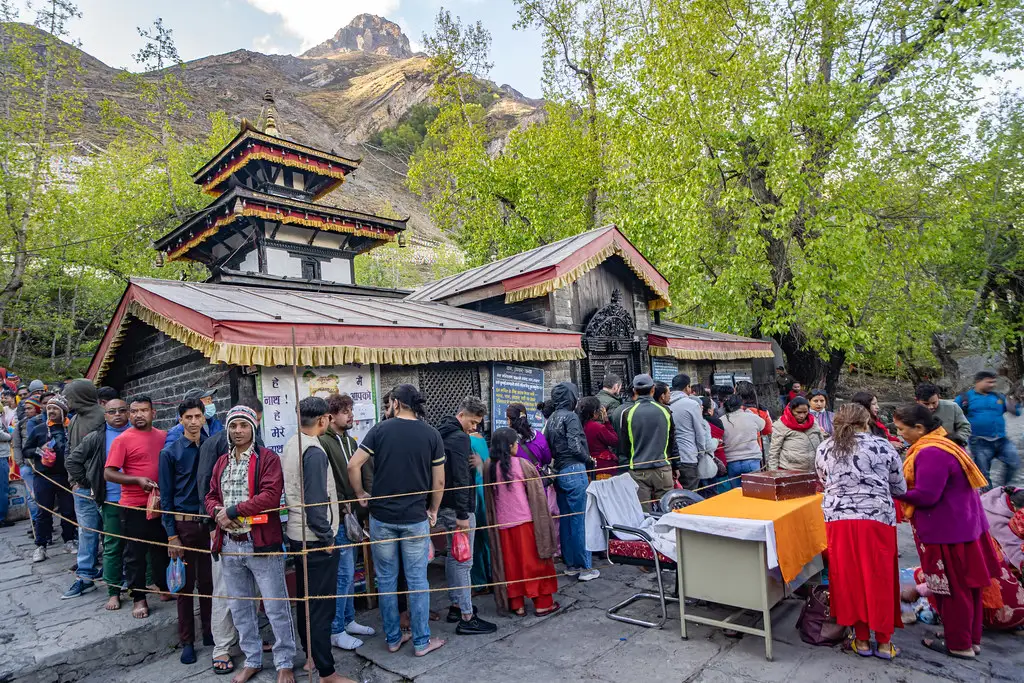
A Restricted Area Permit allows foreign trekkers to enter controlled trekking zones. These zones sit near international borders or inside culturally sensitive regions. The Department of Immigration issues these permits through registered trekking agencies. The permit must remain with the trekker during the entire trek. Immigration staff or police at checkpoints verify permits at each entry gate.
Popular Restricted Area Treks
- Upper Mustang Trek
- Upper Dolpo Trek
- Lower Dolpo Trek
- Manaslu Circuit Trek
- Tsum Valley Trek
- Nar Phu Valley Trek
- Humla Limi Valley Trek
- Kanchenjunga restricted sections
- Mugu region treks
March 2026 Restricted Area Update: What Changed?
Solo Trekkers Now Get Restricted Area Permits
The Department of Immigration revised the rules governing restricted area permits on March 22, 2026. Individual foreign trekkers now require permits to enter restricted areas. The old rule required a minimum of two foreign trekkers per application. Solo travelers no longer need to find a trekking partner or join a group departure. A single trekker applies through a registered agency and treks with a licensed guide. The update covers 15 trekking zones across 13 districts near the borders with Tibet and India.
What Still Remains Mandatory
- A licensed trekking guide remains mandatory for all restricted area treks
- The trek must go through a registered trekking agency
- The agency takes responsibility for rescue and logistics
- The trekker must follow the approved route
- The permit must stay with the trekker during the trek
- Helicopter evacuation insurance remains a requirement
New Guide-to-Trekker Ratio
The 2026 update introduced a guide-to-trekker ratio for restricted areas. One licensed guide handles up to seven trekkers. Larger groups need multiple guides with separate permit assignments.
Pre-Arrival Permit Processing
Foreign trekkers now need to apply for restricted-area permits before arriving in Nepal. Travelers outside Nepal use an Application Submission ID to start the process. The agency submits documents online through the Department of Immigration portal. Final permit collection still happens in person at the Department of Immigration office in Kathmandu. Payment goes in USD or NPR. Processing takes two to four hours during peak season.
Quick Answer: Can solo trekkers get restricted area permits in Nepal?
Yes. Solo foreign trekkers now get restricted area permits in Nepal after the March 2026 update. The trek must go through a registered trekking agency. A licensed guide remains mandatory for all restricted area treks.
Nepal Restricted Area Permit Cost 2026
Restricted area permit fees vary by zone and season. Confirm fees with the Department of Immigration or your registered trekking agency before booking. Fees listed below reflect the most recent information available.
| Restricted Area | Permit Fee Guide | Notes |
|---|---|---|
| Upper Mustang | USD 50 per person per day | Confirm before booking |
| Upper Dolpo | USD 50 per person per day | Confirm before booking |
| Manaslu | USD 100/week (Sep-Nov), USD 75/week (Dec-Aug) | Extra daily fee after the first week |
| Tsum Valley | USD 40/week (Sep-Nov), USD 30/week (Dec-Aug) | Seasonal pricing |
| Nar Phu Valley | USD 100/week (Sep-Nov), USD 75/week (Dec-Aug) | Seasonal pricing |
| Humla | USD 50 per week | Limi Valley routes |
Important: Fee structures differ between official sources. Some list per-day rates. Others list per-week rates with extra charges for additional days. Always confirm the current fee with your agency.
Route-Wise Nepal Trekking Regulations
Everest Base Camp Trek Regulations
Everest Base Camp trekkers need a Sagarmatha National Park Permit. A local permit from Khumbu Pasang Lhamu Rural Municipality also applies. TIMS/E-TIMS and a licensed guide remain standard requirements. Checkpoints verify permits at Monjo, before Namche Bazaar. Trekkers should carry high-altitude insurance covering helicopter evacuation above 4,000 meters. All Lukla flights depart from Manthali (Ramechhap), not Kathmandu.
Annapurna Base Camp Trek Regulations
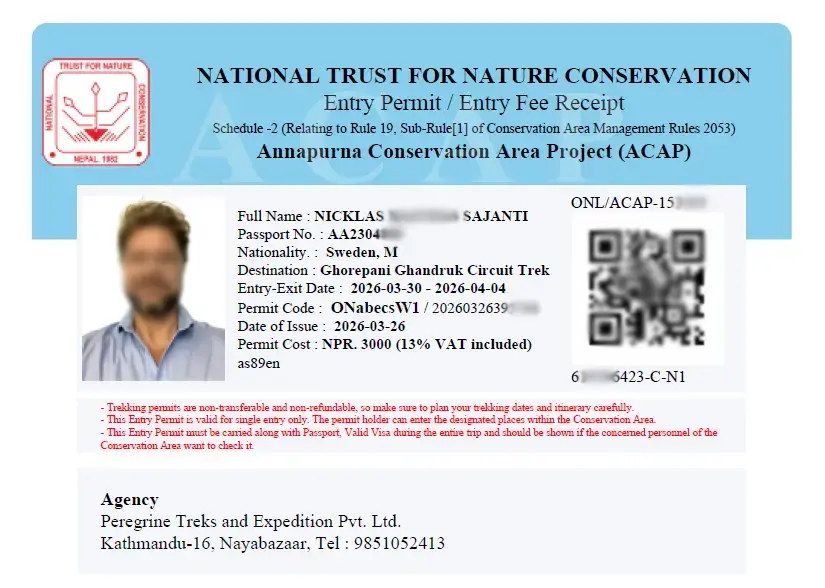
Annapurna Base Camp trek trekkers need an Annapurna Conservation Area Permit (ACAP). TIMS/E-TIMS rules apply based on the current enforcement for the chosen route. A licensed guide remains the standard requirement. Entry points include Ghandruk, Jhinu, and Nayapul. Checkpoints verify ACAP permits along the trail. Carry physical copies of all permits.
Annapurna Circuit Trek Regulations
The Annapurna Circuit requires an ACAP permit and TIMS or e-TIMS. Thorong La Pass reaches 5,416 meters, so altitude sickness insurance is essential here. A licensed guide remains standard. Trekkers who add the Nar Phu side route need a separate restricted area permit. That permit requires a registered agency and follows restricted area rules.
Langtang Valley Trek Regulations
Langtang Valley trekkers need a Langtang National Park Permit and TIMS/E-TIMS. A licensed guide remains a requirement under the revised route rules. Checkpoints verify permits at multiple points along the trail.
Manaslu Circuit Trek Regulations
The Manaslu Circuit requires a Restricted Area Permit, a Manaslu Conservation Area Permit (MCAP), and, if exiting via Dharapani or Besisahar, an ACAP. A licensed guide and registered agency remain mandatory. Solo trekkers now get permits under the March 2026 update. Independent trekking without a guide remains prohibited. The Jagat Checkpoint verifies all permits at the start of the restricted zone.
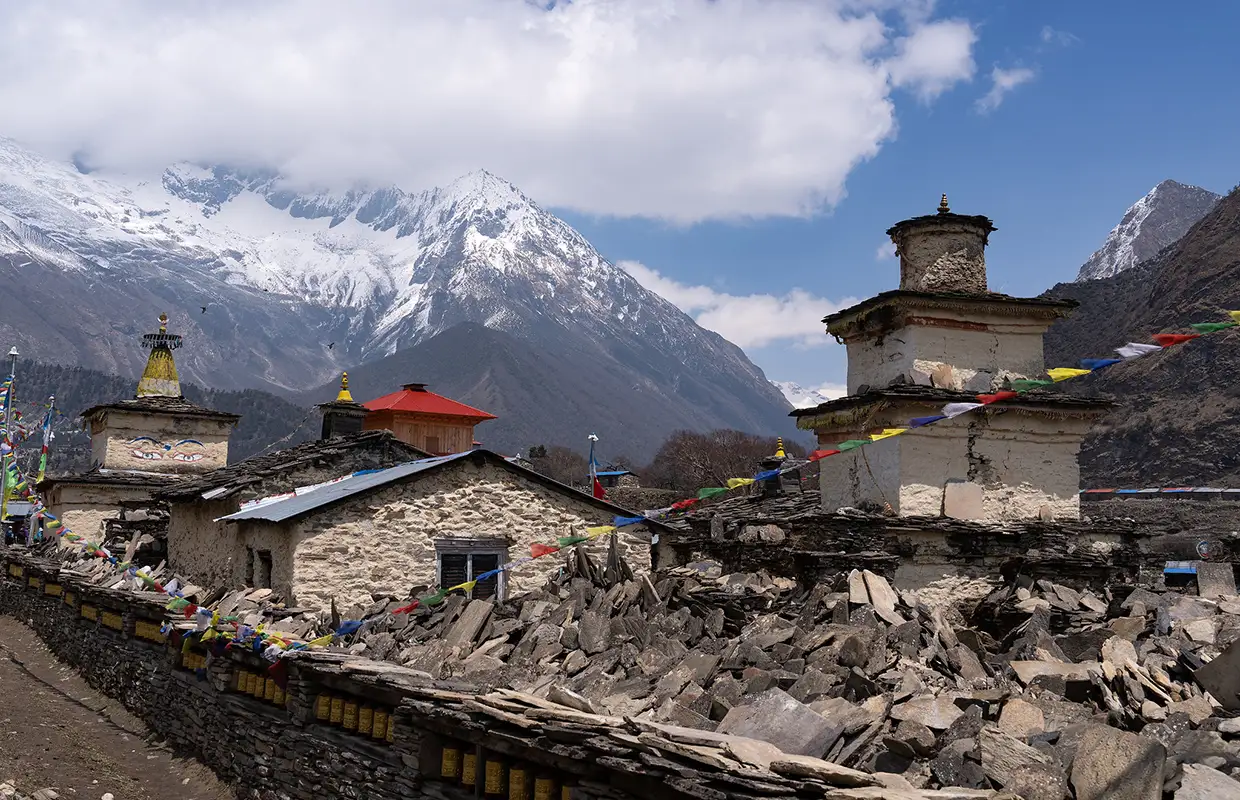
Upper Mustang Trek Regulations
Upper Mustang requires a Restricted Area Permit and an Annapurna Conservation Area Permit. A licensed guide and registered agency remain mandatory. The route follows a fixed path. Solo travelers now apply for permits under the 2026 update. The permit costs USD 50 per person per day. All trekkers must follow the approved route through Lo Manthang.
Dolpo Trek Regulations
Upper and Lower Dolpo require Restricted Area Permits and a Shey Phoksundo National Park Permit. A licensed guide and registered agency remain mandatory. Remote rescue planning matters here. High-altitude insurance covering helicopter evacuation remains critical for Dolpo treks. Supply lines run long. Communication stays limited in much of the region.
Nepal Trekking Insurance: What to Include
Travel insurance may not be required as a formal government permit for every route. Serious trekking agencies require it before trip confirmation. Trekkers should choose a policy that covers the full trek altitude.
Recommended Coverage
- Trekking up to at least 6,000 meters for high-altitude routes
- Helicopter evacuation from remote areas
- Altitude sickness treatment, including HAPE and HACE
- Emergency medical care and hospitalization
- Trip cancellation and interruption
- Search and rescue operations
- Repatriation coverage
The E-TIMS system now verifies insurance details during the permit application process. Some checkpoints also inspect insurance certificates. Carry a printed copy of your policy at all times.
Quick Answer: Do I need insurance for trekking in Nepal?
Yes. Trekkers should carry high-altitude travel insurance. The policy should cover the maximum trek altitude, emergency helicopter evacuation, altitude sickness, medical care, trip cancellation, and rescue support.
Drone, Photography, and Environmental Rules
Drone Rules in Nepal
Drone use in Nepal needs official permission. National parks and other restricted areas have stricter drone rules. Trekkers should not fly drones near airports, army areas, monasteries, crowds, or protected wildlife zones. Your registered agency helps check current drone permits for your specific route. Fines apply for unauthorized drone use in regulated areas.
Waste and Trail Rules
Carry back all non-biodegradable waste. Avoid plastic bottles when refill stations are available. Use lodges and camps responsibly. The Everest region operates a waste deposit system that refunds trekkers for returning their waste bags. Respect local waste rules in the Everest, Manaslu, Mustang, Dolpo, and Annapurna regions. Leave trails cleaner than you found them.
Cultural Rules
Ask before photographing people in villages. Respect monasteries and prayer areas. Walk clockwise around stupas, mani walls, and chortens. Dress modestly in villages and near religious sites.
Documents Needed for Nepal Trekking Permits
- Passport copy with at least six months’ validity
- Nepal visa copy or visa application Submission ID
- Passport-size photo (two copies recommended)
- Travel insurance details with altitude coverage
- Emergency contact information
- Trekking itinerary with dates and stops
- Guide details and license number
- Registered agency details
- Flight or arrival details
- Permit fee payment receipt
- Group details, if applicable
Quick Answer: What documents do I need for Nepal trekking permits?
Most trekkers need a passport copy, Nepal visa details, an Application Submission ID, a passport-size photo, insurance details, emergency contact details, an itinerary, guide details, and registered agency information.
How to Apply for Nepal Trekking Permits
Step 1: Choose the Trekking Route
The route decides the permit type. Everest needs different permits than Annapurna. Restricted areas need additional permits beyond standard conservation fees.
Step 2: Check the Permit Category
Classify the route as a national park, conservation area, restricted area, local government area, or TIMS/E-TIMS route. Some routes fall under multiple categories.
Step 3: Choose a Registered Trekking Agency
A registered agency processes permits for restricted areas and E-TIMS routes. The agency enters all trekker and guide details into the system. Choose a TAAN-registered agency for full compliance.
Step 4: Submit Documents
Provide a copy of your passport, visa details, photo, insurance certificate, itinerary, and emergency contact. The agency handles submissions through the online portal.
Step 5: Pay Permit Fees
Restricted-area permits often require USD or convertible currency. Standard permits use NPR. Keep payment receipts with your permit documents.
Step 6: Carry Permits During the Trek
Carry all permits in printed and digital form. Restricted area checkpoints verify permits at every entry gate. Remote areas sometimes lack internet, so physical copies matter.
What Happens If You Trek Without Permits or Guide Support?
Trekkers should not enter regulated areas without valid permits. Checkpoints stop trekkers, deny access, or report violations. Penalties range from fines to route removal.
In restricted areas, trekking without valid documents creates legal problems. Insurance claims fail without proper permits. Rescue coordination suffers when authorities have no trekker records. Some violations lead to blacklisting from future permit access.
Common Mistakes Trekkers Make
- Thinking that one permit covers every route in Nepal
- Using old blog posts for permit fee information
- Assuming solo trekking means guide-free trekking
- Booking restricted areas without a registered agency
- Forgetting local municipality permits
- Ignoring altitude limits in insurance policies
- Carrying only digital permits, where printed copies help
- Not confirming the guide license details before departure
- Planning remote treks without rescue preparation
Solo Trekking: Before and After March 2026
| Rule | Before March 2026 | After March 2026 |
|---|---|---|
| Restricted area minimum group size | Two foreign trekkers required | Solo trekkers are now allowed |
| Licensed guide | Mandatory | Still mandatory |
| Registered agency | Mandatory | Still mandatory |
| Pre-arrival application | Not available | Available via Submission ID |
| Guide-to-trekker ratio | No formal cap | One guide per seven trekkers |
| Permit cost for solo trekker | Same as group rate | Same as group rate (guide cost not shared) |
Practical Checklist for 2026 Trekkers
- Valid passport with at least six months remaining
- Nepal visa or visa application Submission ID
- Passport-size photos
- Route-specific permits (national park, conservation, restricted)
- TIMS/E-TIMS if required for the route
- Licensed trekking guide with valid credentials
- Registered trekking agency for restricted areas
- High-altitude insurance with helicopter evacuation coverage
- Emergency contact details shared with the agency
- Printed and digital copies of all permits
- Approved itinerary matching your permit
- Enough cash for local fees in remote areas
Final Tips Before Booking a Trek in Nepal
- Confirm rules by route, not just by region
- Ask what permits your package includes
- Ask whether the guide holds a valid license
- Confirm the rescue procedure before departure
- Check the altitude coverage in your insurance policy
- Confirm restricted area permit fees before payment
- Keep one buffer day before international departure
- Carry printed permits in remote regions
- Do not rely on old travel blogs for permit rules
FAQ
Q: What are Nepal trekking regulations?
A: Nepal trekking regulations involve a variety of legal requirements designed to ensure safety and conservation. These rules include obtaining specific permits, TIMS cards, and adhering to licensed guide mandates for most routes. Requirements vary depending on your chosen path, covering everything from national park entry permits to restricted-area access. Always verify the latest local fees and safety checks before departure.
Q: Do I need a guide for trekking in Nepal in 2026?
A: In 2026, most major trekking routes in Nepal require a licensed guide under the revised TIMS provisions. This mandate ensures better safety and environmental protection across the Himalayas. While short day hikes near cities might remain exempt, higher-altitude and restricted-area journeys strictly require professional support. Always confirm the current status of your specific route before starting.
Q: Can I trek solo in Nepal in 2026?
A: Solo travelers can still enjoy trekking in Nepal by booking private trips through registered agencies. However, the freedom to hike entirely alone is restricted on many popular routes that now require a licensed guide. For safety and regulatory compliance, individual hikers must follow the specific rules established for their chosen region. Check if your destination requires professional accompaniment before you arrive.
Q: Can only solo trekkers get restricted-area permits in Nepal?
A: Yes, individual foreign trekkers can now obtain restricted-area permits following the March 2026 regulatory update. Despite this change, the trekking process must still be managed through a registered agency. Additionally, a licensed guide remains mandatory in these sensitive regions. This ensures that even solo adventurers have the support they need while exploring protected mountain areas safely.
Q: Is the TIMS card still required in Nepal?
A: The Trekkers’ Information Management System remains a vital requirement for specific routes across Nepal. The modern e-TIMS system operates online, where registered agencies enter trekker and guide details before issuing the permit. Enforcement can vary by region, so it is important to confirm the current requirements for your path. Carrying a valid permit helps authorities maintain trail safety.
Q: How much does a TIMS card cost?
A: The current fees for the e-TIMS permit are structured by trekker nationality. Visitors from SAARC nations typically pay NPR 1,000, while trekkers from other countries are charged NPR 2,000. It is wise to confirm these rates with your trekking agency, as local pricing can change. These funds contribute to the management of hiking safety systems.
Q: What permits do I need for the Everest Base Camp Trek?
A: Trekkers heading to Everest Base Camp must obtain two primary documents for their journey. These include the Sagarmatha National Park entry permit and the local area permit for Khumbu Pasang Lhamu Rural Municipality. You should also check the latest guide and TIMS requirements before you depart. Having the correct paperwork ensures a smooth, safe passage through the mountain checkpoints.
Q: What permits do I need for the Annapurna Base Camp Trek?
A: To reach Annapurna Base Camp, you are required to secure the Annapurna Conservation Area Permit, commonly known as ACAP. Beyond this, you must determine if the specific guide mandates or e-TIMS rules apply to your chosen trail for 2026. Securing these documents in advance supports local conservation efforts and ensures you are following the latest mountain safety regulations.
Q: What permits do I need for the Manaslu Circuit Trek?
A: The Manaslu Circuit requires several important permits due to its remote, restricted nature. You must have a Restricted Area Permit and a Manaslu Conservation Area Permit for the main journey. If your route exits through the Annapurna region, an ACAP is also necessary. A licensed guide and registered agency support are strictly mandatory for this trek.
Q: What happens if I trek without permits?
A: Attempting to trek without valid permits can lead to serious consequences at various trail checkpoints. You may face denial of entry, financial penalties, or immediate removal from the trekking route by local authorities. In some cases, legal issues can arise, especially within highly restricted zones. Always carry your approved permits and stick to the registered route to ensure a safe trip.