
Included Meals
- Breakfast: 4
- Lunch: 1
- Dinner: 1

Unbeatable Holiday Offers – Save Up to 20% on Your Next Adventure!
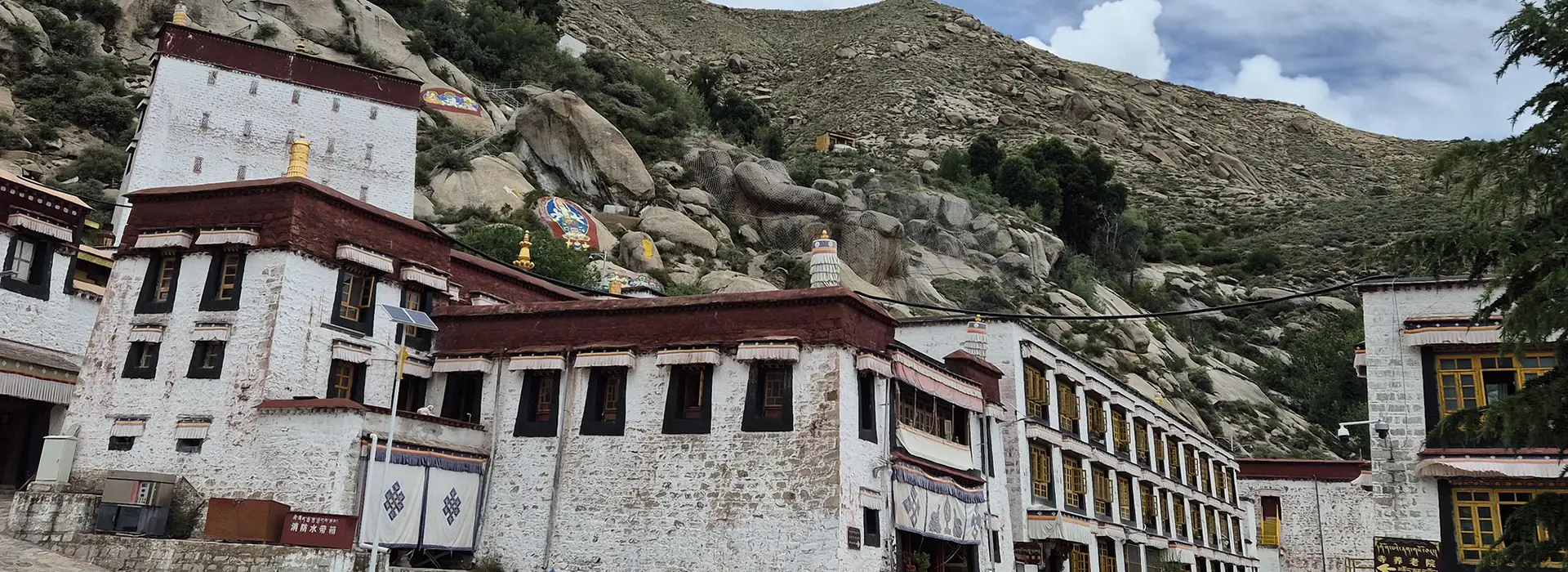
The Lhasa and Yamdrok Lake Tour takes you through the spiritual heart of Tibet and out to one of Asia’s most spectacular mountain lakes — all in five comfortable days. You explore Potala Palace, Jokhang Temple, Barkhor Street, Drepung Monastery, and Sera Monastery in Lhasa. On Day 4, a full-day excursion takes you over the high Gampala Pass and down to the sacred turquoise waters of Yamdrok Lake.
Unlike longer Tibet overland routes, this short Tibet tour with Yamdrok Lake requires no trekking, no multi-day mountain driving, and no extreme physical effort. The pace stays comfortable. The route suits families, seniors, and first-time Tibet visitors who want a manageable pace and proper acclimatization time. Every day builds naturally on the last. The first three days in Lhasa give your body time to acclimatize at 3,656 meters before the Day 4 excursion reaches Gampala Pass at around 4,900 meters. This route offers more cultural and scenic variety than a Lhasa-only city tour
Here are the strongest reasons to book this particular Lhasa Yamdrok Lake Tour over other Tibet packages of a similar duration:
A standard Lhasa city tour covers monasteries and temples. The Lhasa and Yamdrok Lake Tour keeps everything from a classic Lhasa itinerary and adds something genuinely different on Day 4.
Yamdrok Lake sits at 4,441 meters on the Tibetan plateau. The drive from Lhasa crosses Gampala Pass at around 4,900 meters. Standing at the pass and seeing the whole turquoise lake spread across the valley below is a moment that no city tour delivers.
Three days in Lhasa before this excursion allow your body to gradually adjust to the altitude. You arrive at the pass and lake feeling prepared, not exhausted. The addition of Yamdrok also brings more variety. You move from ancient palaces and monastery courtyards to high-altitude plateau scenery, sacred water, and a remote island monastery.
The package stays short and easy, but it delivers far more range than a four-day Lhasa-only option. Travelers who want the Everest Base Camp or Kailash routes need more time and higher physical fitness. It combines major landmarks with one of Tibet’s most important sacred lakes.
The Lhasa and Yamdrok Lake Tour delivers a complete Tibet experience in five well-structured days. You cover Potala Palace, Jokhang Temple, Barkhor Street, Drepung Monastery, Sera Monastery’s famous debate session, a Tibetan teahouse cultural stop, and a full-day Yamdrok Lake excursion that includes four viewpoints and a visit to the Rutok Monastery island. The team handles the core Tibet-side logistics, including transfers, accommodation, guided visits, and listed entrance tickets.
Your job is to arrive, follow your guide, and let Tibet show you what makes it different from anywhere else on earth. Send your inquiry today with your travel dates, group size, and nationality. The team replies with availability, pricing, and the exact permit process for your passport. Confirm early for October and November travel — availability at top Lhasa hotels fills fast in the peak season. Lhasa and Yamdrok Lake together in five days. Designed for first-time visitors. Easy to manage. Rich in culture, scenery, and local experience.

Included Meals

Accommodation
3-star hotel in Lhasa (upgrade available)

Trip Grade
This 5-day trip in Lhasa begins with arrival and a full day to rest and get used to the high altitude. The next two days focus on the city’s main cultural sites, including important monasteries, the Potala Palace, Jokhang Temple, and Barkhor Street, along with a stop at a local teahouse. On Day 4, you take a day trip to Yamdrok Lake, crossing a high mountain pass and stopping at several viewpoints before returning to Lhasa. The tour ends on Day 5 with your departure or the option to continue traveling in Tibet.
Your guide meets you at Lhasa Gonggar Airport or the Lhasa Railway Station with a traditional white khata scarf — the Tibetan greeting of welcome and respect. A private vehicle transfers you to your hotel in Lhasa. The drive from the airport takes approximately one hour along the Lhasa River valley.
Day 1 stays entirely open for rest and acclimatization. Lhasa sits at 3,656 meters. Even physically fit travelers feel the effects of altitude on arrival. Mild headaches, slight shortness of breath, and fatigue are normal in the first 24 hours. Drink water frequently, avoid alcohol, skip vigorous activity, and rest as much as possible.
If you feel well in the late afternoon, a short, gentle walk near the hotel helps you adjust. Avoid rushing to any major site on Day 1. Use the time to settle in, eat a light meal, and prepare your body for the sightseeing days ahead. Your guide briefs you on the full tour program after you check in.
Travel Note: Carry altitude sickness medicine (Diamox) if your doctor prescribes it. Inform the guide if you experience symptoms beyond mild headache or fatigue.
Accommodation:
3-star hotel in Lhasa (upgrade available on request)

Maximum Altitude 3,656m/11,995ft (Lhasa)
Difficulty
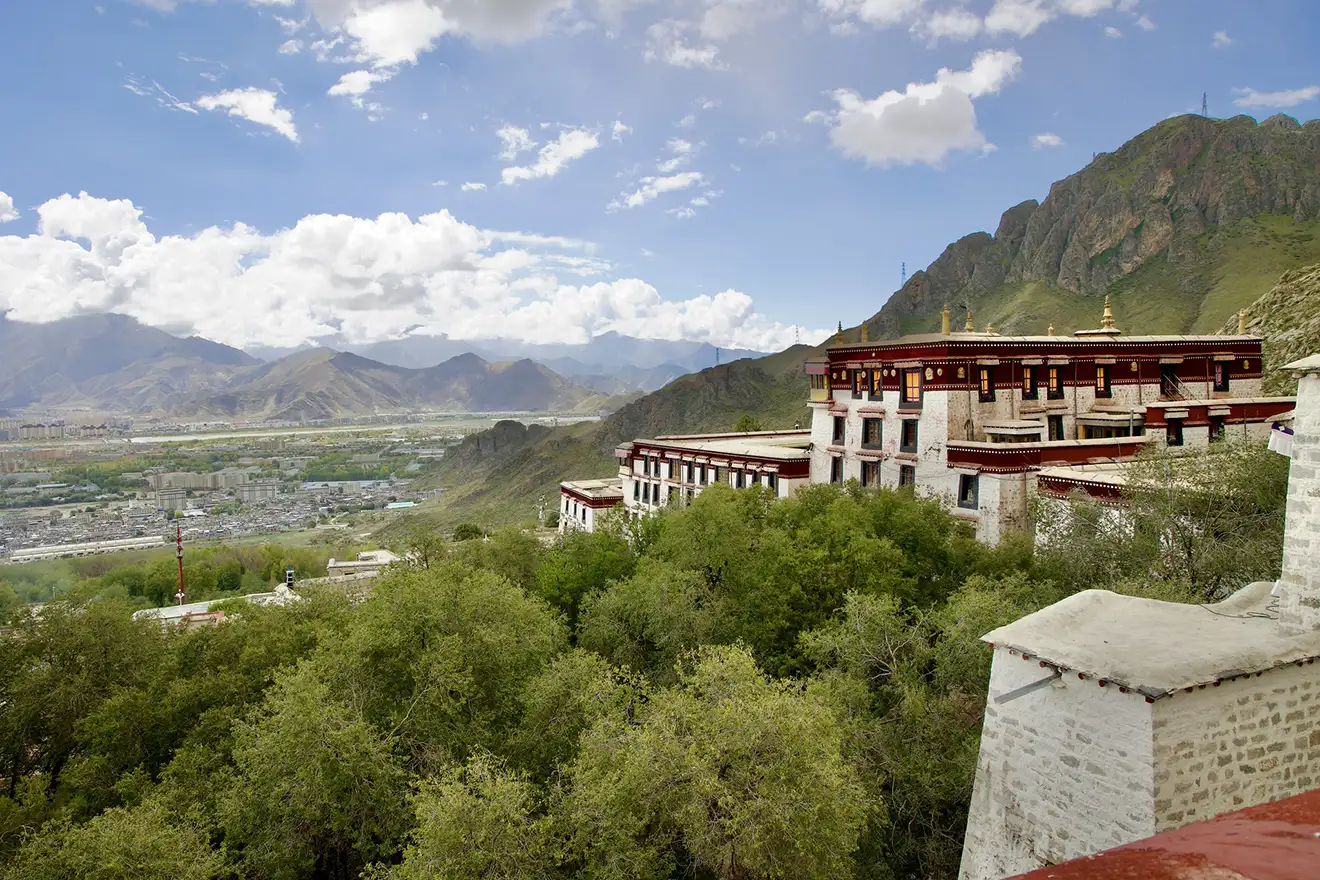
After breakfast at the hotel, your guide takes you to Drepung Monastery on the western edge of Lhasa. Founded in 1416 by Jamyang Choje — a disciple of Tsongkhapa — Drepung once housed over 10,000 monks and ranked as the largest monastery in the world. Today, several hundred monks continue religious study and practice within the complex.
The visit covers the main assembly hall, where large thangka paintings hang from ceiling beams, and monks chant morning prayers. The Maitreya Chapel houses a towering gilded statue of the future Buddha. The living quarters once occupied by the First through Fourth Dalai Lamas also form part of the tour. The monastery buildings spread across a hillside, so the walk involves some uphill paths and stone steps. Your guide keeps the pace slow and builds in rest time.
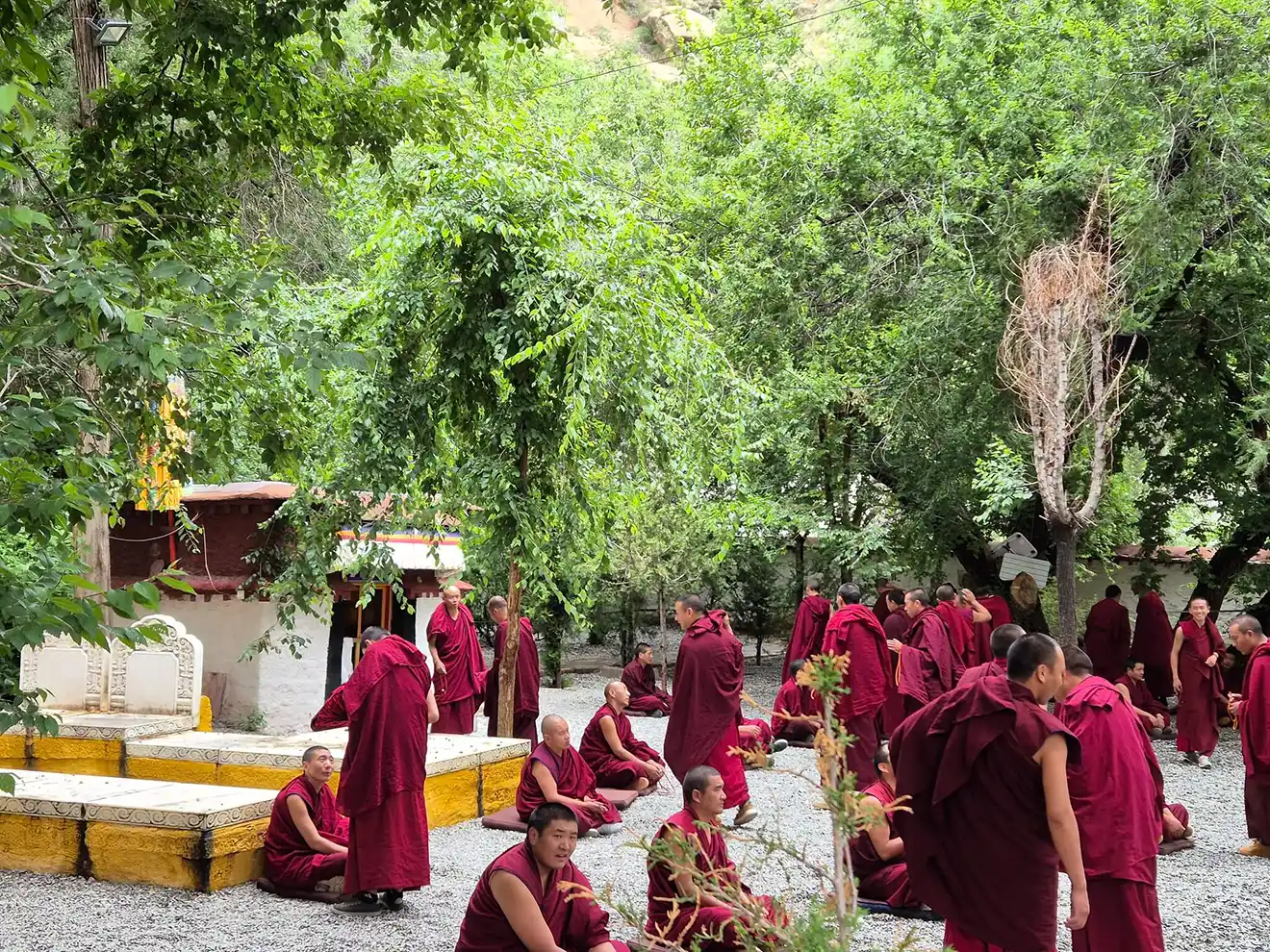
After Drepung, you head to Sera Monastery on the north side of Lhasa. Sera’s most famous attraction runs every weekday afternoon in the debate courtyard. Monks sit and stand in pairs or groups, exchanging philosophical arguments about Buddhist doctrine. The standing monk slaps his hands together sharply with each point. The courtyard fills with the sound of clapping, raised voices, and animated gestures. The session typically runs from around 3 PM. Your guide explains what the monks debate and why the practice matters in Tibetan Buddhist training.
After the debate session, the guide leads you through Sera’s main assembly hall and chapels. Important statues, wall murals, and religious objects line every room. Return to your hotel in Lhasa by late afternoon. Your welcome dinner with the group takes place at a local Tibetan restaurant in the evening.
Highlights: Drepung assembly hall, Maitreya Chapel, Dalai Lama quarters, Sera debate courtyard
Travel Note: Wear comfortable walking shoes. Some uphill paths and stone surfaces at both monasteries.
Accommodation:
3-star hotel in Lhasa
Meals Breakfast, Dinner
Maximum Altitude 3,800m/12,467ft (Lhasa)
Difficulty
Day 3 covers the heart of Lhasa’s famous landmarks. Start at the Potala Palace in the morning. The palace sits on Marpo Ri hill and dominates the city skyline from every direction. The entrance involves a long stone staircase with several hundred steps. Take the climb slowly and pause at each level to catch your breath. Inside, you move through the White Palace — the administrative quarters — and the Red Palace, which holds the religious chapels, golden chortens, and royal burial chambers of past Dalai Lamas.
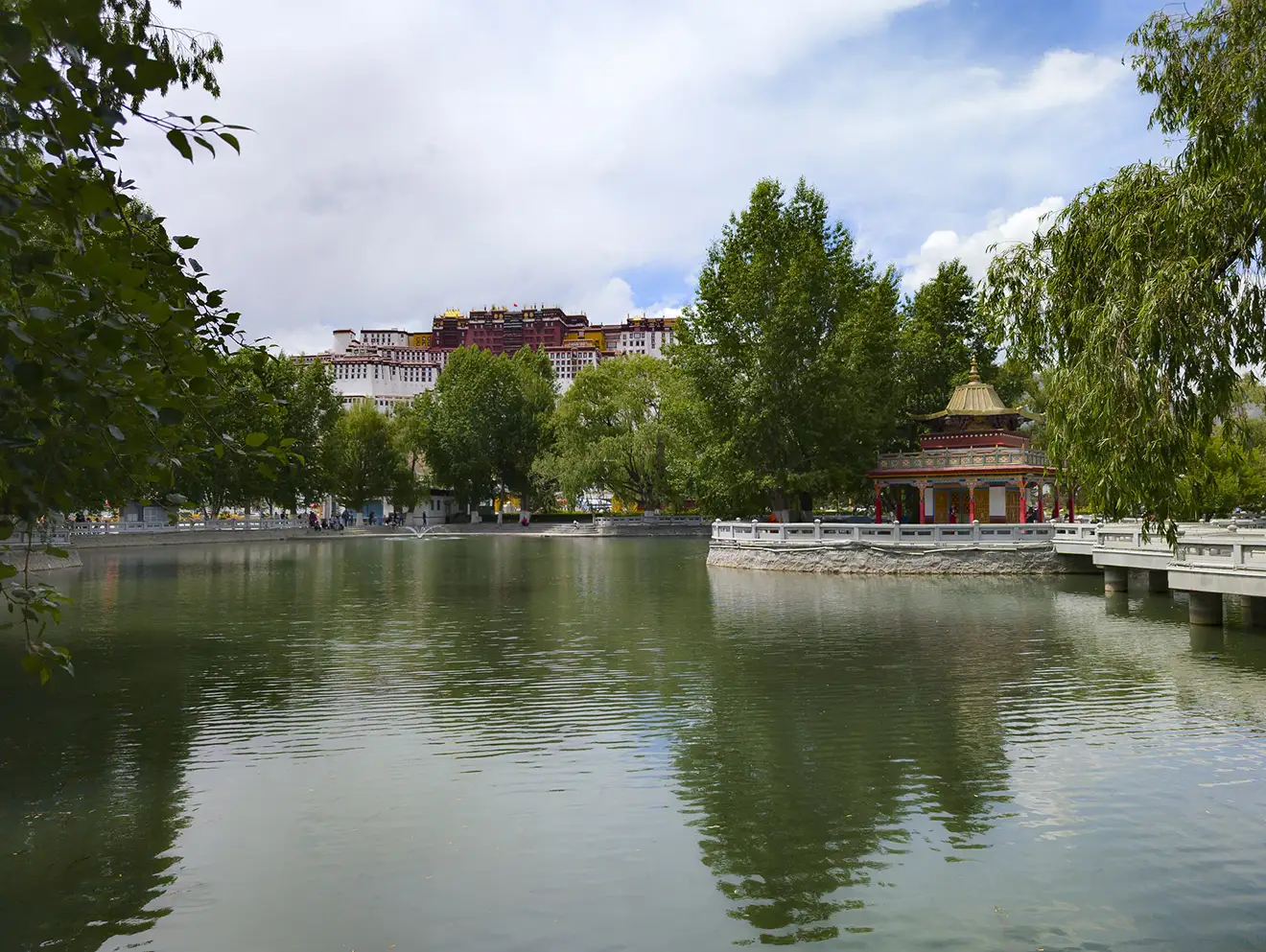
The chapels within the Potala display some of the finest examples of Tibetan Buddhist art in the world. Silk thangkas hang from ceiling beams. Gold and jeweled statues fill alcoves. Hundreds of butter lamps cast warm light across the walls. Visitor numbers inside the Potala are limited each day by a timed-entry system. Your guide secures your entry tickets in advance to ensure smooth access.
After Potala, your group drives to the old town for Jokhang Temple. Built in 647 AD, Jokhang forms the spiritual axis of Lhasa and of Tibetan Buddhism as a whole. The main hall houses the Jowo Rinpoche — a gold statue of the young Shakyamuni Buddha, believed to date back to the time of the historical Buddha himself. Pilgrims crowd the entrance every morning and afternoon, prostrating, chanting, and placing offerings of butter into the lamps that line the courtyard.
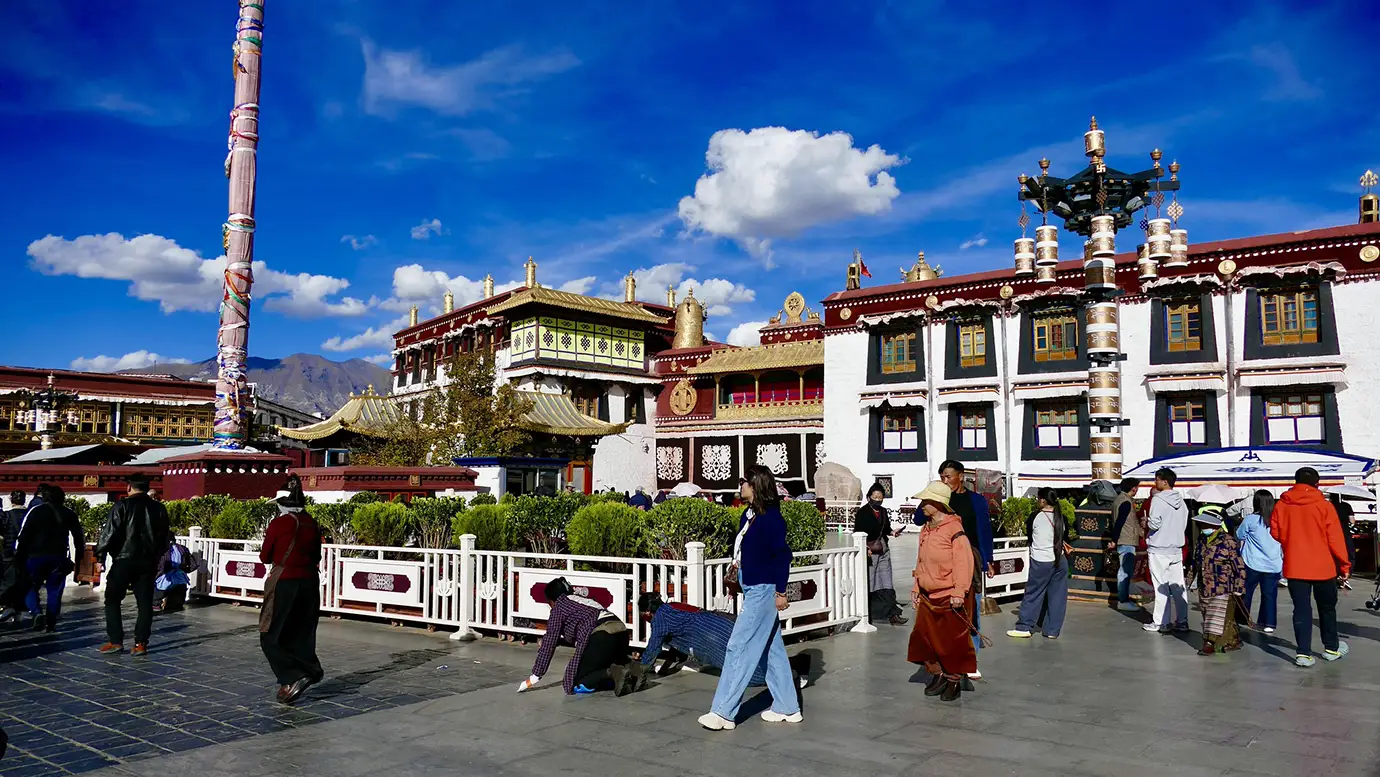
The inner courtyard, the main shrine hall, and the rooftop terrace all form part of the visit. From the rooftop, you see the gold dharma wheel and two deer statues silhouetted against the Lhasa skyline — one of Tibet’s most recognizable images. Your guide explains the history, symbolism, and religious importance of each section of the temple.
After Jokhang, the group walks the Barkhor circuit. The street circles the temple through the old Tibetan quarter. The walk takes about 20 to 30 minutes at a comfortable pace. Shops along the route sell prayer beads, thangka paintings, singing bowls, incense, turquoise jewelry, traditional Tibetan clothing, and handmade silver items. Pilgrims move in a clockwise direction along the route as part of their religious practice. Join the flow, observe, and stop at any stall that interests you.
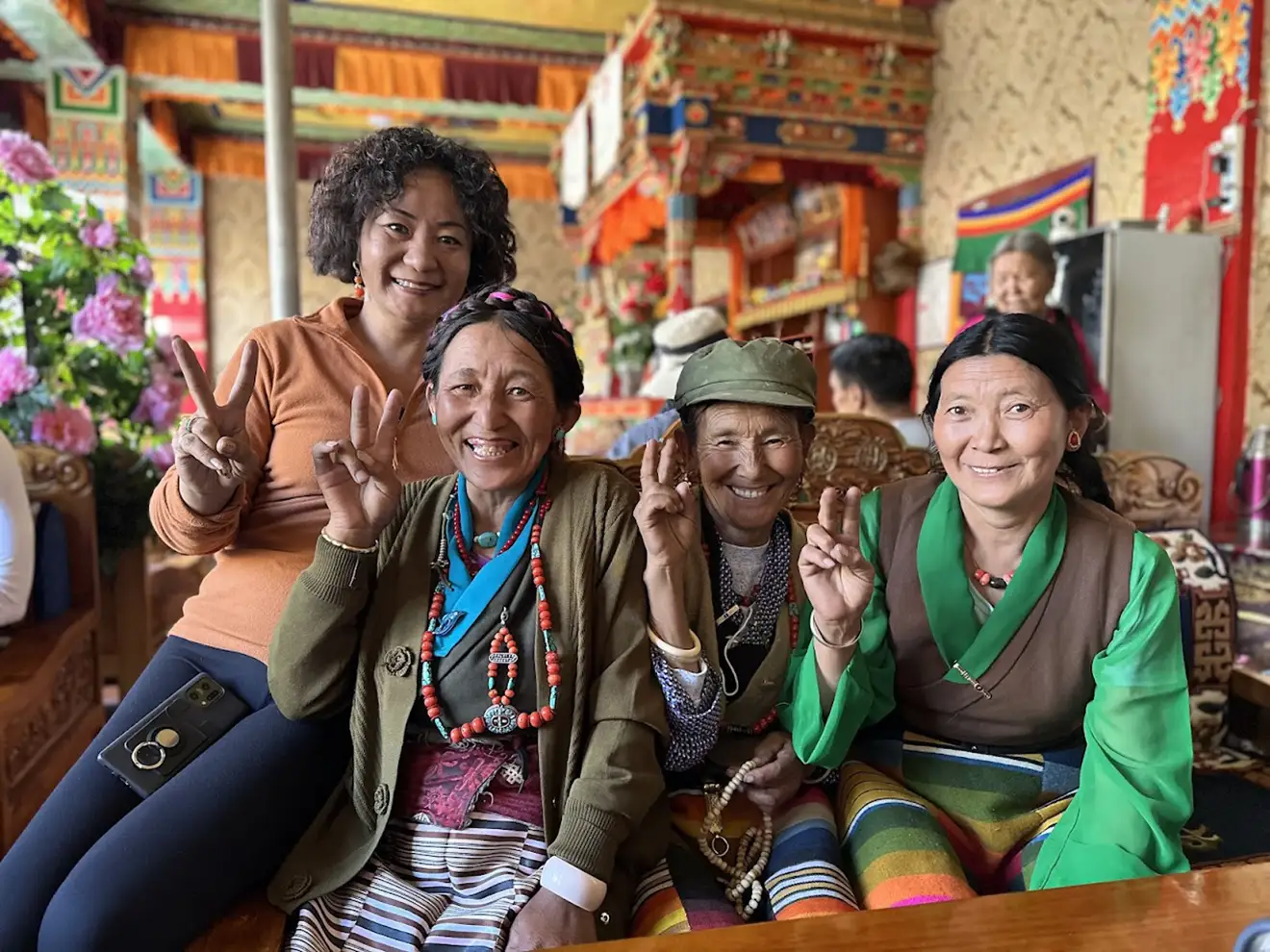
Late afternoon brings a stop at a Tibetan teahouse near the old town. Sit down, order butter tea or sweet tea, and watch how Lhasa residents spend part of their day. Your guide explains the customs around Tibetan tea culture and helps you order local snacks. The teahouse stop gives the cultural day a warm, human ending before returning to the hotel.
Highlights: Potala Palace interior, Jokhang Jowo Rinpoche statue, Barkhor circuit walk, teahouse cultural stop
Travel Note: Photography inside the Potala and Jokhang requires a camera permit in specific areas. Your guide advises on current rules at each site.
Accommodation:
3-star hotel in Lhasa
Meals Breakfast
Maximum Altitude 3,700m/12,139ft (Lhasa)
Difficulty
Day 4 brings the tour’s natural highlight. After breakfast, your vehicle departs Lhasa and heads southeast along the Lhasa River valley. The road climbs steadily toward Gampala Pass at around 4,900 meters above sea level. The pass marks the high point of the day and offers a panoramic view across the valley, revealing the full shape and color of Yamdrok Lake for the first time.
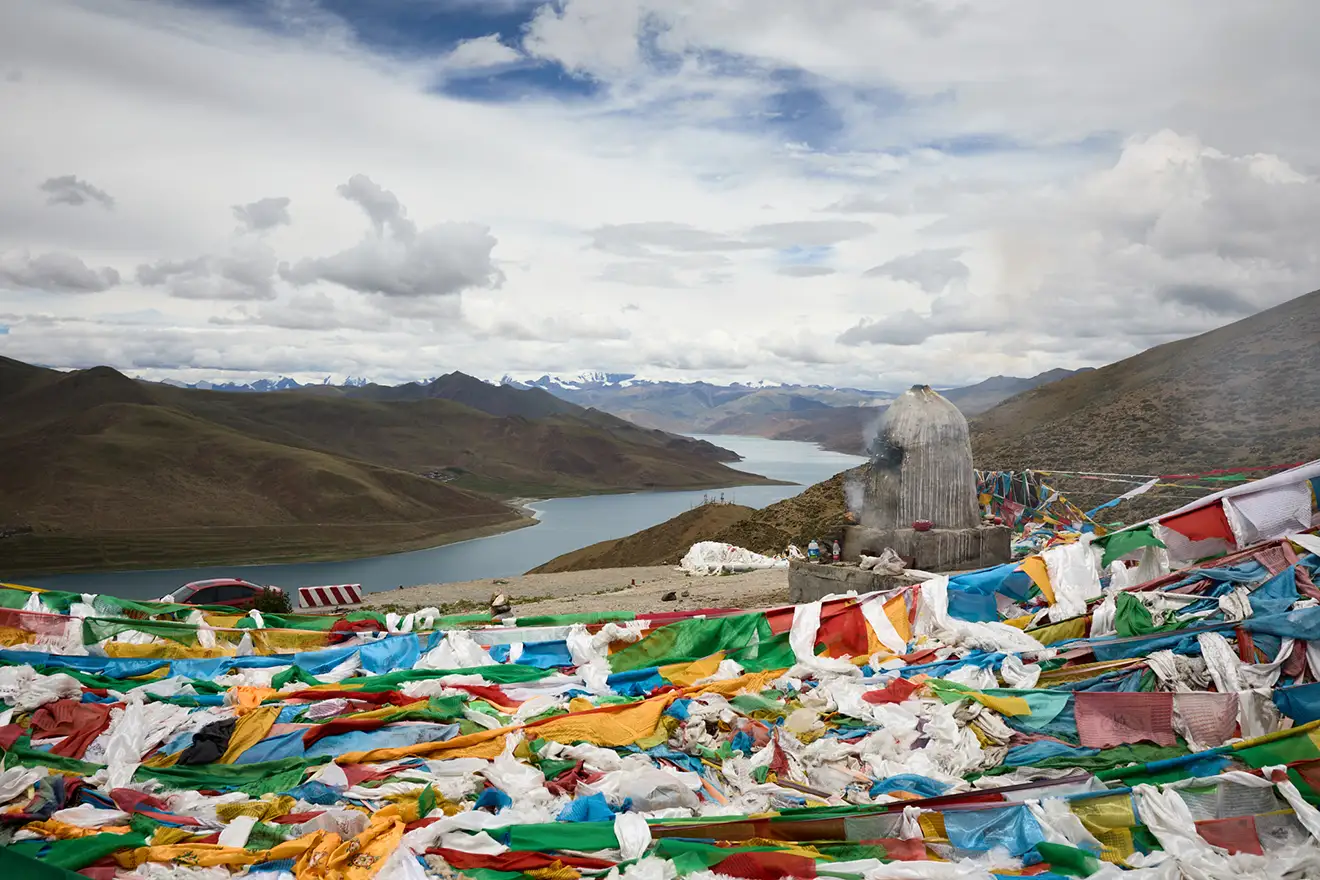
The lake spreads across the valley below the pass in a deep, vivid turquoise — a color produced by the extreme clarity of the glacial water and the high-altitude light. At Gampala, your vehicle stops at the main viewpoint, and a string of prayer flags frames the scene above the water. Take time to photograph, breathe the thin air, and absorb the scale of what you see. This viewpoint counts as Platform One of the four distinct lake-viewing stops built into this itinerary.
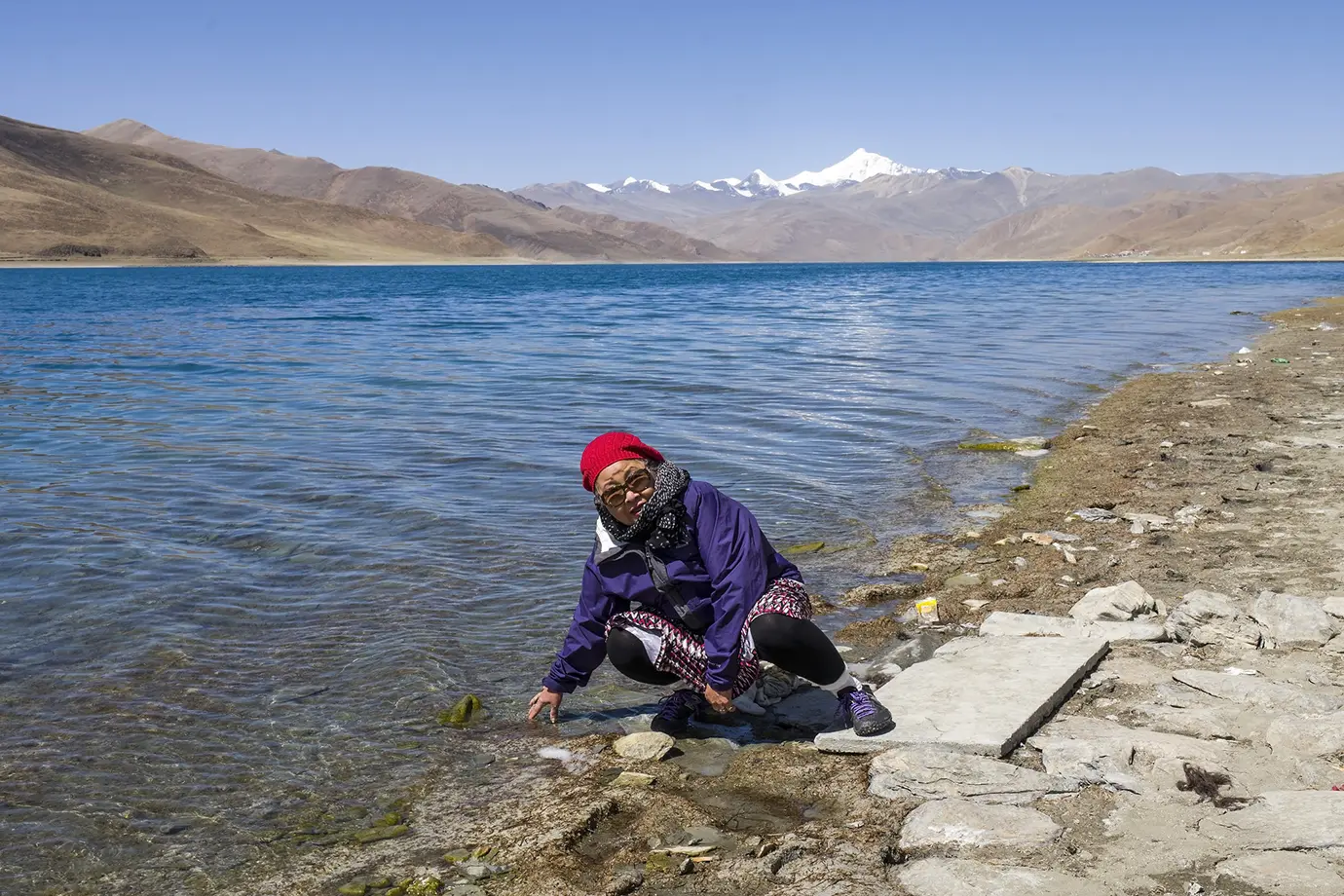
The road descends from the pass to the lake level. At each stopping point along the route, the guide pulls over at a viewing platform that shows a different perspective of Yamdrok Lake. The lake extends over 72 kilometers in an irregular branching shape. Platform Two sits closer to the shoreline and reveals details that the pass viewpoint cannot show. Platform Three captures the full width of the lake with mountains reflected in the water. Platform Four, positioned at a different angle on the return route, gives a late-afternoon color shift that photographers prize.
The itinerary includes a stop at Rutok Monastery. Rutok sits on a small island or promontory at the edge of the lake. A local monk community maintains the monastery. The monastery building itself is modest in scale but holds deep significance for the villages surrounding the lake. Local Tibetan families make offerings at Rutok as part of their relationship with the lake’s sacred status. Visiting Rutok adds a genuine spiritual dimension to the day that most Yamdrok Lake day trips miss entirely.
Lunch on Day 4 is included — usually served at a restaurant near the lake or on the return route to Lhasa. After lunch, the vehicle follows the lake road back toward Lhasa, stopping at the final viewing platform before climbing back over or around Gampala. Your group returns to Lhasa in the late afternoon.
The full-day Yamdrok Lake excursion covers approximately 180 to 200 kilometers round-trip from Lhasa. The drive time runs to about 4 to 5 hours total, including stops. No trekking or hiking is required. All viewing platforms are roadside or involve a short walk of 5 to 15 minutes on level ground.
Highlights: Gampala Pass panorama, four Yamdrok Lake platforms, Rutok Monastery island visit
Travel Note: Gampala Pass sits at ~4,900 m. Spend a few minutes at the viewpoint rather than rushing. Avoid overexertion at this altitude. Wear a warm jacket. The lake area often feels colder than Lhasa even in summer.
Accommodation:
3-star hotel in Lhasa
Meals Breakfast, Lunch
Maximum Altitude 4,900m/16,076ft (Gampala pass)
Difficulty
After breakfast, the guide and driver transfer you to Lhasa Gonggar Airport or the railway station based on your departure schedule. The drive to the airport takes approximately one hour.
If your flight or train leaves in the afternoon, the morning stays open for a short walk around the hotel neighborhood, last-minute shopping near Barkhor, or a final breakfast at a local restaurant. Your guide can suggest a morning activity that fits your departure time.
For travelers who want to extend their trip after the Lhasa and Yamdrok Lake Tour, the guide arranges connections to Shigatse, Gyantse, Everest Base Camp, or other overland routes in Tibet. Ask about extension options when you book.
Travel Note: Check your departure time the evening before and confirm hotel checkout with the guide. Allow extra time at the airport during peak travel seasons.
Meals Breakfast
Difficulty
The base price of the Lhasa and Yamdrok Lake Tour includes 4 nights in a 3-star hotel in Lhasa. The hotels in this category offer private rooms with private bathrooms, hot water showers, and central heating. Most Lhasa 3-star properties include breakfast, in-room Wi-Fi, and a central location near the main sightseeing areas.
All four nights of accommodation stay in Lhasa. The Yamdrok Lake excursion on Day 4 operates as a full-day return trip, so you sleep in Lhasa every night of the tour. No remote guesthouse nights or basic lodges appear in this itinerary.
An upgrade to a 4-star or 5-star Lhasa hotel is available at additional cost. Premium properties in Lhasa include international-brand hotels that offer larger rooms, better in-room facilities, spa services, and multiple dining options. Contact the Booking team to discuss upgrade options and pricing.
Solo travelers receive a single room by default. Couples and friends traveling together share a twin or double room based on preference. Families with young children can request connecting rooms or family suites. Hotel availability for specific room types varies by travel season, so book early for October and November travel.
The family-friendly Lhasa and Yamdrok Lake tour rates as Easy in overall difficulty. No trekking, no mountain climbing, and no multi-day overland drives appear in the itinerary. The physical demands stay well within the range of most travelers, regardless of age or fitness level.
| Location | Altitude | Tour Day |
|---|---|---|
| Lhasa City | 3,656 m / 11,995 ft | Days 1–3 and Day 5 |
| Yamdrok Lake | 4,441 m / 14,570 ft | Day 4 lake visit |
| Gampala Pass | ~4,900 m / 16,076 ft | Day 4 pass crossing |
| Drepung Monastery | 3,800 m / 12,467 ft | Day 2 |
| Sera Monastery | 3,680 m / 12,073 ft | Day 2 |
| Potala Palace | 3,700 m / 12,139 ft | Day 3 |
Altitude represents the main factor to prepare for, even on an easy Tibet tour in Lhasa. The first three days of sightseeing at 3,656 meters let your body adjust gradually before Day 4 reaches 4,441 meters at Yamdrok Lake and 4,900 meters at Gampala Pass. This acclimatization sequence is built into the itinerary intentionally. Most travelers who spend three days in Lhasa before the Yamdrok excursion handle the Day 4 altitude without serious difficulty.
Common altitude symptoms include mild headache, fatigue, slight shortness of breath, and occasionally disturbed sleep. These symptoms normally ease after 24 to 48 hours at altitude. Drink 3 to 4 liters of water daily, avoid alcohol for the first two days, eat light meals, and rest well each evening.
Families with children and senior travelers regularly complete this tour without difficulty when they follow the acclimatization plan and keep a slow pace. Children often acclimatize faster than adults. Seniors who maintain reasonable cardiovascular health and have no active heart or lung conditions generally handle Lhasa well.
Speak with your doctor before booking if you have a history of heart disease, chronic lung conditions, hypertension, or severe anemia. Acetazolamide (Diamox) helps reduce altitude symptoms for many travelers. Ask your doctor about appropriate dosage before your departure.
The tour includes a specific set of meals across the five days. Here is the exact meal pattern:
• Day 1: No meal included. Dinner at your own expense.
• Day 2: Breakfast included. Welcome dinner included at a local Tibetan restaurant.
• Day 3: Breakfast included. Lunch and dinner at your own expense.
• Day 4: Breakfast and lunch included.
• Day 5: Breakfast included.
What to Eat in Lhasa
Lhasa supports a broad food scene that covers local Tibetan, Chinese, Nepali, Indian, and Western options. Local Tibetan food forms the cultural foundation of any meal experience in the city.
Tibetan dishes worth trying on your independent meals include momos — steamed or fried dumplings filled with yak meat or vegetables. Thukpa, a hearty noodle soup, works well for lunch on cool days. Tsampa — roasted barley flour — comes mixed into butter tea or shaped into dough balls as a traditional staple. Sha phaley, a fried bread filled with yak meat and vegetables, makes a popular street snack near Barkhor. Tingmo, a soft steamed bread served with stew, appears on most Tibetan restaurant menus.
Vegetarians find Lhasa easy to navigate. Most restaurants that serve Tibetan and Nepali food offer vegetable momos, vegetable thukpa, and plant-based dal dishes. Tell your guide about any dietary requirements before Day 1 and the team communicates your needs to each restaurant in advance.
The welcome dinner on Day 2 introduces you to Tibetan food in a structured setting. The chef prepares traditional dishes appropriate for the group. The lunch included on Day 4 typically comes from a restaurant near Yamdrok Lake that serves simple, filling Tibetan and Chinese food suited to a full day of outdoor activity.
Every foreign traveler entering Tibet needs two essential documents beyond a standard passport: a valid Chinese visa and a Tibet Travel Permit. Neither comes optional. Without both documents in hand, airlines and train stations refuse to board for Lhasa.
Documents Required
The Chinese government does not allow foreign travelers to apply for the TTP individually. Only a registered Tibet travel agency applies on your behalf. After you confirm your booking and submit a clear copy of your passport bio page and your Chinese visa, the team begins processing your application.
Processing normally takes 7 to 14 working days. Plan your booking at least 3 to 4 weeks before your travel date to allow enough processing time. Citizens of certain countries — including the United States, United Kingdom, and Canada — sometimes face additional processing requirements during sensitive periods. Always book early and declare your nationality at the time of inquiry.
The TTP arrives as a physical document that your operator sends to you or to a travel agent contact in mainland China. Airlines and railway stations check the TTP before issuing boarding passes to Lhasa. Do not attempt to board without it in hand.
Work visa or student visa holders traveling on non-tourist Chinese visas may need additional documentation. Inform the team of your visa type when you inquire, so they can advise you correctly on what to prepare.
The Lhasa and Yamdrok Lake Tour runs all year. The best season for most travelers runs from April through October.
| Season | Months | Conditions | Rating |
|---|---|---|---|
| Spring | Mar – May | Clear skies, rhododendron blooms | Excellent |
| Summer | Jun – Aug | Warm, busy, occasional afternoon rain | Good (busy) |
| Autumn | Sep – Oct | Best visibility, ideal temperatures | Best overall |
| Winter | Nov – Feb | Cold, quiet, budget-friendly, snow views | Good (budget) |
The best overall months are April, May, September, and October, which offer the clearest skies, the most comfortable temperatures, and the best visibility for both Lhasa sightseeing and Yamdrok Lake photography. Book 4 to 6 months early for September and October travel.
Peak season: July and August bring the most visitors to Lhasa. Hotel and permit availability tighten. The early October national holiday (October 1 to 8) attracts large numbers of domestic Chinese tourists to Tibet. Book well ahead for these windows.
Winter: November through February brings cold nights and quiet streets. Prices at 3-star hotels drop noticeably in the low season. Yamdrok Lake takes on a snow-framed appearance in deep winter, a stark contrast to the summer green shoreline. The lake itself stays unfrozen due to its size and depth. Cold gear becomes essential. Warm layers, thick gloves, and a good down jacket are non-negotiable in January and February.
Lhasa enjoys more sunny days per year than almost any other high-altitude city. Even in winter, clear blue skies dominate. The thin air and high UV levels mean sun protection matters year-round, not just in summer.
Pack for a city-based tour with one high-altitude day trip. You do not need trekking gear, but you do need warm layers for the Yamdrok Lake day and for Lhasa evenings.
Documents
Clothing
Sun Protection
Health and Medicine
Electronics
Miscellaneous
Many travelers use the Lhasa and Yamdrok Lake Tour as the opening segment of a longer overland route through Tibet. The five-day base gives you well-acclimatized legs and a strong Lhasa foundation before heading further west or south.
Ask the team about any extension at the time of inquiry. They build a combined permit and logistics plan that covers the full route from the start.
Understanding where this tour sits among other Tibet options helps you decide whether it aligns with your goals. Here is a quick comparison:
The Lhasa and Yamdrok Lake Tour hits the right balance for most first-time visitors. It delivers more than a pure city tour but demands far less than any overland Tibet route.
Lhasa carries a spiritual weight that few cities in the world match. The name Lhasa means ‘Place of the Gods’ in Tibetan. For over 1,300 years, the city has served as Tibet’s political and spiritual center. Tibetan pilgrims cross the entire plateau on foot, on bicycle, and by road to reach Lhasa. The city holds Tibetan Buddhism in its streets, temples, and daily rhythms.
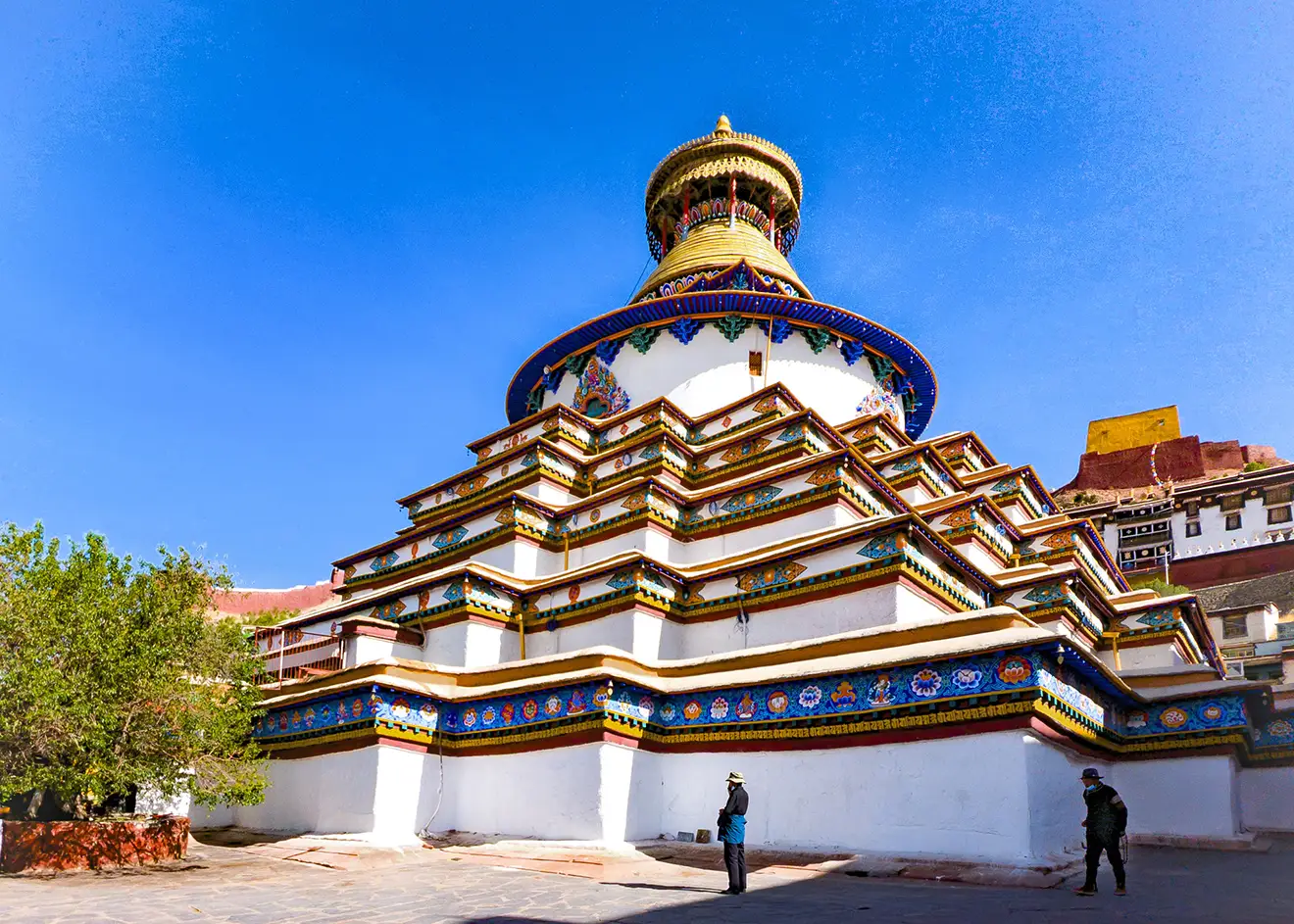
Potala Palace stands on Marpo Ri — Red Hill — above the city. The palace rises 117 meters and contains over 1,000 rooms, 10,000 shrines, and centuries of Tibetan Buddhist art. The Fifth Dalai Lama ordered its construction in 1645. It served as the seat of the Tibetan government and as the winter residence of successive Dalai Lamas. UNESCO added it to the World Heritage list in 1994. Walking up its stone steps and through its red-walled chapels gives a direct sense of Tibet’s historical and religious depth.
Jokhang Temple, built in 647 AD, houses the Jowo Rinpoche — a precious gold statue of young Shakyamuni Buddha. Tibetan Buddhists consider this statue the most sacred object in Tibet. Every morning, pilgrims gather at its entrance, prostrate on flat stones worn smooth by centuries of worship, spin prayer wheels, and chant. The smell of butter lamps, the sound of prayers, and the movement of monks and pilgrims make Jokhang a living spiritual site, not a museum.
Barkhor Street circles Jokhang Temple through Lhasa’s old town. Local Tibetans walk this route daily as part of their practice. Market stalls line both sides, selling thangka paintings, singing bowls, butter lamps, turquoise jewelry, yak wool scarves, incense, and Tibetan medical supplies. The crowd mixes pilgrims, monks, traders, and visitors. A walk around Barkhor takes about 30 minutes at a relaxed pace and gives a direct window into how Tibetans live and practice their faith.
Drepung Monastery, founded in 1416, once housed over 10,000 monks and stands as one of the Three Great Gelug Monasteries of Tibet. Its white-washed buildings spread across a hillside eight kilometers west of Lhasa city. The main assembly hall, the Maitreya Chapel, and the former residence quarters of past Dalai Lamas all form part of the visit.
Sera Monastery, founded in 1419, holds a unique attraction that most travelers remember long after the trip ends. Every weekday afternoon, monks gather in the debate courtyard and argue Buddhist philosophy through a formal system of challenges and responses. The standing monk claps sharply with each argument to emphasize his point. The session looks intense and sounds dramatic. It reflects deep intellectual and spiritual training that has continued at Sera for over 600 years.
A Tibetan teahouse stop adds a personal, unhurried dimension to the days in Lhasa. Butter tea — salty, rich, and made from compressed tea and yak butter — challenges most first-time visitors. Sweet Tibetan tea offers a gentler option. Sitting in a local teahouse, watching how Lhasa residents spend their afternoon, and tasting traditional food makes the cultural experience feel real rather than staged.
Yamdrok Lake — locally called Yamzho Yumco — holds one of the highest spiritual positions among Tibet’s many lakes. Tibetan Buddhists class it as one of the Three Holy Lakes of Tibet, alongside Namtso and Manasarovar. Oracles and high lamas have historically consulted Yamdrok’s waters to identify the reincarnations of important figures, including the Dalai Lama. The lake carries religious significance that goes far beyond its physical beauty.
The lake sits at 4,441 meters above sea level on the Tibetan plateau, roughly 90 kilometers southeast of Lhasa. Gampala Pass, at around 4,900 meters, marks the highest point on the route from Lhasa. At the top of the pass, a viewpoint offers a view of the entire lake spread across the valley below — a vast expanse of deep turquoise water surrounded by snow-capped peaks. The view from Gampala is among the most photographed scenes in all of Tibet.
The Yamdrok Lake day trip from Lhasa takes a route designed around four distinct viewing platforms. Each platform offers a different angle on the lake, a different composition for photography, and a different sense of the water’s scale and color. The lake stretches over 72 kilometers and has an irregular, branching shape that changes appearance as you move along the shoreline.
Rutok Monastery on the lake island makes this tour stand apart from a basic Yamdrok Lake drive. Most day trips from Lhasa pass the lake from the road above. The tour includes a visit to Rutok Monastery on the lake island, which adds a deeper spiritual dimension to the Yamdrok experience. Local monks maintain the monastery and continue religious practice there. Visiting Rutok brings the lake’s spiritual dimension to life in a way a roadside photo stop never can.
The lake’s color shifts noticeably across the day. Early morning brings a deep steel blue. Midday sun turns the water to a bright turquoise. Late afternoon produces warmer tones that reflect the Himalayan light. Day 4 of this itinerary gives you a full day to experience the lake across different hours and light conditions.
Yes. Five days cover all the main Lhasa sights across Days 2 and 3, plus a full Yamdrok Lake day trip on Day 4. Day 1 goes to arrival and acclimatization. Day 5 covers departure. Travelers who want more Lhasa time or an additional natural excursion to Namtso Lake or Gyantse can ask about 7-day extensions.
Yes. Every foreign traveler entering Tibet needs a Tibet Travel Permit. The tour operator applies for it on your behalf after you book and submit passport and visa details. Processing takes approximately 7 to 14 working days. Book at least 3 to 4 weeks before your travel date to allow processing time.
The overall grade rates as Easy. No trekking or hiking appears in the itinerary. All viewing at Yamdrok Lake happens from roadside platforms or short 5 to 15 minute walks on flat ground. The climb up Potala Palace’s stone stairs is the most physically demanding element of the tour. Move slowly, take breaks, and the climb presents no problem for most travelers.
The day trip from Lhasa reaches three altitude levels. Lhasa sits at 3,656 m. Yamdrok Lake sits at 4,441 m. Gampala Pass, the highest point of the day, reaches approximately 4,900 m. Three days of acclimatization in Lhasa before Day 4 significantly reduce the risk of altitude discomfort at the pass.
Rutok Monastery sits on a small island or peninsula at the edge of Yamdrok Lake. Most day trips from Lhasa view the lake from the road above or stop at roadside viewpoints. A visit to Rutok brings the spiritual dimension of the lake into direct personal contact. Local monks maintain the monastery. Seeing the monastery from the lake level, rather than only from above, gives a completely different experience of the site.
Yes. The easy grade and short daily distances suit families well. Children often acclimatize to altitude faster than adults. Keep the pace slow on Day 1 and monitor how each child feels on arrival. On Day 4 at Gampala Pass, keep younger children warm and limit their time at the very highest viewpoints. Families with children below age 10 should consult a doctor before travel to Tibet at altitude.
Yes. Seniors with reasonable cardiovascular health regularly complete this tour. The itinerary stays manageable across all five days. The guide adjusts the daily pace as needed. Seniors who want a private tour rather than a small group tour benefit from even more flexible timing. At Gampala Pass, move slowly and do not rush the short walk to the viewpoint. Inform the guide of any health conditions before Day 1 so the team prepares appropriately.
Yes. The Lhasa and Yamdrok Lake Tour connects naturally to the Gyantse and Shigatse route and then onward to Everest Base Camp. Adding 5 to 7 days after Day 5 extends the package into a full Tibet overland experience. Additional permits are required for the Shigatse area and the Everest zone. Inform the team of your interest at the time of inquiry so they design the combined itinerary and permit plan from the start.
Yes. The five-day itinerary covers exactly the right scope for a first Tibet visit. It gives you the two most important monasteries, the two most important temples, the most famous street, and one of the most sacred lakes — all without overloading a first-time traveler with days of overland driving. The pace stays comfortable, the guide handles all logistics, and the acclimatization plan reduces altitude risk. This tour is a strong short-format Tibet option for first-time visitors to the region.