
Unbeatable Holiday Offers – Save Up to 20% on Your Next Adventure!


Nepal Trekking Culture and Etiquette: 8 Easy Rules
Last verified: 23 November 2026. Customs vary between communities and regions. When unsure, watch what local people do or ask your guide.
Nepal trekking culture and etiquette rules help you show respect in villages, monasteries and homes along the trail. We cover greetings, dress, how to walk around stupas and mani walls, monastery and temple manners, food customs, photography, gifts and tipping, the main communities you will meet on each route, trail festivals and useful Nepali phrases.
Why does etiquette matter on a Nepal trek?
Short answer: Trekking routes pass through people’s homes, farms and sacred places, not empty wilderness. Simple courtesy, such as greeting people, dressing modestly, walking clockwise around stupas and asking before taking photos, shows respect and leads to warmer welcomes. Mistakes are usually forgiven when you show you are trying.
Nepal has more than 120 ethnic and caste groups and many languages, with Hindu and Buddhist traditions that often blend. On a single trek, you may pass Hindu shrines in the lower valleys and Tibetan Buddhist monasteries higher up. Your guide is your best cultural interpreter, so ask questions.
How do you greet people in Nepal?
Short answer: Press your palms together at chest level and say “namaste”. It works for everyone, at any time of day. In Buddhist highland areas such as the Khumbu, Mustang and Tsum, people also say “tashi delek”. Handshakes are common between men in towns, but many women prefer namaste rather than physical contact.
Greet people you pass on the trail, especially elders. Use “didi” (older sister) and “dai” (older brother) as friendly forms of address, which locals use too. A smile and a namaste go a long way, even if conversation ends there.
What should you wear on the trail and in villages?
Short answer: Cover your shoulders and knees in villages and sacred places. Trekking trousers or long shorts and a T-shirt are fine on the trail, but avoid very short shorts, tank tops and going shirtless. Women and men alike should dress modestly. At hot springs, wear a swimsuit with a T-shirt or shorts over it.
Nepalis dress conservatively, especially in rural areas, and revealing clothes can cause discomfort or unwanted attention. Modest, practical clothing also protects you from sun and cold. Remove sunglasses and hats when talking to monks or entering homes and temples.
How should you behave at stupas, mani walls and prayer wheels?
Short answer: Always walk clockwise around stupas, chortens and monasteries, and pass mani walls and chortens on the left so they stay on your right. Spin prayer wheels clockwise with your right hand. Do not sit or climb on stupas or mani stones, and never remove carved stones or prayer flags as souvenirs.
Mani walls are long rows of stones carved with the mantra “om mani padme hum”, common in the Khumbu, Langtang, Manaslu, Tsum and Mustang. Chortens are small stupas, sometimes built as gateways called kani over the trail. Walking through a kani gate is considered a blessing, and you will see local people walk clockwise around whole villages and monasteries as part of daily prayer.
| Do | Do not |
|---|---|
| Walk clockwise around stupas and monasteries | Walk counterclockwise or cut across |
| Keep mani walls on your right | Sit on mani walls or chortens |
| Spin prayer wheels clockwise | Take mani stones or prayer flags |
| Leave a small donation in monasteries | Touch statues, murals or ritual objects |
How should you behave inside a monastery or gompa?
Short answer: Remove your shoes and hat before entering, walk clockwise inside, never point your feet at the altar or monks, ask before taking photos and keep your voice low. Sit quietly at the back if you join a puja, the morning or evening prayer. A small donation in the box is appreciated.
Monasteries such as Tengboche in the Khumbu, Kyanjin Gompa in Langtang, Mu Gompa in Tsum and the monasteries of Lo Manthang are active places of worship. Monks may welcome you to watch prayers but may ask you not to photograph. Flash photography can damage old murals, so never use it inside. Accept offered butter tea or food with both hands or your right hand.
What should you know about Hindu temples?
Short answer: Some Hindu temples do not allow non-Hindus inside the main shrine, including the main temple at Pashupatinath in Kathmandu. Respect signs, remove shoes where asked, avoid leather items in some temples and do not touch offerings. At cremation sites by rivers, watch quietly from a distance and do not photograph grieving families.
Small Hindu shrines stand along many lower trails, often marked with red powder, flowers and bells. Walk around them clockwise as you would a stupa, and do not step over offerings left on the ground. In the Kali Gandaki valley, Muktinath at about 3,700 meters is sacred to both Hindus and Buddhists, and pilgrims from Nepal and India visit in large numbers. Visitors should follow the same rules as pilgrims.
What food and eating customs should you follow?
Short answer: Eat and pass food with your right hand, avoid touching shared food or water bottles with your lips, and do not offer food you have bitten. The kitchen hearth is respected in many homes, so do not throw rubbish into the fire or step over it. Accept tea when offered, even if you only take a sip.
The idea of jutho means food or drink that has touched someone’s mouth is considered impure for others. Pour water into your mouth without the bottle touching your lips if you share. Wash your hands before and after meals. In homestays, you may be served first as a guest, and it is polite to accept second helpings of dal bhat, though you can decline with a hand over the plate.
How should you take photographs respectfully?
Short answer: Always ask before photographing people, especially women, elders, monks and children, and accept a no with a smile. Do not photograph inside monasteries without permission or during rituals, never use flash on murals, and avoid photographing cremations or people bathing. Do not pay children for photos, as it encourages begging.
Many people are happy to be photographed if asked, and showing them the image on your screen is a nice moment. If you promise to send a photo, follow through through your guide or agency. Be careful with drones, which need permission and are restricted near monasteries and in national parks.
What body language should you avoid?
Short answer: Do not touch anyone’s head, which is considered sacred, and do not point your feet at people, altars or the hearth, since feet are considered impure. Avoid stepping over people sitting on the ground. Public displays of affection beyond holding hands make many Nepalis uncomfortable, especially in villages.
When sitting in a lodge or home, tuck your feet under you or to the side. Remove your boots before entering a home or a bedroom. Use your whole hand, not a finger, to point at something, and give or receive items with your right hand or both hands, which shows respect.
Should you give gifts, sweets or money to children?
Short answer: No. Giving sweets, pens or money to children on the trail encourages begging and harms dental health in places with no dentists. If you want to help, donate through a school, health post or local organization, or through your agency’s community projects, so the support reaches people fairly.
Children on popular routes sometimes ask trekkers for “sweet” or “pen”. Responding with a smile and a namaste is fine. Many trekkers support projects such as schools in the Khumbu built by the Himalayan Trust, or community programs run by conservation areas. Our responsible trekking guide lists better ways to give back.
Should you bargain in Nepal?
Short answer: Bargaining is normal in markets and souvenir shops in Thamel, Pokhara and Bhaktapur, where a polite, friendly negotiation is expected. Do not bargain over lodge prices, set menu prices, wages for guides and porters or donations. Keep it good-humored and remember the difference to you is often small.
Start below the asking price and settle somewhere in the middle. Walk away politely if the price does not suit you. In remote villages, prices for food and lodging reflect the cost of carrying supplies up, so haggling there is considered rude.
What trail manners should you follow?
Short answer: Give way to people walking uphill, to porters with loads and to yaks, mules and donkeys. When animals pass, step to the mountain side of the trail, never the drop side, and wait until the whole train has gone by. Greet other walkers, keep music to headphones and do not cut corners on switchbacks.
Pack animals carry supplies up the trails and can knock people off narrow paths, especially on bridges and cliff edges. Wait at the end of a suspension bridge rather than meeting animals in the middle. Porters with heavy loads walk at a steady rhythm and need space to pass. Stay on the main trail to protect fragile slopes from erosion.
How should you behave in a village home or homestay?
Short answer: Remove your shoes at the door, wait to be shown where to sit, accept tea or food with your right hand, avoid stepping over the hearth or people sitting on the floor, dress modestly and ask before entering the kitchen or prayer room. Thank your hosts with a namaste when you leave.
In many homes, the kitchen and the shrine are the most sacred spaces. Guests usually sit in a set place, and the eldest person or guest is served first. In Sherpa and Tibetan Buddhist homes, you may be offered butter tea, and your cup will be refilled each time you drink. If you have had enough, leave the cup full. A small gift such as fruit or something from your home country is welcome. Avoid giving cash directly unless the homestay has a set fee.
What do prayer flags, khata scarves and offerings mean?
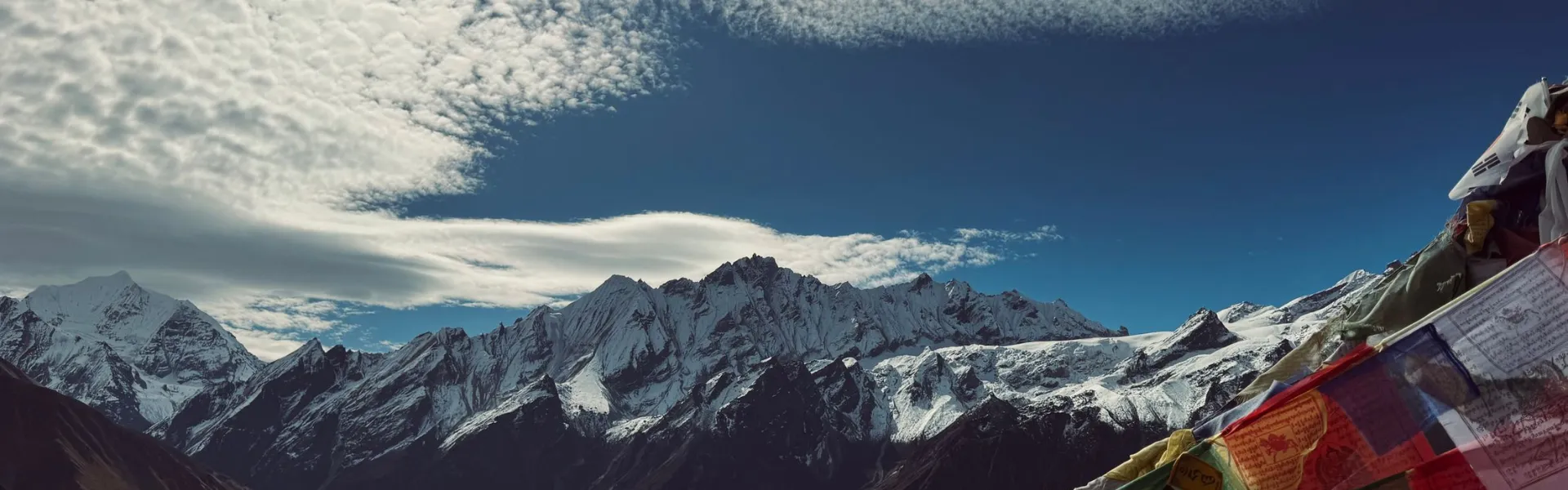
Short answer: Prayer flags carry printed prayers that the wind spreads, and their five colors represent the elements. A khata is a white or cream scarf given as a sign of respect and blessing, often to arriving or departing guests. Leave offerings untouched and never use flags or scarves as decorations or cleaning cloths.
You may receive a khata from your lodge or agency when you finish your trek. Accept it with both hands and a slight bow, and keep it rather than throwing it away. If you want to hang prayer flags at a pass, buy them in Kathmandu or a trailhead town and ask your guide where and how to tie them. Old flags are left to fade naturally rather than removed.
Which communities will you meet on each trekking route?
Short answer: Sherpa people live in the Everest region, Gurung and Magar communities in the Annapurna foothills, Thakali people in the Kali Gandaki valley, Tamang communities in Langtang, Nubri and Tsumba people in the Manaslu and Tsum valleys, Loba people in Upper Mustang, Dolpo-pa in Dolpo, and Rai and Limbu communities in eastern Nepal.
| Region | Main communities | Cultural highlights |
|---|---|---|
| Everest (Khumbu) | Sherpa | Tengboche Monastery, Namche market, Khumjung |
| Annapurna foothills | Gurung, Magar | Ghandruk village, Gurung museum, cultural dances |
| Kali Gandaki and Manang | Thakali, Manangi | Marpha apple orchards, Thakali cuisine |
| Langtang | Tamang | Kyanjin Gompa, Tamang Heritage Trail homestays |
| Manaslu and Tsum | Nubri, Tsumba | Mu Gompa, Rachen Gompa, Samagaun |
| Upper Mustang | Loba | Lo Manthang walled town, cave dwellings, Tiji festival |
| Dolpo | Dolpo-pa | Shey Gompa, Bon and Buddhist traditions |
| Kanchenjunga and Makalu | Rai, Limbu, Sherpa | Terraced hills, Limbu villages, cardamom farms |
Each community has its own language, dress, food and festivals. Asking your guide about local history and customs turns a walk into a richer journey. Our heritage and community trails guide lists routes built around culture.
Which festivals might you see on a trek?
Short answer: Mani Rimdu at Tengboche and other Khumbu monasteries usually falls in October or November, Tiji in Lo Manthang usually in May, Losar, the Tibetan and Sherpa New Year, in February or March, and Dashain and Tihar, Nepal’s biggest Hindu festivals, in October or November. Dates follow lunar calendars, so check each year.
Festivals are religious events first. Watch quietly, follow monks’ and organizers’ instructions, ask before photographing and do not block processions. Lodges near festivals fill up fast, so book ahead. Government offices close during Dashain, which can delay permit processing.
What should women travelers know?
Short answer: Nepal is generally welcoming and safe for women trekkers. Dress modestly, trek with a registered agency and a licensed guide, and lock your room. Women guides are available through several agencies. In some Hindu temples, local customs restrict entry during menstruation, so follow posted rules and your guide’s advice.
Many women trek in Nepal solo or in small groups each season. If anything makes you uncomfortable, tell your guide or agency at once. Carrying menstrual products from Kathmandu is wise, since choices on the trail are limited, and packing them out keeps villages clean.
Which Nepali phrases are useful on the trail?
Short answer: Learn a handful of words: namaste (hello), dhanyabad (thank you), mitho chha (it is delicious), bistarai (slowly), kati ho (how much) and pugyo (enough). Local people appreciate the effort, and these phrases help in lodges and markets.
| English | Nepali |
|---|---|
| Hello / goodbye | Namaste |
| Thank you | Dhanyabad |
| How are you? | Tapai lai kasto chha? |
| I am fine | Malai thik chha |
| Delicious | Mitho chha |
| How much? | Kati ho? |
| Enough, thank you | Pugyo, dhanyabad |
| Slowly | Bistarai |
| Water | Pani |
| Hot water | Taato pani |
| Where is the toilet? | Charpi kaha chha? |
Frequently Asked Questions
Which direction should I walk around a stupa?
Always clockwise, keeping the stupa on your right. The same rule applies to mani walls, chortens, prayer wheels and monasteries.
Can I wear shorts while trekking in Nepal?
Knee-length shorts are generally fine on the trail. Cover your shoulders and knees in villages, monasteries and temples, and avoid very short shorts and tank tops.
Is it rude to refuse food or tea?
Accepting at least a little is polite. If you cannot eat more, say “pugyo, dhanyabad”, meaning enough, thank you, with a smile.
Can I enter monasteries on the trek?
Most monasteries welcome respectful visitors. Remove your shoes and hat, walk clockwise, keep quiet, ask before photographing and leave a small donation.
Should I tip in Nepal?
Tipping guides and porters at the end of a trek is customary, usually around 10 to 15 percent of the trek cost for the crew. Small tips for restaurant staff in towns are appreciated.
About the author: Pradip Karki
Pradip Karki is the Chairman of Peregrine Treks and Tours in Kathmandu and a veteran Himalayan travel specialist with over 20 years of industry leadership. A former TIMS Department Head at the Trekking Agencies’ Association of Nepal (TAAN) with an MBA in Accounting and Finance, Pradip personally scouts routes across Nepal, Tibet and Bhutan to design safe, high-altitude treks and luxury cultural tours.
Reviewed and updated by Pradip Karki on 23 November 2026.
Official Sources Checked
- Nepal Tourism Board: culture and festivals
- UNESCO World Heritage Centre: Kathmandu Valley monuments
- Himalayan Trust: community projects in the Khumbu
Do not hesitage to give us a call. We are an expert team and we are happy to talk to you.
info@hikinginnepal.com- Local Experience
- Financial Protection
- Effortless Travel
- Intimate Group Size
- Bespoken Itinerary