

Included Meals
- Breakfast: 8
- Lunch: 7
- Dinner: 7

Unbeatable Holiday Offers – Save Up to 20% on Your Next Adventure!
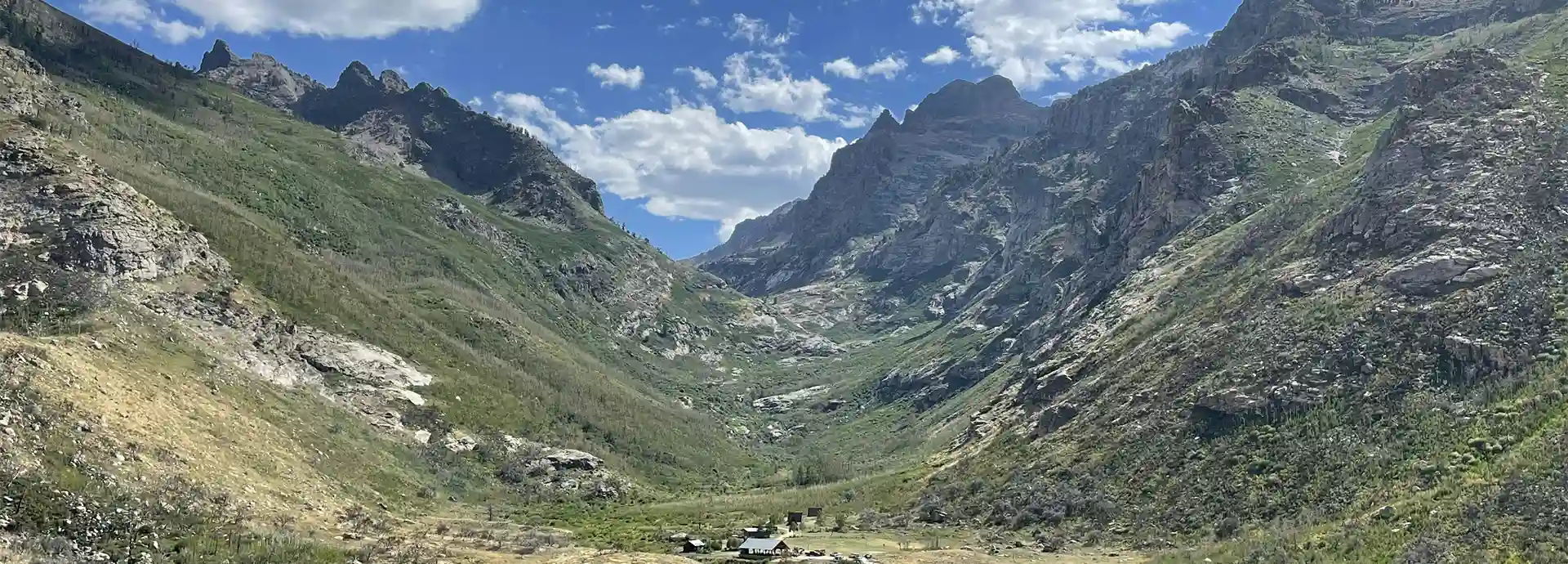
The Ruby Valley Trek runs through the Ganesh Himal region north of Kathmandu — a quiet corridor of Tamang and Gurung villages, rhododendron and pine forest, terraced hillsides, and waterfalls that most Nepal trekkers walk straight past on their way to Langtang. The main pass, Pangsang La at roughly 3,842 to 3,850 meters, gives wide views of Ganesh Himal, the Langtang range, and Manaslu on clear mornings. The villages below it — Tipling, Sertung, Chalish, and Borang — offer some of the most genuine homestay-style accommodation in Nepal’s hill trekking circuits.
Nepal Hiking Company has operated treks across Nepal since 2008. We hold registration with the Department of Tourism, the Office of the Company Registrar, the Small Cottage Industry, the Inland Revenue Department, and Nepal Rastra Bank. We are members of TAAN (Trekking Agencies’ Association of Nepal) and NMA (Nepal Mountaineering Association). Our team in Kathmandu manages road transport, coordination with local lodges, permit paperwork, and guide logistics for the Ruby Valley route. At this destination, good planning matters more than it does on the well-developed Everest and Annapurna circuits.
Hotel Thamel Park handles your nights in Kathmandu. The trail uses local homestays and basic lodges. Don’t bring expectations built on the Everest Base Camp infrastructure. Bring curiosity about how the Tamang and Gurung families actually live — that’s what the route rewards.
The Ruby Valley Trek is a 10-day cultural homestay trek in Nepal’s Ganesh Himal region. The route covers Kathmandu, Syabrubesi or Gatlang, Somdang, Pangsang La Pass, Tipling, Sertung or Chalish, Borang, Dhading Besi, and Kathmandu. It suits trekkers who want quiet trails, Tamang and Gurung village culture, local lodges, forests, waterfalls, and views of Ganesh Himal, Langtang, and Manaslu.
Quick Facts
| Item | Details |
| Duration | 10 Days |
| Start Point | Kathmandu |
| End Point | Kathmandu |
| Trek Start | Syabrubesi or Gatlang, based on the final route |
| Trek End | Road point near Borang, Chalish, or Dhading side |
| Highest Point | Pangsang La Pass, around 3,842–3,850 m |
| Main Region | Ganesh Himal region |
| Difficulty | Moderate |
| Accommodation | Hotel, local lodge, homestay |
| Kathmandu Hotel | Hotel Thamel Park |
| Meals | Breakfast in Kathmandu; full board during trek |
| Transport | Road transport to the trek start and return from the Dhading side |
| Permits | TIMS; Langtang National Park permit if the route enters the Langtang side |
| Best Season | Spring (March–May) and Autumn (September–November) |
| Guide | Licensed trekking guide — required |
| Porter | Optional or included based on package |
The Ruby Valley Trek occupies a gap in Nepal’s trekking map. Langtang Valley Trek gets the alpine seekers. Annapurna gets the circuit trekkers. The Ganesh Himal region — which the Ruby Valley route crosses — sits between those two corridors with a fraction of the foot traffic and a much stronger cultural character. The villages here haven’t been reshaped by decades of demand from trekkers. The homestays and local lodges function as genuine family businesses, not hospitality operations built around tourist expectations.
The route from Syabrubesi or Gatlang climbs through the forest to Somdang, pauses for a pacing day, then crosses Pangsang La Pass, then descends through Tipling, Sertung, or Chalish, and Borang before exiting to the Dhading Besi road. The pass crossing is the route’s high point — literally and visually. On a clear October or April morning, Ganesh Himal’s main massif, the Langtang range, and the distant Manaslu group all appear above the ridge. That view lasts until the clouds build, typically by midday.
The 10-day schedule gives this route the pacing it deserves. Seven-day versions cut the Somdang rest day and rush the lower village sections. Both decisions hurt the trip’s cultural depth. The extra three days add the acclimatization pacing before Pangsang La, proper time in Tamang and Gurung villages on the descent side, and a clean return to Kathmandu without rushing the last day.
Browse every route in our regional trekking guide or see all trekking packages we run. Travellers who like this trip also compare Paldor Peak Climbing, Langtang Gosaikunda Helambu Trek, Numbur Cheese Circuit Trek.
Before you book, read our Nepal trekking cost guide, check the trekking gear list, and review travel insurance requirements. Still deciding? Plan your trip with a local expert.
For official information, see the Nepal Tourism Board, the Trekking Agencies’ Association of Nepal and the Department of Immigration for visa rules.

Included Meals

Trip staff

Transport

Accommodation

Trip Grade
Group Size
Land at Tribhuvan International Airport. A Nepal Hiking Company representative meets you at the arrivals and transfers you to Hotel Thamel Park. The hotel sits in Thamel — convenient for last-minute gear, currency exchange, and a good pre-trek dinner. Use the evening to review your packing and sleep well.
Accommodation:
Hotel Thamel park

Maximum Altitude 1,400m/4,593ft (Kathmandu )
Difficulty
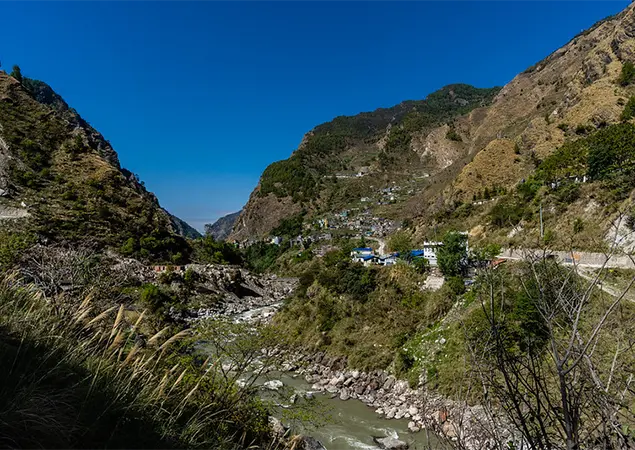
Early morning departure from Kathmandu. The drive north passes through Trishuli Bazaar, climbs through the Rasuwa district hills, and reaches either Syabrubesi or Gatlang, depending on your final route plan. The trip takes roughly 7 to 8 hours on mountain roads that wind through terraced hillsides and river gorges. Road conditions vary by season — the monsoon-damaged sections typically get repaired by late October, but can be rough in early autumn.
Gatlang itself is worth an evening walk. The Tamang village sits at around 2,238 meters with views toward the Ganesh Himal foothills, and the gompa above the village is open in the mornings. A good introduction to the cultural register the trek will maintain for the next week.

Time & Distance 8HRS, 122KM
Accommodation:
Local lodges/ Teahouse
Meals Breakfast, Lunch, Dinner
Maximum Altitude 1,550m/5,085ft (Syabrubesi or Gatlang)
Difficulty
Transportation Public bus/ jeep
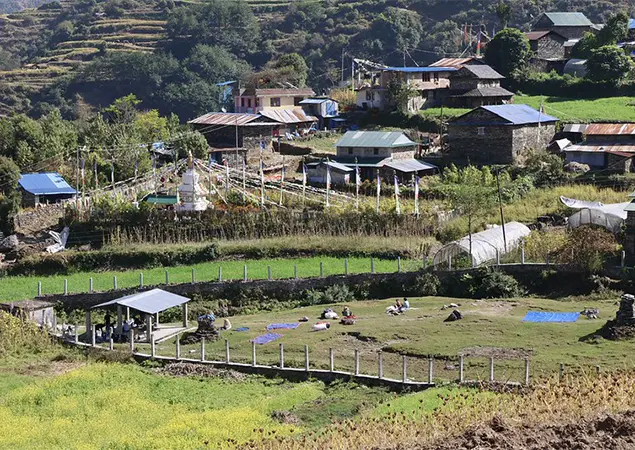
The first walking day climbs through mixed forest terrain toward Somdang. The trail gains significant elevation — roughly 600 to 800 meters depending on the start point through rhododendron and pine forest, with the first Ganesh Himal peaks appearing above the ridge line in the late morning. Somdang sits at about 3,000 meters in a quieter high pasture setting.
Time & Distance 7HR, 16KM
Accommodation:
Local lodge/ Homestay
Meals Breakfast, Lunch, Dinner
Maximum Altitude 3,271m/10,732ft (Somdang)
Difficulty
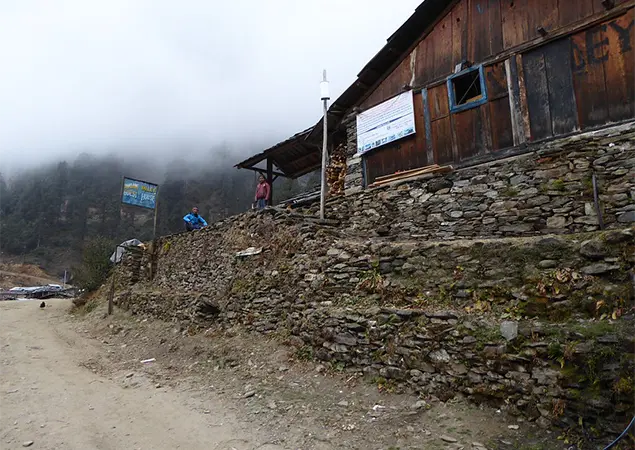
Rest and acclimatize before the Pangsang La Pass crossing. A short, optional hike to a nearby ridge or viewpoint takes 2 to 3 hours and offers the first clear view of the pass line. This day isn’t filler — the altitude gain from the valley to Somdang is real, and resting here reduces the altitude stress on pass day significantly.
 Accommodation:
Local losge/ Homestay
Meals Breakfast, Lunch, Dinner
Maximum Altitude 3,271m/10,732ft (Somdang)
Difficulty
The central day of the Ruby Valley Trek. Start before 7 a.m. The trail climbs steeply to Pangsang La, at elevations of 3,842 to 3,850 meters. The pass takes roughly two to three hours from Somdang. On clear mornings — and early October mornings are often spectacularly clear — Ganesh Himal, Langtang Lirung, and Manaslu are all visible simultaneously. Take the time.
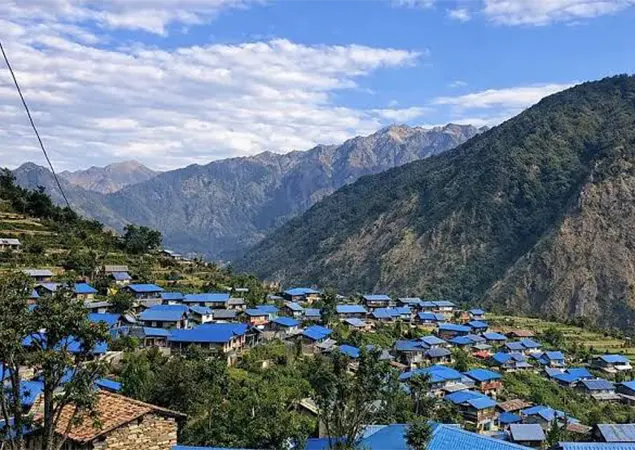
The descent to Tipling covers roughly 2,000 meters of elevation loss. It’s long and steep in sections, with trail surfaces ranging from well-maintained stone steps to loose earth. Trekking poles help. Tipling village sits at around 1,800 meters in the upper Budhi Gandaki Valley — a traditional Tamang settlement with stone houses and an active farming life.
Time & Distance 8HR, 17KM
Accommodation:
Homestay/ Local lodge
Meals Breakfast, Lunch, Dinner
Maximum Altitude 3,850m/12,631ft ( Pangsang La Pass)
Difficulty
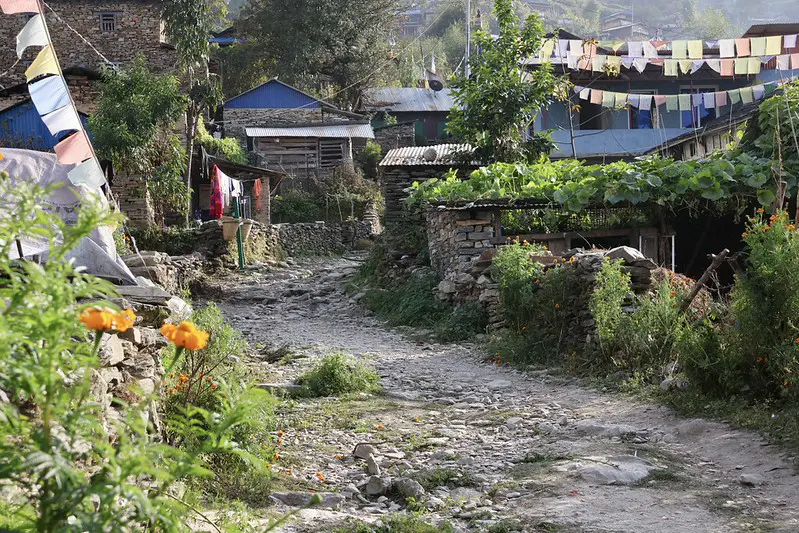
A moderate walking day through the Tamang and Gurung village territory. The trail follows contour paths through terraced fields, crosses river channels, and passes through smaller hamlets between the main village stops. Sertung and Chalish both offer basic homestay accommodation — your guide confirms availability the evening before, since these are small communities where rooms sometimes fill with local traffic.
Time & Distance 4HR, 8KM
Accommodation:
Homestay/ Local lodge
Meals Breakfast, Lunch, Dinner
Maximum Altitude 1,800m/5,906ft (Chalish)
Difficulty
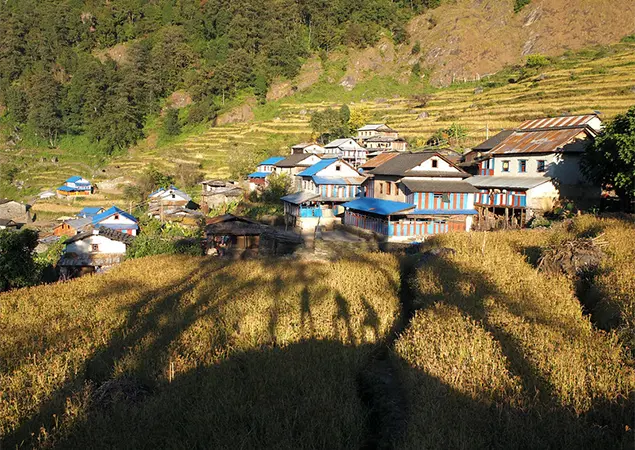
A slower day by design. Spend the morning exploring village life — the morning activity in Tamang households starts early, and being present for the first hours of a farming family’s day gives the trip its most memorable moments. Mid-morning, start walking toward Borang through the lower valley terrain.
Time & Distance 5HR, 11KM
Accommodation:
Homestay or local lodge
Meals Breakfast, Lunch, Dinner
Maximum Altitude 1,585m/5,200ft (Borang)
Difficulty
Descend from the trail to the road access point near the Dhading district. The exact exit point depends on the current road access and the group’s pace. Drive toward Dhading Besi — a functional district town with proper lodge accommodation, a warm shower, and a restaurant menu that feels luxurious after a week of dal bhat.
Time & Distance 5HR, 50KM
Accommodation:
Lodge or hote
Meals Breakfast, Lunch, Dinner
Maximum Altitude 612m/2,008ft (Dhading Besi)
Difficulty
Transportation Jeep
Morning drive back to Kathmandu on the Prithvi Highway. The trip takes four to five hours, depending on traffic near the Kathmandu valley. Transfer to Hotel Thamel Park. Free evening — options include Thamel restaurants, the Boudhanath Stupa area, a short taxi ride away, or simply a long meal and a comfortable bed.
Time & Distance 5HRS, 58KM
Accommodation:
Hotel Thamel Park
Meals Breakfast
Maximum Altitude 1,400m/4,593ft (Kathmandu )
Difficulty
Transportation Public bus/ Jeep
Transfer to Tribhuvan International Airport for your international flight.
Difficulty
The single best reason to choose this route over Langtang Valley or the Tamang Heritage trail is the combination of pass crossing and genuine cultural immersion. The Langtang Valley Trek gives you better alpine scenery but a more commercially developed teahouse corridor. The Tamang Heritage Trek offers village culture without a major mountain pass. The Ruby Valley Trek gives you both, in a route that still hasn’t been discovered by the wider trekking market.
Pangsang La Pass separates the route’s character into two distinct halves. The approach from Syabrubesi or Gatlang climbs through forest terrain with expanding views. The descent from the pass into Tipling, Sertung, and Borang drops into traditional Tamang and Gurung territory — stone houses, terraced barley fields, juniper smoke, yak dung drying on rooftops, and communities that interact with trekkers as guests rather than customers.
Nepal Hiking Company handles Hotel Thamel Park in Kathmandu, road transport on both ends, local lodge and homestay coordination, permit paperwork, licensed guide service, and optional porter support. The Ruby Valley route is best run as a private trek because the homestay logistics require proper advance coordination. Our team manages that directly.
Pangsang La Pass and Ganesh Himal Views
Pangsang La sits at roughly 3,842 to 3,850 meters and marks the watershed between the Trishuli drainage to the north and the Budhi Gandaki side to the south. The pass is the Ruby Valley Trek’s main physical challenge and its best mountain panorama. On a clear morning, Ganesh Himal I (7,422 m) dominates the view to the northwest. The Langtang Himal range appears to the northeast. In excellent visibility, the distant silhouette of Manaslu (8,163 m) appears to the west.
The pass is cold. Wind is common even when the sky is clear. Our guide checks the weather before the group leaves Somdang, and we start early — typically before 7 a.m. — to take advantage of the morning window before clouds develop on the higher ridges. The trail up to the pass from Somdang is not technical, but it gains significant elevation over a relatively short horizontal distance. Go at a steady pace and don’t rush the final 200 meters.
The descent to Tipling includes some steep sections of trail that can be muddy or slippery in wet conditions. Use trekking poles actively on the way down. The views of the upper Budhi Gandaki valley open up progressively as you descend — a different mountain composition from the pass itself, with Ganesh Himal seen from a southern angle.
Tamang and Gurung Village Culture
Tamang communities have lived in the Ganesh Himal foothills for centuries. Their villages follow Tibetan Buddhist traditions — mani walls (stone walls carved with Buddhist mantras) line the approaches to the trail, prayer flags hang from ridge poles, and small gompas (monasteries) sit above the village centers. The Tamang people maintain strong ties to agriculture and animal husbandry. You walk through active farmland, past households where women carry loads of firewood and children play in courtyards.
Gurung communities, concentrated in the lower southern sections of the route near Chalish and Borang, show a slightly different cultural character — warmer valley farming, more Hindu influence in domestic spaces, and a historically military tradition that many families trace through the Gurkha service connection. The transition between Tamang and Gurung village patterns is one of the subtler pleasures of walking this particular route, rather than a single-culture corridor, as in the Tamang Heritage Trek.
Respectful behavior is expected and straightforward. Dress modestly in all village areas — cover shoulders and knees. Ask before photographing individuals; a gesture and a wait is enough. Follow your guide’s direction around gompa interiors and private household spaces. Don’t enter homes uninvited. The guide will facilitate introductions in homestay situations, which is exactly what they are there for.
Homestay and Local Lodge Experience
The accommodation on the Ruby Valley Trek operates differently from standard Nepal teahouse trekking. Tipling, Sertung, Chalish, and Borang don’t have the lodge infrastructure of the Everest or Annapurna circuits. Rooms are simple — a wooden bed frame, a foam mattress, and blankets. Toilets are usually shared and may be squat style. Hot showers are available in a very limited number of places and typically require bucket heating at an additional co—20000 to 400 per use.
The homestay experience compensates for those physical limitations with something the developed teahouse routes can’t offer: actual proximity to local family life. Meals are cooked on wood fires. Tea is made from local herbs in some villages. Conversations through the guide reveal farming cycles, family histories, and the economic pressures of maintaining highland agriculture in a country where young people increasingly move to Kathmandu or Pokhara. That cultural access is worth more than a hot shower.
Wi-Fi and device charging are unreliable throughout the trek. Expect power to be in limited supply — bring a fully charged power bank from Kathmandu, and plan your communication schedule around the lack of reliable connectivity from Day 2 onward. This is not a failure of the lodges; it’s the current state of the infrastructure in the Ganesh Himal foothills.
Hot Springs, Forests, Waterfalls, and Rural Scenery
The lower approach sections of the Ruby Valley Trek pass through mixed forest — rhododendron in the 2,000 to 3,000-meter band (spectacular in late March and early April when the red and pink canopy is open), transitioning to pine and then oak on the ridge approaches. The sound of the forest in the morning — birds, wind, a distant waterfall — is one of the trail’s underrated qualities. After the high-traffic noise of the Annapurna routes, the quiet is notable.
Waterfalls appear throughout the middle sections, particularly between Gatlang and Somdang, where the trail crosses several lateral stream gorges. The most significant falls drop from the upper cliff bands above the trail — worth stopping to photograph in spring when snowmelt increases the volume. In autumn,n the falls are lower,r but the forest is clearer,r and the sky is sharper.
Hot springs appear on some Ruby Valley route variants, typically in the Gatlang or lower valley sections. Whether they’re included depends on your specific route plan — confirm with Nepal Hiking Company before booking if the hot springs are important to your experience. Not every variation of the Ruby Valley circuit passes them directly.
The terraced field sections between Tipling and Borang demonstrate the agricultural skill required by mountain farming. Buckwheat, millet, and barley grow on narrow terraces cut into forty-degree slopes. The geometry of it — from a distance, the whole hillside looks like a complex topographic map — is genuinely beautiful in a functional, non-ornamental way.
Hotel Thamel Park in Kathmandu offers a clean, comfortable city base — hot showers, reliable Wi-Fi, comfortable beds, and a central Thamel location. The standard drops sharply on the trail, and that contrast is honest and expected.
From the trek start through Somdang, Tipling, Sertung, Chalish, and Borang, accommodation ranges from small teahouse-lodges to genuine family homestays. Rooms are typically twin-sharing with wooden bed frames, foam mattresses, and blankets. Shared toilets — squat style in most places — are the norm. Hot bucket water is available at some lodges for NRs. 200 to 400 extra. Don’t expect hot showers plumbed in on the Ruby Valley route.
The homestays are the more culturally rewarding option when they’re available. A family homestay means eating where the family eats, sometimes sleeping in a room adjacent to the family’s living space, and waking to the sounds of a household starting its day — animals, smoke from the fire, children, grinding grain. That proximity to daily life is the cultural access that more developed trekking routes charge premium prices to simulate, and still don’t quite achieve.
Wi-Fi and charging are available in limited format in a few of the larger village lodges. Plan for no reliable connectivity from Day 2 onward. A fully charged power bank from Kathmandu is more reliable than any teahouse electrical socket on this route.
Trip Information
Breakfast is included at Hotel Thamel Park in Kathmandu. Full-board meals — breakfast, lunch, and dinner — cover all trekking days from Day 2 through Day 8.
Dal bhat dominates the menu throughout. Lentil soup, steamed rice, vegetable curry, pickle — the standard configuration, filling and reliable. Most homestays and lodges also offer noodle soup, rice dishes, potato preparations, eggs, pancakes, and local herbal tea alongside standard black tea and instant coffee. Some Tamang villages in the upper route serve butter tea (po cha) — strongly salted and flavored with yak butter, an acquired taste that’s worth trying at least once.
Lunch and dinner in Kathmandu on Days 1, 9, and 10 are not included. Bottled water, soft drinks, additional hot drinks, snacks, desserts, and alcohol are excluded throughout. Use water purification from Day 2 — plastic bottle waste in rural communities has even less disposal infrastructure than in park areas.
Nepal Hiking Company arranges airport pickup and drop-off in Kathmandu, the drive to Syabrubesi or Gatlang at the start of the trek, and the return drive from the Dhading road exit, through Dhading Besi, to Kathmandu.
The drive to Syabrubesi takes roughly 7 to 8 hours from Kathmandu. The Rasuwa district road passes through Trishuli Bazaar and climbs through multiple elevation bands. Road conditions vary by season — late spring and early autumn can involve sections damaged by the monsoon, particularly above Dhunche. Nepal Hiking Company confirms the current road status before departure and selects the starting point (Syabrubesi or Gatlang) in part based on road access.
The return drive from Dhading Besi to Kathmandu on Day 9 typically takes four to five hours on the Prithvi Highway. Road conditions on this western corridor are generally better than on the northern Rasuwa road. Traffic near Kathmandu on weekend afternoons can add 30 to 60 minutes to travel time.
The Ruby Valley Trek permit requirements depend on the exact route. If the trek starts from Syabrubesi or connects through the Langtang National Park boundary area near Gatlang, a Langtang National Park entry permit is required. The Nepal Tourism Board lists this fee at NRs. 3,000 for foreign nationals, NRs. 1,500 for SAARC nationals and NRs. 100 for Nepali citizens.
A TIMS (Trekkers’ Information Management System) card is currently required for most non-protected-area treks in Nepal. Local municipal fees may also apply to specific trail sections. Nepal Hiking Company confirms the exact permit stack before booking is finalized and handles all arrangements for confirmed clients.
Bring your original passport, a copy of your passport, and two passport-size photographs for permit processing. Carry permits on the trek — checkpoints near Dhunche and along the Gatlang approach verify documents. Permit requirements in this region can change, so don’t rely on outdated forum posts for current information.
Moderate. The route stays below 4,000 meters and doesn’t reach the altitude thresholds that require serious acclimatization planning. But Pangsang La Pass, the remote village trail conditions, the long road access, and the basic homestay accommodation all push this beyond a beginner category.
Day 5 — the Pangsang La crossing — is the hardest single day. The ascent from Somdang to the pass gains roughly 800-900 meters. The descent to Tipling loses about 2,000 meters. Total walking time runs 8 to 9 hours with a good weather start. That’s a real day’s effort, not a village stroll.
Who can complete this trek comfortably? Fit travelers who walk regularly can manage several hours of uphill and downhill on natural trail surfaces and don’t require modern lodging standards. Previous trekking experience isn’t strictly necessary if fitness preparation is solid. Travelers who have done any multi-day hill walking at home — even at lower altitudes — adapt well to this route.
| Season | Months | Trail Conditions | Pass Conditions | Recommendation |
| Spring | March–May | Rhododendron blooms in March–April, mild days | Pass clear by late March; some snow possible in early March | Excellent — best for forest color |
| Autumn | Sep–Nov | Dry trails, stable weather, clear skies | Pass clear and dry; best mountain views | Best overall — clearest conditions |
| Winter | Dec–Feb | Cold mornings, possible snow near Pangsang La | Pass may have snow or ice; more demanding crossing | Manageable for prepared trekkers; quieter trails |
| Monsoon | June–Aug | Rain, leeches in lower sections, muddy trails | Clouded views, wet pass surface | Not recommended — difficult road and trail conditions |
Spring and autumn are the two clear windows for the Ruby Valley Trek. October through mid-November gives the sharpest visibility and the most reliable pass conditions. Mid-March through late April brings the rhododendron bloom to the forest sections between Gatlang and Somdang — one of the genuinely striking seasonal experiences on this route. Both windows are valid. If mountain views are your priority, autumn wins. If forest scenery matters as much as the pass panorama, spring is worth considering.
Porter support is available for the Ruby Valley Trek and is particularly useful on the Pangsang La crossing day, when the combination of elevation gain and loss makes a lighter pack significantly more comfortable. One porter can carry up to 20 kg in total for two trekkers. Each trekker carries their own daypack with water, layers, documents, and snacks.
Porter employment in the Ganesh Himal foothills directly supports local families. Nepal Hiking Company ensures that porters receive appropriate wages, insurance, and equipment suited to the conditions. Additional porter support is available on request for groups with heavier gear.
Optional Add-ons and Customization
Travel insurance for the Ruby Valley Trek needs to cover trekking on remote mountain trails, medical treatment in Nepal, emergency helicopter evacuation, trip cancellation, road delay, lost baggage, and personal accident.
The Ruby Valley region is less remote than Makalu or Kanchenjunga, but a serious injury or illness on the trail still requires helicopter evacuation — the road access from the pass area is hours away by foot. Verify that your policy explicitly covers helicopter evacuation from mountain terrain. Nepal Hiking Company recommends purchasing insurance before arriving in Kathmandu. Carry a printed copy of the policy with emergency contacts throughout the trek.
Clothing
Gear
Documents and Essentials
The communities along the Ruby Valley Trek route receive far fewer trekkers than the Everest or Annapurna corridors. That lower footprint is an environmental benefit. It also means that trekker behavior in individual villages carries more weight — one group that behaves badly leaves a stronger impression than it would on a high-traffic route.
The Ruby Valley Trek stays below 4,000 meters, which keeps the risk of altitude sickness relatively low for acclimatized trekkers. The scheduled rest day at Somdang on Day 4 provides a sensible acclimatization step before Pangsang La. Move at a steady pace on the pass day. Drink at least three liters of water. Keep warm layers accessible in the pack rather than buried.
The most common health issues on this route are knee strain from the long Pangsang La descent, blisters from boots that haven’t been fully broken in, and minor gastrointestinal upset from the shift to local cooking styles. None of these are serious if you’re prepared. Trekking poles, properly broken-in footwear, and digestive medication in your personal kit address all three.
Your guide carries a basic first-aid kit and holds first-aid certification. The guide maintains emergency communication contact with Nepal Hiking Company’s Kathmandu team throughout the trek. Road access from the lower villages is possible for serious emergencies, though the Pangsang La area and Tipling require helicopter evacuation for anything requiring urgent hospital care. Comprehensive travel insurance is non-negotiable.
| Trek | Duration | Difficulty | Highest Focus | Main Style | Best For |
| Ruby Valley Trek | 10 days | Moderate | Pangsang La Pass ~3,842 m | Homestay and village trek | Culture and quiet trails |
| Langtang Valley Trek | 8–11 days | Moderate | Kyanjin Ri / Tserko Ri option | Alpine Valley Teahouse Trek | Mountain views and glacier access |
| Tamang Heritage Trek | 7–10 days | Moderate | Tamang villages and viewpoints | Cultural village circuit | Culture and hot springs |
| Manaslu Circuit Trek | 14–18 days | Challenging | Larkya La Pass ~5,106 m | Restricted circuit trek | Remote high-pass trekking |
| Ganesh Himal Base Camp Trek | 12–16 days | Mod–Challenging | Ganesh Himal base area | Remote mountain approach | Stronger, experienced trekkers |
The Langtang Valley Trek is Nepal’s third most popular trekking route. The infrastructure reflects that — multiple teahouses at every stop, clear trail signs, reliable Wi-Fi at Kyanjin Gompa, and a large number of international trekkers throughout the autumn season. The alpine scenery above Langtang village is genuinely impressive. Tserko Ri (4,984 m) and Kyanjin Ri (4,773 m) give high viewpoints that the Ruby Valley route can’t match.
The Ruby Valley Trek is slower, quieter, and more culturally intensive. The homestays and local lodges in Tipling, Sertung, and Borang provide a kind of cultural proximity that even the best Langtang teahouse can’t replicate. If you want alpine drama and glacier views, choose Langtang. If you want village life, a genuine pass crossing, and fewer crowds, Ruby Valley is the right call.
The difference between 10 and 7 days on this route isn’t three days of filler. Seven-day Ruby Valley packages typically remove the Somdang pacing day, compress the village descent sections, and cut the Dhading Besi overnight — effectively turning the trek into a transit route rather than a cultural experience.
The 10-day version includes: the Somdang rest day for pre-pass acclimatization (Day 4), proper village time in Tipling and the Sertung or Chalish section (Days 6 and 7), and the Dhading Besi overnight that separates the trek exit from the Kathmandu drive. The Pangsang La crossing day is physically demanding enough that attempting it without the Day 4 rest consistently results in a harder, less enjoyable experience. We’ve seen this pattern enough times to state it clearly.
At 3,842 to 3,850 meters, Pangsang La is below the altitude threshold for serious mountain sickness in most acclimatized trekkers. But it’s cold, it’s exposed, and it can be windy even when the sky is clear. In late October, the pass temperature at 7 a.m. ranges from -5°C to -10°C before the sun reaches it. Warm gloves, a down or synthetic jacket worn over the fleece, and a hat that covers the ears are not optional items.
The view from the pass on a clear day is the best single moment of the trek. Ganesh Himal I (7,422 m) is the closest major summit. The Langtang range runs northeast. Langtang Lirung (7,234 m) is identifiable by its distinctive north face. On exceptional days, Manaslu (8,163 m) appears far to the west above the lower ridges. The guide will name them. Listen.
A Ruby Valley homestay means sleeping in a room in a family home, usually a wooden-floored space with two bed frames and folded blankets. The toilet is typically a separate structure outside, squat style, with a bucket of water for flushing. The dining room doubles as the family’s living space. You eat where they eat.
Breakfast is usually eggs, bread or flatbread, and tea. Dinner is dal bhat or a rice-based preparation. In some homestays in the Tipling area, buckwheat dishes appear — buckwheat pancakes (dhedo) and buckwheat porridge are local staples that don’t appear on commercial teahouse menus. They taste earthy and substantial. They’re the real food of the Ganesh Himal hills, and eating them in someone’s home gives them a different meaning than ordering from a printed menu.
The homestay coordination on the Ruby Valley route requires advance notice to village hosts. Unlike commercial teahouse routes, where lodges operate independently and trekkers can self-direct, the Ruby Valley homestay system works best when a registered agency coordinates bed availability and meal preparation in advance of group arrival. Walking in unannounced and expecting a room in Tipling or Chalish is unreliable at best.
Running the trek privately also means that the itinerary pacing, pass day timing, and village stop selection can be tailored to your group’s specific pace and interests. A family traveling with older or younger members can allocate more time to the cultural village sections and less to the long transit days. A photographer can adjust the schedule to take advantage of better lighting at the pass. None of that flexibility exists on a shared departure trek with a fixed schedule.
The Ruby Valley Trek covers 10 days from Kathmandu through the Ganesh Himal foothills, over Pangsang La Pass, and through Tamang and Gurung villages back to the Dhading road. The route offers mountain views of Ganesh Himal, Langtang, and Manaslu at the pass, genuine homestay culture in Tipling, Sertung, Chalish, and Borang, and forest trails that most Nepal trekkers never walk.
Nepal Hiking Company handles Hotel Thamel Park in Kathmandu, road transport at both ends, local homestay and lodge coordination, permit paperwork, a licensed guide, an optional porter, and first-aid support throughout the trek. The Ruby Valley route rewards private bookings over group departures because the homestay logistics and pacing work better when the schedule can respond to your group. Contact our team to set that up.
Visit hikinginnepal.com to start the booking process, confirm availability for your dates, and discuss customization options. The Ruby Valley Trek runs well in October and in spring — both windows fill for private groups faster than the website inventory suggests. Book early for your preferred dates.
The Nepal Hiking Company standard package runs 10 days from Kathmandu arrival on Day 1 to final departure on Day 10. The trekking portion covers Days 2 through 8. The road drive to the trek start on Day 2 and the return drive on Day 9 are included in the package.
The Ruby Valley Trek takes place in the Ganesh Himal region of north-central Nepal, in Rasuwa and Dhading districts. The route connects villages north and south of Pangsang La Pass, running from the Trishuli drainage near Syabrubesi or Gatlang south to the Dhading road corridor near Dhading Besi.
Moderate. The trek doesn’t reach extreme altitudes — the highest point is Pangsang La Pass at around 3,842 to 3,850 meters — but it includes a demanding 8- to 9-hour pass-crossing day with significant elevation gain and loss, remote trail conditions, and basic homestay accommodation. Fit beginners with solid physical preparation complete this route.
Pangsang La Pass at approximately 3,842 to 3,850 meters is the highest point. It’s reached on Day 5 of the itinerary. Most of the route sits between 1,600 and 3,000 meters.
On clear days from Pangsang La Pass, you can see Ganesh Himal I (7,422 m) to the northwest, the Langtang Himal range including Langtang Lirung (7,234 m) to the northeast, and Manaslu (8,163 m) in exceptional visibility to the west. Mountain views are weather-dependent — morning conditions give the best clarity.
Yes, for fit beginners who prepare physically beforehand. The route requires the ability to walk 5 to 8 hours on natural mountain terrain, including a full pass day with 800 to 900 meters of ascent and roughly 2,000 meters of descent. Previous multi-day hiking experience helps, but isn’t strictly required.
Hotel Thamel Park in Kathmandu for city nights. Local lodges and homestays for all trekking days. Rooms are typically twin-sharing with simple bedding and shared toilet facilities. Hot bucket water is available at a few lodges for a small additional fee. No reliable Wi-Fi or plumbed hot showers on the trail.
Breakfast is included at Hotel Thamel Park in Kathmandu. Full-board meals — breakfast, lunch, and dinner — cover all trekking days from Day 2 through Day 8. Lunch and dinner in Kathmandu are not included. Bottled water, snacks, alcohol, and desserts are excluded throughout.
No restricted area permit is required for the standard Ruby Valley route. The trek doesn’t enter restricted Himalayan zones. Depending on the exact route, a Langtang National Park permit may be required if the trail passes through the park boundary near Syabrubesi or Gatlang. Nepal Hiking Company confirms this before booking.
You may need a TIMS card, a Langtang National Park entry permit if the route enters park boundaries (NRs. 3,000 for foreign nationals as listed by the Nepal Tourism Board), and possible local municipal fees. Nepal Hiking Company confirms and arranges all permits before your trek starts.
Autumn (September to November) gives the clearest mountain views and most reliable trail conditions. October is the peak month. Spring (March to May) brings rhododendron blooms to the forest sections and is the best time for forest scenery. Both seasons work well for the route.
Porter service is available as a standard inclusion or optional add-on, depending on your package variant. One porter carries up to 20 kg for two trekkers. Porter support is strongly recommended for the Pangsang La crossing day. Contact Nepal Hiking Company to confirm the inclusion of a porter in your specific booking.
Yes. Nepal Hiking Company offers route customization for the Ruby Valley Trek. Options include adjusting the starting point between Syabrubesi and Gatlang, adding the Langtang Valley extension for a longer circuit, combining with the Tamang Heritage Trek, adding a hot-spring section, or adjusting the village stop sequence based on group pace and interests. The route works best as a private trek and is well-suited to customization.
The Ruby Valley Trek focuses on Tamang and Gurung village culture, homestays, and the Pangsang La Pass crossing with views of Ganesh Himal. The Langtang Valley Trek follows an alpine river valley with better teahouse infrastructure, higher side-trip options, and more prominent glacial scenery. Ruby Valley has fewer crowds and more cultural depth. Langtang has better developed facilities and more dramatic high-mountain terrain.
Yes. Travel insurance for the Ruby Valley Trek must cover trekking on mountain terrain, emergency helicopter evacuation, medical treatment in Nepal, trip cancellation, and road delays. The route doesn’t reach extreme altitudes, but evacuation from the Pangsang La area and Tipling still requires helicopter support in serious medical situations. Verify that your policy explicitly covers helicopter rescue in mountainous terrain.