

Included Meals
- Breakfast: 15
- Lunch: 14
- Dinner: 13

Unbeatable Holiday Offers – Save Up to 20% on Your Next Adventure!
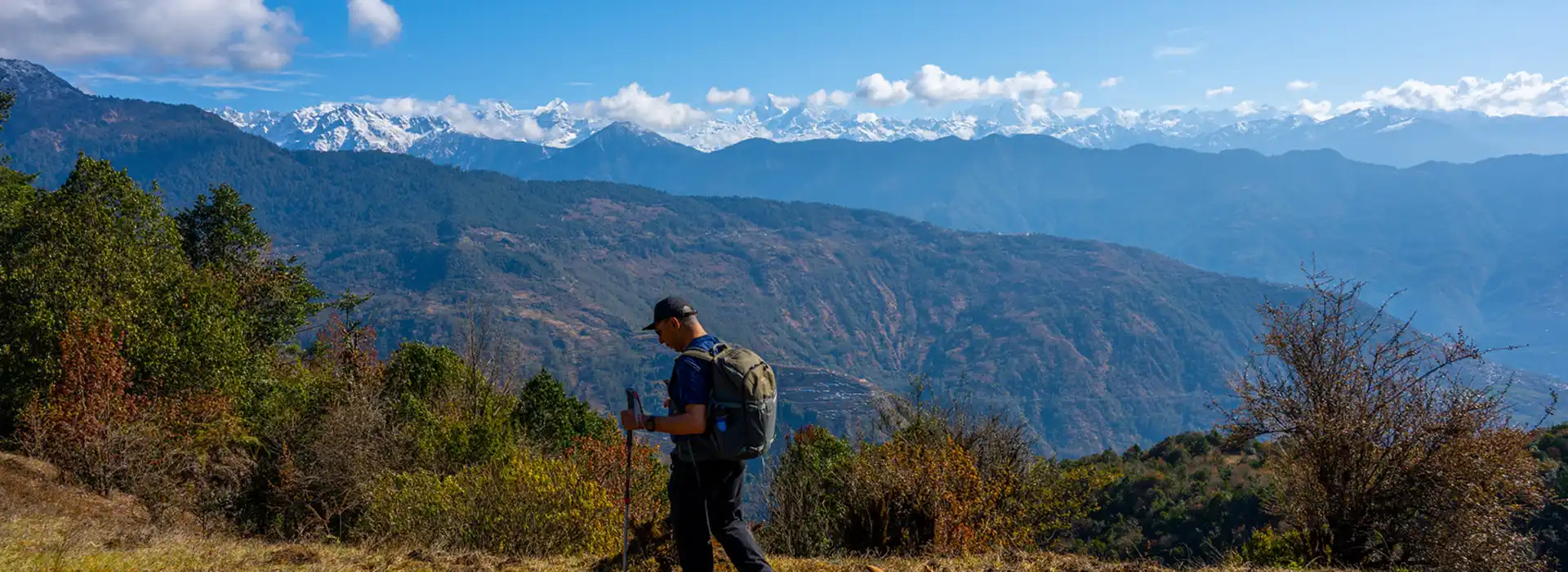
The Langtang Gosaikunda Helambu Trek delivers the most complete 16-day trekking circuit in the region. Operating entirely via teahouses, the point-to-point route covers three distinct geographical and cultural areas without any reliance on flights or repeated trail sections. It smoothly connects the classic Langtang Valley approach, the sacred high-altitude lakes of Gosaikunda, and the rich Yolmo cultural villages of Helambu.
The 14 walking days offer an exceptional variety. The trek begins with a steady mountain approach from Syabrubesi through traditional Tamang settlements to Kyanjin Gompa. From there, the trail climbs toward Gosaikunda Lake at 4,380 meters, an alpine setting of immense spiritual significance to Hindu and Buddhist traditions, before tackling the 4,610-meter Laurebina Pass. The trip finishes with a gentle descent through the forested hills and active monasteries of Helambu, concluding at Melamchi Pul Bazaar.
This comprehensive package covers airport transfers, two hotel nights in Kathmandu, overland transport to and from the trailheads, teahouse lodging, all meals, a licensed guide, porters, and necessary permits. This linear itinerary is ideal for fit trekkers, photographers, and culture enthusiasts who want to experience the absolute best of the Langtang region in a single, well-paced trip.
The Langtang Gosaikunda Helambu Trek offers a diverse scenery and cultural variety in a single trip. Shorter regional itineraries skip key areas, but this 16-day loop links the forested Langtang Valley, the high-alpine Gosaikunda lakes, and the cultural villages of Helambu into a smooth point-to-point circuit. This structural flow provides an ideal cultural and geographical progression.
You travel from the deep river gorges and Tamang villages of Langtang up into the high-altitude sacred lakes and the 4,610-meter Laurebina Pass. The trek concludes with a gentle descent through the Yolmo Buddhist communities of Helambu, characterized by active monasteries and terraced farmlands. The 16-day timeline ensures excellent safety and physical preparation.
The early night at Kyanjin Gompa, combined with the steady valley walk from Syabrubesi, helps build your acclimatization base. This gradual ascent protects you from mountain sickness before you reach the 4,380-meter overnight at Gosaikunda Lake, making the entire trip safe, comfortable, and deeply rewarding.
This trek includes an overnight stay at Gosaikunda Lake, above 4,000 m, and at the Laurebina Pass, approximately 4,610 m. It suits fit trekkers with basic altitude awareness who want cultural variety, sacred scenery, and mountain views in one complete Langtang-region route—not casual day walkers or first-time trekkers without hiking preparation.
The Langtang Gosaikunda Helambu Trek delivers a complete, multi-destination circuit that shorter regional packages cannot match. By combining the classic Langtang Valley, the sacred high-altitude lakes, and the Helambu cultural site, this 16-day linear itinerary covers fresh terrain every single day from Syabrubesi to Melamchi Pul Bazaar. Gosaikunda Lake adds a profound spiritual dimension to the mountain scenery.
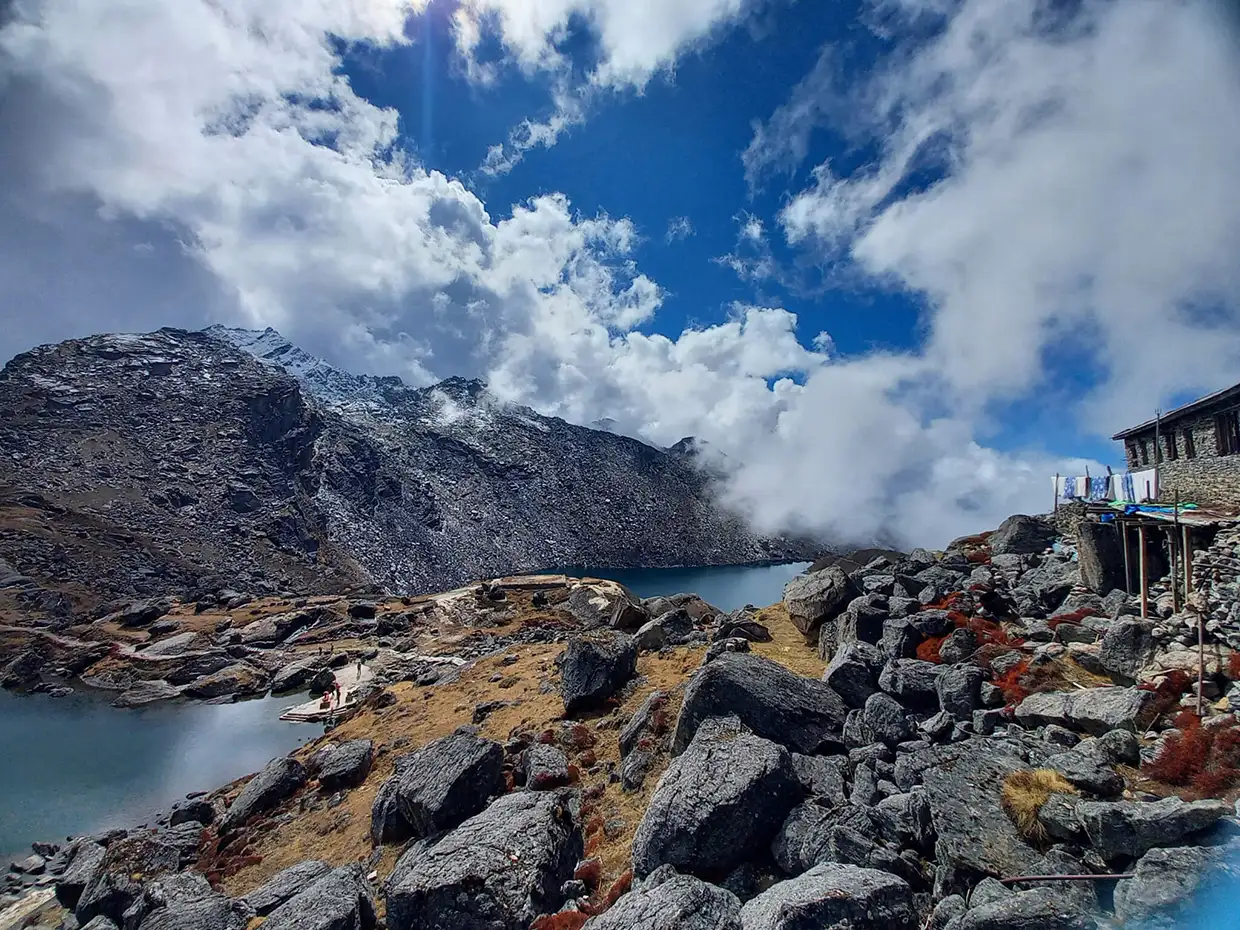
At an elevation of 4,380 meters, this sacred alpine lake holds immense religious significance for both Hindus and Buddhists, offering photographers and culture enthusiasts an atmosphere of deep stillness and lively tradition. Crossing the 4,610-meter Laurebina Pass provides a rewarding physical challenge, elevating the trip above a standard valley walk. While the trail is non-technical and requires no specialized mountaineering gear, the high altitude and exposed terrain deliver a genuine sense of mountain achievement.
Because the route relies entirely on road transport at both trailheads, the schedule is completely free from domestic flight dependencies and mountain weather delays. This reliable infrastructure ensures a smooth, uninterrupted flow through three distinct geographical and cultural zones.
The trek suits:
| Trek | Duration | Difficulty | Highest Point | Main Style | Best For |
|---|---|---|---|---|---|
| Langtang Gosaikunda Helambu | 16 Days | Mod–Challenging | 4,610 m (Laurebina Pass) | Valley, lake, pass, culture | Complete the Langtang route |
| Langtang Valley Trek | 8–11 Days | Moderate | Kyanjin Ri / Tserko Ri | Valley and mountain views | Shorter mountain trek |
| Langtang Gosaikunda Trek | 12–14 Days | Mod–Challenging | Gosaikunda / Laurebina | Sacred lake and pass | Lake-focused trekkers |
| Helambu Circuit Trek | 8 Days | Easy–Moderate | Tharepati area | Yolmo villages and forests | Short cultural trek |
Browse every route in our regional trekking guide or see all trekking packages we run. Travellers who like this trip also compare Langtang Ganja La Pass Trek, Yala Peak Climbing, Tsum Valley Trek.
Before you book, read our Nepal trekking cost guide, check the trekking gear list, and review travel insurance requirements. Still deciding? Plan your trip with a local expert.
For official information, see the Nepal Tourism Board, the Trekking Agencies’ Association of Nepal and the Department of Immigration for visa rules, plus background on Gosaikunda lake.

Included Meals

Trip staff

Accommodation

Trip Grade
You arrive at Tribhuvan International Airport. Our representative meets you in the arrival hall with a name sign and transfers you to your hotel in Kathmandu. Check in, rest after your flight, and use the afternoon to purchase any remaining trekking items or explore the Thamel area. Our guide visits your hotel in the evening to walk through the full 16-day Langtang Gosaikunda Helambu Trek itinerary, explain altitude awareness for the Gosaikunda section, and confirm permit documentation requirements.
Accommodation:
Hotel in Kathmandu (twin sharing)
Difficulty
The Kathmandu to Syabrubesi road trip takes 7 to 8 hours through the Trishuli River valley, Dhunche town, and the final mountain road approach to Syabrubesi at approximately 1,460 meters. The Trishuli valley section provides the first mountain views of the trip—the river gorge narrows progressively as the road climbs northward, with Himalayan ridge systems appearing above the valley walls near Dhunche.
Accommodation:
Teahouse in Syabrubesi
Meals Breakfast, Lunch, Dinner
Difficulty
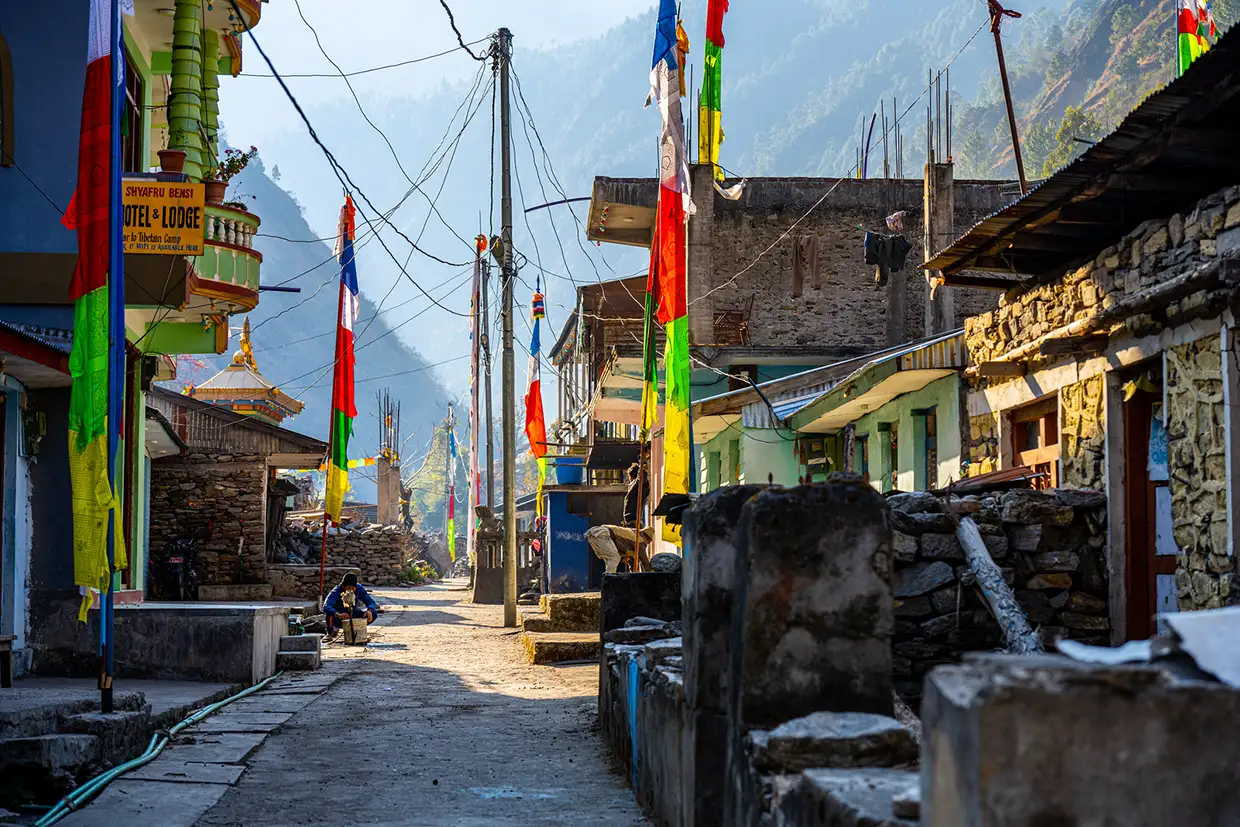
The first trekking day from Syabrubesi to Lama Hotel at approximately 2,470 meters establishes the Langtang Valley trail character—old-growth mixed forest with rhododendron and bamboo, suspension bridge crossings over the Langtang River tributaries, and the first Himalayan views through the forest canopy. Walking time runs approximately 5 to 6 hours.
 Accommodation:
Teahouse at Lama Hotel
Meals Breakfast, Lunch, Dinner
Difficulty
Day 4 passes through the Ghora Tabela army checkpoint and Langtang National Park entry area before the valley opens above the main forest zone. Langtang Village at approximately 3,430 meters appears on the open valley floor—the rebuilt settlement with traditional Tamang architectural forms, prayer flags, and chortens visible against the ridge wall. Your guide explains the effects of the 2015 earthquake on the Langtang community during the village exploration. Walking time runs approximately 5 hours.
Accommodation:
Teahouse in Langtang Village
Meals Breakfast, Lunch, Dinner
Difficulty
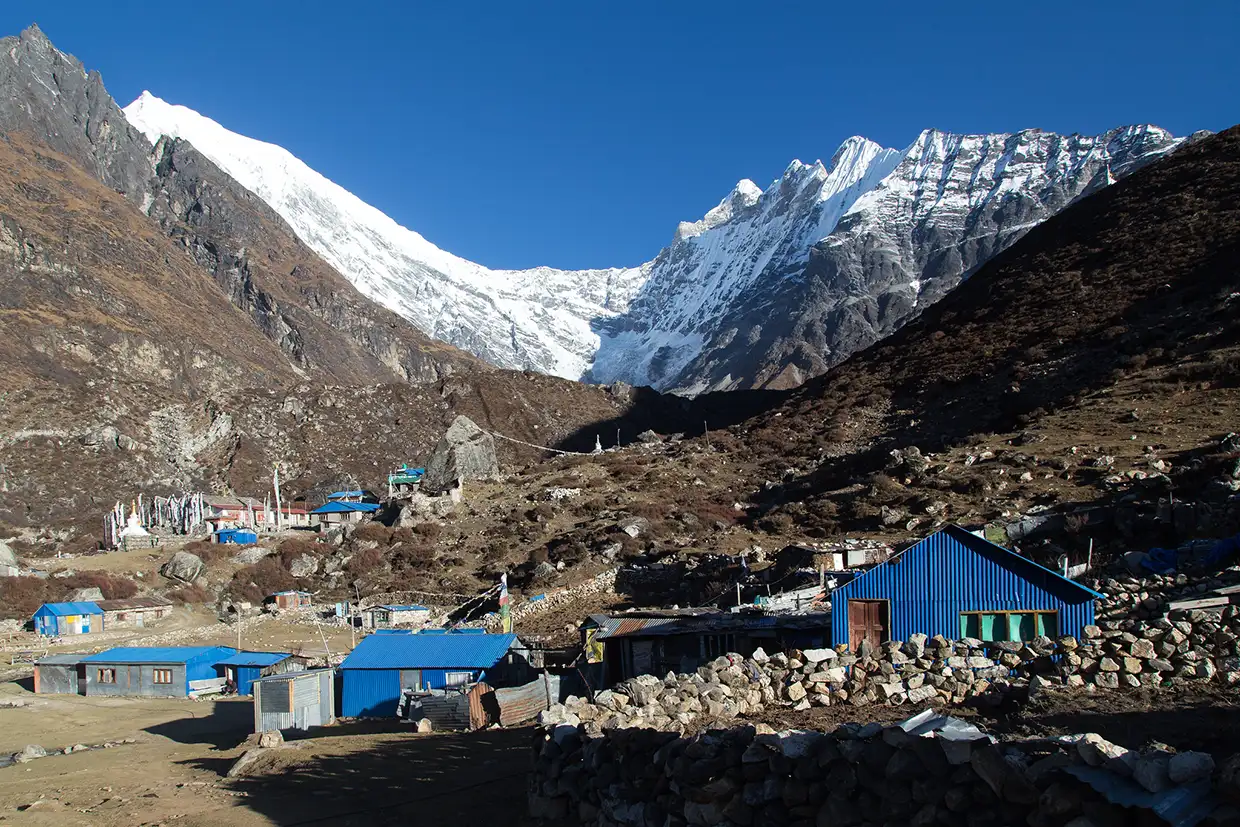
The Day 5 approach to Kyanjin Gompa follows the open valley floor with direct views of Langtang Lirung’s south face growing progressively closer. The glacier systems above Kyanjin Gompa come into view during the final approach. The walking time is approximately 3 to 4 hours. Use the afternoon for a monastery visit and rest before the acclimatization day tomorrow.
Accommodation:
Teahouse in Kyanjin Gompa
Meals Breakfast, Lunch, Dinner
Difficulty
Day 6 stays in Kyanjin Gompa for the acclimatization hike to Kyanjin Ri at 4,773 meters or Tserko Ri at approximately 5,033 meters—based on the group’s fitness and your guide’s weather assessment. Both ridge hikes follow the acclimatization protocol of climbing higher than the sleeping altitude to accelerate physiological adaptation before the Gosaikunda section. Kyanjin Ri delivers views of the complete Langtang range at close range. Tserko Ri adds Naya Kanga and the eastern Langtang peaks.
Do not skip Day 6 to save time. The acclimatization hike and rest at Kyanjin Gompa provide the physiological preparation that makes the overnight stay at Gosaikunda Lake at 4,380 meters manageable rather than stressful.
Accommodation:
Teahouse in Kyanjin Gompa (second night)
Meals Breakfast, Lunch, Dinner
Difficulty
Day 7 retraces the valley trail from Kyanjin Gompa to Lama Hotel—covering in a single day the altitude loss of two ascending days. The descent proceeds through Langtang Village and the forest section back to Lama Hotel at approximately 2,470 meters. Walking time runs approximately 5 to 6 hours. The descending valley views—looking south toward the forest zone and the Lama Hotel from higher valley positions—offer a different perspective from the ascending approach.
Accommodation:
Teahouse at Lama Hotel
Meals Breakfast, Lunch, Dinner
Difficulty
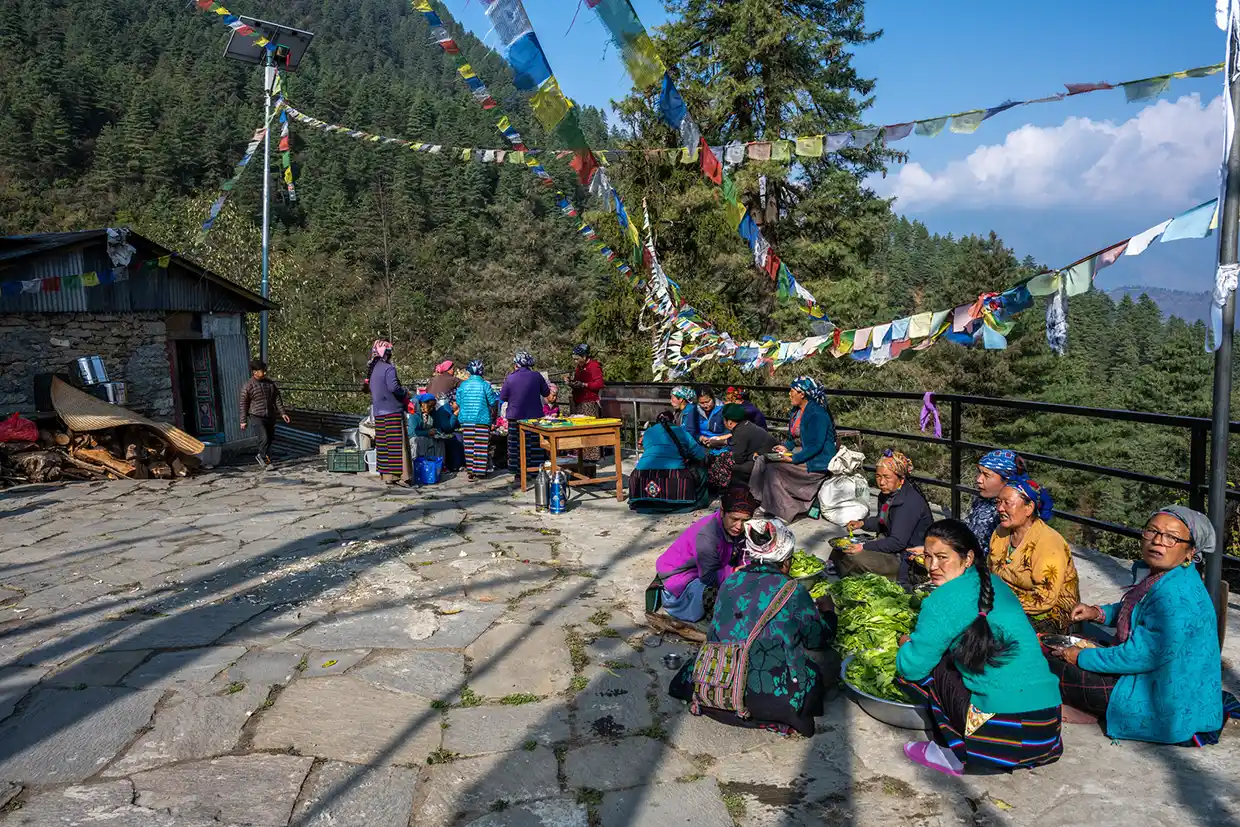
Day 8 branches from the main Langtang Valley return trail and heads south toward Thulo Syabru—a scenic Tamang village above the forest zone with views across the lower Langtang National Park area. The trail from Lama Hotel to Thulo Syabru takes approximately 4 to 5 hours on a path that diverges from the main Syabrubesi-return corridor used by standard Langtang Valley trekkers.
Thulo Syabru offers a traditional Tamang village overnight stay with monastery views and the cultural atmosphere of a community situated at the transition zone between the Langtang Valley teahouse circuit and the Gosaikunda approach trail.
 Accommodation:
Teahouse in Thulo Syabru
Meals Breakfast, Lunch, Dinner
Difficulty
Day 9 climbs from Thulo Syabru through forest and village paths toward Shin Gompa at approximately 3,530 meters—a teahouse stop known for its monastery area, forest setting, and the cheese production enterprise that the local community runs as a supplemental income source. The ascent from Thulo Syabru to Shin Gompa covers significant elevation gain through a rhododendron forest that blooms in spring across the approach trail. Walking time runs approximately 5 to 6 hours.
Accommodation:
Teahouse at Shin Gompa
Meals Breakfast, Lunch, Dinner
Difficulty
Day 10 continues through the Laurebina area and high alpine terrain to reach Gosaikunda Lake at approximately 4,380 meters.
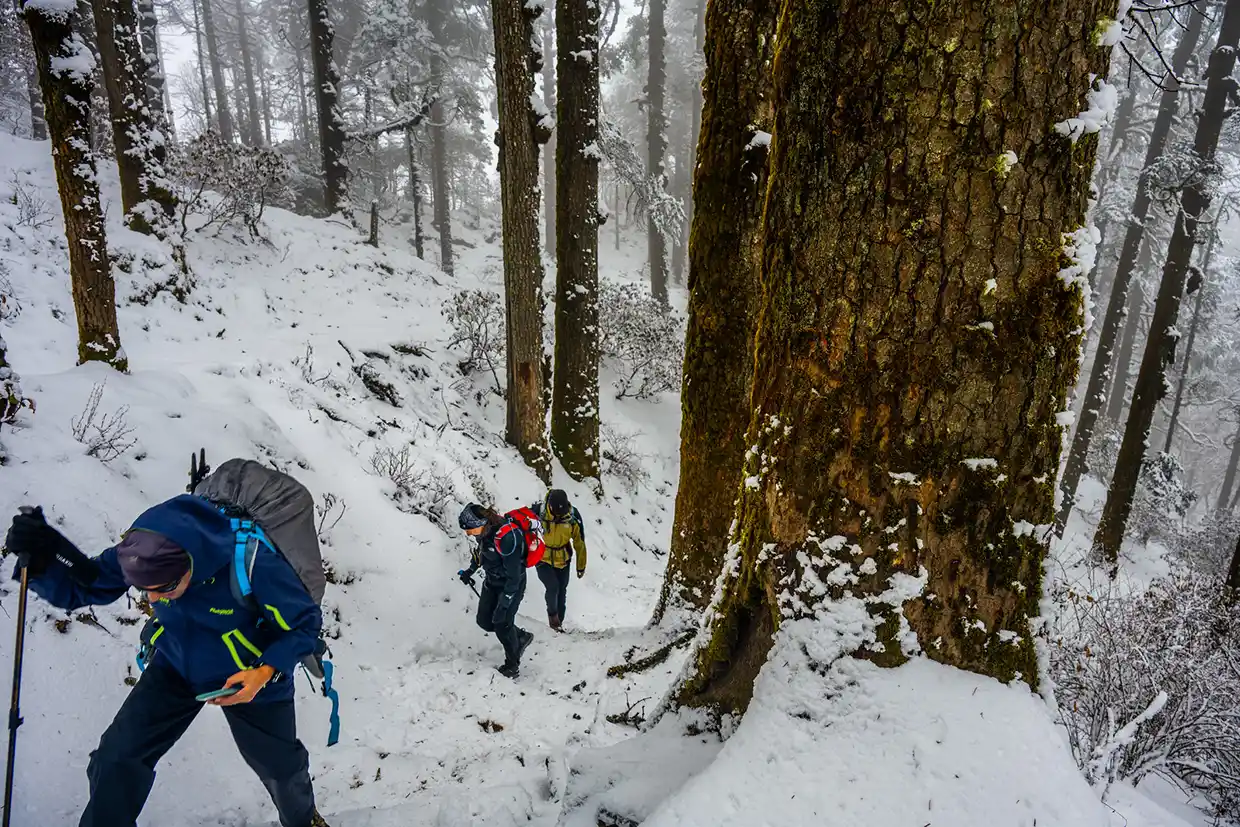
The trail moves through progressively more open high-altitude terrain as the forest thins and the rocky subalpine zone gives way to the open lake basin. Walking time is approximately 4 to 5 hours, depending on the route via the Laurebina teahouse.
Arrive at Gosaikunda Lake in the afternoon.
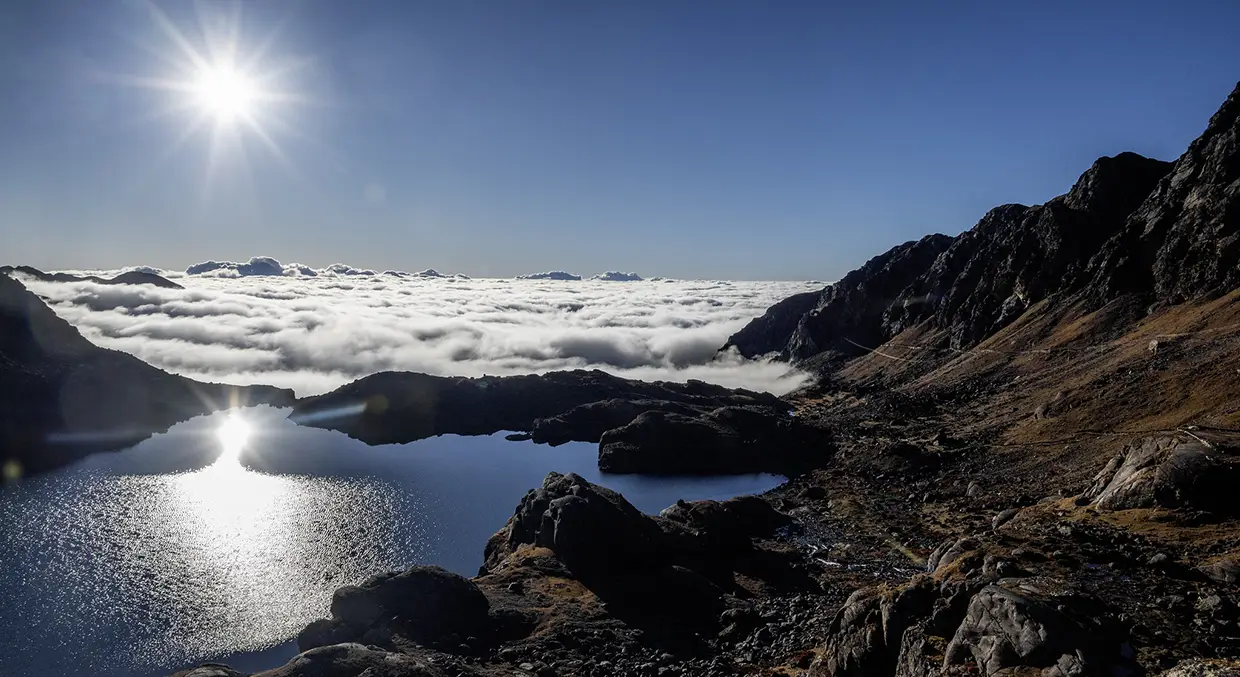
Explore the lakeside, observe the prayer flags above the north shore, and watch the evening light on the water before the cold drives the group indoors. The teahouse at Gosaikunda provides basic accommodation at 4,380 meters—full warm layers are required for the overnight. Eat a full dinner and rest early for the Day 11 Laurebina Pass crossing.
Accommodation:
Teahouse at Gosaikunda Lake (~4,380 m)
Meals Breakfast, Lunch, Dinner
Difficulty
The Laurebina Pass day begins with an early departure from the Gosaikunda teahouse—typically 6 to 7 AM. The ascent from Gosaikunda to the Laurebina Pass at approximately 4,610 meters follows a rocky, well-marked trail through the open alpine terrain above the lake’s north shore. The guide sets a steady pace for the ascent and monitors the group throughout the climbing section.
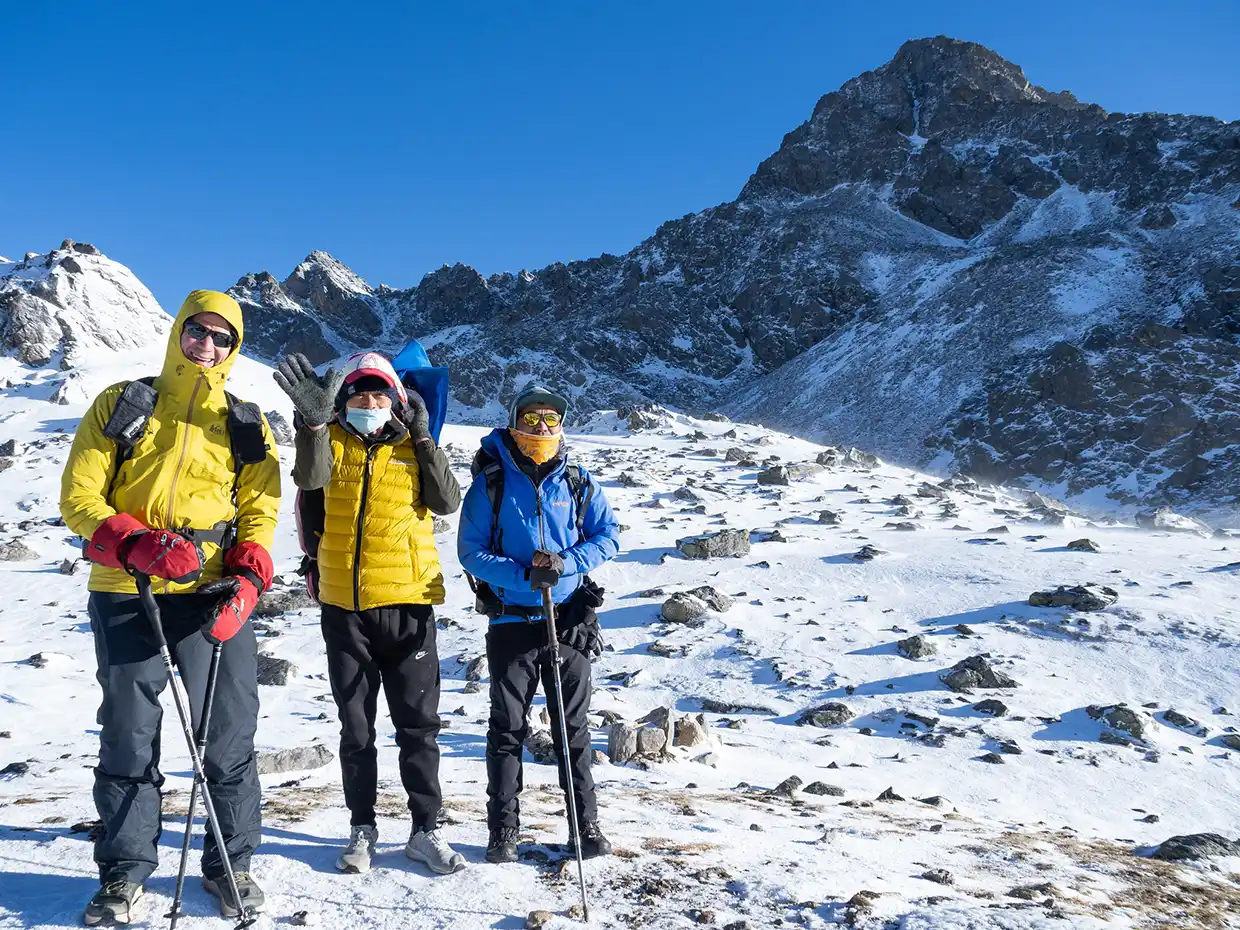
At the Laurebina Pass summit, the Langtang range appears behind the Gosaikunda basin, and the Helambu hill system opens below. The descent from the pass to Ghopte covers rocky, uneven terrain that demands careful footwork and support from trekking poles throughout. Walking time for the full Day 11 runs approximately 7 to 9 hours. Arrive at Ghopte in the afternoon and rest completely for the Day 12 Tharepati approach.
Accommodation:
Teahouse at Ghopte
Meals Breakfast, Lunch, Dinner
Difficulty
Day 12 continues from Ghopte toward Tharepati at approximately 3,490 meters through forest, ridge, and rocky trail sections. Tharepati marks the main junction between the Gosaikunda descent route and the Helambu Circuit trail—a transition point where the high-altitude rocky character of the Gosaikunda section gives way to the forested descent toward the Yolmo villages below.
Accommodation:
Teahouse at Tharepati
Meals Breakfast, Lunch, Dinner
Difficulty
Day 13 descends from Tharepati through forest trails and village scenery into the Helambu region. Tarkeghyang, at approximately 2,590 meters, offers the first overnight at a Yolmo cultural village—a Buddhist community with an active monastery, traditional Sherpa-Yolmo stone house architecture, local agricultural activities, and family-run teahouse hospitality that defines the Helambu trekking experience.
Arrive in Tarkeghyang in the early afternoon with time for a monastery visit and village walk before dinner. The visual and cultural contrast between the high-altitude Gosaikunda section and Tarkeghyang’s forested village setting offers genuine relief after the physical effort of the Laurebina Pass and Ghopte sections.
Accommodation:
Teahouse in Tarkeghyang
Meals Breakfast, Lunch, Dinner
Difficulty
Day 14 follows the Helambu Ridge Trail from Tarkeghyang, through forest sections, mani wall-lined village paths, and monastery approaches, to Sermathang at approximately 2,620 meters. The walking time is approximately 4 to 5 hours. Sermathang’s plateau setting, monastery views, and open southern hills perspective give the Day 14 overnight a distinct visual character from Tarkeghyang’s more enclosed valley setting.
Accommodation:
Teahouse in Sermathang
Meals Breakfast, Lunch, Dinner
Difficulty
Day 15 descends from Sermathang through terraced farmland and rural villages, and along the lower Helambu valley, to Melamchi Pul Bazaar at approximately 823 meters on the Melamchi River. Walking time runs approximately 4 to 6 hours. Organize guide and porter tips at Melamchi Pul Bazaar before the vehicle departs for the 4 to 5-hour road return to Kathmandu.
Accommodation:
Hotel in Kathmandu
Meals Breakfast, Lunch
Difficulty
Our driver will pick you up from your Kathmandu hotel and transfer you to Tribhuvan International Airport at the agreed pickup time. Allow at least 3 hours before international departure for check-in, immigration, and security.
Accommodation:
Not included
Meals Breakfast
Difficulty
Kathmandu – Hotel
Your Kathmandu hotel provides private bathrooms, hot water, Wi-Fi, and daily breakfast on both the arrival night and the Day 15 return night. The central location gives walking access to gear shops, restaurants, and permit processing support for any Day 1 preparation needs.
Langtang Valley Section – Syabrubesi to Kyanjin Gompa and Back
Teahouses from Syabrubesi through Lama Hotel, Langtang Village, and Kyanjin Gompa provide standard Langtang Valley lodge service—twin-sharing rooms with basic bedding, shared bathrooms, and improving mountain views with decreasing menu breadth as altitude increases. Kyanjin Gompa teahouses represent the most remote and basic of the valley section.
Gosaikunda Section – Shin Gompa to Ghopte
Teahouses at Shin Gompa, Gosaikunda Lake, and Ghopte provide progressively simpler facilities as the altitude and remoteness increase. The Gosaikunda Lake teahouse at 4,380 meters represents the most basic overnight on the entire 16-day route—simple rooms, a limited menu, no hot showers, and cold nights. Pack all warm layers in your sleeping bag layering system.
Helambu Section – Tharepati to Melamchi Pul Bazaar
Helambu teahouses at Tharepati, Tarkeghyang, and Sermathang provide adequate facilities at the moderate altitudes that characterize the Helambu descent. Tarkeghyang and Sermathang both offer the warm family-lodge hospitality of the Yolmo teahouse tradition.
Trip Information
The Langtang Valley approach from Syabrubesi to Kyanjin Gompa covers four walking days and 2,400 meters of altitude gain along a striking river valley. The trail winds northward through bamboo and rhododendron forests past the Lama Hotel, opens into the wider subalpine valley above Ghora Tabela, and climbs along the glacial floor to the high-altitude settlement of Kyanjin Gompa at 3,870 meters.
Langtang Village, at 3,430 meters, offers a deeply moving human dimension to the trek. Completely destroyed by a massive avalanche during the 2015 earthquake, the village has been resiliently rebuilt using traditional Tamang stone and timber architecture. A small memorial stands at the edge of the settlement, and visiting this community offers a profound look at local persistence and cultural survival.
Kyanjin Gompa serves as the highest teahouse hub on the route and an essential base for acclimatization. Home to an active monastery, a community-run cheese factory, and dramatic views of Langtang Lirung, it provides the perfect alpine setting for Day 6 rest hikes up Kyanjin Ri or Tserko Ri, preparing your body for the higher altitudes ahead.
Gosaikunda Lake, sitting at 4,380 meters in a high-mountain bowl, features deep blue-green waters that reflect the surrounding rocky ridges and lively prayer flags. In clear conditions, the Jugal Himal and Ganesh Himal crest the western horizon, while the Laurebina ridge frames the northern sky.
The lake holds immense spiritual significance for both Hindu and Buddhist traditions. According to Hindu mythology, Lord Shiva created Gosaikunda by striking the mountain with his trident to source water after consuming poison during the churning of the cosmic ocean. This heritage draws thousands of devotees every July or August for the sacred Janai Purnima festival. Buddhist pilgrims similarly revere the waters, identifying a central rock formation as a sacred image of Shiva.
Spending the night here provides a distinctive high-altitude experience. Accommodations are basic and running cold, requiring a solid layering system for sleeping comfort. The morning light over the water before beginning the Laurebina Pass crossing offers a powerful photographic and spiritual moment that serves as a major highlight of the entire trek.
Laurebina Pass, situated at 4,610 meters, connects the Gosaikunda lake basin to Helambu’s northern ridge system. The crossing begins with a 6 to 7 AM departure to maximize daylight and beat the afternoon wind and clouds that frequently obscure the exposed pass.
The ascent follows a rocky, well-marked trail through open alpine terrain. While non-technical during spring and autumn, the high altitude, freezing morning air, and biting wind still present a rigorous physical challenge. Your guide manages the group’s pace to ensure a safe, steady climb. The summit rewards you with panoramic views of the Langtang range and the green Helambu hills ahead. This ridge marks a dramatic transition from rocky high-alpine terrain to forested wilderness. The descent toward Ghopte features steep, rocky sections that require steady footwork, so trekking poles are highly recommended for stability.
The Helambu section from Tharepati through Tarkeghyang, Sermathang, and down to Melamchi Pul Bazaar provides the 16-day route’s cultural and sensory contrast with the high-altitude Gosaikunda section. The Tharepati junction, at approximately 3,490 meters, marks the transition from the open, rocky terrain of the Gosaikunda ridge to the forested descent into the Helambu valley system. The temperature rises, the vegetation densifies, and the visual environment shifts from high-altitude austerity to forested hillside warmth within a few hours of walking below Tharepati.
The Yolmo people of the Helambu region maintain a distinct Buddhist cultural heritage that connects them to Tibetan origins through a distinct migration history, distinct from the Tamang lineage of the Langtang Valley communities. The Yolmo monastery tradition at Tarkeghyang and Sermathang preserves the specific Nyingma Buddhist practices that the founding lamas brought from Tibet and that the local community has maintained across generations of relative geographic isolation from the main Kathmandu cultural sphere.
Tarkeghyang, at approximately 2,590 meters, provides the Day 13 overnight with a monastery compound, traditional stone-walled houses, and the specific village atmosphere of a community that has hosted Helambu Circuit trekkers for decades without the commercial development that the main Khumbu corridor’s teahouse network experienced. The monastery’s active puja schedule, the village’s agricultural calendar—potato planting, barley harvest, yak pasture rotation—and the family-run teahouses create a cultural encounter that the high-altitude section’s dramatic scenery cannot provide.
Sermathang, at approximately 2,620 meters, adds the Day 14 overnight with an open-plateau setting, monastery views, and the final cultural encounter before the Day 15 descent to Melamchi Pul Bazaar and the road return to Kathmandu. The forest trail from Sermathang to Melamchi Pul Bazaar descends through terraced farmland and rural settlements, offering a pastoral visual decompression that completes the 16-day route’s geographical range—from the 3,870-meter-high teahouse settlement at Kyanjin Gompa down to the Melamchi valley road.
Full board meals cover all 13 trekking days from Day 2 through Day 14. Hotel breakfast is included in Kathmandu. Day 15 includes breakfast and lunch. The Langtang Valley section offers the best variety—Lama Hotel and Thulo Syabru offer more options. Kyanjin Gompa, Shin Gompa, Gosaikunda, and Ghopte offer a standard mountain teahouse menu of dal bhat, noodle soup, potato dishes, eggs, and hot drinks.
Bottled water, soft drinks, alcohol, snacks, and desserts carry additional fees at all trail stops. Water costs increase significantly at Gosaikunda altitude—carry purification tablets from Kathmandu for the high-altitude section, where spring water sources provide clean but unpurified water.
The package covers airport pickup and drop-off in Kathmandu, road transfer to Syabrubesi on Day 2, and road return from Melamchi Pul Bazaar to Kathmandu on Day 15. The linear route—Syabrubesi start, Melamchi Pul Bazaar exit—requires two separate vehicle arrangements. Private jeep upgrades provide more comfort on both road sections and are available on request before booking.
The Langtang Gosaikunda Helambu Trek requires the Langtang National Park Entry Permit for the Langtang Valley and Gosaikunda sections. The TIMS card may apply under the current Nepal Tourism Board policy. Both permits come included in the package price. Our team arranges all documentation in Kathmandu before Day 2 departure and provides the complete permit package to your guide.
The Langtang Gosaikunda Helambu Trek rates as moderate to challenging. The moderate rating applies to the Langtang Valley approach section—well-maintained trail, consistent altitude gain, full teahouse support. The challenging elements include the overnight above 4,000 meters at Gosaikunda Lake, the Laurebina Pass at 4,610 meters, the rocky descent to Ghopte and Tharepati, and the long walking days across both the high-altitude section and the Helambu descent.
The trek involves no technical climbing in normal conditions. The highest requirement is steady fitness for long walking days—5 to 8 hours—across varied terrain, including uphill forest climbs, open ridge walking, rocky pass terrain, and long descents. Fit trekkers with basic hiking experience can comfortably complete the route. Previous altitude experience above 3,500 meters helps but is not strictly required if the acclimatization schedule is followed correctly.
Trekking poles are recommended for the Gosaikunda ascent, the Laurebina Pass section, and the long descents from Ghopte and from Sermathang toward Melamchi Pul Bazaar.
| Season | Months | Conditions | Best? |
|---|---|---|---|
| Spring | March to May | Mild temperatures, rhododendron blooms on the lower Langtang forest sections, and the Shin Gompa approach. Clear morning views from Kyanjin Ri and Gosaikunda. Good Laurebina Pass window. | Yes |
| Autumn | Sep to Nov | Best mountain visibility and most stable weather. Blue-sky mornings at Gosaikunda Lake and Laurebina Pass. October is the peak month across all three route sections. | Yes – Best |
| Winter | Dec to Feb | Snow accumulation at Gosaikunda Lake and Laurebina Pass makes the crossing difficult and potentially dangerous. Cold nights throughout. Experienced trekkers only in winter. | With Caution |
| Monsoon | Jun to Aug | Rain, leeches in lower forest sections, slippery trails throughout the route, clouds obscuring most views, and possible landslide risk on the Syabrubesi road. Not recommended. | No |
Porter service is optional in the base package and available as a paid upgrade. The Gosaikunda approach from Shin Gompa and the Day 11 Laurebina Pass section represent the two points where the main bag weight most directly affects walking comfort and altitude management—arriving at the Gosaikunda teahouse with energy for the evening lake exploration and the Day 11 pass departure requires not carrying unnecessary load through the high-altitude approach sections. One porter carries a maximum of 20 kilograms, shared between two trekkers.
Travel insurance is compulsory and must specifically cover trekking above 4,600 meters and emergency helicopter evacuation. The Gosaikunda Lake, at 4,380 meters, and the Laurebina Pass, at 4,610 meters, both exceed the altitude caps of some basic adventure travel policies. Confirm your altitude coverage limit with your insurance provider before purchase.
A helicopter evacuation from the Gosaikunda Lake area costs USD 2,000 to USD 4,000, depending on conditions and pickup location. Without adequate insurance, the full cost of evacuation falls on the trekker. Purchase your policy before flying to Nepal and carry both printed and digital copies throughout the trek.
Pack for temperature conditions from warm Syabrubesi valley afternoons to cold Gosaikunda Lake nights above 4,000 meters:
Gosaikunda Lake holds dual sacred status for Hindu and Buddhist communities—treat the lake and its immediate surroundings with the respect that any active pilgrimage site deserves. No swimming, no washing in the lake water, and no littering at the lake shore or on the approach trail. The prayer flag structures above the north shore and the stone images near the lake edge are active religious monuments, not photography props.
Walk to the left of all mani walls and chortens throughout the route—the clockwise Buddhist convention applies from Syabrubesi through the Langtang Valley and throughout the Helambu section. Remove footwear before entering monastery buildings at Kyanjin Gompa, Tarkeghyang, and Sermathang. Ask before photographing monks, monastery ceremonies, and village residents at all cultural stops.
Use refillable water bottles and purification tablets throughout the trek. The Gosaikunda and Helambu sections both have spring water sources that purification tablets make safe without the plastic waste of bottled water. The Langtang National Park’s environmental protection mandate specifically discourages the accumulation of single-use plastic along high-altitude trail sections.
The Kyanjin Gompa acclimatization day on Day 6 provides the altitude preparation that makes the overnight at Gosaikunda Lake and the Laurebina Pass crossing safe. Never skip or abbreviate Day 6—the body needs the altitude exposure and rest that a full acclimatization day provides before the Day 10 overnight at 4,380 meters.
Above 3,500 meters, your guide monitors your altitude response at each meal stop and each overnight. Mild headache and fatigue at Kyanjin Gompa and Gosaikunda Lake are normal early-adaptation symptoms that resolve with hydration, rest, and a full dinner. Symptoms that worsen rather than improve after 6 to 8 hours of rest and hydration require communication with your guide before proceeding to a higher altitude.
The Laurebina Pass day runs 7 to 9 hours—the longest single day of the trek. Begin the Day 11 morning with a full breakfast, carry adequate water and snacks in your daypack, wear full warm layers before leaving the Gosaikunda teahouse, and maintain the guide’s pace throughout both the ascent and the rocky post-pass descent to Ghopte.
A: The full package runs 16 days from arrival in Kathmandu on Day 1 to final airport departure on Day 16. The active trekking section covers 13 days from the Syabrubesi overnight on Day 2 through the Sermathang teahouse on Day 14. Day 15 covers the Melamchi Pul Bazaar descent and Kathmandu return drive.
A: The trek rates as moderate to challenging. The Langtang Valley approach is moderate. The Gosaikunda section—overnight at 4,380 meters and Laurebina Pass at 4,610 meters—lifts the route into the challenging category. Long walking days of 5 to 9 hours and rocky trail sections on the post-pass descent further increase the demand beyond standard moderate.
A: Gosaikunda Lake sits at approximately 4,380 meters (14,370 feet) above sea level. You reach the lake on Day 10 after the approach from Shin Gompa via the Laurebina area. The overnight at Gosaikunda represents the second highest point of the trek—above 4,000 meters for the first time on the route.
A: Laurebina Pass sits at approximately 4,610 meters (15,125 feet) above sea level—the highest point of the entire 16-day trek. You cross the pass on Day 11 with an early morning departure from the Gosaikunda teahouse.
A: The trek is not suitable for complete beginners. It requires basic hiking fitness, altitude awareness above 4,000 meters, and the physical capacity to walk 5 to 9 hours on varied terrain across 13 consecutive days. Previous multi-day hiking experience helps significantly. The acclimatization structure built into the 16-day schedule makes the Gosaikunda and Laurebina Pass sections manageable for fit trekkers without prior high-altitude experience.
A: The Langtang Valley Trek covers the approach to Kyanjin Gompa and returns. The Langtang Gosaikunda Helambu Trek continues from Kyanjin to Gosaikunda Lake, crosses Laurebina Pass, and exits through the Helambu cultural villages—9 additional walking days covering entirely new terrain and two distinct cultural regions beyond the Langtang Valley section.
A: The trek requires the Langtang National Park Entry Permit and may require the TIMS card under current Nepal Tourism Board policy. Both permits come included in the package price. Our team confirms current fees at booking inquiry and arranges all documentation before your departure.
A: You stay at a hotel in Kathmandu for two nights and in teahouses for all 13 trekking nights. Teahouse quality varies across the route—best at Syabrubesi and the lower valley stops, most basic at the Gosaikunda Lake teahouse at 4,380 meters. All teahouse nights include basic bedding and shared bathroom facilities.
A: Yes. Full board—breakfast, lunch, and dinner—comes included on all 13 trekking days from Day 2 through Day 14. Kathmandu hotel breakfast comes included on applicable mornings. Bottled water, hot drinks, snacks, and alcohol carry additional fees throughout.
A: Porter service is optional in the base package and available as a paid upgrade. One porter carries a maximum of 20 kilograms shared between two trekkers. Adding a porter is particularly valuable for the Gosaikunda approach section and the Laurebina Pass day.
A: Spring (March to May) and autumn (September to November) both provide good trekking conditions. Autumn’s October window offers the best mountain visibility and most stable weather for the Laurebina Pass crossing. Spring adds rhododendron blooms on the Shin Gompa approach trail.
A: Yes. Your insurance must explicitly cover trekking above 4,600 meters and emergency helicopter evacuation. The Laurebina Pass at 4,610 meters exceeds the altitude caps of some basic adventure policies. Confirm your coverage before purchase.
A: Yes. Contact our team before booking if you want to add an extra acclimatization day, adjust the Helambu section length, or explore a Langtang Gosaikunda-only version without the full Helambu exit. We accommodate reasonable customization requests within the safety requirements of the high-altitude section.
A: Your guide monitors weather conditions through the Gosaikunda overnight and makes the Laurebina Pass crossing decision on the morning of Day 11 based on current conditions—not the itinerary schedule. If conditions make the crossing unsafe, the guide may delay the departure by a day, reroute through an alternative path, or return via the Shin Gompa descent. Travel insurance with trip interruption coverage protects your costs if a weather delay extends your Nepal stay.
A: No. The entire 16-day route uses teahouses for all 13 trail nights. No camping equipment, tents, or camping crew are required. The Gosaikunda Lake teahouse provides basic accommodation at 4,380 meters—basic but adequate with proper layering for the cold overnight.