

This off-the-beaten-path route offers stunning Himalayan views and authentic cultural immersion while directly supporting local villages.

Unbeatable Holiday Offers – Save Up to 20% on Your Next Adventure!
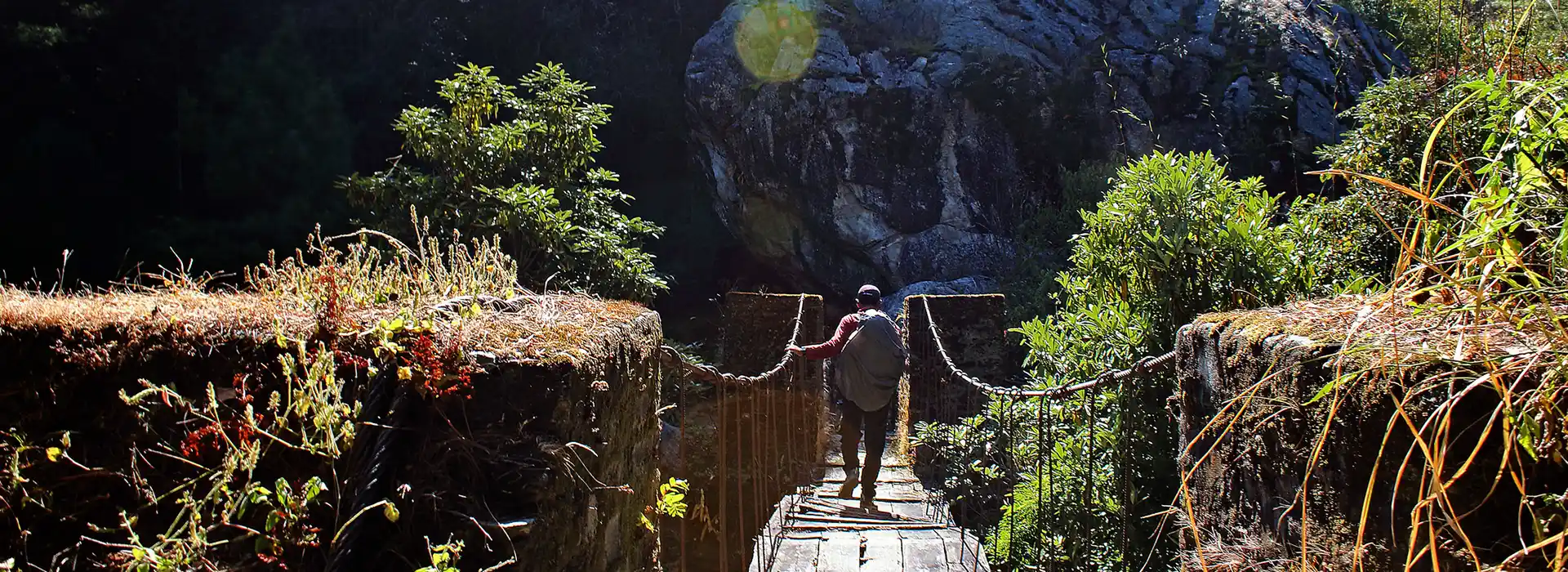

This off-the-beaten-path route offers stunning Himalayan views and authentic cultural immersion while directly supporting local villages.
The Annapurna Community Trek takes you through the quiet Annapurna foothills on a 9-day route that connects rural Magar villages, community lodges, rhododendron forests, and the Mohare Danda ridgeline viewpoint—all while keeping the benefits of your trip inside the local communities you walk through. The route starts and ends in Kathmandu, travels to Pokhara by tourist bus, then drives to the trailhead at Galeshwor, and then follows a series of village-to-village walking days through Bas Kharka, Nangi, Mohare Danda, and Tikot.
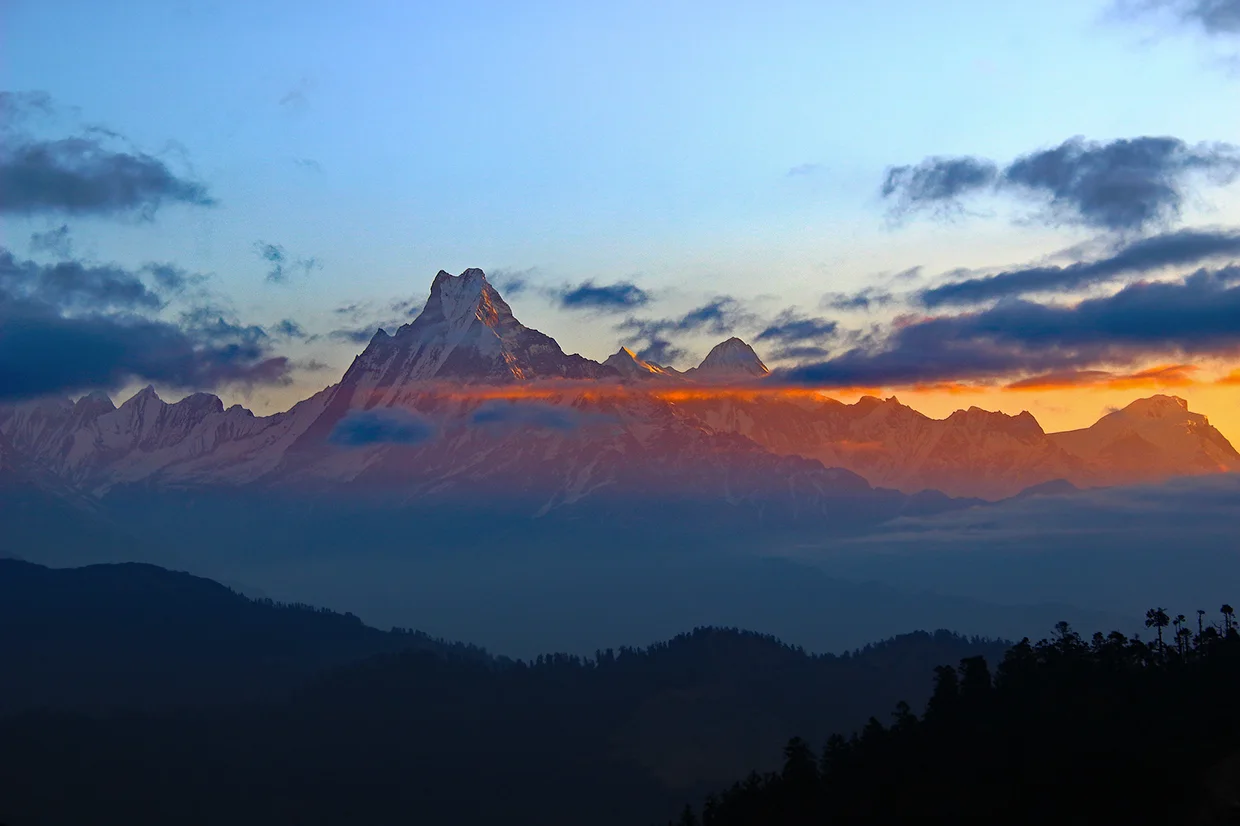
Mohare Danda sits at approximately 3,300 to 3,313 meters on an open ridge, offering panoramic views of the Annapurna and Dhaulagiri ranges. Sunrise from the ridge reveals Dhaulagiri, Annapurna I, Annapurna South, and Machhapuchhre in a wide arc across the northern horizon. The view attracts far fewer visitors than nearby Poon Hill—on most mornings at Mohare Danda, your group shares the ridge with a handful of other trekkers rather than the hundreds who crowd the Poon Hill observation platform during peak season.
The Annapurna Community Lodge Trek moves through settlements where tourism income flows directly to local families rather than absentee teahouse owners. Bas Kharka, Nangi, and Tikot each offer community lodges or homestays run by local families and cooperatives. Nangi village specifically connects trekking income to a broader community development program that includes school facilities, eco-tourism initiatives, handicrafts, fish farming, and mushroom cultivation projects that have been running for years.
The 9-day package includes airport pickup and drop-off, two nights at Hotel Thamel Park in Kathmandu, two nights at Hotel Splendid View in Pokhara, all transport between cities and the trailhead, community lodge and homestay accommodation on all trekking nights, full board meals during trekking days, and a licensed guide throughout the trail section. The Mohare Danda Trek rates as easy to moderate and suits first-time trekkers, culture-focused travelers, families, and anyone who wants genuine mountain views without high-altitude risk.
Quick Answer: What Is the Annapurna Community Trek?
The Annapurna Community Trek is a 9-day community-based trek in the Annapurna foothills. The route connects Kathmandu, Pokhara, Galeshwor, Bas Kharka, Nangi, Mohare Danda, Tikot, and back to Pokhara. The trek offers village culture, local homestays, community lodges, rhododendron forests, and sunrise views over Annapurna and Dhaulagiri from Mohare Danda. Difficulty rates as easy to moderate, with Hotel Thamel Park in Kathmandu and Hotel Splendid View in Pokhara included.
The Annapurna Community Trek offers a trekking experience built around what most standard Annapurna routes omit: direct interaction with rural Nepali village life, locally owned accommodation, and community-supported tourism that puts money into household economies rather than centralized commercial teahouse chains. Where the Poon Hill circuit moves between busy teahouse stops that cater primarily to tourist convenience, the Annapurna Community Trek route passes through Bas Kharka and Tikot—Magar villages, where trekker numbers remain low enough that your arrival still feels like a genuine event rather than a routine transaction.
The trail runs through the foothills of the Annapurna Conservation Area, between approximately 1,000 meters at Galeshwor and 3,313 meters at Mohare Danda. No high passes, no glacier zones, and no altitude acclimatization days appear in the 9-day itinerary. Daily walking time ranges from 4 to 7 hours, depending on the day, with the approach to Mohare Danda on Day 5 representing the longest and most sustained uphill section of the route. The trail surface alternates between stone-paved village paths, earthen forest trails, and open ridgeline sections above the treeline near Mohare Danda.
City accommodation at Hotel Thamel Park in Kathmandu and Hotel Splendid View in Pokhara provides a comfortable frame around the simpler community lodge and homestay nights on the trail. The package does not pretend that community lodges offer hotel-quality facilities—they do not, and that gap is part of the authentic experience. What community lodges provide is warm local hospitality, simple home-cooked food, and the direct connection to village life that hotel accommodation cannot replicate.

Included Meals

Trip staff

Transport

Accommodation

Trip Grade
Group Size
You arrive at Tribhuvan International Airport in Kathmandu. Our representative meets you in the international arrivals hall with a name sign and transfers you by private vehicle to Hotel Thamel Park in the Thamel tourist district. Check in, rest after your flight, and use the afternoon to recover and prepare. Thamel puts you within easy walking distance of trekking gear shops, money exchange outlets, pharmacies, and restaurant options at every price point.
Our guide visits your hotel in the evening to introduce themselves and walk through the 9-day itinerary. Use the meeting to confirm your gear list, ask questions about the community lodge experience, and discuss what to expect from the Bas Kharka, Nangi, and Tikot overnight stays. Confirm that your travel insurance covers trekking activity and emergency evacuation before the meeting ends.
Meals: Not included – Thamel offers many restaurant options
Accommodation:
Hotel Thamel Park, Kathmandu (twin sharing)
Difficulty
You board the tourist bus or private vehicle from Kathmandu to Pokhara in the morning. The journey takes 6 to 7 hours along the Prithvi Highway, following the Trishuli and Marsyangdi river valleys through the middle hill zone. The road offers views of terraced farmland, river gorges, and distant Himalayan ridgelines along the way. Tourist buses stop at a roadside restaurant for lunch—lunch on this day falls outside the package.
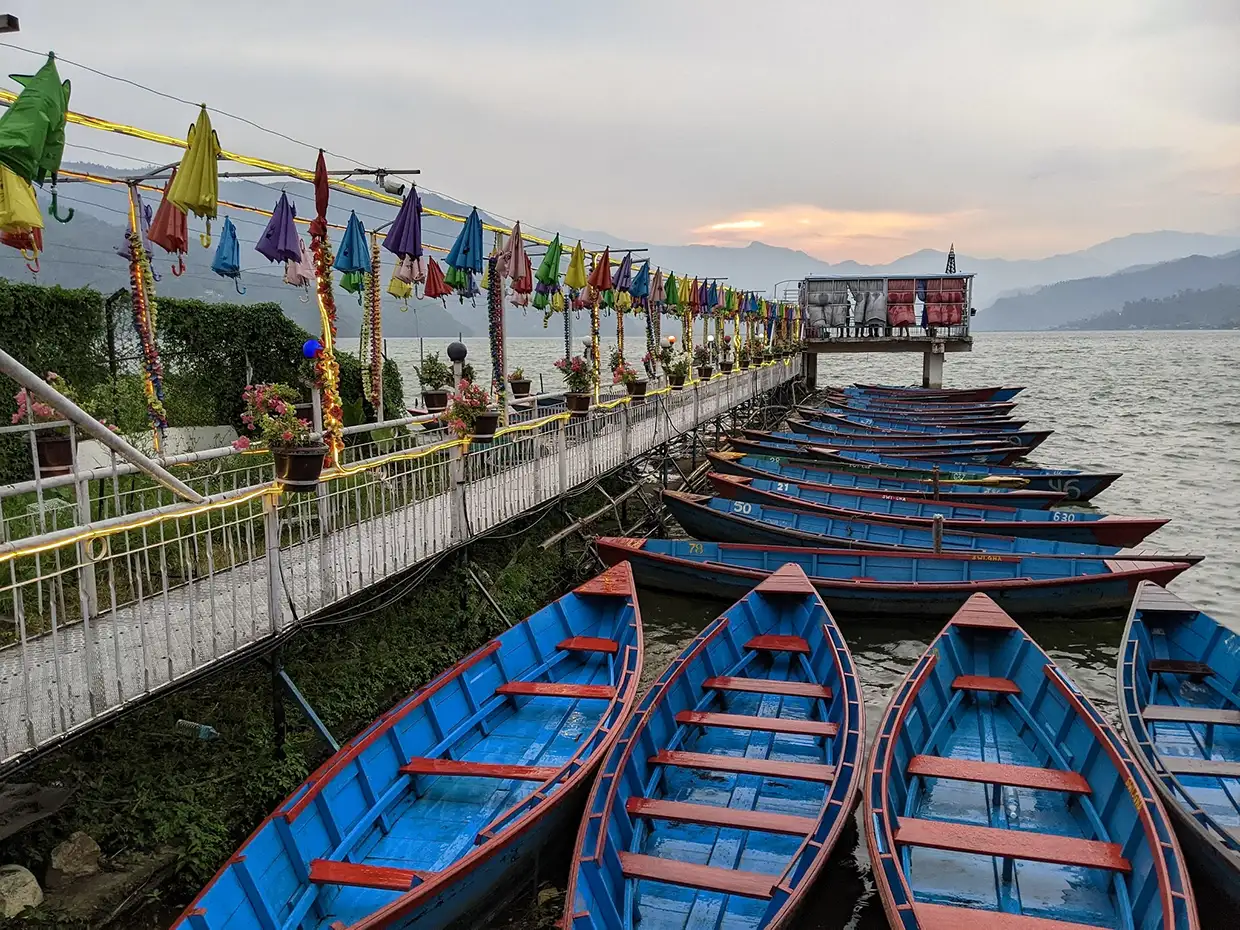
You arrive in Pokhara in the early afternoon and transfer to Hotel Splendid View near the lakeside. The evening is free. Walk along Phewa Lake at sunset, explore the Lakeside promenade, or sit at an outdoor cafe with the Annapurna and Machhapuchhre silhouettes visible above the water in clear weather. Use the evening to confirm your daypack contents and check your gear for the next morning’s drive toward the trailhead.
 Accommodation:
Hotel Splendid View, Pokhara Lakeside (twin sharing)
Meals Breakfast
Difficulty
A local vehicle transfers you from Pokhara through Beni to Galeshwor in the Myagdi District—approximately 3 to 4 hours by road. Galeshwor sits near the confluence of the Myagdi and Kali Gandaki rivers, at around 1,000 meters, and marks the start of the Annapurna Community Trek trail. The trailhead puts you immediately into the lower hill terrain of the Annapurna foothills, away from any tourist infrastructure.
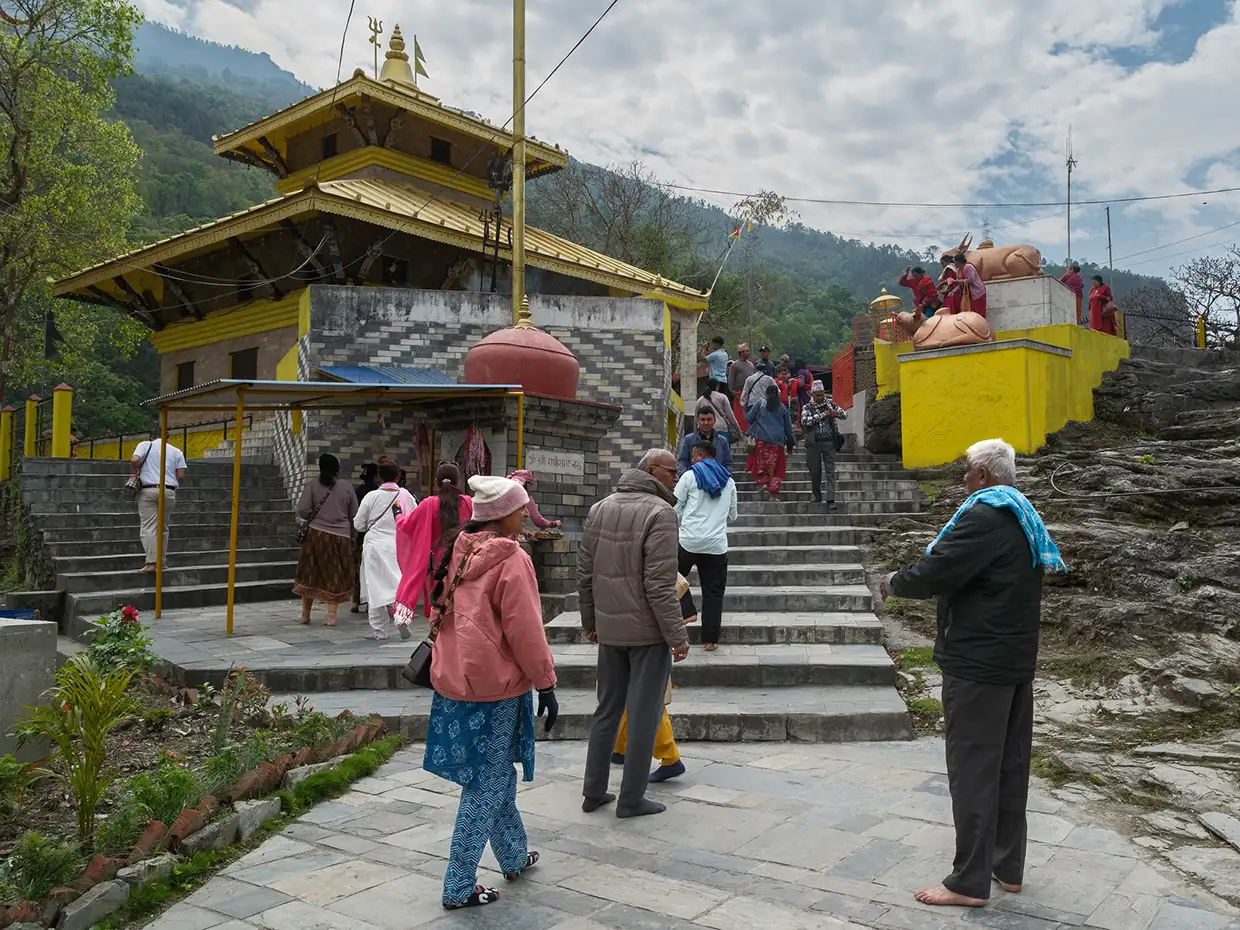
The trek from Galeshwor to Bas Kharka climbs steadily through terraced farmland, village settlements, and lower-hill forest, taking approximately 4 to 5 hours. The trail gains significant elevation on the approach to Bas Kharka—your legs notice the consistent uphill on the first day out. Arrive at the community lodge in Bas Kharka in the late afternoon, eat the family-cooked dinner, and rest early for the Day 4 village walk to Nangi.
Accommodation:
Community lodge or homestay in Bas Kharka
Meals Breakfast, Lunch, Dinner
Difficulty
The trail from Bas Kharka to Nangi continues through the Annapurna foothills on a mix of stone-paved village paths and earthen forest trails. The walking section passes through small farming communities, terraced fields, and patches of mixed forest before reaching Nangi village. Daily walking time ranges from 4 to 6 hours, with moderate elevation gain along the route.
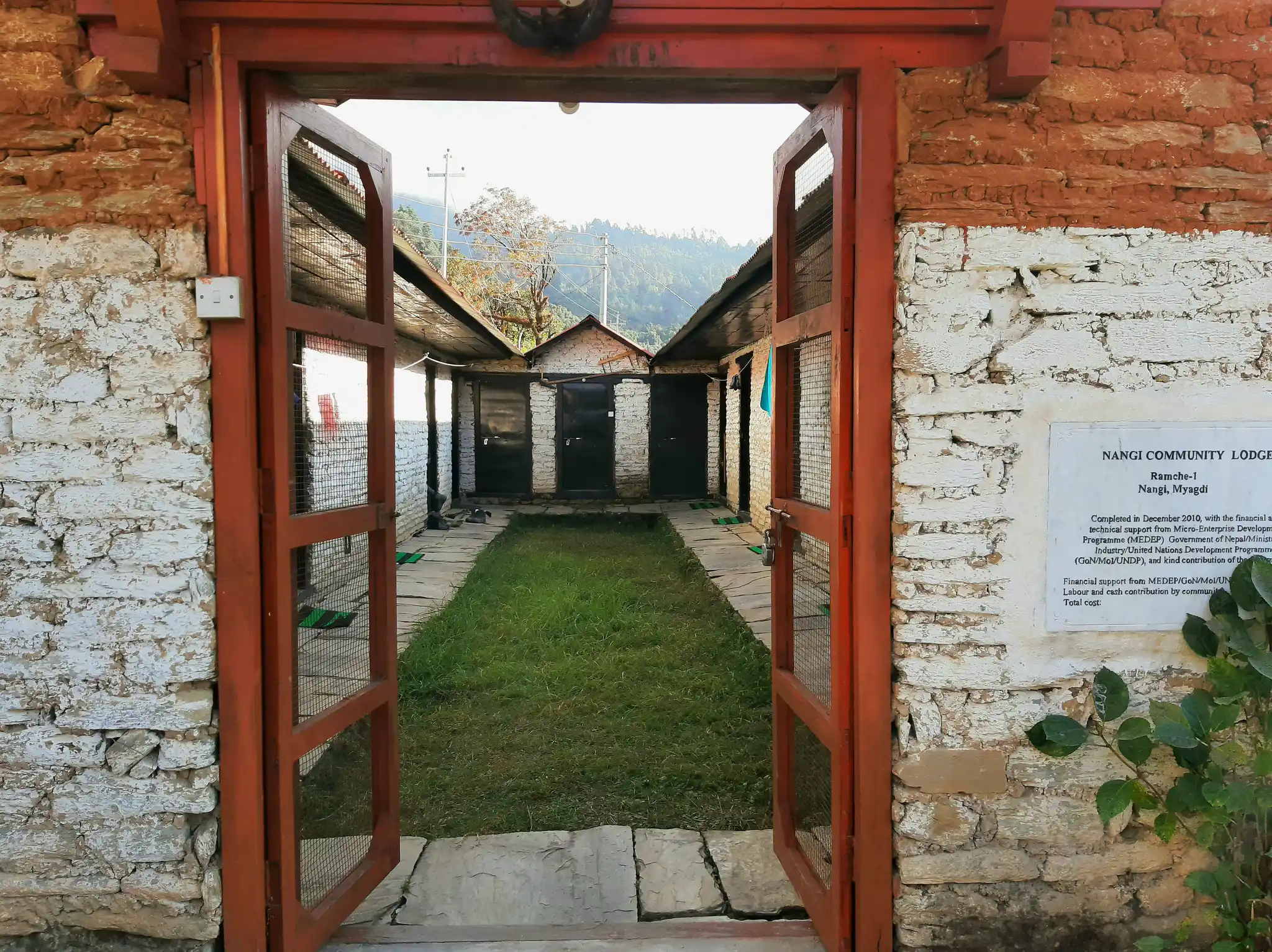
Arriving in Nangi gives you time before dinner to walk through the village and observe the community development projects that connect local households to a wider network of income sources beyond farming and trekking. The community lodge in Nangi typically offers the best-organized of the three homestay stops on the route—the community tourism infrastructure in the village has developed over multiple seasons of trekker visits and reflects that accumulated experience in the quality of hosting.
 Accommodation:
Community lodge or homestay in Nangi
Meals Breakfast, Lunch, Dinner
Difficulty
Day 5 delivers the most sustained climbing of the Annapurna Community Trek. The trail from Nangi rises through rhododendron and oak forests, with a steady uphill that gains elevation consistently over 5 to 7 hours of walking. The forest section from Nangi to the ridgeline delivers the best rhododendron blooms of the entire route in spring—red and pink flowers cover the hillside from late February through April as the trail climbs from 2,000 meters toward the 3,313-meter Mohare Danda ridge.
The community lodge at Mohare Danda sits on the ridge crest with the full Annapurna and Dhaulagiri panorama directly in front of the dining room windows. Arrive late in the afternoon, in time for sunset. The mountain light on the Annapurna massif in the hour before dark shifts from white to gold to amber across 20 to 30 minutes of continuous color change on clear evenings. Eat dinner at the lodge table with the panorama as your backdrop, then put on your warm layers and headlamp for the pre-dawn sunrise on Day 6.
Accommodation:
Basic community lodge at Mohare Danda
Meals Breakfast, Lunch, Dinner
Difficulty
Your guide wakes the group at 5 to 5:30 AM for the Mohare Danda sunrise walk. Dress in full, warm layers—the temperature at 3,313 meters before dawn typically ranges from -2°C to 5°C, depending on the season. Walk to the optimal viewpoint position and face north. The Annapurna and Dhaulagiri summits appear in silhouette as the sky lightens from dark blue to pale orange before the first direct sunlight touches the highest snowfields. The entire color progression takes 15 to 20 minutes and rewards the cold and the early start completely.
Return to the community lodge for breakfast, then pack and start the descent toward Tikot. The trail from Mohare Danda drops through forest and village paths on a long downhill, taking approximately 4 to 6 hours to complete. The descent puts significant stress on the knees—trekking poles provide genuine benefit through the lower forest sections above Tikot. Arrive at Tikot village in the afternoon, check into the community lodge or homestay, and spend the evening in the village before the final trekking day on Day 7.
Accommodation:
Community lodge or homestay in Tikot
Meals Breakfast, Lunch, Dinner
Difficulty
The final trekking day drops from Tikot through the lower village and forest trails to a road access point near Baseri, Beni, or another nearby connection. The walking time runs approximately 3 to 4 hours on a clear downhill path. A pre-arranged vehicle picks up the group at the road access point for the drive back to Pokhara. The drive takes 3 to 4 hours, depending on road conditions and the specific road access point used.
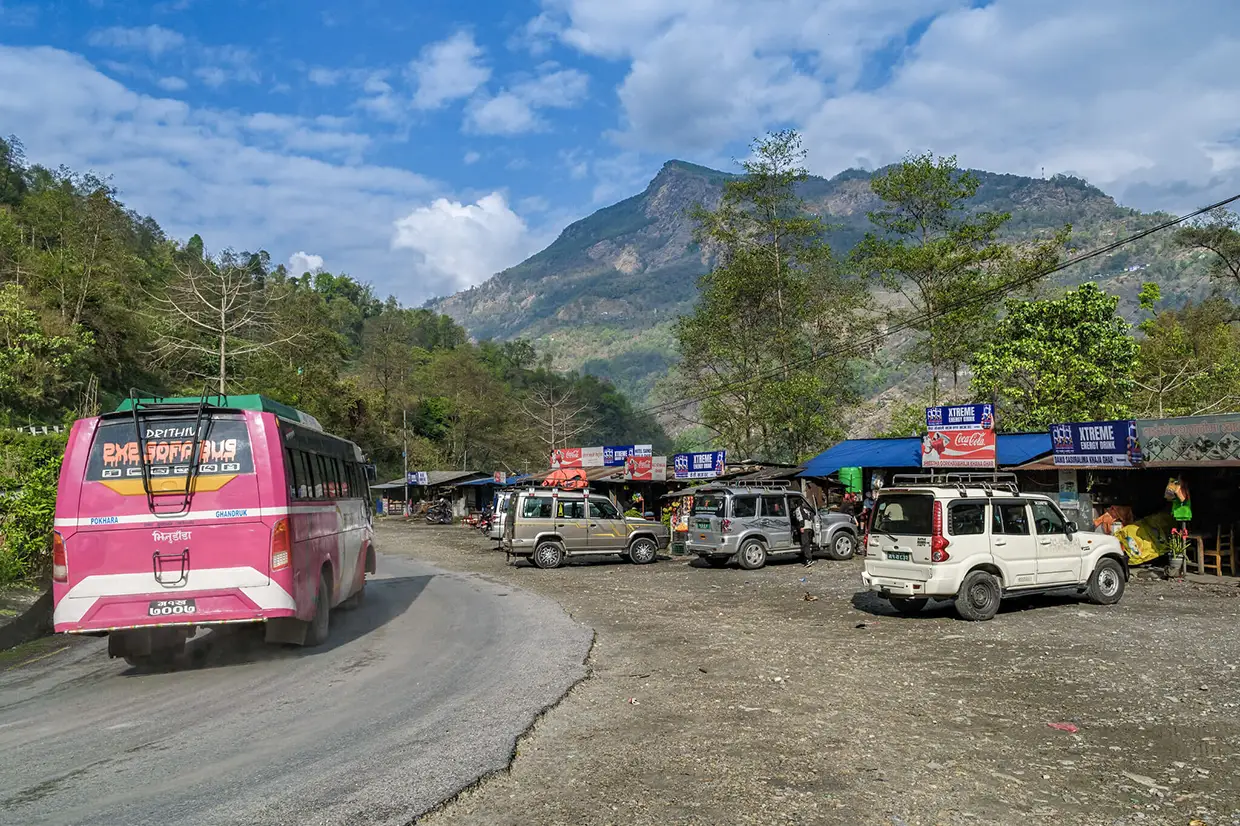
You arrive back in Pokhara in the afternoon and check into Hotel Splendid View. The evening is completely free—the first fully unstructured free evening since Day 2. Many trekkers celebrate the end of the trail at a lakeside restaurant, explore the Pokhara Lakeside promenade on foot, or rest at the hotel with a good meal and a proper bed after four consecutive community lodge nights on the trail.
Accommodation:
Hotel Splendid View, Pokhara Lakeside
Meals Breakfast, Lunch
Difficulty
The morning tourist bus or private vehicle returns from Pokhara to Kathmandu in 6 to 7 hours. Transfer to Hotel Thamel Park on arrival in the late afternoon. Use the evening for final souvenir shopping in Thamel, a celebration dinner, or simply resting at the hotel before the Day 9 airport departure. Our team remains available by phone and WhatsApp through the evening for any last-minute departure logistics.
Accommodation:
Hotel Thamel Park, Kathmandu
Meals Breakfast
Difficulty
Our driver transfers you from Hotel Thamel Park to Tribhuvan International Airport at the agreed pickup time. Allow at least 3 hours before international departure for check-in, immigration, and security. If your flight departs in the afternoon, store your luggage at the hotel after checkout and use the free morning to visit Swayambhunath Stupa or Boudhanath—both are within 15 minutes of Thamel.
Accommodation:
Not included – hotel checkout at standard time
Meals Breakfast
Difficulty
Accommodation:
Transport:
Meals:
Staff & Support:
Permits & Entry Fees:
Safety Equipment:
The Annapurna Community Trek package offers a trekking experience with an ethical dimension that standard teahouse routes do not. Every community lodge night, every locally prepared meal, and every trekking permit fee channeled through the ACAP system contribute directly to the economic well-being of villages with few income sources beyond farming and tourism. Choosing the Mohare Danda community lodge route over a standard commercial teahouse circuit makes a tangible difference to the households along the trail.
The mountain views from Mohare Danda match or exceed what Poon Hill offers, with a view arc that includes both Dhaulagiri to the west and the full Annapurna massif to the north. The key difference is the crowd level. In October, Poon Hill accommodates 200 to 300 trekkers on the observation platform before 6 AM. Mohare Danda hosts 20 -30 on the same morning. Both viewpoints look at the same mountain range from comparable altitudes. The experience at the less-visited ridge carries a different quality.
The 9-day structure provides a complete Nepal experience from arrival in Kathmandu to departure. You receive hotel stays in both Kathmandu and Pokhara, all transport between cities and the trailhead, full board meals on the trail, permits, and a licensed guide—all in one price. Sightseeing tours in Kathmandu and Pokhara are optional, so you control your total budget and pace.
The difficulty level keeps the route accessible to a wide range of travelers. No high-altitude pass crossing, no acclimatization day requirement, and no technical terrain appear on the 9-day itinerary. First-time trekkers with basic fitness can comfortably handle the daily walking distances with proper footwear and a reasonable pace. Families with active teenagers, travelers in their 50s and 60s, and solo travelers without previous trekking experience all complete the Annapurna Community Trail Trek without significant difficulty.
Community-based trekking differs from standard teahouse trekking in one fundamental way: the income stays local. On the main Annapurna Circuit trails, many teahouses are owned by people who live in Pokhara or Kathmandu and employ staff from outside the immediate village. On the Annapurna Community Trek route, the lodges and homestays in Bas Kharka, Nangi, and Tikot are run by families who live in those villages, cook their own food, and reinvest their income into their own households and communities.
Nangi village provides the strongest example of community-based development along the entire Mohare Danda trail. The village’s community programs connect trekking tourism income to a network of local initiatives that include primary school facilities, teacher support, eco-tourism training, handicraft production for local sale, paper products made from local materials, fish farming in community ponds, and mushroom cultivation—a protein source and income stream that runs independently of trekking season.
Homestay accommodation means sleeping in a room in a family’s home rather than in a purpose-built lodge. Your host family cooks your meals in the same kitchen where they cook for themselves. The food comes from their own garden or from the local market rather than from wholesale suppliers who serve commercial teahouses. The conversation over dinner reflects genuine local life rather than a rehearsed trekker-greeting script.
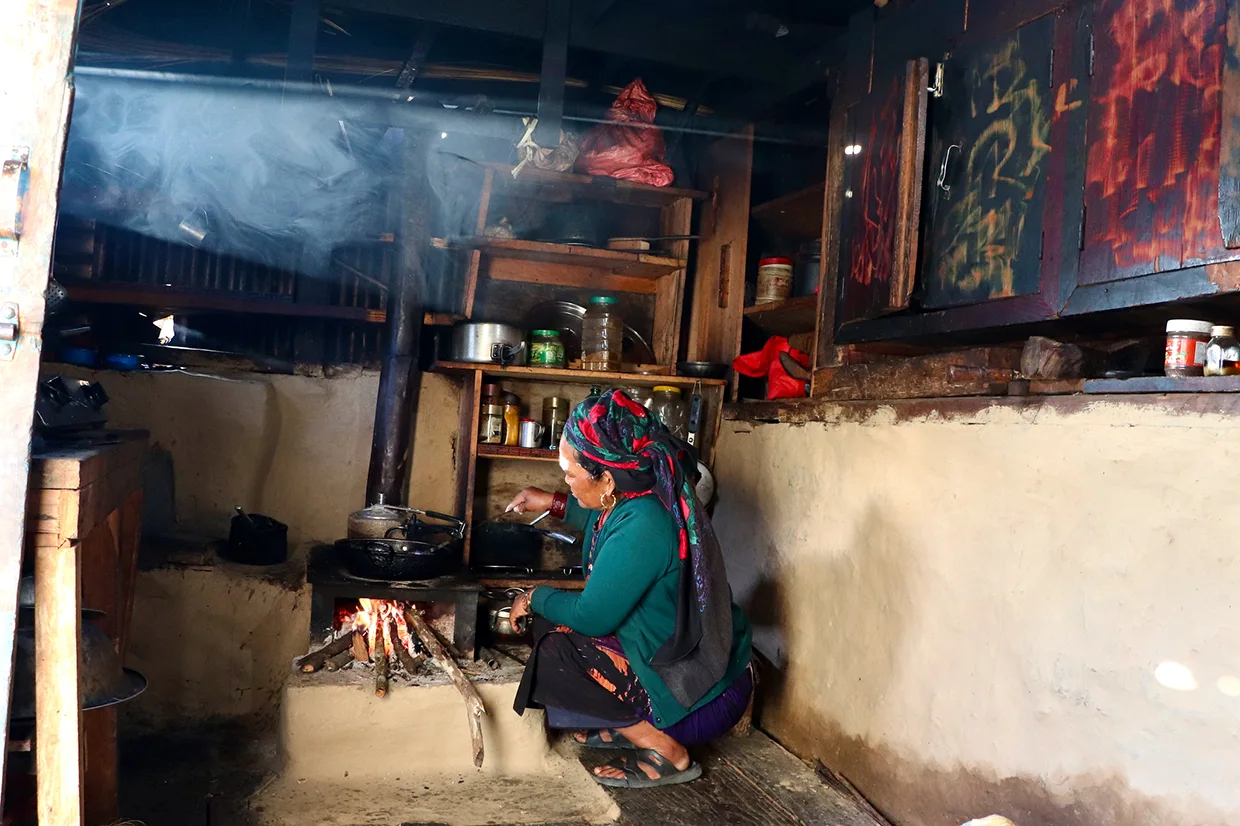
Trekkers who choose community-based routes over standard teahouse circuits receive something that no amount of comfortable accommodation provides: the experience of being a genuine guest rather than a paying customer. The distinction matters most at Tikot village, where the Magar community’s traditional hospitality extends to trekkers as it would to any visitor—with curiosity, directness, and warmth that commercial teahouse culture cannot replicate.
Mohare Danda sits at approximately 3,300 to 3,313 meters on a ridge that forms part of the southern flank of the Annapurna Conservation Area. The ridge faces north and northwest across a clear view corridor that takes in Dhaulagiri at 8,167 meters to the west, Annapurna I at 8,091 meters to the north, Annapurna South at 7,219 meters directly ahead, and Machhapuchhre at 6,993 meters to the northeast. On clear days, the panorama extends to include several secondary peaks of the Nilgiri and Lamjung groups.
Sunset from Mohare Danda arrives the evening of Day 5 as the light drops behind the western ridgeline and catches the Annapurna massif in warm amber and gold. The community lodge terrace faces the mountain panorama directly—you watch the sun drop from your dinner table without a trail walk. Sunrise on Day 6 morning requires an early start—typically 5 to 5:30 AM—to reach the optimal viewpoint position before the light crests the eastern ridge and begins illuminating the summits. Carry a headlamp, full warm layers, and gloves for the pre-dawn Mohare Danda start.
The crowd level at Mohare Danda remains far below that at Poon Hill throughout both the spring and autumn peak seasons. On a clear October morning, the Mohare Danda ridge hosts 20 to 40 trekkers. Poon Hill on the same morning handles 200-400. The mountain panorama features similar peaks at comparable altitudes. Photographers who want space to compose, a tripod room, and foreground options without other trekkers in every frame find Mohare Danda significantly more practical than Poon Hill for serious landscape work.
The community lodge at Mohare Danda uses basic facilities—thin mattresses, shared bathrooms, limited electricity, and a simple but genuinely warm dining room. Cold mornings at 3,313 meters require your sleeping bag and full warm layers, rather than relying solely on the blanket supply. Carry everything you need for a cold mountain night in your daypack on the Day 5 approach to the ridge.
Bas Kharka provides the first community lodge or homestay experience of the trek. The village sits in terraced farmland above the Galeshwor trailhead, surrounded by fields of millet, maize, and seasonal vegetables that local families farm year-round. The walk from Galeshwor to Bas Kharka climbs steadily through lower hill forest and past small homesteads before reaching the village settlement.
The community lodge in Bas Kharka reflects the honest character of the entire Annapurna community lodge network—simple rooms, basic shared facilities, and a dining room where the family serves dal bhat at a communal table. Your arrival in Bas Kharka represents genuine income for the household that hosts you, and the family’s hospitality reflects that directness. Local farming tools, dried grain, and seasonal produce around the lodge give the first night of trekking a distinctly rural Nepali character that differs completely from a standard commercial teahouse.
Nangi village represents the most developed community tourism model on the Mohare Danda route. The village operates multiple community-supported initiatives simultaneously—school facilities that serve local children from surrounding settlements, eco-tourism training that equips local families to host trekkers effectively, handicraft production using traditional Magar techniques, paper products made from local plant materials, fish farming in constructed community ponds, and mushroom cultivation that provides protein and income independent of the trekking calendar.
Walking through Nangi on Day 4 gives you a ground-level view of what community-based development actually looks like in practice. School buildings sit alongside farming terraces. Women work on handicrafts outside their homes while children return from school. The village economy runs as a connected system rather than as isolated individual households—trekking income supports the school, the school supports the children, and the children eventually support the community. Your community lodge stay in Nangi connects your visit to everything.
Tikot village presents the most traditional and least commercially developed community experience of the three overnight stops. The village uses the classic Magar architectural style—stone-walled houses with low doorways, narrow lanes between family compounds, and flat-roofed structures that reflect the traditional building methods of the middle hills. Magar culture maintains deep roots in the Annapurna foothills, and Tikot preserves a village character that larger Annapurna trail settlements have largely traded away in favor of trekker-focused infrastructure.
Local food in Tikot uses ingredients grown or raised in the village itself. Dal bhat arrives at the table from the family kitchen rather than from a commercial food supplier. The evening in Tikot typically ends early—the village goes quiet when the light fails, and your community lodge stay reflects that natural rhythm. Wake with the village, walk in the morning light, and leave the following day with a cleaner sense of what rural life in the Annapurna foothills actually involves.
The Annapurna Community Trek suits:
Be honest before confirming this package:
| Trek | Duration | Difficulty | Highest Point | Main Style | Best For |
|---|---|---|---|---|---|
| Annapurna Community Trek | 9 Days | Easy–Moderate | ~3,313 m | Community lodges, village culture | Responsible travel, culture seekers |
| Poon Hill Trek | 4–6 Days | Easy–Moderate | 3,210 m | Classic sunrise viewpoint trek | Short-trip trekkers |
| Khopra Ridge Trek | 10–11 Days | Moderate | ~4,500 m+ | Ridge, lake, remote trails | Stronger trekkers |
| Annapurna Panorama Trek | 8–9 Days | Easy–Moderate | 3,210 m | Scenic villages and views | First-time trekkers |
Our team walks the Mohare Danda and Annapurna community lodge route during each trekking season to maintain current knowledge of trail conditions, community lodge quality, and the development status of village projects in Nangi and Tikot. The guide assigned to your trek knows the Bas Kharka, Nangi, Mohare Danda, and Tikot sections from direct, recent walking experience—not from a description written several seasons ago.
We use Hotel Thamel Park in Kathmandu and Hotel Splendid View in Pokhara because our team verifies the quality of both properties through ongoing working relationships. We do not use hotels that we have not personally checked. The community lodges on the trek receive pre-season visits from our team to confirm room availability, meal quality standards, and the specific community hosting arrangements for each overnight stop.
Permit fees stated in this package reflect current NTNC pricing—NRs. 3,000 for foreign nationals, NRs. 1,000 for SAARC nationals, tax included. All permit processing runs through the official NTNC e-permit system, with documentation sent to your email before departure. Our company carries all permit records for your group and handles all checkpoint interactions on the trail.
The Poon Hill trek focuses on reaching the Poon Hill viewpoint for the sunrise panorama and returning to Pokhara within 4 to 5 trekking days. The Annapurna Community Trek reaches a comparable viewpoint at Mohare Danda within 9 days and adds four village nights, three distinct community encounters, and a trail section that sees a fraction of Poon Hill’s daily foot traffic. The mountain panorama from Mohare Danda covers Dhaulagiri and Annapurna South, in an arc similar to that from Poon Hill. The village experience along the way has no equivalent on the standard Poon Hill circuit.
Community lodges feel simple because they are simple. Mattresses are thin. Bathrooms are shared and sometimes cold. The dining room serves one or two main dish options rather than a laminated tourist menu. None of this represents a failure of quality—it represents the authentic infrastructure of a rural Nepali village that hosts trekkers alongside its primary function as a farming community. Approach community lodge stays with curiosity and flexibility rather than hotel-standard expectations.
Sunset at Mohare Danda on the evening of Day 5 provides a warm, unhurried mountain panorama from the lodge terrace without an early alarm or a cold pre-dawn walk. Sunrise on Day 6 morning delivers sharper colors, lower-angle light, and the full first-sun effect on the mountain summits—but requires a 5 AM start, warm layers, and a headlamp. Photographers who want both bring a headlamp and work both ends of the light day. Trekkers who want the view without the 5 AM cold can enjoy the sunset panorama on Day 5 evening as their primary Mohare Danda experience.
Keeping Kathmandu and Pokhara sightseeing optional in the base package reduces the per-person cost for trekkers who want to explore both cities independently. Both cities reward independent exploration—Thamel’s gear shops, Boudhanath’s stupa circuit, Pokhara’s lakeside market, and the World Peace Pagoda all give you a full day without a guided tour. Trekkers who prefer an organized tour with a guide and private vehicle add the city tour as an upgrade at a clearly stated price.
The Annapurna Community Trek stays below 3,313 meters and covers moderate daily distances. Trekkers who pack a 6 to 8 kilogram daypack—essentials only—find the trail manageable without a porter on most days. The Day 5 approach to Mohare Danda represents the one section where pack weight clearly affects enjoyment. Trekkers who carry more than 8 kilograms or who want consistent trail comfort add porter service before departure. The upgrade also creates direct employment income for workers from the communities along the trail.
Full board meals are included on all four active trekking days from Day 3 through Day 7. Hotel breakfast is included at Hotel Thamel Park and Hotel Splendid View on Days 2, 8, and 9. Day 1, and all lunches and dinners in Kathmandu and Pokhara, are not included in the package.
Community lodge meals focus on locally prepared Nepali food rather than the broad tourist menus available at commercial teahouses. Dal bhat—steamed rice, lentil soup, vegetable curry, pickles, and seasonal side dishes—forms the core of most dinner and lunch meals.
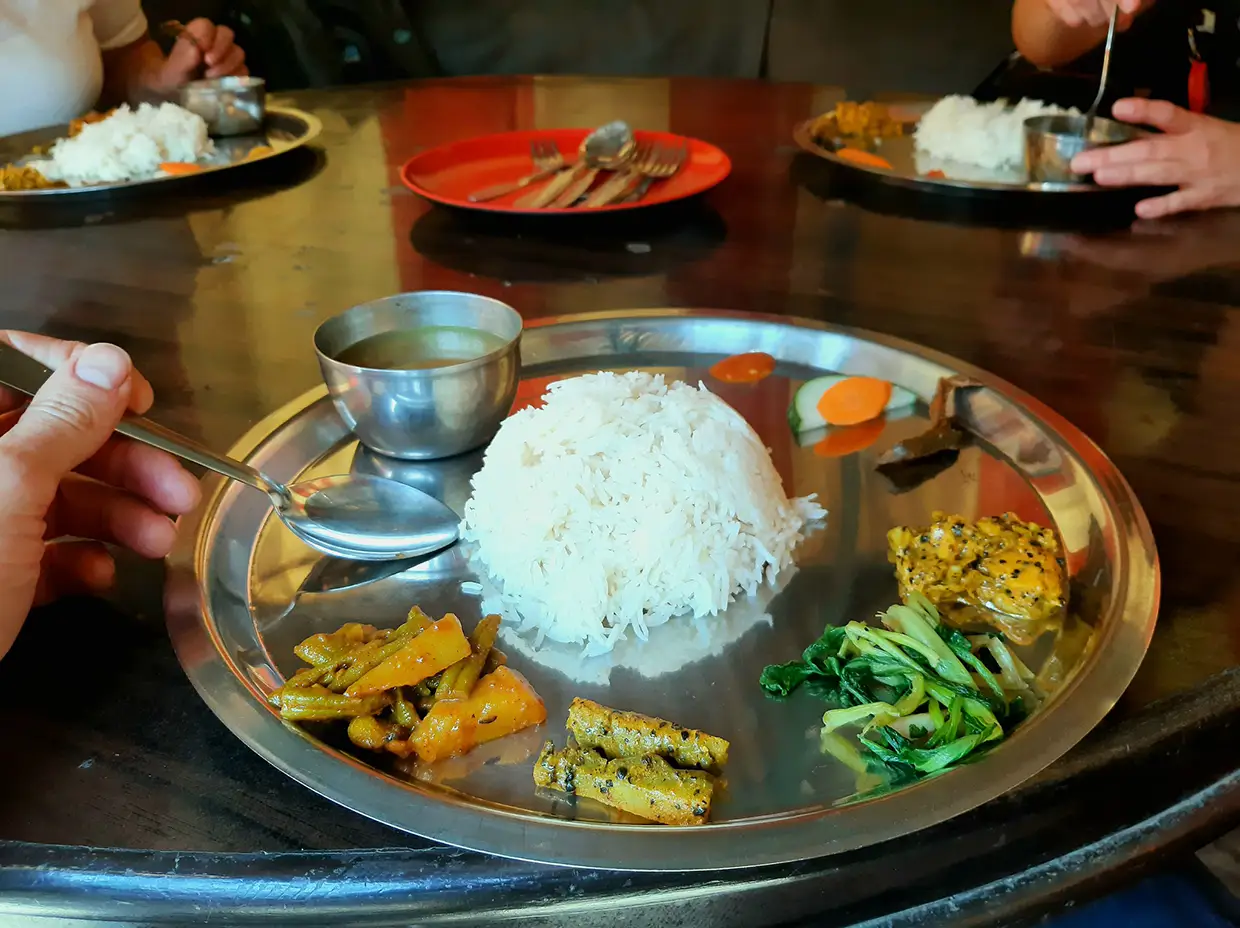
Breakfast options typically include eggs, bread or roti, porridge with honey, and tea or instant coffee. In Nangi and Tikot, seasonal vegetables from the family garden appear in the curry alongside foraged herbs that the kitchen uses in place of commercial spice packets.
Eating local meals at community lodges directly supports village household incomes. A family that earns NRs. 500 from your dinner serves that money back into the household economy rather than transferring it to a Pokhara-based teahouse operator. Choosing local meals over packaged food from your daypack—chocolate bars, instant noodles, commercial snacks—keeps your spending inside the community you travel through.
Bottled water, soft drinks, hot drinks beyond basic tea and coffee, alcohol, and desserts carry additional charges at all trail stops. Carry a refillable water bottle and use purification tablets to reduce both cost and plastic waste in the community lodge section.
The package covers five transport segments: airport pickup by private vehicle on Day 1, tourist bus or private vehicle Kathmandu to Pokhara on Day 2, local vehicle Pokhara to Galeshwor via Beni on Day 3, local vehicle from road point back to Pokhara on Day 7, tourist bus or private vehicle Pokhara to Kathmandu on Day 8, and airport drop-off on Day 9.
Optional transport upgrades are available for any segment. A private car replaces the tourist bus on either the Kathmandu–Pokhara or Pokhara–Kathmandu leg for more comfort and flexibility. A domestic flight cuts the Kathmandu–Pokhara or Pokhara–Kathmandu journey from 6 hours to 25 minutes. Contact our team before booking to add any transport upgrade and receive current pricing.
The Annapurna Community Trek enters the Annapurna Conservation Area and requires two permits. The Annapurna Conservation Area Permit costs NRs. 3,000 for foreign nationals and NRs. 1,000 for SAARC nationals, tax included, as listed on the NTNC e-permit portal. The TIMS card may also apply depending on the current Nepal Tourism Board policy. Both permits come included in the package price.
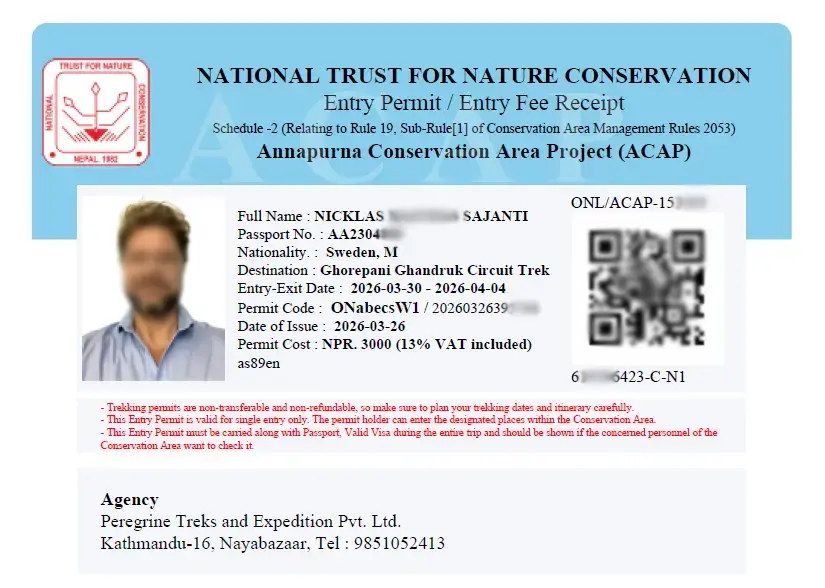
Our team arranges both permits in Kathmandu before your Day 3 departure toward the trailhead. Bring two passport-size photographs and a clear copy of your passport photo page to provide to our team on Day 1 or the morning of Day 2. Permit rangers check your documents at checkpoints along the Annapurna Conservation Area trail—keep both permits in your daypack at all times during the trek.
The Annapurna Community Trek rates as easy to moderate. No high passes, no technical terrain, and no glacier sections appear on the 9-day route. The trail climbs from approximately 1,000 meters at the Galeshwor trailhead to 3,313 meters at Mohare Danda—a comfortable altitude profile that requires no acclimatization day and poses no serious altitude sickness risk for healthy adults.
The Day 3 climb from Galeshwor to Bas Kharka involves sustained uphill on the first day of trekking—a physical surprise for trekkers who arrive unprepared. The Day 5 approach from Nangi to Mohare Danda is the longest and most demanding walking day of the trek, taking 5 to 7 hours and featuring consistent elevation gain through the rhododendron forest above the village. Day 6 descent from Mohare Danda to Tikot involves an extended downhill that stresses the knees for 4 to 6 hours—trekking poles effectively reduce this load.
Fit beginners complete the Annapurna Community Trek comfortably with 2 to 4 weeks of regular walking preparation before departure. Trekkers who exercise regularly—walking, cycling, or any aerobic activity—find the daily distances manageable without dedicated preparation. Carry trekking poles for the descent sections and wear properly broken-in trekking footwear before the trek begins.
| Season | Months | Conditions | Best? |
|---|---|---|---|
| Spring | March to May | Rhododendron forests bloom along the trail from Bas Kharka to Mohare Danda. Mild daytime temperatures, clear mornings, and strong mountain views. One of the two best windows. | Yes |
| Autumn | Sep to Nov | Best visibility and stable weather after the monsoon ends. Blue-sky days deliver the clearest mountain panoramas from Mohare Danda. October is the peak month. | Yes – Best |
| Winter | Dec to Feb | Cold mornings and nights in community lodges—bring full warm gear. Clear skies on good days. Trails stay quiet. Manageable for prepared trekkers. | Possible |
| Monsoon | Jun to Aug | Daily rain, leeches on the trail, poor visibility, and slippery paths. Not recommended for most first-time trekkers on this route. | No |
Spring and autumn offer the best balance of weather, visibility, and trail conditions. March and April add the visual reward of rhododendron blooms along the Bas Kharka to Mohare Danda section. October delivers the clearest mountain panoramas of the year from the Mohare Danda ridge. Winter is feasible with adequate warm gear, but requires accepting cold nights at community lodges above 3,000 meters.
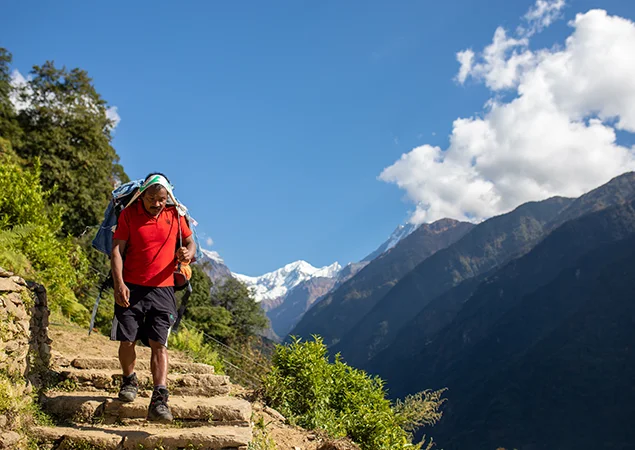
Porter service is optional in the base package and available as a paid upgrade. The Annapurna Community Trek stays at a lower altitude and moderate difficulty than the Khopra Ridge or Annapurna Circuit routes, which means many trekkers complete the trail comfortably without a porter carrying their main bag. Trekkers who pack light—under 8 kilograms in a standard daypack—generally manage the daily distances and elevation changes without difficulty.
Adding a porter significantly changes the experience on the Day 5 Nangi to Mohare Danda climb and the Day 6 descent to Tikot. One porter can carry a maximum of 20 kilograms between two trekkers. You carry your own daypack with daily essentials—water, snacks, a rain jacket, a camera, and personal items. Porter service also provides direct employment income to local workers from the communities along the trail.
Add any of the following to your base package at extra cost. Contact our team before confirming your booking to add upgrades and receive current pricing:
Travel insurance is compulsory for all trekkers on the Annapurna Community Trek. The route stays below 3,313 meters—well below the high-altitude thresholds of the Annapurna Circuit or Khopra Ridge routes—but the remote trail location, the basic lodge facilities, and the risk of injury, sickness, or accident on a multi-day mountain trek make insurance coverage essential regardless of altitude.
Your policy must cover trekking activity up to at least 3,500 meters, emergency helicopter evacuation, in-patient and out-patient medical treatment in Nepal, trip cancellation, flight delays, and lost baggage. A helicopter evacuation from the Mohare Danda section to Pokhara costs USD 1,500 to USD 3,000 depending on conditions—without insurance, the full cost falls on the trekker. Purchase your policy before you fly to Nepal.
Pack light and cover the key temperature range—warm afternoons in the lower villages and cold mornings at the Mohare Danda ridgeline at 3,313 meters:
Responsible trekking on the Annapurna Community Trek means making daily choices that support the communities you visit rather than simply passing through them. Buy meals at the community lodges even when you carry packaged snacks in your daypack—the family earns more from a hot dinner than any tip compensates for a skipped meal. Buy water from the lodge rather than plastic bottles when purification tablets are available. Ask your guide about specific community projects in Nangi before you visit and carry genuine curiosity rather than tourist detachment.
Dress modestly when walking through Bas Kharka, Nangi, and Tikot. Magar communities in the Annapurna foothills maintain their own social customs and norms around clothing, physical contact, and the use of shared spaces. Cover shoulders and knees in village settings. Ask before entering private household areas. Ask clearly before taking close-up photographs of local people—particularly children and older community members—and accept a refusal without pressure.
Stay on marked trails at all times. The lower Annapurna foothills contain active farming terraces, irrigation channels, and community forest zones. Cutting across terrace walls, walking through irrigated fields, or creating new trail shortcuts through forest damages the land that farming families depend on for their food supply. Follow your guide’s route exactly through all village agricultural zones.
Keep noise low in community lodges during evening and early morning hours. Homestay families wake early for farming work and manage their household alongside their trekker-hosting responsibilities. Late-night noise from trekking groups disrupts household routines that predicate your own comfortable stay. The community lodge experience works when you adapt to the village rhythm rather than expecting the village to adapt to yours.
Your licensed guide manages safety throughout every trekking day. Safety responsibilities include setting a sustainable walking pace for the group, monitoring weather conditions—particularly for the Day 5 approach to Mohare Danda where afternoon cloud and rain can make the ridgeline trail slippery—and managing emergency communication if injury or illness requires evacuation from the trail.
The Annapurna Community Trek does not expose trekkers to serious altitude sickness risk at the 3,313-meter maximum elevation. Mild headache and reduced energy can occur above 3,000 meters for some trekkers, particularly on the Day 5 evening at Mohare Danda. Drink at least 2.5 liters of water daily, eat full meals, rest adequately between walking days, and inform your guide immediately if you feel unwell above 2,500 meters.
Slippery trails in wet conditions present the main physical hazard on this route. The descent from Mohare Danda to Tikot on Day 6 passes through forest trail that becomes muddy and slippery after rain. Trekking poles reduce the risk of ankle-twisting falls on the steeper descent sections. Wear waterproof trekking footwear with good grip rather than trail runners with minimal sole traction for better performance on wet earthen paths.
The full package runs 9 days from arrival in Kathmandu on Day 1 to final airport departure on Day 9. The active trekking section covers 4 days from Day 3 through Day 6, with Day 7 combining a final short trek to the road point and a drive back to Pokhara. You spend 2 nights in Kathmandu and 2 nights in Pokhara framing the 4 community lodge nights on the trail.
The highest point is Mohare Danda at approximately 3,300 to 3,313 meters (10,827 to 10,869 feet) above sea level. You reach Mohare Danda on the afternoon of Day 5 and stay at the community lodge there for the Day 6 sunrise. The altitude stays well below the high-altitude threshold where serious altitude sickness risk becomes a significant concern for healthy adults.
Yes. The trek rates as easy to moderate and suits healthy first-time trekkers with basic fitness. The main demands are the Day 3 uphill from Galeshwor to Bas Kharka, the Day 5 sustained climb from Nangi to Mohare Danda, and the Day 6 extended descent to Tikot. Two to four weeks of regular walking preparation improves your comfort level on all three sections significantly.
The Annapurna Community Trek routes accommodation and income through locally owned community lodges and family homestays rather than commercially operated teahouses. The families who host you live in the villages you visit—Bas Kharka, Nangi, and Tikot. Your accommodation fee, meal payment, and permit fee all contribute directly to local household and community economies. Nangi village specifically connects trekking income to a broader development program including school facilities, eco-tourism, handicrafts, and farming initiatives.
Mohare Danda is famous for its mountain panorama view of the Annapurna and Dhaulagiri ranges from a ridge at approximately 3,313 meters. The viewpoint covers Dhaulagiri (8,167 m), Annapurna I (8,091 m), Annapurna South (7,219 m), and Machhapuchhre (6,993 m) in a wide arc. The main distinction from Poon Hill—which faces a similar mountain range—is the crowd level. Mohare Danda sees a small fraction of the daily trekker numbers that Poon Hill handles during peak season.
From Mohare Danda, you see Dhaulagiri (8,167 m) to the west, Annapurna I (8,091 m) to the north, Annapurna South (7,219 m) directly ahead, and Machhapuchhre or Fishtail Mountain (6,993 m) to the northeast. On clear days, the panorama extends to include secondary peaks of the Nilgiri group and portions of the Lamjung range. Both sunset on Day 5 evening and sunrise on Day 6 morning illuminate the full panorama from the community lodge ridge position.
You stay at Hotel Thamel Park in Kathmandu for two nights and Hotel Splendid View in Pokhara for two nights—both comfortable three-star hotels with private bathrooms, hot water, Wi-Fi, and daily breakfast. On the trail, you stay in community lodges or homestays in Bas Kharka, Nangi, Mohare Danda, and Tikot. Community lodge rooms provide basic twin beds and shared bathrooms. Hot showers are limited or unavailable at most trail stops—particularly at Mohare Danda.
Yes. Full board—breakfast, lunch, and dinner—comes included at community lodges on all 4 active trekking days from Day 3 through Day 6. Hotel breakfast comes included at both city hotels on applicable mornings. Day 7 includes breakfast and lunch at the trail end before the drive to Pokhara. Lunch and dinner in Kathmandu and Pokhara are not included. Bottled water, hot drinks, soft drinks, and alcohol carry additional charges at all locations.
Porter service is optional in the base package and available as a paid upgrade. One porter carries a maximum of 20 kilograms shared between two trekkers. We recommend adding a porter if you carry more than 8 kilograms or want to reduce physical load on the Day 5 Mohare Danda climb and Day 6 descent. Contact our team before booking to add porter service.
You need the Annapurna Conservation Area Permit (ACAP) and the TIMS card. The current ACAP fee stands at NRs. 3,000 for foreign nationals and NRs. 1,000 for SAARC nationals, inclusive of tax. Both permits come included in the package price. Our team arranges the documents in Kathmandu before your Day 3 departure. Bring two passport-size photographs and a copy of your passport photo page.
Spring (March to May) and autumn (September to November) offer the best conditions. Spring brings rhododendron blooms along the Bas Kharka to Mohare Danda section and mild temperatures. Autumn delivers the clearest mountain panoramas of the year from the Mohare Danda ridgeline. October stands as the strongest individual month for combined weather stability and mountain visibility.
Yes. A Kathmandu city sightseeing tour covering Pashupatinath Temple, Boudhanath Stupa, Swayambhunath Stupa, and one Durbar Square is available as an optional add-on at extra cost. Contact our team at booking to add the city tour and receive current pricing.
Yes. A Pokhara city tour covering Phewa Lake boat ride, the World Peace Pagoda, Davis Falls, and Gupteshwor Cave is available as an optional upgrade. The tour takes approximately half a day and includes a guide and private vehicle. Contact our team before booking to add it.
Yes. Both the Kathmandu to Pokhara and Pokhara to Kathmandu segments are upgradeable to domestic flights at extra cost. The flight takes 25 minutes versus the 6 to 7 hour bus journey and offers aerial views of the Himalayan range on clear days. Contact our team before confirming your booking to add the flight upgrade.
Yes. Travel insurance is compulsory for all trekkers on this route. Your policy must cover trekking activity, emergency helicopter evacuation, medical treatment in Nepal, trip cancellation, and lost baggage. The route stays below 3,313 meters, so standard trekking insurance without extreme altitude restrictions generally provides adequate coverage—confirm your specific policy terms before purchase.