

Enjoy spectacular Himalayan panoramas and authentic Sherpa culture on this shorter, lower-altitude journey to the famous Everest View Hotel.

Unbeatable Holiday Offers – Save Up to 20% on Your Next Adventure!
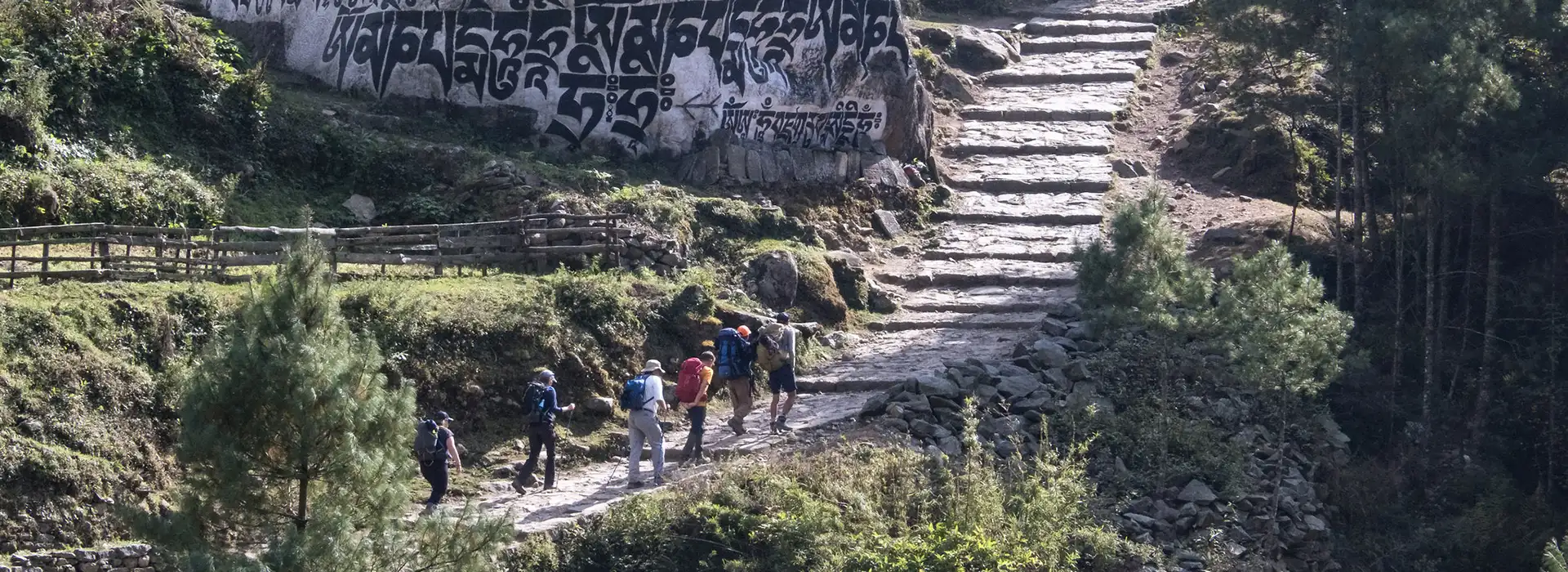

Enjoy spectacular Himalayan panoramas and authentic Sherpa culture on this shorter, lower-altitude journey to the famous Everest View Hotel.
The Everest View Trek delivers the most iconic mountain panoramas and cultural highlights of Nepal’s Khumbu region in a well-paced eight days, completely avoiding the intense altitude of Everest Base Camp. The itinerary features the classic Lukla flight, suspension bridges over the Dudh Koshi Valley, the vibrant hub of Namche Bazaar, and the scenic Syangboche ridge. Throughout the journey, you stay safely below 4,000 meters while enjoying clear views of Everest, Ama Dablam, and Lhotse from multiple vantage points.
Our specific itinerary uses a three-stop structure—incorporating the Everest View Hotel, Khumjung village, and Tengboche Monastery—to provide a remarkably complete experience. The Everest View Hotel offers spectacular, direct sightlines from its panoramic terrace. Khumjung village adds authentic Sherpa heritage and a visit to the historic Hillary School. Finally, Tengboche Monastery serves as the spiritual and visual centerpiece of the trip, anchoring your cultural discovery.
From Monjo onward, you trek through Sagarmatha National Park, a UNESCO World Heritage Site recognized for its exceptional glaciers, dramatic river valleys, and the deep relationship between the alpine ecosystem and Sherpa traditions. Your park entry permit directly funds conservation programs that maintain trail safety and protect the mountain wilderness.
This comprehensive 8-day package includes airport transfers, a stay at a Kathmandu hotel, round-trip flights to Lukla, six nights of local teahouse accommodation, and full-board meals on the trail. It also covers your licensed English-speaking guide and all necessary regional permits. Rating as easy to moderate, this route perfectly suits first-time Himalayan visitors, active families, and photographers who want the finest visual highlights of the Everest region within a predictable, compact timeframe.
Quick Answer: What Is the Everest View Trek?
The Everest View Trek is a short 8-day trek from Kathmandu. The route covers Lukla, Phakding, Namche Bazaar, Everest View Hotel, Khumjung or Khunde, Tengboche Monastery, Monjo or Phakding, and Lukla. The trek offers Everest views, Sherpa culture, Buddhist villages, and teahouse trekking without going to Everest Base Camp. The package includes guided trekking, Lukla flights, teahouse accommodation, trek meals, and all required permits.
The Everest View Trek occupies the most practical position in the short Everest market, delivering iconic Khumbu panoramas, authentic cultural encounters, and an efficient 8-day schedule. By bypassing the extreme altitudes of the Base Camp route, the itinerary focuses on three essential destinations—the Everest View Hotel, Khumjung, and Tengboche—to provide the most complete short Khumbu experience available.
This 8-day framework improves on rushed 5-day express packages by dedicating a full day above Namche Bazaar to visit the Everest View Hotel and Khumjung village. While shorter routes sprint directly from Namche to Tengboche and reduce the experience to a simple scenic corridor, our format uses this day as a vital acclimatization step and a rich cultural extension. Trekkers gain spectacular mountain sightlines and a deeper connection to Sherpa heritage without feeling hurried.
The route officially enters Sagarmatha National Park at the Monjo checkpoint on Day 3. This boundary marks a clear transition into a pristine, heavily protected wilderness environment that feels far less commercial than the lower trail sections from Lukla. At the gate, rangers verify both your national park permit and the local Khumbu Pasang Lhamu entry permit, a process your licensed guide handles seamlessly on your behalf.
Finishing with an easy-to-moderate rating, the trek accommodates a wide variety of fitness levels. The maximum altitude tops out around 3,867 meters at Tengboche Monastery, making the journey challenging enough to require basic cardio preparation but entirely achievable for fit beginners. Furthermore, the strategic acclimatization day above Namche significantly eases your body’s adaptation to the altitude before the final climb to Tengboche, ensuring a safe and comfortable high-altitude experience.

Included Meals

Trip staff

Transport

Accommodation

Trip Grade
Group Size
You arrive at Tribhuvan International Airport in Kathmandu. Our representative meets you in the international arrivals hall with a name signboard and transfers you by private vehicle to your hotel in Kathmandu. Check in, rest after your flight, and use the afternoon to explore the Thamel area or rest at the hotel. Our guide visits in the evening to walk through the 8-day Everest View Trek itinerary, explain the logistics of the Lukla flight, and confirm your permit requirements.
Use the evening of Day 1 to buy any remaining trekking items—gloves, a warm hat, trekking poles, and snacks—available in Thamel at competitive prices. Confirm that your travel insurance covers trekking in Nepal and emergency helicopter evacuation before the guide meeting ends
Accommodation:
Hotel in Kathmandu (twin sharing)
Difficulty
The Day 2 schedule begins with an early transfer to the airport—Tribhuvan International in Kathmandu or Manthali Airport in Ramechhap, depending on the season and current Civil Aviation Authority flight routing. The Lukla flight takes 25 to 35 minutes over the Himalayan foothills before the final approach to Tenzing-Hillary Airport—the upward-sloping 3,440-meter runway carved into a Himalayan hillside that has defined the Khumbu trekking entry experience since 1964.
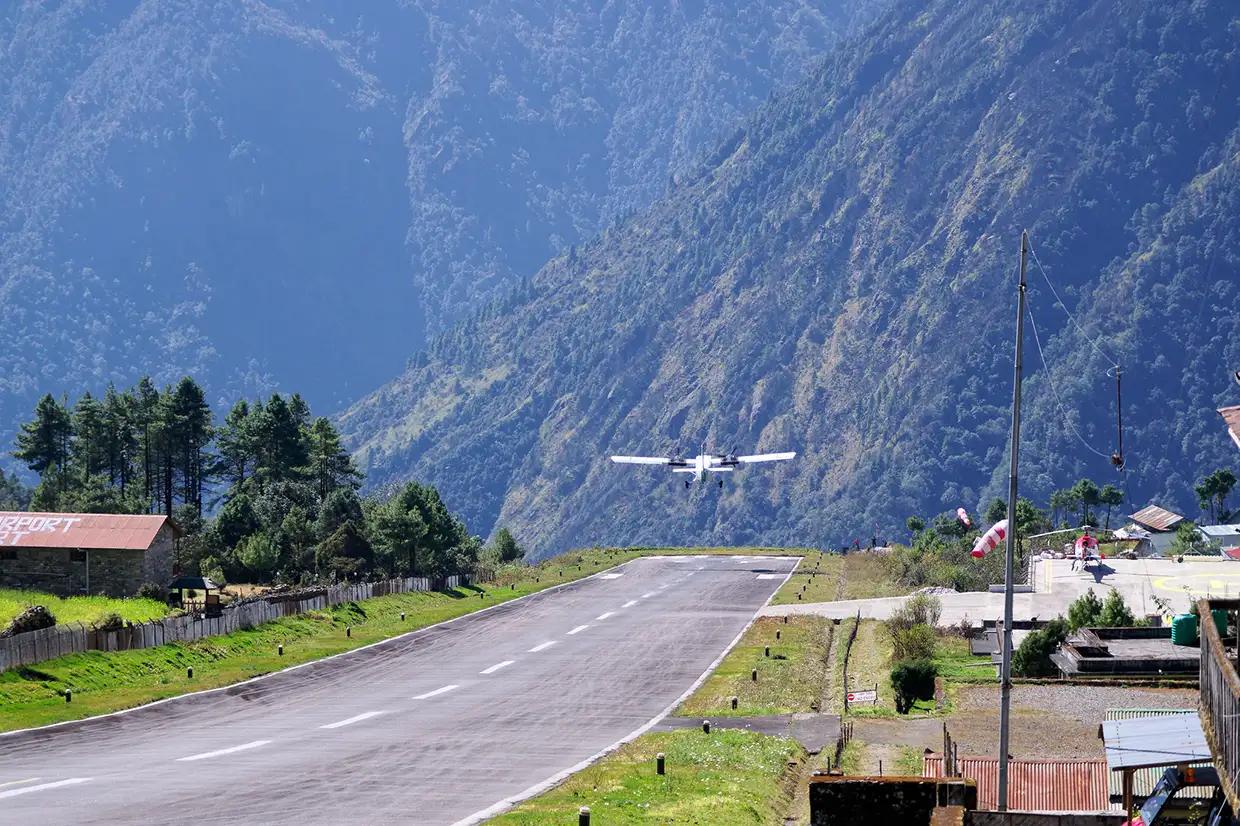
After landing in Lukla, the trek begins on the Dudh Koshi Valley trail heading north. The trail descends from Lukla through Sherpa villages and pine forests to the Dudh Koshi River, then follows the river valley northward to Phakding at approximately 2,610 meters. Walking time runs approximately 3 hours. The first suspension bridges of the route appear on the Phakding approach—iron cables with prayer flags strung between them and the glacial Dudh Koshi audible below through the bridge slats.
Accommodation:
Teahouse in Phakding
Meals Breakfast, Lunch, Dinner
Difficulty
Day 3 covers the most physically demanding section of the Everest View Trek—the 600-meter elevation gain from the Dudh Koshi bridge to Namche Bazaar at 3,440 meters. The trail follows the Dudh Koshi through Monjo, where the Sagarmatha National Park entry checkpoint processes permits, through Jorsale, and then along the river to the Hillary Suspension Bridge at approximately 3,300 meters.
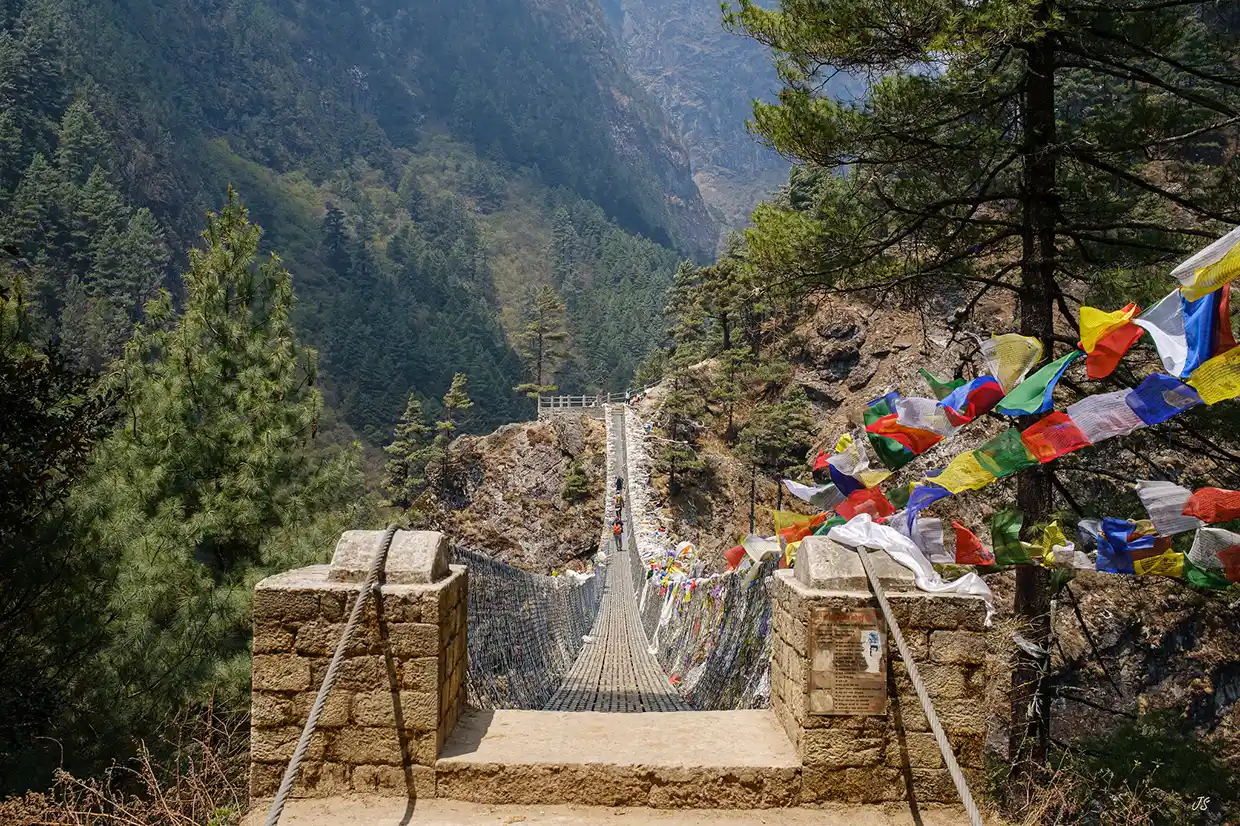
The Hillary Suspension Bridge crossing gives the first direct Everest view from the southern approach—a brief mountain panorama between forest canopy sections that signals the visual rewards of the higher elevations ahead. Above the bridge, the trail climbs steeply for 2 to 3 hours through pine and rhododendron forests before Namche Bazaar suddenly appears as the trail crests the final ridge above the horseshoe-shaped town bowl. Check in to your teahouse, eat a full dinner, and rest early for the Day 4 acclimatization hike.
Accommodation:
Teahouse in Namche Bazaar
Meals Breakfast, Lunch, Dinner
Difficulty
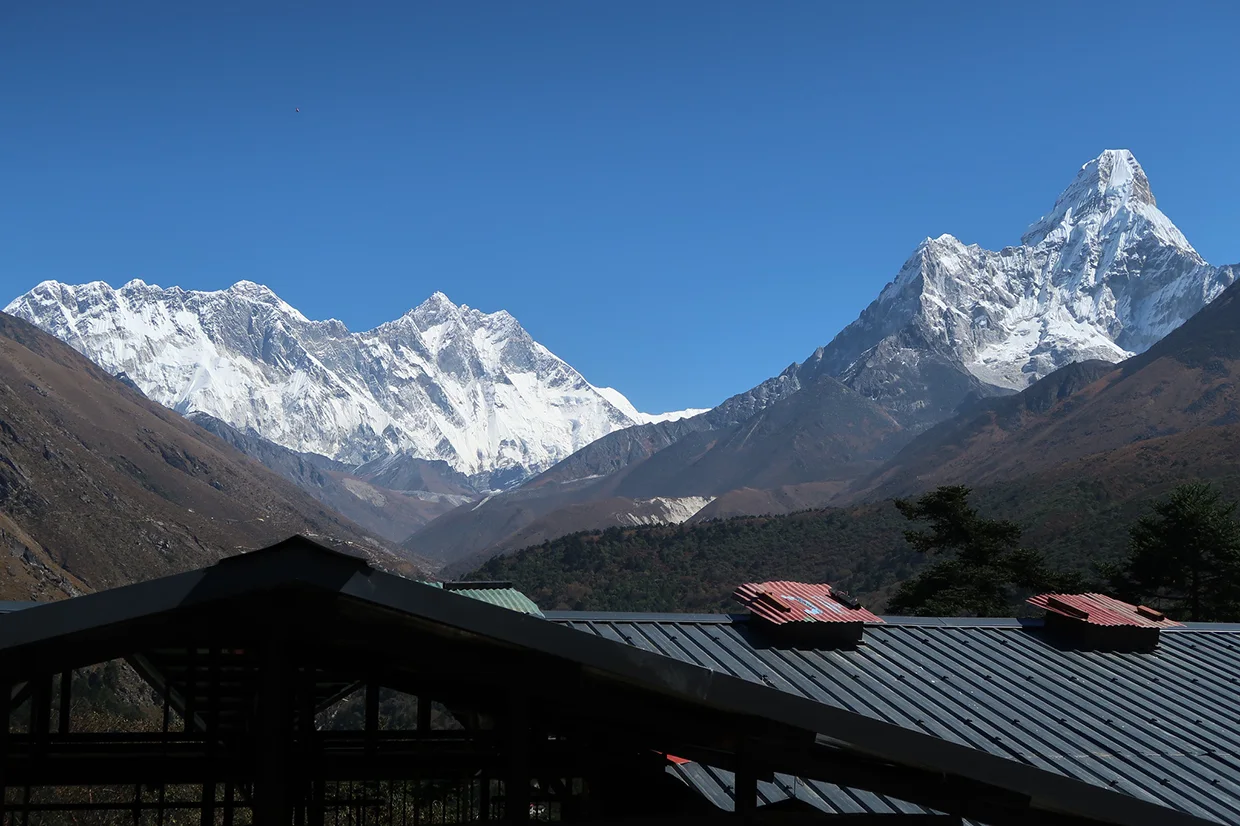
Day 4 is spent in the Namche area for acclimatization and cultural exploration. Your guide leads the group on the morning hike to the Everest View Hotel on the Syangboche ridge—approximately 45 minutes to 1 hour of uphill from Namche. The hotel’s terrace, at approximately 3,880 meters, places you directly above the Namche bowl’s view obstruction and offers the first unobstructed views of Everest, Lhotse, and Nuptse on clear mornings. Ama Dablam rises to the southeast in its classic profile above the lower valley.
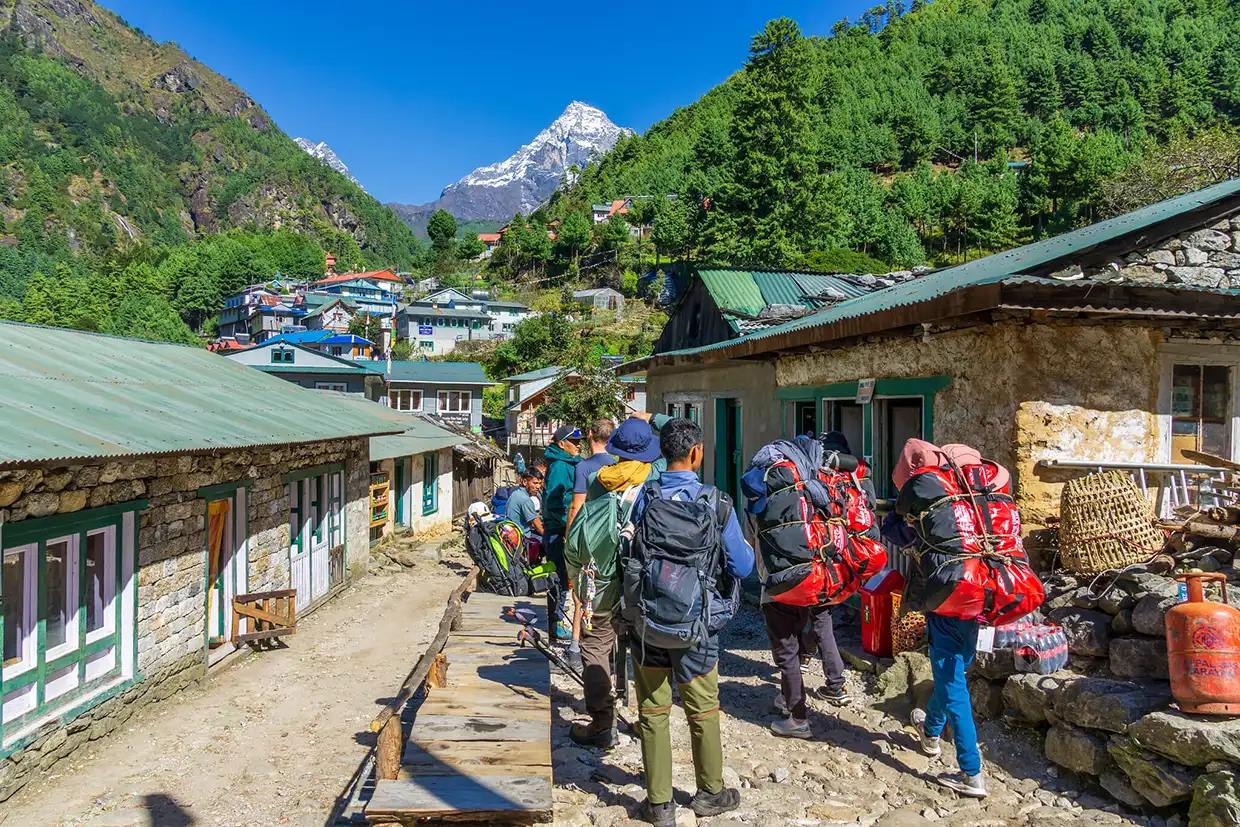
After tea or a light meal at the hotel terrace, the trail continues to Khumjung village at approximately 3,790 meters. The walk from the Everest View Hotel to Khumjung takes approximately 30 to 45 minutes across the Syangboche plateau. The afternoon exploration of Khumjung village covers the Hillary School area, the Khumjung Monastery, traditional Sherpa homes along the main village lane, and open-plateau views of Ama Dablam and Khumbila. Return to Namche for dinner and the second overnight.
Accommodation:
Teahouse in Namche Bazaar (second night)
Meals Breakfast, Lunch, Dinner
Difficulty
The Day 5 trail from Namche to Tengboche begins with a descent from Namche’s ridge through the Dudh Koshi valley forest before the climb to Tengboche Monastery at 3,860 meters. The route passes through Phunki Tenga at the valley bottom—the lowest point between Namche and Tengboche—before the forested ascent to the monastery ridge. The walking time is approximately 4 to 5 hours.
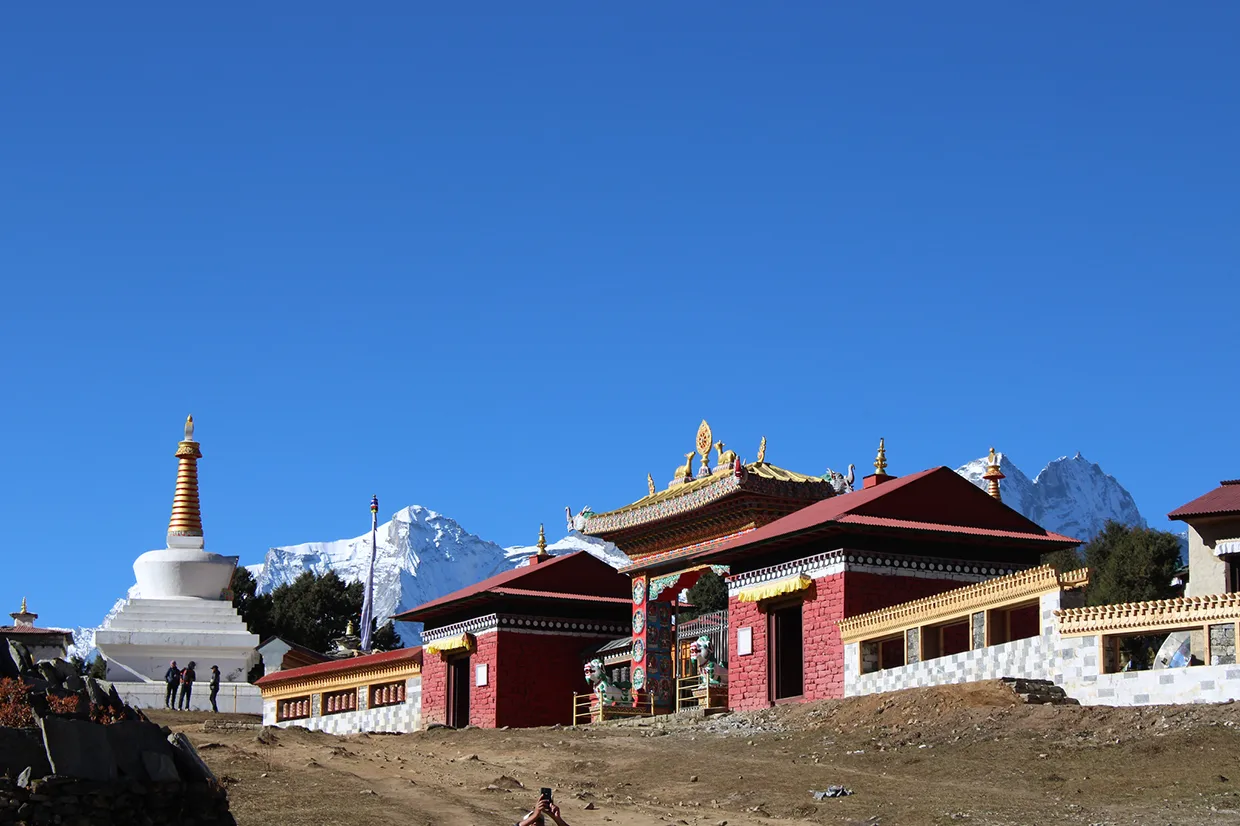
Tengboche Monastery and the mountain panorama surrounding it appear simultaneously as the forest opens onto the wide ridge saddle. Ama Dablam dominates the southeastern horizon above the monastery building. Everest and Lhotse rise above the Nuptse ridge to the north. Check into the teahouse beside or near the monastery, explore the monastery grounds in the late afternoon, and attend the evening puja ceremony if the timing aligns with your arrival.
 Accommodation:
Teahouse at Tengboche
Meals Breakfast, Lunch, Dinner
Difficulty
Day 6 begins with a morning view of the mountains from Tengboche before descending back through the Phunki Tenga forest. The morning provides the strongest photography conditions—pre-cloud morning light on Ama Dablam and Everest before the valley cloud buildup begins. Attend the morning puja if you missed the evening ceremony the previous day.
After breakfast, the trail descends from Tengboche through the Phunki Tenga forest and back along the Dudh Koshi Valley toward Monjo or Phakding. The descent covers a significant elevation loss over 3 to 4 hours. Trekking poles protect knees through the steeper forest descent sections. Arrive at Monjo or Phakding for the overnight stay before the final walk to Lukla.
Accommodation:
Teahouse at Monjo or Phakding
Meals Breakfast, Lunch, Dinner
Difficulty
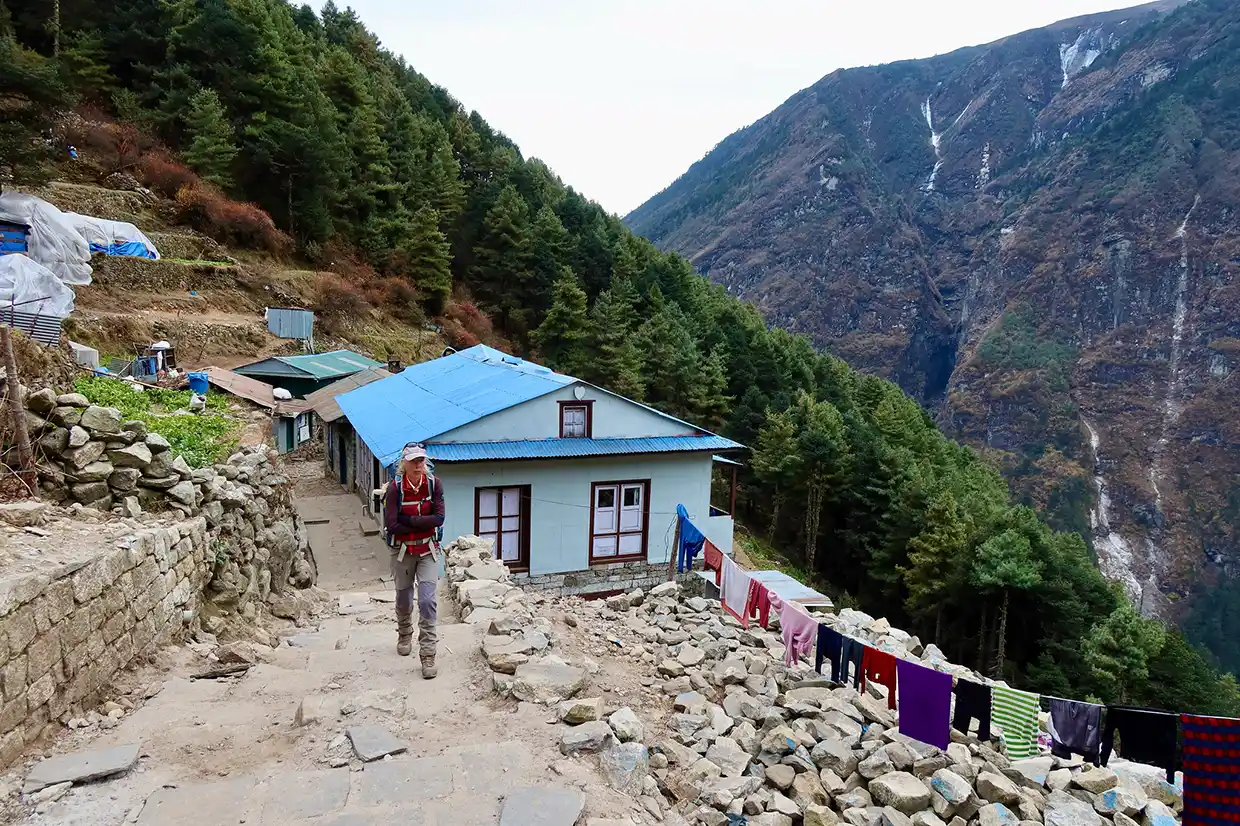
The Day 7 trail returns from Monjo or Phakding to Lukla on the familiar Dudh Koshi Valley trail. The walking time is approximately 4 to 5 hours, with the final uphill climb from the valley floor back up to Lukla town at 2,840 meters. The familiar trail passes through Ghat, Cheplung, and the lower Lukla approach sections before the final climb to the airport town.
Lukla, on the final evening, provides a celebration dinner with your guide and porter team. Organize tips for the guide and porter according to your satisfaction, confirm your morning flight departure time, and pack your main bag completely for the early Day 8 airport departure. Your guide will confirm flight status throughout the evening.
Accommodation:
Teahouse in Lukla
Meals Breakfast, Lunch, Dinner
Difficulty
The morning flight from Lukla departs between 6 and 9 AM, depending on weather and flight assignment. Our team confirms your specific flight time and airport transfer arrangements on the evening of Day 7. Based on current Civil Aviation Authority operations, our team manages the routing and advises you of the specific arrangement for either Kathmandu or Ramechhap.
If your international flight departs the same day, the Lukla morning flight typically provides sufficient connection time—but weather delays at Lukla create uncertainty, making same-day international connections high-risk. We recommend adding an optional extra hotel night in Kathmandu on Day 8 if your international departure falls within 12 hours of the standard Lukla morning arrival.
Accommodation:
Optional hotel night in Kathmandu if required
Meals Breakfast
Difficulty
The Everest View Trek 8 Days package delivers the Khumbu’s three most distinctive short-trek destinations in a format that fits travelers with limited Nepal holiday time. From arrival in Kathmandu to departure, the route fits within a standard 10-day international trip, with time left for a visit to Kathmandu city. The three-destination structure—Everest View Hotel for mountain views, Khumjung for village culture, and Tengboche for spiritual and scenic depth—provides stronger overall value than packages that focus on only one or two of these stops.
Day 4 at the Everest View Hotel and Khumjung serves a dual purpose, making the 8-day format more effective than shorter alternatives. The morning hike to Everest View Hotel at approximately 3,880 meters serves as an acclimatization push—climbing higher than your Namche sleeping altitude before returning for the Khumjung visit and the Namche overnight. The afternoon Khumjung visit adds cultural substance to a day that a simple rest day approach would waste on altitude adaptation alone. The combination of acclimatization benefits and cultural content justifies the 8-day length over compressed 5-day alternatives.
Tengboche Monastery on Day 5 serves as the cultural and scenic centerpiece that distinguishes the Everest View Trek from basic viewpoint-only short treks. Many 5 to 6-day Everest express packages reach the Namche viewpoint ridge and return without including Tengboche. Adding Tengboche gives the trek a monastery destination at 3,860 meters, with direct views of Ama Dablam and Everest that neither the Everest View Hotel nor the Namche viewpoint ridge offers. The monastery stay on Day 5 creates an overnight at the trek’s visual and cultural high point.
The package covers every logistical element from arrival at Kathmandu airport to departure. Lukla flight arrangements—including the Ramechhap alternative routing that applies during peak trekking seasons—run through our operations team, so you don’t need to manage aviation bookings separately. A licensed guide handles every permit inspection, teahouse booking, and safety decision throughout the 6 trekking days. You focus on walking and mountain views rather than logistics.
The Everest View Trek suits:
Be honest before confirming:
How the Everest View Trek Compares
| Trek | Duration | Difficulty | Highest Focus | Main Style | Best For |
|---|---|---|---|---|---|
| Everest View Trek | 8 Days | Easy–Moderate | Everest View Hotel / Tengboche | Short Everest views + Sherpa culture | Short-time travelers |
| Everest Base Camp Trek | 12–16 Days | Mod–Challenging | EBC + Kala Patthar | Classic high-altitude trek | Base camp seekers |
| Pikey Peak Trek | 9 Days | Moderate | Pikey Peak (~4,065 m) | Road-based Everest view | No Lukla flight |
| Everest Cultural Trek | 10 Days | Easy–Moderate | Tengboche area | Sherpa villages + monasteries | Culture-focused trekkers |
| Everest Luxury Trek | 8–12 Days | Easy–Moderate | Comfort lodge route | Premium lodge experience | Comfort-focused travelers |
Your Kathmandu hotel for the Day 1 arrival night sits in the Thamel tourist district with walking access to gear shops, restaurants, money exchange, and airport transfer pickup. The hotel provides clean twin-sharing rooms with private bathrooms, hot water, Wi-Fi, and daily breakfast. The overnight provides practical comfort for pre-trek preparation and the Day 8 return, if a Lukla flight delay extends your stay.
On the trail, you stay in teahouses at Phakding, Namche Bazaar (two nights), Tengboche, Monjo or Phakding, and Lukla across six consecutive trekking nights. Teahouse quality varies significantly—Namche and Lukla offer the most developed facilities, with broader menus, reliable electricity, Wi-Fi access at some lodges, and private bathroom upgrades available. Tengboche provides simpler but adequate accommodation. Phakding and Monjo fall between these quality levels.
Basic teahouse rooms throughout the Khumbu provide twin beds with pillows and blankets in clean, simple rooms. Bathrooms are shared at most teahouses. Hot showers incur an additional fee of USD 3-5 per shower, payable directly to the teahouse. Device charging and Wi-Fi access carry small fees at most stops and may not function reliably at Tengboche.
The Everest View Hotel sits on the Syangboche ridge above Namche Bazaar, at approximately 3,880 meters, above the direct Everest sightline obstruction created by the Namche bowl. The hotel’s position on the ridge places the Lhotse-Nuptse wall and the Everest summit triangle directly in the northern view corridor on clear mornings. The short hike from Namche to the hotel takes approximately 45 minutes to 1 hour, with consistent uphill on a well-maintained trail that serves as the acclimatization push for Day 4.
The Everest View Hotel itself is a Japanese-built mountain lodge that opened in 1971 as one of the first permanent tourist facilities in the Khumbu region. The hotel charges a separate fee for day visitors—typically for tea or a meal at the terrace—which provides a legitimate resting point at the viewpoint before the descent toward Khumjung. The terrace faces north across the Khumbu valley toward Everest, Lhotse, Nuptse, and Ama Dablam. On clear October and April mornings, the views from the terrace justify the uphill walk from Namche.
Khumjung village, at approximately 3,790 meters, sits on a wide-open plateau above Namche, with the full Ama Dablam profile rising to the southeast and Khumbila—the guardian mountain of the Khumbu—above the northwestern ridge. The village’s traditional Sherpa stone-house layout, the Hillary School in the village center, the Khumjung Monastery on the upper edge of the settlement, and the open-plateau views create a Sherpa-village experience distinctly different from Namche’s commercial-hub character.
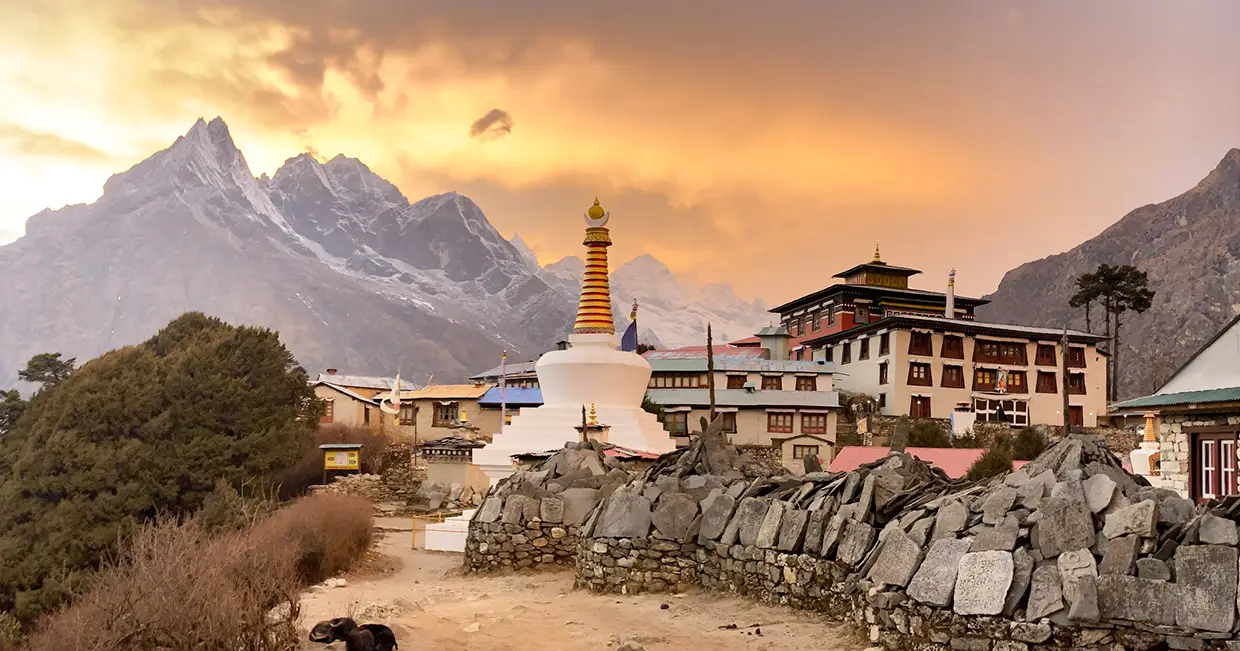
Tengboche Monastery stands at approximately 3,860 meters on a prominent ridge above the confluence of the Dudh Koshi valley, with Ama Dablam rising directly behind the monastery and Everest and Lhotse visible above the northern ridge on clear mornings. The monastery is the largest Buddhist monastery in the Khumbu region and serves as the primary spiritual center for Sherpa Buddhist communities throughout the Everest region. The original structure dates to 1916 and was rebuilt after the 1989 fire, reopening in 1993 with international support.
The Tengboche Monastery’s visual setting creates one of the most photographed mountain-monastery compositions in the world—Ama Dablam’s elegant pyramid framing the monastery from the southeast while Everest and Lhotse anchor the northern horizon. The composition works best in morning light from the monastery ridgeline viewpoint before cloud buildup begins. Arriving at Tengboche on Day 5 in the late afternoon gives you time for the evening puja ceremony before the morning departure on Day 6, when the pre-cloud morning light delivers the strongest mountain photography conditions.
Morning puja ceremonies at Tengboche begin before the main trekking groups typically arrive from Namche. The deep sound of monastery horns and the chanting of monks in the main prayer hall provide an immersive cultural atmosphere that the visual mountain spectacle alone cannot deliver. Attending a puja requires arriving at the monastery before 6 AM, sitting quietly in the visitors’ area, and following your guide’s etiquette instructions throughout the ceremony.
Sherpa communities in the Khumbu region maintain a Buddhist cultural identity that the global mountaineering industry has brought to international attention without fundamentally displacing. Namche Bazaar shows the most commercially developed face of Khumbu Sherpa culture—a town where expedition outfitters, trekking agencies, and mountain gear shops occupy the same stone-walled buildings that traditional Sherpa trading families have used for generations. Khumjung and the villages along the Tengboche approach trail show the more traditional agricultural face—potato fields, yak corrals, stone-walled homes with mani wall-lined approach paths, and Buddhist monastery compounds at the center of community life.
Mani walls run alongside the approach trails to every significant Khumbu village and monastery. The walls are adorned with thousands of carved prayer stones inscribed with Buddhist mantras—primarily Om Mani Padme Hum, the central mantra of Avalokiteshvara. Walk to the left of every mani wall throughout the Everest View Trek—keeping the stone structure on your right—in the clockwise direction that Tibetan Buddhist tradition specifies. The same clockwise protocol applies to chortens—the white-domed Buddhist stupa monuments that mark trail junctions, village boundaries, and mountain passes throughout the Khumbu.
Prayer flags become increasingly dense as the trail approaches each monastery site and Namche’s commercial center. The five-colored flags—blue, white, red, green, and yellow—represent the five elements and carry printed mantras that the wind continuously transmits across the surrounding mountains. The flag density reaches its visual peak in Tengboche Monastery’s main courtyard and along the ridgeline above the monastery.
Yak trains regularly run along the main Khumbu trail between Lukla and Namche, carrying supplies for teahouses, lodges, and local households. Step aside and move uphill of the trail when a yak train approaches—yaks take the outer trail edge instinctively, and the inner wall position keeps you between the animals and the valley rather than on the exposed downhill side. Your guide manages yak train encounters throughout the trekking days.
Full board meals cover all six trekking days from Day 2 through Day 7. Hotel breakfast is included at your Kathmandu hotel on Day 2 morning. Lunch and dinner in Kathmandu on Days 1 and 8 are not included in the package. The Day 8 return from Lukla includes the standard Lukla teahouse breakfast.
Food quality in the Khumbu teahouse network improves significantly compared with lower-altitude Nepal teahouse standards. Namche’s teahouses and cafes offer pizza, pasta, baked goods, and fresh coffee, along with broader menus than those of standard mountain teahouses at similar altitudes elsewhere. Phakding teahouses provide reliable standard Nepali mountain food. Tengboche simplifies to the essentials—dal bhat, noodle soup, potato dishes, eggs, and hot drinks.
Bottled water, soft drinks, alcohol, hot drinks beyond standard tea and coffee, snacks, and desserts carry additional fees at all trail locations. The cost of water increases with altitude in the Khumbu—carry a refillable water bottle with purification tablets from Kathmandu to reduce both plastic waste and daily spending throughout the six trekking days.
The package covers airport pickup and drop-off in Kathmandu, Lukla flight booking in both directions via Kathmandu or Ramechhap, based on current operations, and a road transfer to or from Ramechhap if flights operate from Manthali Airport. The Ramechhap road transfer takes approximately 4 hours from Kathmandu and requires an early pre-dawn departure to reach Manthali Airport for morning flight slots.
Optional transport upgrades include a helicopter return from Lukla for travelers who want guaranteed same-day Kathmandu arrival regardless of weather delays—the most reliable but most expensive option. A private vehicle for the Ramechhap road transfer provides more comfort than shared transport on the 4-hour mountain road.
Two permits cover the Everest View Trek route. The Sagarmatha National Park Entry Permit grants access to the UNESCO World Heritage Site from the Monjo-Jorsale checkpoint onward. Permit rangers check documents at the national park checkpoint on Day 3. The Khumbu Pasang Lhamu Rural Municipality local entry permit, or trek card, is required for access to the Khumbu region. Both permits come included in the package price.
The TIMS card may apply under the current Nepal Tourism Board policy. Our team confirms the TIMS requirement at booking time and includes the card if required by current regulations. Permit fees change annually under government policy—our team confirms the current pricing at the time of the booking inquiry rather than stating potentially outdated figures.
The Everest View Trek rates as easy to moderate. The highest overnight point sits at Tengboche at approximately 3,860 meters—significantly lower than Everest Base Camp at 5,364 meters, which keeps the risk of serious altitude sickness low. No technical terrain, no glacier travel, and no high-altitude pass crossings appear on the route.
The most demanding single section is the Phakding to Namche Bazaar climb on Day 3—600 meters of elevation gain over 2 to 3 hours of consistent steep uphill on a well-maintained trail. Most trekkers find this section harder than expected on their first unacclimatized day of the Khumbu trek. The Day 4 Everest View Hotel hike and Khumjung visit above Namche provide acclimatization benefits that improve altitude comfort before the Day 5 Tengboche approach.
Beginners with 3 to 4 weeks of regular walking preparation can comfortably complete the route. The guide sets and maintains a pace appropriate for all group members throughout every trekking day. Trekking poles provide clear benefits on the Namche descent and the Tengboche forest descent on Day 6.
| Season | Months | Conditions | Best? |
|---|---|---|---|
| Spring | March to May | Clear morning views, mild daytime temperatures, rhododendron blooms in the Phakding forest section. Lukla flights may route through Ramechhap in busy periods to reduce Kathmandu congestion. | Yes |
| Autumn | Sep to Nov | Best mountain visibility of the year. Stable weather, dry trails, and blue-sky mornings for Everest View Hotel and Tengboche viewing. October is peak month—book early. | Yes – Best |
| Winter | Dec to Feb | Cold mornings in teahouses, cold at Tengboche. Clear days deliver excellent views. Fewer trekkers on the trail. Manageable with full warm gear and preparation. | Possible |
| Monsoon | Jun to Aug | Daily cloud cover, rain, Lukla flight delays, slippery trails, and lower visibility from all viewpoints. Not recommended for short Everest view treks. | No |
\Spring and autumn offer the best trekking and viewing conditions. October provides the most consistently clear mountain views from the Everest View Hotel and Tengboche ridge. Book October departures at least 4 to 6 weeks in advance—peak season fills Namche teahouses and Lukla flights quickly. March and April provide a reliable spring alternative with rhododendron blooms on the lower Phakding trail section.
Porter service is optional in the base package and available as a paid upgrade. The Namche Bazaar climb on Day 3 and the Phunki Tenga to Tengboche ascent on Day 5 represent the two sections where the main bag weight most directly affects walking comfort. One porter can carry a maximum of 20 kilograms between two trekkers. You carry your own daypack with water, camera, rain jacket, and personal items throughout the trail.
All porters on our team receive fair wages, adequate warm clothing for work at Khumbu altitudes, and full insurance coverage. Contact our team before booking to add porter service and receive current pricing.
Add any of the following to your base package at extra cost:
Pack for the temperature range from warm Phakding valley afternoons to cold Tengboche mornings:
Walk to the left of all mani walls and chortens throughout the entire Khumbu trail network—the clockwise Buddhist convention applies to every religious monument from Phakding through Tengboche. Walk under rather than over prayer flag lines where the path allows. Remove footwear before entering monastery buildings and temple interiors at Khumjung and Tengboche.
Sagarmatha National Park prohibits the removal of any natural materials within its boundary. The national park conservation mandate specifically protects the Khumbu ecosystem from the combined pressures of trekking, mountaineering, and climate change. Your national park permit fee supports trail maintenance, waste management, and wildlife protection programs within the park.
Carry a refillable water bottle throughout the trek. The Dudh Koshi Valley and Tengboche trail sections see heavy trekker traffic during peak October and April seasons, and plastic bottle accumulation represents the most visible environmental challenge in the national park trail system. Your refillable bottle and purification tablets eliminate your personal plastic contribution.
Step aside uphill and wait when yak or mule trains approach on the trail. Uphill traffic takes priority on the Khumbu trail network. Yaks take the outer trail edge and can push against anything between them and the valley—the uphill inner position keeps you safely between the animals and the mountain wall.
Your licensed guide manages safety across all six trekking days. Responsibilities include pace management on the Namche climb, altitude monitoring from Namche’s 3,440 meters onward, pre-dawn Lukla flight status monitoring for the Day 8 return, advance teahouse booking at Tengboche during peak season when lodge availability is limited, and emergency communication with our Kathmandu office for any situation requiring medical support or evacuation.
The Day 4 Everest View Hotel hike and Khumjung visit above Namche serve as an altitude acclimatization structure—climbing to 3,880 meters during the day while sleeping at 3,440 meters follows the standard high-altitude protocol. The Day 5 Tengboche approach at 3,860 meters follows the acclimatization day, providing the body with additional physiological preparation for the slightly higher overnight altitude at Tengboche.
Lukla weather delays represent the main practical challenge on the return on Day 8. Our team monitors Lukla flight status throughout the morning and communicates changes to your guide before they affect your departure plan. The optional extra hotel night in Kathmandu on Day 8 provides the most effective buffer against disruptions to international connections.
A: The full package runs 8 days from arrival in Kathmandu on Day 1 to final departure on Day 8. The active trekking section covers 6 days from the Lukla landing on Day 2 through the Lukla teahouse night on Day 7. Day 8 covers the morning Lukla flight and Kathmandu airport transfer. An optional extra hotel night in Kathmandu on Day 8 provides a flight delay buffer.
A: No. The Everest View Trek does not go to Everest Base Camp. The highest overnight point is Tengboche at approximately 3,860 meters—significantly lower than Everest Base Camp at 5,364 meters. The route focuses on mountain views, Sherpa culture, and Tengboche Monastery rather than reaching any specific high-altitude destination above the Namche corridor.
A: The highest overnight point is Tengboche at approximately 3,855 to 3,870 meters (12,647 to 12,697 feet). The Day 4 hike to Everest View Hotel reaches approximately 3,880 meters—the highest walking point of the trek. The route does not include any overnight above Tengboche’s altitude.
A: Yes, with preparation. The trek rates as easy to moderate and suits healthy first-time Khumbu visitors who prepare 3 to 4 weeks of regular hill walking before departure. The Phakding to Namche climb on Day 3 demands sustained uphill effort that fitness preparation specifically improves. The Day 4 acclimatization hike improves altitude comfort before the Tengboche approach.
A: From the Everest View Hotel terrace at approximately 3,880 meters on the Syangboche ridge, you see Mount Everest (8,849 m) above the Lhotse-Nuptse wall to the north, Lhotse (8,516 m), Nuptse (7,861 m), and Ama Dablam (6,812 m) to the southeast. View quality depends entirely on morning weather—clear October and April mornings deliver the strongest views, while afternoon cloud typically obscures the mountain panorama.
A: Khumjung village adds traditional Sherpa village character to the Day 4 above-Namche exploration that the Everest View Hotel hike alone cannot provide. The Hillary School, Khumjung Monastery, traditional Sherpa stone houses, and Ama Dablam plateau views create a Sherpa cultural encounter beyond Namche’s commercial center atmosphere. The village also demonstrates the history of international development engagement in the Khumbu region through the Himalayan Trust’s ongoing school support program.
A: Tengboche Monastery provides the cultural centerpiece of the entire Khumbu trekking corridor. The monastery complex at 3,860 meters houses the largest active Buddhist monastic community in the Everest region, conducts regular puja ceremonies, and occupies the mountain setting with Ama Dablam directly behind it that produces the most photographed mountain-monastery composition in Nepal. Adding Tengboche converts the Everest View Trek from a viewpoint route into a culturally complete short Khumbu experience.
A: From the Everest View Hotel and Tengboche ridge, you see: Everest (8,849 m), Ama Dablam (6,812 m), Lhotse (8,516 m), Nuptse (7,861 m), and Thamserku (6,608 m). You also see Kwangde, Kangtega, and other secondary Khumbu peaks from various trail points between Namche and Tengboche.
A: You stay at a Kathmandu hotel for one night with private bathroom, hot water, Wi-Fi, and breakfast. On the trail, you stay in teahouses at Phakding, Namche (two nights), Tengboche, Monjo or Phakding, and Lukla. Teahouse rooms provide basic twin beds and shared bathrooms. Hot showers cost extra at most teahouses.
A: Yes. Full board—breakfast, lunch, and dinner—comes included on all 6 trekking days from Day 2 through Day 7. Kathmandu hotel breakfast comes included on Day 2 morning. Lunch and dinner in Kathmandu are not included. Bottled water, hot drinks, and alcohol carry additional fees.
A: The Everest View Trek requires the Sagarmatha National Park Entry Permit and the Khumbu Pasang Lhamu Rural Municipality Local Entry Permit or trek card. The TIMS card may apply under current Nepal Tourism Board policy. All permits come included in the package price. Our team arranges documents before your Day 2 Lukla flight.
A: Lukla weather delays cancel or postpone flights regularly. Our team monitors flight status and communicates changes to your guide before they affect your schedule. Extra hotel nights caused by weather delays fall outside the base package price—travel insurance with trip interruption coverage and an optional buffer hotel night on Day 8 provide the most effective protection.
A: Yes. Better lodge options are available at Namche and Lukla as optional upgrades. Contact our team before booking to request lodge upgrade arrangements and receive current pricing. Tengboche and Phakding have limited upgrade options due to the smaller number of properties on the trail.
A: Yes. Travel insurance is compulsory. Your policy must cover trekking in Nepal, emergency helicopter evacuation, medical treatment, Lukla flight delays, and trip cancellation. The route stays below 4,000 meters, so standard trekking policies generally provide adequate altitude coverage.
A: The Everest View Trek uses the Lukla flight and the main Khumbu corridor—Namche, Khumjung, Tengboche. The Pikey Peak Trek uses road-based access through Dhap and Phaplu without any flight requirement, routing through the Lower Everest Solu region rather than the main Khumbu corridor. Pikey Peak reaches a 4,065-meter summit while Everest View Trek stays below 3,880 meters. The Pikey Peak route includes Junbesi village and Thupten Chholing Monastery—different cultural stops than the Khumbu route.