

Included Meals
- Breakfast: 13
- Lunch: 12
- Dinner: 11

Unbeatable Holiday Offers – Save Up to 20% on Your Next Adventure!
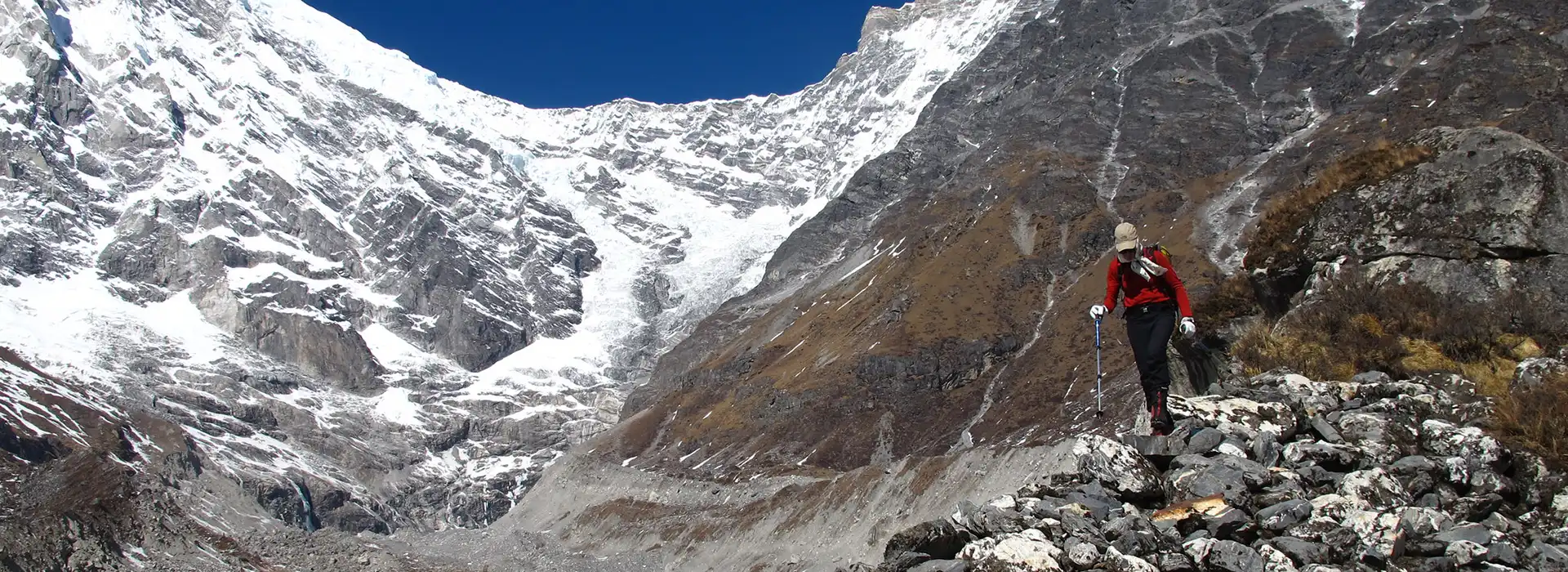
The Langtang Ganja La Pass Trek combines classic teahouse routes with remote wilderness camping and a complete Helambu exit in a single 14-day loop from Kathmandu. The trail links Syabrubesi, Langtang Village, Kyanjin Gompa, the 5,130-meter Ganja La Pass, and the cultural hubs of Helambu before concluding at Melamchi Pul Bazaar. Because the three-day wilderness stretch between Kyanjin Gompa and Tarkeghyang lacks any teahouse infrastructure, a professional crew and specialized camping equipment are absolutely essential.
As the physical peak of the itinerary, the Ganja La Pass crossing requires a pre-dawn departure to follow steep snow slopes, rocky moraine, and exposed ridges. Weather conditions at 5,130 meters shift rapidly, with sudden wind or snow directly impacting safety. Our guides monitor these elements in real time and maintain ultimate authority on whether to proceed. The 14-day architecture protects your safety and the travel experience.
A mandatory acclimatization day at Kyanjin Gompa gives your body vital time to adapt before tackling the pass. Exiting through Tarkeghyang and Sermathang introduces you to the unique Yolmo Buddhist culture, offering a fascinating contrast to the Tamang heritage experienced during the first week. Shortening this timeline removes either this cultural depth or critical acclimatization safety margins.
This package covers airport transfers, two nights at a Kathmandu hotel, overland transport, teahouse lodging, and a full camping setup with kitchen support. It includes all meals, a licensed guide, porters, and a camp crew. This challenging route is specifically designed for experienced trekkers rather than beginners.
IMPORTANT: The Langtang Ganja La Pass Trek is strenuous. It includes a remote high pass at 5,100–5,130 m, tented camping with no teahouse services for three nights, steep snow terrain on the pass crossing, and long walking days with significant altitude exposure. Previous multi-day high-altitude trekking experience is required, not recommended. This trek is not suitable for beginners.
The Langtang Ganja La Pass Trek operates in a distinct category above standard Langtang Valley packages. The Langtang Valley Trek ends at Kyanjin Gompa and returns the same valley route to Syabrubesi. The Ganja La Pass Trek continues from Kyanjin into the remote highland terrain above the main valley, crosses the 5,100 to 5,130-meter pass, descends into completely different topography and cultural environment on the Helambu side, and exits through the Yolmo communities of Tarkeghyang and Sermathang to Melamchi Pul Bazaar.
The linear route covers two distinct geographical and cultural regions in a format that the Langtang Valley teahouse circuit cannot provide. The camping section between Kyanjin Gompa and Dukpu represents the operational and experiential heart of the trek. No teahouse infrastructure serves the Ngegang, Keldang, and high-route sections between the last Kyanjin Gompa lodge and the first Tarkeghyang village teahouse on the Helambu side.
Camping equipment—tents, sleeping pads, kitchen tent, toilet arrangements, cooking fuel, and food supplies—must be carried by the crew from Kyanjin Gompa. The camping section adds cost, logistical complexity, and physical challenge while giving the Langtang Ganja La Pass Trek its defining remote character. The 14-day plan builds in appropriate acclimatization and pacing. Days 3 through 5 provide a gradual altitude gain from Syabrubesi at approximately 1,460 meters to Kyanjin Gompa at approximately 3,870 meters without rushed single-day altitude jumps.
Day 6’s Kyanjin Gompa acclimatization day—including an optional hike to Kyanjin Ri or Tserko Ri above 4,700 meters—gives the body the physiological preparation it needs for the Ganja La Pass at 5,100 to 5,130 meters. Removing Day 6 to compress the itinerary eliminates the most critical single safety element of the entire 14-day route. The Helambu exit through Tarkeghyang and Sermathang adds a cultural dimension that the Langtang Valley’s Tamang communities do not provide.
The Yolmo people of the Helambu region maintain a distinct Buddhist cultural tradition with their own monastery architecture, agricultural calendar, and community organization. The contrast between the high-altitude Tamang culture of Langtang Village and Kyanjin Gompa and the forested hill-village Yolmo culture of Tarkeghyang and Sermathang gives the 14-day route genuine cultural variety rather than the single-culture character of most Langtang-only packages.
Quick Answer: What Is the Langtang Ganja La Pass Trek?
The Langtang Ganja La Pass Trek is a 14-day strenuous trek from Langtang Valley to Helambu. The route covers Syabrubesi, Lama Hotel, Langtang Village, Kyanjin Gompa, Ngegang, Ganja La Pass (5,100–5,130 m), Keldang, Dukpu, Tarkeghyang, Sermathang, and Melamchi Pul Bazaar. The trek combines teahouse stages in the valley sections with remote camping between Kyanjin Gompa and Dukpu. It suits experienced, fit trekkers who want a challenging high-pass route.
The Langtang Valley approach from Syabrubesi to Kyanjin Gompa covers five walking days through one of Nepal’s most accessible mountain valleys. Starting at 1,460 meters, the trail climbs steadily through bamboo and oak forests above Lama Hotel, enters the broad valley zone above Ghora Tabela, and passes through the rebuilt Langtang Village before reaching the open valley floor of Kyanjin Gompa at 3,870 meters.
Langtang Village, situated at 3,430 meters, is a reconstructed yet genuine Tamang highland settlement. Extensively damaged in the 2015 earthquake, the surviving community rebuilt the village using traditional stone-and-timber architectural forms, including flat-roofed houses, monastery compounds, and mani walls. Walking through with a guide who provides pre- and post-earthquake context gives this overnight stay a historical depth that beautifully complements the alpine scenery.
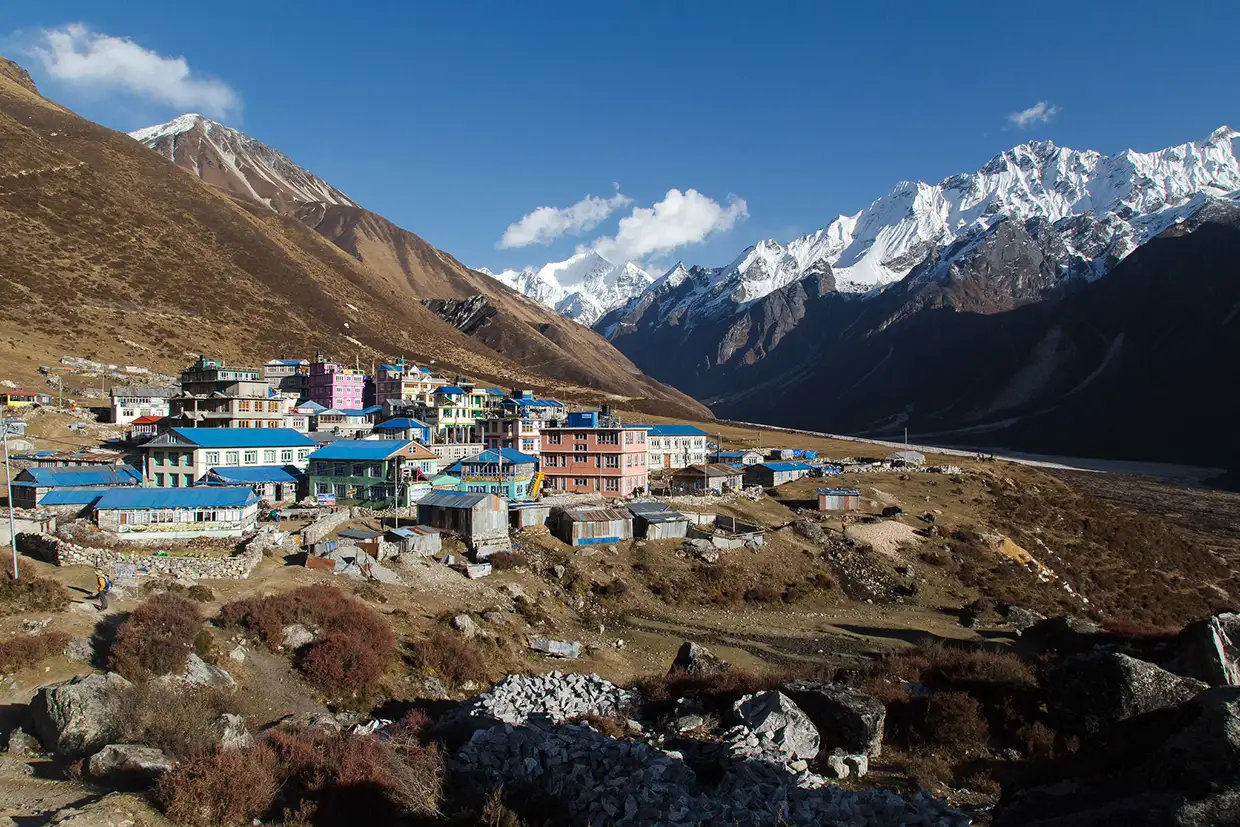
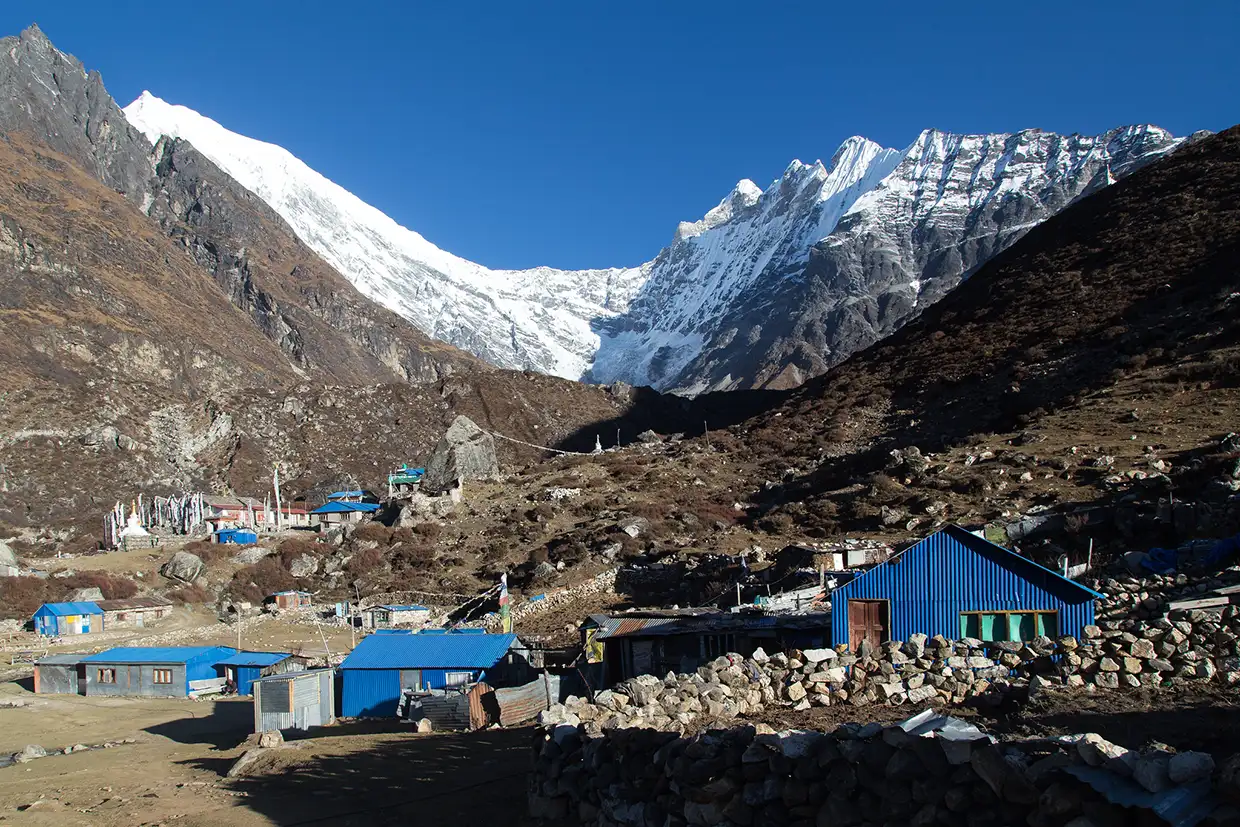
Kyanjin Gompa serves as the valley’s highest teahouse settlement and the essential acclimatization base for the Ganja La Pass Trek. The local monastery compound, a community-run yak cheese factory, and expansive glacial views toward Langtang Lirung give Kyanjin its distinct high-altitude character. The dedicated rest day here offers an optional ridge hike up Kyanjin Ri (4,773 meters) or Tserko Ri (5,033 meters), providing vital altitude adaptation and spectacular views of the main glacier system.
The Ganja La Pass at 5,130 meters is the highest point and the primary physical challenge of the trek. The crossing begins before sunrise from Ngegang camp—typically between 4:00 AM and 5:00 AM—to ensure ample daylight for the climb and descent before afternoon weather sets in. The trail traverses rocky moraine, steep snow slopes, and exposed ridgelines where high winds, cold temperatures, and thin air demand sustained physical endurance.
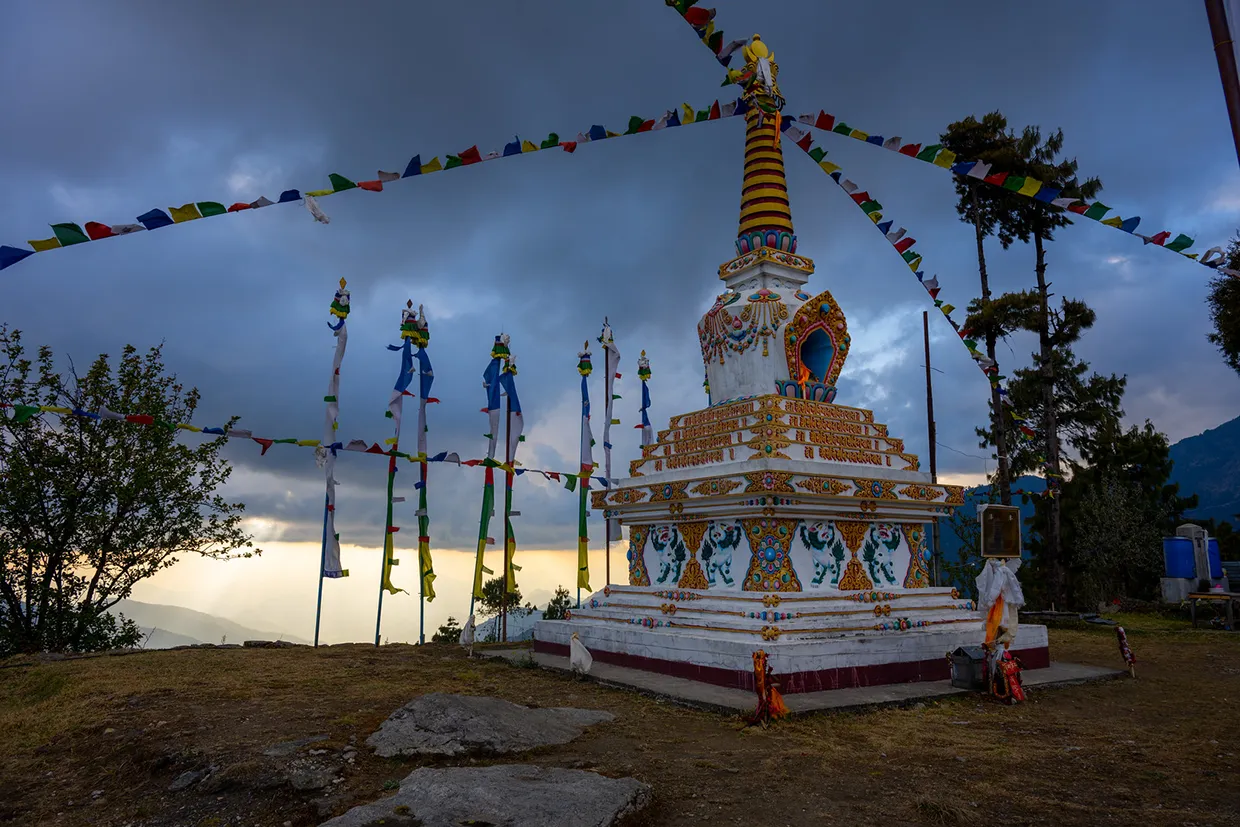
The summit provides an intense mountain panorama that the lower valley trail cannot match. Trekkers are rewarded with unobstructed views of the full Langtang range, including the massive north face of Langtang Lirung (7,227 m), Dorje Lakpa (6,966 m), Naya Kanga (5,846 m), and Yala Peak (5,520 m). Prayer flags mark this distinct geographic boundary, separating the glacial system of the Langtang Valley from the south-facing forested slopes of Helambu.
Descending toward Keldang requires continuous focus, as fatigue and altitude make the steep, loose-rock-and-snow drop particularly demanding. Trekking poles are essential for balance on this side of the pass. Depending on the day’s specific snow and ice conditions, your guide may deploy fixed rope support on exposed sections to ensure a safe descent into the lower valley.
Safety Warning: Ganja La Pass should never be treated as a straightforward hiking pass. Snow, ice, high wind, fog, and rapid weather changes affect the crossing probability on any given day, regardless of season. The guide has full authority to decide whether to cross the pass. If conditions make the crossing unsafe, the guide may delay, reroute, or cancel the Ganja La crossing. Guests must accept this possibility before booking.
Weather assessment for the Ganja La crossing requires your guide to evaluate overnight snow accumulation, morning wind speeds at the summit, forecast cloud timing, and the group’s physical state after the Ngegang camp night. Our guides carry current weather information from the nearest forecasting service and make crossing decisions based on a comprehensive safety picture rather than itinerary pressure. A delayed or rerouted crossing is not a failure—it is the correct safety decision.
The three camping nights at Ngegang, Keldang, and Dukpu represent the operational heart of the trek. The teahouse infrastructure ends at Kyanjin Gompa, so there are no commercial services until you reach Tarkeghyang. Every logistical element—including tents, kitchen equipment, fuel, food, and waste management—is carried and managed by a dedicated support crew.
Our camp crew sets up tents before you arrive, prepares hot meals three times daily, and maintains strict campsite hygiene to minimize environmental impact. Each campsite offers a distinct environment: Ngegang provides a high-alpine setting at 4,300 meters before the pass, Keldang serves as a rugged descent camp on the Helambu side, and Dukpu offers a forested hillside setting as the altitude drops.
Nights in the open wilderness run significantly colder than in the valley. Temperatures at Ngegang regularly drop between -10°C and -15°C. Because tents lack the thermal insulation of stone buildings, a sleeping bag rated to at least -15°C is essential. Your down jacket should remain readily accessible for the cold nights and the pre-dawn summit departure rather than being packed away with the porters.
This camping section is what truly differentiates the Ganja La Pass route from standard teahouse treks. Trekkers who embrace the rustic nature of wilderness camping—including shared tents and basic facilities—consistently.
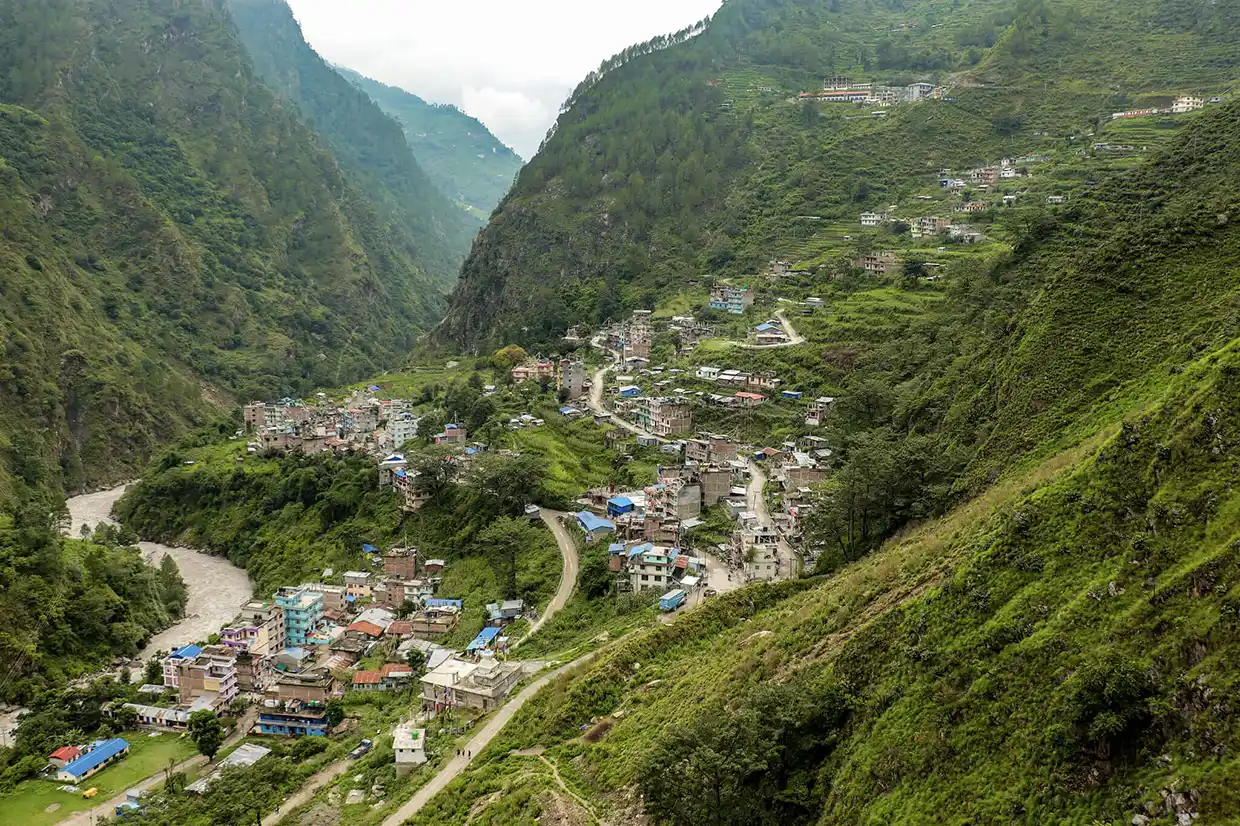
The descent from Dukpu to Tarkeghyang on Day 10 marks your transition from the remote wilderness of camping back to comfortable teahouses and lively local villages. At 2,590 meters, Tarkeghyang serves as the main cultural hub for the Yolmo people. This Buddhist community features distinct architecture, cuisine, and religious traditions that stand in sharp contrast to the Tamang culture found in the Langtang Valley.
The Yolmo people of Helambu trace their heritage to a rich blend of Tibetan and local Nepali influences, shaped by centuries of living in the secluded Helambu hills. Active monasteries in both Tarkeghyang and Sermathang preserve the specific Nyingma Buddhist tradition through regular ceremony schedules. Visiting these sites on Days 10 and 11 provides a fascinating cultural counterpoint to the Tamang monasteries experienced earlier in the trek.
Sermathang, at 2,620 meters, is where you’ll spend Day 11 overnight in a peaceful village-monastery setting, with sweeping views of the Kathmandu Valley hills to the south.
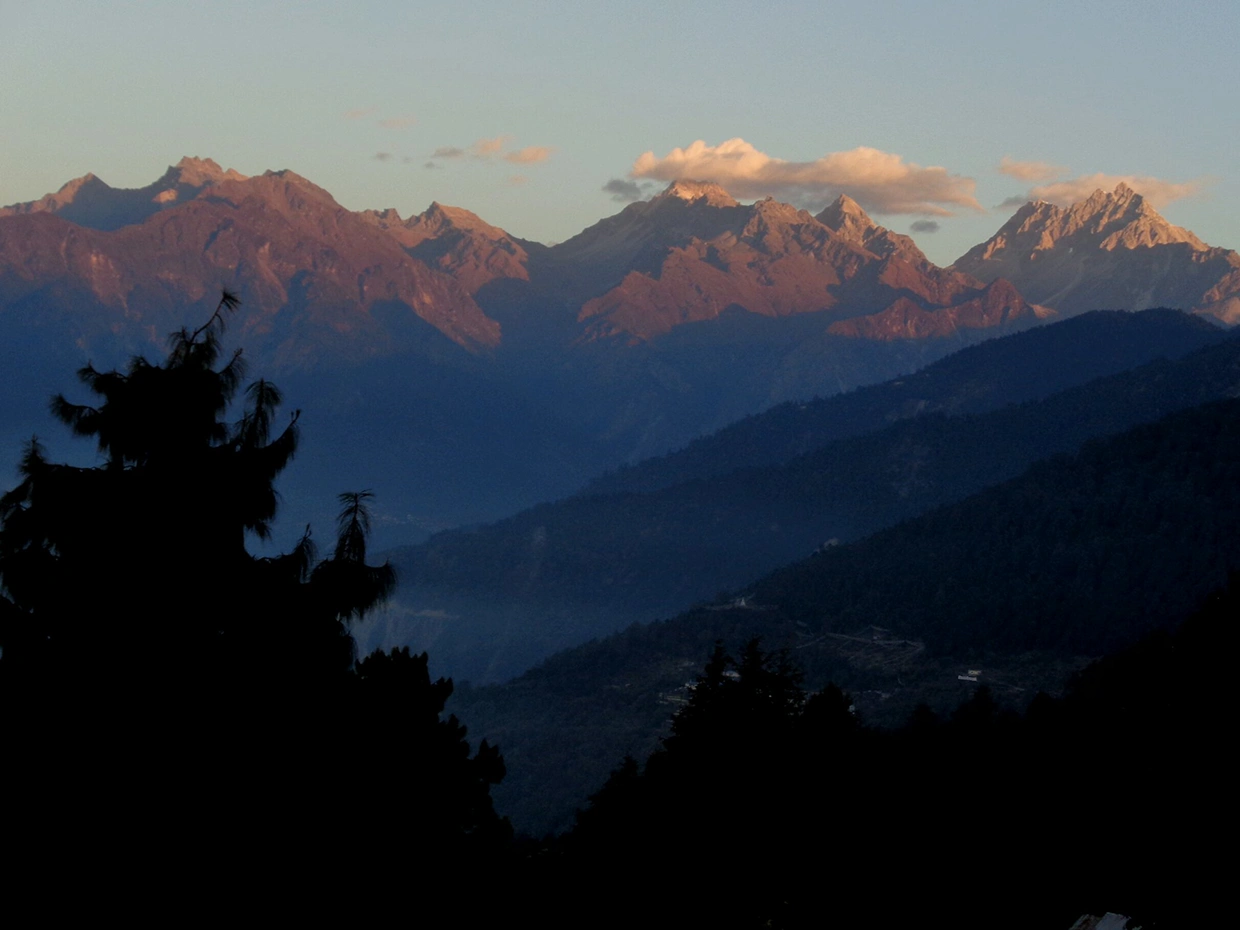
The final day drops down to Melamchi Pul Bazaar through lush terraced farmland and rural settlements. As the most agricultural and least alpine day of the entire 14-day itinerary, this gentle descent offers a relaxing visual decompression after the pass’s high-altitude intensity.
The Langtang Ganja La Pass Trek suits:
Be completely honest before confirming:
| Trek | Duration | Difficulty | Highest Point | Main Style | Best For |
|---|---|---|---|---|---|
| Langtang Ganja La Pass Trek | 14 Days | Strenuous | 5,100–5,130 m | High pass, camping, Langtang to Helambu | Experienced trekkers |
| Langtang Valley Trek | 8–11 Days | Moderate | Kyanjin Ri / Tserko Ri | Teahouse Valley Trek | Mountain scenery |
| Langtang Gosaikunda Trek | 12–15 Days | Mod–Challenging | Gosaikunda / Lauribina | Sacred lake and pass | Lake and culture trekkers |
| Helambu Circuit Trek | 8 Days | Easy–Moderate | Tharepati area | Cultural villages, forests | Short cultural trek |
| Tamang Heritage Trek | 9 Days | Moderate | ~3,165 m (Nagthali) | Tamang villages and culture | Cultural travelers |
Browse every route in our regional trekking guide or see all trekking packages we run. Travellers who like this trip also compare Langtang Gosaikunda Helambu Trek, Yala Peak Climbing, Annapurna Panorama Trek.
Before you book, read our Nepal trekking cost guide, check the trekking gear list, and review travel insurance requirements. Still deciding? Plan your trip with a local expert.
For official information, see the Nepal Tourism Board, the Trekking Agencies’ Association of Nepal and the Department of Immigration for visa rules, plus background on Langtang National Park.

Included Meals

Trip staff

Transport

Accommodation

Trip Grade
You arrive at Tribhuvan International Airport. Our representative meets you in the arrival hall and transfers you by private vehicle to your hotel in Kathmandu. The Day 1 evening guide meeting runs 60 to 90 minutes—the Langtang Ganja La Pass Trek’s complexity requires a thorough briefing covering the camping section logistics, Ganja La Pass weather decision framework, altitude safety protocols, and gear requirements for the cold camping nights.
Confirm that your sleeping bag is rated to -15°C or lower, that your travel insurance explicitly covers trekking above 5,000 meters and emergency helicopter evacuation, and that your trekking poles are functional before the meeting ends. Our guide can identify any gear gaps and direct you to Thamel suppliers before Day 2 departure.
Meals: Not included
Accommodation:
Hotel in Kathmandu (twin sharing)
Difficulty
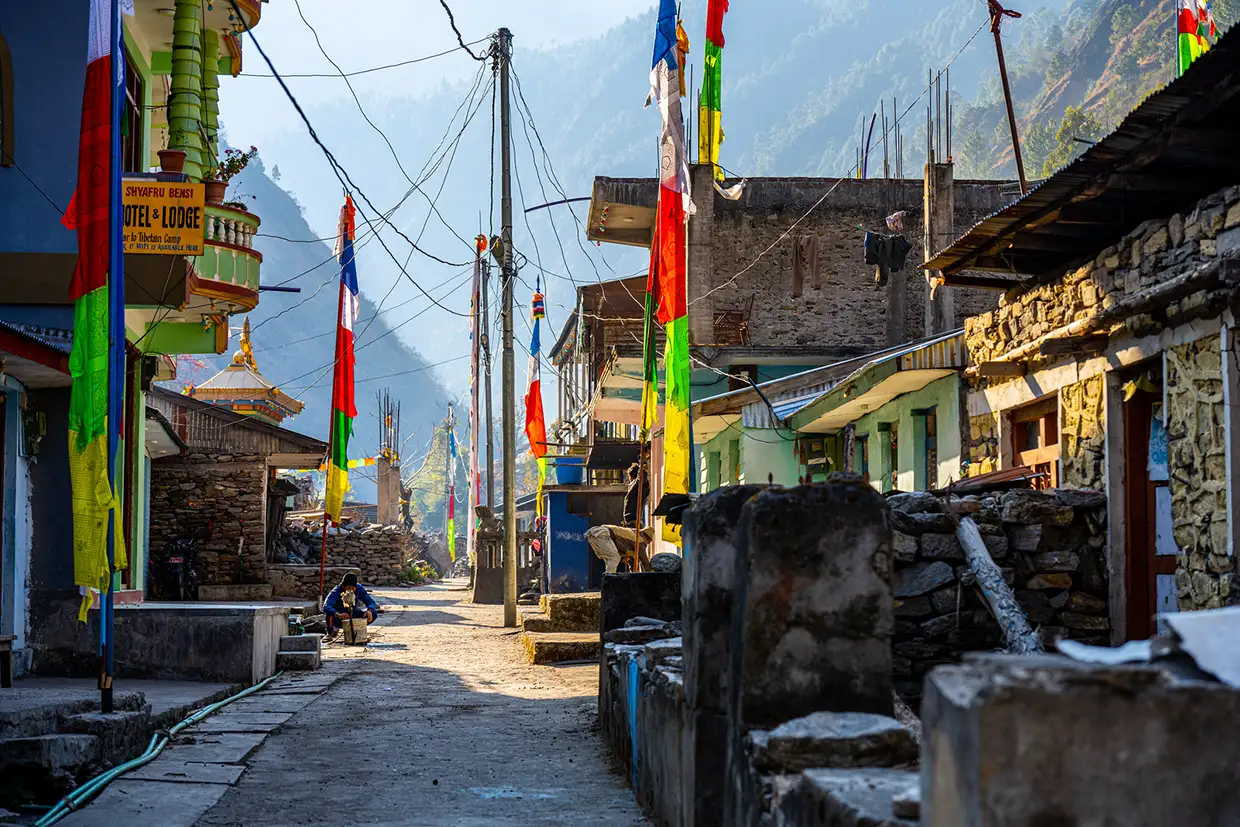
The Kathmandu to Syabrubesi road trip takes 7 to 8 hours through the Trishuli River valley, Dhunche town, and the final mountain approach to Syabrubesi at approximately 1,460 meters. The Trishuli valley drive covers the most dramatic road scenery of the approach—the river gorge narrows progressively as the road climbs, with the first Himalayan ridge systems appearing above the valley walls near Dhunche. Prepare for a full travel day.
 Accommodation:
Teahouse in Syabrubesi
Meals Breakfast, Lunch, Dinner
Difficulty
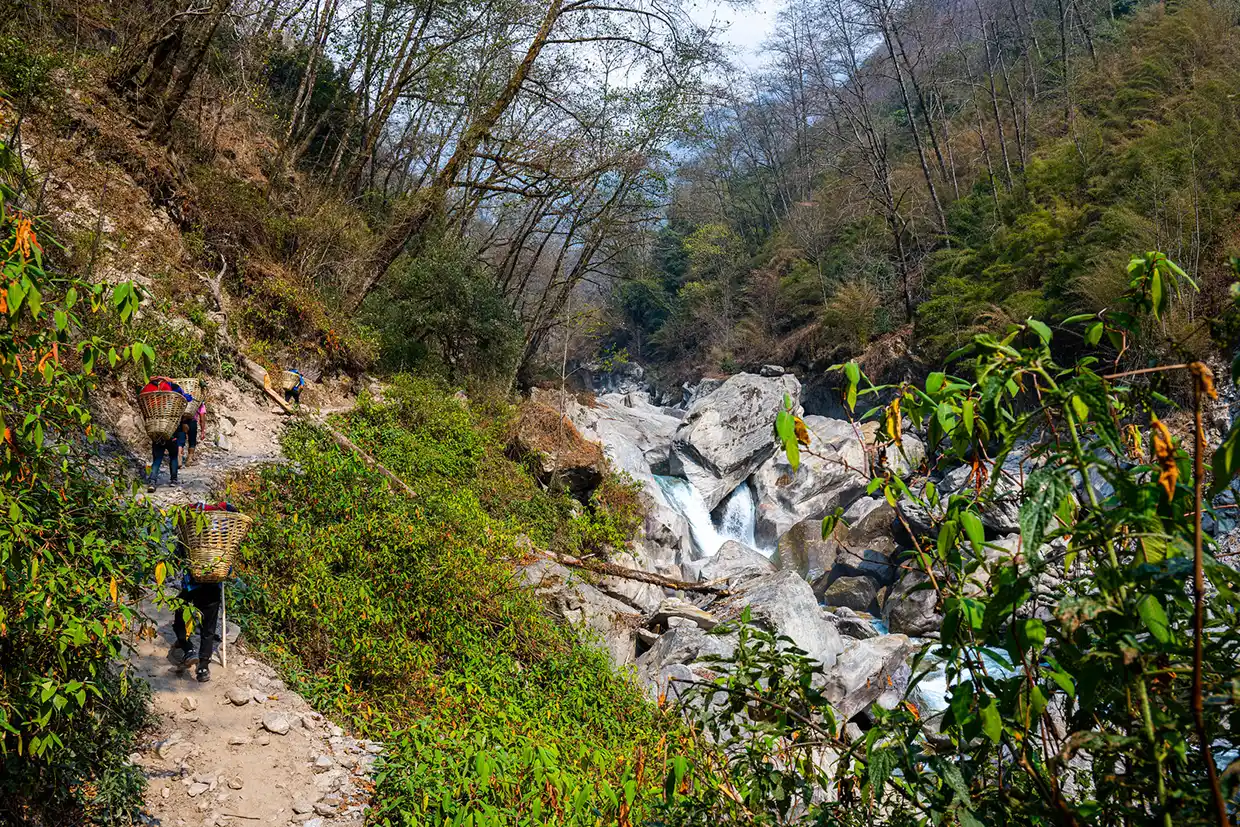
The first trekking day from Syabrubesi to Lama Hotel, at approximately 2,470 meters, establishes the Langtang Valley trail character—old-growth forest with rhododendron, bamboo, and oak canopy, river-gorge sections with wooden bridge crossings, and the first Himalayan views through the forest canopy above the lower valley walls. Walking time runs approximately 5 to 6 hours on a well-maintained trail with consistent altitude gain through the forest zone.
 Accommodation:
Teahouse at Lama Hotel
Meals Breakfast, Lunch, Dinner
Difficulty
The Day 4 trail moves from Lama Hotel through Ghora Tabela—the army checkpost and Langtang National Park entrance area—before the valley opens into the broader, drier, and more alpine character above the main forest zone. Langtang Village at approximately 3,430 meters appears ahead as the trail crosses the open valley floor—the rebuilt settlement’s prayer flags and chorten structures visible against the ridge wall behind the village. Walking time runs approximately 5 hours.
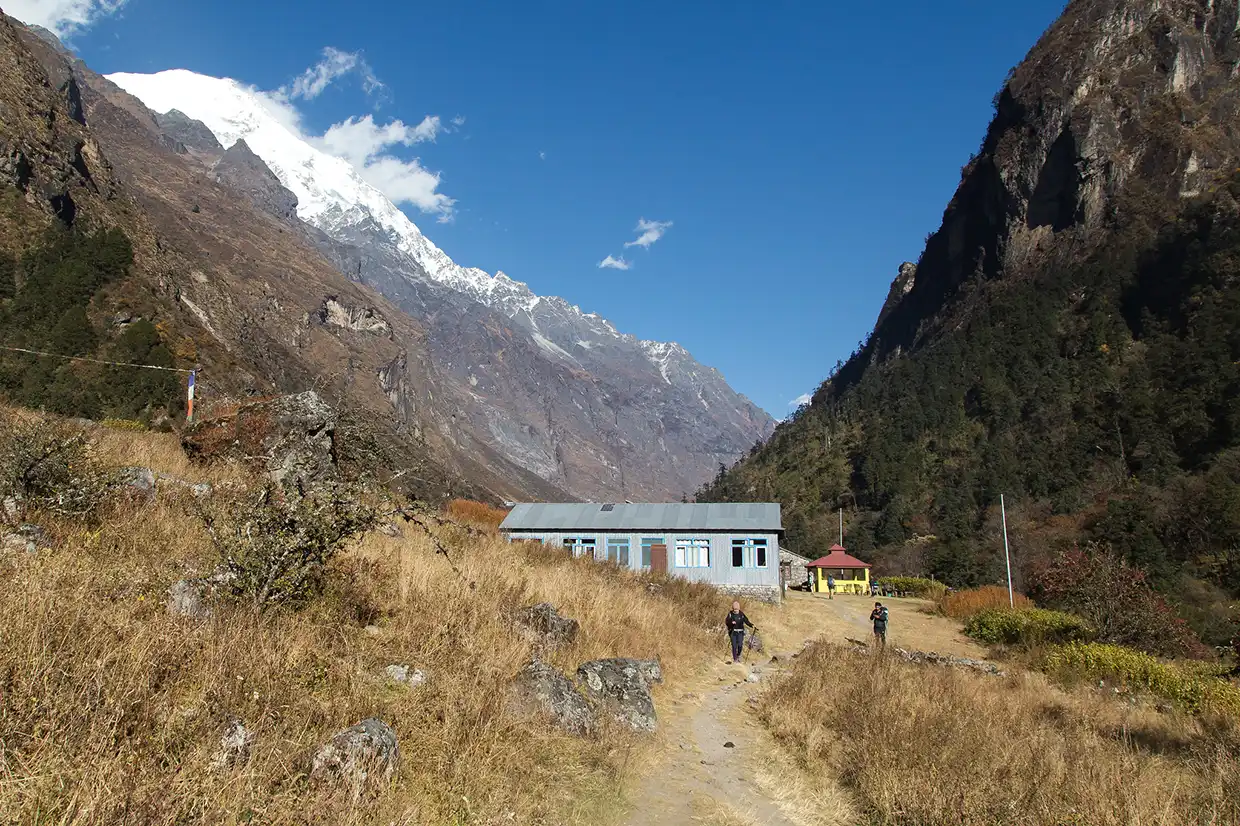
Use the afternoon arrival in Langtang Village to walk through the rebuilt settlement, visit the monastery compound, and speak with your guide about the specific effects of the 2015 earthquake on the community. The human context of the earthquake recovery adds a historical dimension to the mountain scenery, making the overnight in Langtang Village more meaningful than the altitude data alone suggests.
Accommodation:
Teahouse in Langtang Village
Meals Breakfast, Lunch, Dinner
Difficulty
The Day 5 approach to Kyanjin Gompa at approximately 3,870 meters follows the open valley floor, with direct views of Langtang Lirung’s massive south face, which grows progressively closer as the trail climbs up the valley. The glacier and moraine systems above Kyanjin Gompa come into view during the final approach. Walking time runs approximately 3 to 4 hours from Langtang Village—a relatively short day that compensates for the altitude by arriving early enough for an afternoon monastery visit and rest.
 Accommodation:
Teahouse in Kyanjin Gompa
Meals Breakfast, Lunch, Dinner
Difficulty
Day 6 stays in Kyanjin Gompa for the acclimatization hike to Kyanjin Ri at 4,773 meters or Tserko Ri at approximately 5,033 meters—based on the group’s fitness, the guide’s weather assessment, and the current trail conditions. Both ridge hikes follow the standard high-altitude acclimatization protocol: climbing significantly higher than the sleeping altitude to accelerate the body’s oxygen-carrying adaptation before the 5,100- to 5,130-meter Ganja La crossing.
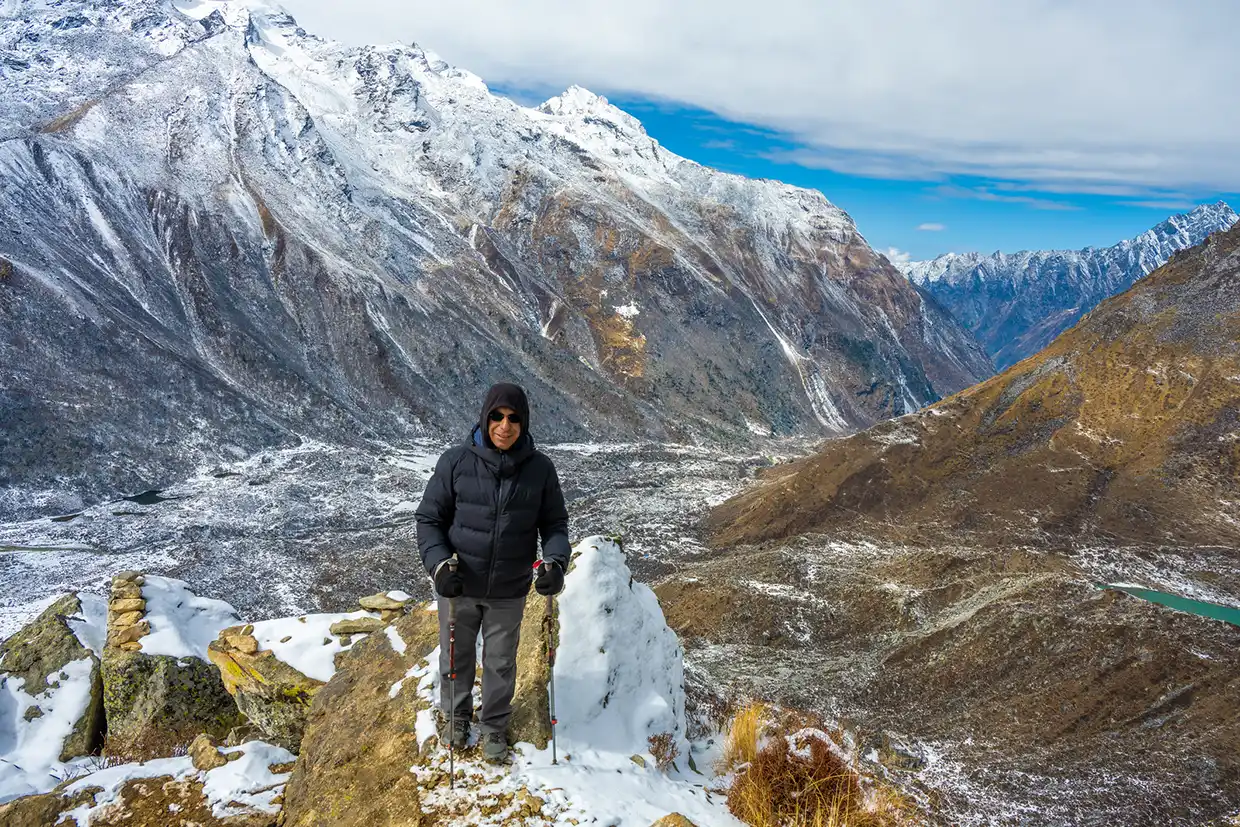
Kyanjin Ri delivers views of the complete Langtang range at close range—Langtang Lirung, Kimshung, Dorje Lakpa, and the glacier complex below Kyanjin directly below the ridgeline. Tserko Ri’s higher summit at approximately 5,033 meters adds Naya Kanga and the wider eastern Langtang range to the panorama. Your guide selects the specific hike objective based on current conditions and the group’s acclimatization state. Do not remove Day 6 from the itinerary regardless of the group’s perceived fitness level.
Accommodation:
Teahouse in Kyanjin Gompa (second night)
Meals Breakfast, Lunch, Dinner
Difficulty
Day 7 leaves the last teahouse infrastructure of the Langtang Valley and enters the remote approach terrain toward Ganja La Pass. The trail from Kyanjin Gompa climbs through high alpine terrain—open ridgelines, boulder fields, and pasturelands at altitude—to the Ngegang camping area at approximately 4,100 to 4,300 meters. The camping crew arrives before the trekking group to set up camp.
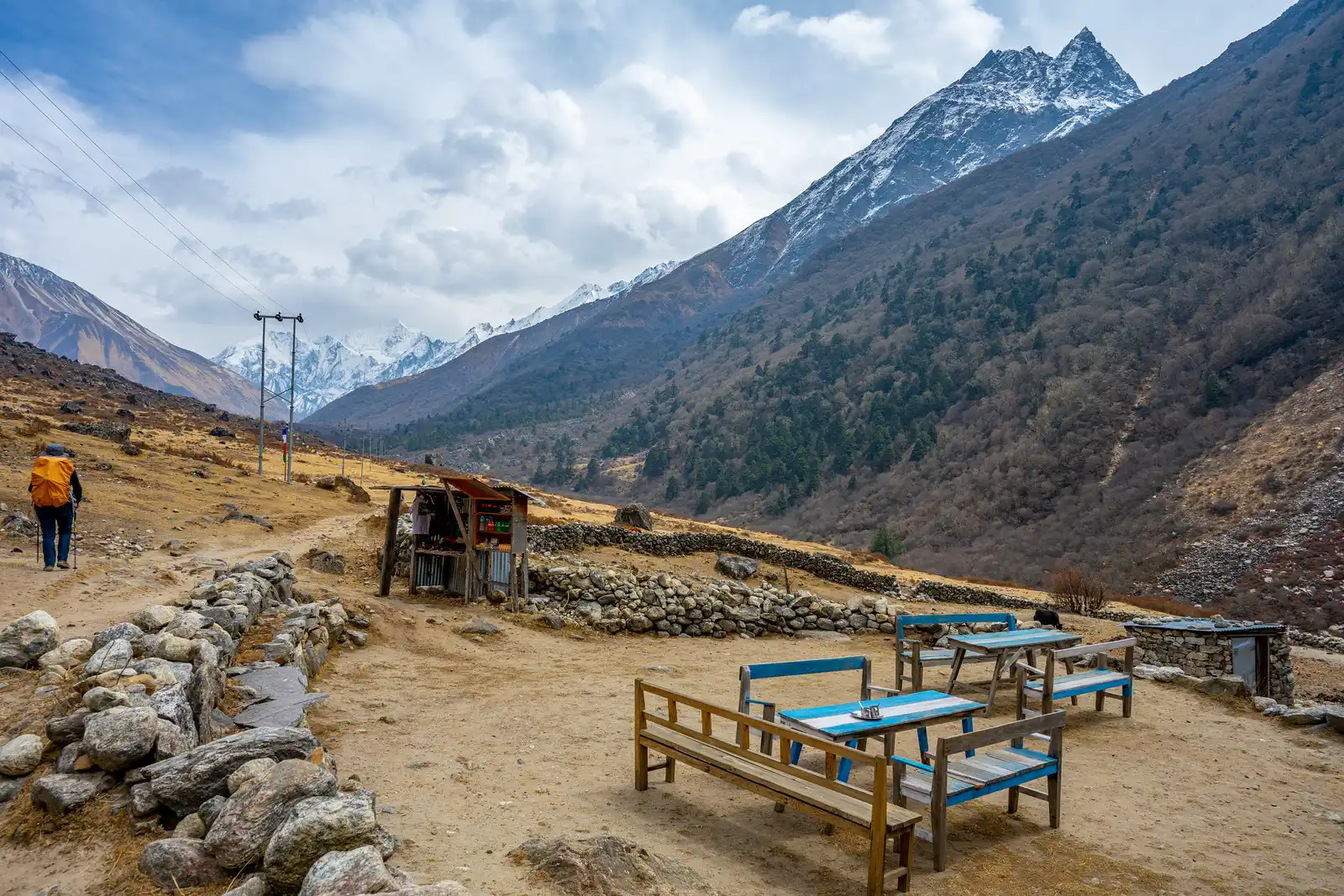
The Day 7 afternoon in camp covers final gear preparation for the Day 8 pass crossing—checking warm layers, verifying headlamp function, loading daypacks with snacks and water, and confirming the 4 to 5 AM departure time with the guide. Eat a full dinner, drink 3 liters of water throughout the afternoon and evening, and go to bed as early as possible for the pre-dawn start.
Accommodation:
Tented camp at Ngegang (~4,100–4,300 m)
Meals Breakfast, Lunch, Dinner
Difficulty
The Ganja La Pass day begins at 4 to 5 AM in complete darkness at the Ngegang camp. Dress in full layering before leaving the tent—down jacket, thermal base layers, warm gloves, and a hat. The ascent from Ngegang to the Ganja La summit, at approximately 5,100 to 5,130 meters, takes 4 to 6 hours, depending on snow conditions, group pace, and weather. Your guide sets the pace, monitors everyone’s altitude response, and carries rope for any technical sections the current conditions require.
At the Ganja La summit, the full Langtang range panorama faces north while the Helambu hills roll southward below the pass on the opposite side. The transition in visual character between the two sides—the north’s glaciated high-alpine severity versus the south’s forested hill topography—happens within 100 meters of the prayer-flag-covered summit cairn. Spend 10 to 15 minutes at the summit before the cold sets in and the descent begins to drive the group onward.
The Helambu-side descent from Ganja La to Keldang covers steep terrain that demands full concentration on footing throughout. The walking time from Ngegang to Keldang is 8 to 12 hours, including ascent and descent. Arrive at the Keldang camp in late afternoon, eat a full dinner, and rest completely for the Day 9 approach to Dukpu.
Accommodation:
Tented camp at Keldang
Meals Breakfast, Lunch, Dinner
Difficulty
Day 9 continues through remote Helambu highland terrain from Keldang toward Dukpu. The trail crosses high ridgelines and pastureland at altitude before descending toward the Dukpu area that marks the transition zone between the open high terrain and the forested Helambu hillside approach. Walking time is approximately 5 to 7 hours, depending on trail conditions and the group’s recovery after the Ganja La crossing.
The Dukpu overnight represents the camping section’s final remote night before Tarkeghyang’s teahouse infrastructure on Day 10. Eat a full dinner, rest early, and prepare for the descent to Tarkeghyang that marks the physical end of the trek’s most demanding section.
Accommodation:
Tented camp at Dukpu
Meals Breakfast, Lunch, Dinner
Difficulty
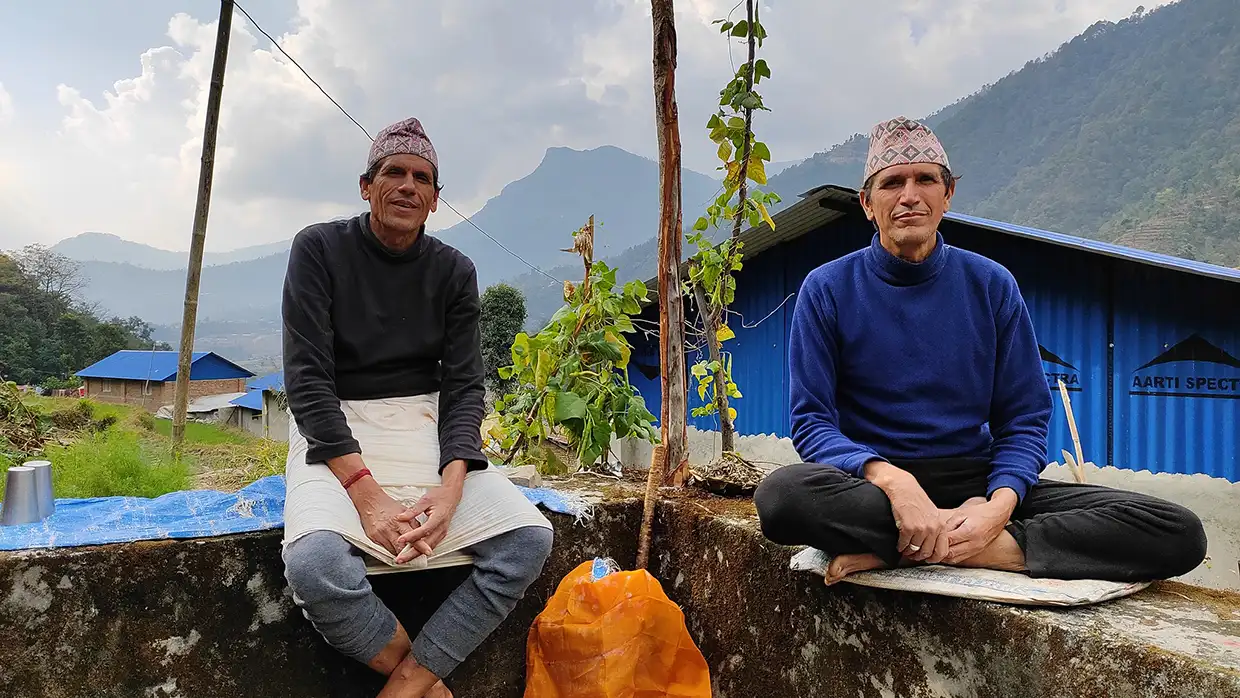
The Day 10 descent from Dukpu to Tarkeghyang, at approximately 2,590 meters, returns the trek to teahouse infrastructure, hot meals from a lodge kitchen, and the cultural environment of the Yolmo village in the Helambu region. Walking time runs approximately 4 to 6 hours with significant altitude loss through forest sections and village approach trails.
Tarkeghyang’s arrival marks both a physical recovery milestone and a cultural transition. The Yolmo monastery above the main village, the traditional house architecture of the Helambu community, and the dramatically different forest-and-farmland visual environment after three days of high-alpine, remote terrain create the strongest single-day contrast of the entire 14-day route. Rest, a hot shower if available, and a full teahouse dinner mark the end of the camping section.
 Accommodation:
Teahouse in Tarkeghyang
Meals Breakfast, Lunch, Dinner
Difficulty
The Day 11 trail from Tarkeghyang to Sermathang follows the Helambu Ridge route through forest sections, village paths, and monastery approaches, covering approximately 4 to 5 hours of walking. Sermathang, at approximately 2,620 meters, provides a monastery setting with open views southward toward the Kathmandu valley hills. The afternoon gives time for monastery exploration and the final night in the Helambu cultural environment before the descent to the road.
Accommodation:
Teahouse in Sermathang
Meals Breakfast, Lunch, Dinner
Difficulty
The final trekking day descends from Sermathang through terraced farmland and rural villages, and across the lower Helambu foothills, to Melamchi Pul Bazaar, at approximately 823 meters on the Melamchi River. Walking time is approximately 4 to 6 hours, with consistent altitude loss, on a clear trail that ends at the road access point for the Kathmandu return.
Organize guide and porter tips at Melamchi Pul Bazaar before the vehicle departs. The camping crew who supported the remote section specifically deserves recognition—the quality of the camping experience depends directly on the crew’s pre-deployment standards, cooking, and equipment management throughout Days 7 to 9.
Accommodation:
Teahouse or lodge at Melamchi Pul Bazaar
Meals Breakfast, Lunch, Dinner
Difficulty
The Melamchi Pul Bazaar to Kathmandu road return takes approximately 4 to 5 hours—significantly shorter than the Day 2 Syabrubesi drive because Melamchi Pul Bazaar sits much closer to the Kathmandu valley than Syabrubesi. Transfer to your Kathmandu hotel on arrival in the afternoon or evening.
Accommodation:
Hotel in Kathmandu
Meals Breakfast, Lunch
Difficulty
Our driver will pick you up from your Kathmandu hotel and transfer you to Tribhuvan International Airport at the agreed pickup time. Allow at least 3 hours before international departure for check-in, immigration, and security.
Accommodation:
Not included
Meals Breakfast
Difficulty
Kathmandu – Hotel
Your Kathmandu hotel provides private bathrooms, hot water, Wi-Fi, and daily breakfast. Two nights—one before the trek and one on the Day 13 return—frame the remote camping experience with city-standard comfort. The central Thamel location gives walking access to any remaining gear purchases before the Day 2 departure.
Teahouse Section – Syabrubesi to Kyanjin Gompa
Teahouses from Syabrubesi through Lama Hotel, Langtang Village, and Kyanjin Gompa provide the standard Langtang Valley lodge experience—twin-sharing rooms with basic bedding, shared bathrooms at most stops, and the improving views and decreasing menu breadth that characterizes all altitude-ascending Himalayan teahouse routes.
Camping Section – Ngegang to Dukpu (Days 7–9)
Three nights in tented camps. Our camping equipment includes expedition-quality two-person tents, insulated sleeping pads, a dining tent, a kitchen tent, and basic toilet tent arrangements. Your sleeping bag provides your primary insulation—a bag rated to -15°C minimum is essential. The crew sets up camp before the trekking group arrives and manages all tent, kitchen, and camp logistics throughout the three remote nights.
Return Teahouse Section – Tarkeghyang to Melamchi Pul Bazaar
The Helambu teahouses at Tarkeghyang, Sermathang, and Melamchi Pul Bazaar provide adequate but basic facilities—simpler than the Langtang Valley lodges in most cases, but offering hot meals, dry rooms, and shelter that make the camping-to-teahouse transition feel like genuine comfort restoration.
Full board covers all 12 trekking days from Day 2 through Day 13. Hotel breakfast is included in Kathmandu on Day 2 morning and Day 14 morning. Day 13 includes breakfast and lunch. The teahouse sections from Syabrubesi to Kyanjin Gompa and Tarkeghyang to Melamchi Pul Bazaar provide standard dal bhat, noodle soup, potato dishes, eggs, porridge, and tea.
The camping section from Days 7 through 9 uses a different food system—our kitchen crew carries pre-planned supplies from Kyanjin Gompa and prepares hot meals at each camp using a portable camp kitchen. Camping menu options include dal bhat, vegetable soups, pasta, noodle dishes, rice preparations, hot drinks, and the high-calorie food that cold nights and physical exertion at altitude demand. The kitchen crew maintains consistent hot drink availability throughout each camping day.
Food quality in the teahouse sections reflects the standard Langtang Valley lodge menu—the best quality near Syabrubesi and the simplest at Kyanjin Gompa, where supply logistics limit access to fresh ingredients. Bottled water, soft drinks, alcohol, snacks beyond standard trail meals, and desserts carry additional fees at all teahouse stops. Carry purification tablets from Kathmandu for the camping section where bottled water is not available.
The package includes airport pickup and drop-off in Kathmandu, a road transfer to Syabrubesi on Day 2, and a road return from Melamchi Pul Bazaar to Kathmandu on Day 13. Private jeep or shared local transport depends on the package tier. The linear route—Syabrubesi start, Melamchi Pul Bazaar exit—requires coordinating two separate vehicle arrangements rather than a simple out-and-back road route.
Private jeep upgrades are available for both road transfers and provide more comfort and scheduling flexibility than shared transport on the mountain road sections. Contact our team before booking to add private vehicle upgrades.
The Langtang Ganja La Pass Trek requires the Langtang National Park Entry Permit for the Langtang Valley section. The TIMS card may apply under the current Nepal Tourism Board policy. Our team arranges all permits in Kathmandu before Day 2 departure and provides your guide with documentation for all checkpoint inspections along the route.
Permit fees are subject to annual government review—our team confirms the current pricing at the time of the booking inquiry. Bring two passport-size photographs and a clear copy of your passport to provide on Day 1.
The Langtang Ganja La Pass Trek is rated strenuous on every standard trekking difficulty scale. The combination of a 5,100 to 5,130-meter-high pass crossing, three nights of remote camping above 4,000 meters, long walking days on technically varied terrain, and cold night temperatures in the camping section places this route firmly at the challenging end of the non-technical trekking category.
The most demanding single day is Day 8—the Ganja La crossing from Ngegang camp to Keldang. Total walking time on Day 8 runs 8 to 12 hours, depending on snow conditions, group fitness, and any technical sections requiring rope support. Days 3 through 5 in the valley section run 5 to 6 hours daily on a well-maintained trail. Days 10 through 12 in the Helambu section run 4 to 6 hours on descending terrain.
Previous multi-day high-altitude trekking experience is required—not recommended. Trekkers who have completed similar pass crossings (Thorong La, Cho La, Renjo La, or equivalent) arrive with the altitude management experience and physical conditioning that the Ganja La crossing demands. First-time trekkers and those without high-altitude experience should not book this route.
| Season | Months | Conditions | Best? |
|---|---|---|---|
| Spring | March to May | Good pass-crossing window with manageable snow levels. Lower trail sections warm and well-trodden. Possible fresh snow near the pass after late April storms. Clear morning views in the Langtang Valley. | Yes |
| Autumn | Sep to Nov | Best mountain visibility and most stable weather for the Ganja La crossing. October is the primary window—snow accumulation stays minimal until late November. Book well in advance. | Yes – Best |
| Winter | Dec to Feb | Deep snow on Ganja La Pass, extreme cold at camping altitudes, high risk of pass closure. The crossing becomes very difficult, if not impossible, without specialized snow gear and experience. | Not Recommended |
| Monsoon | Jun to Aug | Rain, cloud, severe landslide risk on the road sections, leeches on lower forest trails, and poor visibility at all viewpoints. Ganja La Pass carries significant snow and weather risk. Avoid. | No |
Porter and camping crew service comes included in the standard Langtang Ganja La Pass Trek package. The camping section requires crew support that the standard Langtang Valley porter arrangement cannot provide—kitchen equipment, tent systems, food supplies, and cooking logistics demand a specialized camping crew in addition to the standard porter load.
One porter carries a maximum of 20 kilograms, shared between two trekkers, for the main baggage load throughout the teahouse and camping sections. The camping crew handles tent setup, cooking, camp management, and equipment transport independently of the porter team. Our guide coordinates all crew logistics daily throughout the 12 trekking days.
All porters and camping crew receive fair wages, adequate warm clothing for the high-altitude camping section, sufficient sleeping arrangements in or near the trekking group’s camp, and full insurance coverage in accordance with Nepal trekking industry employment standards. Extra porters are available on request for trekkers who need additional load support on the camping section.
An emergency helicopter evacuation from the Ganja La remote camping area costs USD 3,000 to USD 6,000, depending on the pickup location and weather conditions. Without adequate insurance, the full cost falls on the trekker or their family. The remote camping section between Kyanjin Gompa and Tarkeghyang has no road access—helicopter evacuation is the only emergency extraction option.
Your policy must also cover medical treatment, trip cancellation, road delays, weather-based itinerary changes, and personal accident. Trip cancellation coverage protects your investment if a Ganja La weather closure forces an itinerary change that extends your Nepal stay beyond the original schedule.
Pack for the full temperature range from warm Syabrubesi afternoons at 1,460 meters to the Ngegang camp night at -10°C to -15°C and the Ganja La summit at 5,100 meters before sunrise:
Leave No Trace principles apply throughout the remote camping section with particular rigor, as the terrain between Kyanjin Gompa and Tarkeghyang receives limited trekker traffic and lacks the waste management infrastructure of the main Langtang Valley teahouse trail. Our camping crew packs out all non-biodegradable waste from every campsite—the toilet tent arrangements minimize environmental impact on the remote alpine terrain. Inspect the campsite before departure each morning and carry out any waste that the crew’s pack-out system misses.
Support the Langtang Village community by purchasing meals, snacks, and souvenirs from local teahouses and vendors during the Day 4 and Day 5 valley section. The 2015 earthquake significantly weakened the community’s economic foundation—trekking tourism income supports the reconstruction effort and the long-term community viability of one of Nepal’s most severely affected mountain settlements.
The Yolmo cultural communities of Tarkeghyang and Sermathang receive fewer trekkers than the main Langtang Valley corridor, which preserves both the cultural authenticity and the economic impact of each trekking group. Eating at local teahouses, purchasing local products, and engaging respectfully with monastery communities in Tarkeghyang and Sermathang creates direct income for households that the trekking industry’s commercial development has not yet reached to the same degree as the main Khumbu or Annapurna circuits.
Safety management centers on Kyanjin Gompa acclimatization and the Ganja La weather assessment. Our guides base the Day 6 acclimatization hike and the Day 8 pass-crossing decisions on real-time weather, snow conditions, and the group’s health rather than a rigid schedule.
High-altitude sickness management follows strict protocols. We enforce a measured pace, a maximum overnight altitude gain of 500 meters above 3,500 meters, a mandatory rest day, and immediate descent if symptoms appear. Trekkers should consult a doctor and carry personal Diamox, while the guide provides a comprehensive group medical kit.
Because the remote camping section lacks road access and teahouse support, helicopter evacuation is the primary rescue option. Our guide maintains constant satellite phone or VHF radio contact with our Kathmandu office, ensuring our 24-hour operations team can smoothly coordinate emergency protocols and evacuations if needed.
Our guides assigned to the Langtang Ganja La Pass Trek carry specific Ganja La Pass experience—multiple crossing seasons, current knowledge of the Ngegang and Keldang camp sites, direct relationships with the Tarkeghyang and Sermathang teahouse operators, and the Ganja La weather assessment experience that makes the Day 8 safety decision reliable rather than uncertain. We do not assign guide-only Ganja La routes to guides who have not completed the specific crossing multiple times.
The camping crew assigned to the remote section operates from pre-planned logistics that our team coordinates before each departure—Kyanjin Gompa supply points for camping food, equipment inspection before the trek departs Kathmandu, and crew briefing on cold-weather camp management protocols specific to the Ngegang altitude. The quality of the camping crew directly determines the camping section experience, and our team monitors this standard through guide reporting and client feedback.
Permit requirements for the Langtang Ganja La Pass Trek include the Langtang National Park permit and may include TIMS under the current Nepal Tourism Board policy. Both permits are arranged in Kathmandu before departure. Permit fees change during the annual government review—our team confirms current pricing at the time of the booking inquiry.
Ganja La Pass Trek vs. Langtang Valley Trek
While both treks share the approach from Syabrubesi to Kyanjin Gompa, they diverge completely afterward. The standard Langtang Valley route returns along the same path and is rated as moderate. The Ganja La Pass Trek continues into remote terrain, tackles a 5,130-meter crossing, and exits through Helambu, offering a distinct frontier experience.
Why Camping Is Non-Negotiable
No teahouses exist between Kyanjin Gompa and Tarkeghyang. Attempting a single-day crossing requires a hazardous 12 to 16-hour march at extreme elevation. Our three-camp framework at Ngegang, Keldang, and Dukpu breaks the trip into manageable segments, eliminating dangerous time pressure.
Why the Trek Rates as Strenuous
This route is a significant step above moderate. The strenuous rating reflects sustained physical demands over 12 consecutive trekking days: altitudes exceeding 5,000 meters, remote wilderness camping, technical terrain, steep snow slopes requiring rope support, and freezing night temperatures dipping below -10°C.
Why Kyanjin Gompa Acclimatization is Mandatory
Skipping the rest day at 3,870 meters forces an aggressive daily ascent up to the 5,130-meter summit, drastically increasing acute mountain sickness risks. A dedicated day here, paired with an optional high-ridge hike, gives your body the vital oxygen-carrying boost needed for the pass.
Ganja La Pass Weather Reality
Pass crossings are never 100% guaranteed, even in peak seasons. Fresh overnight snow can instantly alter trail conditions. Our guides monitor forecasts in real time and make the final crossing call on the morning of Day 8. Safety takes priority, so flexible travel insurance and international flight connections are highly recommended.
The booking process completes in under 10 minutes:
A: The full package runs 14 days from arrival in Kathmandu on Day 1 to final airport departure on Day 14. The active trekking section covers 12 days from the Syabrubesi overnight on Day 2 through the Melamchi Pul Bazaar lodge on Day 12. Day 13 covers the road return from Melamchi Pul Bazaar to Kathmandu.
A: The trek rates as strenuous—the highest standard difficulty rating for non-technical Nepal trekking. The combination of Ganja La Pass at 5,100 to 5,130 meters, three nights of remote camping, long walking days on steep terrain, cold nights in the camping section, and weather-dependent route decisions places this route well above the moderate category. Previous multi-day high-altitude trekking experience is required.
A: Ganja La Pass sits at approximately 5,100 to 5,130 meters (16,732 to 16,830 feet) above sea level. It represents the highest point of the trek and the physical climax of the route. The crossing occurs on Day 8 with a pre-dawn departure from the Ngegang tented camp.
A: Yes. No teahouse infrastructure serves the terrain between Kyanjin Gompa and Tarkeghyang on the Ganja La route. Three nights of tented camping at Ngegang, Keldang, and Dukpu are non-negotiable on the standard 14-day itinerary. The camping equipment, kitchen support, and crew come included in the standard package.
A: No. The Langtang Ganja La Pass Trek is not suitable for first-time trekkers or those without multi-day high-altitude hiking experience. The Ganja La Pass crossing, remote camping conditions, cold nights, and strenuous daily distances all require the altitude management experience and physical conditioning that only previous high-altitude multi-day trekking provides.
A: Autumn (September to November) provides the best pass-crossing conditions—stable weather, minimal snow accumulation, and maximum mountain visibility. October is the prime month. Spring (March to May) offers a reliable second window. The guide confirms Ganja La crossing conditions on the morning of Day 8 regardless of season—weather variability affects the crossing probability even during the best months.
A: If weather or snow conditions make the Ganja La crossing unsafe, your guide has the authority to delay, reroute, or cancel the crossing. Possible alternatives include waiting 1 to 2 days for conditions to improve, returning via the Langtang Valley to Syabrubesi, or taking an alternative lower route. Travel insurance with trip cancellation coverage protects your investment if an extended delay becomes unavoidable.
A: Yes—and the policy must explicitly cover trekking above 5,000 meters and emergency helicopter evacuation. Standard adventure policies that cap altitude coverage at 3,000 or 4,000 meters do not provide adequate protection. Show proof of adequate coverage to our team at booking confirmation. An evacuation from the remote camping section costs USD 3,000 to USD 6,000.
A: The trek requires the Langtang National Park Entry Permit. The TIMS card may apply under current Nepal Tourism Board policy. Both permits come included in the package price. Our team confirms current requirements and fees at booking inquiry time.
A: You stay at a hotel in Kathmandu for two nights, teahouses from Syabrubesi to Kyanjin Gompa and Tarkeghyang to Melamchi Pul Bazaar, and tented camps at Ngegang, Keldang, and Dukpu during the three remote camping nights. The camping equipment—tents, sleeping pads, dining and kitchen tents—comes included in the standard package.
A: Yes. Full board—breakfast, lunch, and dinner—comes included on all 12 trekking days including the three camping nights. Our kitchen crew carries sufficient food supplies from Kyanjin Gompa to provide hot meals throughout the remote camping section.
A: Yes—and the rating matters. Your sleeping bag must rate to -15°C minimum for the Ngegang camping night. This is non-negotiable. Sleeping bag rental is available on request through our team if you cannot bring an adequate bag. Do not use a bag rated warmer than -15°C for the Ngegang and Keldang camping nights.
A: Yes. Day 6 is a dedicated acclimatization day at Kyanjin Gompa with the optional Kyanjin Ri or Tserko Ri hike. The guide selects the specific ridge objective based on group fitness and weather conditions. This day is non-negotiable and cannot be removed to compress the itinerary.
A: The Langtang Valley Trek follows the teahouse route from Syabrubesi to Kyanjin Gompa and returns via the same valley. The Ganja La Pass Trek continues from Kyanjin into remote terrain, crosses the 5,100 to 5,130-meter pass with camping support, and exits through the Helambu region via Tarkeghyang and Sermathang to Melamchi Pul Bazaar. The two routes share the approach section but diverge completely above Kyanjin Gompa in character, difficulty, required equipment, and cultural content.
A: Yes. Contact our team before booking if you want to adjust specific elements—adding an extra acclimatization day, extending the Helambu section, adding a Kyanjin Ri summit attempt as a dedicated hike, or customizing the Kathmandu hotel arrangements. We accommodate reasonable customization requests within the safety framework the Ganja La Pass route requires.