

This off-the-beaten-path adventure combines the ancient Tibetan Buddhist culture of a remote valley with the rugged, high-altitude challenge of the classic Manaslu Circuit.

Unbeatable Holiday Offers – Save Up to 20% on Your Next Adventure!
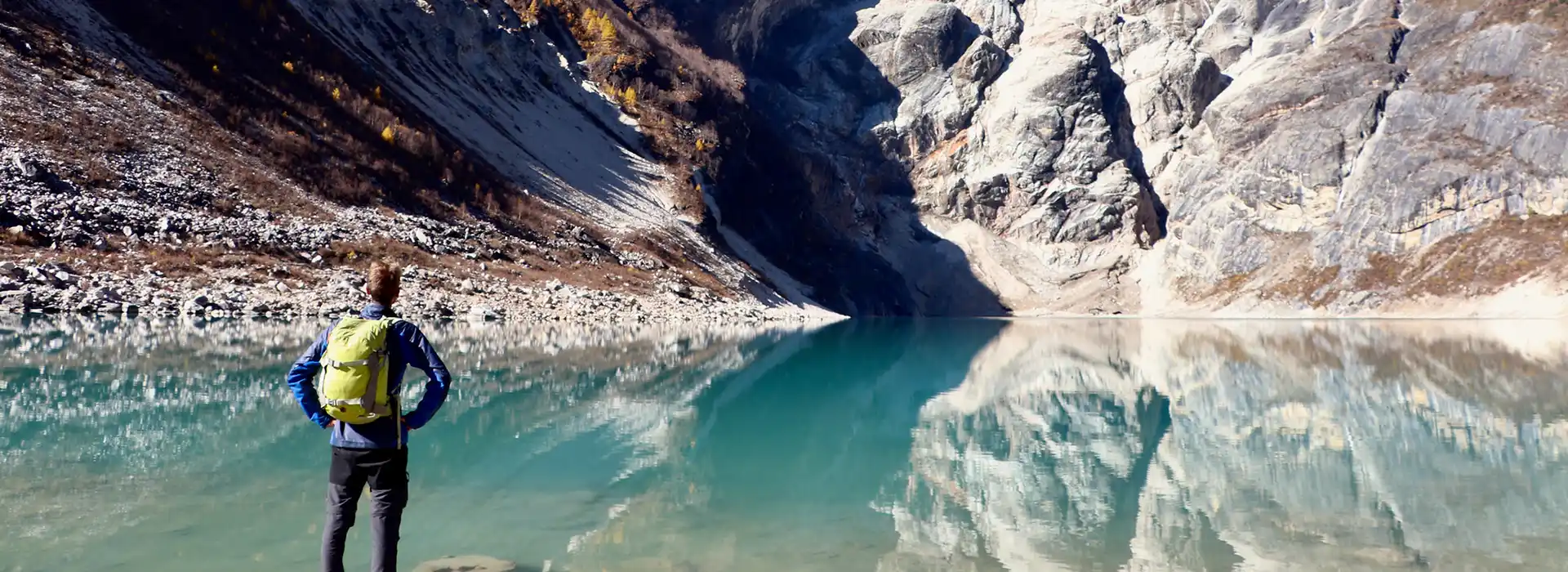

This off-the-beaten-path adventure combines the ancient Tibetan Buddhist culture of a remote valley with the rugged, high-altitude challenge of the classic Manaslu Circuit.
The Manaslu Tsum Valley Trek combines two premier routes across a 22-day itinerary from Kathmandu. The first section explores the sacred, protected Tsum Valley, passing through Chumling and Chhokangparo to reach the historic Mu Gompa and Rachen Gompa monasteries. The second section rejoins the Manaslu Circuit at Deng, ascending through Namrung, Lho, Sama Gaun, and Samdo before crossing the 5,160-meter Larkya La Pass and descending to Bhimthang for the return journey.
These two phases offer contrasting landscapes and cultural encounters. The Tsum Valley section introduces the Tibetan-influenced culture of the Tsumba people within a peaceful, hidden valley setting. In contrast, the Manaslu Circuit focuses on high-altitude glacial terrain, featuring views of Mount Manaslu (8,163 meters) and an expansive mountain panorama from the Larkya La Pass.
Sustaining this 22-day timeline ensures safe altitude pacing. Spending Days 5 through 11 in Tsum Valley permits genuine cultural immersion, while dedicated acclimatization days at Sama Gaun (Day 15) and Samdo (Day 17) prepare the body for the high pass crossing. Shorter 19-day versions often cut these vital rest days, increasing safety risks and rushing the experience.
Quick Answer: What Is the Manaslu Tsum Valley Trek?
The Manaslu Tsum Valley Trek is a 22-day restricted-area trek in Nepal combining the sacred Tsum Valley and the Manaslu Circuit. The route covers Machha Khola, Jagat, Lokpa, Chumling, Chhokangparo, Nile, Mu Gompa, Rachen Gompa, Deng, Namrung, Lho, Sama Gaun, Samdo, Dharamsala, Larkya La Pass, Bhimthang, Dharapani, and Kathmandu. It requires five permits and includes Larkya La Pass at approximately 5,160 m.
The Manaslu Tsum Valley Trek delivers the ultimate journey through the Manaslu region, blending the deep spiritual heritage of Tsum Valley with the rugged, high-altitude loop of the Manaslu Circuit. No other itinerary from Kathmandu matches this geographical and cultural range. The route moves in a natural progression: the first seven days immerse you in the sacred monastery culture of Tsum Valley, before, on Day 11, transitioning at the Deng junction into ten days of high-altitude glacial approaches and the challenge of Larkya La Pass.
Trekkers should expect 19 walking days averaging 4 to 8 hours, with teahouse lodging that becomes increasingly basic at higher elevations, such as Dharamsala. Menus simplify as altitude increases, and our team fully manages a comprehensive 5-permit system. Because it combines two separate restricted areas, this trek requires a licensed guide, excellent physical fitness, and careful acclimatization, making it ideal for experienced hikers seeking a complete Himalayan expedition.

Included Meals

Trip staff

Transport

Accommodation

Trip Grade
Group Size
Your journey begins with a landing at Tribhuvan International Airport, where a representative warmly greets you outside the terminal. After collecting your luggage, you board a private vehicle for the short drive to your hotel in Thamel. The bustling streets immediately expose you to Kathmandu’s vibrant mix of colors, honking scooters, and fragrant spice shops. Check‑in formalities complete, you settle into your twin‑sharing room and begin adjusting to the new time zone.
Resting after your flight is essential for recovering from travel fatigue and preparing mentally for the trek ahead. Your guide will visit the hotel in the evening to brief you about tomorrow’s permit office schedule and required documents. Use this quiet time to organize your backpack, double-check your gear list, and fully charge all electronic devices. A comfortable night’s sleep at 1,400 meters allows your body to ease into the adventure without immediate physical demands.
The afternoon offers a perfect opportunity to wander through Thamel’s labyrinth of trekking shops, bookstores, and rooftop cafés. You might pick up a detailed map, a sturdy water bottle, or some local snacks for the long mountain days ahead. Light exercise, like walking around the neighborhood, helps your cardiovascular system gradually adapt to the moderate altitude. Evening arrives with a relaxed dinner at a local restaurant, where you sample your first dal bhat of the trip.
Accommodation:
Hotel in Kathmandu (twin sharing)
Difficulty
You wake at your hotel and enjoy an included breakfast. Eat a substantial meal because today involves a comprehensive briefing. At 9:00 AM, your guide meets you in the hotel lobby. You provide a copy of your passport and two identical photographs.
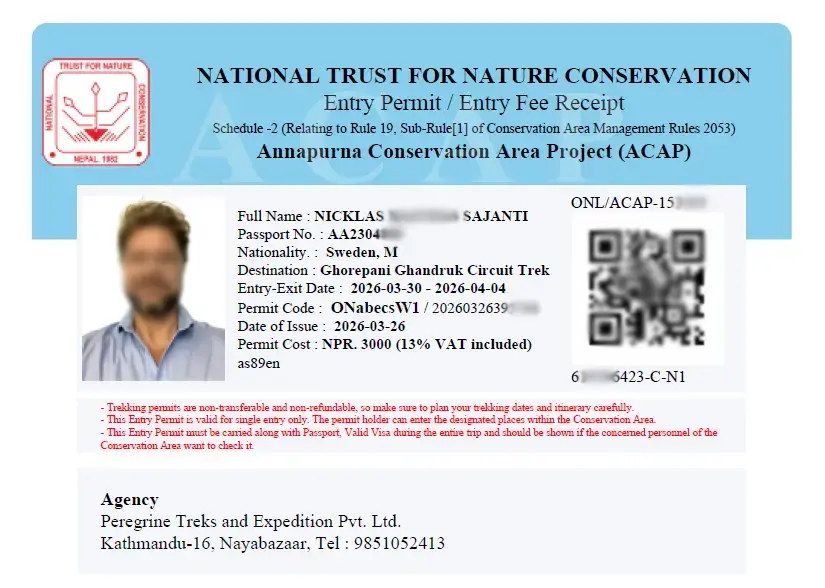
The guide departs to process three required trekking permits. These include the Nar Phu Restricted Area Permit and ACAP. The TIMS card may also be processed if currently required. You do not need to accompany the guide on these errands.
Free time from late morning allows you to exchange currency. You can buy last-minute gear at Thamel shops or visit a pharmacy. Lunch is on your own and should be kept light. Avoid unfamiliar foods to prevent digestive issues later.
Your guide returns early in the afternoon with the processed permits. A two-hour briefing thoroughly covers the safety protocols for Kang La Pass. Canyon trail conditions and cultural protocols for monastery visits are explained. Altitude sickness recognition and mandatory reporting are also emphasized.
A final gear check follows the afternoon briefing session. Boots, warm jacket, headlamp, and trekking poles are inspected. You then pack your porter bag to a maximum of 15 kilograms. The guide confirms tomorrow’s 7:00 AM departure time and introduces your driver.
Eat an early light dinner on your own this evening. Avoid alcohol and heavy foods completely before sleeping. Hydrate well, because this is your last night in your hotel bed. Tomorrow, the real mountain journey finally begins.
Day 2 Metrics:
Accommodation:
Hotel in Kathmandu (second night)
Meals Breakfast
Difficulty
An early departure from the hotel at six in the morning marks the true start of your overland mountain journey. Your vehicle leaves the Kathmandu Valley via the busy Prithvi Highway, then turns north at Dhading Bensi towards Arughat. The asphalt gradually gives way to a winding dirt road as you enter the deep gorge of the Budhi Gandaki River. Dramatic scenery unfolds with terraced rice fields clinging to steep hillsides and distant peaks visible through the haze.
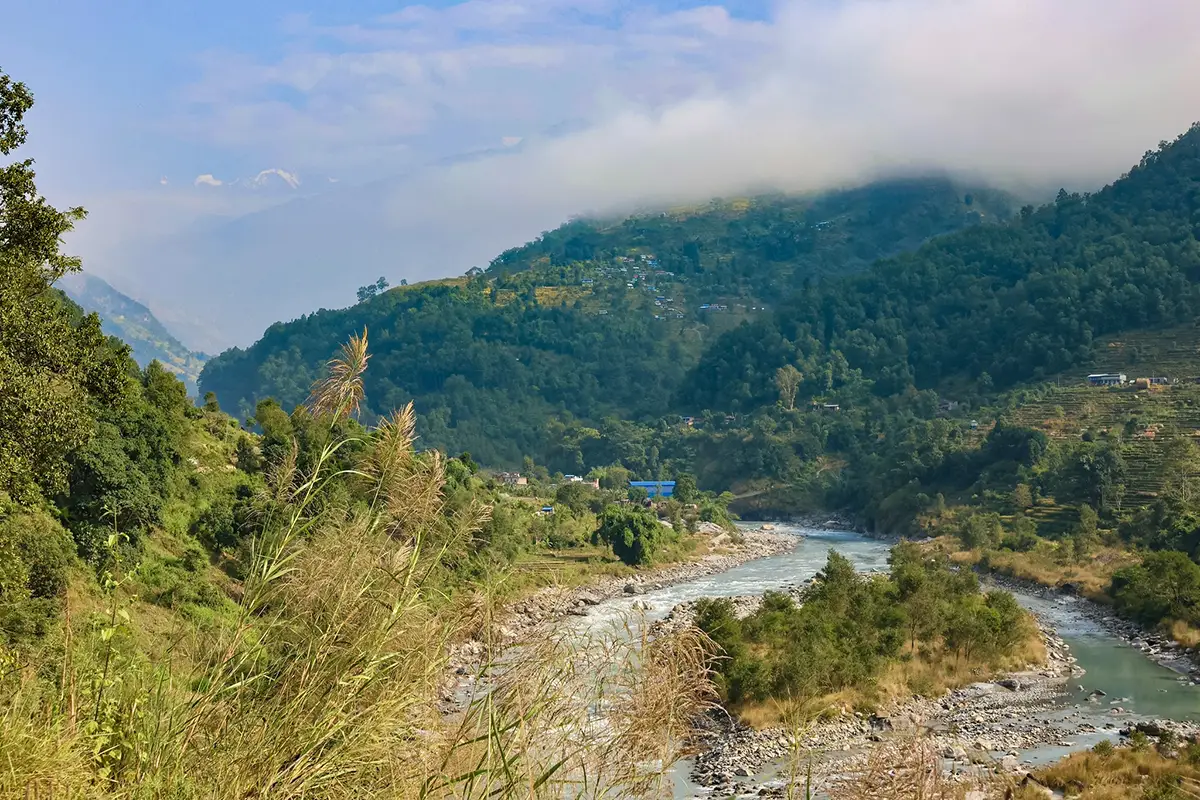
After passing the bustling bazaar of Arughat, the road climbs to a small pass at approximately 1,550 meters before dropping again. The vehicle descends through dense forests and past cascading waterfalls, bouncing over rough sections carved into the valley wall. Machha Khola village appears beside the river, a cluster of stone houses and teahouses at an elevation of 900 meters. You arrive after seven to eight hours of driving, a journey that tests your endurance despite the relatively low altitude.
Checking into a simple teahouse, you unpack your daypack and stretch your legs after the long, bumpy ride through the hills. The sound of the river below fills the evening air, promising the adventure that will begin on foot tomorrow morning. Dinner is a hearty local meal of dal bhat or noodle soup, prepared by the teahouse family in a communal dining room. Sleep comes early in the quiet mountain night, with oxygen levels still above ninety percent of sea level for comfortable rest.
Accommodation:
Teahouse at Machha Khola
Meals Breakfast, Lunch, Dinner
Difficulty
Your first steps on the trail follow the Budhi Gandaki River northwards through a lush subtropical river gorge. The path crosses several suspension bridges draped with prayer flags and winds past terraced fields of millet and maize. Small villages appear at regular intervals, where children call out cheerful greetings, and villagers offer warm smiles. By early afternoon, the valley narrows dramatically, exposing rock walls that rise almost vertically from the river below.
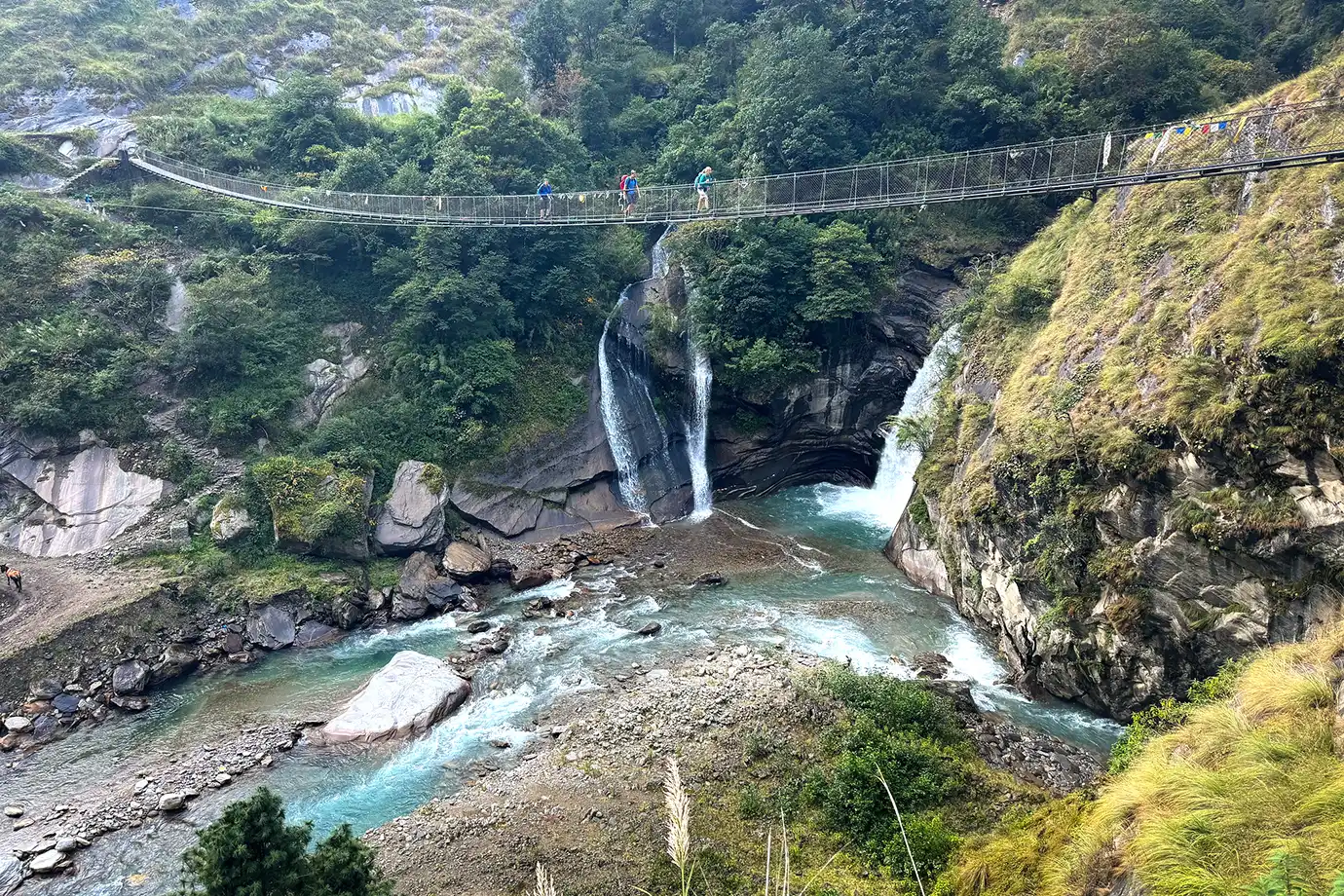
A final steep section leads to the village of Jagat, perched at approximately 1,340 meters on a river terrace. The teahouse here provides a comfortable overnight stop with simple but nourishing local food. The total walking time of five to six hours gives your legs their first proper mountain workout at a safe, low altitude. Oxygen remains above ninety percent of sea level, so your body can focus on building trail fitness without altitude stress.
Accommodation:
Teahouse at Jagat
Meals Breakfast, Lunch, Dinner
Difficulty
Leaving Jagat, the trail continues north along the river, passing through forested sections and several more suspension bridges. The path climbs gradually, offering your first distant views of the Ganesh Himal range peeking over the southern ridgelines. After about four hours of steady walking, you reach the crucial trail junction at Lokpa, marked by a large white chorten. This is the entry gate to the restricted Tsum Valley, where your Tsum Valley Restricted Area Permit is inspected and logged.
Once the checkpoint formalities are completed, you settle into a simple teahouse at Lokpa overlooking the valley you will enter tomorrow. The total walking time of six to seven hours brings a gentle but steady net altitude gain to the overnight stop. Although still well below 3,000 meters, the air feels noticeably cooler and fresher as you ascend deeper into the Manaslu Conservation Area. Cultural influences from nearby Tibet begin to appear in the architecture and prayer stones along the trail.
Accommodation:
Teahouse at Lokpa
Meals Breakfast, Lunch, Dinner
Difficulty
Your path now officially enters the sacred beyul of the Tsum Valley, a hidden Buddhist land of legend. The trail climbs through dense rhododendron and pine forests, then descends to cross the Shiar Khola on a long suspension bridge. After the bridge, a steady ascent leads to Chumling, where you catch your first clear views of the Ganesh Himal and Himalchuli. Arriving after four to five hours of walking, you experience the valley’s profound spiritual atmosphere for the first time.
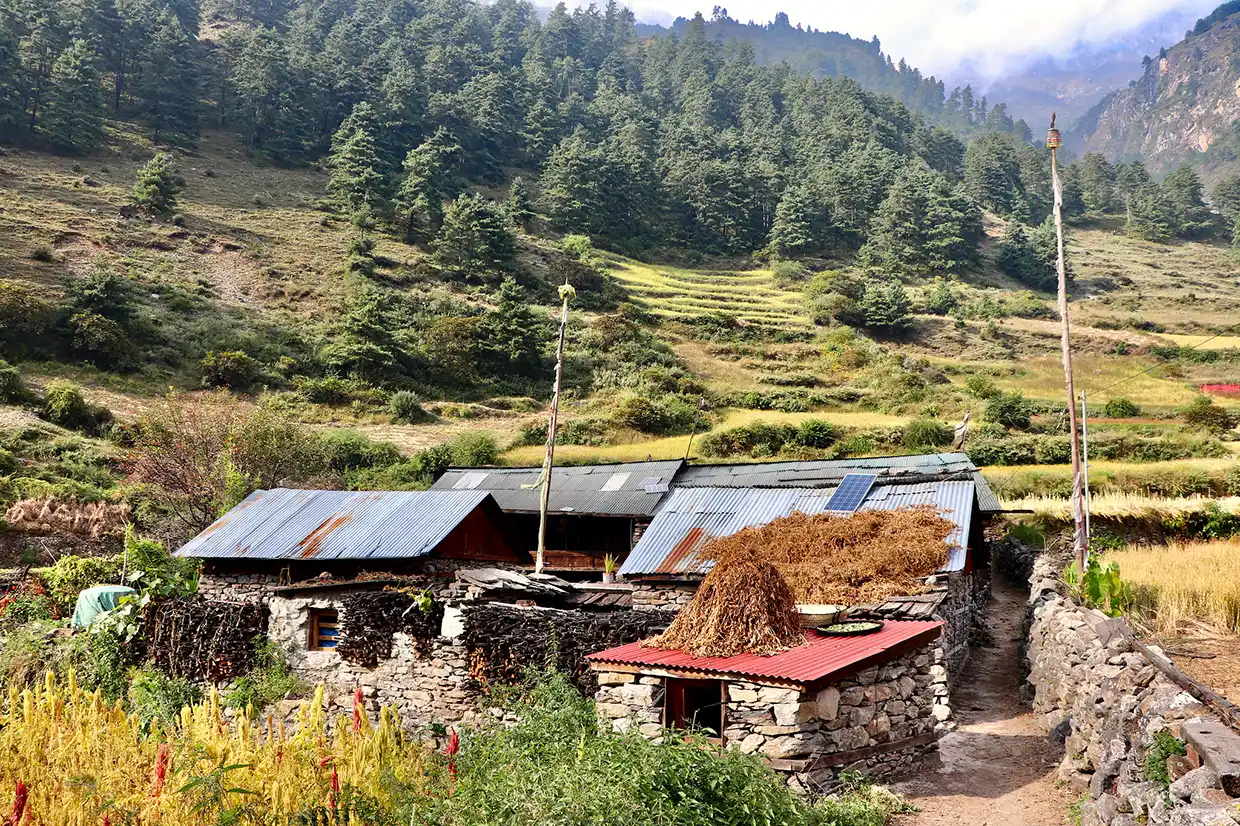
The village of Chumling, sitting at 2,386 meters, has a beautifully restored gompa and several whitewashed stone houses. You can visit the gompa in the afternoon, spin the prayer wheels, and learn about the region’s Buddhist heritage from local monks. The overnight elevation marks a significant step in your acclimatization process, with oxygen levels now around eighty percent of sea level. Spending the night here prepares your body for the higher altitudes of the upper Tsum Valley tomorrow.
Accommodation:
Teahouse at Chumling
Meals Breakfast, Lunch, Dinner
Difficulty
The morning trail from Chumling follows the Shiar Khola upstream and crosses several small side streams on wooden bridges. Valley walls gradually open out into the wide, rolling floor that gives the upper Tsum its characteristic high‑altitude charm. Mani walls stretch for hundreds of meters, their carved stones glowing under the crisp mountain sun. After roughly five to six hours, you arrive at Chhokangparo, a scattered village ringed by fields of buckwheat and barley.
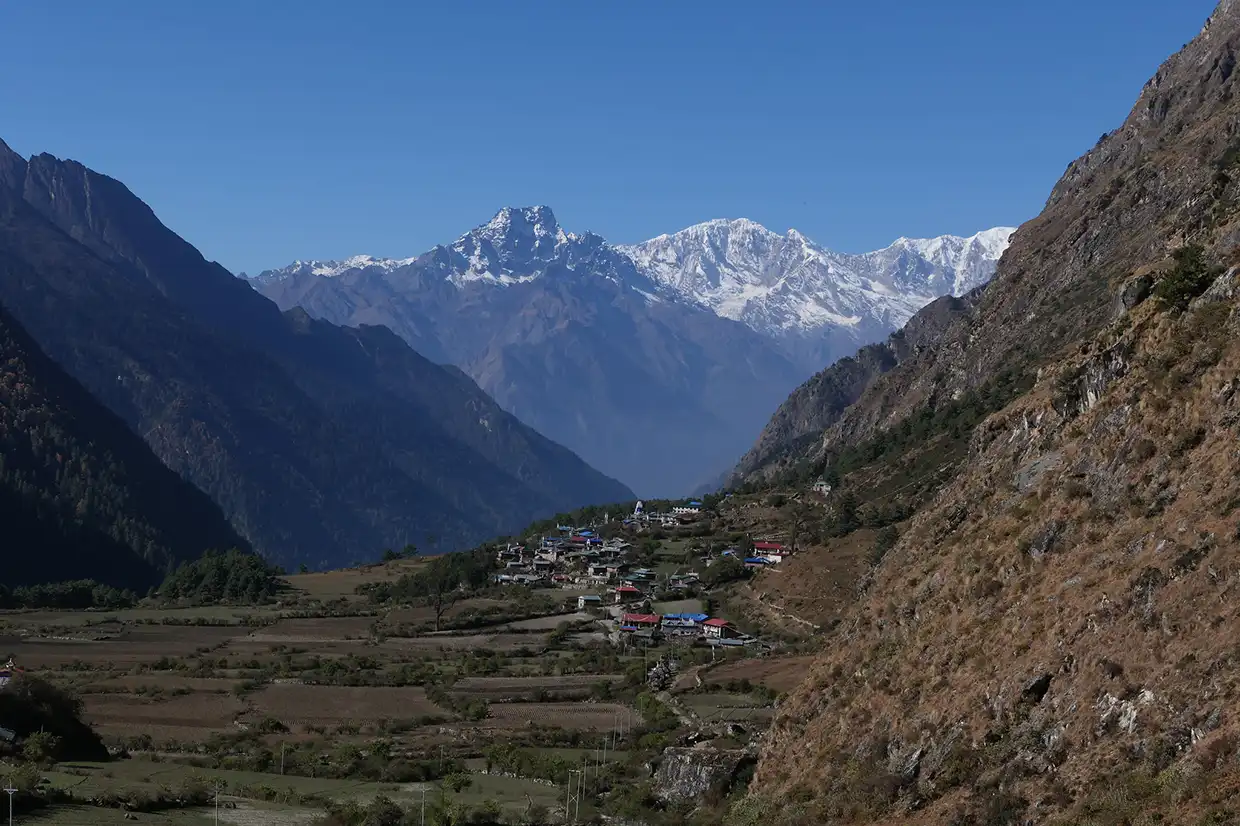
This is the day the Ganesh Himal and Sringi Himal ridge systems first fill the northern horizon with breathtaking clarity. The altitude now sits above 3,000 meters, and you may notice a slight shortness of breath on steeper sections. Resting at the teahouse with a cup of Tibetan butter tea rewards you for the day’s effort and helps you stay hydrated. Evening light paints the surrounding peaks in shades of gold and pink, a memory that stays with you forever.
 Accommodation:
Teahouse at Chhokangparo
Meals Breakfast, Lunch, Dinner
Difficulty
Leaving Chhokangparo, you walk past ancient chortens and enter the cultural heartland of the upper Tsum Valley. A steady ascent brings you to the revered Milarepa Cave, where the great Tibetan yogi is said to have meditated. Inside the cave, flickering butter lamps illuminate a small shrine, and the rock walls carry centuries of spiritual energy. Your guide allows sufficient time here for quiet reflection before continuing the journey northward.
Beyond the cave, the valley floor broadens even further, revealing a vast amphitheater of snow‑peaks and glacial streams. The trail passes through Tibetan‑influenced hamlets where yaks graze beside stone‑built homes adorned with intricate woodwork. Nile village appears after six to seven total walking hours, its whitewashed houses huddled at an altitude of approximately 3,361 meters. This remote settlement feels worlds away from the lower valleys and is your base for tomorrow’s exploration of Mu Gompa.
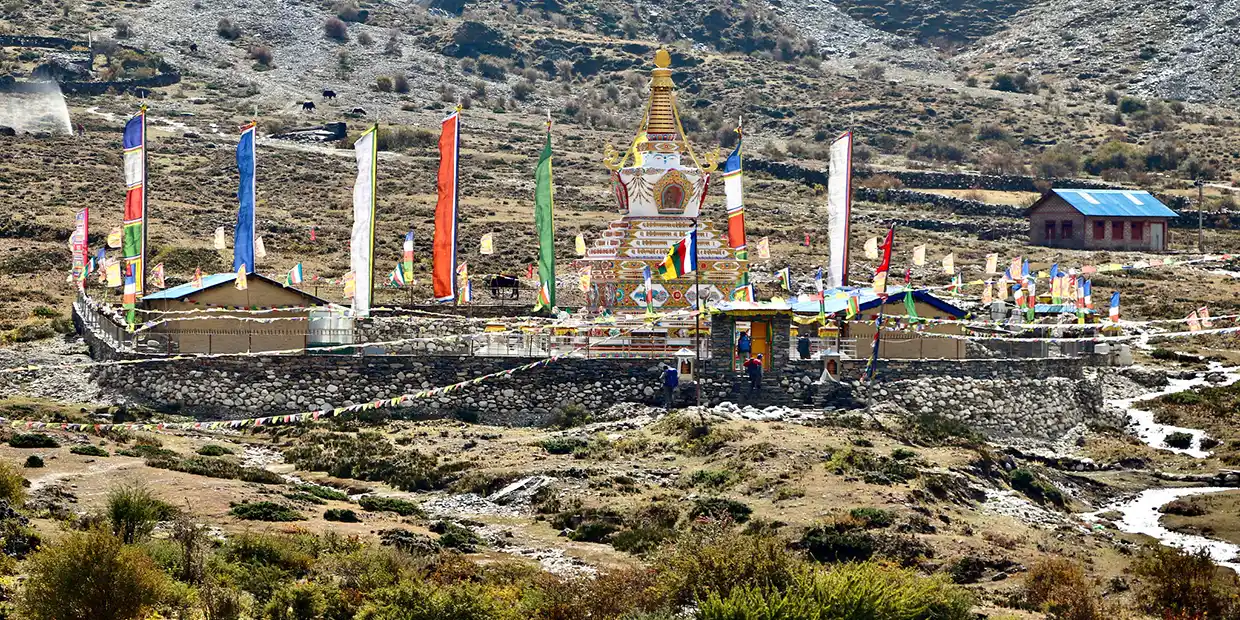
Evening at Nile is cold but deeply peaceful, with the sound of prayer bells drifting from the local monastery. You gather around the teahouse stove, sharing stories with fellow trekkers while the cook prepares steaming bowls of thukpa. Sleeping at this elevation continues the vital acclimatization process needed for the high passes ahead. SpO₂ levels typically drop to around ninety percent here, so hydration and slow movement remain essential.
Accommodation:
Teahouse at Nile
Meals Breakfast, Lunch, Dinner
Difficulty
An early start takes you on the pilgrimage trail from the Nile up to Mu Gompa, the highest monastery in the Tsum Valley at around 3,700 meters. The path climbs steadily through barren high‑altitude pastures dotted with grazing yaks and fluttering prayer flags. Upon reaching the monastery, you are welcomed by monks who explain the ancient murals, scriptures, and statues inside the main prayer hall. The panoramic view from this sacred site stretches across the entire upper valley and its ring of glaciated peaks.
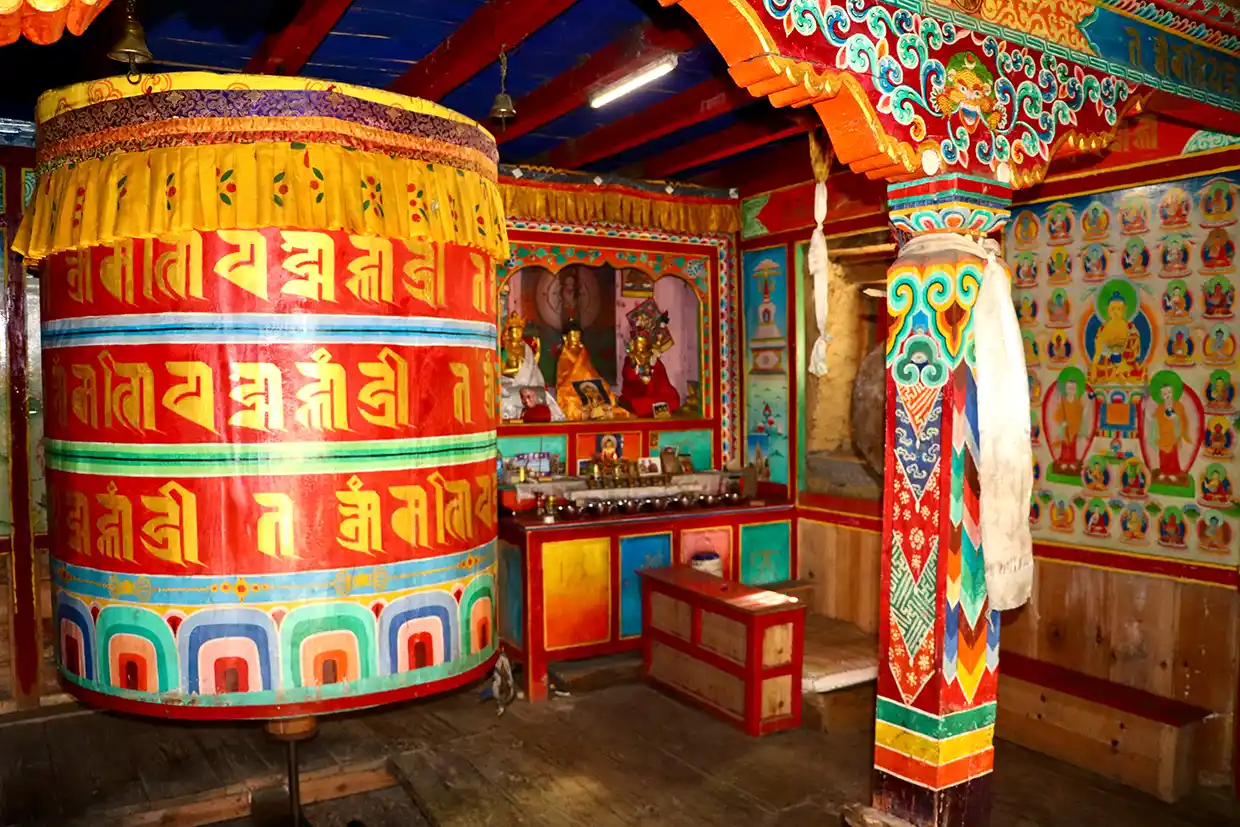
After descending back to the Nile for lunch, you continue southward along the valley floor towards Rachen Gompa, a large nunnery complex. This section of the trail feels gentler because you are gradually losing altitude, but the distances add up to a full day. Rachen Gompa itself houses an impressive collection of Buddhist art and accommodates female practitioners devoted to the Dharma. Spending the night in the monastery lodge or adjacent teahouse offers a rare chance to witness evening chanting ceremonies.
Eight hours of walking make this the longest day so far, so pacing and hydration are crucial for enjoying it. The high altitude reduces oxygen availability, and your guide monitors the group for any signs of altitude sickness. Nevertheless, the spiritual richness of two major monasteries in a single day creates one of the trek’s most unforgettable chapters. Falling asleep to the murmur of nuns’ prayers leaves a lasting imprint on your heart and mind.
Accommodation:
Teahouse or monastery lodge at Rachen Gompa
Meals Breakfast, Lunch, Dinner
Difficulty
Today you begin the return journey southwards, retracing your steps through the middle Tsum Valley in reverse direction. Descending through familiar villages gives you a fresh perspective, as views that were once hidden now come into view. The walk takes about five to six hours, and the decreasing altitude brings noticeably thicker, warmer air into your lungs. By the time you reach Chumling at 2,386 meters, the sense of ease in breathing is a welcome reward after days above 3,000 meters.
Settling back into the same teahouse as before feels like returning to an old friend’s home. You have the afternoon to rest tired legs, wash clothes in the sun, or simply sit and admire the Ganesh Himal. This recovery stop helps consolidate your acclimatization gains before you transition to the Manaslu Circuit tomorrow. Enjoy a relaxed evening meal without the urgency of an early‑morning high‑altitude start hanging over you.
Accommodation:
Teahouse at Chumling
Meals Breakfast, Lunch, Dinner
Difficulty
Leaving the sacred Tsum Valley behind, you walk back to the main Budhi Gandaki trail and head north towards Deng. The landscape transitions from the open high‑valley character of Tsum to a narrower, more rugged river gorge. Forest paths and rocky sections alternate as the trail climbs steadily above the thundering river below. After six to seven hours of walking, you reach the small settlement of Deng, nestled on a terrace at approximately 1,860 meters.
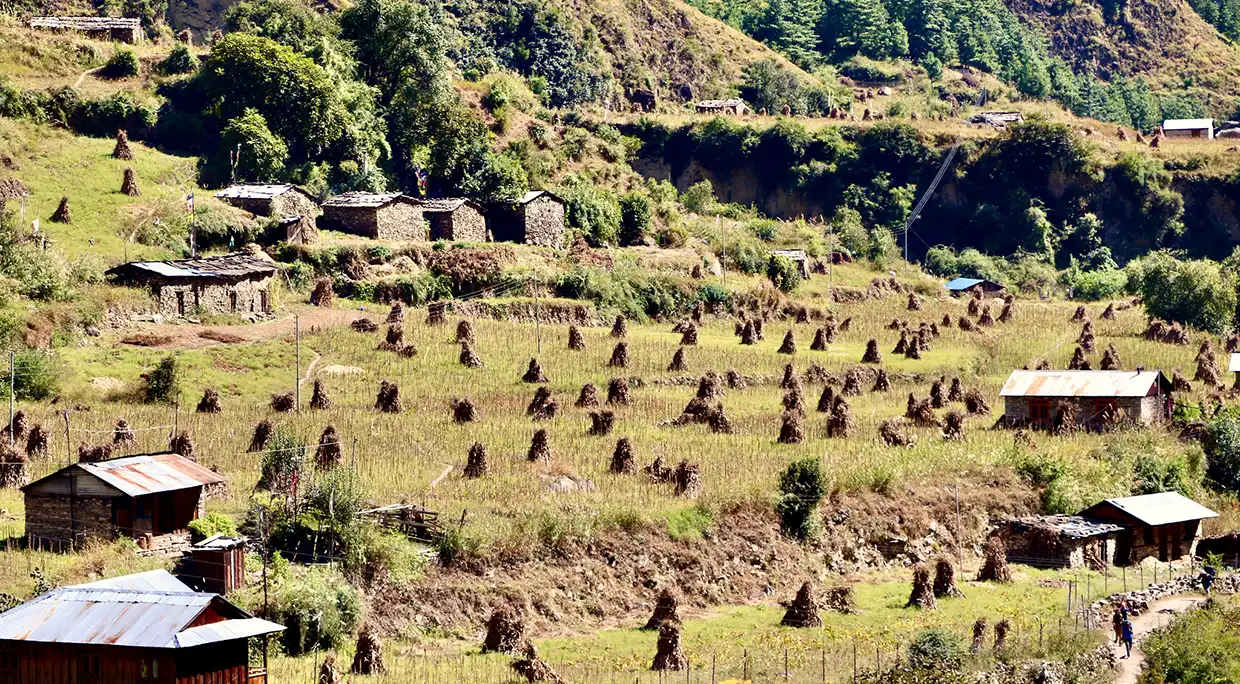
This day marks a distinct cultural and geographical shift from the beyul’s Tibetan‑oriented villages to the classic Manaslu Circuit communities. Deng is a Gurung village, and the architecture, language, and daily life differ noticeably from what you experienced in Tsum. The lower altitude restores oxygen levels to about eighty‑five percent of sea level, giving your body a gentle break before the big climbs ahead. Enjoy the change of scenery and prepare mentally for the dramatic mountain days that now unfold.
Accommodation:
Teahouse at Deng
Meals Breakfast, Lunch, Dinner
Difficulty
The trail from Deng climbs gently through a mix of bamboo groves, oak forests, and small terraced clearings. You cross the Budhi Gandaki on a suspension bridge and begin a steady ascent on the river’s western bank. Distant views of the Manaslu massif begin to tease you through gaps in the valley walls as the morning progresses. After five to six hours of walking, you enter Namrung at 2,630 meters, a prosperous village with well‑built stone houses and a police checkpoint.
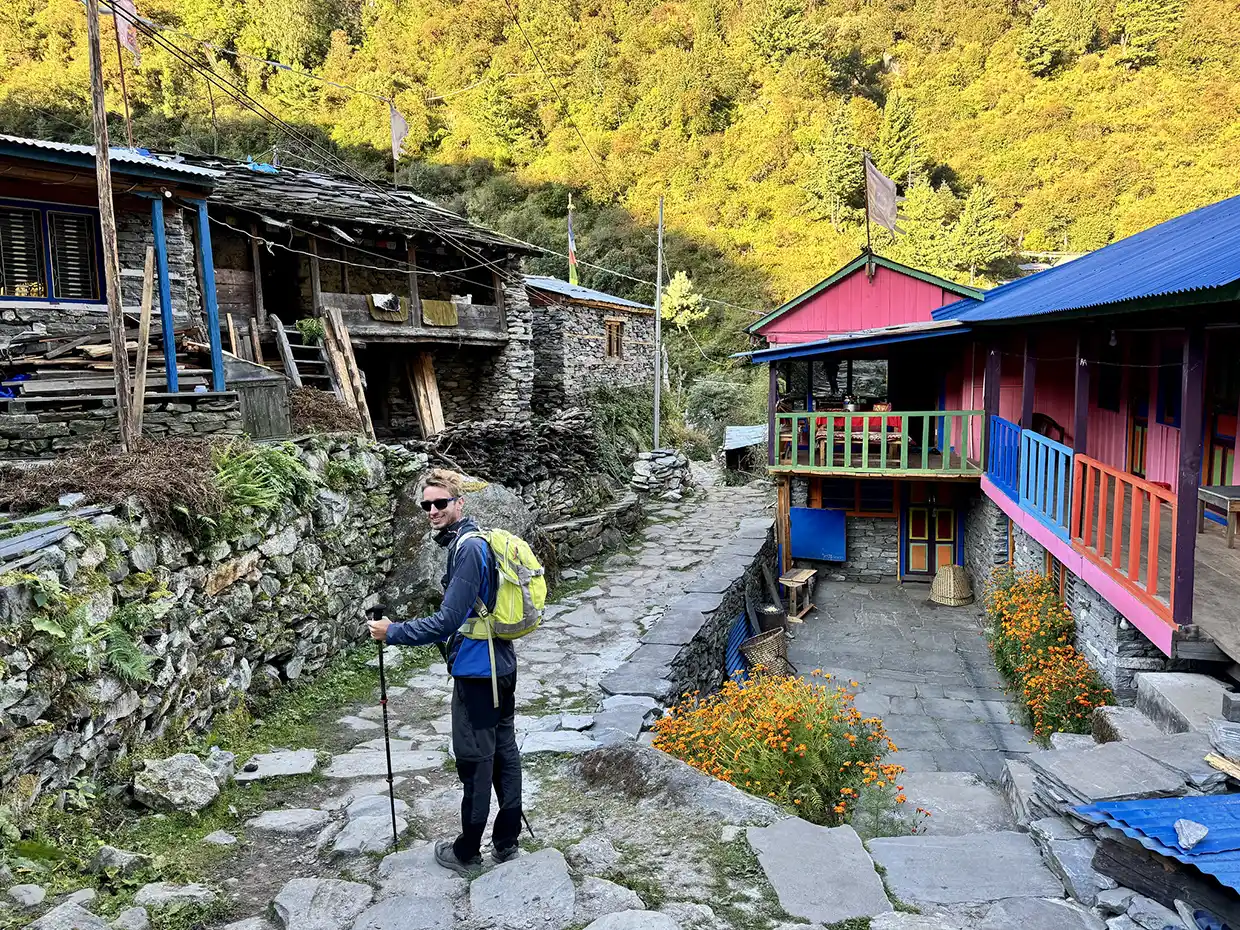
Namrung serves as the gateway to the Nupri region, where Tibetan culture once again becomes dominant. The village has excellent teahouses, and you can take a short afternoon stroll to the nearby monastery for panoramic views. With oxygen at seventy‑nine percent of sea level, your body is now working harder, yet the altitude remains manageable for most trekkers. This night’s rest sets you up for the increasingly spectacular mountain scenery of the next two days.
Accommodation:
Teahouse at Namrung
Meals Breakfast, Lunch, Dinner
Difficulty
Walking north from Namrung, you pass through the charming Tibetan‑style villages of Lihi and Sho, with their ornate gateways. The trail climbs steadily, and suddenly the full south face of Manaslu appears, dominating the horizon in a way that stops you in your tracks. Prayer walls, mani stones, and fluttering prayer flags line the route through the Nupri cultural corridor. After four to five hours, you reach Lho at 3,180 meters, a village with a commanding view of Manaslu’s massive glacier‑carved face.
Lho’s large monastery is well worth a visit, as its rooftop offers perhaps the best sunset vantage point on the entire circuit. Sitting here in the evening light, watching the alpenglow turn Manaslu’s ice to rose gold, is a moment of pure Himalayan magic. The altitude has climbed significantly, with oxygen at just over three‑quarters of sea level, so rest and hydration are essential. Your guide reminds you to take it slow and to speak up immediately if you experience any headache or dizziness.
Accommodation:
Teahouse at Lho
Meals Breakfast, Lunch, Dinner
Difficulty
The morning’s walk from Lho descends briefly to cross the Damonan Khola, then climbs through rhododendron and juniper forests. Emerging above the treeline, you traverse open hillsides with direct views of Manaslu’s south face and the enormous glacier tumbling down from its summit. The trail undulates gently, allowing you to catch your breath while taking in the immense mountain scenery around you. After four to five hours, you arrive at Sama Gaun, the largest and most important village on the Manaslu Circuit, at 3,530 meters.
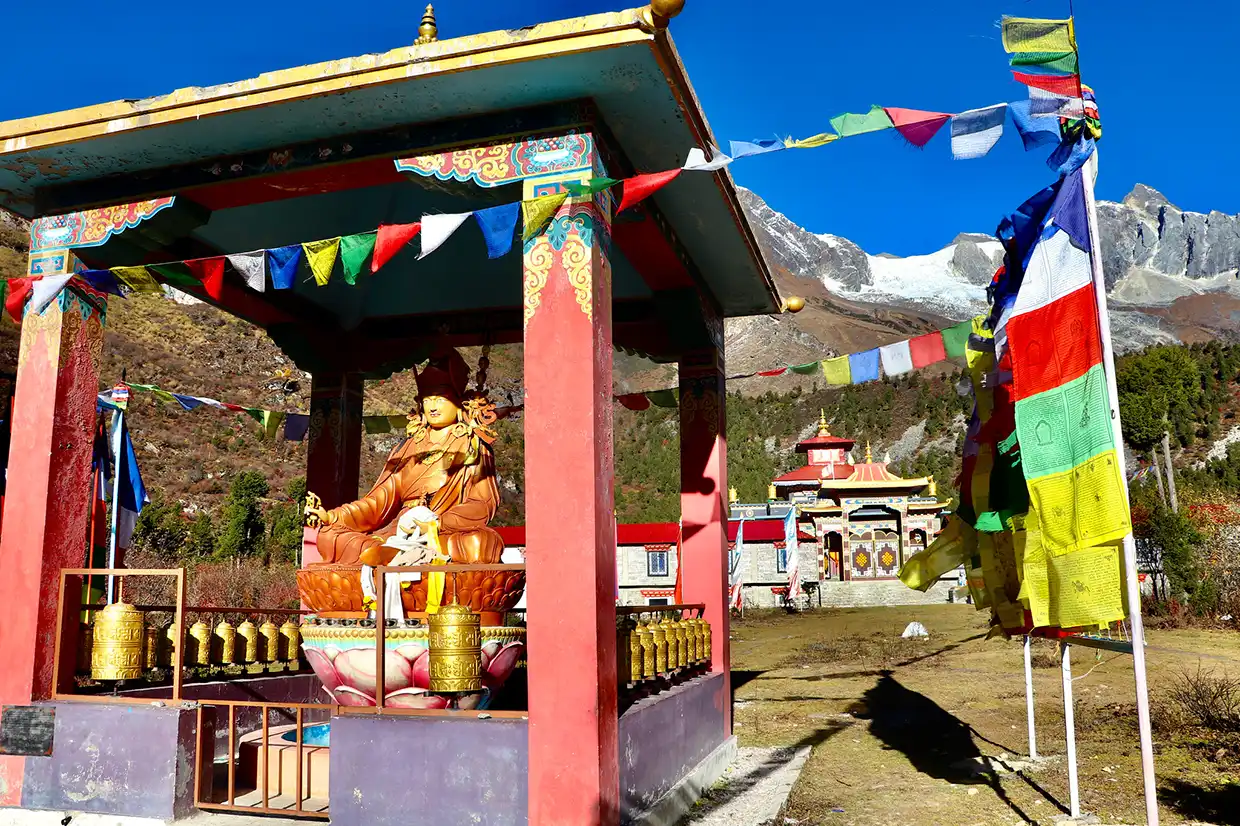
Sama Gaun is a vibrant summer settlement of stone‑walled fields, winding alleyways, and welcoming teahouses. The village looks directly up at the monolithic face of Manaslu, a sight that dominates every window and courtyard. Resting here for two nights is a deliberate and crucial part of the acclimatization plan, so you should take the afternoon very easily. Drinking plenty of water and keeping your pulse rate low helps your body produce the red blood cells needed to cope with the thinning air.
Accommodation:
Teahouse at Sama Gaun
Meals Breakfast, Lunch, Dinner
Difficulty
Acclimatization day at Sama Gaun offers three different side‑hike options, and your guide chooses the best one based on the group’s fitness and the weather. The most popular hike climbs towards Manaslu Base Camp, a dramatic journey over moraine trails to around 4,800 meters. Alternatively, a gentler walk leads to the sacred Birendra Lake, where Manaslu’s face is perfectly reflected in its turquoise waters at 4,000 meters. A third option is the cultural hike to Pungyen Gompa, a monastery perched on a ridge at approximately 4,050 meters with stunning glacier views.
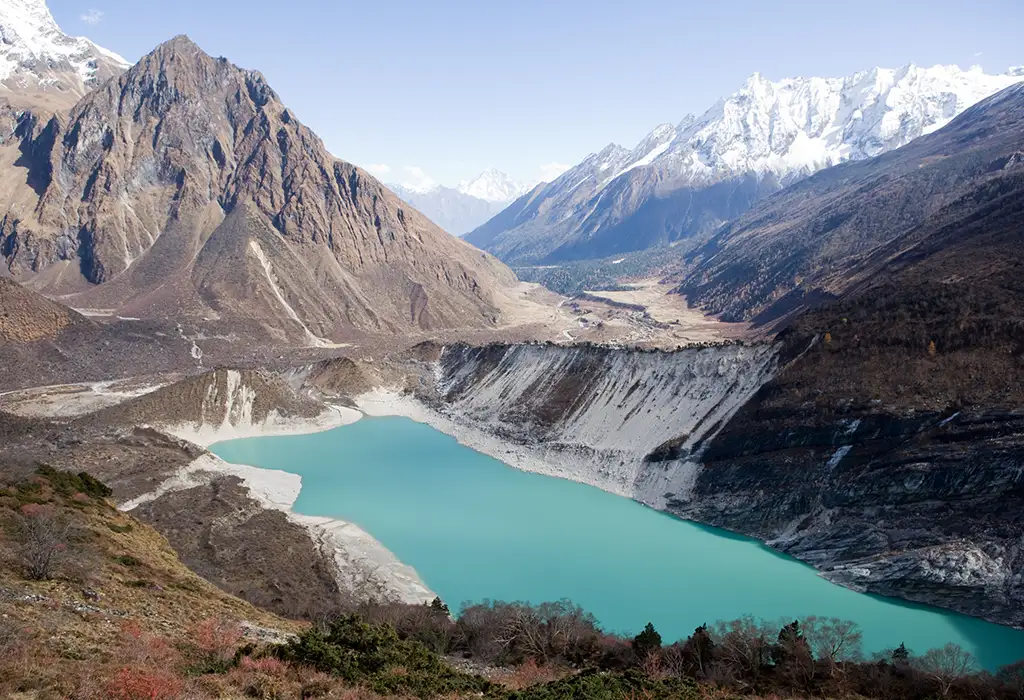
Whichever option you take, the key principle is to climb high during the day but sleep low, which speeds up acclimatization. Your guide sets a deliberately slow pace, encouraging frequent rest stops and constant snacking to maintain energy levels. Exposure to altitudes above 4,000 meters triggers your body’s adaptive responses, while the overnight sleep at 3,530 meters consolidates those gains. Returning to the teahouse by mid‑afternoon gives you plenty of time to rest, wash, and prepare for tomorrow’s move to Samdo.
Evening at Sama Gaun often becomes a social affair, with trekkers from different groups sharing stories around the stove. The teahouse serves hot ginger tea, garlic soup, and generous plates of dal bhat to replenish your depleted calories. Falling asleep at this altitude, your blood oxygen saturation may hover around eighty‑eight percent, which is normal for a healthy acclimatizing trekker. Should any symptoms, such as persistent headache or loss of appetite, appear, you must inform your guide immediately.
Accommodation:
Teahouse at Sama Gaun (second night)
Meals Breakfast, Lunch, Dinner
Difficulty
Today’s walk is deliberately short, just three to four hours, to keep stress low as you continue rising in altitude. Leaving Sama Gaun, the trail follows the Budhi Gandaki through wide sandy plains and past ancient mani walls. You cross a series of glacial streams and gradually ascend into an even more barren, wind‑scoured landscape. Samdo appears at 3,690 meters, a high‑altitude village of stone‑roofed houses set against the backdrop of snow‑clad peaks.
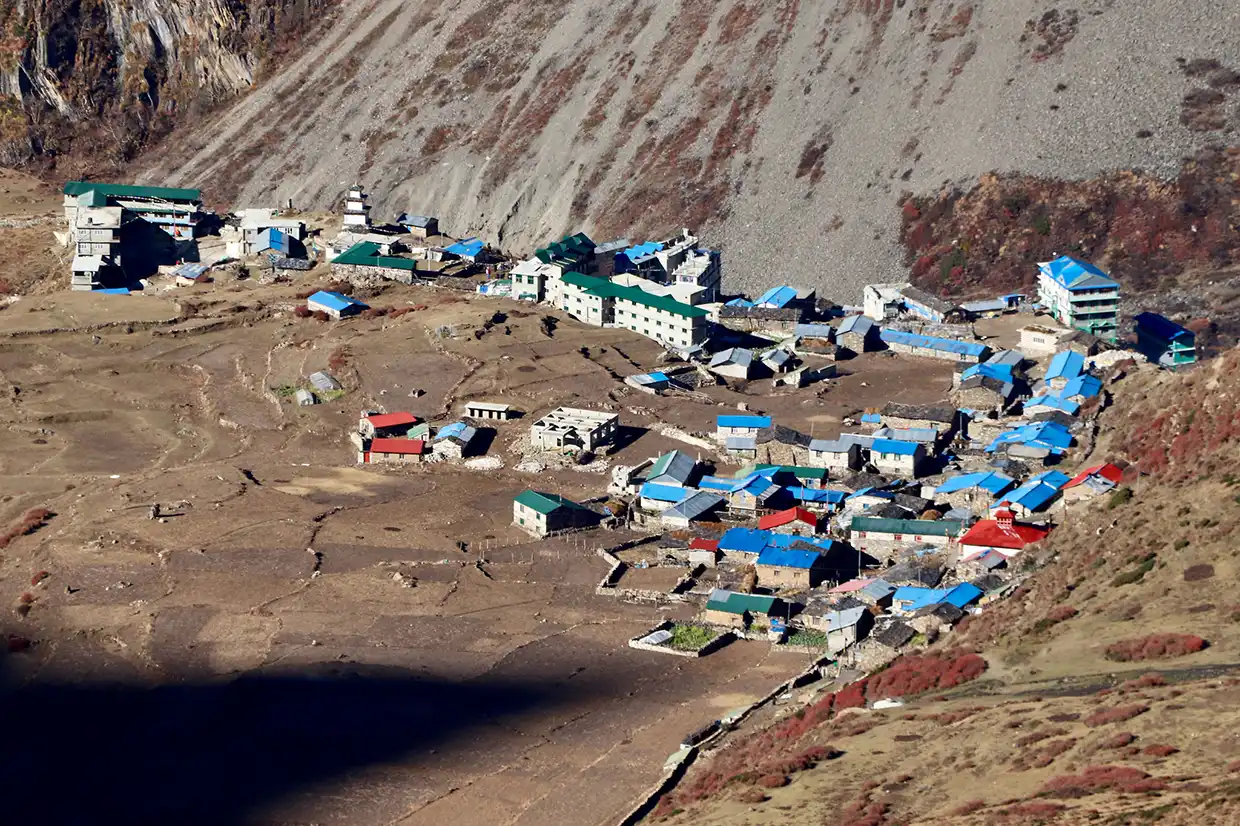
Samdo has a historic connection to the old Tibetan border trade route, and you can still feel the trans‑Himalayan atmosphere. The short walking day lets you arrive by lunchtime, leaving you with an entire afternoon to rest and explore the village trails. Sitting outside the teahouse in the thin, cold air, you clearly see the route leading towards the Larkya La pass. Your body uses every hour of this low‑stress afternoon to produce more red blood cells for the high crossing ahead.
Accommodation:
Teahouse at Samdo
Meals Breakfast, Lunch, Dinner
Difficulty
A full rest day at Samdo is a critical step in your high‑altitude preparation before the Larkya La crossing. You sleep in, eat a relaxed breakfast, and then perhaps take a short optional walk up the ridge behind the village. This gentle activity keeps your circulation moving without exhausting the body’s energy reserves for the demanding days ahead. Your guide uses the afternoon to conduct the detailed Larkya La safety briefing, covering ice‑axe use, rope‑clipping procedures, and avalanche awareness.
The evening meal is deliberately high in carbohydrates, with pasta, potatoes, and Tibetan bread filling the table. You pack only the essentials into your daypack — spare gloves, a down jacket, snacks, and two liters of water — for tomorrow’s early departure. Oxygen saturation readings are checked for every group member, and any downward trend prompts careful discussion. An early bedtime in the freezing Samdo night ensures you are as rested as possible for the summit day.
Accommodation:
Teahouse at Samdo (second night)
Meals Breakfast, Lunch, Dinner
Difficulty
The trek to Dharamsala is short in distance but significant because it brings you to the final camp before Larkya La. The trail climbs gradually through high‑altitude desert terrain, crossing loose moraine ridges and frozen streams. After three to four hours, you reach the cluster of basic teahouses known as Dharamsala, perched at 4,460 meters. This is the highest point of the entire trek, and the thin air demands strict attention to hydration and slow, steady movement.
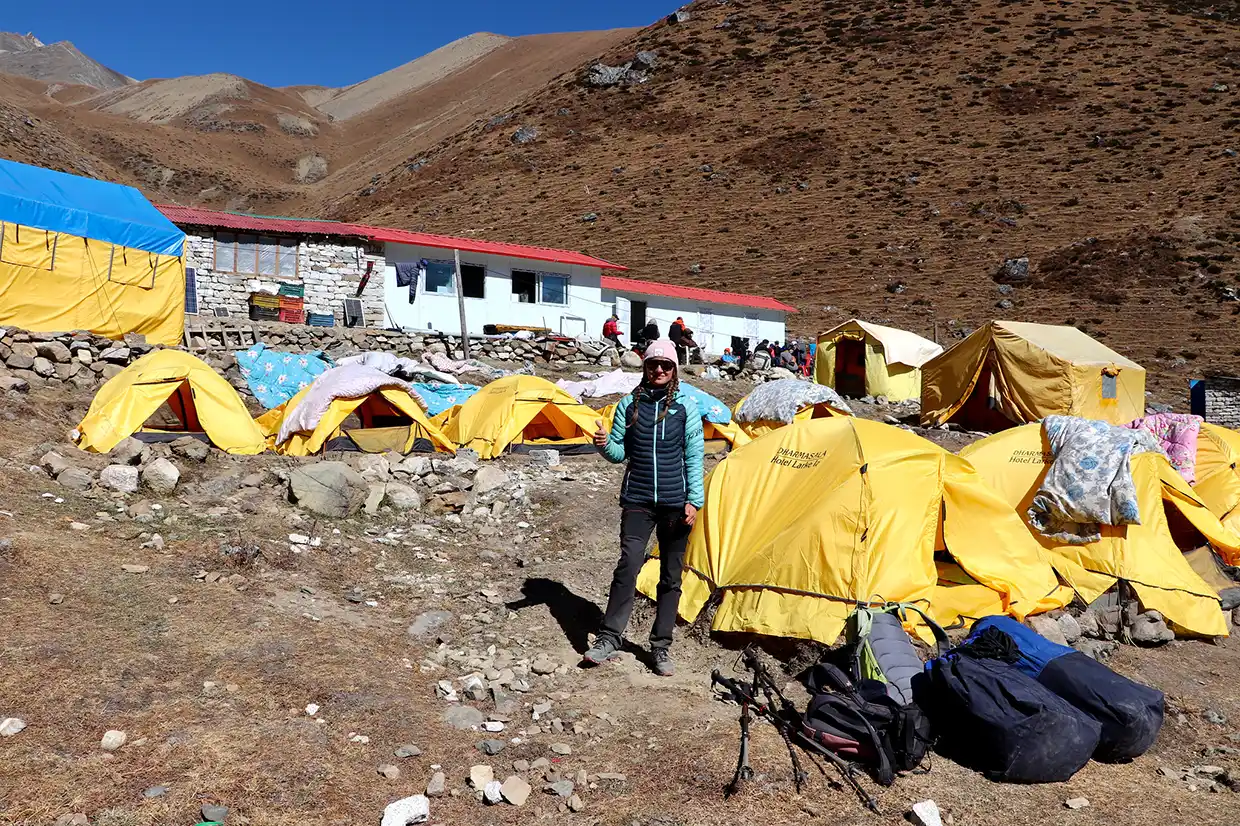
Arriving early in the day gives you many hours to rest and observe the enormous north face of Manaslu from a completely new angle. The teahouse facilities are extremely simple here, with no heating and only cold water, so your down jacket becomes your best friend. You eat an early dinner, set the alarm for 3 am, and repack your daypack with headlamp, snacks, crampons, and spare warm layers. Every breath now draws in only about sixty percent of the oxygen available at sea level, so conserve your energy wisely.
Accommodation:
Teahouse at Dharamsala
Meals Breakfast, Lunch, Dinner
Difficulty
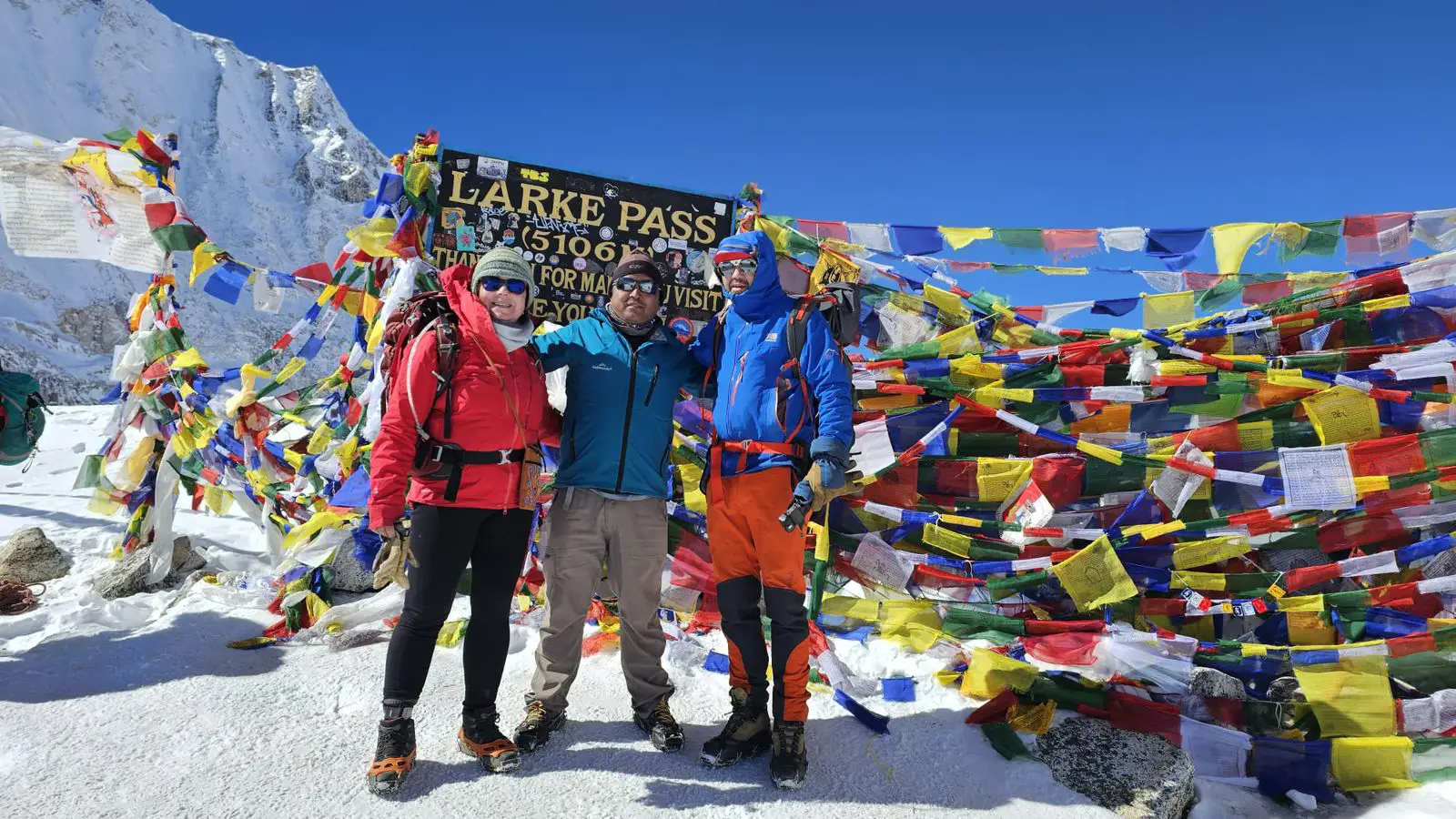
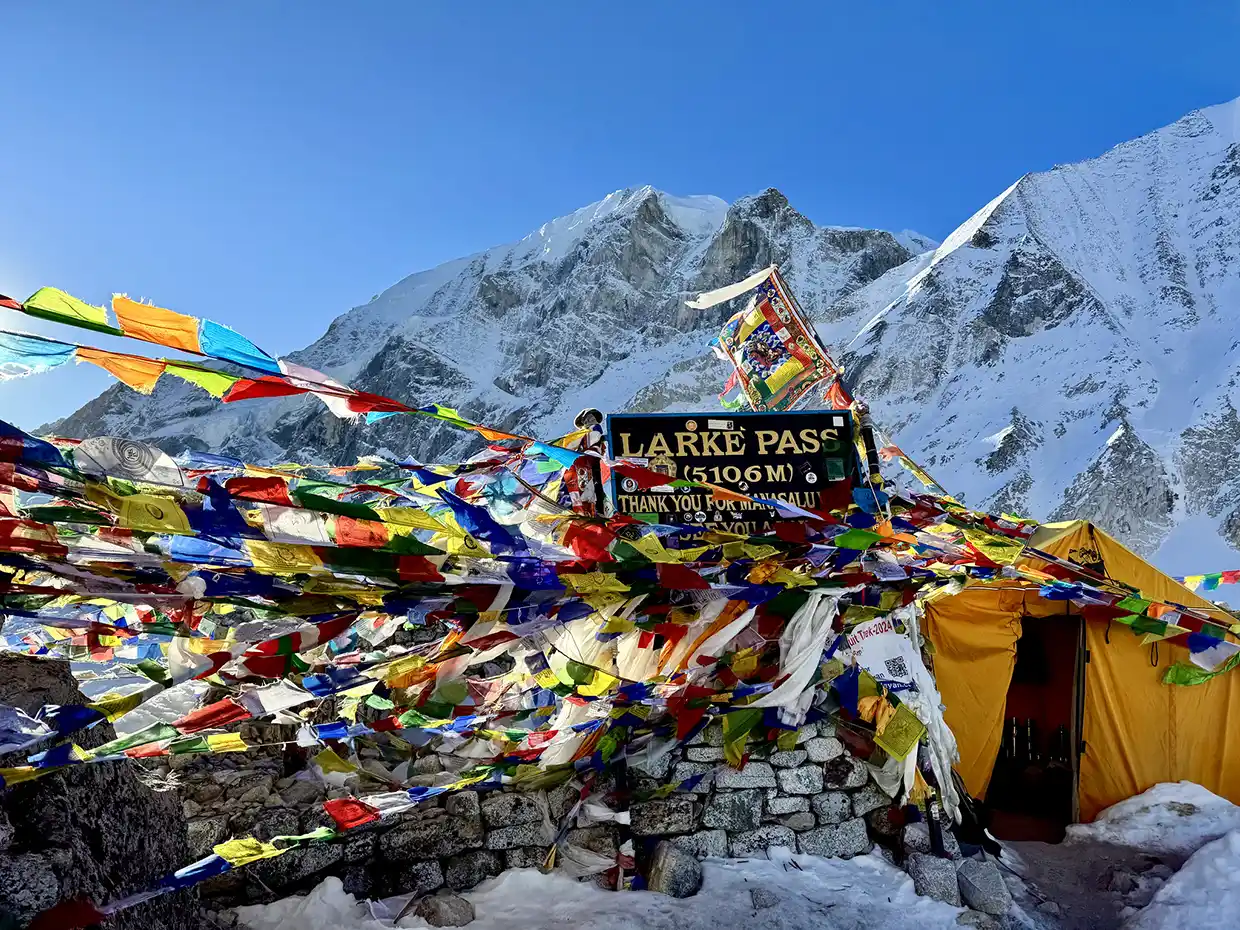
Your guide wakes the group at 3 am for a pre‑dawn departure, the headlamp beams cutting through pitch darkness and bitter cold. The ascent follows a steep, rocky moraine trail that switchbacks relentlessly up the north side of the Larkya Valley. Sunrise catches you near the top, illuminating the surrounding giants — Manaslu, Himalchuli, Ngadi Chuli, and Annapurna II in a single panoramic embrace. After four to six hours of slow, deliberate climbing, you stand on the prayer‑flag‑festooned summit of the Larkya La at 5,160 meters.
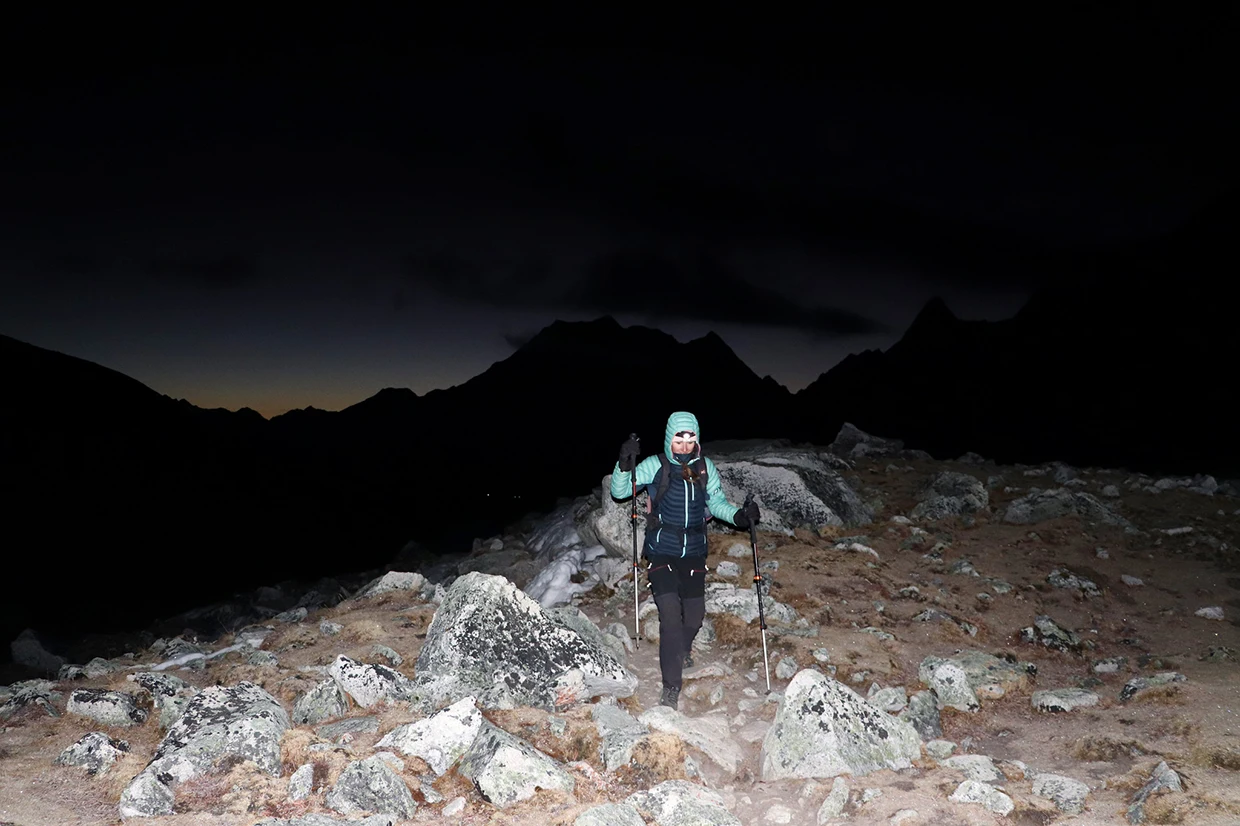
The summit moment is euphoric but brief, because wind and cold limit your stay at the pass to a few minutes of photographs and hushed congratulations. The descent is almost as demanding as the climb, a steep plunge down loose scree and icy patches on the south side of the pass. Gradually, the terrain becomes more forgiving, and you enter a wide, green valley with glacial lakes and yak pastures far below. Reaching Bhimthang at 3,720 meters after a total of eight to eleven hours feels like emerging from another world entirely.
Collapsing onto the teahouse bench, you can finally shed your crampons and celebrate the hardest physical achievement of the trek. The air at Bhimthang carries much more oxygen than the pass, allowing your body to begin rapid recovery. Dinner tastes like the best meal of your life, regardless of what the cook actually serves. As sleep arrives, the memory of sunrise on Larkya La replays behind your eyelids, a permanent treasure of this Himalayan journey.
 Accommodation:
Teahouse at Bhimthang
Meals Breakfast, Lunch, Dinner
Difficulty
Descending from Bhimthang, the trail enters lush forests of pine, rhododendron, and bamboo within the first hour. The dramatic change from high‑alpine desert to temperate woodland feels almost surreal after yesterday’s moonscape. You pass through the village of Karche and continue walking beside the Dudh Khola, whose milky glacial waters churn as they flow along the path. After five to seven hours, you arrive at either Tilije or Dharapani, both situated at 2,300 meters on the Annapurna Circuit’s edge.
The warmth of the lower altitude wraps around you like a blanket, and you can finally taste the sweetness of abundant oxygen again. These villages have comfortable teahouses, often with hot showers and even Wi‑Fi, providing a celebratory end‑of‑trek atmosphere. You share stories with trekkers coming from the Annapurna side, trading tales of passes crossed and mountains conquered. Tonight marks the last teahouse dinner of the trip, a moment both joyful and bittersweet.
Accommodation:
Teahouse at Tilije or Dharapani
Meals Breakfast, Lunch, Dinner
Difficulty
Your morning starts with a short jeep ride from Dharapani to Besisahar along the rough Marsyangdi valley road. At Besisahar, you switch to a private vehicle for the long drive back to Kathmandu on the Prithvi Highway. The journey passes through terraced hillsides, bustling towns, and eventually the familiar urban sprawl of the Kathmandu Valley. Arriving at your hotel in the afternoon or evening, you are reunited with the comfort of a hot shower, clean sheets, and city lights.
The transition from remote mountain wilderness back to civilization feels abrupt, but the body welcomes the thick, oxygen‑rich air at 1,400 meters. You can spend the evening enjoying a farewell dinner at one of Kathmandu’s excellent restaurants, celebrating the completion of your extraordinary journey. This final hotel night is not included in the trek package for meals other than breakfast, giving you freedom to explore the city’s food scene one last time.
Accommodation:
Hotel in Kathmandu
Meals Breakfast, Lunch
Difficulty
Your driver will transfer you to Tribhuvan International Airport at the agreed departure time, which should be at least 3 hours before your international flight. Breakfast at the hotel provides a last taste of Nepali hospitality before you head through airport security. Reflecting on the journey, you realize the Manaslu Tsum Valley Trek has reshaped your understanding of remote Himalayan beauty and your own inner strength. With a mind full of mountain memories, you board the aircraft and carry the spirit of the beyul back home with you.
Meals Breakfast
Difficulty
The trek suits:
| Trek | Duration | Difficulty | Main Style | Highest Focus | Best For |
|---|---|---|---|---|---|
| Manaslu Tsum Valley Trek | 22 Days | Challenging | Sacred valley + full circuit | Larkya La Pass (~5,160 m) | Complete Manaslu route |
| Manaslu Circuit Trek | 14–18 Days | Challenging | High-pass circuit | Larkya La Pass (~5,160 m) | Classic Manaslu trekkers |
| Tsum Valley Trek | 15 Days | Mod–Challenging | Sacred Valley culture | Mu Gompa / Ganesh Himal option | Cultural trekkers |
| Manaslu Larkya La Trek | 12–16 Days | Challenging | Circuit without Tsum | Larkya La Pass | Shorter high-pass trek |
| Nar Phu Valley Trek | 12 Days | Challenging | Restricted valley culture | Kang La Pass (~5,320 m) | Annapurna restricted area |
Hotel accommodation in Kathmandu on Days 1, 2, and 21 provides city-standard comfort with private bathroom, hot water, Wi-Fi, and breakfast. Teahouse accommodation covers all 19 active trekking nights.
The Tsum Valley section from Chumling through the upper valley uses simpler teahouse facilities than the main Manaslu approach corridor. Hot showers cost extra—typically NPR 200 to NPR 500—and may not be available at the upper valley stops near Nile, Rachen Gompa, or the Rachen Gompa monastery lodge. Wi-Fi is unreliable above Chumling and absent at most upper Tsum Valley stops.
The Manaslu Circuit section from Deng through Sama Gaun, Samdo, and Dharamsala uses standard Manaslu Circuit teahouse infrastructure—basic but more developed than the Tsum Valley upper section. Dharamsala at 4,460 meters represents the most basic overnight on the circuit section—simple rooms, a limited menu, and cold nights.
The 22-day route uses simple teahouses and monastery lodges throughout the 19 trail nights. Facilities are simplest in the upper Tsum Valley, Dharamsala, and Samdo. Hotel Kathmandu provides city-standard comfort at both ends of the trek.
Tsum Valley holds a sacred identity in Tibetan Buddhism as a beyul, a hidden valley designated as a spiritual sanctuary in ancient texts. The local Tsumba community’s identity is deeply intertwined with this status, expressed through a vibrant network of monasteries and religious traditions that distinctively color local life. Beyond the Lokpa permit checkpoint, this sacred character is visible at every turn through extensive mani walls, chortens marking village boundaries, and lines of prayer flags spanning the valleys. Community life at 2,400 to 3,700 meters follows a traditional calendar structured around highland agricultural cycles and the monastery puja schedule.
The traditional villages of Chumling, Chhokangparo, Nile, and Chule feature flat-roofed stone houses, strategically built to face south for maximum solar warmth. Below the settlements, terraced fields of barley, buckwheat, and potatoes provide the community’s agricultural backbone. Alongside farming, local families maintain age-old seasonal herding patterns, moving their yaks and cattle between lower valleys and high alpine pastures. This controlled-access restricted zone effectively shields these ancient ways of life from heavy commercial influence, transforming the journey from a standard high-pass trek into a profound cultural and spiritual expedition.
Mu Gompa sits at 3,700 to 3,800 meters near the upper end of Tsum Valley, serving as the region’s highest and most spiritually significant monastery. The active monk community maintains an authentic sacred atmosphere filled with the scent of incense, flickering butter lamps, and the deep resonance of morning horns. Rather than a static museum, the monastery preserves a living collection of ancient texts, ritual objects, and traditional thangka paintings.
Down the valley, Rachen Gompa houses a dedicated community of Buddhist nuns, providing a unique perspective that beautifully complements the monk lineage at Mu Gompa. On Day 9, the itinerary structures a complete upper valley circuit: a morning hike from Nile up to Mu Gompa, followed by a descent to Rachen Gompa for an atmospheric overnight stay next to the nunnery compound. The total walking time is 6 to 8 hours, and your guide carefully coordinates both visits around the daily ceremony schedules to ensure proper cultural protocol and insightful historical context.
Milarepa Cave, located on the Day 8 route from Chhokangparo to Nile, is a sacred Himalayan site connected to the meditation tradition of the 11th-century Tibetan Buddhist yogi, Milarepa. To ensure a smooth journey, your guide will assess the daily pace and trail conditions before initiating this side trip, balancing the detour against the group’s overall energy for the next morning’s trek to Mu Gompa.
Because of these variables, this visit is included as a flexible option. This practical approach ensures the group arrives in Nile with plenty of time to rest, rather than rushing through a compressed schedule. When conditions are favorable, your guide will provide the cultural history that makes exploring the cave a deeply meaningful experience rather than just a scenic viewpoint
The Day 11 trail from Chumling toward Deng marks the most significant route transition of the 22-day trek. Leaving behind the enclosed, sacred sanctuary of Tsum Valley, the route joins the main Budhi Gandaki corridor heading north toward the Manaslu massif. This shift links the sacred beyul’s restricted corridor directly into the main Manaslu Circuit network, a geographic transition your guide handles with the cultural context needed to make the change meaningful.
From Deng northward through Namrung, Lho, and Sama Gaun, the trek delivers a spectacular, progressive mountain revelation. Mount Manaslu (8,163 meters) appears first as a distant pyramid above the forest ridges at Namrung, transitions into a massive glacier system dominating the northern horizon at Lho, and finally reveals its towering south face above Sama Gaun (3,530 meters). Along this route, the cultural landscape shifts from Tsumba to Nupri traditions. While sharing the flat-roofed stone architecture of Tsum Valley, the inner villages of Nupri maintain their own distinct monastery lineages and community structures that your guide will highlight during your exploration.
Sama Gaun (3,530 meters) is the most culturally significant village on the Manaslu Circuit, nestled directly beneath the south face of Mount Manaslu. Its flat-roofed stone houses cluster around a central Nupri Buddhist monastery, framed by direct glacier views. The scheduled Day 15 acclimatization day here is essential for building the altitude foundation required to safely tackle the high pass ahead.
Your guide will assess the group’s fitness and weather conditions on Day 15 to recommend one of three side hikes: a demanding climb to Manaslu Base Camp (4,800 meters) for an up-close glacier view, a gentler trek to glacial Birendra Lake (4,000 meters), or a cultural hike to Pungyen Gompa (4,050 meters). It is best to remain flexible and let current conditions dictate the final choice.
Samdo (3,690 meters) serves as the second vital acclimatization stage before the crossing. Positioned near an ancient trade route to Tibet, the village has a rich mercantile heritage quite distinct from Sama Gaun. The Day 17 rest day and optional side hike here provide crucial altitude exposure and physical rest, ensuring you are fully prepared for the demanding days at Dharamsala and the 5,160-meter Larkya La Pass.
Larkya La Pass (5,160 meters) connects the main Manaslu Valley to the Marsyangdi-Annapurna drainage system, marking the physical and geographical peak of the route. The Day 19 crossing begins with a 3-4 AM departure from the basic teahouse camp at Dharamsala (4,460 meters). This early start ensures the group navigates the rocky moraine trail and open glacier approach before afternoon winds and clouds pick up.
The high-altitude summit rewards trekkers with an expansive panorama of Mount Manaslu’s north face, alongside Himalchuli, Ngadi Chuli, Cheo Himal, Kang Guru, and Annapurna II. The subsequent descent to Bhimthang (3,720 meters) covers significant altitude loss over several hours on rocky, variable terrain where trekking poles are essential for stability. While the pass is non-technical under normal conditions, the combination of altitude, cold, and a long descent makes this the trek’s most demanding day, requiring full warm layers in your daypack and adherence to your guide’s timing decisions.
Full board covers all 19 trekking days from Day 3 through Day 21. Hotel breakfast is included in Kathmandu. Day 21 includes breakfast and lunch. Menu variety and ingredient freshness both decrease with altitude and remoteness across the 22-day route—the Machha Khola approach teahouses offer the broadest menus; Dharamsala and the Tsum Valley upper stops simplify toward the standard highland teahouse essentials.
Dal, noodle soup, potato dishes, Tibetan bread, egg preparations, and hot drinks make up the core menu across both sections. The Tsum Valley’s local barley-flour Tibetan bread—a specific preparation using locally grown grain—gives the Chhokangparo and Nile meals a quality distinction from commercial supply-chain teahouse food, which the main circuit’s broader supply network reduces in the Manaslu section. Bottled water, soft drinks, and alcohol carry additional fees throughout.
The package covers airport pickup and drop-off in Kathmandu, road transfer to Machha Khola on Day 3, and road return from Dharapani or Besisahar to Kathmandu on Day 21. The road journey to Machha Khola takes 7 to 8 hours through the Dhading district and the Budhi Gandaki valley approach. The return from Dharapani or Besisahar takes approximately 5 to 7 hours, depending on road conditions on the Marsyangdi highway.
The Manaslu Tsum Valley Trek requires five permit documents arranged through our team: the Manaslu Restricted Area Permit at USD 100 per person per week from September to November (USD 75 per week December to August), the Tsum Valley Restricted Area Permit at USD 40 per person per week from September to November (USD 30 per week December to August), the Manaslu Conservation Area Permit at NRs. 3,000 for foreign nationals, the Annapurna Conservation Area Permit at NRs. 3,000 for foreign nationals, and the TIMS card is currently required under Nepal Tourism Board policy.
All five documents come included in the package price. Our team processes all documentation in Kathmandu before the Day 3 departure. Bring two passport-size photographs and a clear copy of the passport photo page to our team on Day 2. Your guide carries all permit documents for all checkpoint inspections throughout both restricted sections from Lokpa through the Tsum Valley and from the Manaslu Circuit entry through the Larkya La crossing to Dharapani.
The Manaslu Tsum Valley Trek rates as challenging. The 22-day duration requires sustained physical effort, and accumulated fatigue progressively affects the second and third weeks. The Tsum Valley section rates as moderate to challenging on its own—the combination with the Manaslu Circuit section, including the two high-altitude acclimatization stages and the Larkya La Pass crossing at 5,160 meters, elevates the complete route to challenging throughout.
No technical climbing applies in normal conditions. Previous multi-day mountain hiking experience—ideally including at least one previous route above 4,000 meters—provides the most relevant preparation. Trekking poles are strongly recommended for the Larkya La descent and for the long descent sections in the Bhimthang and Dharapani sections.
| Season | Months | Conditions | Best? |
|---|---|---|---|
| Spring | March to May | Mild temperatures, rhododendron blooms on Budhi Gandaki forest approach sections, good Larkya La Pass access window, clear morning mountain views above Sama Gaun, and Samdo. | Yes |
| Autumn | Sep to Nov | Best mountain visibility and most stable weather. October offers the clearest views of Manaslu, Himalchuli, and Ngadi Chuli from Sama Gaun, Samdo, and the Larkya La summit. | Yes – Best |
| Winter | Dec to Feb | Cold nights in high teahouses. Snow accumulation makes Larkya La Pass significantly harder. Dharamsala and the Larkya approach require experienced trekkers only. | With Caution |
| Monsoon | Jun to Aug | Rain, landslide risk on the Machha Khola approach road, slippery trails in lower forest sections, and clouds blocking mountain views throughout the Manaslu section. Not recommended. | No |
October provides the strongest overall combination of Tsum Valley cultural atmosphere, Manaslu Circuit mountain visibility, and Larkya La Pass access for the 22-day route. The Tsum Valley section’s village and monastery character is accessible and pleasant in both spring and autumn. The Larkya La Pass section’s safety and visibility are both strongest in the October to November window.
Porter service is optional in the base package and available as a paid upgrade. The remote trail sections in the Tsum Valley and the Larkya La Pass day both represent points where the main bag weight most directly affects walking comfort and safety. One porter carries a maximum of 20 kilograms shared between two trekkers. You carry your own daypack with water, camera, warm layers, and personal items throughout all trekking days.
Travel insurance is compulsory and must explicitly cover trekking above 5,000 meters and emergency helicopter evacuation. Larkya La Pass at approximately 5,160 meters exceeds the altitude cap of some standard adventure policies. Confirm your altitude coverage before purchase. A helicopter evacuation from the Larkya La or Dharamsala area costs USD 2,500 to USD 5,000, depending on conditions.
The route’s dual restricted-area character and 22-day duration both extend the period during which insurance coverage applies. Purchase your policy before flying to Nepal and carry both printed and digital copies. Show proof of coverage at permit processing on Day 2.
Pack for the temperature range from warm Machha Khola afternoons to cold Dharamsala overnight, and the pre-dawn Larkya La Pass departure:
Walk clockwise around all mani walls, chortens, and monastery circuit paths throughout both the Tsum Valley restricted corridor and the Manaslu Circuit section. Remove footwear before entering monastery buildings at Chumling, Chhokangparo, Mu Gompa, Rachen Gompa, and the Sama Gaun and Samdo monastery compounds. Keep voices low during active puja ceremonies.
The Tsum Valley’s beyul sacred identity requires the specific respect mandated by both its cultural significance and its restricted visitor controls. Do not photograph monks, nuns, or village community members at work without first asking. Dress modestly throughout both restricted sections—the Tsum Valley’s sacred community responds more directly to visitor dress and behavior than the more commercially developed Manaslu Circuit corridor.
Use refillable bottles and purification tablets throughout both sections. Support local teahouses by ordering from the house menu rather than bringing in commercial food from Kathmandu. Your meal spending creates direct income for households in both restricted zones, where the permit system’s visitor controls limit total annual revenue potential.
Your licensed guide manages safety across all 19 trekking days with three critical focus points: the Tsum Valley monastery visit, cultural management, and trail pacing for the Day 9 combined Mu Gompa and Rachen Gompa day; the two-stage acclimatization monitoring at Sama Gaun and Samdo; and the Larkya La Pass weather assessment and crossing timing decision on Day 19 morning.
Do not skip or compress either the Sama Gaun (Day 15) or Samdo (Day 17) acclimatization days. The gradual altitude gain from Sama Gaun through Samdo to Dharamsala, and then to the Larkya La summit, follows the standard altitude management protocol of never exceeding 500 meters of daily altitude gain above 3,500 meters for sleeping altitude.
Symptoms of altitude sickness above 3,500 meters require communication with your guide rather than self-management. The guide carries the group’s first-aid kit and maintains emergency contact with our Kathmandu operations office throughout both restricted sections. Helicopter evacuation coordinates through your travel insurance for any emergency requiring extraction above the road access points.
A: The full package runs 22 days from arrival in Kathmandu on Day 1 to final airport departure on Day 22. The active trekking section covers 19 days from the Machha Khola overnight on Day 3 through the Dharapani or Tilije overnight on Day 20. Days 21 and 22 cover the road return and the final airport departure.
A: Yes. The route crosses two separate restricted areas: the Tsum Valley Restricted Area from the Lokpa entry through the upper valley and back to the Deng junction, and the Manaslu Restricted Area from the main Manaslu Circuit entry through Larkya La Pass and Dharapani. Both sections require specific restricted area permits arranged through a registered agency with a licensed guide.
A: Five permits apply: the Manaslu Restricted Area Permit (USD 100/week Sep–Nov; USD 75/week Dec–Aug), the Tsum Valley Restricted Area Permit (USD 40/week Sep–Nov; USD 30/week Dec–Aug), the Manaslu Conservation Area Permit (NRs. 3,000 for foreign nationals), the Annapurna Conservation Area Permit (NRs. 3,000 for foreign nationals), and the TIMS card if currently required. All five come included in the package price.
A: The trek rates as challenging throughout. The 22-day duration requires sustained physical effort. The Tsum Valley section rates moderate to challenging on its own. The combined route with the Manaslu Circuit’s two acclimatization stages and Larkya La Pass at 5,160 meters elevates the complete route to challenging from start to finish.
A: Larkya La Pass sits at approximately 5,160 meters (16,929 feet) above sea level. You cross the pass on Day 19 with a pre-dawn departure at approximately 3 to 4 AM from the Dharamsala teahouse at 4,460 meters. The ascent takes 4 to 6 hours followed by the long descent to Bhimthang.
A: Yes. The Mu Gompa hike is included in Day 9’s upper Tsum Valley combined circuit—morning ascent from Nile to Mu Gompa at approximately 3,700 to 3,800 meters, monastery interior visit, and continuation to Rachen Gompa for the Day 9 overnight.
A: Yes. Rachen Gompa’s Buddhist nunnery provides the Day 9 overnight accommodation—teahouse or monastery lodge—after the Mu Gompa morning hike. The nunnery cultural encounter completes the upper Tsum Valley sacred circuit.
A: Yes, as a Day 15 acclimatization side hike from Sama Gaun at approximately 4,800 meters. Manaslu Base Camp is one of three Day 15 options—Birendra Lake at approximately 4,000 meters and Pungyen Gompa at approximately 4,050 meters are the alternatives. Your guide recommends the specific option based on weather and your altitude response at the time.
A: Two nights at a Kathmandu hotel with private bathroom, hot water, Wi-Fi, and breakfast. Nineteen nights of teahouse and monastery lodge accommodation on the trekking section—basic twin rooms with shared bathrooms throughout. Facilities are simplest at Tsum Valley upper stops, Dharamsala, and Samdo.
A: Yes. Full board—breakfast, lunch, and dinner—comes included on all 19 trekking days from Day 3 through Day 21. Kathmandu hotel breakfast comes included on Days 2 and 3 mornings. Day 21 includes breakfast and lunch. Lunch and dinner in Kathmandu are not included.
A: Porter service is optional in the base package and available as a paid upgrade. One porter carries a maximum of 20 kilograms shared between two trekkers. Adding a porter is particularly valuable for the Tsum Valley remote trail sections and the Larkya La Pass day.
A: Autumn (September to November) provides the best overall conditions for the combined route—October is optimal for both Tsum Valley cultural atmosphere and Larkya La Pass access and visibility. Spring (March to May) offers a reliable alternative.
A: Yes. Your policy must cover trekking above 5,000 meters and emergency helicopter evacuation. Both restricted areas require the coverage that standard adventure policies without adequate altitude caps cannot provide. Confirm your coverage before purchase and show proof at the Day 2 permit briefing.
A: The standard Manaslu Circuit Trek goes directly from Machha Khola to the main circuit without entering the Tsum Valley restricted corridor. The Manaslu Tsum Valley Trek adds 7 to 8 trekking days in the Tsum Valley sacred section—including Mu Gompa, Rachen Gompa, and the restricted beyul corridor—before rejoining the circuit at Deng.
A: Yes. The standalone Tsum Valley Trek covers the sacred valley section in a 15-day format with the optional Gumba Lungdang and Ganesh Himal Base Camp section. Contact our team if you want the standalone Tsum Valley package rather than the combined 22-day Manaslu Tsum Valley Trek.