

Discover ancient Tibetan culture and cross dramatic high-altitude passes on this remote, off-the-beaten-path journey into a restricted Himalayan valley.

Unbeatable Holiday Offers – Save Up to 20% on Your Next Adventure!
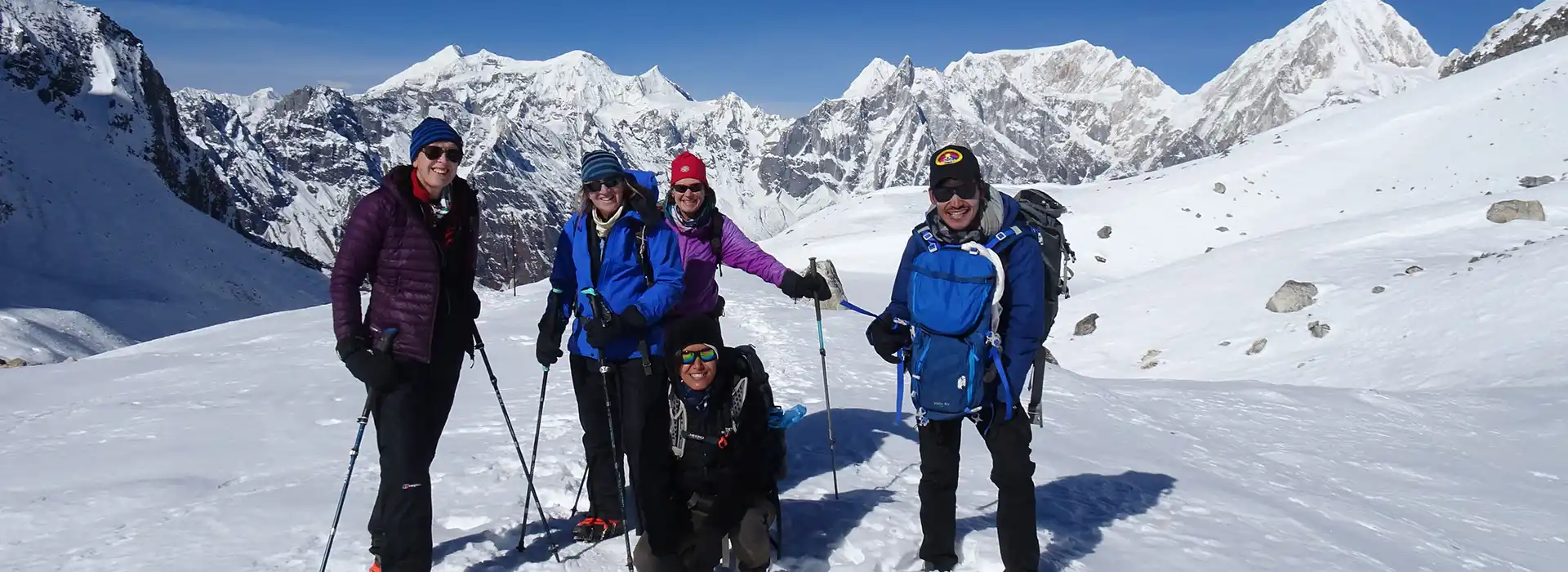

Discover ancient Tibetan culture and cross dramatic high-altitude passes on this remote, off-the-beaten-path journey into a restricted Himalayan valley.
The Nar Phu Valley Trek delivers a remote, culturally concentrated restricted-area experience across 12 days from Kathmandu. The route enters the valley at Koto, passing through a narrow canyon trail to Meta and the ancient stone settlement of Phu Village (3,960 meters). It then crosses to Nar Village (4,110 meters) before tackling the 5,320-meter Kang La Pass and descending to Ngawal on the main Annapurna Circuit for the road return.
The valley maintains a distinct Tibetan-influenced Buddhist culture shaped by geographic isolation. Strict permit controls limit visitor numbers, preserving the local stone settlements, gompa compounds, and highland pastoral life from heavy commercial development. Unlike the longer combined circuit package, this standalone route exits by jeep from Ngawal rather than continuing over Thorong La Pass.
This format provides the complete Nar Phu experience and the Kang La panorama without the extra five-day commitment. This comprehensive package covers airport transfers, two nights in Kathmandu, overland transport to Koto and back from Besisahar, teahouse or monastery lodging for all eight trekking nights, full-board meals, a licensed guide, and all required permits.
Important: The Nar Phu Valley Trek is challenging. The route crosses Kang La Pass at approximately 5,320 meters in a remote restricted area with limited emergency infrastructure. Previous multi-day trekking experience, good physical fitness, and altitude awareness are required. Not suitable for first-time trekkers.
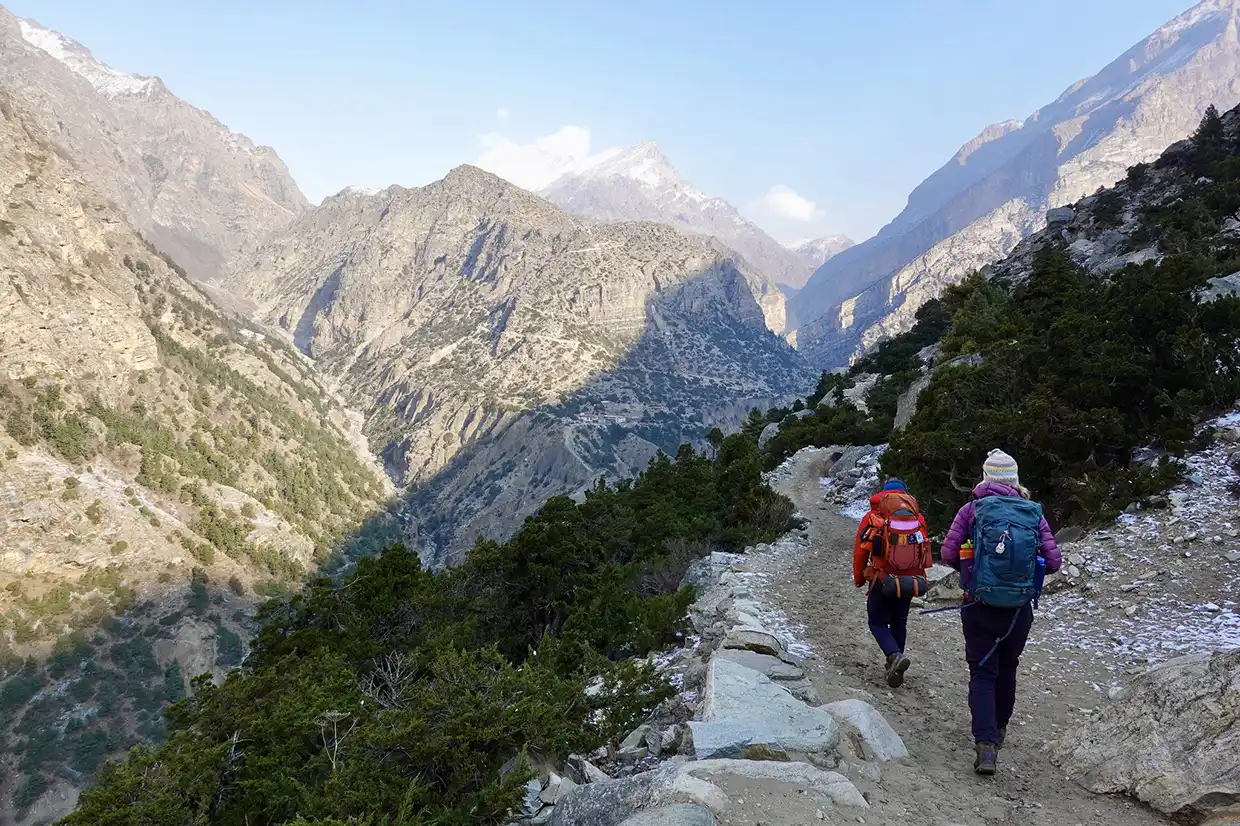
The Nar Phu Valley Trek operates as a self-contained, high-pass route free from main circuit crowds. Restricted access ensures the trails remain remarkably quiet compared to the commercial Annapurna corridor below. The terrain changes dramatically along the way. The route begins with narrow cliff trails above the Phu Khola between Koto and Meta, requiring careful footwork. Above Meta, the landscape opens into a dry, Tibetan plateau-like highland featuring treeless ridges, wide skies, ancient stone settlements, and high-pasture yak herds.
This 12-day format provides critical safety pacing. The Day 6 acclimatization day in Phu Village is mandatory to prepare your body for the 5,320-meter Kang La Pass crossing on Day 9. Rushing this timeline on shorter schedules directly increases altitude risks and compromises the overall experience.
Quick Answer: What Is the Nar Phu Valley Trek?
The Nar Phu Valley Trek is a 12-day restricted-area trek in Nepal’s Annapurna region. The route covers Kathmandu, Koto, Meta, Phu Village, Nar Phedi, Nar Village, Kang La Pass (approx. 5,320 m), Ngawal, Pisang, Besisahar, and Kathmandu. The trek focuses on Tibetan-influenced villages, Buddhist monasteries, narrow canyon trails, high alpine landscapes, and the Kang La Pass crossing with views of the Annapurna range.

Included Meals

Trip staff

Transport

Accommodation

Trip Grade
Group Size
Your international flight lands at Tribhuvan International Airport this afternoon. You proceed through immigration to obtain your Nepal visa on arrival. Two passport-size photographs and USD cash are required for this process. After clearing customs, you exit into the arrivals hall.
Our representative meets you outside the glass doors, holding a sign with your name. They assist with your luggage and escort you to a private vehicle. The short drive takes you through Kathmandu’s bustling urban streets. Temples tucked between modern buildings offer your first glimpse of the city.
You check into your hotel in Thamel or Lazimpat. Free time follows for rest, a shower, or a gentle walk. Your licensed trekking guide visits your hotel during the early evening. He confirms your passport details and performs a quick gear check.
Dinner tonight is on your own at a nearby restaurant. Your guide can recommend authentic Nepali dal bhat or international cuisine. Return to your hotel after eating and sleep early tonight. Proper rest is important for altitude readiness ahead.
Accommodation:
Hotel in Kathmandu (twin sharing)
Difficulty
You wake at your hotel and enjoy an included breakfast. Eat a substantial meal because today involves a comprehensive briefing. At 9:00 AM, your guide meets you in the hotel lobby. You provide a copy of your passport and two identical photographs.
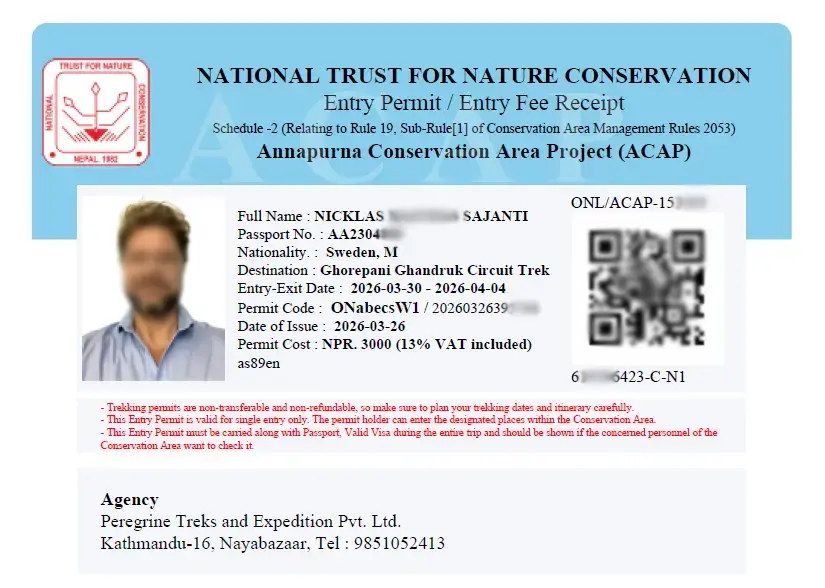
The guide departs to process three required trekking permits. These include the Nar Phu Restricted Area Permit and ACAP. The TIMS card may also be processed if currently required. You do not need to accompany the guide on these errands.
Free time from late morning allows you to exchange currency. You can buy last-minute gear at Thamel shops or visit a pharmacy. Lunch is on your own and should be kept light. Avoid unfamiliar foods to prevent digestive issues later.
Your guide returns by early afternoon with the processed permits. A two-hour briefing thoroughly covers the safety protocols for Kang La Pass. Canyon trail conditions and cultural protocols for monastery visits are explained. Altitude sickness recognition and mandatory reporting are also emphasized.
A final gear check follows the afternoon briefing session. Boots, warm jacket, headlamp, and trekking poles are inspected. You then pack your porter bag to a maximum of 15 kilograms. The guide confirms tomorrow’s 7:00 AM departure time and introduces your driver.
Eat an early light dinner on your own this evening. Avoid alcohol and heavy foods completely before sleeping. Hydrate well, because this is your last night in your hotel bed. Tomorrow, the real mountain journey finally begins.
Accommodation:
Hotel in Kathmandu (second night)
Meals Breakfast
Difficulty
You wake at 6:00 AM for your final hotel shower. After packing, you eat breakfast from 6:30 to 7:00 AM. Check-out and vehicle loading must happen by 7:00 AM sharp. Your main porter bag goes into a private 4WD jeep.
Departure from Kathmandu is scheduled for approximately 7:15 AM today. The Prithvi Highway takes you northwest, following the Trishuli River. Small towns like Nagdhunga, Malekhu, and Mugling pass by continuously. A brief rest stop allows a toilet break and tea.
Arrival at Besisahar at 760 meters happens around 10:00 AM. This town marks the end of the paved highway section. The jeep is checked before tackling the rough mountain roads ahead. A short 15-minute break allows last-minute snack purchases.
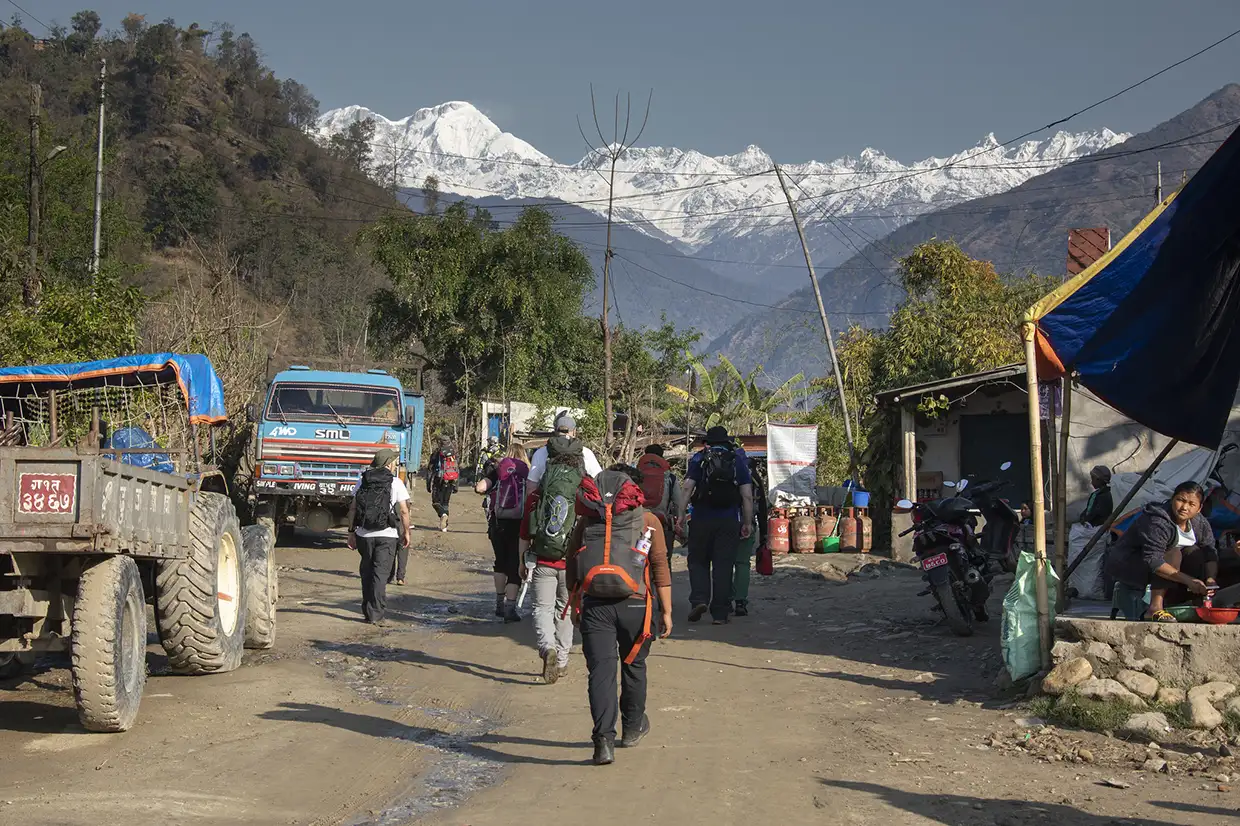
From Besisahar, the road becomes an unpaved mountain track. The next 40 kilometers take about 3 to 4 hours. Dust and switchbacks dominate this entire upper road section. Wearing a neck gaiter over your mouth is strongly recommended.
You pass many villages along the dusty winding road. Bhulbhule, Ngadi, Syange, Jagat, and Chamje appear in sequence. Tal, Dharapani, and Bagarchhap follow after those villages. Mountain views of Lamjung Himal and Annapurna II begin appearing.
Arrival at Koto at 2,600 meters occurs between 2:30 and 4:00 PM. You check into a basic teahouse with twin-sharing rooms. Shared bathroom facilities are standard at this lodge. After settling in, your guide conducts a Day 4 canyon briefing.
A short acclimatization walk around Koto village is highly recommended. Walking 1 to 2 kilometers after a long drive stimulates circulation. Views of Annapurna II reward your gentle uphill effort. You also pass the Koto checkpoint gate and a small monastery.
Dinner is served at the teahouse between 6:00 and 7:00 PM. Eat a normal portion of dal bhat without overstuffing yourself. A full stomach at altitude can cause restless sleep. After dinner, pack your daypack with water and essential gear.
Charge all your electronic devices before going to sleep. Your power bank must be full for the restricted valley. Sleep with your window slightly open for fresh air. This helps reduce the risk of altitude headache.
Accommodation:
Teahouse at Koto
Meals Breakfast, Lunch, Dinner
Difficulty
Your guide handles the permit inspection at the Koto checkpoint early in the morning. Rangers verify all documents before you enter the restricted Nar Phu Valley. The trail soon narrows into a dramatic canyon above the Phu Khola. Exposed cliff sections demand careful footwork and single-file walking.
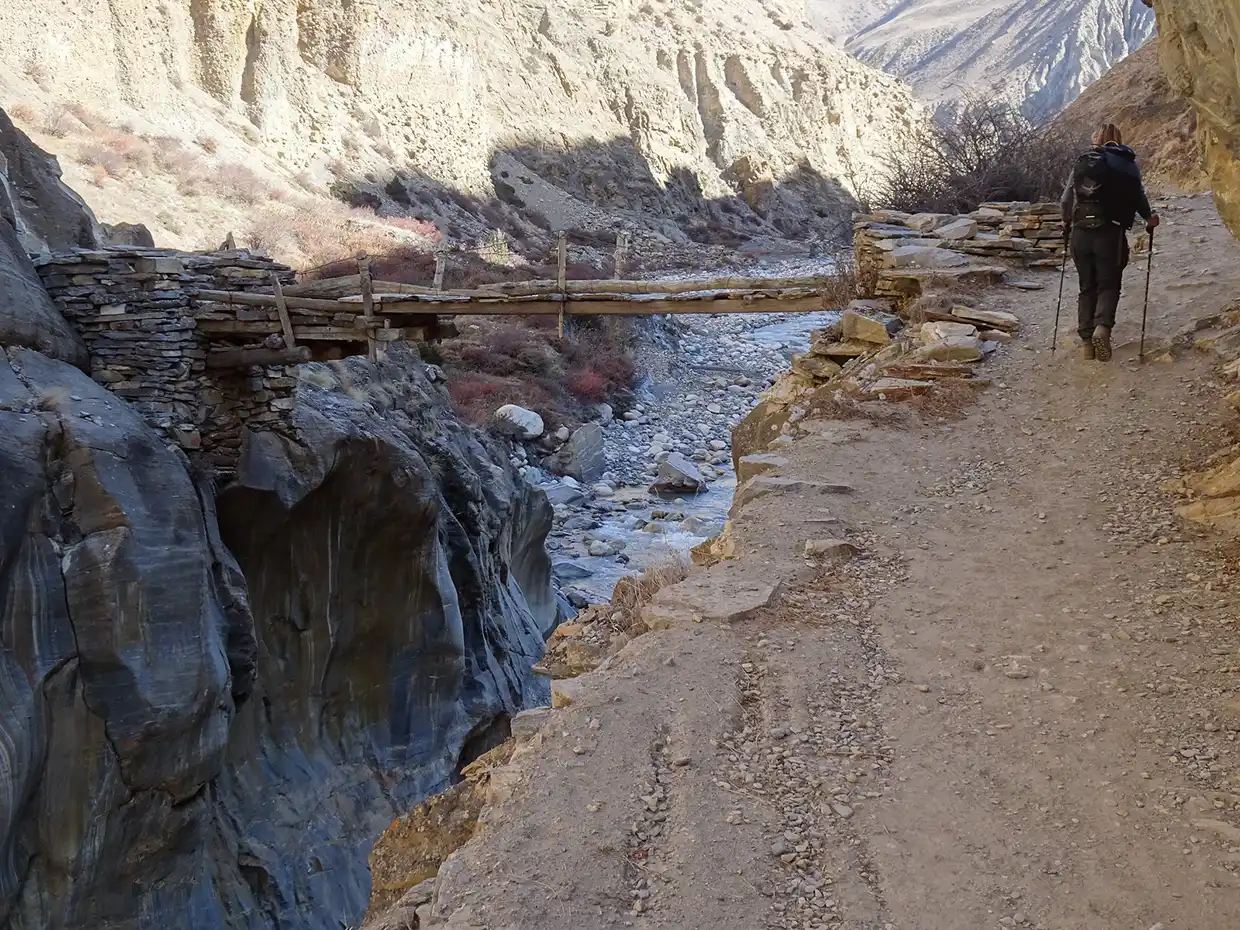
The canyon trail clings to vertical rock faces in several places. Your guide maintains strict spacing between trekkers for safety. The sound of the river echoes loudly from the deep gorge below. There are no teahouses or water sources along this entire section.
After several hours, the canyon gradually widens into a more open landscape. The trail climbs steadily past dry scrub and scattered pine trees. You finally reach Meta at 3,560 meters in the early afternoon. This basic teahouse marks your first overnight inside the restricted area.
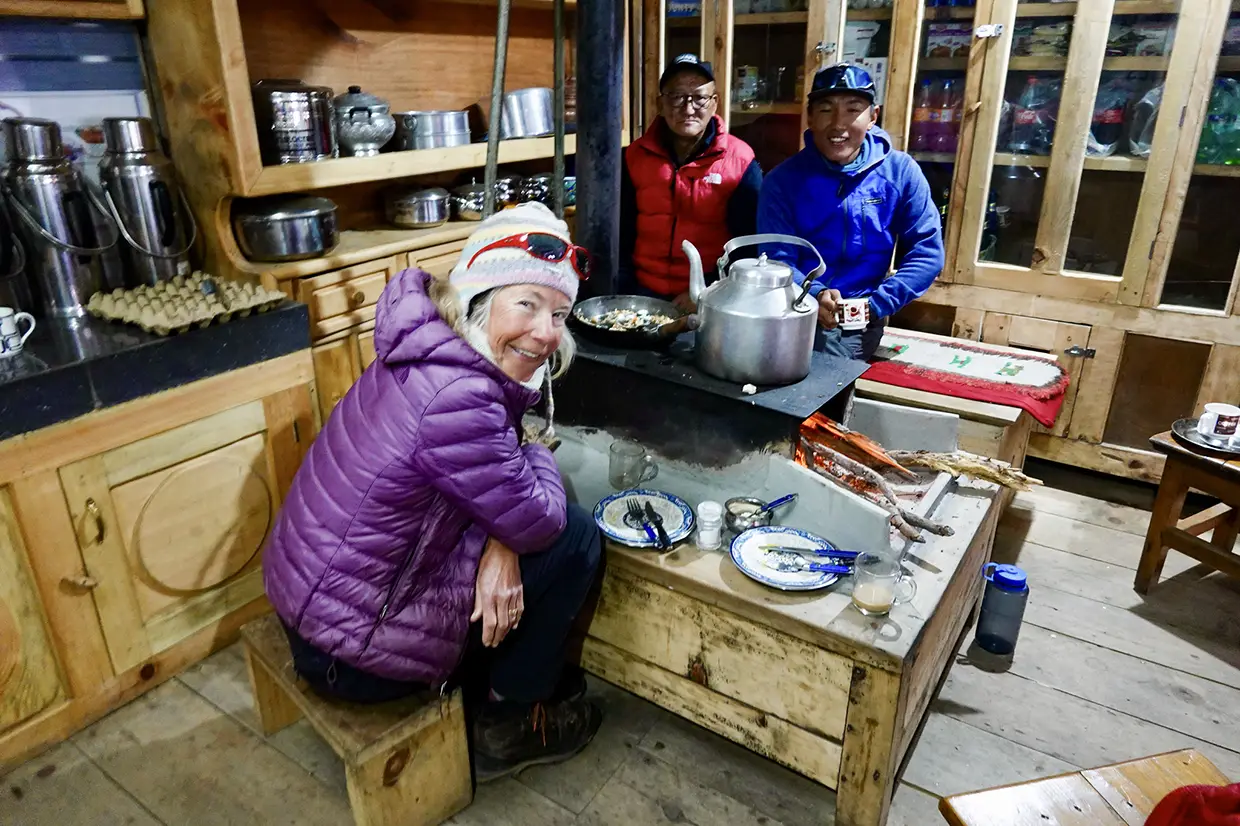
Settle into your room and rest after the demanding canyon walk. Your guide briefs you on tomorrow’s trek to Phu Village. Drink plenty of water to help your body adjust to the altitude at 3,560 meters. A hot dal bhat dinner restores energy before an early bedtime.
Accommodation:
Teahouse at Meta
Meals Breakfast, Lunch, Dinner
Difficulty
Morning breakfast at Meta fuels you for the highland journey ahead. The trail leaves the canyon behind and enters a wide arid valley. Dry Tibetan-like terrain stretches out under enormous open skies. Chortens and mani walls begin appearing along the approach path.
The walking today is less technical than yesterday’s canyon section. Gradual ascent over open ground replaces the narrow cliff trail. You pass yak pastures and stone herder shelters along the way. The first glimpse of Phu Village appears dramatically on a distant terrace.
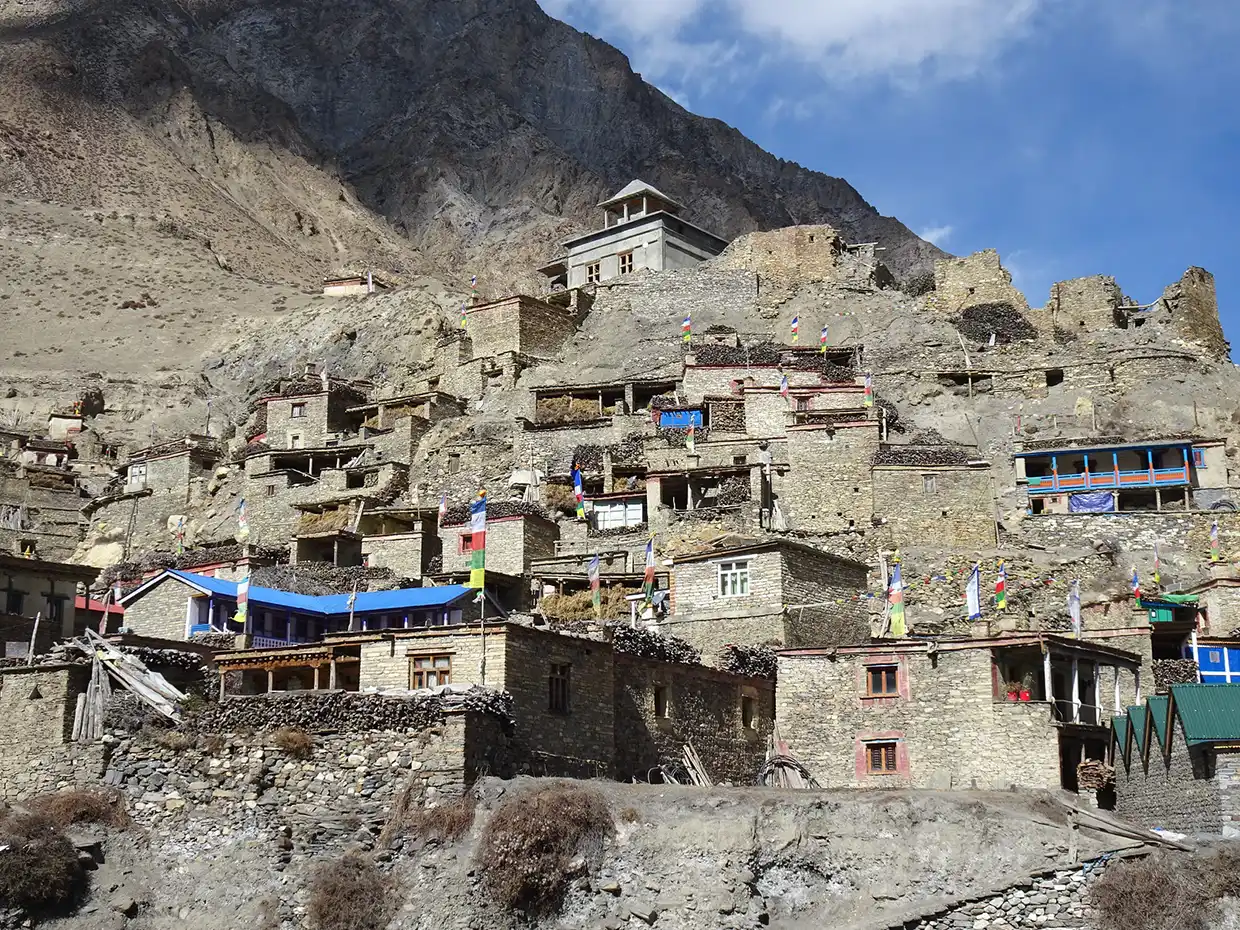
Phu Village sits at approximately 3,960 to 4,080 meters above sea level. Ancient flat-roofed stone houses cluster below an active monastery compound. This is the cultural heart of the entire Nar Phu Valley. You arrive in the afternoon and check into a simple teahouse.
Eat a full dinner and drink plenty of water upon arrival. Rest early because tomorrow is your critical acclimatization day. Your guide explains the morning hike plan before you sleep. The thin air at this altitude demands respect and slow movement.
Accommodation:
Teahouse at Phu Village
Meals Breakfast, Lunch, Dinner
Difficulty
Today is a mandatory acclimatization day and cultural highlight. Morning begins with an optional hike to approximately 4,400 to 4,600 meters. This climb-high sleep-low strategy stimulates your body’s altitude adaptation. Clear Himalayan views reward those who make the ascent.
Return to Phu Village by midday for lunch and rest. The afternoon is dedicated to exploring the ancient stone settlement. Your guide coordinates a visit to the active village monastery. Inside, resident monks conduct rituals amid thangka paintings and butter lamps.
Walk through narrow alleys between flat-roofed stone houses. Observe yak herders and local life that have remained unchanged for centuries. Rotate prayer wheels along the main village lane slowly. Photography is allowed, but always ask permission first, respectfully.
Your guide assesses the group’s acclimatization progress before dinner. Drink extra water and eat well to prepare for tomorrow’s departure. This full rest day is non-negotiable for safe Kang La crossing. Without it, the risk of altitude sickness increases significantly.
Accommodation:
Teahouse at Phu Village (second night)
Meals Breakfast, Lunch, Dinner
Difficulty
Morning departure from Phu Village retraces part of your approach route. The trail then gradually branches toward the Nar valley system. You walk through dry, highland terrain with wide-open skies. Chortens and mani walls guide the path ahead.
The walking is moderate with steady but manageable elevation change. You cross several small streams coming from surrounding ridges. Yak herds graze on sparse pastures scattered across the slopes. The landscape feels increasingly remote and spiritually quiet.
Nar Phedi, at approximately 4,000 meters, sits between two valley systems. This small settlement houses an active monastery lodge or basic teahouse. Your overnight here breaks the journey into safe pacing for altitude. The monastery’s morning puja horns will be your wake-up call.
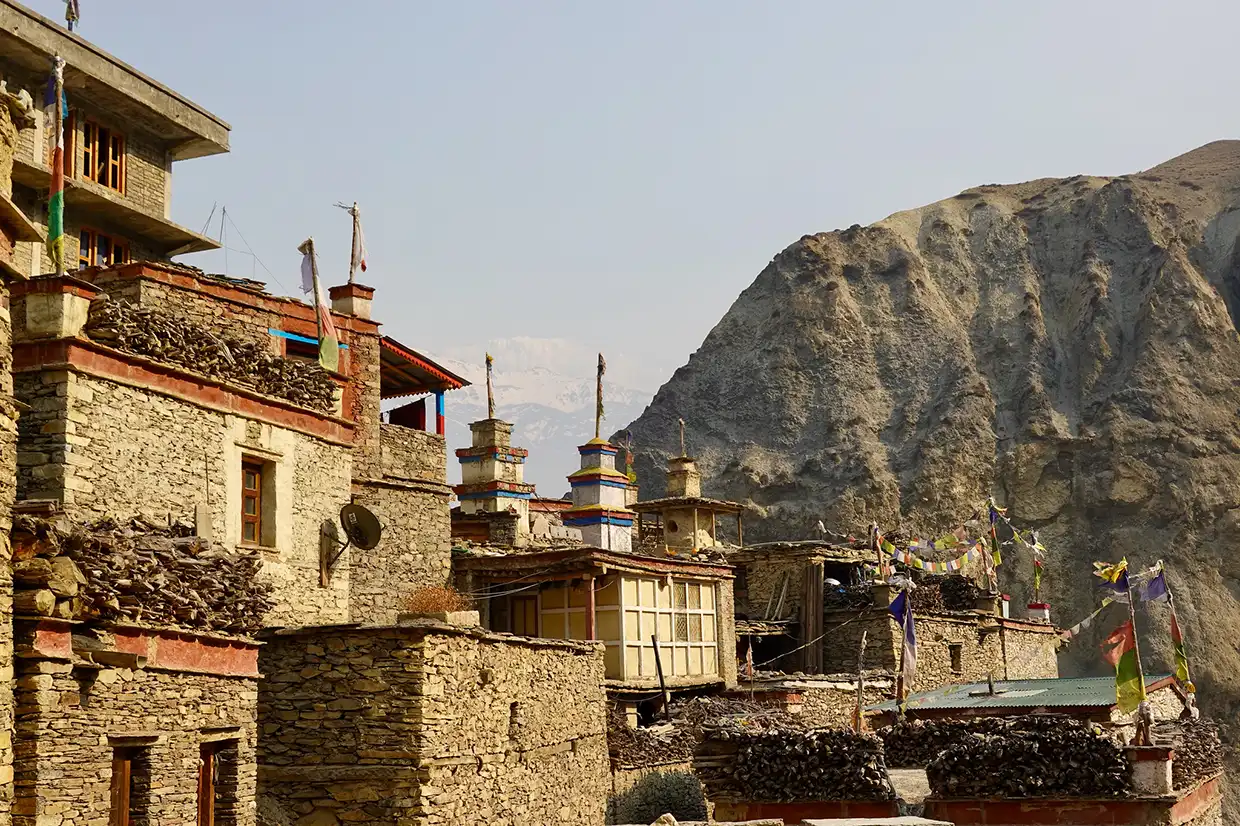
Accommodation type depends on the confirmed seasonal operations. Basic rooms may be the most rustic of the entire trek. The spiritual atmosphere makes this the most distinctive overnight stop. Eat dinner early and rest well for tomorrow’s climb to Nar.
Accommodation:
Teahouse or monastery lodge at Nar Phedi
Meals Breakfast, Lunch, Dinner
Difficulty
Breakfast at the monastery lodge is accompanied by the sounds of morning puja. You depart early for the relatively short walk to Nar Village. The trail climbs steadily through a barren but beautiful highland landscape. Chortens at the approach path signal your arrival is near.
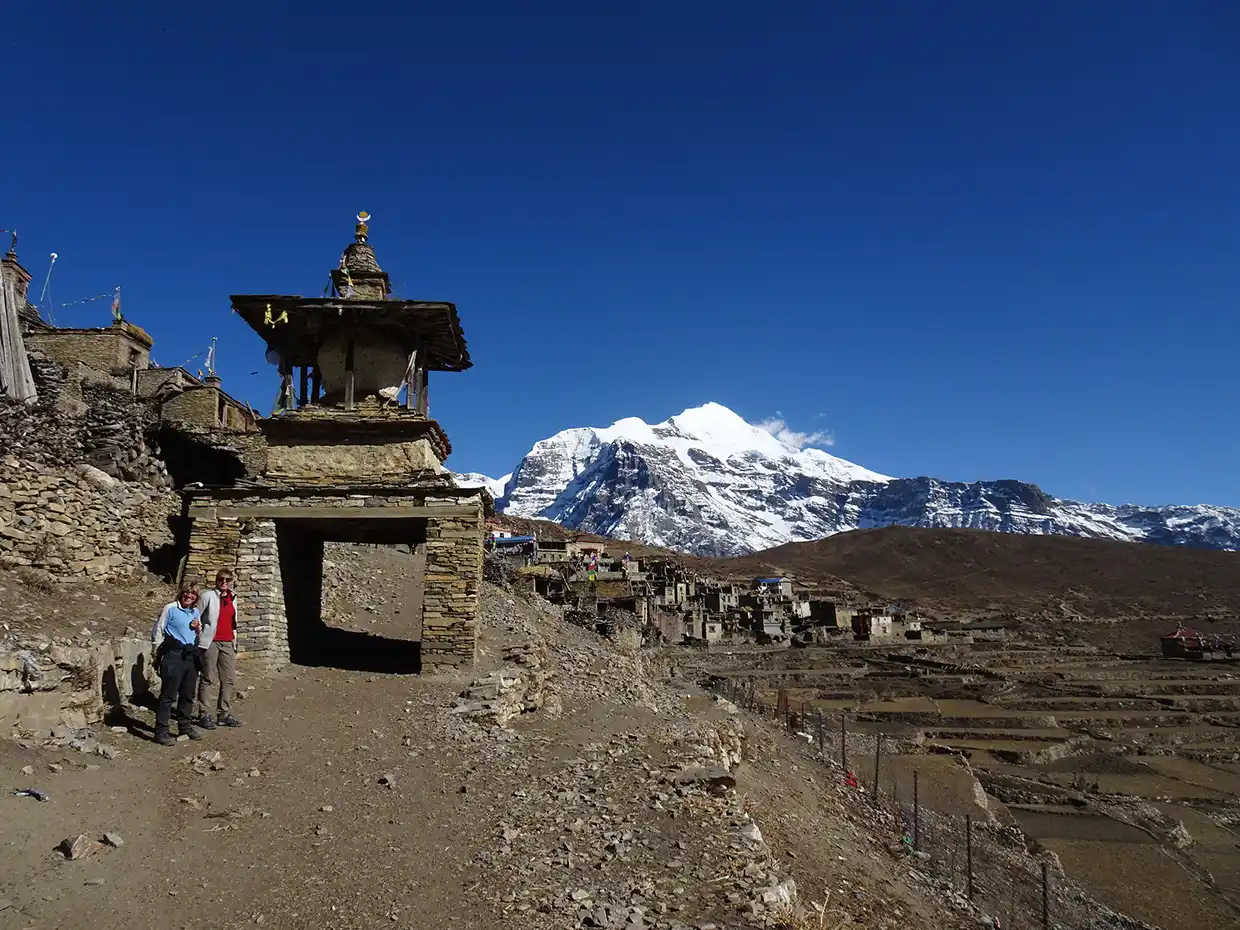
Nar Village, at approximately 4,110 meters, appears on a sunlit terrace. Traditional stone houses cluster around barley fields and prayer wheel lanes. A monastery compound sits at the upper edge of the settlement. You arrive by late morning with ample afternoon free time.
Spend the afternoon exploring Nar’s cultural landmarks and terraced fields. Rotate the village prayer wheels along the main stone lane. Visit the monastery and observe agricultural life on the slopes. Your guide conducts the critical Kang La Pass safety briefing in the evening.
The briefing covers pre-dawn departure time and full layering requirements. Terrain details for the ascent and descent are explained clearly. Nar’s altitude of 4,110 meters provides correct pre-pass positioning. Eat a substantial dinner and prepare your gear before going to bed early.
Accommodation:
Teahouse at Nar Village
Meals Breakfast, Lunch, Dinner
Difficulty
Today begins before dawn, between 4:00 and 5:00 AM. Dress in several layers of warm clothing before leaving your teahouse room. Headlamp beams catch the first trail dust in cold darkness. This is the most demanding day of the entire trek.
The ascent to Kang La summit takes four to six hours. Rocky exposed terrain climbs steadily toward the 5,320-meter pass. Your guide sets a slow, steady pace and monitors everyone closely. No other groups share this restricted pass crossing with you.
At the summit, prayer flags mark the boundary between two valleys. Annapurna II fills the southern horizon in spectacular close view. Gangapurna, Tilicho Peak, and Pisang Peak surround the panorama. The Nar Phu Valley stretches northward for its full length.
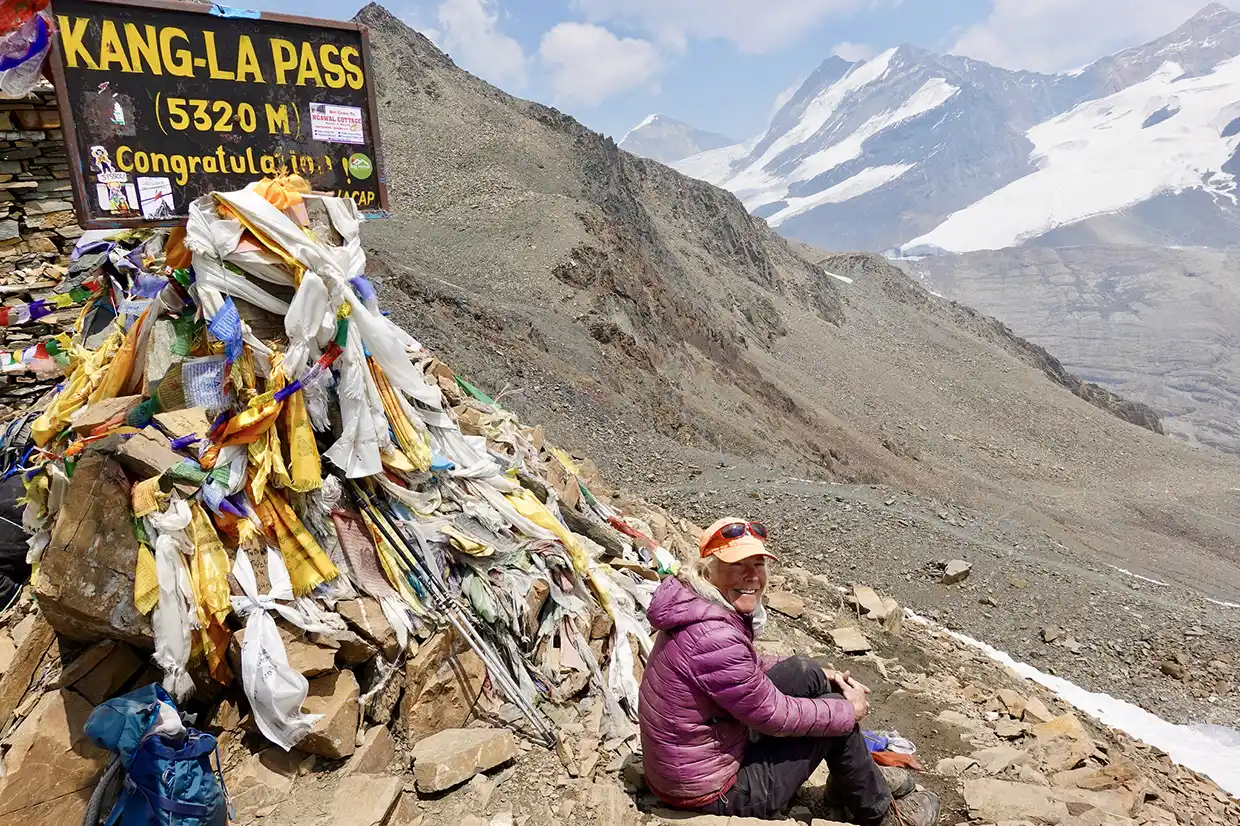
The descent to Ngawal drops approximately 1,600 to 2,000 meters. Rocky variable trail demands trekking poles and careful knee management. Your guide controls the pace to protect the group’s joints. Views of the Manang Valley unfold as you descend.
Ngawal, at 3,660 meters, is the first main circuit village. Broader menus and steady electricity welcome you after six days of restrictions. Celebrate your Kang La crossing with a well-deserved hot meal. Sleep deeply knowing the hardest challenge is now complete.
Accommodation:
Teahouse at Ngawal
Meals Breakfast, Lunch, Dinner
Difficulty
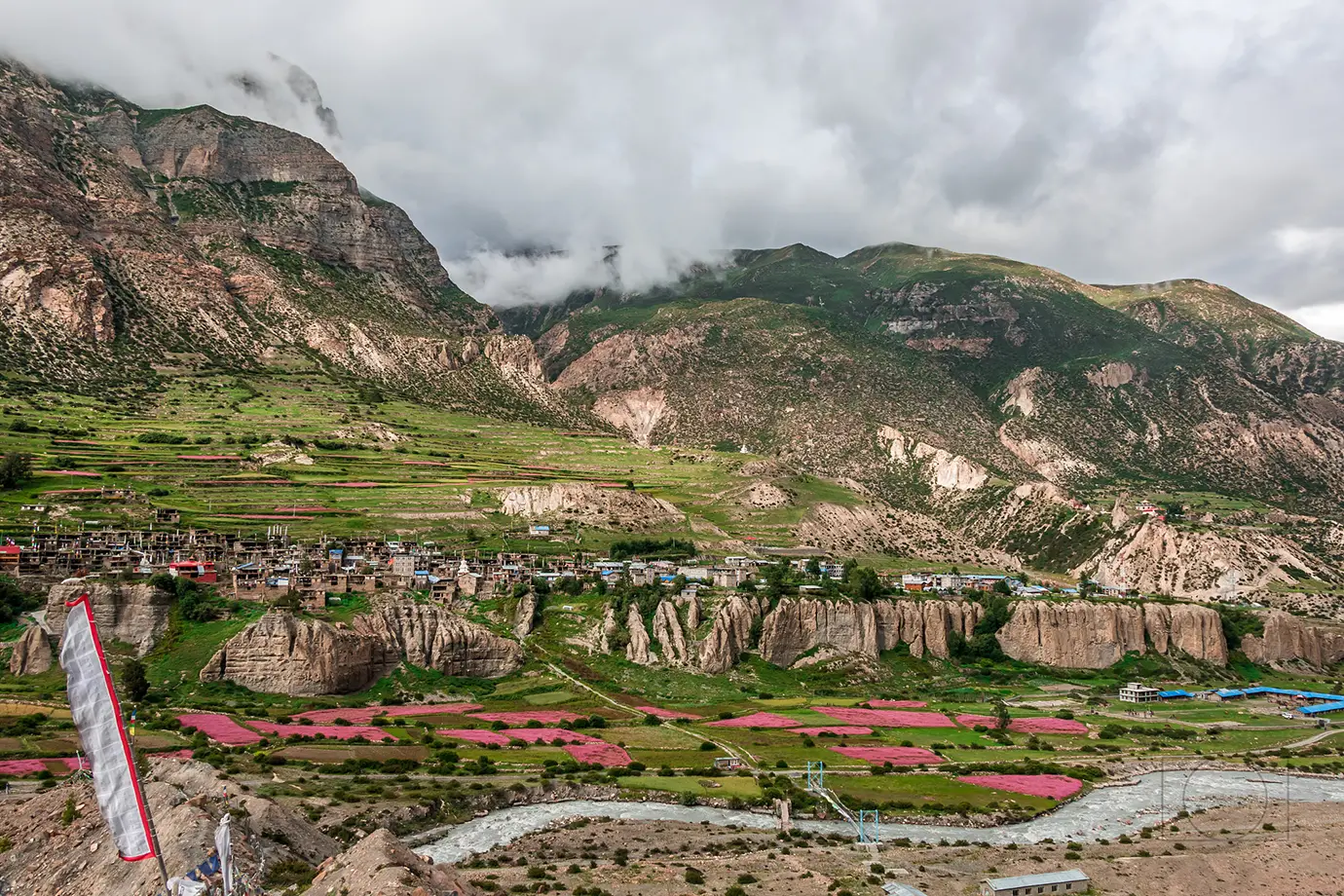
Morning breakfast at Ngawal marks the start of your final trekking day. You walk downhill through the wide Manang Valley landscapes and villages. Apple orchards and barley fields line the gentle trail ahead. Pisang or Humde is reached after a few hours.
The jeep meets you at the designated pickup point. Road conditions determine whether pickup happens at Pisang or Humde. The drive to Besisahar takes roughly three to five hours. You descend rapidly through the Marsyangdi River valley.
Arrival in Besisahar at 760 meters happens by late afternoon. Check into a comfortable teahouse or small lodge. A hot shower and celebration dinner mark the trek’s end. Sleep deeply at low altitude with fully restored oxygen.
Accommodation:
Teahouse or lodge at Pisang or Besisahar
Meals Breakfast, Lunch, Dinner
Difficulty
Morning in Besisahar feels warm and oxygen-rich after weeks of high. Breakfast is followed by the road journey back to Kathmandu. The drive follows the Marsyangdi and Trishuli rivers through familiar towns. Paved roads return after Besisahar, so the ride is comfortable.
The journey takes five to seven hours with a lunch stop. You arrive in Kathmandu by mid-afternoon at your hotel. Check into a private room with a hot shower and Wi-Fi. The evening is completely free for rest or city exploration.
Dinner tonight is not included, so explore local restaurants. Celebrate the completion of your Nar Phu Valley adventure. Rest well in your comfortable hotel bed tonight. The mountains will stay with you long after departure.
Accommodation:
Hotel in Kathmandu
Meals Breakfast, Lunch
Difficulty
Your final includes breakfast at the hotel on the day. Our driver picks you up at the agreed departure time. The transfer to Tribhuvan International Airport takes about thirty minutes. Allow three hours before your international flight for check-in.
This marks the end of your incredible journey through the Nar Phu Valley. You leave with memories of remote villages and high passes. The quiet of Kang La and the spirit of Phu remain. Safe travels home until your next Himalayan adventure.
Accommodation:
Not included
Meals Breakfast
Difficulty
The Nar Phu Valley Trek delivers the complete remote experience in a focused 12-day format, perfect for trekkers wanting an authentic alternative to the full Annapurna Circuit. Beyond the Koto checkpoint, restricted permit access keeps visitor numbers low, allowing the local communities to maintain their vibrant cultural heritage completely on their own terms. Phu Village showcases an ancient world of flat-roofed stone houses built onto steep cliff terraces. Here, an active monastery, resident monks, and traditional yak herders support a highland lifestyle unchanged for centuries.
This immersive experience offers a deep level of isolation and cultural preservation that is unavailable along the highly developed main circuit. At 5,320 meters, Kang La Pass provides a rewarding physical challenge. Unlike the busy mornings on Thorong La, the valley’s restricted entry ensures a solitary high-pass crossing. This standalone format offers the best of Nar, Phu, and the pass without requiring a longer commitment, though the circuit extension remains a flexible add-on option.
The trek suits:
| Trek | Duration | Difficulty | Main Style | Highest Focus | Best For |
|---|---|---|---|---|---|
| Nar Phu Valley Trek | 12 Days | Challenging | Restricted valley + Kang La | Kang La Pass ~5,320 m | Remote culture, high pass |
| Annapurna Circuit Trek | 12–16 Days | Mod–Challenging | Classic circuit | Thorong La (5,416 m) | Classic Annapurna trekkers |
| Nar Phu + Annapurna Circuit | 16–20 Days | Challenging | Nar Phu + Thorong La | Kang La + Thorong La | Longer high-pass trekkers |
| Tilicho Lake Trek | 12–16 Days | Challenging | High lake route | Tilicho Lake/Thorong La | High lake trekkers |
| Manaslu Circuit Trek | 14–18 Days | Challenging | Restricted circuit | Larkya La Pass (5,106 m) | Remote circuit trekkers |
Hotel accommodation in Kathmandu on Days 1, 2, and 11 provides city-standard comfort with private bathroom, hot water, Wi-Fi, and breakfast. Teahouse accommodation covers all 8 trekking nights from Koto through Ngawal and Pisang.
The restricted Nar Phu Valley section between Koto and Ngawal uses simpler teahouse facilities than the main Annapurna Circuit corridor. Meta, Phu Village, Nar Village, and Ngawal all provide basic twin-sharing rooms with shared bathrooms and limited hot water. Hot showers cost extra—typically NPR 200 to 500—and may not be available at the more remote valley stops. Wi-Fi is unreliable above Meta.
The Nar Phedi monastery lodge or basic teahouse on Day 7 offers the most atmospherically distinctive overnight rooms, adjacent to an active monastery compound, with morning puja audible before breakfast and the stillness of a community running on religious rather than commercial time.
Nar Phu Valley’s Tibetan-influenced Buddhist culture connects its isolated communities to rich trans-Himalayan traditions. Both Nar and Phu maintain active monasteries where resident monks conduct regular rituals and preserve ancient texts. These traditional gompas feature distinctive Tibetan architecture, marked by white-plastered walls, red-brown trim, and beautifully carved doorframes, while the resonant sound of morning horns drifts through the quiet village lanes.
Long mani walls and decorative chortens line the approach trails, built from stones meticulously inscribed with Buddhist mantras. To respect local tradition, always walk to the left of these sacred structures, keeping them on your right as you pass. This vibrant heritage is perfectly framed by the dry, trans-Himalayan landscape, where treeless ridgelines, wide skies, and earthy rock tones create a stark highland atmosphere completely different from Nepal’s lower, forested regions. Far from a mere side trip, Nar Phu carries an independent identity that makes this standalone trek a complete experience.
Phu Village sits at 3,960 to 4,080 meters at the upper end of the lower Phu Khola valley, where the narrow canyon opens into a wide highland bowl. Its flat-roofed stone houses occupy a natural terrace below the monastery compound and high yak pasture ridges. The ancient settlement carries deep historical layers, featuring stones worn smooth by generations of use and a historic gompa showing multiple construction periods.
The Day 6 acclimatization day serves both a physiological and cultural function. To prepare for the upcoming high pass, trekkers can take an optional morning hike to 4,400 meters to stimulate altitude acclimatization before returning to sleep at the village level. This full day allows ample time for village walks and viewpoint hikes without the rush of a standard transit day.
A central highlight is the village monastery, where an active community of monks conducts daily rituals. Coordinating your interior visit with the morning puja lets you experience the resonant horns, burning incense, and butter lamps illuminating traditional thangka paintings. This immersive spiritual encounter anchors Phu Village as the undeniable cultural centerpiece of the entire trek.
Nar Village, at approximately 4,110 meters, provides the trek’s second major cultural village destination before the Day 9 Kang La crossing. Traditional stone settlement, chortens at the approach path, prayer wheels along the main lane, barley terraces on south-facing slopes, and a monastery compound at the upper settlement edge give Nar its specific character. The Day 8 arrival allows afternoon village exploration before the critical pass briefing.
Your guide conducts the Kang La Pass safety briefing on the evening of Day 8, with departure time of 4 to 5 AM, full layering requirements from the teahouse doorstep, the specific terrain of the upper approach, and the demands of the descent route. Nar Village’s position at 4,110 meters provides the correct pre-pass departure altitude, making the 1,210-meter climb to the summit manageable rather than extreme.
Kang La Pass at approximately 5,320 meters connects the restricted Nar Valley to the Manang Valley at Ngawal. The Day 9 crossing begins before dawn—typically 4 to 5 AM from the Nar Village teahouse—to allow full daylight for both the ascent and rocky descent to Ngawal before afternoon cloud and wind deteriorate conditions. The pre-dawn start in complete darkness, with headlamp beams catching the first trail dust, sets the tone for the most demanding day of the 12-day trek.
At 5,320 meters, Annapurna II fills the southern horizon. Gangapurna, Tilicho Peak, Pisang Peak, and sections of the Manang range appear in the surrounding panorama. The Nar Phu Valley lies to the north in full length before the descent begins. The summit prayer flags mark the crossing point between the restricted valley and the main Annapurna Circuit trail.
The descent from Kang La to Ngawal covers approximately 1,600 to 2,000 meters of altitude loss over several hours on a rocky, variable trail. Trekking poles are essential throughout. Your guide manages the descent pace to protect the group’s knees and monitors for altitude-related symptoms that prolonged effort and rapid changes in altitude can trigger.
Meta (3,560 meters): The first overnight inside the restricted valley after navigating the narrow cliff trails above the Phu Khola. Its basic teahouse marks the transition from the steep canyon to the open highlands.
Phu Village (3,960–4,080 meters): The route’s cultural centerpiece, defined by stone architecture, an active monastery, and a traditional pastoral lifestyle. Days 5 and 6 ensure vital altitude adaptation and deep cultural exploration.
Nar Phedi: A quiet intermediate stop at a local monastery lodge that naturally breaks up the journey between Phu and Nar. This overnight provides a peaceful spiritual atmosphere that shorter itineraries often rush past.
Nar Village (4,110 meters): A traditional stone settlement filled with chortens and prayer wheels. An afternoon village exploration on Day 8 and a detailed evening briefing prepare the group for the pass crossing the next morning.
Ngawal (3,660 meters): The first developed village on the main Annapurna Circuit after six days in the restricted valley. Reached on Day 9 after crossing Kang La, it offers broader menus, steady electricity, and wide Manang Valley views for a comfortable decompression.
Full board covers all 8 trekking days from Day 3 through Day 11. Hotel breakfast comes included in Kathmandu on Day 2 and Day 3 mornings. Day 11 includes breakfast and lunch. Lunch and dinner in Kathmandu are not included.
The restricted valley teahouse menus use progressively local ingredients as the supply chain from Koto becomes the primary food source. Dal bhat with locally grown lentils, potato dishes from highland cultivation, barley flour Tibetan bread, and seasonal vegetable accompaniments give the food at Phu Village and Nar Village a local character that the commercial supply chain menus of the main circuit corridor do not replicate. Bottled water, soft drinks, and alcohol carry additional fees.
The package covers airport pickup and drop-off in Kathmandu, road transfer to Besisahar and jeep to Koto on Day 3, jeep from Pisang or Ngawal area to Besisahar on Day 10, and road return from Besisahar to Kathmandu on Day 11. Private jeep upgrades on both the Kathmandu to Koto and the Ngawal to Kathmandu sections provide more comfort and flexibility.
Three permits apply. The Nar Phu Restricted Area Permit grants entry to the restricted valley section from the Koto checkpoint. The Annapurna Conservation Area Permit (ACAP) costs NRs. 3,000 for foreign nationals and NRs. 1,000 for SAARC nationals. The TIMS card may apply under current Nepal Tourism Board policy—our team confirms the current requirement at booking time.
All permits come included in the package price. Our team processes all documentation in Kathmandu before the Day 3 departure. Bring two passport-size photographs and a clear passport photo page copy to our team on Day 2. Your guide carries the complete permit set for all checkpoint inspections throughout the restricted valley section from Koto to Ngawal.
The Nar Phu Valley Trek rates as challenging. The Koto to Meta canyon trail requires careful footwork on exposed narrow sections. The remote restricted area provides limited emergency infrastructure throughout Days 4 to 9. Kang La Pass at approximately 5,320 meters demands the altitude preparation from the Phu acclimatization day, the physical fitness for a 4 to 6 hour pre-dawn ascent, and the knee stability that the long rocky Ngawal descent requires.
No technical climbing applies in normal conditions. Fit trekkers with previous multi-day mountain hiking experience—ideally including at least one previous high-altitude section above 4,000 meters—complete the route safely. Trekking poles are strongly recommended for both the canyon approach and the Kang La descent.
| Season | Months | Conditions | Best? |
|---|---|---|---|
| Spring | March to May | Mild temperatures, clear morning views, and a good Kang La access window. Possible flowers on the lower Marsyangdi approach. | Yes |
| Autumn | Sep to Nov | Best mountain visibility and most stable weather. October offers the clearest views of Annapurna II and Gangapurna from the Kang La summit. | Yes – Best |
| Winter | Dec to Feb | Cold nights, possible heavy snow on the Kang La approach. Pass crossing becomes harder and potentially dangerous with deep snow. | With Caution |
| Monsoon | Jun to Aug | Rain, landslide risk on the Koto access road, slippery trails, and clouds blocking views. Not recommended. | No |
October and November deliver the strongest mountain visibility from the Kang La summit and the Ngawal descent. March through May provides a reliable spring alternative with stable morning conditions and manageable pass access. Book October departures 4 to 6 weeks in advance—restricted-area permit allocation fills up before teahouse availability becomes the limiting factor.
Porter service is optional in the base package and available as a paid upgrade. The canyon trail from Koto to Meta and the Day 9 Kang La Pass crossing both represent sections where main bag weight most directly affects walking safety and comfort. One porter carries a maximum of 20 kilograms shared between two trekkers.
Travel insurance is compulsory and must explicitly cover trekking above 5,000 meters and emergency helicopter evacuation. Kang La Pass at approximately 5,320 meters exceeds the altitude cap of some standard adventure policies. Confirm your coverage before purchase. A helicopter evacuation from the restricted valley between Koto and Ngawal costs USD 2,500 to USD 5,000 depending on pickup location and conditions.
The restricted valley’s limited road access makes insurance more important than altitude alone indicates—any medical emergency above Koto requires helicopter extraction. Purchase your policy before flying to Nepal and carry printed and digital copies throughout the trek.
Pack for the temperature range from Koto’s lower valley afternoons to the pre-dawn Kang La Pass departure:
Walk clockwise around all mani walls and chortens from Koto through Ngawal. Remove footwear before entering monastery buildings at Meta, Phu Village, Nar Phedi, and Nar Village. Keep voices low during active puja ceremonies. Your guide provides specific cultural protocols before each monastery visit.
Use refillable bottles and purification tablets throughout—spring water sources in the upper valley provide clean options. Carry out all non-biodegradable waste from the restricted section. Support local teahouses by eating the house menu rather than carrying commercial food from Kathmandu—your meal spending creates direct income for households in a valley where permit controls limit total annual visitor revenue.
Your licensed guide manages safety across all 8 trekking days with three critical focus points: the Koto to Meta canyon trail navigation where exposure demands group spacing and footwork attention; the Phu Village acclimatization day structure that creates the altitude preparation Kang La requires; and the Day 9 Kang La Pass weather assessment and crossing timing decision.
The Phu Village acclimatization day is non-negotiable. Do not request compression of the itinerary that removes this day. The guide carries the group medical kit and maintains satellite phone or direct contact with our Kathmandu operations office throughout the restricted valley section.
Altitude sickness symptoms above 3,500 meters—persistent headache, nausea, loss of appetite, disturbed sleep—require communication with your guide rather than self-management decisions. The restricted valley provides no medical facilities between Koto and Ngawal—helicopter evacuation is the only emergency option throughout the 5 restricted valley nights.
A: The full package runs 12 days from arrival in Kathmandu on Day 1 to final airport departure on Day 12. The active trekking section covers 8 days from the Koto overnight on Day 3 through the Pisang or Besisahar overnight on Day 10. Days 11 and 12 cover the road return and final departure.
A: Yes. Nepal’s Department of Immigration and Tourism Board designate Nar Phu Valley as a restricted trekking zone requiring a specific permit arranged through a registered agency. Independent trekking without a licensed guide is not permitted. The restricted area designation limits visitor numbers to protect the valley’s cultural and environmental character.
A: Three permits apply: the Nar Phu Restricted Area Permit, the Annapurna Conservation Area Permit (ACAP) at NRs. 3,000 for foreign nationals, and the TIMS card if current Nepal Tourism Board policy requires it. All three permits come included in the package price and require agency arrangement.
A: The trek rates as challenging. The Koto to Meta canyon trail requires careful footwork on exposed sections. The remote restricted area provides limited emergency infrastructure. Kang La Pass at approximately 5,320 meters demands the altitude preparation from the Phu acclimatization day and the physical fitness for a pre-dawn 4 to 6 hour ascent. Previous multi-day mountain hiking experience is required.
A: Kang La Pass sits at approximately 5,320 meters (17,454 feet) above sea level. You cross the pass on Day 9 with a pre-dawn departure from the Nar Village teahouse, ascending over 4 to 6 hours before the long descent to Ngawal.
A: Phu Village—also called Phu Gaon—is the ancient stone settlement at approximately 3,960 to 4,080 meters that gives the trek its strongest remote-village cultural identity. Stone houses on cliff terraces, an active monastery with resident monks, yak pastures on surrounding ridges, and a Tibetan-influenced village economy define Phu’s specific character. The Days 5 and 6 combined arrival and acclimatization stay gives both cultural depth and altitude preparation.
A: Nar Village at approximately 4,110 meters provides the trek’s second major cultural destination before the Kang La crossing. Traditional chortens, prayer wheels, barley terraces, and a monastery compound give the village its character. The Day 8 afternoon in Nar provides the cultural encounter and the specific pre-pass altitude that the Day 9 crossing requires.
A: No. The canyon trail from Koto to Meta, the remote restricted area’s limited infrastructure, and the Kang La Pass crossing at 5,320 meters all require previous mountain hiking experience. Fit beginners without previous high-altitude mountain trekking experience should complete a standard Nepal trek before booking the Nar Phu Valley route.
A: Two nights at a Kathmandu hotel with private bathroom, hot water, Wi-Fi, and breakfast. Eight nights of teahouse and monastery lodge accommodation on the trekking section—basic twin rooms with shared bathrooms throughout the restricted valley. The Nar Phedi monastery lodge provides the most atmospherically distinctive overnight.
A: Yes. Full board—breakfast, lunch, and dinner—comes included on all 8 trekking days from Day 3 through Day 11. Kathmandu hotel breakfast comes included on Day 2 and Day 3 mornings. Day 11 includes breakfast and lunch. Lunch and dinner in Kathmandu are not included.
A: Porter service is optional in the base package and available as a paid upgrade. One porter carries a maximum of 20 kilograms shared between two trekkers. Adding a porter is particularly valuable for the canyon trail from Koto to Meta and the Day 9 Kang La Pass crossing.
A: Autumn (September to November) provides the best combination of Kang La Pass access and mountain visibility—October is optimal. Spring (March to May) offers a reliable second window with good morning clarity and manageable pass conditions.
A: Yes. Your policy must cover trekking above 5,000 meters and emergency helicopter evacuation. Standard adventure policies capping altitude coverage below the pass elevation are inadequate. Helicopter evacuation from the restricted valley costs USD 2,500 to USD 5,000 depending on location and conditions.
A: Yes. The Annapurna Circuit extension is available as an optional add-on—continuing from Ngawal through Manang, Yak Kharka, Thorong La Pass, and Muktinath. Contact our team before booking if you want the combined format.
A: The Annapurna Circuit routes through the commercial main corridor from Besisahar to Thorong La Pass—the most developed teahouse route in Nepal. The Nar Phu Valley Trek enters the restricted side valley from Koto, covers the remote cultural villages of Phu and Nar, crosses Kang La Pass, and exits at Ngawal—delivering a restricted-area cultural experience and a different high-pass perspective that the main circuit cannot provide.