


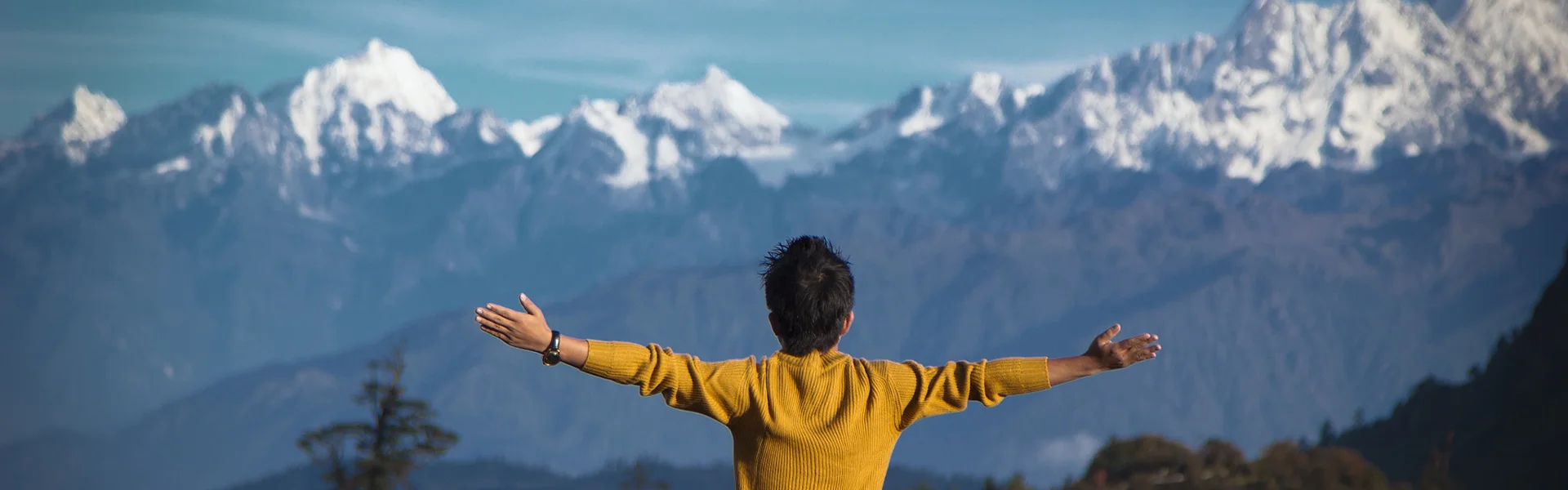

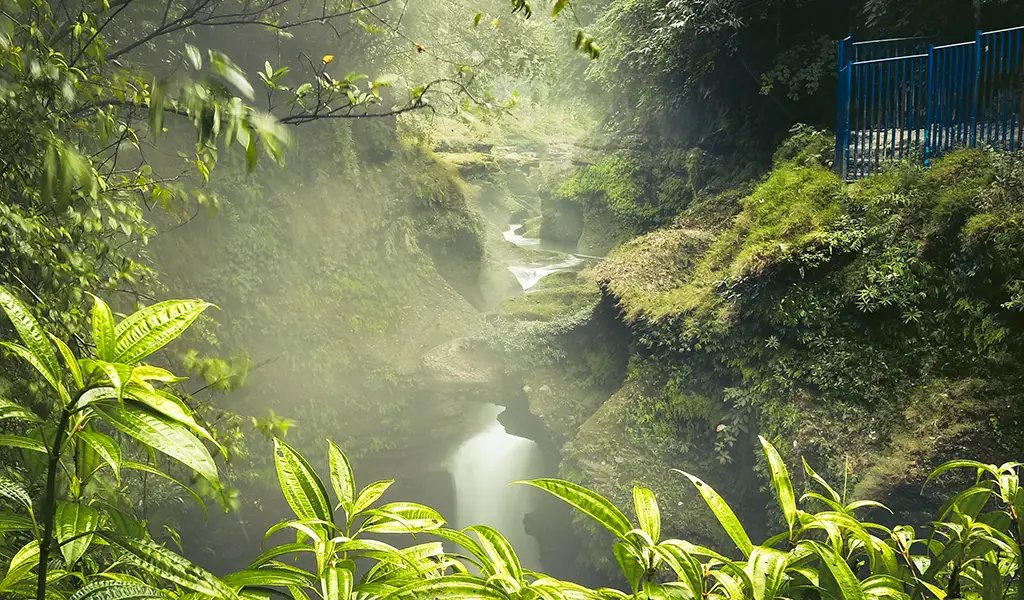
The water from Phewa Lake drops off a cliff at Devi’s Falls just outside Pokhara. The waterfall flows into a hidden cavern below, creating a loud roaring sound. On sunny days, you can see mist and swirls around the rocks and rainbows in the spore. The wet rock walls are covered in ferns and moss. A tunnel runs beneath the waterfall, leading into the earth.
The falls are also known as Patale Chhange, which translates to “underworld waterfall” in Nepali. Locals believe the water falls directly into the underworld from here. This dramatic and powerful fall is very different from the calm waters of the Phewa Lake nearby.
Location and Overview
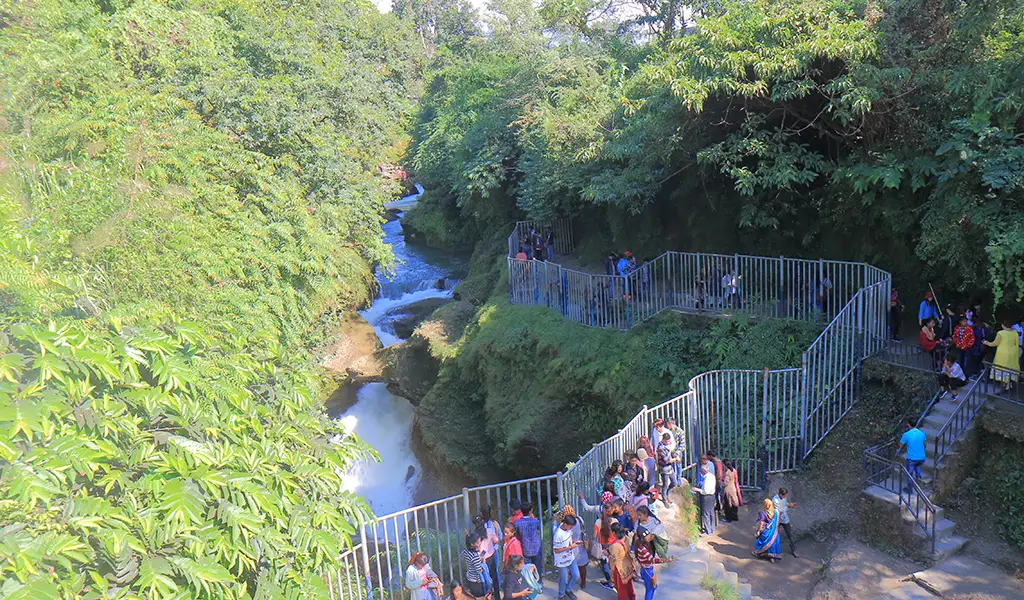
Devi’s Falls is about 2km southwest of Lakeside Pokhara and lies on the Siddhartha Highway. You can take a taxi or a local drive for about 10 minutes and pay about NPR 300-500. You can also walk from Lakeside for 30 minutes along a paved road. Large signs on the highway mark the entrance.
The fee is about NPR 100 for foreigners to get to the viewpoint. Take a short path and sturdy staircase to an observation deck by reading the waterfalls’ history and local legends.
This waterfall drips about 30 to 50m and flows full force, especially during the monsoon. It then disappears into a 150-meter underground limestone tunnel and resurfaces in another river. You can go to Gupteshwor Mahadev Cave just across the road. The same water flows through this cave.
The Legend and Cultural Significance
Devi’s Falls has a tragic story. A Swiss couple rented a boat in Phewa Lake’s canal in 1961. The wife, Davisa, accidentally fell into the rushing water near the canal mouth. Authorities never found her body, believing she got swept into the bottomless pit. Locals began calling the waterfall “Devi’s Falls” after her nickname.
Some locals believe Devi’s spirit still resides at the falls. Others pay their respect as they look down into the deep, roaring water.
The small memorials, shrines, and scattered flower petals are near the site. The word “Devi’ means goddess in Nepali, so some people make small offerings to seek blessings.
The Visual and Sensory Experience
You can feel the roar of Devi’s Falls even before you see it. The mist is cool and foggy, and the air feels fresh. You can watch the fall from a safe platform with metal railings. The fall creates a rainbow in the spray on sunny days.
You’ll see a dark void opening behind the waterfall. The lights on the observation deck reveal limestone walls with small carvings and local figures.
You can toss a coin onto a statue of a meditating guru in the winding pool for luck or a blessing. Even a short visit to this fall is impressive. The wet rocks, dramatic weather, and the cool air make the visit memorable.
Best Time to Visit and Weather Considerations
Monsoon (June to September): The fall has the strongest flow during this season. You’ll feel more mist and brighter rainbows. Paths can be slippery, and the crowds are heavy. You should wear a raincoat or poncho if you’re visiting the fall in this season.
Autumn (October to November): The weather is clear and the water flow is strong. While not as dramatic as the monsoon, this season still has lush vegetation and roaring fall. Evenings are mild and thus a popular time to visit.
Winter (December to February): The falls are still dramatic, and the air is crisp. Early mornings are 5–10°C and quiet with few visitors. The deck warms up as the sun rises.
Spring (March to May): Water flow is much lower than in the monsoon, but the falls remain impressive. You’ll see flowers like rhododendrons coloring the area. Mornings are cold and afternoons are warmer.
Timing: Devi’s Falls opens at around 8:00 AM. You should visit the place early to avoid crowds and enjoy cooler air. Late afternoon is also a good time. You should avoid visiting during heavy rain as strong water flow may close pathways.
Practical Tips for Visitors
Clothing: Wear quick-dry clothes as the water can soak you. You can wear a light raincoat or a poncho in the monsoon.
Footwear: Avoid flip-flops. You should wear sturdy shoes or non-slip sandals. The metal staircase and platform can be wet and slippery.
Camera: Keep your cameras and phones in waterproof bags, as you may get splashed with water. Wipe your equipment after taking photos.
Costs: Entry fee is about NPR 100 for foreigners and less for Nepali citizens. Small shops sell tea and snacks for around NPR 50-100. Since no restaurants are here, you should plan meals or eat after returning to Pokhara.
Safety: Stay behind railings as the drop is dangerous. Don’t get too close, throw objects, or attempt to swim in any pools.
Eco-friendly: Take out all your trash and avoid littering, even the most minor things. If you can pick up trash, notify the staff.
Combined Ticket: The combined ticket for Devi’s Falls and Gupteshwor Cave is around NPR 150.
Facilities: There are restrooms at the entrance. They are basic, so carry your own tissue and sanitizer.
Nearby Attractions and Activities
Gupteshwor Mahadev Cave: The Gupteshwor cave is directly across from Devi’s Fall. The cave goes underground and has a Shiva Lingam. You can see the river flowing inside the cave.
Mahendra Cave and Bat Caves are about 3-4 km away, further along the road. Mahendra Cave has limestone formations and a small pool. Bat Cave, or the Chameri Gufa, is a short forest walk and home to thousands of bats.
Phewa Lake: This lake is 2-3 km away by road. You can begin or end your visit with a boat ride on the lake.
World Peace Pagoda: You can take a boat and hike up to the pagoda from Phewa Lake. The hilltop offers panoramic views of Pokhara and the lake, especially at sunset.
Tibetan Handicraft Center: Near the falls’ parking area, a small Tibetan refugee village sells carpets, prayer wheels, momo, and Tibetan tea. It’s a good spot to buy souvenirs or a quick snack.
Begnas Taal: This lake is 15km east of Pokhara and a quieter alternative for those who want fewer crowds and a peaceful lakeside experience.
Environmental and Community Context
Devi’s Falls and Gupteshwor Cave are both formations of fragile limestone. Heavy foot traffic can wear down baths, so local guides monitor safety and cleanliness. The water of the Devi’s Falls comes from Phewa Lake, and the clarity depends on proper waste management. In recent years, villagers and local groups have worked to prevent sewage and trash from entering the canal.
Nearby communities grow organic vegetables and sell them in town. You can buy fresh fruit or marigolds outside the ticket booth from families to help support local livelihoods. Tourism contributes to the local economy. Youth volunteers help clean the pool and parking area. There are signs saying, “This water belongs to everyone; treat it with respect”.
Logistics and Accessibility
Getting There: You can taxi from Lakeside for NPR 300-500. Many drivers will wait and take you to Devi’s Falls and Gupteshwor Cave in one trip. Alternatively, you can also walk 30 minutes from Lakeside.
Parking: You can park your car, motorbike, or the tour bus at the entrance parking lot. Parking fees are low at around NPR 10 to 20.
Opening Hours: Devi’s Falls typically opens daily from 8:00 AM to 6:00 PM. Hours may vary, so you should check locally.
Tickets: Buy entry tickets at the gate. Buying the combined ticket to Gupteshwor Cave and Devi’s Falls is better for saving money.
Guides: Hiring a guide is optional. Most visitors explore the palace on their own. You may hear explanations about the legend from local guides or read signboards at the site.
Accommodations: You should return to Pokhara’s Lakeside for the night. Depending on the place, guesthouses and hotels range from $10 to $60.
Accessibility: The staircases and viewing platforms are steep and often slippery. The place is not wheelchair-friendly and may be difficult for visitors with limited mobility.
Conclusion
Devi’s Falls combines dramatic and beautiful natural phenomena with a solemn story. For some, it’s just a water body plunging into rock, while for others, the legend adds a layer of mystery.
Visit the place responsibly, follow safety rules, and help clean the area. You can support local guides and vendors by tipping or buying a small snack. As you leave, you’ll carry lifelong memories of the mist, rainbows, and history.