



Gupteshwor Cave feels like a different world with damp, cool air and dripping water. The stone walls are dark, and you can constantly hear the distant roar of an underground stream. You can see stalactites formed over centuries and small shrines along the passage. The cave is attractive because of the naturally formed Shiva lingam. Due to the Shiva lingam, the cave is also an important pilgrimage site. Visitors often stop here as a part of their trip to see the natural formation and spiritual setting.
Spiritual and Cultural Significance
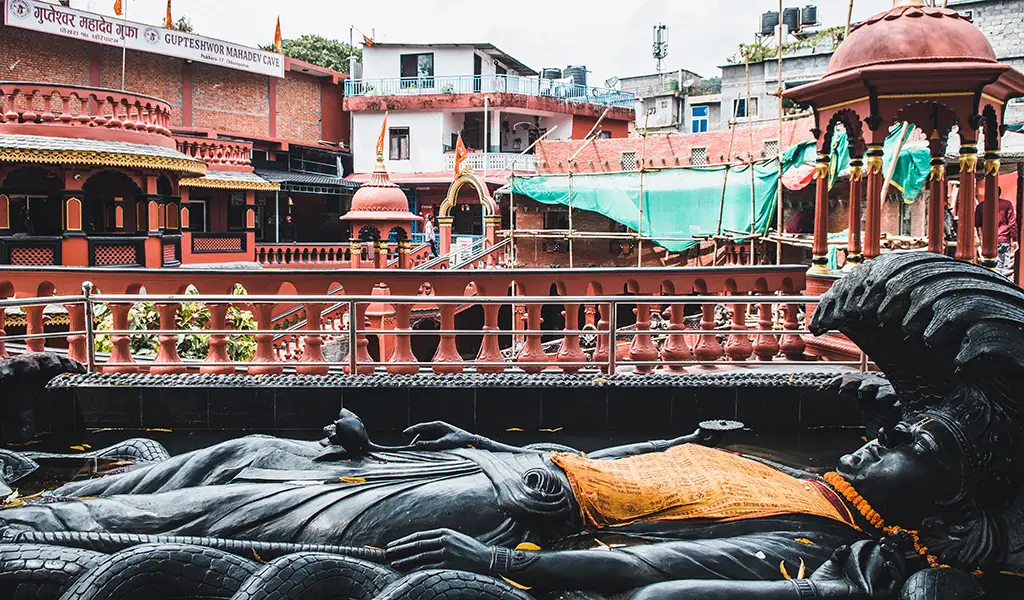
Local people regard Gupteshwor Cave as a sacred site. A large Shiva Lingam formed by mineral deposits over centuries stands at the center, and Hindus believe Lord Shiva resides here. There are other smaller shrines of Parvati, Ganesh, and Saraswati.
According to a legend, a shepherd discovered the cave centuries ago after his cow fell into a hole. Villagers entered and found the Shiva Lingam inside. People established the current shrine in the early 1990s. Since then, Gupteshwor has become an important pilgrimage site, especially on Shivaratri. It’s common to see devotees coming to pray and sadhus meditating here.
The name “Gupteshwor” means “Hidden God”. Pilgrims light incense, ring bells, and place offerings before the lingam. If you’re considering visiting the cave, remember to remove your shoes, bear the shrine, speak softly, and respect the sacred setting.
The Cave Experience
You’ll enter the Gupteshwor Cave by descending a long spiral staircase. You should watch your legs as the steps are rocky and uneven, and the lights are dim. After a short walk, you’ll arrive at a chamber where a cow statue stands beside a Shiva idol, symbolizing a guardian presence.
Deeper in the cave, you’ll reach the main temple chamber. Hundreds of lamps flicker around a massive lingam that rises from the cave floor. The ceilings dip in some places, and the walls shine with minerals. You can click pictures or talk loudly in the cave. Many visitors pause here to meditate, pray, or make a wish.
Beyond the shrine, you can go even further down by following a metal staircase. As you go further down, the sound of rushing water from the Devi’s Falls strengthens. The water glows through narrow gaps in the ground, making the floor slippery. Remember that the staff will close the area when the water level rises.
The cave stays cold all year round at around 12–15°C. The stone walls feel wet with moisture, and you may even notice small drops of water on your clothes.
Best Time to Visit and Considerations
Gupteshwor Cave is open around 8:00 AM and closes at 5:00-6:00 PM. You can go in the early morning hours for a quiet visit.
The staff may close the lower section of the cave, especially during the monsoon or heavy rain. If the stream swells, the deepest chamber can flood. The cave is safe all year-round, but the path can be muddy after rain. Bring a light jacket or shawl if you’re visiting during December. You should avoid visiting on Maha Shivaratri to skip the crowds.
Practical Tips for Visitors
Wear sturdy shoes as the Gupteshwor Cave floor can be wet and uneven. Bring a light jacket or shawl since the undergarment is cool. You can wear long pants or skirts for modesty. Even though the cave has electrical lights, it’s better to bring a small flashlight or headlamp for darker corners and to see the rock formations.
The cave is a place of worship. Remove your shoes before descending near the shrine, speak softly, and do not smoke or litter. Dress modestly and respect the place. You can take photos in the outer passages, but keep your camera off near the main lingam. The shrine area prohibits flash photography.
Tickets cost about NPR 100 for foreigners and less for Nepali citizens. It covers the entry to both Gupteshwor Cave and Devi’s Falls. You can take a guide to learn the place’s history and key points. Some local guides offer short tours at the entrance, and the interpretive sign guides visitors along the path.
You can buy prayer beads, idol statues, incense, and candles for lighting at the shrine from the local souvenir shop. The cave has many stairs, and some areas even require bending. You can pause and breathe if you feel short of breath or cold.
Nearby Attractions and Activities
Devi’s Falls: Located directly across from Gupteshwor Cave, the water from this fall flows through the cave. You can walk to the viewpoint to see the Fall up close.
Peace Pagoda: This Buddhist Peace Stupa sits on a hill above the Phewa Lake. You can reach the trail by road or boat, while many people hike to the pagoda.
International Mountain Museum: This museum is on the lakeside and shows the history of the Himalayas, local culture, and mountaineering. It helps provide context to the mountains you see from the city.
Tibetan Handicrafts: A Tibetan refugee settlement is near the Devi’s Falls entrance. You can buy carpets, prayer wheels, and authentic momo here.
Handicrafts Markets: Browse through stalls for handmade pashmina, wood carvings, and local art.
Hiking: If you want more adventure, take a short trek to Dhampus or Australian Camp villages by starting near Lakeside. The trails offer views of the city and the surrounding mountains.
Environmental and Geological Insights
Ancient limestone forms the Gupteshwor Cave. It results from over a thousand years of rain-eroded rock creating the cave and its stalactites. These formations grow only a few millimeters each year. You must not touch the stalactites or the Shiva Lingam, as it can stop the growth of the cave permanently.
The water flowing through the cave comes from the Phewa Lake, and the raging sound is from the Devi’s falls. Scientists estimate it takes about 24 hours for one drop to travel from Devi’s Falls through the cave to the Kali Gandaki River.
Local groups actively help keep the cave clean. School children organize cleanup drives and pick up trash. Some charity boats use solar power to prevent fuel leaks into the water.
Gupteshwor Cave and Devi’s Falls form a connected natural system, symbolizing Shiva’s power. A local priest said, “The cave shows that even the wildest force of nature has peace deep inside. It is like Shiva’s nature itself: fierce and calm.”
Logistics and Access
Gupteshwor sits on the right side of the Siddhartha Highway, directly across from Devi’s Falls. You can take a taxi or tuk-tuk from the lakeside or walk to the cave. The cave has a parking lot for self-driving visitors. The cave opens daily around 8:00 AM and closes by 5:00 PM. Opening hours vary seasonally, so confirm locally.
You should pay the ticket fee to enter the cave. This ticket allows entry into the cave and the Devi’s Falls, so keep it safely in case of inspection.
The site is inaccessible to wheelchairs as you must take the steep stairs and narrow passages. You hire a guide or follow the signboards along the path. Most visitors explore the cave for about an hour. You can add more time if you want to see Devi’s Falls.
Conclusion
Gupteshwor Cave offers a hidden experience beneath Pokhara. The cool air, dripping rock, and the presence of Shiva give the cave a quiet and powerful atmosphere. Move gently and leave no trash behind. The lamps and prayers inside are essential to local worshippers. When you step back into the sunlight, you notice how different this part of Nepal feels, tucked away, meaningful, and worth the visit.