



Jokhang, an ancient temple in the center of old Lhasa, influences the city’s history and culture. It’s also known as the spiritual heart of Tibet. Pilgrims from every corner of the plateau have been traveling here for more than 1,300 years. Many believe “Lhasa”, which translates to “Place of Gods”, got its name from Jokhang’s founding. Legends say it was once known as “Rasa” or “Goat’s Land” until the temple made it a sacred city.
Barkhor, a ring of narrow streets serving as a pilgrim kora route and a lively market, encircles Jokhang. This temple shaped a neighborhood and defined the city. Jokhang secured Lhasa’s palace as Tibet’s primary pilgrimage destination and religious capital.
Today, the Jokhang Temple is the most sacred site in Tibetan Buddhism and is part of the UNESCO World Heritage Site. Pilgrims chant prayers, offer incense, and prostrate here. These rituals show that the temple is still the city’s living heart.
Historical Background
Built in the 7th century by Tibet’s 33rd king, King Songtsen Gampo, the Jokhang Temple is the spiritual heart of the Tibetan Plateau. He united Tibet and helped establish Buddhism, guided by his two wives, Princess Bhrikuti of Nepal and Princess Wencheng of China. Both women brought sacred Buddha statues with them as part of their dowries.
King Songtsen Gampo built the Jokhang Temple to enshrine the statue brought by Princess Wencheng. She got a life-sized image of the Buddha aged 12, also known as Jowo Shakyamuni. Legends say the king built the temple on a drained lake identified by the princess. This story also explains the city’s old name, “Rasa,” named after the mythical goat that helped drain the water.
The Jokhang Temple has survived many challenges over the centuries. It survived persecution, fires, and political changes. Monks hid the Jowo statue in the 9th century to protect it from King Langdarma, who opposed Buddhism. The 5th Dalai Lama expanded the temple in the 17th century. He added golden roofs and upper floors, which we see today. The temple also hosted events like the enthronement of the Dalai Lamas and the Monlam Prayer Festival.
Jokhang faced severe damage during the Cultural Revolution. It reopened later in 1979 and is still a significant pilgrimage site. Despite centuries of change, the temple remains the center of Lhasa’s spiritual and cultural life.
Architectural Features
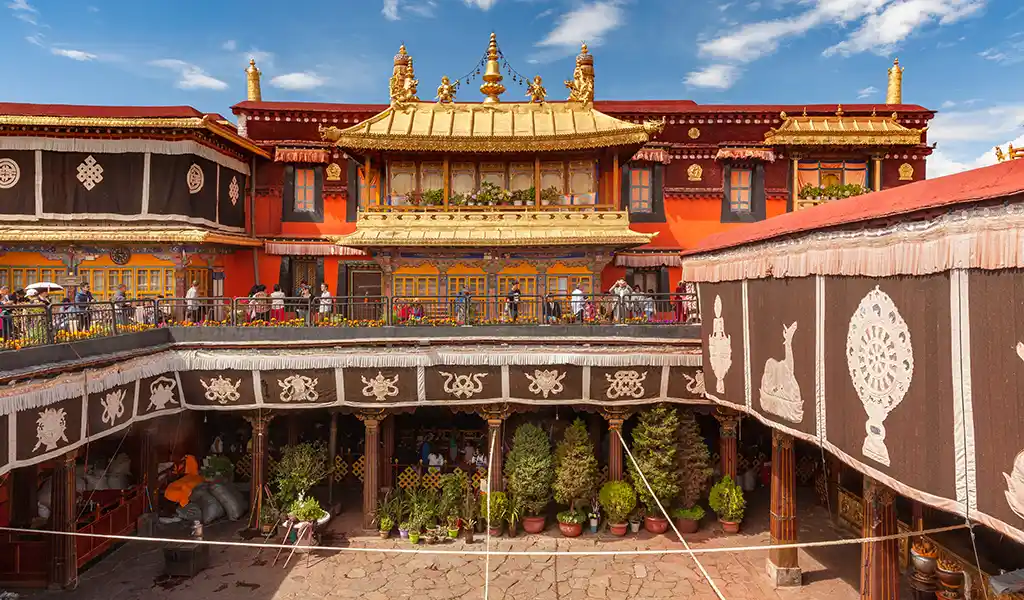
Nepali, and Chinese architecture with a mandala-shaped, symmetrical four-storey layout and a central courtyard—the faces north, honoring Princess Wencheng’s homeland. The central sanctum holds the sacred Jowo Shakyamuni statue. This golden Buddha is the most essential object in the temple. Pilgrims leave offerings like yak butter, money, and white scarves here.
There are many smaller chapels for different deities surrounding the main hall. These include King Songtsen Gampo and his two queens. These dimly lit chapels have carved wood decorations, silk banners, and flickering butter lamps.
The rooftop is another highlight. You can see gilded roofs and statues standing atop the temple. A pair of golden deer stand beside a Dharma Wheel, symbolizing the Buddha’s first sermon. You’ll see the Potala Palace and the surrounding Barkhor market. from the roof
Builders used wood and stone to construct the temple. Artists painted the wall with ancient murals of Buddhist stories and the temple’s history. Pilgrims have walked the Barkhor market street to perform the kira for centuries.
The Jokhang Temple continues to stand as more than a monument. Each statue, mural, and worn stone tells the stories of Tibetan Buddhism and its resilience.
Spiritual and Religious Significance
The Jokhang Temple is the holiest site for the followers of Tibetan Buddhism. It’s often referred to as the spiritual heart. The significance of this temple comes from many layers of faith and history.
Home of the Jowo Shakyamuni
Jowo Rinpoche’s statue stands at the center of the temple. Tibetans believe this life-size statue of the 12-year-old Buddha carries his living essence. According to legend, the statue’s origin dates back to his lifetime, with Buddha directly blessing the statue. For that reason, pilgrims see it as the most accurate Buddha statue and the most sacred object in Tibet.
People across Tibet, Bhutan, Ladakh, and Mongolia travel to Lhasa to see the Jowo. Many people spend weeks or months walking or prostrating in the city. You may see pilgrims crying out, weeping, or even collapsing in deep emotion in the temple. They offer white scarves, gold leaf pressed onto crowns, or butter for lamps. Visiting the Jowo is the ultimate fulfillment of Tibetan spiritual life. They say, “Without seeing Jowo in Lhasa, one’s human life is incomplete.”
Pilgrimage and Kora
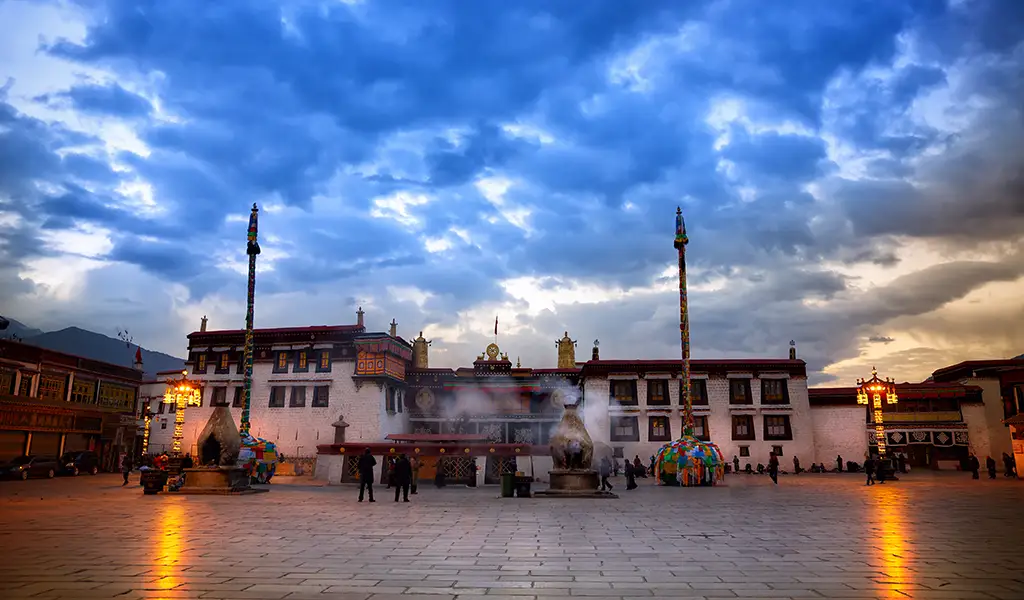
The Jokhang has always been the final goal of Buddhist pilgrimage. Most worshippers walk the Barkhor circuit around the temple 108 times. Some prostrate themselves with each step, taking hours to complete a single circuit. They believe these acts purify karma and keep their life centered on Dharma.
Festivals and Rituals
Central Tibetan Buddhism revolves around the Jokhang. Monks from the great monasteries, Sera, Drepung, and Ganden, gather in the courtyard during Monlam Chenmo, the Great Prayer Festival. Worshippers would pray for days in front of the temple. On one occasion, people held a debate exam for the Geshe degree here in the presence of the Dalai Lama. The procession of the Jowo statue around the Barkhor was an annual tradition during the Monlam Chenmo.
Lhamo Dhondrup, the Summons of the Gods, also took place at Jokhang. The Nechung would perform a trance before the Jowo to predict the year. Gutor, the Lamp Festival falls on the last day of the year. Butter lamps light the Jokhang and Barkhor to welcome the new year. Even today, devotees gather on Saga Dawa, the month of Buddha’s enlightenment, to pray and chant through the night.
Legends and Miracles
There are many legends and miracles associated with Jokhang. One such legend says that a great teacher, Atisha from Bengal, visited Jokhang in the 11th century. Jowo Buddha spoke to him and told him that his work in Tibet would benefit countless beings. People say the Jowo statue shed tears during invasions, and the statue’s face appears to smile and radiate light during auspicious days. Another relic, Ramalung Tooth, which people believe to be Buddha’s tooth brought by the Princess Wencheng, was also kept here. For Tibetans, standing before the Jowo statue is as close as one can get to meeting the Buddha face-to-face.
Daily Life and Community
Jokhang is part of the daily life for residents of Lhasa. Locals walk a quick kora before work, shopkeepers light incense, and parents bring newborns for blessings. Families leave a lock of their baby’s hair at the statue’s feet as a lifelong offering. People blend these traditions with modern life.
Unity Beyond Sects
Every school of Tibetan Buddhism around the world honors the Jokhang. Although the Dalai Lama’s tradition, Gelug School, became dominant later, Kagyu, Nyingma, Sakya, and other schools visit and honor the Jono statue. Even though the rituals of these schools differ slightly, they all honor the temple. Even followers of the pre-Buddhist Bön religion joined in. Bön practitioners circumambulate their shrines counter-clockwise, but they walk clockwise at the Jokhang to show respect. Jokhang serves as a unifying symbol for all faiths in Tibet.
Spiritual Atmosphere
Many visitors say the Jokhang’s atmosphere is compelling, radiant, and transformative. The smell of butter lamps and juniper smoke fills the air as the mantras echo through the dim halls. The devotion of pilgrims creates soeldep, a powerful field of blessings.
Role in Identity and Continuity
The Jokhang has remained central to the Tibetan faith during war, turmoil, and the Cultural Revolution. When the temple closed in the 1960s, Tibetans still prayed silently. Thousands traveled to the temple after it reopened in 1979. Many young Tibetans now walk the Barkhor and do kora even if they are not religious. Jokhang Temple is a part of Tibetan culture and identity. Tibetans worldwide often pray toward the Jokhang, just as Muslim people face Mecca to strengthen their devotion.
Cultural and Social Impact on Lhasa
The Jokhang Temple has shaped Lhasa’s growth, turning the valley into a lively city. People built the Barkhor market around the temple to serve the constant flow of pilgrims and travelers. Many traders came here to sell goods and exchange ideas, making Lhasa a cultural and trade hub.
The temple also boosts the local economy. Monasteries owned and rented out properties in the Barkhor. Donations to the Jokhang support both religious and everyday life. Pilgrims and travelers buy food, souvenirs, and spiritual items, keeping the market thriving.
Beyond the economy, Jokhang is also a social and cultural center. Tibetans from all backgrounds meet here as the temple hosts events from daily gatherings to large festivals and protests. The temple has inspired generations of artists and poets.
Historically, the Jokhang connected religion with politics. Officials swore oaths and announced major decrees here. The temple linked the administration to Buddhist principles. This temple still draws visitors and pilgrims and keeps its traditions alive.
Challenges, Preservation, and Modern Relevance
The Jokhang Temple faces modern challenges like preservation and political pressures. Many tourists and devotees walking its halls wear the fragile ancient structure down. Authorities have installed digital records, better ventilation, and protective barriers. They reduce damage from foot traffic, butter lamp smoke, and constant touching.
After the 2018 fire, the authorities imposed stricter safety rules. Balancing tradition with modernization is another challenge. Some modern, “faux-traditional” structures have replaced the historic buildings. While the temple’s core remains protected, locals say the town is losing its character.
The government tightly monitors monks and their rituals, but Tibetan spiritual life continues in Jokhang as pilgrims devote themselves openly. This temple is still a central social and cultural hub. Tradition and modern life coexist to maintain the temple’s spirit in a changing world.
Conclusion
Despite great hardships, the Jokhang Temple has preserved its spiritual power. Every day, pilgrims and locals fill the courtyard, circle the Barkhor path, and devote themselves to the temple.
The Jokhang temple has been Lhasa’s spiritual, cultural, and social center for over 1,300 years. It transformed Lhasa from a small settlement into a central trading hub. The temple saw royal coronations, political struggles, and major festivals.
The temple is a living reminder of Tibetan culture and faith as the city grows and modernizes. It brings people together, inspires respect, and creates a sense of community. The Jokhang is a historical monument, the living soul of a civilization, and a symbol of continuity through changes.