
Included Meals
- Breakfast: 5
- Lunch: 1
- Dinner: 1

Unbeatable Holiday Offers – Save Up to 20% on Your Next Adventure!
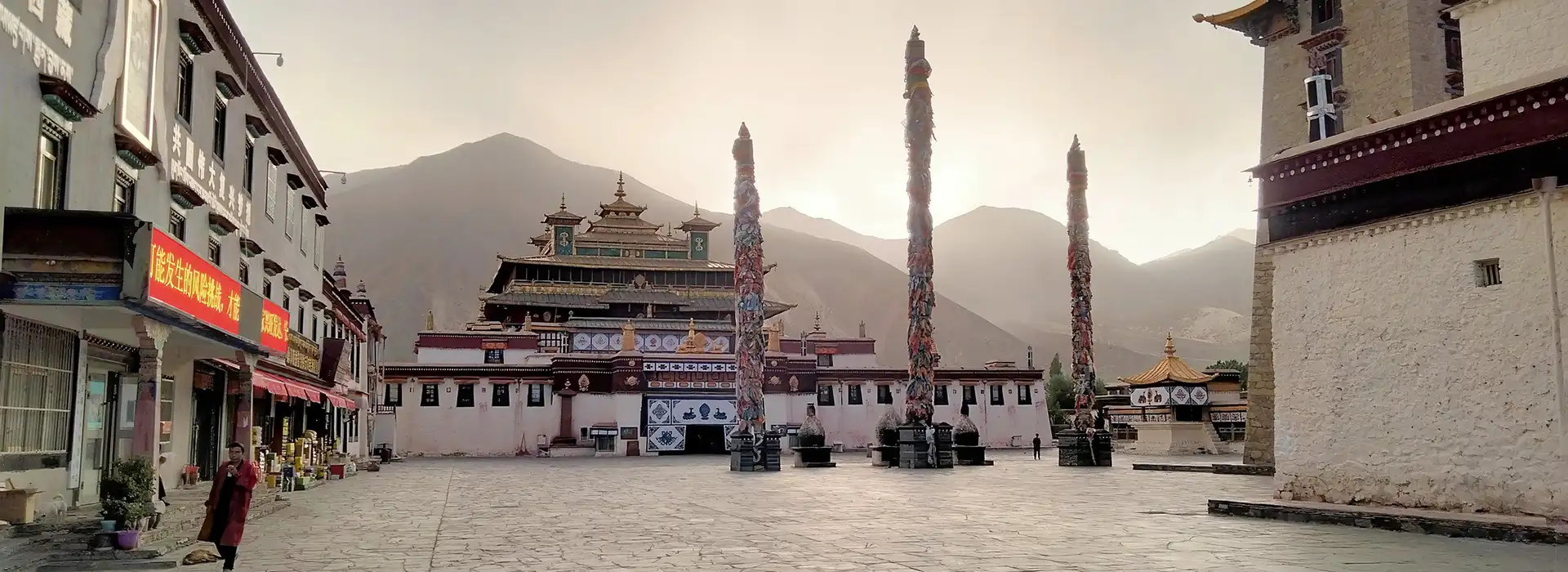
The Lhasa and Shigatse Tour is a 6-day cultural tour of central Tibet that starts and ends in Lhasa. It covers the most famous landmarks in Tibet, including Potala Palace, Jokhang Temple, Drepung Monastery, and Sera Monastery. The route then heads west through central Tibet, passing Yamdrok Lake, Korola Glacier, and Gyantse before arriving in Shigatse, the second-largest city in Tibet. In Shigatse, travelers visit Tashilhunpo Monastery, the historic seat of the Panchen Lama.
This tour suits first-time visitors to Tibet well. It does not require trekking, it does not involve extreme sleeping altitudes, and the main overland route runs on a fully paved road. Unlike an Everest Base Camp trip, this route keeps sleeping altitudes manageable and driving distances comfortable. Families, seniors, and culture-focused travelers all find this route practical and rewarding.
This route stands out among central Tibet tours for several reasons. Here is a quick look at what makes it worth booking:
Few short central Tibet routes combine lake views, glacier scenery, historic towns, and major monastery visits as effectively as this six-day itinerary.
Many Tibet travelers book a simple Lhasa city tour when they could get significantly more from this route in just two extra days. Here is a direct comparison:
| Lhasa-Only Tour | Lhasa and Shigatse Tour |
|---|---|
| Potala Palace | Potala Palace |
| Jokhang Temple | Jokhang Temple |
| Barkhor Street | Barkhor Street |
| No lake visit | Yamdrok Lake included |
| No glacier | Korola Glacier is visible from the road |
| No Gyantse | Gyantse old town stop |
| No Tashilhunpo | Tashilhunpo Monastery |
| City-only experience | Central Tibet overland scenery |
| Shorter trip | 6 days with more variety |
The Lhasa and Shigatse Tour gives travelers everything a short Lhasa city break offers, and then adds a full overland day through some of the most beautiful scenery in central Tibet. The extra two days do not push anyone into hard expedition territory. They simply make the trip feel complete.
Compared to an Everest Base Camp tour, this route stays lower, drives shorter daily distances, and allows travelers to return home without worrying about how their bodies handled the extreme altitude. That combination makes the Lhasa Shigatse Tour the most logical upgrade for anyone who wants a rich Tibet experience without overcommitting.
The Lhasa and Shigatse Tour offers six days across the two greatest historic cities of central Tibet, one of the most scenic overland drives in Asia, and a cultural experience that most travelers remember as a highlight of their entire trip. Potala Palace, Jokhang Temple, Yamdrok Lake, Korola Glacier, Gyantse, and Tashilhunpo Monastery together form a complete picture of what Tibet looks, feels, and sounds like.
This itinerary covers a wide range of central Tibet highlights in a short and manageable format. This is not a trip that demands extreme fitness, weeks of preparation, or a high tolerance for rough conditions. It asks only for an open mind, good health, and a willingness to slow down and take in one of the most extraordinary landscapes and cultures on the planet. Contact our team to check availability, confirm permit timelines, and get a full quote based on your travel dates and group size.
We arrange everything from permits to hotels to guide assignments, so you step off your flight in Lhasa with every detail taken care of. The Lhasa and Shigatse Tour is available year-round. April through October offers the best overall conditions. We look forward to helping you plan it.
Below are the key stops and experiences you find on this trip:
• Potala Palace – the most iconic structure in Tibet and a UNESCO World Heritage Site
• Jokhang Temple – the spiritual center of Tibetan Buddhism, visited by thousands of pilgrims
• Barkhor Street – the pilgrimage circuit around Jokhang, lined with traditional market stalls
• Tibetan Teahouse – a local stop for butter tea and a genuine slice of everyday Lhasa life
• Drepung Monastery – historically one of the largest monasteries in the world
• Sera Monk Debate – the famous afternoon debate held in the courtyard of Sera Monastery
• Yamdrok Lake – a turquoise sacred lake visible from Gampala Pass at about 4,900 meters
• Korola Glacier – a massive glacier visible directly from the road as you drive west
• Simila Pass – a scenic mountain pass on the route between Gyantse and Shigatse
• Gyantse Old Town – a historic town with the famous Kumbum Stupa and old-world street life
• Tashilhunpo Monastery – the traditional seat of the Panchen Lama in Shigatse
• Samzhubze Old Market – a local market in Shigatse for handicrafts and daily Tibetan goods

Included Meals

Accommodation
3-star hotels (base package, low season)

Trip Grade
Your trip begins the moment you land at Lhasa Gonggar Airport or step off the train at Lhasa Railway Station. Your Tibetan guide and tour vehicle meet you on arrival and transfer you to your hotel in Lhasa.
Lhasa sits at around 3,656 meters above sea level. Most travelers feel some effect from altitude on their first day. Mild headaches, slight fatigue, and occasional shortness of breath are normal. Your body needs time to adjust, and the best way to help it is to rest, drink plenty of water, and avoid any strenuous physical activity for the first afternoon and evening.
Keep the afternoon completely free. Do not rush out to explore. Even a short walk around the hotel block at this altitude uses more energy than it would at sea level. A light meal, some warm tea, and an early bedtime set you up well for the full day of sightseeing ahead.
Practical Tips for Day 1
Accommodation:
Hotels in Lhasa

Maximum Altitude 3,656m/11,995ft (Lhasa)
Difficulty
Day 2 eases you into Lhasa sightseeing without pushing too hard. Your guide takes you to two of the most important Gelug monasteries in Tibet.
Drepung Monastery
Start the morning at Drepung Monastery, located on the slopes of Mount Gephel at the western edge of Lhasa. Before the Chinese occupation of Tibet, Drepung housed over 10,000 monks and stood as one of the largest active monasteries in the world. Today, it remains one of the great seats of Tibetan Buddhist learning.
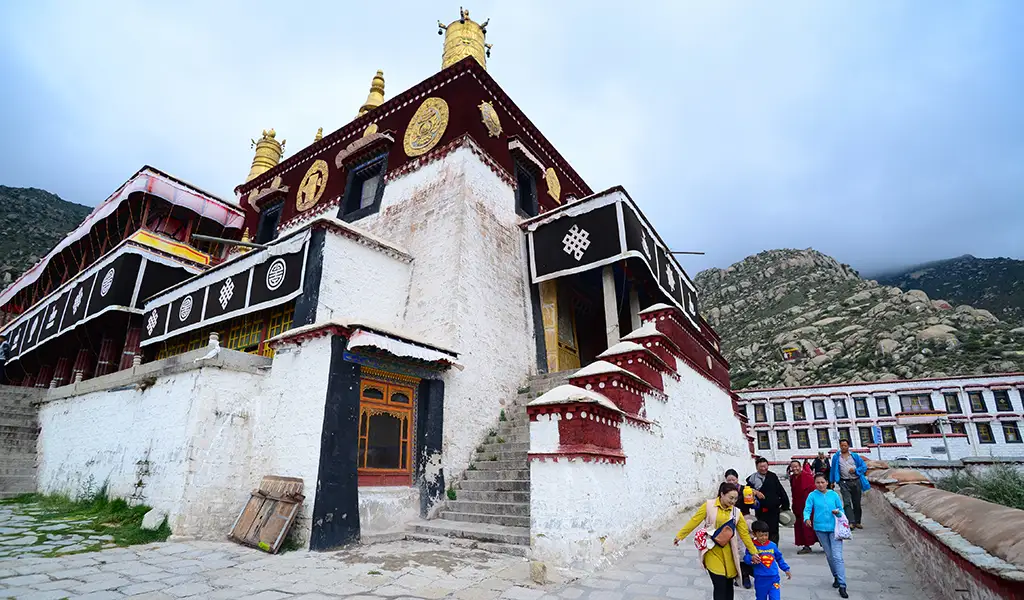
Walk through the wide courtyards, examine the main assembly hall, and explore the numerous chapels scattered across the hillside. The scale of the complex takes most visitors by surprise. Drepung feels less like a single building and more like a small walled town. The upper sections offer clear views across the Lhasa Valley.
Allow about two to three hours here. As you walk, your guide explains the significance of each hall and the history of the Gelug school of Tibetan Buddhism. The monastery sits slightly higher than the city center, so take your time climbing the steps.
Sera Monastery and Monk Debate
After lunch, drive to Sera Monastery, about five kilometers north of the Lhasa city center. Sera was founded in 1419 and remains one of the three great Gelug university monasteries of Tibet, along with Ganden and Drepung.
The main attraction at Sera is the monk debate, held every afternoon except Sunday in the monastery’s debate courtyard. Monks practice dialectical debate to sharpen their understanding of Buddhist philosophy. They use hand gestures, claps, and formal rhetorical questions in a practice that looks almost theatrical to outsiders. Watching it for the first time is genuinely interesting. The energy in the courtyard is loud, animated, and completely unlike anything you find at a typical monastery visit.
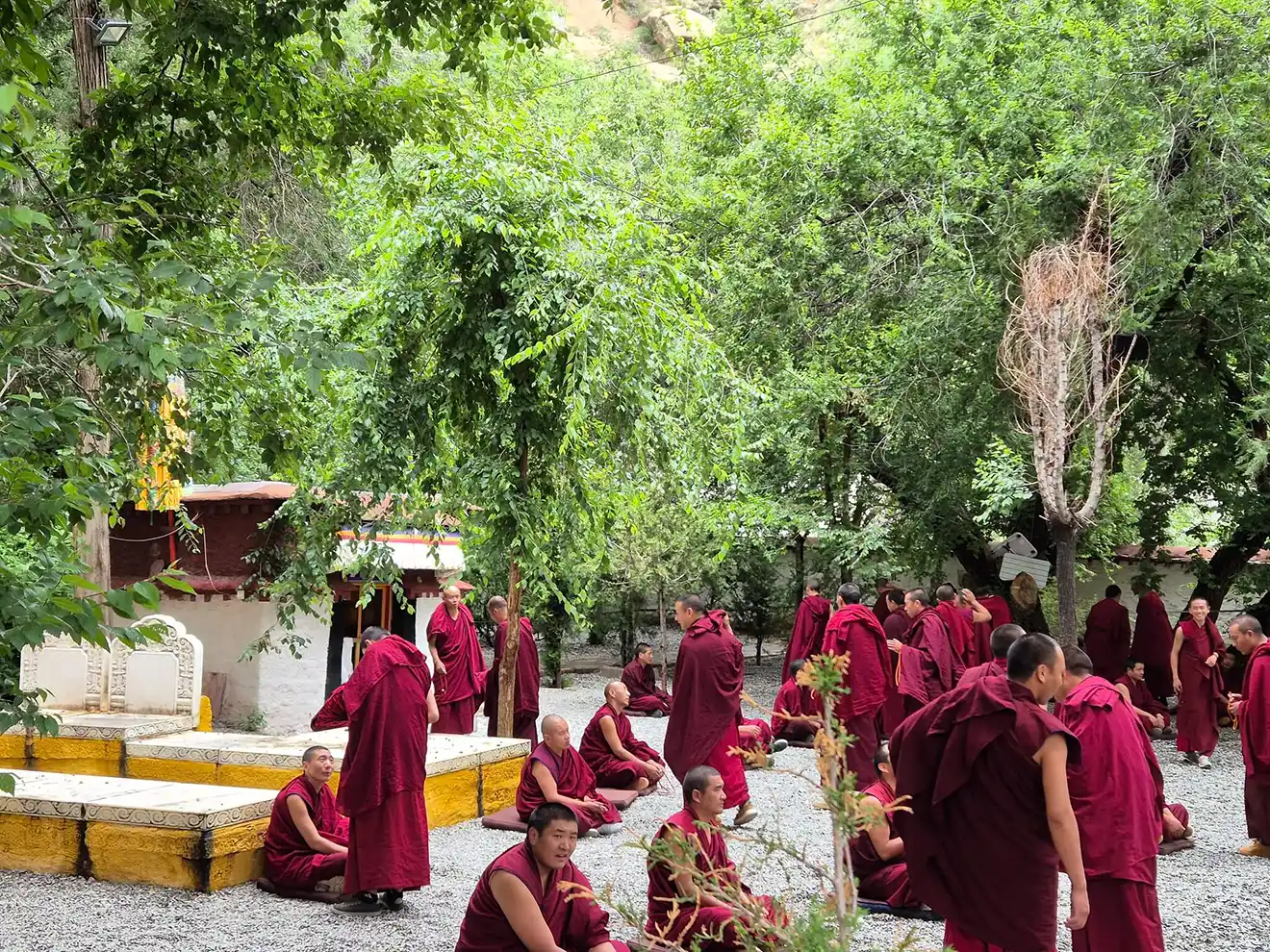
Debates usually run from around 3:00 PM. Plan to arrive a little before that time to find a good viewing spot. Photography of the debate is allowed, though your guide will advise on respectful conduct near the monks.
The day ends with a welcome dinner, typically held at a local Tibetan restaurant. The dinner includes traditional Tibetan dishes such as tsampa, momo dumplings, thukpa noodle soup, and Tibetan bread. Your guide and any other group members join you for the meal, making it a good time to ask questions and plan for the days ahead.
Practical Tips for Day 2
Accommodation:
Hotels in Lhasa
Meals Breakfast, Dinner
Maximum Altitude 3,656m/11,995ft (Lhasa)
Difficulty
Day 3 covers the heart of Lhasa. These three sites together form the core of any Lhasa Shigatse Tour and represent some of the most significant religious and cultural landmarks in the entire Tibetan Plateau.
Potala Palace
Begin the morning at Potala Palace. The palace sits on a rocky hill called Marpo Ri, or Red Hill, rising about 130 meters above the Lhasa Valley floor. It served as the winter palace of the Dalai Lamas for several centuries and now functions as a museum and UNESCO World Heritage Site.
The structure contains over 1,000 rooms spread across 13 floors. Visitors follow a fixed route through the White Palace and the Red Palace. The Red Palace holds the most important chapels and the ornate golden stupas containing the tombs of past Dalai Lamas. The views from the upper terraces across the city and the surrounding valley are excellent.
Visitor numbers are strictly controlled. Your guide holds your pre-booked entrance ticket, which specifies an entry time. Arrive at the gate at least 15 minutes before your slot. The walk from the main entrance to the upper floors involves a significant number of steps. Take them slowly and rest when needed. Do not rush the climb. The visit typically lasts 2 to 3 hours. Guides explain the significance of the murals, statues, and artifacts in each room.
Jokhang Temple
After the Potala Palace, drive to the Jokhang Temple in the heart of old Lhasa. Jokhang is the most sacred temple in Tibet and the spiritual center of Tibetan Buddhism. Pilgrims travel from all across the Tibetan Plateau to visit the temple, and it receives visitors year-round, regardless of weather or season.
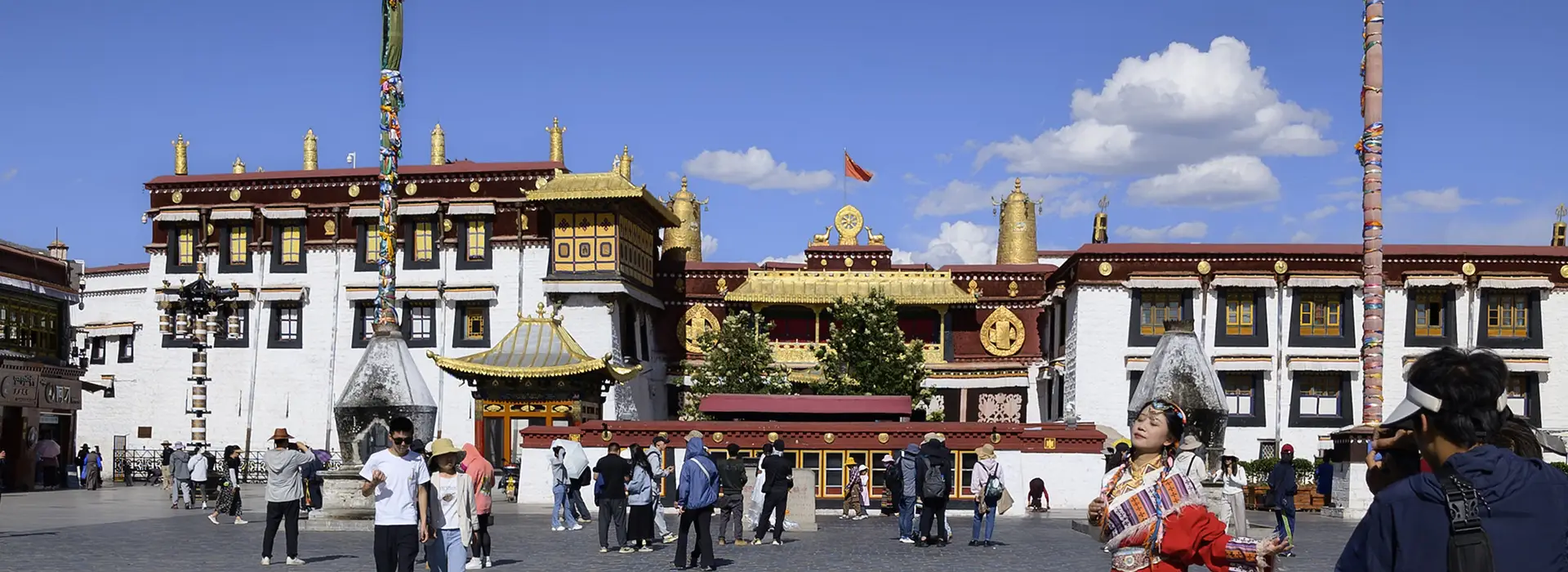
The main object of veneration inside Jokhang is the Jowo Rinpoche, a golden statue of Shakyamuni Buddha at age 12. It is considered the most precious religious object in Tibet. The chapel housing the statue fills with the smell of butter lamps and the low murmur of pilgrims reciting mantras.
Walk through the main hall, visit the rooftop for a view of the golden deer and dharma wheel above the entrance, and watch the stream of pilgrims prostrating on the stone plaza in front of the temple. The atmosphere here is genuinely moving, regardless of your personal religious background.
Barkhor Street
Barkhor Street is the outer pilgrimage circuit that runs in a wide loop around Jokhang Temple. Pilgrims walk the circuit clockwise as an act of devotion. At the same time, the street functions as a traditional open-air market selling thangka paintings, prayer flags, incense, jewelry, traditional clothing, and handicrafts.
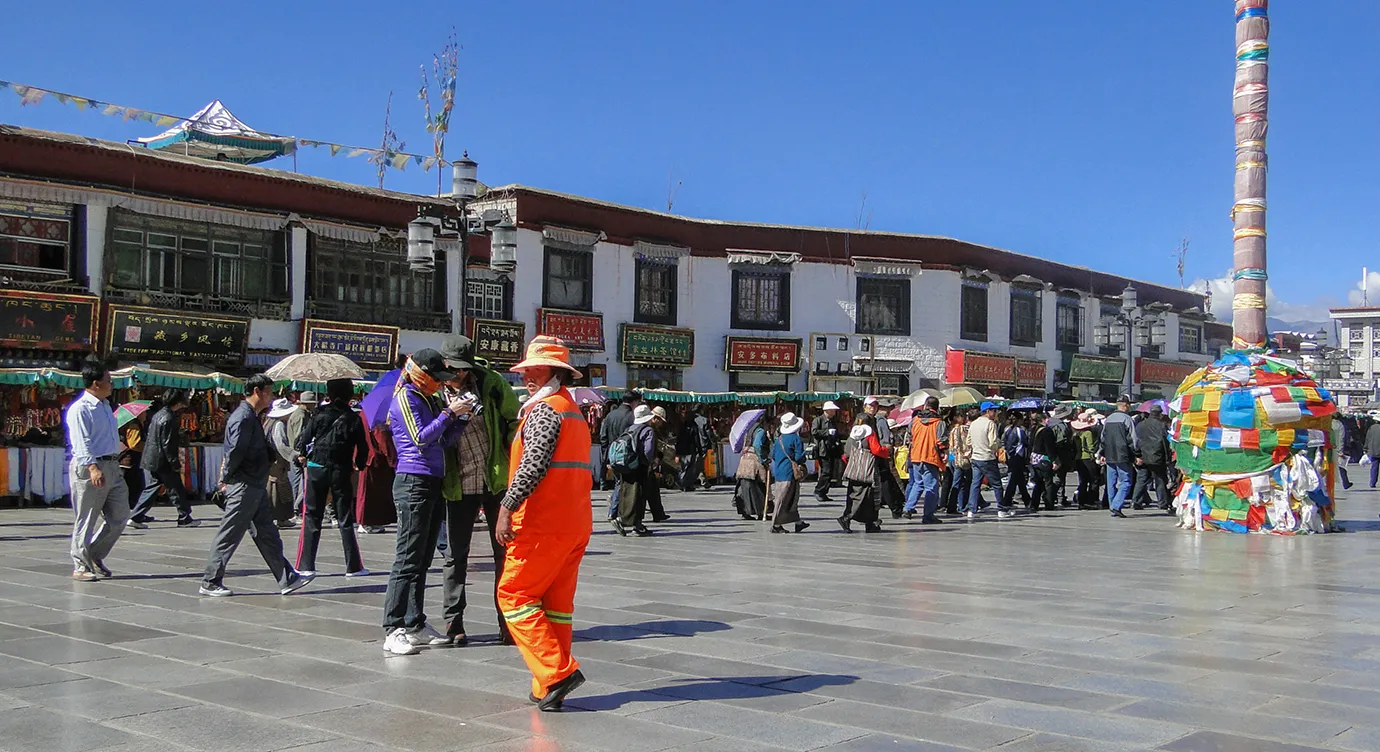
Walk the circuit with your guide and take your time browsing the market stalls. This is one of the best places in Lhasa to buy authentic Tibetan souvenirs directly from local vendors. Your guide can help you identify quality items and negotiate fair prices.
The street fills with locals, pilgrims, and monks at almost every hour of the day, but mornings and evenings tend to draw the largest crowds of worshippers.
Tibetan Teahouse Stop
After Barkhor Street, stop at a traditional Tibetan teahouse for butter tea or sweet milk tea. Teahouses are a central part of daily social life in Lhasa. Locals gather to talk, read, or simply rest while drinking tea and eating small snacks. Sitting in a teahouse gives you a more relaxed and personal feel for the city than any monastery visit.
Try yak butter tea for the most traditional experience. The taste is salty and rich rather than sweet, and it takes most visitors a cup or two before they decide whether they enjoy it. Sweet tea, made with milk and sugar in a style influenced by Indian chai culture, is more immediately familiar to most travelers.
Practical Tips for Day 3
Accommodation:
Potala Palace, Jokhang Temple, Barkhor Street, and Tibetan Teahouse
Meals Breakfast
Maximum Altitude 3,656m/11,995ft (Lhasa)
Difficulty
Day 4 is the scenic heart of the entire Lhasa and Shigatse Tour. The drive covers about 360 kilometers and takes most travelers eight to ten hours, including all stops. It passes through some of the most spectacular landscapes in central Tibet and is the only day on the trip when the altitude rises significantly above Lhasa. Start early from Lhasa after breakfast. The road heads southwest out of the city and begins climbing almost immediately.
Gampala Pass and Yamdrok Lake
The first major highlight is Gampala Pass at approximately 4,900 meters. A short walk from the road takes you to a viewpoint that looks down on Yamdrok Lake, one of the three sacred lakes of Tibet. The lake stretches across the valley below in a deep turquoise color, unlike anything you find at lower altitudes. Prayer flags at the pass snap in the wind, and in clear weather, the views extend to distant snow-capped peaks on the far side of the lake.
Yamdrok Lake sits at an elevation of approximately 4,441 meters and covers an area of approximately 638 square kilometers. Local Tibetan communities consider it a living goddess and believe its well-being reflects the health of Tibet itself. The road descends from the pass along the lakeshore, giving you extended views from the vehicle before turning south.
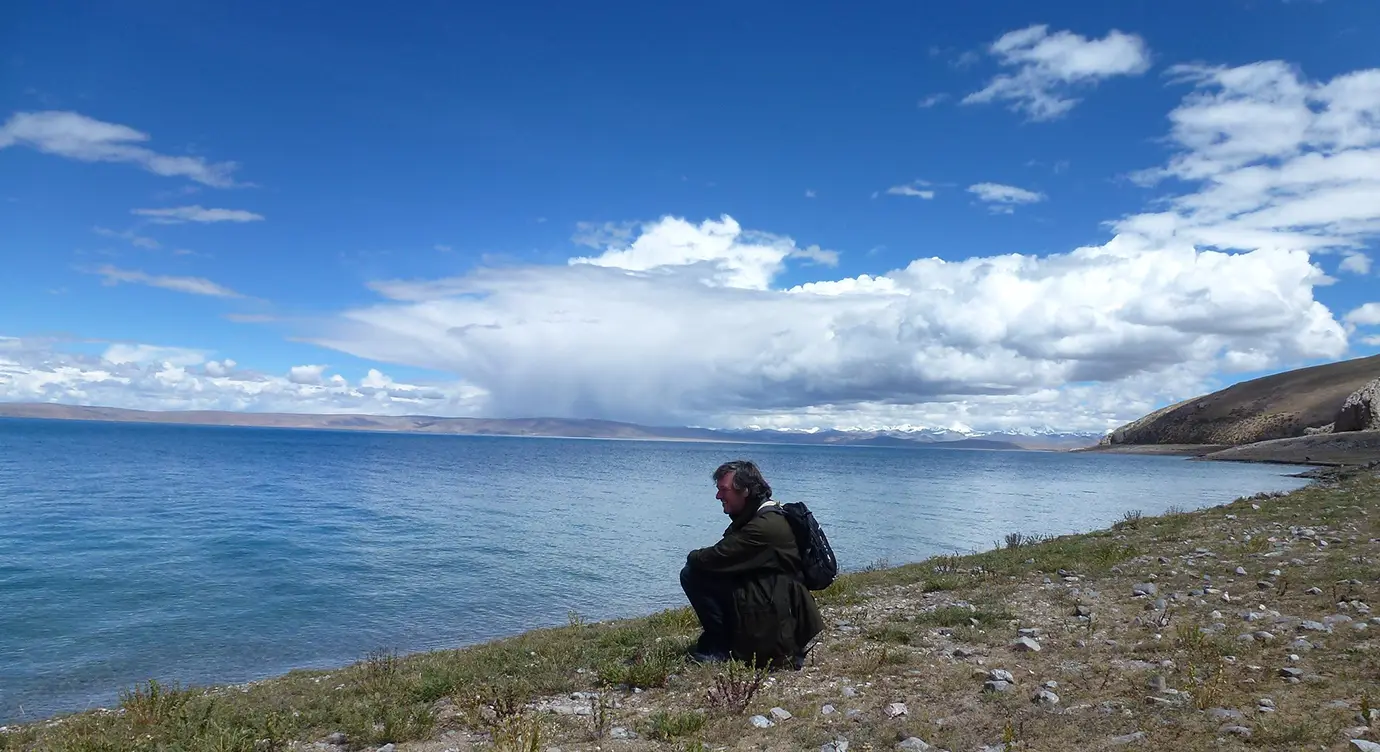
The official itinerary includes a local family lunch near Yamdrok Lake. This is one of the most memorable parts of the day for most travelers. You eat a simple home-cooked meal in a traditional Tibetan farmhouse, often including barley flatbread, vegetable stew, and yak dairy products. The experience offers you a personal, unhurried window into rural Tibetan life that no tourist restaurant can replicate.
Korola Glacier
After the lake, continue driving west. The road passes Karola Glacier, also spelled Korola Glacier, which descends from the flanks of Noijin Kangsang peak directly toward the roadside. At around 5,560 meters, the mountain is one of the highest peaks in central Tibet.
The glacier is visible from the road without any hiking required. You see the blue-white ice field above and the moraine debris at the glacier’s edge below. The driver stops at the designated viewing area so you get time to take photographs and walk close to the glacier base. The stop usually takes about 30 to 45 minutes. The altitude at this point on the route is approximately 5,020 meters. Move slowly, avoid running or heavy lifting, and drink water regularly.
Simila Pass
The route continues through Simila Pass before descending into the Gyantse area. Simila Pass sits at around 4,390 meters. The road at this point crosses open high-altitude grasslands with views of rolling hills and distant monastery walls. The landscape feels wide and open, unlike the Lhasa Valley.
Gyantse
Gyantse is the third-largest city in Tibet and one of the best-preserved historical towns on the central Tibet route. The town sits in the broad Nyang Chu Valley at an elevation of around 3,977 meters above sea level.
Gyantse is one of the most historic towns on the central Tibet route. Depending on timing and road conditions, the stop may include a short walk through the old town area and views of its famous Kumbum and monastic heritage. The structure dates to the 15th century, and its distinctive tiered design is unlike anything found in other Tibetan towns.
Depending on driving time and conditions, the Gyantse stop may be a brief walk through the old town area or a short visit to the monastery complex. Your guide confirms the extent of the Gyantse stop based on departure time from Lhasa and conditions on the day.
From Gyantse, continue the final stretch to Shigatse, arriving at your hotel in the early evening. Check in and rest. Shigatse sits at around 3,840 to 3,900 meters, slightly higher than Lhasa but within a range that most acclimatized travelers handle comfortably by Day 4.
Practical Tips for Day 4
Accommodation:
Hotel in Shigatse
Meals Breakfast, Lunch
Maximum Altitude 4,900m/16,076ft (Gampala pass)
Difficulty
Day 5 focuses on Shigatse before the return drive to Lhasa. The city is the second-largest urban center in Tibet and the traditional domain of the Panchen Lama, whose authority in Tibetan Buddhism ranks second only to the Dalai Lama.
Tashilhunpo Monastery
Tashilhunpo Monastery is the centerpiece of Shigatse and one of the reasons the Lhasa Shigatse Tour draws culture-focused travelers in the first place. The monastery was founded in 1447 by the first Dalai Lama and later became the traditional seat of the Panchen Lama.
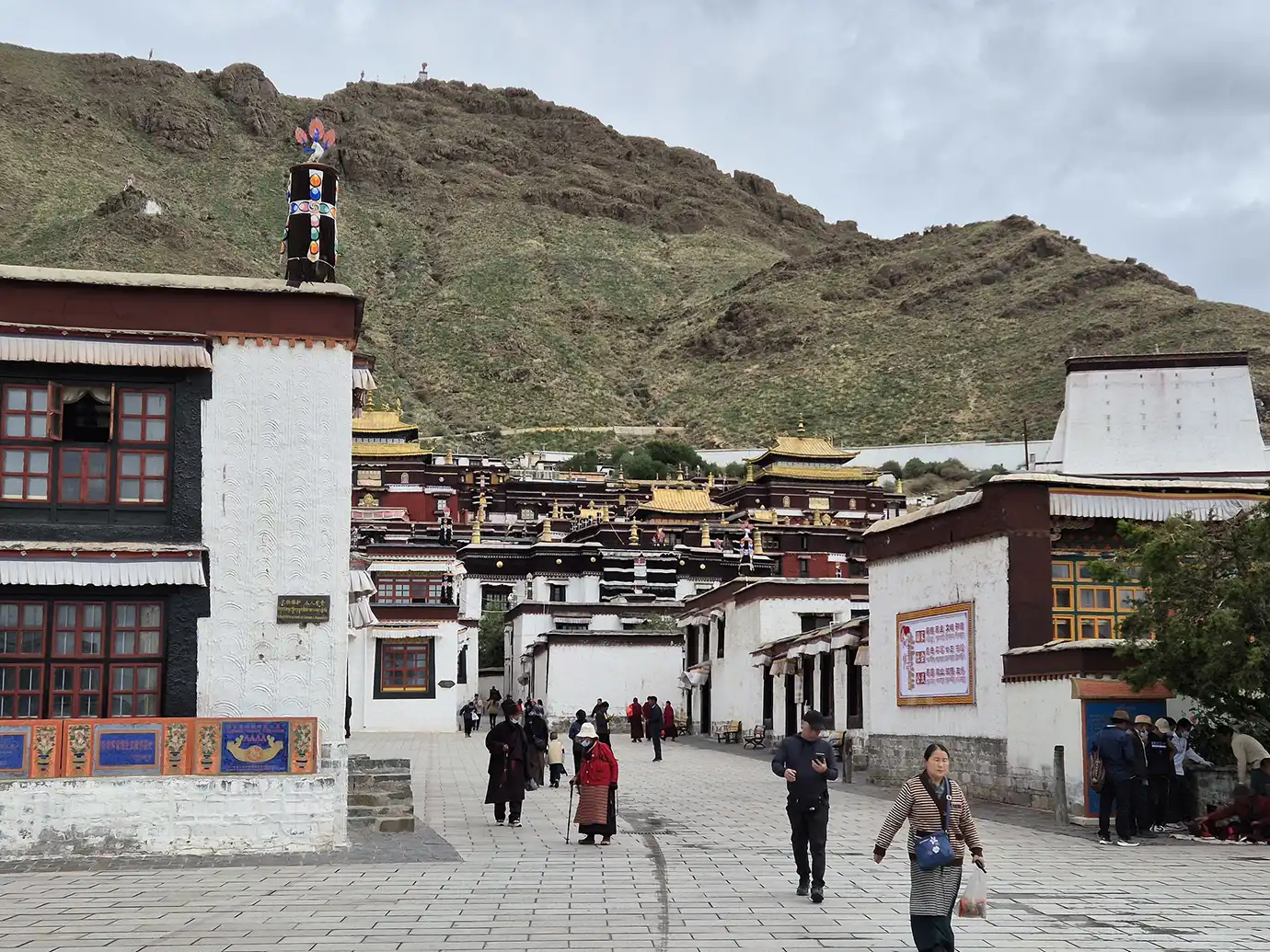
The complex covers about 70,000 square meters and houses some of the most impressive religious art in Tibet. The Maitreya Buddha Chapel houses a 26-meter-high gilded bronze statue of the future Buddha, one of the largest bronze statues in the world. The monastery also contains the Panchen Lama’s palace, multiple assembly halls, and a series of golden-roofed chapels that catch the morning light beautifully.
Allow two to three hours for Tashilhunpo. Walk through the kora pilgrimage path around the outer walls before entering to get a full sense of the monastery’s scale. The outer kora takes about 30 to 40 minutes at a normal pace. The monastery remains active. Monks conduct daily rituals and study sessions throughout the morning. If you arrive early, you will see the main assembly hall filled with monks during their morning prayers. The sound of horns, drums, and chanting carries through the courtyards.
Samzhubze Old Market
After Tashilhunpo, visit the Samzhubze Old Market in Shigatse’s old quarter. The market offers a broader, more local selection of goods than the tourist stalls near the monastery. Locals shop here for clothing, tools, spices, dried yak meat, traditional jewelry, and household items.
The area around the market has a distinctly Tibetan character, though less curated than Barkhor Street in Lhasa. It is a good place to buy authentic handicrafts and pick up gifts at reasonable prices. Take time to walk the side streets near the market as well.
Return to Lhasa
After the Shigatse sightseeing, drive back to Lhasa on the same fully paved Lhasa-Shigatse Highway. The return journey takes about four to five hours without the additional stops of Day 4. The drive is smooth and comfortable. You arrive in Lhasa in the late afternoon or early evening.
Travelers who prefer a different experience on the return leg have the option to take the Lhasa-Shigatse railway instead of driving. The train runs directly between the two cities and offers a different view of the landscape. An extra ticket cost applies, and seats need advance booking. Ask your guide or tour operator to arrange this if you want to try it.
Practical Tips for Day 5
Accommodation:
Hotels in Lhasa
Meals Breakfast
Maximum Altitude 3,900m/12,795ft (Shigatse)
Difficulty
After breakfast on your final morning, your guide and driver transfer you to Lhasa Gonggar Airport or Lhasa Railway Station for your onward journey. Departure day is flexible depending on your flight or train time.
The drive from central Lhasa to Gonggar Airport takes approximately one hour under normal road conditions. Allow extra time during peak travel periods such as the Tibetan New Year, China’s national holidays, or the summer high season from July to August.
If your departure time allows, you may have a few final hours to explore the city on your own, revisit Barkhor Street, or pick up any remaining souvenirs. Confirm this with your guide based on your actual flight or train schedule.
The Lhasa and Shigatse Tour ends here. Travelers who want to extend their time in Tibet may inquire about add-on options such as a day trip to Ganden Monastery, an overnight excursion to Namtso Lake, or a longer overland route to Shigatse via the southern Friendship Highway. These extensions require separate permits and planning.
Meals Breakfast
Maximum Altitude 3,656m/11,995ft (Lhasa)
Difficulty
The following are included in the listed package price for the Lhasa and Shigatse Tour:
The following are not included and apply as additional costs:
The base package price includes 3-star standard hotels in both Lhasa and Shigatse. Both cities have a good range of hotels catering to international tourists, and 3-star properties offer clean, comfortable rooms with en-suite bathrooms, hot water, Wi-Fi, and room heating.
Lhasa Hotels
Lhasa has the widest selection of hotels in Tibet. Travelers on the base package stay in a 3-star city hotel with easy access to the main sightseeing areas. The Tibetan Quarter around Barkhor Street and the Chinese commercial district around Beijing Road both have hotel options within the standard package. Travelers who prefer a higher standard of accommodation may upgrade to a 4-star or boutique hotel in Lhasa at additional cost. Several Tibetan-style boutique properties near Jokhang Temple offer rooms with traditional furniture, courtyard gardens, and rooftop views of the city.
Shigatse Hotels
Shigatse has a smaller but adequate selection of international-standard hotels. The base package includes a 3-star city hotel near Tashilhunpo Monastery. Rooms are comfortable and clean, with heating and ensuite facilities. Food options near the hotel include both Tibetan and Chinese restaurants.
Room Type
The base package is priced for twin or double shared occupancy. A single room supplement applies if you want a private room. Confirm this at the time of booking.
Understanding altitude is the most important part of planning any Tibet trip. Here are the key numbers for the Lhasa and Shigatse Tour:
| Lhasa | Approx. 3,656–3,658 m (11,995–11,998 ft) |
|---|---|
| Shigatse | Approx. 3,840–3,900 m (12,598–12,795 ft) |
| Gyantse | Approx. 3,977 m (13,048 ft) |
| Gampala Pass | Approx. 4,900 m (16,076 ft) |
| Korola Glacier area | Approx. 5,020 m (16,470 ft) |
| Trip Grade | Easy – no trekking required |
The highest point on the trip is Gampala Pass at around 4,900 meters. However, you only pass through this altitude briefly on Day 4. You do not sleep at that elevation. Sleeping altitude stays at Lhasa (Days 1–3) and Shigatse (Day 4), both well below 4,000 meters.
Compared to an Everest Base Camp tour, where travelers sleep above 5,000 meters on multiple nights, the Lhasa Yamdrok Shigatse Tour keeps sleeping conditions manageable. That difference matters a lot for travelers who are physically healthy but not experienced with high-altitude travel.
The two to three nights in Lhasa before Day 4 help your body gradually adjust before the high-altitude crossing. This itinerary structure is deliberately set up that way. Do not skip or shorten the Lhasa days to rush the trip.
No trekking, camping, or technical equipment is needed. All travel happens by road in a comfortable vehicle. The only physical demands are walking moderate distances at each sightseeing stop and climbing steps at sites like Potala Palace and Tashilhunpo Monastery.
Altitude Sickness – What to Know
Tibet has a clear seasonal pattern. Knowing when to go helps travelers choose the right month for their priorities.
| Season | Months | What to Expect |
|---|---|---|
| Best Overall | April – October | Clear skies, warm days, best road conditions, most monastery activities running |
| Peak Season | July – August, October holiday | Busy, more expensive, book early, excellent weather |
| Spring | April – May | Warming up, fewer crowds, good photography light, some festival dates |
| Autumn | September – October | Best air clarity, moderate temperatures, popular with experienced travelers |
| Winter | November – March | Cold, fewer tourists, lower prices, roads to Lhasa and Shigatse stay open, some site closures |
The tour runs year-round. Winter visitors find a quieter experience with noticeably lower costs, and the Lhasa-Shigatse highway stays open. However, some monastery courtyards and outer kora paths are harder to walk in freezing temperatures, and a few smaller sites may have reduced hours.
The Tibet Tourism Bureau periodically closes Tibet to foreign tourists before major Chinese political anniversaries. These closures typically affect March and sometimes the period around the Tibetan New Year. Your tour operator tracks these dates and advises you on timing when you book.
Traveling to Tibet requires more paperwork than most other destinations in Asia. Getting the documents right in advance saves serious problems on arrival.
Chinese Tourist Visa
Every foreign traveler needs a standard Chinese tourist visa, known as a Type L visa, to travel to Tibet. Obtain this from a Chinese embassy or consulate in your home country before departure. Most visitors get a double-entry or multiple-entry visa valid for 60 or 90 days. Visa and permit procedures can vary by nationality. Confirm your passport details with the operator before booking, so the correct Tibet document process can be arranged.
Tibet Travel Permit
A Tibet Travel Permit, also called the Tibet Entry Permit or the red permit, is a separate document that foreign tourists must carry in addition to their Chinese visa. No traveler boards a flight or train to Lhasa without this permit. Airlines and train staff check it at the gate. Only a licensed Tibet travel agency or tour operator can arrange this permit on your behalf. Individual travelers cannot apply for it directly. The permit covers specific destinations within the Tibet Autonomous Region and must match your planned itinerary. Processing typically takes 7 to 14 working days. During peak season or before major holidays, processing may take longer. Book early and provide your passport details accurately.
Additional Permits
Some areas within Tibet require a second-level permit called the Alien Travel Permit, also known as the PSB permit. For the Lhasa and Shigatse Tour, your operator arranges all necessary permits during the booking process. Confirm with your operator exactly which permits your itinerary requires.
Passport Requirements
First-time Tibet travelers often worry about road quality after seeing photographs of rough mountain passes on other Tibet routes. The Lhasa and Shigatse Tour uses roads that are among the best in the entire Tibet Autonomous Region.
The overland day on this central Tibet culture tour is genuinely scenic travel, not expedition-style rough driving. Families, seniors, and travelers who prefer smooth roads find Day 4 enjoyable rather than stressful.
Here is the exact meal pattern for each day of the Lhasa and Shigatse Tour:
| Day 1 – Arrival | No meals included |
|---|---|
| Day 2 – Drepung and Sera | Breakfast + Welcome Dinner |
| Day 3 – Lhasa City Tour | Breakfast |
| Day 4 – Overland Day | Breakfast + Local Family Lunch |
| Day 5 – Shigatse | Breakfast |
| Day 6 – Departure | Breakfast |
All meals not listed in the above table are at your own expense. Lhasa and Shigatse both have good restaurant options covering Tibetan, Chinese, Indian, and Western food. Mid-range meals at local restaurants cost roughly 40 to 80 Chinese yuan per person, depending on the dish type.
The local family lunch near Yamdrok Lake on Day 4 is one of the most memorable food experiences on the trip. It is home-cooked and simple, but the setting and the personal interaction with a Tibetan farming family make it far more meaningful than any restaurant meal.
Food Notes
Packing smart for a Tibet trip means preparing for cold mornings, intense sun, and altitude. Here is a practical list:
Documents
Clothing
Health and Personal
Gear and Accessories
No. The Lhasa and Shigatse Tour does not include Everest Base Camp. EBC requires a separate itinerary, additional permits, a much longer overland drive, and sleeping at elevations above 5,000 meters. This tour focuses on central Tibet. If you want Everest Base Camp, ask about the 8-day or 10-day Lhasa to EBC extension packages.
You need to be in general good health, but you do not need to be athletic. The trip does not involve trekking. Walking distances at each sightseeing site are moderate, typically between one and four kilometers per day at a slow pace. The main physical challenge is the altitude, not the activity level. If you can walk up and down stairs without difficulty and spend two to three hours on your feet, you manage this trip comfortably.
Yes. Tibet is generally safe for solo female travelers. Crime against tourists is rare. Traveling with a licensed guide and driver adds an additional layer of security and practical support. Women traveling alone on this tour join a small group or travel privately with a local guide and driver. Your guide handles all logistics and accommodation, so you never navigate the city alone unless you want to.
The Tibet Travel Permit is a document issued by the Tibet Tourism Bureau that gives foreign tourists permission to enter the Tibet Autonomous Region. You cannot board a plane or train to Lhasa without it. Only a licensed Tibet travel agency can apply for the permit on your behalf. Once you book this tour, your operator collects your passport details and arranges the permit. Processing usually takes 7 to 14 working days under normal conditions. The operator will confirm the final delivery method and travel instructions before departure.
April through October covers the best overall travel window. May, June, and September offer a combination of good weather, fewer crowds than peak summer, and clear views at mountain passes and lake viewpoints. July and August have warm temperatures and high visibility but attract the most tourists. April and October are excellent shoulder-season options with lower prices and manageable conditions.
Yes. The tour suits seniors in good general health. The itinerary keeps daily activity at a moderate pace. There is no trekking, and all transportation is by comfortable vehicle. The main consideration is altitude. Seniors with cardiovascular or respiratory conditions should consult a doctor before booking any Tibet trip. The gradual acclimatization built into this itinerary, with two or three nights in Lhasa before the overland day, helps most travelers handle the altitudes well.
Yes. Both Namtso Lake and Ganden Monastery are popular add-ons. Namtso Lake sits at around 4,718 meters and requires an extra night and additional permits. Ganden Monastery sits about 47 kilometers east of Lhasa and works well as a half-day or full-day extension from Lhasa. Ask your tour operator to add these when you book or after your tour if your schedule allows.
Photography rules vary by site and by specific chapel or hall within a site. Outdoor photography is generally permitted everywhere. Inside most monastery chapels and assembly halls, photography is either restricted or requires a fee. At Potala Palace, interior photography requires a paid photography permit. Your guide explains the rules at each site before you enter. Always ask before photographing monks or pilgrims at close range.
Chinese yuan, also called renminbi or RMB, is the only currency accepted in Tibet. International credit cards work at major hotels in Lhasa and Shigatse and at ATMs in both city centers. However, smaller sites, local markets, and teahouses only accept cash. Carry a sufficient supply of small bills. USD, EUR, and other foreign currencies are not accepted at shops or markets
Your guide on this tour speaks English and Tibetan. Most licensed Tibetan guides also have working Mandarin. In some cases, additional language options such as Spanish, French, or German are available on request at booking. Ask your operator when confirming your booking if you prefer a guide with a specific language.