
Included Meals
- Breakfast: 6
- Lunch: 1
- Dinner: 2

Unbeatable Holiday Offers – Save Up to 20% on Your Next Adventure!
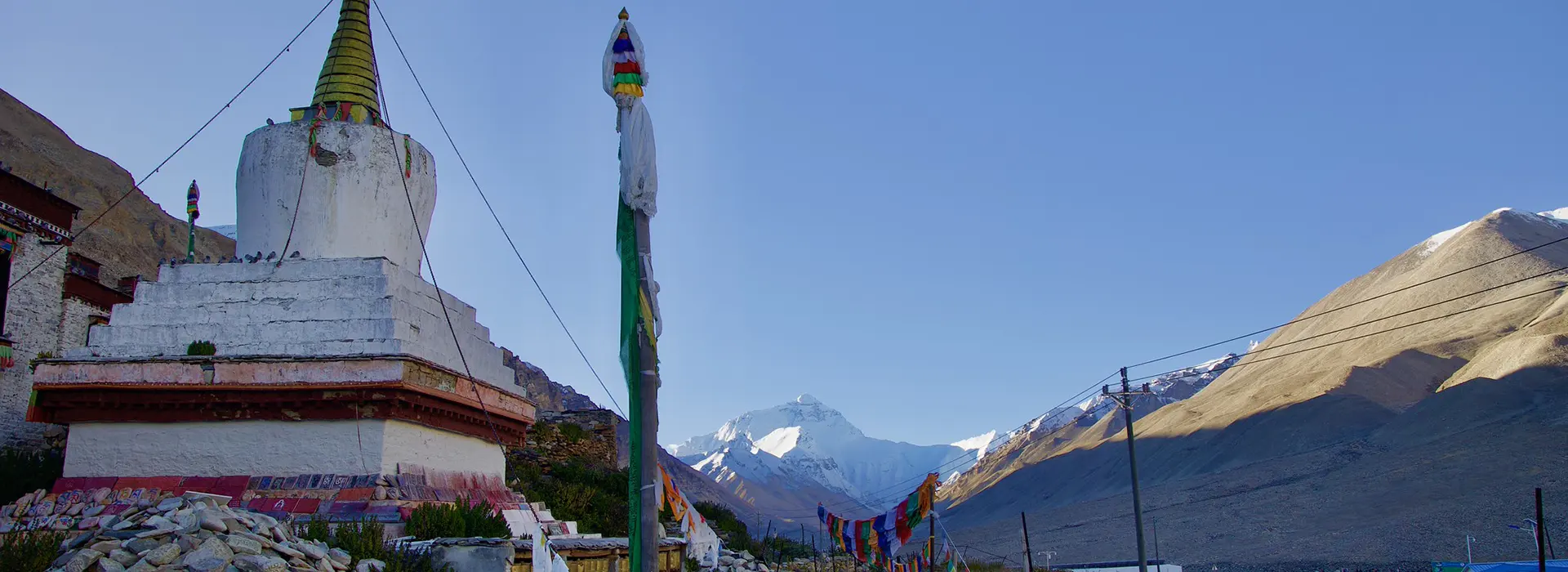
The Lhasa to Everest Base Camp Tour covers 8 days of overland travel across Tibet’s most dramatic terrain, starting in Lhasa and ending at the base of the world’s tallest mountain. Travelers visit ancient monasteries, turquoise lakes, glaciers, and high mountain passes before reaching Everest Base Camp at 5,200 meters, creating a balanced mix of cultural and scenic highlights.
The route is fully road-based, so it does not require any strenuous trekking. This makes it suitable for first-time Tibet travelers, photographers, couples, and solo visitors who want high-altitude scenery without demanding hikes. The package includes permit support, a local guide, shared transport, and accommodations, while the gradual rise in altitude allows the body to adjust more comfortably before reaching higher elevations.
The Lhasa to Everest Base Camp Tour offers a rare combination of Tibetan culture and Himalayan scenery in a single, well-paced trip.
This Tour Suits:
In Lhasa:
On the Road:
At the Destination:

Included Meals

Transport
Shared tourist vehicle by group size

Accommodation
3-star hotels in cities, basic guesthouse at EBC

Trip Grade
Your guide meets you at Lhasa Gonggar Airport or Lhasa train station and drives you to your hotel. Check in, drink plenty of water, and rest for the remainder of the day. Do not do any intense activity on Day 1. Your body needs time to start adjusting to Lhasa’s altitude of 3,650 m. Even fit travelers feel some mild breathlessness or a light headache on the first day. Eat light, avoid alcohol, and go to bed early.
Important note: Lhasa airport sits around 3,600 m. The drive to the city hotel takes 60 to 90 minutes, depending on traffic. You must carry your passport at all times for security checks at road checkpoints.
Difficulty
Morning: Drepung Monastery
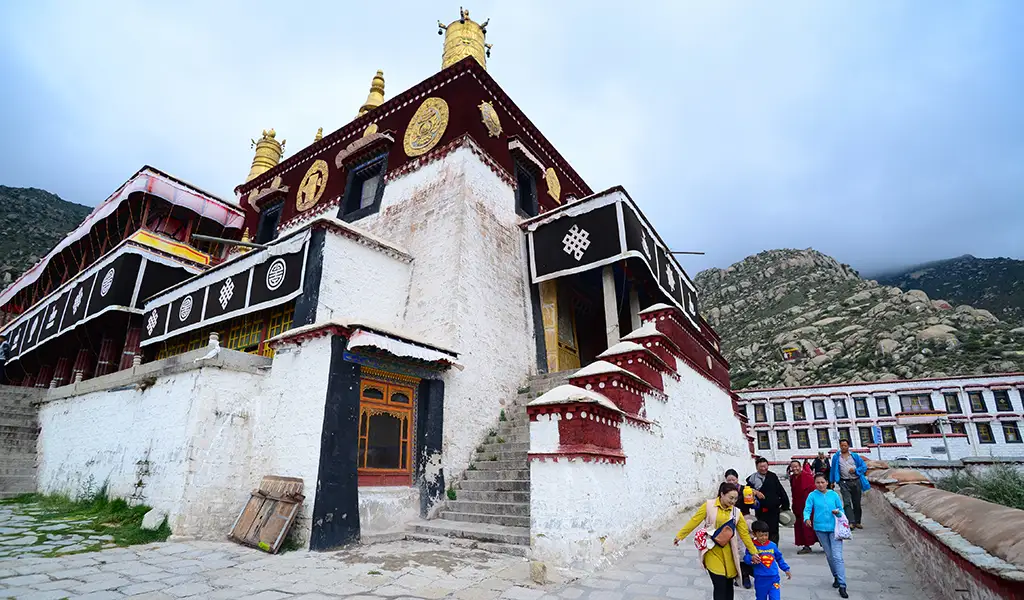
Drepung Monastery sits on the slopes west of Lhasa city. Founded in 1416, it once housed up to 10,000 monks. Today, it remains one of the largest working monasteries in Tibet. Whitewashed buildings spread up the hillside with mountain backdrops behind them. Wear comfortable walking shoes. The terrain involves some uphill paths, though the walk is not steep.
Afternoon: Sera Monastery and the Monk Debate
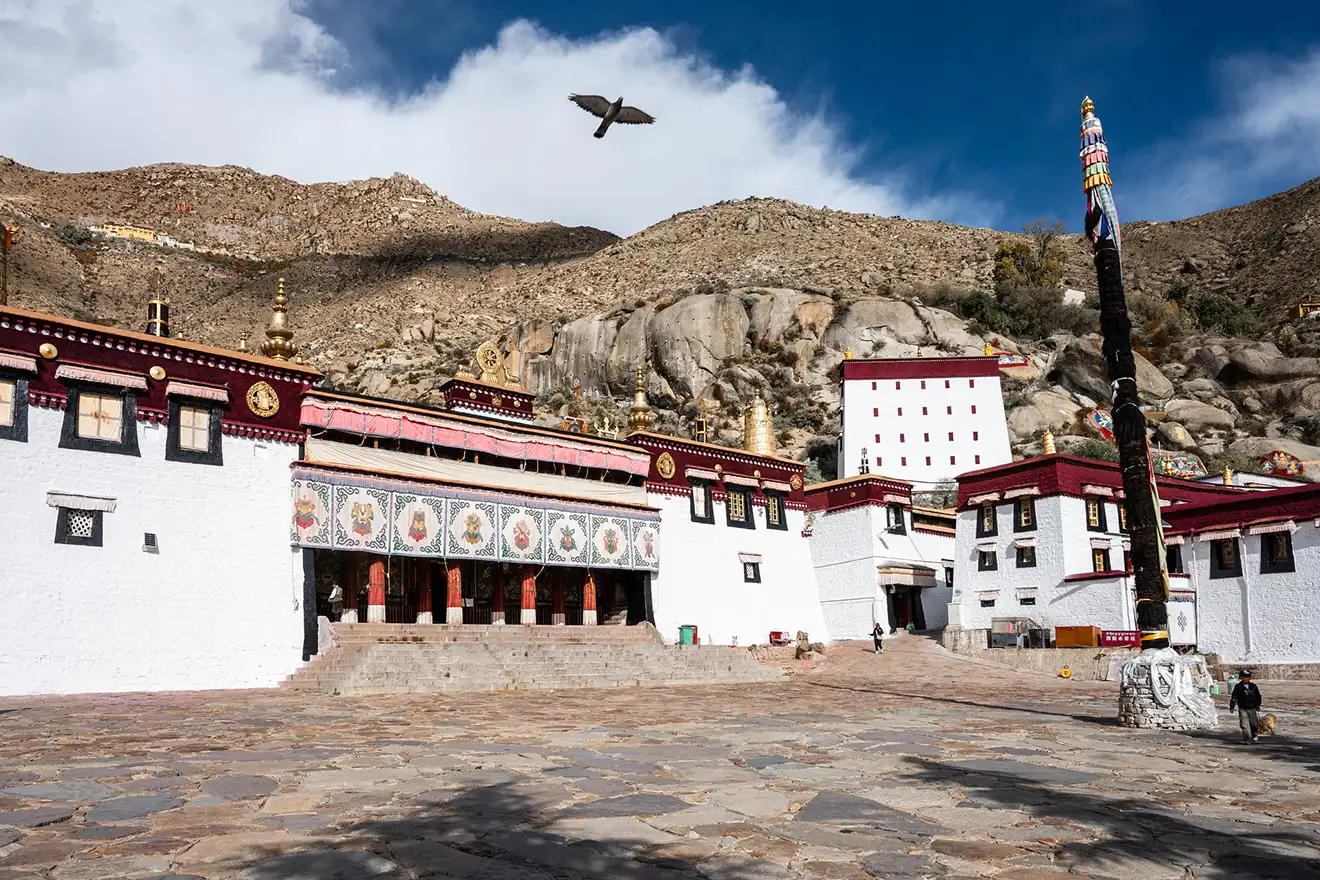
Sera Monastery, on the northern edge of Lhasa, offers one of Tibet’s most memorable cultural experiences: the monk debate. Every afternoon except Sunday, monks gather in a walled courtyard and practice dialectical argument in a traditional Tibetan format. The debates are loud, physical, and energetic. Monks clap, stomp, and shout during formal debates. Arrive by 3 pm to find a good viewing position. Photography is allowed from the edges of the courtyard.
Evening: Welcome Dinner
Your guide arranges a welcome dinner at a Tibetan restaurant in Lhasa. Expect hot dishes suited to the cold altitude, including thukpa (noodle soup), momos (dumplings), and butter tea.
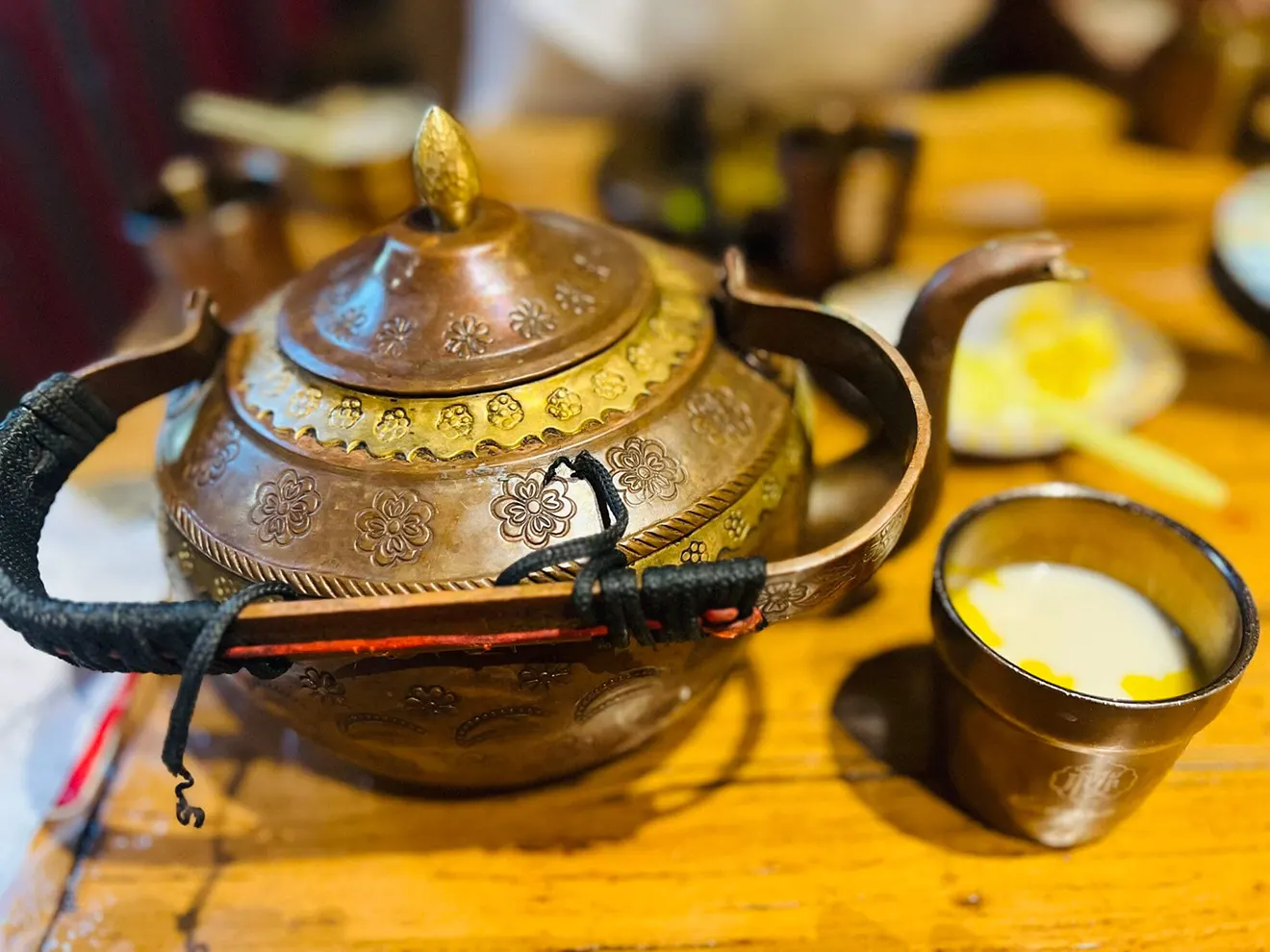
Photography note: Both monasteries allow outdoor photography freely. Ask before photographing monks directly inside prayer halls.
Accommodation:
3-star hotel in Lhasa
Meals Breakfast, Dinner
Difficulty
Morning: Potala Palace
Potala Palace dominates Lhasa’s skyline from Red Hill. Built in the 7th century and expanded in the 17th century, the palace served as the winter residence of the Dalai Lamas. Tickets must be pre-booked through your guide due to strict daily visitor limits.
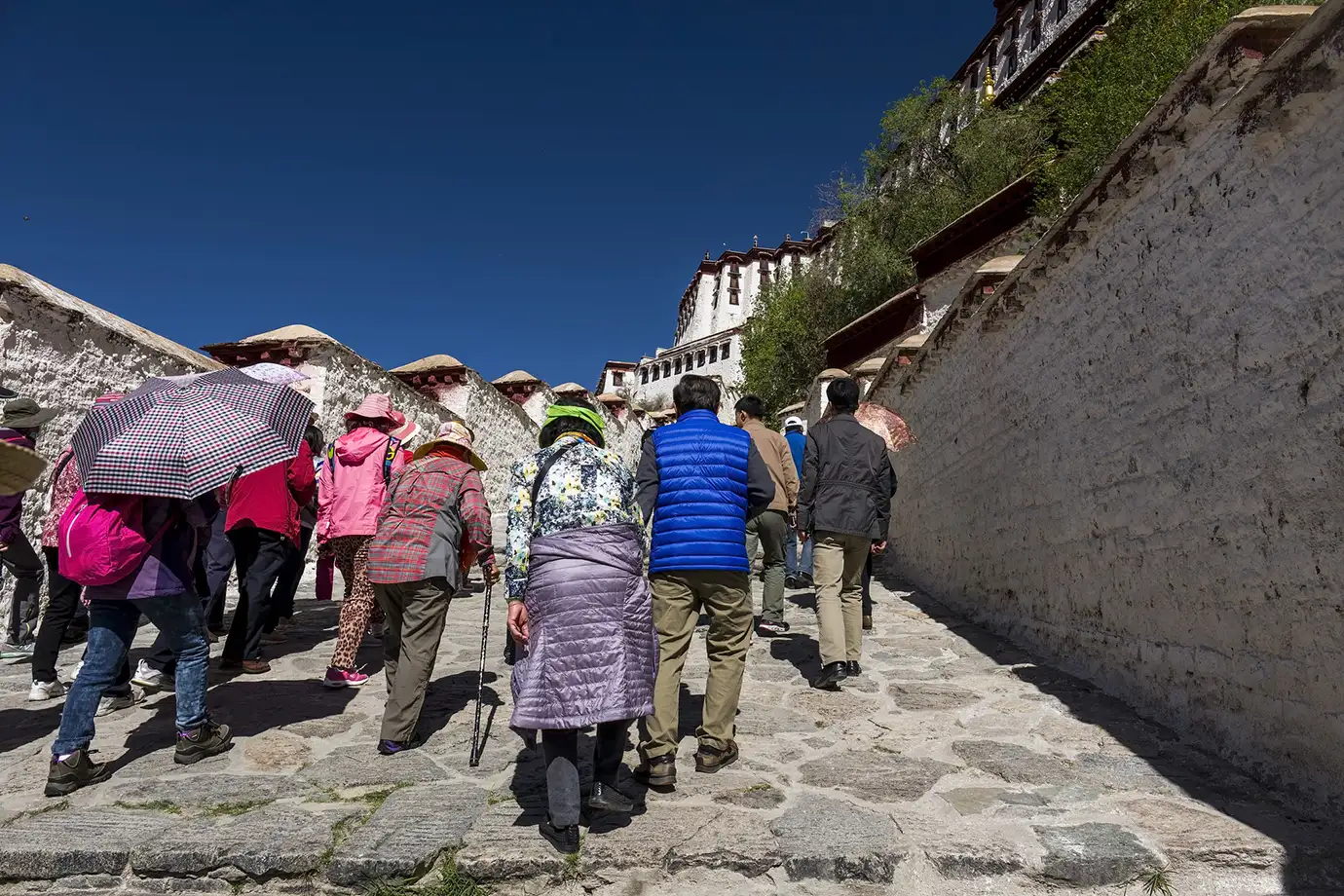
Entry involves climbing stairs — over 300 steps from street level to the main entrance. Take the climb slowly. Stop and breathe at each landing. The interior includes the Red Palace, the White Palace, golden stupas, and ancient chapels with butter lamps. The views from the upper levels of Lhasa are exceptional.
Important entry notes:
Afternoon: Jokhang Temple and Barkhor Street
Jokhang Temple in the center of the old city is Tibet’s most sacred shrine. Pilgrims come from every corner of Tibet and walk the Barkhor circuit — a wide street that circles the temple — spinning prayer wheels and prostrating as they walk. The energy around Jokhang is intense and real.
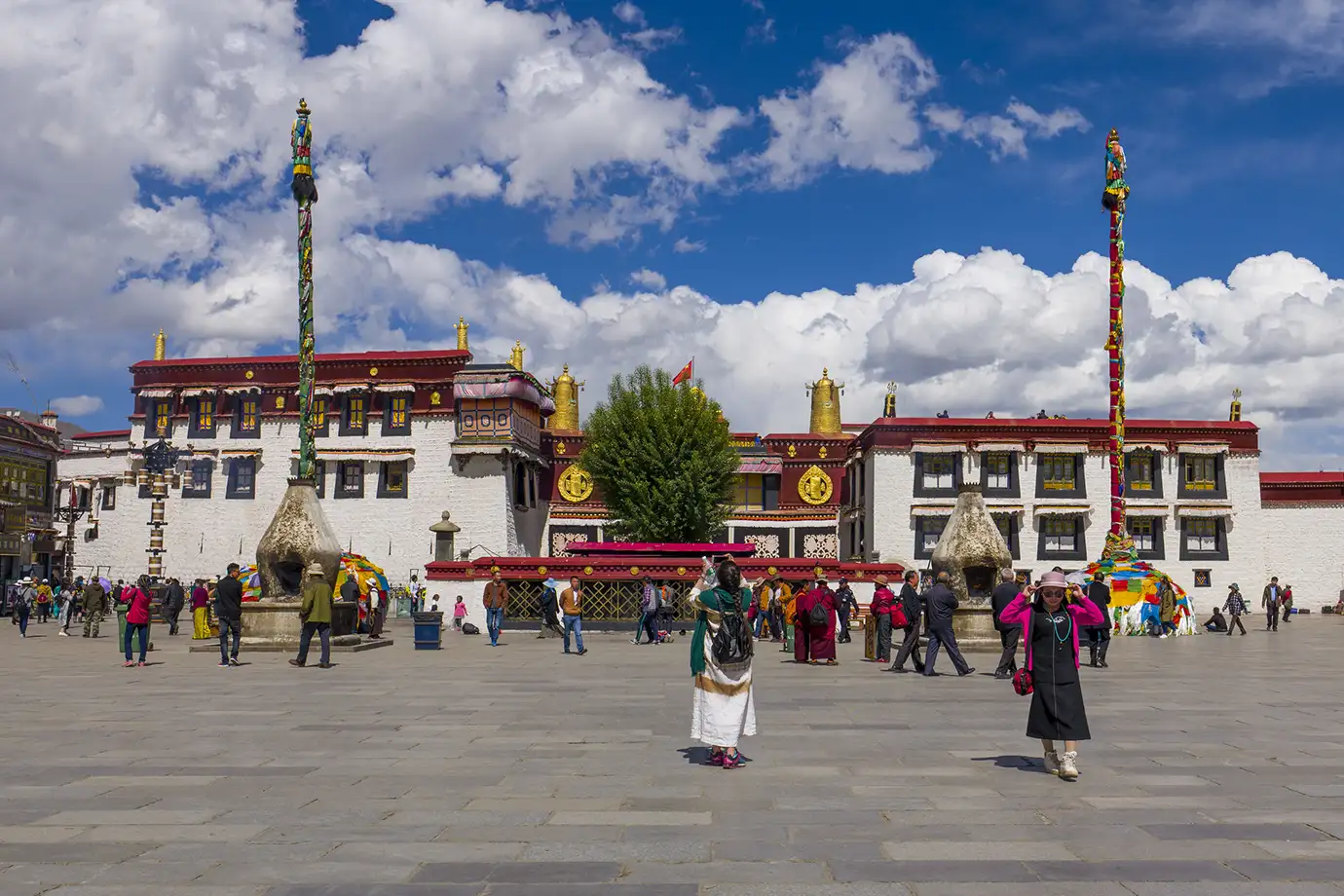
Inside the temple, the most sacred image is the Jowo Rinpoche, an ancient statue of the young Buddha brought to Tibet in the 7th century. Lines to enter the inner hall form early in the morning and in the afternoon. Barkhor Street around the temple is the best place in Lhasa to browse handicrafts, thangka paintings, yak wool textiles, and turquoise jewelry. Tibetan trading families set up stalls along the circuit.
Accommodation:
3-star hotel in Lhasa
Meals Breakfast
Difficulty
Today covers approximately 360 km. Leave Lhasa early — around 7:30 to 8 am — to have enough daylight for all scenic stops.
Stop 1: Gampa La Pass and Yamdrok Lake
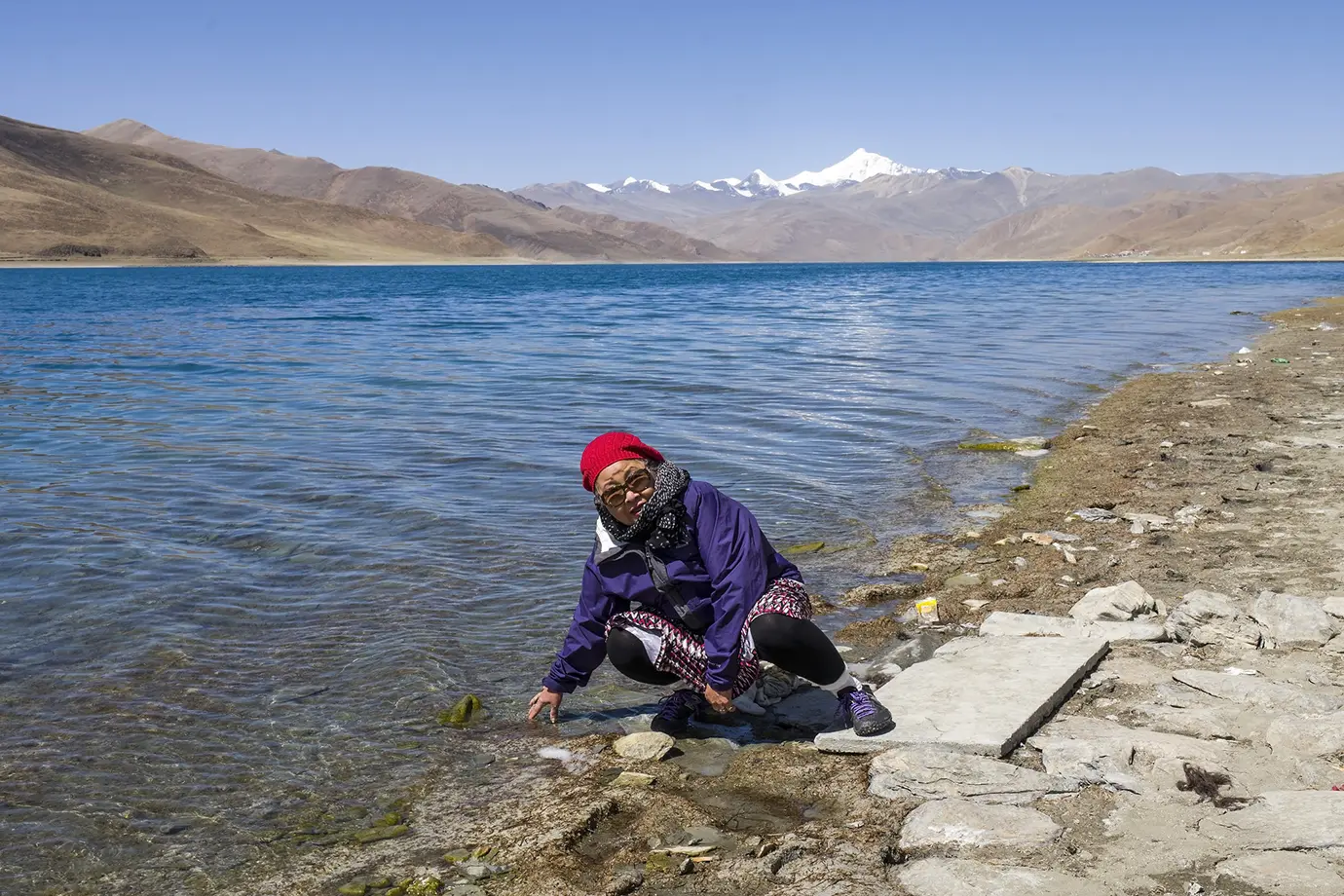
Around 90 minutes south of Lhasa, the road climbs to Gampa La Pass at 4,794 m. From the top, Yamdrok Lake appears below in an extraordinary turquoise color that looks almost artificial. The lake stretches for 72 km and reflects the peaks above it. Most groups stop for 20 to 30 minutes at this viewpoint. The road then descends alongside the lake. If the weather is clear, the views continue for much of the descent.
Stop 2: Karola Glacier
Past Yamdrok Lake, the road reaches Karola Glacier, one of three major glaciers in Tibet accessible by road. The glacier face drops 5,560 m to the highway below. The stop takes 15 to 20 minutes. Wind often picks up at this location, so bring a jacket.
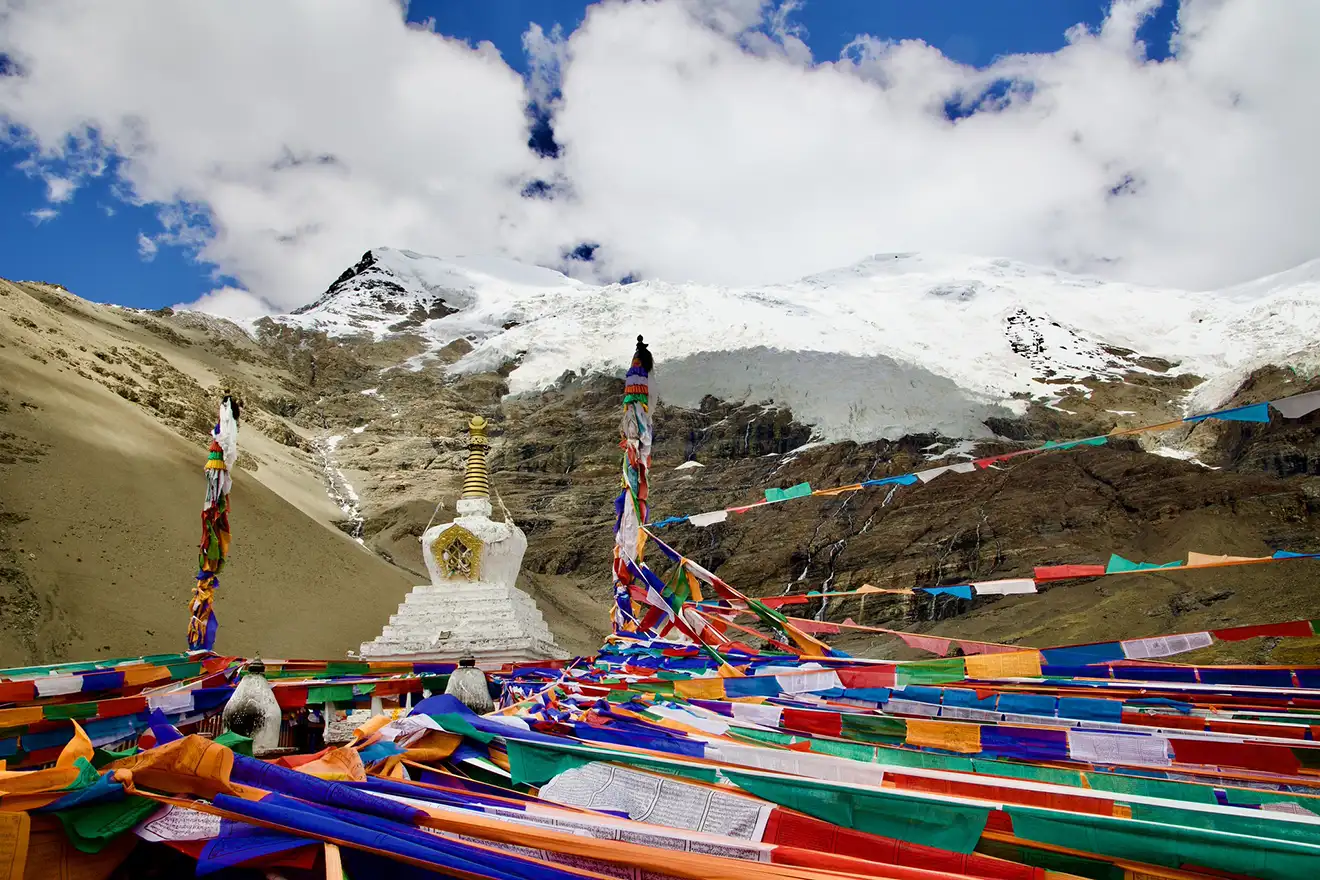
Stop 3: Gyantse
Gyantse is one of Tibet’s best-preserved old Tibetan towns. The drive through town takes you past the Gyantse Dzong (fortress) that dominates the hill above the old quarter. If time allows, a short walk through the old streets reveals traditional Tibetan architecture largely unchanged for centuries.
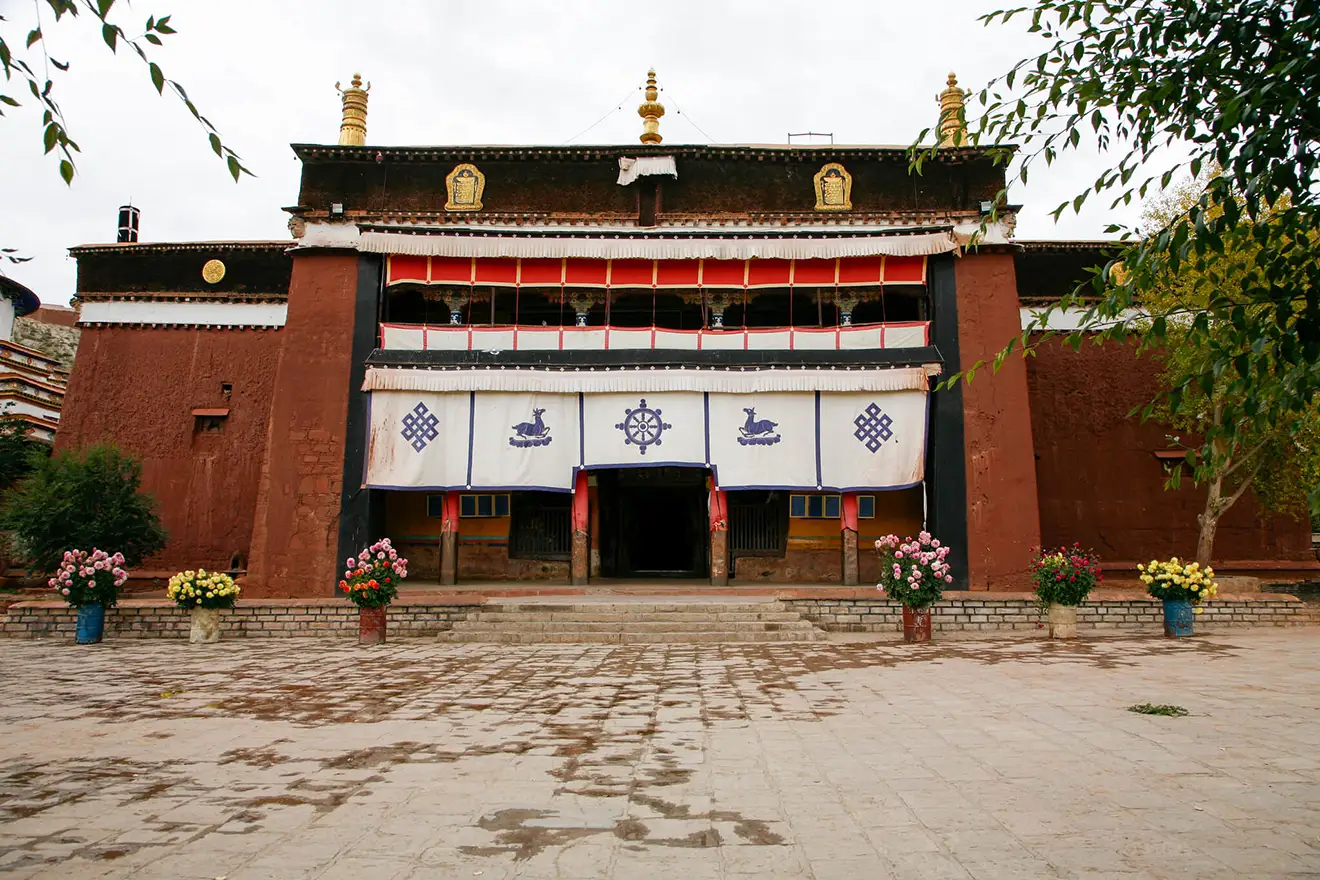
Village Lunch
Your guide arranges a hot lunch at a local restaurant in the Gyantse area. Expect simple Tibetan food — rice, vegetables, and meat dishes suited to the elevation.
Arrival in Shigatse
Shigatse, Tibet’s second-largest city, sits at 3,840 m. Check into your hotel and rest for the long drive the next day.
Accommodation:
3-star hotel in Shigatse
Meals Breakfast, Lunch
Difficulty
Day 5 is the most anticipated day of the Lhasa to Everest Base Camp Tour. Leave Shigatse early — around 7 to 7:30 am.
Morning Drive
The first section of road runs southwest from Shigatse across broad plateau country. Fields, small villages, and distant snow peaks line the route. Around 9 to 10 am, the road begins to climb toward the Gyatsola Pass at 5,248 m. This pass already sits higher than EBC itself. The views from the top take in a long arc of Himalayan peaks. From the pass, the road descends toward Shelkar (New Tingri), a roadside town where many groups stop for fuel and a bathroom break.
Gawula Pass: First Everest Sighting
The drive continues south toward the Gawula Pass at 5,198 m. At the top of this pass, on a clear day, Mount Everest appears directly ahead. The distinctive pyramid shape of the summit is unmistakable. This is often the first time travelers see Everest with their own eyes. The road winds down from the pass along a series of dramatic switchbacks toward the Rongbuk Valley below.
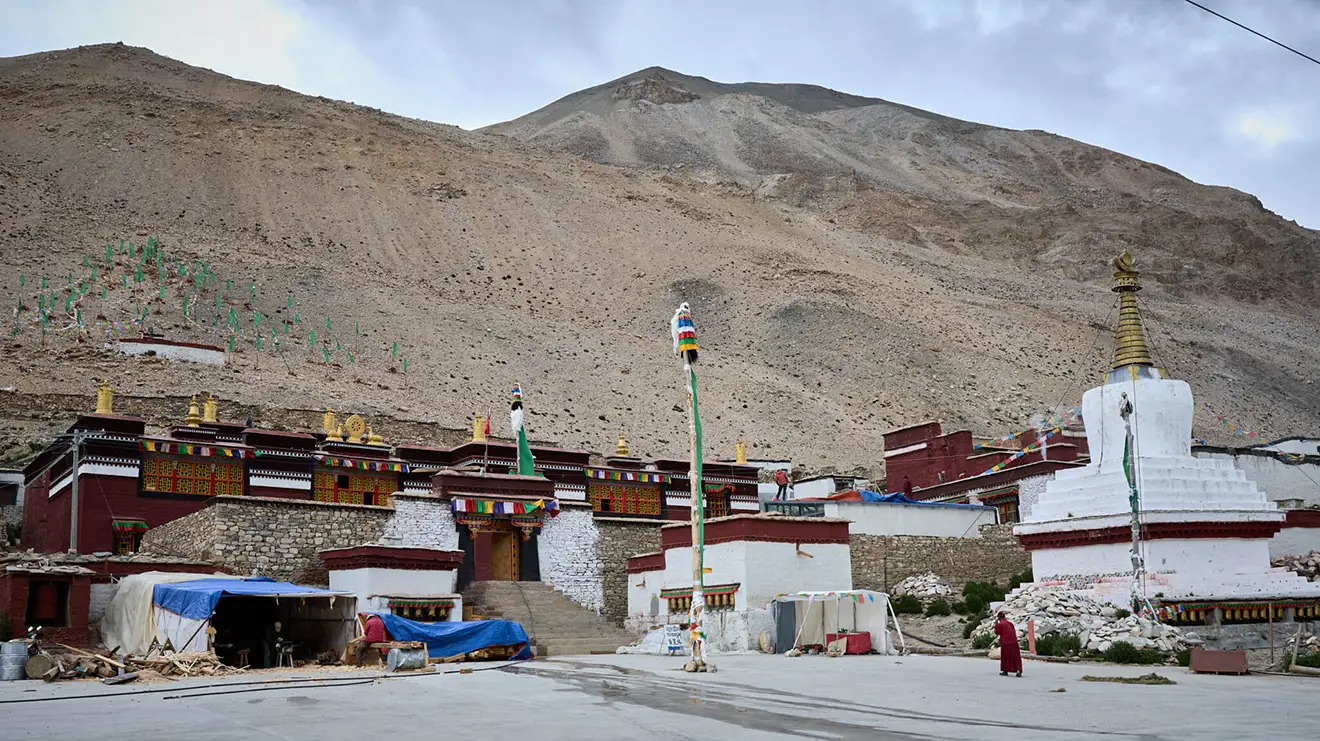
Arrival at Rongbuk Monastery
Rongbuk Monastery at 4,980 m is the world’s highest monastery. The monastery faces directly toward Everest’s north face. The classical photograph showing a monastery gate with Everest rising beyond it comes from this location. Spend 20 to 30 minutes here before driving the last 8 km to EBC.
Arrival at Everest Base Camp
The vehicle drops you at the EBC parking area. A short walk across flat ground leads to the famous Everest Base Camp sign and the tent settlement area. In spring, expedition teams’ colorful tents fill the moraine. In autumn, the area is quieter. In winter, access stays open for independent travelers. Check in to your EBC guesthouse. Rooms are basic — simple beds, blankets, and limited heating. Electricity supply at EBC is limited and sometimes solar-only. Charge devices during daylight. Hot drinks and simple noodle or rice dishes are available in the guesthouse common area.
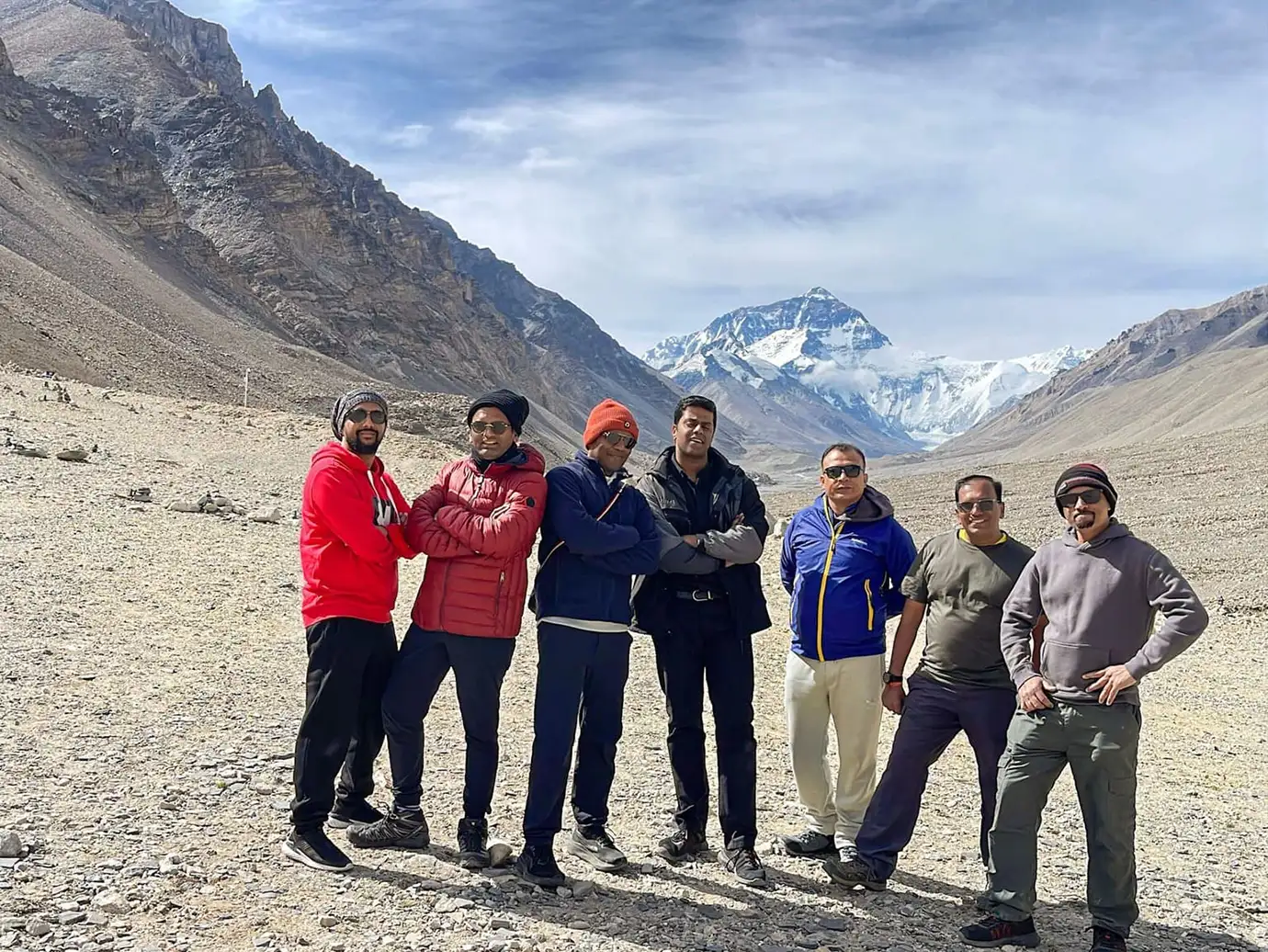
Sunset over Everest
If the weather permits, the late afternoon light turns the summit pyramid orange and gold. The EBC area offers open, unobstructed views of Everest’s entire north face. After sunset, temperatures drop quickly. Expect 0 to -10°C overnight, even in the warmer months.
Important reminders for Day 5:
Night sky: EBC has almost no artificial light pollution. On a clear night, the Milky Way stretches directly above the mountain. Photographers should bring a wide-angle lens and a remote shutter if possible.
Accommodation:
Basic guesthouse or tent-style lodge near EBC
Difficulty
Sunrise at Everest Base Camp
Wake up around 5:30 to 6 am. The morning sky above the Himalayas changes color fast. Everest’s summit often catches the first light of sunrise in a deep gold before the sky brightens fully. Dress in your warmest layers — a down jacket, a thermal base layer, a hat, gloves, and two pairs of socks. The temperature at dawn near EBC drops below freezing even in summer. A short flat walk of 10 to 15 minutes takes you to the best sunrise viewpoints near the base camp area. Your guide shows you the spots with the clearest lines of sight to the summit.
Return to Rongbuk Monastery
After breakfast, drive back toward Rongbuk Monastery for a proper visit. The monastery houses monks and nuns who have chosen to live at one of the world’s most remote religious sites. The monastery’s interior features murals, butter sculptures, and views down the valley toward Everest as you exit.
Drive East via Dinggye Viewpoint
The return route from EBC to Shigatse passes through the town of Dinggye. From certain points on the road near Dinggye, you get a final elevated view of Everest from a different angle than the classic EBC view. Your guide stops at the best viewpoint if conditions are clear.
Arrival in Shigatse
Expect to arrive in Shigatse between 6 pm and 8 pm, depending on road conditions and stops. A hot meal and a warm bed in a proper hotel room mark a welcome return from the high-altitude night.
Accommodation:
3-star hotel in Shigatse
Meals Breakfast
Difficulty
Morning: Tashilhunpo Monastery
Tashilhunpo Monastery is one of the most important monasteries in Tibet. Founded in 1447, it serves as the traditional seat of the Panchen Lama. The complex spans a large area within Shigatse city and includes vast prayer halls, tall golden stupas, and a giant statue of the Maitreya (future Buddha) that stands over 26 meters tall.
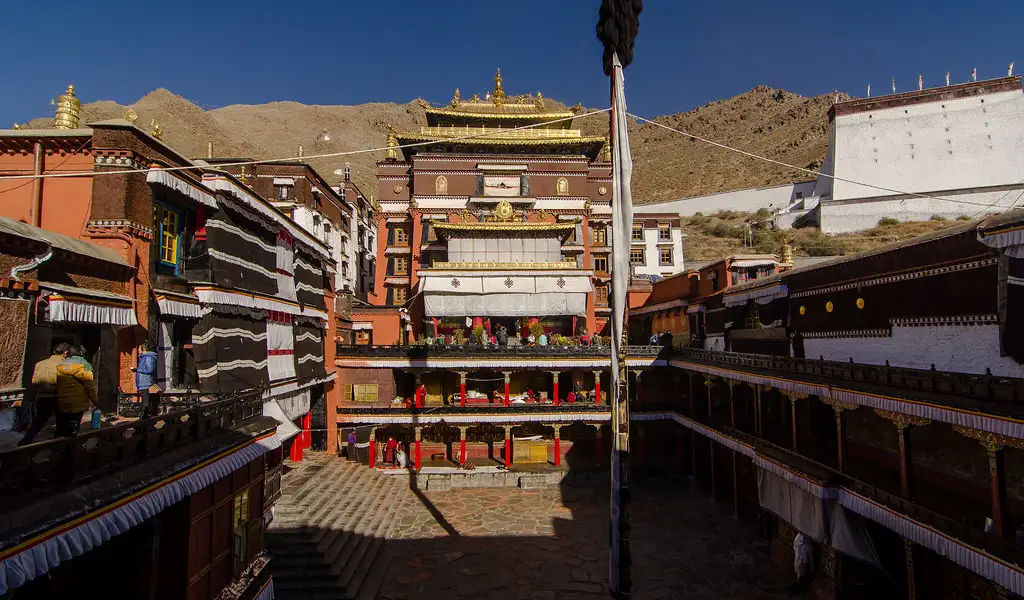
Spend 1.5 to 2 hours inside. Photography rules here vary by section. Outdoor and courtyard photography is generally allowed. Interior hall photography often requires a fee or is restricted. Check with your guide before raising a camera.
Drive to Lhasa
After Tashilhunpo, the vehicle heads northeast back along the Friendship Highway toward Lhasa. The drive takes approximately 3.5 to 4.5 hours. If time allows and the group is interested, a short stop in the Gyantse area or at Yamdrok Lake on the return adds a second viewpoint of the lake from the opposite shore angle.
Evening: Farewell Dinner
Arrive back in Lhasa by early to mid-evening. Your guide arranges a farewell dinner at a restaurant known for Tibetan or mixed Tibetan-Chinese cuisine. Use the dinner to share photos, ask your guide final questions, and prepare your bags for departure.
Optional: After dinner, the Barkhor Street area around Jokhang Temple offers a completely different atmosphere at night. Butter lamp offerings outside the temple make for strong photography after dark if energy permits.
Accommodation:
3-star hotel in Lhasa
Meals Breakfast, Dinner
Difficulty
Check out of the hotel by 10 am or as required. Your guide will transfer you to Lhasa Gonggar Airport or the Lhasa train station.
Timing advice:
Your guide stays with you until you enter the departure area. The tour concludes at the handover point.
Transfer time: Hotel to airport or train station
Meals Breakfast
Difficulty
Lhasa (Days 1 to 3 and Day 7)
Lhasa hotels recommended by local teams sit within 10 to 20 minutes of Barkhor Street and the central sights. In peak season (April, May, October), some hotels book up fast. Confirm hotel choice at booking.
Shigatse (Days 4 and 6)
Everest Base Camp (Day 5)
Set your expectations for EBC overnight correctly. No luxury accommodation exists at 5,200 m. The experience is remote, cold, and basic — and for most travelers, that is exactly what makes it memorable.
Winter alternative: When the EBC guesthouses close (typically late November to late February), the overnight stop moves to Tingri at 4,300 m or Zhaxizong (Pekü) at a lower elevation. Your guide confirms current EBC access during winter trip planning.
Hotel Upgrade Option
Lhasa and Shigatse both offer 4-star and boutique hotel options. An upgrade from a standard 3-star to a 4-star typically adds USD 25-50 per person per night in these cities. Request this at booking. EBC accommodation cannot be upgraded at any time of year.
Documents You Need
What Your Tour Operator Handles
What you must provide to start the permit process:
When to Book
Book at least 20 to 25 days before your arrival date. Tibet Travel Permits take 7 to 14 working days to process under normal conditions. Peak season demand (April through May and September through October) may extend processing times.
Important: You cannot enter Tibet without a permit in hand. Late applications risk your entire trip.
Special Permit Cases
The food experience on this journey remains simple and practical, closely reflecting the regions you travel through. Each day begins with an included breakfast in Lhasa and Shigatse hotels, where buffets typically offer boiled eggs, bread or steamed buns, rice porridge, Tibetan butter tea, and fruit. Some hotels also offer Western-style options such as cereal, noodles, and hot soup, adding a bit of variety.
Lunch is mostly self-arranged, especially on long driving days, with stops at roadside restaurants in towns such as Gyantse, Shelkar, and Nyalam. Meals usually cost between 30 and 60 CNY per person and include rice dishes, stir-fried vegetables, noodle soups, and, occasionally, yak meat, keeping things simple yet filling.
The itinerary also includes a few planned meals that add local flavor to the experience. A welcome dinner in Lhasa on Day 2 features Tibetan dishes like thukpa, momos, butter-fried bread, and yak stew, followed by a simple village-style lunch near Gyantse on Day 4. The journey then concludes with a farewell group dinner back in Lhasa on Day 7.
As you reach Everest Base Camp, food options become more basic. Guesthouses serve simple meals such as instant noodles, rice with vegetables, and hot soups. Everything here is paid separately, and prices are higher than in the cities due to the remote location.
For dietary needs, vegetarian travelers can usually find suitable options, especially in Lhasa, where restaurants are more accommodating. However, choices are limited at roadside stops, so informing your guide in advance and carrying personal snacks is recommended. Vegan, gluten-free, or allergy-specific diets face more limitations in rural Tibet, and while guides assist where possible, flexibility is important.
On long driving days, it is helpful to carry snacks like nuts, energy bars, dried fruit, and crackers. Many small shops in Lhasa stock travel snacks, making it easy to prepare in advance. Hot water is widely available in hotels and guesthouses, usually provided in thermos flasks in the room. Drinking boiled water from reusable bottles remains the safest option throughout the trip.
Spring — April to June (Best overall season for Everest views)
Spring brings the clearest skies and the most reliable mountain views at EBC. Daytime temperatures in Lhasa reach 15 to 20°C. Nights in the cities stay cool, with temperatures between 3 and 8°C. EBC nights drop to -10°C or below even in May.
April and May are the busiest months. Everest climbing expeditions use these months as the pre-monsoon summit window. You see more expedition activity at EBC in spring than at any other time. Book permits at least 4 to 6 weeks ahead for spring departures.
Summer — July to August
Monsoon activity in South Asia brings moisture to the Himalayan range during summer. The Tibetan Plateau sees less direct rain than Nepal, but cloud cover increases. Mountain views at EBC are less consistent. Some days offer clear views; others see heavy cloud by mid-morning. Valleys look greener and more lush than in spring. Fewer crowds visit the monasteries. Daytime driving conditions stay comfortable. Summer suits travelers who prioritize culture over mountain views and are willing to take a weather gamble at EBC.
Autumn — September to October (Best season for photography and crisp views)
Post-monsoon air offers extraordinary clarity. Skies over Everest are clear after the rainy season ends. October light at EBC is among the best of the year for photography. Temperatures feel like spring with pleasant days, cold nights, and very cold at EBC. Leaves on valley trees begin to turn gold in October. October through early November is a second peak booking period. Reserve permits and accommodations well in advance.
Winter — November to March (Quiet, cold, and often deeply rewarding)
Crowds disappear from Tibet’s monasteries and roads from December through February. Hotel prices drop. Roads stay open in most years on the main routes between Lhasa, Shigatse, and the EBC area. EBC in winter means temperatures from -20 to -30°C overnight. The EBC guesthouses may close depending on the year. Overnight accommodation moves to Tingri or Zhaxizong when EBC lodges shut.
Everest views in winter are often exceptionally clear on days without wind or clouds. The mountain is often buffeted by winter winds, which sometimes create a dramatic white plume from the summit. Winter suits travelers who want solitude, lower costs, and do not mind extreme cold.
Vehicle Type
The tour uses shared tourist vehicles suited to group size:
All vehicles include luggage storage, rear seating with windows, and basic comfort for multi-day drives.
Seat Comfort
Seats come padded and adequate for standard drives. On Days 4 and 5, the drive exceeds 6 to 7 hours each. Bring a neck pillow or inflatable travel pillow for long stretches. A small blanket helps on the high passes where the vehicle interior cools quickly.
Road Quality
Lhasa to Shigatse: Paved national highway. Smooth surface. Well-maintained.
Shigatse to EBC: Mix of paved highway and unpaved sections. The final approach to
EBC involves a rougher gravel track in places.
Mountain passes: Paved surfaces, but narrow in some sections. Steep switchbacks near Gawula Pass on the EBC descent.
| Day | Route | Approximate Drive Time |
|---|---|---|
| Day 1 | Airport/station to hotel | 1–1.5 hours |
| Day 4 | Lhasa to Shigatse | 6–7 hours with stops |
| Day 5 | Shigatse to EBC | 6–7 hours with stops |
| Day 6 | EBC to Shigatse | 5–6 hours with stops |
| Day 7 | Shigatse to Lhasa | 4–5 hours with monastery visit |
On driving days, your driver stops every 60 to 90 minutes at facilities, though toilets range from basic roadside setups to better options near larger towns, so carrying tissue and hand sanitizer is essential. Some travelers may feel motion sickness on winding sections, such as the Yamdrok Lake to Gyantse route or the Gawula Pass descent, so taking medication such as Dramamine or Stugeron beforehand is recommended if needed.
The journey includes regular photo stops at key viewpoints, including Gampa La Pass, Karola Glacier, Simila Pass, Gyatsola Pass, Gawula Pass, and Dinggye, with extra stops possible if arranged in advance. Main luggage is stored in the vehicle, while you should keep a day pack with essentials like water, camera gear, medications, and layers inside the cabin.
Small Group Departures
Standard group departures accept 6 to 14 travelers. Groups form from individual bookings. Solo travelers, couples, and friends traveling independently join together on confirmed departure dates. Small group travel on this route works well. Shared costs significantly reduce the per-person permit and transport fees. Group members typically share the vehicle, the guide, and a similar pace for the itinerary.
Solo Traveler Access
Solo travelers join the shared group departures. You do not need to arrange private transport to do the Lhasa to Everest Base Camp Tour. In peak season, groups fill quickly. During the off-season, groups sometimes require a minimum of 2 to 4 travelers to confirm departure.
Single supplement: If you prefer a private room rather than a twin share, a single supplement applies for hotel nights in Lhasa and Shigatse. At EBC, accommodations are basic, and shared facilities are standard regardless.
Private Departures
Book the entire tour as a private group for two or more travelers. Private departures allow flexible start dates, the ability to adjust daily timing, and a guide focused entirely on your group. Private travel costs more per person but offers more control. Couples, families, and travelers with tight schedules or specific photography goals benefit from private departures.
Travel Documents
Clothing Layers
Footwear
Sun Protection
Personal Medicine
Skincare
Electronics
Snacks
Cash and Payment
Best Viewpoints and Timing
Sunrise: The best Everest sunrise photos come from the EBC area on Day 6. Position yourself facing northeast before the sun breaks the horizon. The summit pyramid catches light first, turning from dark blue to pale gold to orange within minutes.
Sunset: Day 5 evening at EBC offers a long sunset window as the sun descends behind the Tibetan plateau to the west, while Everest’s faces stay lit until late.
Yamdrok Lake: The best Yamdrok Lake photograph comes from Gampa La Pass at the top of the descent. Morning light from the east illuminates the lake’s turquoise surface before midday haze reduces contrast.
Potala Palace: Photograph Potala Palace from the square below in the early morning before crowds build. The most classic angle looks northwest from the square with the red and white buildings rising against the hills.
Rongbuk Monastery: The famous shot of the monastery gates with Everest centered in the background comes from directly in front of the main entrance. Morning light from the east hits both the monastery facade and Everest’s north face simultaneously.
Gawula Pass: The first Everest sighting in late afternoon light produces dramatic photographs. The mountain appears at the end of a long valley, framed between closer ridges.
Monastery Photography Etiquette
Equipment Notes
Cold temperatures drain camera batteries fast. Carry at least 2 fully charged backup batteries and keep one in an inner pocket against your body heat when shooting at EBC or on high passes. At EBC altitude, bring a wide-angle lens for the panoramic north face view and a telephoto (200 mm or longer) for summit detail shots. When shooting the Milky Way, a fast wide-angle lens (f/2.8 or wider) and a tripod are essential.
Mobile Signal and Charging
Mobile signal (China SIM, preferably China Unicom) works in Lhasa, Shigatse, and along the main highway. Signal drops or disappears at high passes and throughout the EBC valley. Download offline maps and translation apps before leaving Lhasa. Charging at EBC relies on solar power. Use the daylight hours to charge devices while in the guesthouse common area.
From Price
The Lhasa to Everest Base Camp Tour starts at USD 1,170 per person for a small-group departure (minimum 4 persons) in the shoulder season. Spring and autumn departures in peak months carry a seasonal supplement.
Price notes by category:
| Category | Approximate Range |
|---|---|
| Group departure (4–8 travelers) | From USD 1,170 per person |
| Single supplement (private room) | USD 250 for the trip duration |
| Hotel upgrade (Lhasa and Shigatse) | USD 300 per person |
| Private departure (2 travelers) | Quoted separately on request |
| Winter departure (Dec–Feb) | Lower price; EBC adjustment possible |
Payment Schedule
Date Change Policy
One date change is allowed up to 20 days before departure at no charge. Date changes within 20 days of departure may incur an administrative fee depending on the permit stage.
Cancellation Terms
| Cancellation timing | Fee |
|---|---|
| More than 30 days before the start | Deposit non-refundable; balance fully refunded |
| 15 to 30 days before start | 50% of the total price |
| Less than 15 days before the start | 100% of the total price |
Permit charges are non-refundable once processing begins. This applies regardless of the cancellation timeline, as the permit application fee is transferred to the permit authorities upon submission.
Force Majeure and Weather Note
Tibet travel is occasionally disrupted by road closures due to landslides, extreme weather events, or policy-based access restrictions. In these cases, your operator offers a date change, credit toward a future tour, or a pro-rated refund depending on how far the disruption occurs into the trip. Your tour operator confirms the current policy terms at the time of booking.
Step-by-Step Booking
What You Get with This Tour
Departure Guarantee Note
Confirmed departures operate with a minimum of 2 travelers. Single travelers who join a confirmed group do not face last-minute cancellation due to group size.
Yes. Every foreign traveler to Tibet requires a Tibet Travel Permit. No independent travel is allowed in Tibet. Your operator arranges this permit on your behalf using your passport and visa details.
Most nationalities need a standard Chinese tourist visa before entering Tibet. A few countries have visa-free access for mainland China, but Tibet requires the Tibet Travel Permit on top of any visa arrangement. Confirm current visa rules for your nationality at booking.
The Lhasa to Everest Base Camp Tour rates as easy to moderate. No trekking is required. The main physical demands come from the altitude and the long drives on Days 4 to 6. Walking at each sight is minimal and mostly flat.
No. Every major sight on this route is reachable by vehicle and a short, flat walk. The walk from the EBC vehicle drop-off point to the Base Camp sign is approximately 500 meters on flat ground.
The highest point is Everest Base Camp at 5,200 m. The highest overnight altitude is also 5,200 m at the EBC guesthouse. In winter, the overnight altitude at Tingri is approximately 4,300 m.
Yes. The tour suits first-time Tibet visitors and people who have never been to high altitude before. The route builds altitude gradually. Following the acclimatization advice at each step keeps most healthy travelers comfortable.
Yes. Solo travelers join shared group departures on confirmed dates. You do not need to pay for a private tour.
A basic guesthouse with simple beds, shared toilets, and very limited heating. No luxury. No hot shower. Bring your warmest sleeping bag and thermals.
Yes, but conditions are extreme. Temperatures at EBC overnight reach -20 to -30°C in midwinter. The EBC guesthouses may be closed in deepest winter, so overnight accommodation moves to Tingri or another nearby location. Day trips to EBC still operate in most winter conditions.
Pack: a sleeping bag rated to at least -15°C, thermal base layers, a heavy down jacket, gloves, a warm hat, and thick socks. A headlamp and a portable battery pack are equally important.
Supplemental oxygen canisters ride in the vehicle throughout the tour. Personal portable oxygen cans are also available for purchase in Lhasa before departure.
Yes. Vegetarian options exist at restaurants in Lhasa and Shigatse. On the road, choices are more limited. Inform your operator at booking and carry personal snacks for flexibility.
Yes. Private departures allow full customization of dates, pace, accommodation, and route extensions. Group departures follow the standard 8-day itinerary.
Yes. Post-tour extensions are available. Lhasa to Kathmandu overland takes an additional 5 to 7 days through the Himalayas. A Mount Kailash extension adds approximately 10 to 12 days beyond the Lhasa endpoint. Both require additional permits and separate pricing.
Yes. Many travelers fly into Lhasa from Chengdu, Chongqing, or Xian and take the overnight train back. The Qinghai-Tibet Railway from Lhasa to Xining runs through spectacular plateau scenery and takes approximately 22 hours. The train ride itself is a travel experience worth doing.
Travelers over 60 in good health complete this tour regularly. The physical demands are low. The altitude at EBC is the main challenge. Seniors with heart conditions, high blood pressure, or respiratory issues should get a doctor’s clearance before booking. Many people in their 60s and 70s find this tour perfectly manageable with good preparation and careful acclimatization.
Limited solar charging is available at EBC guesthouses during daylight hours. Bring a fully charged portable battery bank from Shigatse. Do not rely on EBC power for critical charging needs.
Weather at EBC changes daily. If clouds cover Everest on the evening of Day 5, the morning of Day 6 often offers better conditions. Spring and autumn give the highest probability of clear views. No tour operator can guarantee mountain visibility on any specific day. If weather blocks the view entirely during your stay, the experience of being at Base Camp itself still stands as the central memory of the trip.
At EBC: 0 to -10°C in spring and autumn, and -15 to -30°C in winter. In Lhasa: 2 to 8°C in spring and autumn nights, -5 to -15°C in winter. In Shigatse: similar to Lhasa.
Yes. Contact the operator to request a private departure. Private tours depart on your chosen date with a dedicated vehicle and guide for your group only.