

Included Meals
- Breakfast: 16
- Lunch: 14
- Dinner: 13

Unbeatable Holiday Offers – Save Up to 20% on Your Next Adventure!
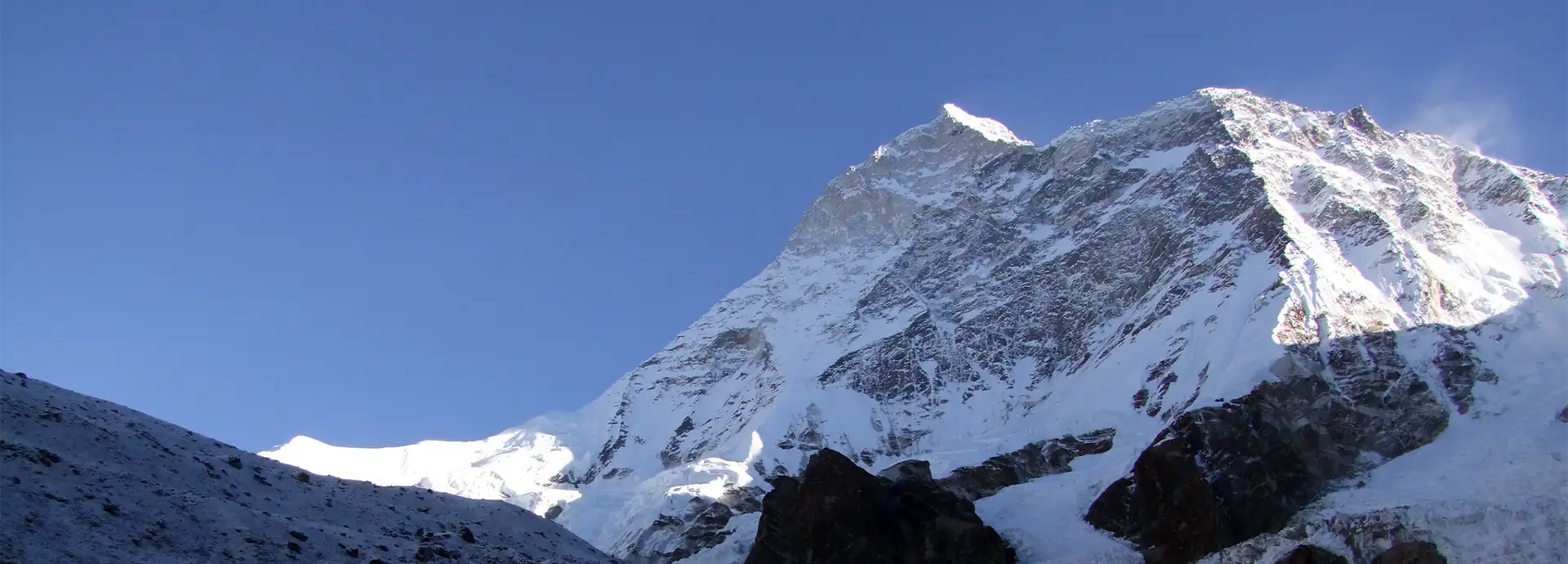
The Makalu Base Camp Trek takes you to the foot of Mount Makalu — the world’s fifth-highest mountain at 8,485 meters — through one of Nepal’s most remote and rewarding wilderness routes. The trail cuts deep into Makalu Barun National Park, follows the Barun Valley, crosses the demanding Shipton La and Keke La passes, and reaches Makalu Base Camp at about 4,870 m. You won’t share the trail with the crowds you find on Everest or Annapurna. You’ll share it with the mountain.
Nepal Hiking Company has been operating remote high-altitude treks since 2008. Our team in Kathmandu is registered with the Department of Tourism, the Office of the Company Registrar, the Small Cottage Industry, the Inland Revenue Department, and Nepal Rastra Bank. It is a member of TAAN (Trekking Agencies’ Association of Nepal) and NMA (Nepal Mountaineering Association). We’ve run this specific Makalu route through multiple seasons and know the teahouses, the passes, and the exact spots where the mountain first appears above the ridge.
Hotel Thamel Park in Kathmandu handles your city nights. After that, expect basic teahouses, simple food, cold mornings, and a scenery that very few trekkers ever see. Experienced hikers only. But if that sounds right, this is the trek.
The Makalu Base Camp Trek is an 18-day remote teahouse trek in eastern Nepal through Makalu Barun National Park. The route flies to Tumlingtar, then travels by road and trail through Num, Seduwa, Tashigaon, Khongma Danda, Shipton La, Keke La, Dobato, Yangle Kharka, and Langmale Kharka to reach Makalu Base Camp at about 4,870 m. It suits experienced trekkers who want wilderness, fewer crowds, and serious Himalayan scenery.
Quick Facts
| Item | Details |
|---|---|
| Duration | 18 Days |
| Start Point | Kathmandu |
| End Point | Kathmandu |
| Trek Start | Num or nearby road point |
| Trek End | Seduwa, Num, or available road point |
| Highest Point | Makalu Base Camp, about 4,870 m |
| Main Region | Makalu Barun National Park |
| Main Valley | Barun Valley |
| Difficulty | Strenuous |
| Accommodation | Hotel, lodge, teahouse, basic teahouse |
| Kathmandu Hotel | Hotel Thamel Park |
| Meals | Breakfast in Kathmandu; full board during trek |
| Transport | Kathmandu–Tumlingtar flight and road transfers |
| Permits | Makalu Barun National Park permit, Makalu Rural Municipality permit, TIMS if required |
| Best Season | Spring (March–May) and Autumn (September–November) |
| Guide | Licensed trekking guide — required |
| Porter | Included or recommended |
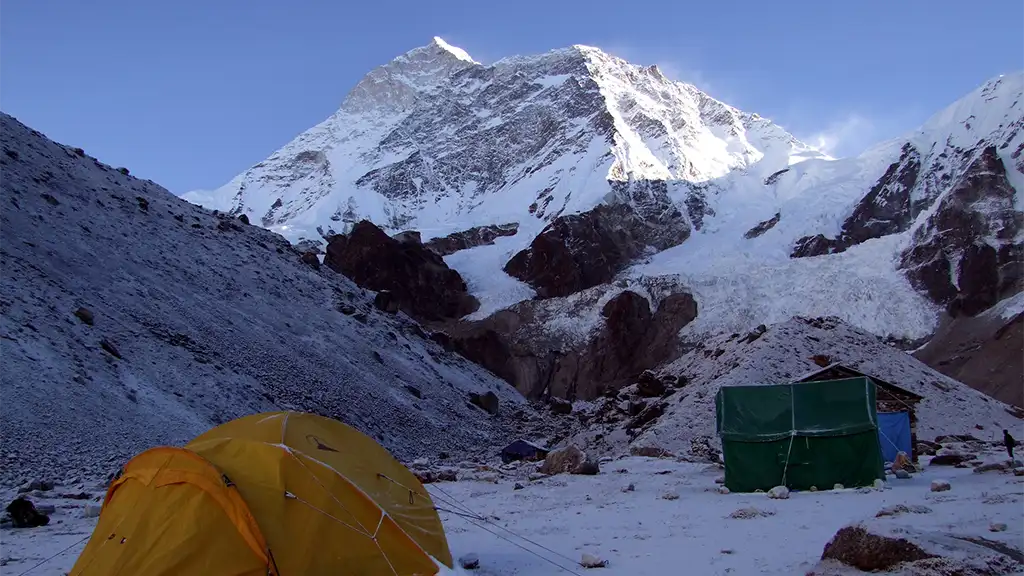
The Makalu Base Camp Trek is a different kind of Himalayan experience. It doesn’t have the well-worn lodges of the Everest Highway or the café culture of the Annapurna Circuit. What it has is Barun Valley — a dramatic, progressively wilder corridor that takes you from Rai farming villages at 1,000 meters to glacial flats at nearly 5,000 meters. On clear days above Langmale Kharka, you get simultaneous views of Makalu, Everest, Lhotse, Baruntse, and Chamlang. Not many treks in Nepal offer five 8,000-meter peaks in one frame.
The 18-day structure isn’t padded. The Tumlingtar flight and road approach to Num take the better part of a full day. The trek takes six walking days, including a necessary acclimatization stop at Khongma Danda. The Shipton La and Keke La section demands real energy. And the full day at Makalu Base Camp — which shorter 15- and 16-day competitors often skip or rush — is, honestly, the point of the whole trip.
Road access in eastern Nepal can change at short notice. Landslides, monsoon damage, and vehicle availability all affect travel time. Our team actively monitors road conditions and adjusts departure points as needed. You should expect some flexibility in the early travel days and pack accordingly.
Browse every route in our regional trekking guide or see all trekking packages we run. Travellers who like this trip also compare Arun Valley Trek, Kanchenjunga Base Camp Trek, Manaslu Tsum Valley Trek.
Before you book, read our Nepal trekking cost guide, check the trekking gear list, and review travel insurance requirements. Still deciding? Plan your trip with a local expert.
For official information, see the Nepal Tourism Board, the Trekking Agencies’ Association of Nepal and the Department of Immigration for visa rules, plus background on Makalu mountain facts.

Included Meals

Trip staff

Transport

Accommodation

Trip Grade
Group Size
Land at Tribhuvan International Airport. Our representative meets you at arrivals and transfers you
Accommodation:
Hotel Thamel Park

Maximum Altitude 1,400m/4,593ft (Kathmandu )
Difficulty
Meet your licensed guide in the morning. Check permits, review the itinerary, confirm packing, and discuss the route. This preparation day matters — remote treks leave less room for forgotten gear or permit issues.
Accommodation:
Hotel Thamel Park
Meals Breakfast
Maximum Altitude 1,400m/4,593ft (kathmandu )
Difficulty
Take the early morning domestic flight from Kathmandu to Tumlingtar airport in Sankhuwasabha district. The flight takes about 45 minutes and offers views of the Himalayan foothills on approach. Drive from Tumlingtar through Khandbari and Chichila toward Num. The road winds through mid-hill terrain; travel time depends on road conditions and typically takes 4 to 6 hours.

Time & Distance 6Hour, 230KM
Accommodation:
Lodge or teahouse
Meals Breakfast, Lunch, Dinner
Maximum Altitude 1,528m/5,013ft (Num)
Difficulty
Transportation Flight, Jeep
The trail descends steeply from Num to the Arun River — the crossing point into the Makalu Barun National Park trail corridor. After the river, it climbs through the forest and terraced farmland to Seduwa at about 1,500 meters. Rai settlements line this section. The trail can be muddy in wet conditions.
Time & Distance 6Hour, 9KM
Accommodation:
Teahouse
Meals Breakfast, Lunch, Dinner
Maximum Altitude 1,500m/4,921ft (Seduwa)
Difficulty
A longer walking day through mixed forest, village trails, and river crossings. The trail passes through smaller Rai communities and eventually reaches Tashigaon — one of the last lower-valley settlements before the climb begins in earnest. Dal bhat (lentil soup and rice — Nepal’s daily staple) tastes particularly good here after a full day on the trail.
Time & Distance 6Hour, 8KM
Accommodation:
Teahouse
Meals Breakfast, Lunch, Dinner
Maximum Altitude 2,100m/6,890ft (Tashigaon)
Difficulty
The hardest early day of the trek. The trail climbs steeply — roughly 1,500 meters of elevation gain — from Tashigaon’s forest to the ridge at Khongma Danda at 3,560 meters. Rhododendron forest dominates the lower climb. The ridge opens to mountain views that arrive as a genuine reward for the effort. Start early. Take breaks. This is not a day to rush.
Time & Distance 7Hour, 7.5KM
Accommodation:
Teahouse
Meals Breakfast, Lunch
Maximum Altitude 3,548m/11,640ft (Khongma Danda)
Difficulty
Rest and adjust to the altitude before the high pass section. A short optional ridge walk, roughly 1 to 2 hours, gives views toward the Shipton La area and helps your body acclimatize actively rather than passively. Drink at least three liters of water. Sleep as long as your body wants.
Accommodation:
Teahouse
Meals Breakfast, Lunch, Dinner
Maximum Altitude 3,554m/11,660ft (3554)
Difficulty
The crux day of the Makalu Base Camp Trek. Start before 6 a.m. Cross Shipton La and Keke La — the two passes that connect the lower approach to the Barun Valley. Snow patches are common even in autumn. Wind exposure is significant near the tops. The descent to Dobato at 3,630 meters is steep and requires trekking poles.
Time & Distance 8Hour, 8KM
Accommodation:
Teahouse
Meals Breakfast, Lunch, Dinner
Maximum Altitude 3,860m/12,664ft
Difficulty
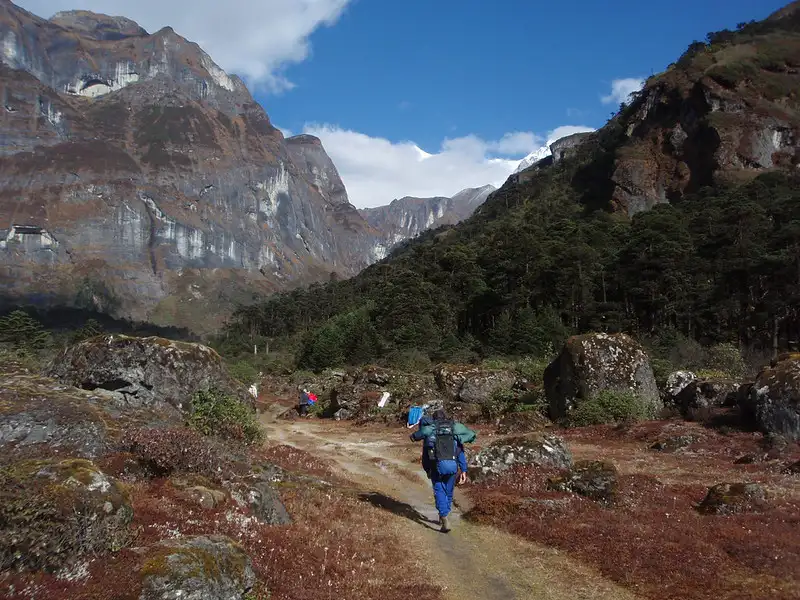
The trail descends and traverses through forest and river-valley terrain toward Yangle Kharka at 3,680 meters. Some sections cross landslide-exposed slopes, particularly after the monsoon season. The guide sets the pace and checks the trail status in advance. Yangle Kharka marks the point where the Barun Valley begins to dominate the scenery.
Time & Distance 6Hour, 10KM
Accommodation:
Teahouse
Meals Breakfast, Lunch, Dinner
Maximum Altitude 3,610m/11,844ft ( Yangle Kharka)
Difficulty
One of the most visually rewarding walking days of the entire trek. The Barun Valley widens, and the mountains begin to reveal themselves. The trail follows the Barun River upstream through increasingly open terrain. Langmale Kharka at 4,410 meters sits in a high pasture with unobstructed views — Makalu’s southwest face, Baruntse, and parts of the Everest massif visible on clear mornings.
Time & Distance 7Hour, 10KM
Accommodation:
Teahouse
Meals Breakfast, Lunch, Dinner
Maximum Altitude 4,410m/14,469ft (Langmale Kharka)
Difficulty
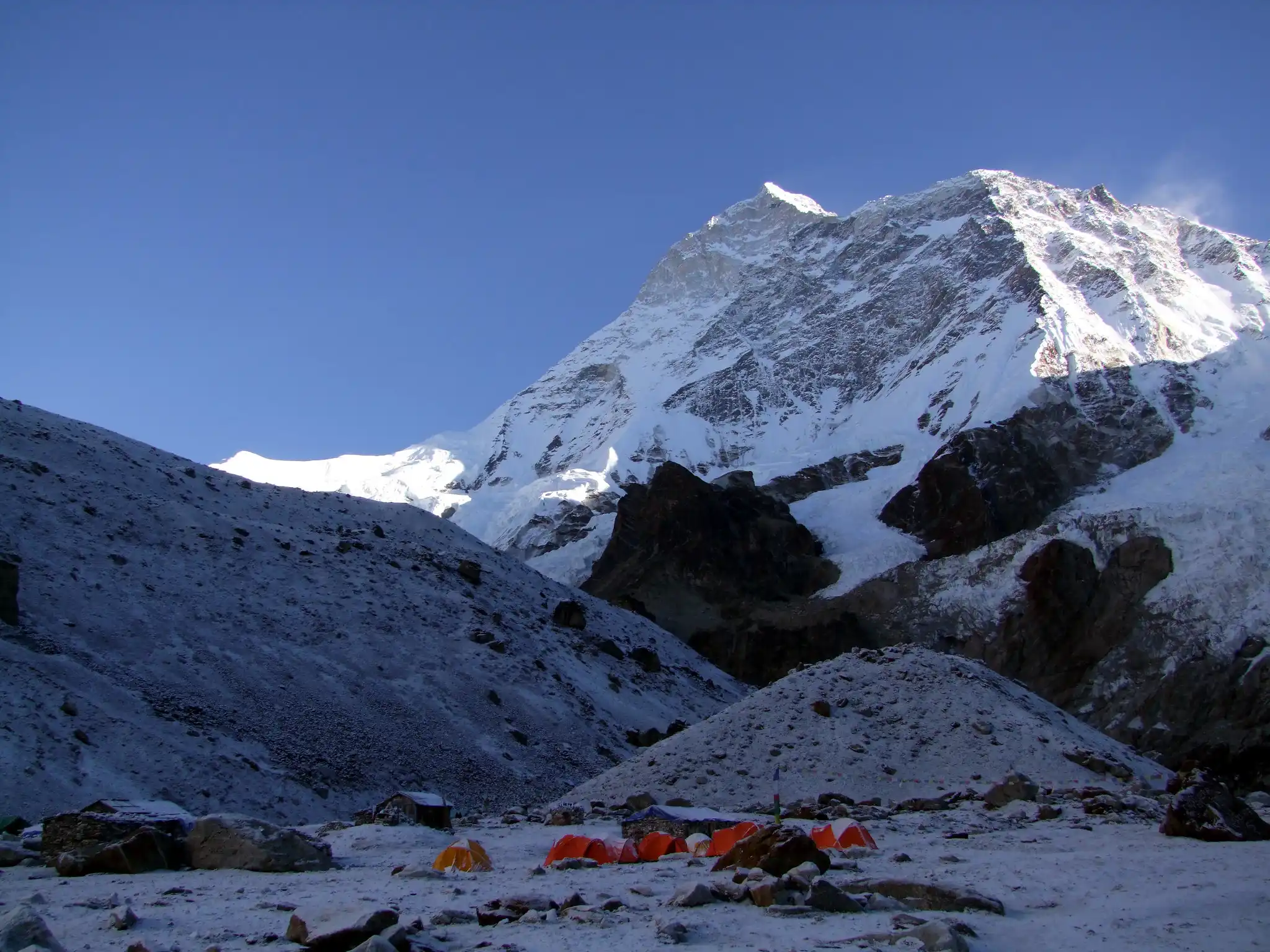
The final approach to Makalu Base Camp through remote alpine terrain. Glacial streams cross the trail. Rock and ice debris from the Barun Glacier lines the upper route. The base camp itself sits at about 4,870 meters — a spare, high-altitude scenery with the north face of Makalu immediately above.
Time & Distance 6Hour, 9KM
Accommodation:
Basic teahouse
Meals Breakfast, Lunch, Dinner
Maximum Altitude 4,870m/15,978ft ( Makalu Base Camp)
Difficulty
The reason we built for 18 days. You have a full day to explore the upper Barun area based on conditions and energy. Options include a closer walk toward the Barun Glacier, a visit to Barun Pokhari, Lower Barun Lake, or — for those still feeling strong — a push toward Swiss Base Camp for a higher perspective. Your guide makes the call on safety and snow conditions before any additional hike.
Accommodation:
Basic teahouse
Meals Breakfast, Lunch, Dinner
Maximum Altitude 4,870m/15,978ft (Makalu Base Camp)
Difficulty
Long descent day, covering roughly 16 kilometers back through Langmale Kharka and down to Yangle Kharka. Knees feel the return more than the approach. Use trekking poles. The views on the way down hit differently — you know the mountain now.
Time & Distance 8Hour, 16KM
Accommodation:
Teahouse
Meals Breakfast, Lunch, Dinner
Maximum Altitude 3,610m/11,844ft (Yangle Kharka)
Difficulty
Re-cross the Barun Valley terrain and climb back toward the ridge. Return pace is typically faster than the inbound leg, but altitude and cumulative fatigue from the earlier days deserve respect. We adjust the overnight stop based on group pace and lodge availability.
Time & Distance 7Hour, 9KM
Accommodation:
Teahouse
Meals Breakfast, Lunch, Dinner
Maximum Altitude 3,680m/12,073ft (Dobato or Khongma Danda)
Difficulty
Descend through the forest back to Tashigaon. The temperature rises noticeably. After days above 4,000 meters, the warm air at 2,070 meters feels conspicuous. Villages, farming, and forests return to the scenery.
Time & Distance 6Hour, 7.2KM
Accommodation:
Teahouse
Meals Breakfast, Lunch, Dinner
Maximum Altitude 2,100m/6,890ft (Tashigaon)
Difficulty
Complete the descent to Seduwa or Num, depending on pace, then transfer by road to Tumlingtar through Chichila and Khandbari. Road conditions in eastern Nepal vary seasonally. Our team confirms the drive point before this day starts.
Time & Distance 5Hour, 11KM
Accommodation:
Lodge
Meals Breakfast, Lunch, Dinner
Maximum Altitude 1,530m/5,020ft (Seduwa)
Difficulty
Morning flight back to Kathmandu. Transfer to Hotel Thamel Park. The afternoon is yours — rest, hot shower, real coffee, and a meal that isn’t dal bhat or noodles.
Time & Distance 45Minute, 185KM
Accommodation:
Hotel Thamel Park
Meals Breakfast
Maximum Altitude 1,400m/4,593ft (Kathm,andu )
Difficulty
Transportation Flight
Transfer to Tribhuvan International Airport for your international departure.
Difficulty
Start with the mountain. Makalu is the fifth-highest peak on Earth. Most trekkers who’ve done the Everest Base Camp Trek have never heard of the route to Makalu’s base. That’s not because the views are lesser — it’s because the logistics are harder and the trail demands more experience. If you’ve got that experience, the reward is a base camp experience that feels genuinely earned.
The route through Makalu Barun National Park passes through a protected area that spans from subtropical forest at around 800 meters to permanent snow above 7,000 meters. You cross river gorges cut by the Arun and Barun rivers, walk through rhododendron and bamboo forest in the middle sections, and eventually break into open alpine terrain where the mountain reveals itself in stages.
The package includes Hotel Thamel Park in Kathmandu for city nights, a one-way domestic flight to Tumlingtar, full road transfer logistics, teahouse accommodation throughout the trek, all trekking meals, a licensed guide, and permit arrangements. Our team handles the paperwork. You focus on the walking.
Makalu Barun National Park sits in the Sankhuwasabha and Solukhumbu districts of eastern Nepal. The park covers 1,500 square kilometers and adjoins Sagarmatha National Park (Everest region) to the northwest. The Arun River drains the eastern edge of the park; the Barun River cuts through its heart.
The park’s elevation range — from about 800 meters at the park boundary near Num to over 8,485 meters at Makalu’s summit — means the terrain shifts dramatically over a few days of walking. You walk through subtropical and temperate forests in the lower sections, sub-alpine shrubs and meadows in the mid-sections, and glacial terrain above Langmale Kharka. Wildlife in the park includes snow leopard, red panda, Himalayan tahr, and over 400 bird species, though sightings depend heavily on season and trail section.
The Nepal Tourism Board lists the Makalu Barun National Park entry fee at NRs. 3,000 for foreign nationals, NRs. 1,500 for SAARC nationals and NRs. 100 for Nepali citizens. Nepal Hiking Company handles the permit paperwork before your trek starts.
Barun Valley and High Alpine Scenery
The Barun Valley is the ecological and visual centerpiece of the trek. After crossing the Arun River near Num and climbing through Rai villages and along forest trails, the route eventually opens onto the upper Barun drainage. This valley feels increasingly remote with every kilometer.
From Yangle Kharka onward, the trail runs through open high-altitude terrain with the Barun River running beside it. The walls of the valley close in. Glacial streams cut across the path. Langmale Kharka sits at about 4,410 meters and gives the first extended views of the surrounding peaks — including the southwest face of Makalu. On mornings after clear nights, the light hits the glacier at an angle that’s hard to describe and harder to forget.
The full wildness of the valley is part of why the trek needs 18 days. Rushing through Barun Valley would miss the point entirely. We recommend taking the morning slowly at Langmale Kharka on the way in — sit with tea, let the views come to you. You’ve earned it by the time you get there.
The Shipton La and Keke La section is the most technically demanding part of the Makalu Base Camp Trek. Most trekkers rate this day harder than the Makalu Base Camp approach itself. Cold starts, potential snow on higher trail sections, wind exposure, and an indistinct trail in poor visibility all combine.
On a clear October day, the pass crossing is demanding but straightforward. In early spring or after fresh snowfall, it requires more caution. Our guides carry the final call on timing and pace. The acclimatization day at Khongma Danda isn’t just about altitude — it’s also about monitoring the weather for the upcoming pass crossing.
Trekking poles are practically mandatory here. Warm base layers worn under the waterproof shell matter at 4,000-plus meters in morning conditions. The descent to Dobato comes steeply, and tired knees on wet rock is not a situation you want. Take the guide’s pace seriously on this day.
Makalu Base Camp sits at about 4,870 meters in the upper Barun Valley. The north face of Makalu rises directly above. The Barun Glacier extends northeastward. The setting is raw — rock, ice, and sky, with the mountain filling the upper frame in a way that Everest Base Camp, tucked in the Khumbu Glacier moraine, doesn’t quite match.
The full exploration day on Day 12 gives you time to actually use the base camp, not just check it off. Depending on conditions and fitness, options include a closer approach to the Barun Glacier, a visit to Barun Pokhari (the lake below the glacier), exploration of Lower Barun Lake, and — for stronger trekkers — a push toward Swiss Base Camp for a higher vantage point. Your guide assesses snow conditions and trail safety before any of these side trips.
Many short Makalu itineraries reach base camp on day 11 and head back on day 12. In our team’s experience, trekkers who rush the base camp section consistently say afterward that they wish they had more time. The 18-day schedule exists specifically to fix that problem.
Hotel Thamel Park in Kathmandu is a clean, well-located hotel in Thamel — walking distance from trekking gear shops, restaurants, and currency exchange. Good beds, hot showers, and reliable Wi-Fi. It’s a comfortable starting and ending point.
On the trail, the reality shifts. From Num to Yangle Kharka, teahouses are basic but functional — simple wooden rooms, thin mattresses, shared squat toilets in most places, and limited but warm menus. From Langmale Kharka to Makalu Base Camp, accommodation becomes sparse. At base camp itself, the teahouse options are minimal — expect a basic structure with bedding provided, but bring your sleeping bag rated to -10°C regardless.
Makalu is more remote than Everest, Annapurna, and Langtang. The lodge infrastructure has grown noticeably over the past decade, but it hasn’t caught up with the popular routes. Hot showers are available at a few lodges in the lower sections and cost NRs. 200 to 500 extra per use. Wi-Fi exists in name only above Tashigaon — don’t rely on it. Charging is possible at most teahouses for a small fee, but bring a power bank with enough capacity for 3 to 4 days between charges.
Trip Information
You receive breakfast at Hotel Thamel Park in Kathmandu. Full-board meals — breakfast, lunch, and dinner — cover all trekking days and remote road travel days from Day 3 onward.
Dal bhat — Nepal’s foundational meal of lentil soup, steamed rice, vegetable curry, and pickles — is available everywhere and provides solid fuel for long walking days. Most teahouses also serve noodle soup, fried rice, porridge, eggs, potatoes in various preparations, and standard tea or coffee. Above Yangle Kharka, menus narrow to the basics. Don’t expect pasta, pancakes, or pizza above 4,000 meters.
Lunch and dinner in Kathmandu are not included. Bottled water, soft drinks, hot drinks, snacks, desserts, and alcohol are excluded from the included meals and are not available throughout the trek. Fresh food resupply stops after Langmale Kharka — this is simply logistics. Bring high-energy snacks from Kathmandu for the upper valley days.
Nepal Hiking Company arranges airport pickup and drop-off for both the departure from Tumlingtar and the return to Kathmandu. The domestic flight from Kathmandu to Tumlingtar takes about 45 minutes and operates most mornings, subject to mountain weather and aircraft availability.
From Tumlingtar, a private vehicle drives through Khandbari and Chichila to Num — roughly 4 to 6 hours depending on road conditions. The return drive from Seduwa or Num to Tumlingtar mirrors this route. Road quality in eastern Nepal varies significantly by season. Landslides during and after monsoon can affect access to Num. Our team in Kathmandu monitors road conditions and adjusts the trek start and end points as needed.
A delayed flight to Tumlingtar is one of the most common disruptions on this itinerary. The 18-day schedule builds in enough buffer that a one-day delay at either end rarely affects the overall trek plan. Still, don’t book your international departure flight for the day after Day 18.
The Makalu Base Camp Trek requires three permits. First: the Makalu Barun National Park entry permit — NRs. 3,000 for foreign nationals (as listed by the Nepal Tourism Board). Second: the Makalu Rural Municipality permit — listed by NTB at USD 20 per person per week for the first four weeks and USD 25 per week thereafter. Third: the TIMS (Trekkers’ Information Management System) card, required under current practice for most treks in Nepal.
Nepal Hiking Company arranges all permits before your trek starts. You need to provide a copy of your passport and two passport-size photographs for the application. Bring your originals on the trek — checkpoint officers verify permits at Seduwa and at the national park entry point near Num.
Permit fees change periodically. Nepal Hiking Company confirms current rates before your departure. Government permit requirements in remote areas can also change with little public notice, so we recommend booking through a registered agency rather than attempting to manage permits independently for this route.
Strenuous. That’s the honest rating, and it’s not a description the company applies lightly. The route earns it on several counts.
Walking days run 5 to 9 hours. The climb from Tashigaon to Khongma Danda gains about 1,500 meters in a single day. The Shipton La and Keke La crossing demands a full-energy start before 6 a.m. with exposure to wind, cold, and possible snow. The return from Makalu Base Camp covers significant ground on tired legs. And the overall altitude — spending several nights above 4,000 meters — compounds fatigue regardless of fitness level.
Who completes this trek successfully? Trekkers who’ve done multi-day high-altitude routes before — ideally something above 4,000 meters. People who can walk 8 hours without significant knee or hip problems. Hikers who don’t need hot showers and a reliable menu every night. If you’ve done Everest Base Camp, Annapurna Circuit, or Manaslu Circuit, Makalu is within reach. If this is your first Himalayan trek, it isn’t.
| Season | Months | Trail Conditions | Pass Conditions | Recommendation |
| Spring | March–May | Rhododendron bloom, warming days, clear mornings | Snow possible on Shipton La in March | Excellent — best for flowers and wildlife |
| Autumn | Sep–Nov | Stable weather, dry trails, best visibility | Pass usually clears by late September | Best overall — peak trekking window |
| Winter | Dec–Feb | Cold, limited teahouse service, possible closures | Heavy snow risk on passes | Not recommended for most trekkers |
| Monsoon | June–Aug | Rain, landslides, and leeches in the lower sections | Poor visibility, wet trail | Not recommended |
Spring (March to May) and autumn (September to November) are the two viable windows. Autumn gives the clearest mountain views and the most reliable pass conditions. Spring brings rhododendron blooms in the forest sections and warmer daytime temperatures, but early spring still carries a risk of snow on Shipton La. October through mid-November is our team’s preferred window for this route.
Nepal Hiking Company includes porter support in the standard package where possible. The Makalu route is strenuous enough that we recommend it strongly — this is not a trek to experiment with carrying your own heavy pack. One porter carries a total load of up to 20 kg for two trekkers. Each trekker carries their own daypack with water, snacks, valuables, and layers.
Our porters are hired locally through the Khandbari and Tumlingtar area, where possible, and hold valid Nepal porter welfare documentation. They receive appropriate wages, equipment, and insurance. Additional porter support is available on request for groups with heavier gear requirements.
Optional Add-ons
Makalu Base Camp Trek isn’t optional in any practical sense. The route goes above 4,800 meters in a national park where road access ends well before the trek begins. Helicopter evacuation from Yangle Kharka or Makalu Base Camp costs USD 3,000 to USD 6,000 or more, depending on weather and aircraft availability. A standard travel insurance policy won’t cover that.
Your policy must explicitly cover: emergency helicopter evacuation from high-altitude remote areas, medical treatment in Nepal and internationally, trip cancellation, domestic flight delays, road condition delays, lost baggage, and personal accident. Refer to official medical recommendations, such as the CDC High-Altitude Travel Guidelines, to ensure proper medical coverage. World Nomads, Battleface, and ISOS are commonly used by trekkers on this route — but verify the exact altitude and remoteness coverage with your provider before you depart. Nepal Hiking Company cannot arrange insurance on your behalf. We recommend purchasing it before you arrive in Kathmandu and carrying a printed copy of your policy with your emergency contact numbers.
Clothing
Gear
Documents and Essentials
You are entering a protected national park and the traditional homelands of the Rai and Sherpa communities. Both deserve respectful conduct.
Altitude sickness is the primary medical risk on the Makalu Base Camp Trek. The route includes a scheduled acclimatization day at Khongma Danda (3,560 m) to reduce that risk before the high-pass section. Above this point, the itinerary follows the standard 300 to 400 meters per day maximum altitude-gain principle.
Your guide monitors for symptoms of Acute Mountain Sickness — headache, nausea, fatigue, loss of appetite, disturbed sleep — throughout the high-altitude sections. Any trekker showing moderate AMS symptoms stops and rests. Any trekker showing severe symptoms descends immediately. Our team doesn’t negotiate this. Descent is the only reliable treatment.
The guide carries a basic first-aid kit and acetazolamide (Diamox) for altitude management. We maintain emergency communication lines through local contacts and Kathmandu throughout the trek. Helicopter evacuation from the Makalu region is possible but not guaranteed in bad weather — another reason comprehensive insurance is non-negotiable.
Stay hydrated. Drink 3 to 4 liters of water per day above 3,500 meters. Eat hot meals even when your appetite drops. Altitude suppresses hunger in many trekkers above 4,000 meters — force yourself to eat dal bhat at Langmale Kharka even if it’s the last thing you feel like.
| Trek | Duration | Difficulty | Highest Point | Trail Character | Best For |
| Makalu Base Camp Trek | 18 days | Strenuous | ~4,870 m — Makalu Base Camp | Remote valley and base camp | Experienced trekkers wanting wilderness |
| Kanchenjunga Base Camp Trek | 26 days | Challenging to strenuous | ~5,143 m — Pangpema | Remote full circuit | Long-route wilderness trekkers |
| Manaslu Circuit Trek | 14–18 days | Challenging | ~5,106 m — Larkya La Pass | Restricted circuit trek | Remote circuit hikers |
| Everest Base Camp Trek | 12–16 days | Moderate to challenging | ~5,545 m — Kala Patthar | Popular high-altitude route | First classic Himalayan trek |
| Annapurna Circuit Trek | 12–16 days | Moderate to challenging | ~5,416 m — Thorong La Pass | Classic circuit route | High-pass circuit trekkers |
The two routes share a region — the Makalu Barun National Park boundary touches Sagarmatha National Park — but the experience is completely different. Everest Base Camp has lodges every two to three hours, multiple tea shops at every stop, stable Wi-Fi in Namche Bazaar, and thousands of trekkers from September through November. Makalu has none of that.
Makalu’s infrastructure is genuinely sparse above Tashigaon. The teahouses exist, but they’re smaller, the menus are shorter, and the gap between lodges is wider. The trade-off is real: you get solitude, proper wilderness, and a base camp view that’s arguably more dramatic precisely because you’ve earned it on a route with less hand-holding.
Everest Base Camp is the right choice for a first high-altitude Himalayan trek. Makalu Base Camp is the right choice when you’ve done that and want something harder and quieter.
Several operators market 15- and 16-day Makalu packages. To make those work, they typically cut the acclimatization day at Khongma Danda and reduce base camp time to a single night. In our team’s experience — and in honest feedback from trekkers who’ve done both versions — cutting those days produces a rushed, altitude-stressed experience that doesn’t do the route justice.
The 18-day version includes: a full acclimatization day at Khongma Danda (Day 7), a proper full exploration day at Makalu Base Camp (Day 12), and a buffer built into the Tumlingtar approach and exit. None of these is padding. All three reflect real field experience with what the route needs.
The Shipton La (at about 4,216 m) and Keke La (at about 4,170 m) form the defining challenge of the first half of the Makalu trek. Technically, they’re not extreme — no ropes, no fixed lines, no glacier travel under normal conditions. But the combination of altitude, cold, potential snow, and early-morning start makes the day hard in a way that altitude numbers don’t capture.
On a group our team ran in autumn, two of the eight trekkers found the Keke La descent genuinely nerve-wracking because of loose, wet rock after a light snowfall the previous night. The guide adjusted pace, used hand-hold assistance at one section, and the whole group got through safely. That’s the version of that day you need to be prepared for — not the photo on the website.
Makalu Base Camp itself gives direct views of the north face and the upper reaches of the Barun Glacier. For most trekkers, spending time here and walking to the glacier margin is enough — the mountain’s scale is striking from the base.
For stronger trekkers with energy on Day 12, additional options include: walking south to Barun Pokhari — a glacial lake at about 4,540 meters — which takes about two hours round trip; continuing to Lower Barun Lake; or attempting the approach toward Swiss Base Camp at about 5,150 meters, which the guide assesses on the morning of Day 12 based on snow conditions. Swiss Base Camp is not always feasible and isn’t guaranteed in the itinerary — but when it is, the view expands to include the full west face of Makalu and the north ridge of Baruntse.
From Seduwa to Tashigaon, teahouses are modest but reasonable. Clean rooms, basic bedding, squat toilets, and limited but edible menus. From Khongma Danda to Yangle Kharka, the lodges feel more austere — thinner walls, colder nights, menus with four or five items.
At Langmale Kharka, accommodation is very basic. Rooms are often plywood-walled, bedding is minimal, and the temperature at 4,410 meters drops significantly after sunset. This is precisely why we include a sleeping bag rated to -10°C in the packing list — not as a precaution but as a necessity.
At Makalu Base Camp itself, the teahouse is a simple structure that primarily serves expedition teams. Trekkers are welcome, but the setup reflects that function. Hot food, basic bedding, and the mountain right outside. That’s the deal.
The Makalu Base Camp Trek covers 18 full days from Kathmandu to the base of the world’s fifth-highest mountain and back. The route runs through Makalu Barun National Park, follows Barun Valley, crosses Shipton La and Keke La, and reaches Makalu Base Camp at about 4,870 meters — with a full exploration day built into the schedule rather than bolted on as an afterthought.
Nepal Hiking Company handles Hotel Thamel Park accommodation in Kathmandu, Tumlingtar domestic flights both ways, all eastern Nepal road transfers, teahouse accommodation through the trek, full-board trekking meals, permits (Makalu Barun National Park permit, Makalu Rural Municipality permit, and TIMS), licensed guide, porter support, first-aid equipment, and complete trekking logistics. You carry your pack. We carry the logistics.
Contact Nepal Hiking Company through hikinginnepal.com to confirm dates, group size, pricing, and any customization requests. The trail to Makalu doesn’t get less impressive once you’ve seen it. But you do need to go. Contact us today to start planning your Makalu Base Camp Trek.
The standard Nepal Hiking Company package runs 18 days from Kathmandu arrival to final departure. Day 1 is arrival; Day 18 is departure. The trekking portion runs from Day 4 to Day 16, with two days of road and flight logistics at each end.
Makalu Base Camp at about 4,870 meters is the highest overnight point. Some trekkers push to viewpoints or toward Swiss Base Camp at about 5,150 meters on the day of exploration, depending on conditions and fitness. The Shipton La and Keke La pass section reaches approximately 4,170 to 4,216 meters.
Strenuous. Long walking days of 5 to 9 hours, a 1,500-meter single-day climb from Tashigaon to Khongma Danda, a high-pass crossing with weather risk, and multiple nights above 4,000 meters all contribute to that rating. You need prior multi-day high-altitude trekking experience to complete this route comfortably
No. The Makalu Base Camp Trek is not suitable for trekkers without prior high-altitude multi-day experience. If this is your first Himalayan trek, we recommend starting with a route like the Everest Base Camp or Annapurna Base Camp trek and returning to Makalu once you’ve built altitude experience and trail fitness.
You need three permits: the Makalu Barun National Park entry permit (NRs. 3,000 for foreign nationals), the Makalu Rural Municipality permit (USD 20 per person per week), and the TIMS card if required under current regulations. Nepal Hiking Company arranges all three before your trek starts.
The Makalu Base Camp Trek starts and ends in Kathmandu. The trekking portion starts from Num after the flight to Tumlingtar and the road transfer. It ends at Seduwa or Num before the return road and flight to Kathmandu. Exact start and end road points depend on current road conditions.
Autumn (September to November) is the best overall window — stable weather, clearest mountain views, and the most reliable conditions on Shipton La and Keke La. Spring (March to May) is the second-best window, with blooming rhododendrons in the forest sections and warmer days, though early spring carries a risk of snow on the passes.
Hotel Thamel Park in Kathmandu for city nights. Teahouses for most trekking days — basic rooms with shared toilets—very basic teahouse at Makalu Base Camp. Twin-sharing rooms were available. Hot showers cost extra at lower-end lodges and may not be available above Tashigaon.
Breakfast is included at Hotel Thamel Park in Kathmandu. Full-board meals — breakfast, lunch, and dinner — cover all trekking days from Day 3 onward. Lunch and dinner in Kathmandu on Days 1, 17, and 18 are not included. Bottled water, alcohol, snacks, and desserts are excluded throughout.
Porter service is included in the standard Nepal Hiking Company package. One porter carries up to 20 kg for two trekkers. Each trekker carries their own daypack. Additional porter support is available on request.
Makalu Base Camp Trek has far fewer trekkers, more basic teahouse infrastructure, more challenging logistics, and a route that feels genuinely remote. The mountain view from Makalu Base Camp is arguably more dramatic. Everest Base Camp offers better facilities and more support services, and it suits first-time high-altitude trekkers better. Makalu suits experienced trekkers who’ve done Everest and want the next level of challenge and solitude.
The 18-day schedule accommodates one-day flight delays without major impact on the itinerary. Our team in Kathmandu monitors flight status and communicates updates immediately. If a delay extends beyond 24 hours, we adjust the trek start point or compress lower-valley days with greater flexibility. Extra hotel nights caused by flight delays are not included in the package price — this is why we recommend comprehensive travel insurance.
You can, but we advise against removing the Khongma Danda acclimatization day or the base camp exploration day. Those two days are the ones shorter operators cut, and they’re the ones trekkers consistently say they wish they hadn’t lost. If time is genuinely limited, consider the 13- to 16-day Kanchenjunga South Base Camp Trek or Mardi Himal Trek as alternatives that suit shorter windows.
Yes — and not just any travel insurance. Your policy must explicitly cover emergency helicopter evacuation from remote areas above 4,000 meters and medical treatment in Nepal. Standard travel insurance policies do not cover this. Verify with your insurer before departure. Carry a printed copy of the policy with emergency contact numbers.
The essentials: waterproof trekking boots broken in well before the trip, a sleeping bag rated to -10°C, a down jacket, trekking poles, a power bank with multi-day capacity, water purification, and personal medications including altitude tablets. High-energy snacks for the upper Barun Valley days matter more than most trekkers expect. Full packing list in the dedicated section above.