

Included Meals
- Breakfast: 12
- Lunch: 9
- Dinner: 9

Unbeatable Holiday Offers – Save Up to 20% on Your Next Adventure!
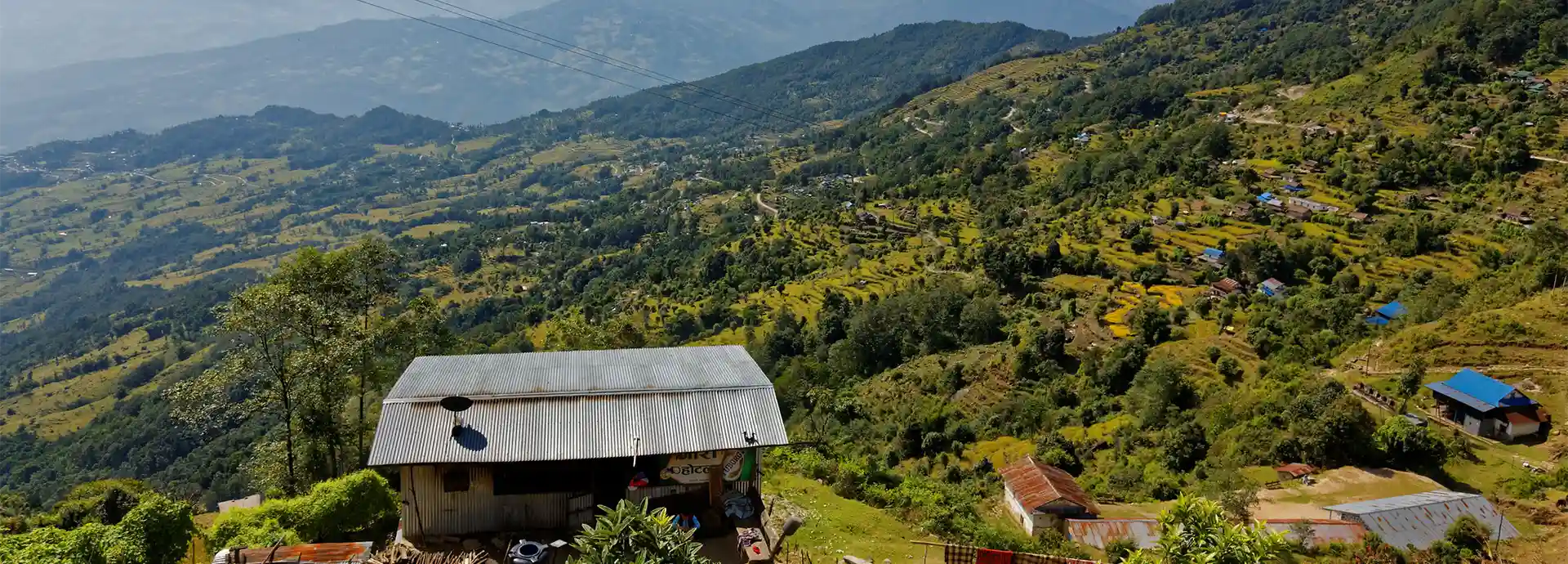
The Arun Valley Trek is a crossing route — not a base camp trek, not a viewpoint hike, but a genuine traverse of eastern Nepal from the Arun River drainage to the foot of the Khumbu Valley. The trail starts at Tumlingtar airport in Sankhuwasabha district, passes through Rai farming communities in the middle hills, climbs to Salpa Bhanjyang for the main ridge crossing, passes near Salpa Pokhari (a lake sacred to both Hindu and Buddhist communities in the region), and descends through Sherpa village territory to Lukla. Fourteen days. No Everest Base Camp. No teahouse highway. Just eastern Nepal, unhurried.
Nepal Hiking Company has been running treks across Nepal since 2008. We hold registration with the Department of Tourism, the Office of the Company Registrar, the Small Cottage Industry, the Inland Revenue Department, and Nepal Rastra Bank. We are members of TAAN (Trekking Agencies’ Association of Nepal) and NMA (Nepal Mountaineering Association). Our team in Kathmandu coordinates the Tumlingtar domestic flight, local road logistics through Khandbari and Chichila, permit arrangements, guide assignment, and the Lukla return flight — including the Ramechhap contingency when Lukla operations are disrupted during busy seasons.
Hotel Thamel Park handles your nights in Kathmandu. Local lodges, teahouses, and homestays cover the trail. If you want to walk through eastern Nepal’s villages at a pace that lets you actually see them, this is the route.
Quick Answer: What Is the Arun Valley Trek?
The Arun Valley Trek is a 14-day cultural crossing trek from Tumlingtar to Lukla in eastern Nepal. The route covers Kathmandu, Tumlingtar, Chichila, Gothe Bazaar, Salpa Phedi, Salpa Bhanjyang, Sanam, Bung, Pangom, Paiya, and Lukla. It suits trekkers who want quiet villages, Rai and Sherpa culture, forest trails, Salpa Pokhari, and access to lower Everest without having to follow the busy Everest Base Camp trail.
Quick Facts
| Item | Details |
|---|---|
| Duration | 14 Days |
| Start Point | Kathmandu |
| End Point | Kathmandu |
| Trek Start | Chichila or Khandbari area (after Tumlingtar flight) |
| Trek End | Lukla |
| Main Route | Tumlingtar to Lukla |
| Main High Point | Salpa Bhanjyang area |
| Sacred Site | Salpa Pokhari |
| Main Region | Eastern Nepal and the lower Everest region |
| Difficulty | Moderate |
| Accommodation | Hotel, local lodge, teahouse, homestay |
| Kathmandu Hotel | Hotel Thamel Park |
| Meals | Breakfast in Kathmandu; full board during trek |
| Transport | Kathmandu–Tumlingtar flight; Lukla–Kathmandu or Ramechhap return flight |
| Permits | Route-dependent — Makalu-Barun NP, Sagarmatha NP, Khumbu local, TIMS as applicable |
| Best Season | Spring (March–May) and Autumn (September–November) |
| Guide | Licensed trekking guide — required |
| Porter | Optional or included based on package |
Most trekkers who want to connect eastern Nepal with the Everest region fly to Lukla and start from there. The Arun Valley Trek reverses that logic—it starts in the Arun River corridor near the edge of Makalu Barun National Park and walks west through progressively higher terrain until it reaches the Lukla approach trail from the south. By choosing the Arun Valley Trek, travelers cross rich cultural territory that the standard Khumbu circuit never touches.
The Arun Valley drainage holds some of Nepal’s most intact Rai culture. Kirat Rai communities—Nepal’s oldest documented indigenous cultural group, with a distinct oral literature and animist spiritual practices that predate Hinduism and Buddhism in the hills—live and farm along the lower Arun Valley Trek corridor. As the Arun Valley Trek trail climbs toward Salpa Bhanjyang and begins the descent toward Bung and Pangom, Sherpa settlements appear, and the cultural character shifts noticeably. Walking that transition over several days on the Arun Valley Trek, while observing changes in architecture, food, religious practices, and language, is one of the route’s defining qualities.
The 14-day schedule for the Arun Valley Trek works far better than shorter versions for a specific reason: the Lukla flight buffer. Lukla is one of Nepal’s most delay-prone airports. Two dedicated buffer days in Kathmandu at the end of the Arun Valley Trek absorb flight delays without wrecking your international connection. Every shortened version of the Arun Valley Trek cuts those days, leaving trekkers stressed at Lukla airport. Keeping those buffer days intact ensures the safest and most reliable Arun Valley Trek experience.
Browse every route in our regional trekking guide or see all trekking packages we run. Travellers who like this trip also compare Makalu Base Camp Trek, Kanchenjunga Base Camp Trek, Numbur Cheese Circuit Trek.
Before you book, read our Nepal trekking cost guide, check the trekking gear list, and review travel insurance requirements. Still deciding? Plan your trip with a local expert.
For official information, see the Nepal Tourism Board, the Trekking Agencies’ Association of Nepal and the Department of Immigration for visa rules, plus background on Arun River.

Included Meals

Trip staff

Transport

Accommodation

Trip Grade
Group Size
Land at Tribhuvan International Airport. Nepal Hiking Company’s representative meets you and transfers you to Hotel Thamel Park in Thamel. Use the afternoon to confirm your kit, pick up any remaining gear items, and rest. The Tumlingtar flight leaves early.
Accommodation:
Hotel Thamel Park

Maximum Altitude 1,400m/4,593ft (Kathmandu )
Difficulty
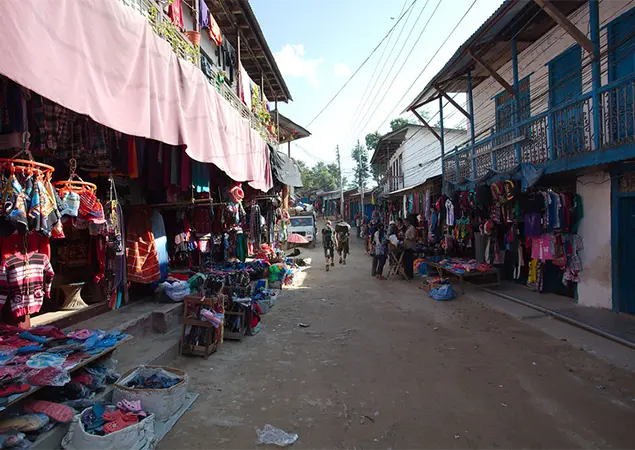
Morning flight from Kathmandu to Tumlingtar airport, roughly 45 minutes. From Tumlingtar, a road transfer through Khandbari heads toward Chichila at about 1,800 meters — the practical starting point for the Arun Valley Trek. The drive takes 2 to 3 hours, depending on road conditions. Chichila has a small bazaar and local lodge options.

Time & Distance 5Hour, 255KM
Accommodation:
Local Lodge/Hotel
Meals Breakfast, Lunch, Dinner
Maximum Altitude 1,890m/6,201ft ( Chichila)
Difficulty
Transportation Flight, Jeep/Bus
The first full walking day climbs through mixed forest and terraced farming scenery. The trail gains altitude gradually through Rai villages — stone houses, potato fields, a tea shop where the owner knows everyone who passes. Gothe Bazaar sits at around 2,500 meters in a forest clearing with basic teahouse accommodation.
Time & Distance 7Hour, 15KM
Accommodation:
Local Lodge
Meals Breakfast, Lunch, Dinner
Maximum Altitude 800m/2,625ft ( Gothe Bazaar)
Difficulty
The trail descends from Gothe Bazaar before climbing again through the forest to Salpa Phedi at around 1,800 meters. The Salpa Phedi section feels like a genuine basecamp day — the pass is visible above, the lodge is basic, and the morning start will determine how the next day goes. Good night’s sleep matters here.
Time & Distance 6Hour, 14KM
Accommodation:
Local Lodge
Meals Breakfast, Lunch, Dinner
Maximum Altitude 1,680m/5,512ft (Salpa Phedi)
Difficulty
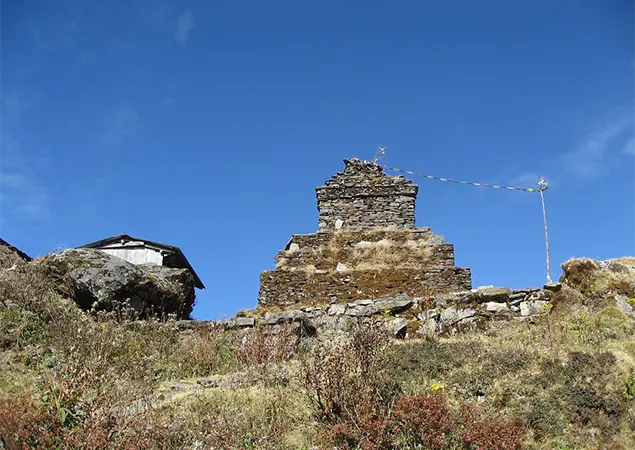
The defining day of the Arun Valley Trek. Start before 6 a.m. The climb to Salpa Bhanjyang gains roughly 1,500 to 1,800 meters through dense rhododendron forest that opens progressively as you gain altitude. The pass sits at about 3,350 to 3,400 meters, marked with prayer flags and stone cairns. On clear mornings, Makalu appears to the northeast — a distinctive wedge-shaped 8,000-meter peak that few people recognize from this angle.
After the pass, the trail descends steeply through the forest toward Sanam at about 2,400 meters. The descent on the Sanam side is steeper than the approach. Use trekking poles.
Time & Distance 9Hour, 18KM
Accommodation:
Local Lodge/Teahouse
Meals Breakfast, Lunch, Dinner
Maximum Altitude 3,495m/11,467ft (Salpa Bhanjyang)
Difficulty
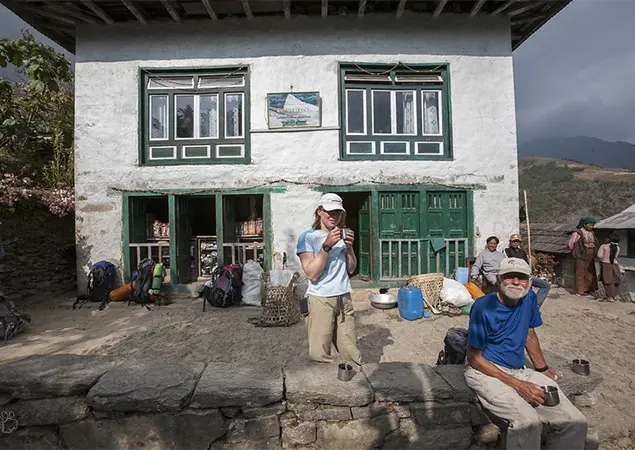
Descend from Sanam through a mix of Rai village territory and forest toward Bung at roughly 1,600 meters. Bung is one of the larger settlements on this section of the route — a market village with several lodge options and enough local economic activity to feel like a real community center. The sound of a school in session, children’s voices through open windows, is one of those details that mark the difference between walking through a place and walking past it.
Time & Distance 6Hour, 14KM
Accommodation:
Local Lodge
Meals Breakfast, Lunch, Dinner
Maximum Altitude 1,900m/6,234ft (Bung)
Difficulty
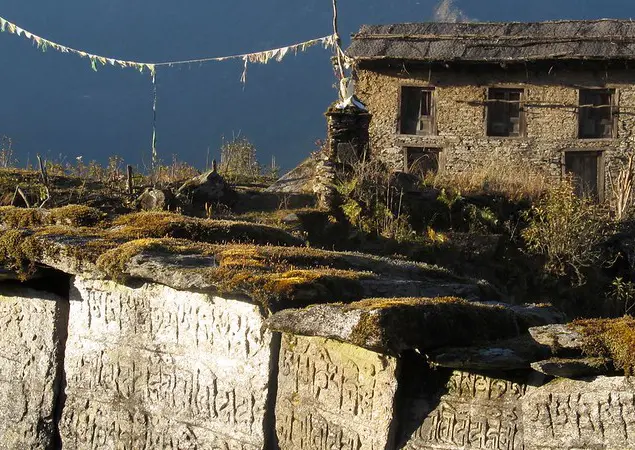
A quieter walking day through forested ridges and small settlements. The trail climbs from Bung before traversing toward Gaikharka or Najingdingma, depending on the route plan. This section is one of the least-described in any published Arun Valley trekking itinerary — the villages are small, the lodges are basic, and the trail moves through forest that’s genuinely undisturbed.
Time & Distance 6Hour, 11KM
Accommodation:
Basic Lodge
Meals Breakfast, Lunch, Dinner
Maximum Altitude 2,300m/7,546ft (Gaikharka )
Difficulty
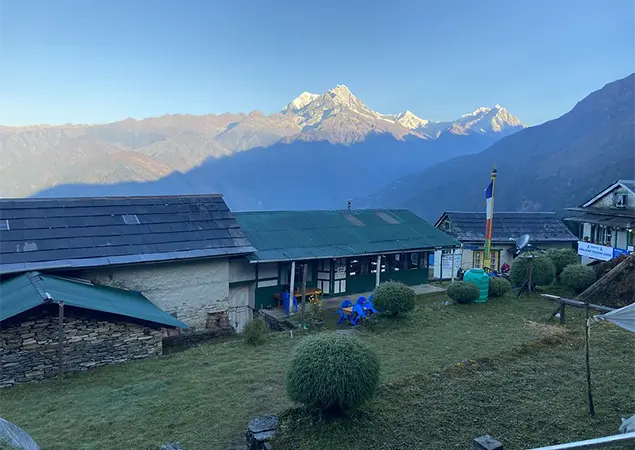
Continue toward Pangom — the settlement that connects the Arun Valley crossing route with the lower Solukhumbu trail network. The transition is visible before you reach it: prayer flags appear on ridge poles, the forest has been shaped by Buddhist practices, and the trail signs become more formal. Pangom marks the point where the Arun Valley Trek joins the wider Everest region trail system.
Time & Distance 7Hour, 12KM
Accommodation:
Local Lodge
Meals Breakfast, Lunch, Dinner
Maximum Altitude 2,846m/9,337ft (Pangom)
Difficulty
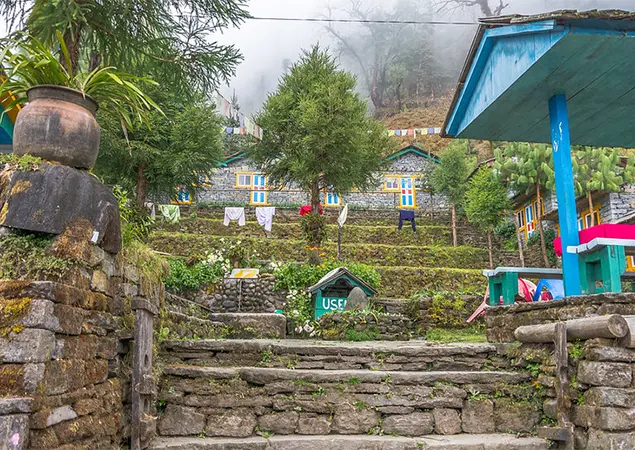
Follow the trail through lower Solukhumbu terrain toward Paiya. The forest here offers some of the best birdwatching along the whole route — the mixed-species flocks that move through this zone in autumn include species uncommon elsewhere in the eastern Nepal trail network. Morning walking produces the best observation. Paiya is a small teahouse stop with a clear view toward the lower Khumbu ridges.
Time & Distance 7Hour, 12KM
Accommodation:
Teahouse
Meals Breakfast, Lunch, Dinner
Maximum Altitude 2,830m/9,285ft (Paiya)
Difficulty
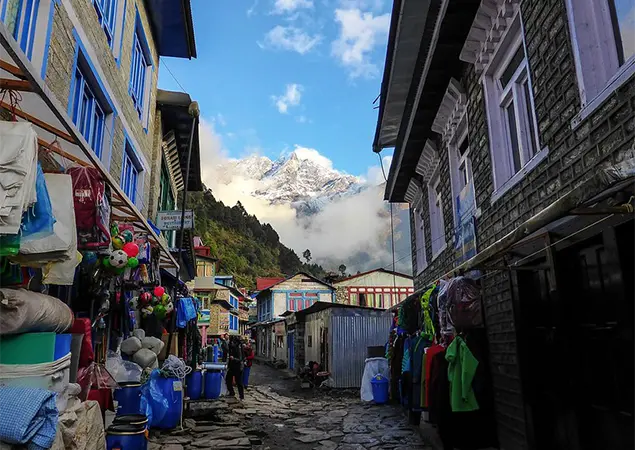
The final walking day arrives at Lukla (2,860 m). The trail from Paiya through local village sections and forest reaches the Lukla approach trail from the south — a different entry to the airport town than the standard north-side Everest Base Camp approach. Arriving in Lukla from this direction, having walked from Tumlingtar rather than flown in, yields a particular satisfaction. You’ve crossed eastern Nepal. The airport is at the end of the route, not the beginning.
Time & Distance 5Hour, 11KM
Accommodation:
Teahouse
Meals Breakfast, Lunch, Dinner
Maximum Altitude 2,860m/9,383ft (Lukla)
Difficulty
Morning Lukla flight. Flights operate to Kathmandu directly or through Ramechhap, depending on the season and current Lukla flight operations. Nepal Hiking Company tracks the current operating status and confirms routing before Day 11. Transfer to Hotel Thamel Park on arrival in Kathmandu.
Time & Distance 30MInute, 135KM
Accommodation:
Hotel Thamel Park
Meals Breakfast
Maximum Altitude 1,400m/4,593ft (Kathmandu )
Difficulty
A built-in schedule buffer for Lukla flight delays. In our experience running Lukla-exit treks across multiple seasons, a significant percentage of groups experience at least a one-day delay at Lukla or Ramechhap. This buffer day absorbs that without affecting your international departure. If the flight ran on schedule, use the day for rest, Thamel shopping, or optional sightseeing in Kathmandu.
Accommodation:
Hotel Thamel Park
Meals Breakfast
Maximum Altitude 1,400m/4,593ft (Kathmandu )
Difficulty
A second flexible day in Kathmandu. For trips where Lukla operated on schedule, this day allows optional Boudhanath Stupa, Pashupatinath Temple, or Patan Durbar Square visits. For trips with delays, it provides additional schedule protection.
Accommodation:
Hotel Thamel Park
Meals Breakfast
Maximum Altitude 1,400m/4,593ft (Kathmandu )
Difficulty
Transfer to Tribhuvan International Airport for your international departure.
Difficulty
The Everest region draws 40,000-plus trekkers per autumn season through a single Khumbu corridor between Lukla and Gorak Shep. The Arun Valley Trek uses a completely different approach — starting in Sankhuwasabha district and converging with the lower Everest network only at the Lukla end. For 10 of the trek’s 14 days, you walk trails where another international trekking group is an unusual sight rather than a constant backdrop.
The cultural dimension of the route is genuinely unusual. Rai communities in the Arun Valley maintain cultural practices and oral traditions that much of Nepal has either lost or commercialized. Walking through the village of Bung or Sanam with a guide who speaks the local language — and can explain the significance of what you’re seeing rather than just pointing at it — adds a layer that no standard Everest trek provides.
Nepal Hiking Company handles Hotel Thamel Park in Kathmandu, the domestic flight to Tumlingtar, local road transfer to the trek start, all permit arrangements, a licensed guide, a porter, and the logistics for the return flight to Lukla, including the Ramechhap seasonal contingency. Eastern Nepal flights and permit structures have multiple variables. Our team manages them from direct experience on this route.
The Arun River is one of Nepal’s largest and oldest river systems — it drains part of the Tibetan plateau before cutting south through the Himalayan chain. The valley it occupies in Sankhuwasabha district is wide and humid in the lower elevations, narrowing and cooling as it climbs toward the Salpa ridge. The scenery changes dramatically over the first five days of the trek.
From Chichila, the trail follows a scenery of terraced rice and millet fields, pipal and banyan tree shade, and small bazaar settlements with local tea shops. The forest begins in earnest above 2,000 meters — first mixed deciduous, then rhododendron-dominant, then the high-altitude oak and fir that covers the Salpa ridge. In spring, the rhododendron sections below Salpa Bhanjyang bloom in a sequence of colors — crimson at lower elevations, pink in the middle band, white near the ridgeline.
The transition from the Arun side to the lower Everest side, visible from above Pangom on a clear day, shows the full range of what the Himalayan foothills have to offer. The trail doesn’t focus on a single peak or a single viewpoint. It rewards the walker who pays attention to cumulative change.
Salpa Bhanjyang is the main ridge crossing of the Arun Valley Trek. The pass sits at roughly 3,350 to 3,400 meters and divides the Arun drainage from the Inja Khola drainage that leads toward the lower Solukhumbu. The approach from Salpa Phedi gains roughly 1,500 to 1,800 meters over a single day — a sustained climb through rhododendron forest that earns the views at the top.
Cold is the defining sensory detail at the pass. Even in October, the wind on the Salpa ridge carries a genuine chill. The pass itself is marked with Buddhist prayer flags and Hindu offerings — the two religious traditions coexist in this border zone between Rai and Sherpa territory. On clear days, the Makalu group appears to the northeast. Everest and Lhotse are visible in exceptional visibility. Don’t expect these views every day — cloud builds on the Salpa ridge faster than most guides predict, and the morning window is typically the only reliable viewing time.
Salpa Pokhari — the sacred lake near the pass area — is a pilgrimage site for both Hindu and Buddhist communities in the region. Local Rai communities consider it a sacred water source with protective spiritual significance. Sherpa pilgrims visit it as part of their circumambulation circuits. Don’t wash, camp near, or disturb the lake area. Your guide will explain the specific conduct expected when you approach it.
Rai people — the Kirat Rai — have lived in the Arun Valley and surrounding hills for at least two millennia, predating both the Shah kings of Nepal and the spread of Hinduism into the eastern hills. Their spiritual practice, called Mundhum, is an animist oral tradition maintained through shamanic ritual and ancestral story cycles. It’s not a museum piece. In Sanam, Bung, and the villages between Chichila and Salpa Phedi, Mundhum continues to govern birth ceremonies, funerals, crop planting, and the treatment of illnesses.
The village layout in Rai communities differs from that of both the Brahmin-Chhetri hill villages farther west and the Sherpa settlements closer to Lukla. Stone and mud-brick houses sit close together on ridge spurs, surrounded by terraced fields of millet, maize, and winter wheat. The smell of raksi (a home-distilled grain alcohol) and dried corn in the morning air, the sound of a dhami-jhankri (a shaman) working on a client in an adjacent household — these sensory details define the experience of walking through a living Rai community.
Sherpa settlements near Pangom and Paiya operate differently. Buddhist gompas (monasteries) anchor the village centers. Prayer flags run between houses—the food shifts from Rai staples to a more recognizable teahouse menu. The accommodation improves slightly as the trail enters terrain with more Everest-bound traffic.
Respect applies throughout. Dress modestly in all villages. Ask before photographing individuals or religious ceremonies. Follow your guide’s direction around monasteries, gompa interiors, and any ritual space you happen to encounter.
Tumlingtar airport sits at roughly 460 meters in the flat Arun Valley floor — the arrival point for flights connecting eastern Nepal to Kathmandu. From Tumlingtar, a road drive through Khandbari to Chichila or a nearby starting point begins the trek. Chichila sits at around 1,800 meters and is where the trail begins in earnest.
The trail from Chichila through Gothe Bazaar to Salpa Phedi traverses progressively steeper, more forested terrain. Each day’s character is distinct — this route doesn’t look the same from dawn to dusk. The forest sections above Gothe Bazaar hold some of the most bird-rich habitats in eastern Nepal’s mid-hills. Listen for laughingthrush mixed-species flocks in the canopy, the call of a Himalayan barbet in the rhododendron, and the surprisingly loud wing-drumming of a great slaty woodpecker on a dead tree.
From Bung through Pangom and Paiy to Lukla, the trail joins the lower reaches of the Solukhumbu trekking network. The lodges become slightly more developed. The menus expand. The trail signs appear more frequently. Arriving in Lukla after nine or ten days of trekking in a remote eastern Nepal produces a specific kind of culture shock — the noise and traffic of what is, by Himalayan airport standards, a genuine hub.
Hotel Thamel Park in Kathmandu gives you a clean, comfortable city base — hot showers, reliable Wi-Fi, and proper beds. The gap between this and the trail accommodation is real and should be expected.
From Chichila through Sanam, Bung, and the middle-route villages, accommodation uses local lodges and homestays. These are small family-run operations — typically a room with two wooden beds and a foam mattress, shared toilet facilities, and a family kitchen that produces limited but warm meals. In Bung and the larger villages, options include two or three competing lodges with slightly more varied menus. In the smaller settlements between Gaikharka and Najingdingma, accommodation is genuinely basic — one option, take it or camp.
From Pangom toward Lukla, the teahouse infrastructure improves as the trail enters territory that sees more Everest-circuit traffic. By Paiya and Lukla, you find the standard Khumbu teahouse format — more menu choices, occasional Wi-Fi (poor), and charging facilities (inconsistent).
Hot showers are available at the Kathmandu hotel and at a few lodges in Bung and larger settlements — typically NRs. 200 to 400 extra. Don’t expect them in the smaller village sections. A power bank charged to full from Kathmandu is more reliable than any in-lodge socket until you reach the lower Khumbu network.
Trip Information
Breakfast is included at Hotel Thamel Park in Kathmandu. Full-board meals—breakfast, lunch, and dinner—cover all trekking days from Day 2 through Day 10.
Dal bhat (lentil soup with steamed rice, vegetable curry, and pickle) is the staple throughout. Rai village kitchens add their own regional character—fermented bamboo shoots (tama), dried meat preparations, and wild vegetable side dishes appear in season. These additions are specific to the lower-altitude section of the Arun Valley Trek and do not appear on standard Khumbu teahouse menus.
The menu expands as the trail approaches Lukla—pasta, pizza, and apple pie appear by Paiya and Lukla, catering to the EBC-bound international trekkers using the same trail from the north. On the Arun Valley Trek section, expect short menus and honest local cooking. In the lower Khumbu section, expect the familiar commercial teahouse format.
Lunch and dinner in Kathmandu on Days 1, 11, 12, 13, and 14 are not included. Bottled water, snacks, alcohol, and desserts are excluded throughout the entire trip.
Nepal Hiking Company manages logistics for the Arun Valley Trek, including Kathmandu airport transfers, domestic flights to Tumlingtar, ground transport to the trailhead, and return flights from Lukla.
The 45-minute domestic flight from Kathmandu to Tumlingtar provides access to the eastern trailhead. The subsequent 2- to 3-hour road transfer from Khandbari to Chichila traverses rural mountain terrain, where road conditions vary with seasonal weather and post-monsoon maintenance.
Return logistics from Lukla require active monitoring due to localized weather variations and cloud cover, which frequently affect flight operations in early autumn and late spring. Flights operate either directly to Kathmandu or via Ramechhap, depending on seasonal civil aviation schedules. The two buffer days scheduled in Kathmandu at the end of the itinerary account for potential flight delays and ensure international flight departures.
The Arun Valley Trek permit requirements depend on the exact route and entry points. If the trail enters Makalu Barun National Park territory in the early sections, the Makalu Barun National Park permit applies — NRs. 3,000 for foreign nationals as listed by the Nepal Tourism Board. If the final trail section uses territory within Sagarmatha National Park near Lukla, the Sagarmatha National Park entry permit also applies, as does NRs 3,000 for foreign nationals. A Khumbu Pasang Lhamu Rural Municipality local entry permit may also be required in the lower Khumbu sections. TIMS is required under current regulations.
Nepal Hiking Company confirms the exact permit stack based on your final route before booking and arranges all paperwork. Bring your original passport or a copy of your passport, and two passport-size photographs. Checkpoint officers verify permits at multiple points on the route.
Permit rules in eastern Nepal and the lower Khumbu zone can change with minimal public notice. Always confirm current requirements with Nepal Hiking Company rather than older online sources.
The Arun Valley Trek is graded as moderate. The maximum altitude of the Arun Valley Trek at Salpa Bhanjyang—roughly 3,350 to 3,400 meters—remains well below the Everest Base Camp approach. The Arun Valley Trek does not reach the high elevations where serious mountain sickness is common among fit, well-paced trekkers. The difficulty of the Arun Valley Trek stems directly from the route’s overall character rather than its height.
On Day 5 of the Arun Valley Trek, the Salpa Bhanjyang crossing gains 1,500 to 1,800 meters of elevation in a single day. The descent from Salpa Bhanjyang to Sanam on the Arun Valley Trek is steep and covers loose trail surfaces. Trekking poles are essential equipment for this specific section of the Arun Valley Trek. Other Arun Valley Trek days feature 5 to 7 hours of walking on natural trail surfaces with regular ascents and descents. The accommodation along the Arun Valley Trek is basic throughout, and the trail remains remote from Day 2 through Day 9.
Fit beginners with solid walking preparation can successfully complete the Arun Valley Trek. Prior multi-day trekking experience—even at lower altitudes—provides a better baseline knowledge of your body’s response to daily hill walking on the Arun Valley Trek. The Salpa Bhanjyang crossing is the main day of the Arun Valley Trek that requires targeted physical preparation and training.
| Season | Months | Trail Conditions | Salpa Bhanjyang Conditions | Recommendation |
| Spring | March–May | Green forest, rhododendron blooms in April, mild days | Pass usually clear from March; best for flowers | Excellent — rhododendron bloom on the Salpa approach |
| Autumn | Sep–Nov | Dry trails, stable weather, clear skies | Pass clear and dry; best mountain views | Best overall — clearest visibility and conditions |
| Winter | Dec–Feb | Cold mornings; possible frost near the pass | Light snow possible on Salpa ridge; cold crossing | Challenging for pass day; quieter trail overall |
| Monsoon | June–Aug | Heavy rain, leeches in the forest, muddy trail, landslide risk | Poor visibility; wet, slippery crossing | Not recommended |
Porter support is available for the Arun Valley Trek and is recommended for travelers who prefer to walk without a heavy pack on the Salpa Bhanjyang day in particular. One porter can carry up to 20 kg in total for two trekkers. Each trekker carries their own daypack.
Porter employment on the Arun Valley route supports Rai and Sherpa families in one of eastern Nepal’s more economically isolated districts. Nepal Hiking Company ensures fair wages, appropriate equipment, and insurance for all porters on this route.
Optional Add-ons and Customization
Travel insurance for the Arun Valley Trek must cover trekking on remote mountain trails, emergency helicopter evacuation, medical treatment in Nepal, trip cancellation, domestic flight delays (both Tumlingtar and Lukla), road delays, lost baggage, and personal accident.
The remote sections between Chichila and Pangom sit well away from road-based emergency access. Helicopter evacuation from the Salpa area or the remote middle-route villages takes time and costs USD 2,000 to USD 4,000 or more. Standard travel insurance doesn’t cover this. Verify your policy explicitly before departing Kathmandu.
Clothing
Gear
Documents and Essentials
The Rai communities along the Arun Valley route have maintained cultural traditions that other parts of Nepal have largely lost. That’s partly because fewer outside visitors have moved through this corridor. Walking responsibly here matters more than in heavily managed trekking zones.
The Arun Valley Trek’s maximum altitude at Salpa Bhanjyang — roughly 3,350 to 3,400 meters — keeps the risk of serious altitude sickness low for properly paced trekkers. The altitude gain on Day 5 is the primary physical stressor. Start early, move steadily, drink regularly, and don’t try to recover lost time by rushing the final section to the pass.
The remote middle sections from Bung through Najingdingma to Pangom are the most isolated parts of the route. Road access from these villages requires multiple hours on foot in any direction. Any serious medical situation requires a helicopter evacuation. The guide carries first-aid equipment, holds current certification, and maintains contact with Nepal Hiking Company’s Kathmandu team throughout the trip.
Lukla flight delays are the most common practical disruption on this itinerary. The guide informs our Kathmandu team immediately when a Lukla delay is confirmed. We hold Hotel Thamel Park’s availability for the buffer days and actively manage rescheduling. Days 12 and 13 exist for this purpose.
| Trek | Duration | Difficulty | Highest Focus | Main Style | Best For |
| Arun Valley Trek | 14 days | Moderate | Salpa Bhanjyang — Tumlingtar to Lukla crossing | Cultural crossing trek | Quiet route trekkers |
| Pikey Peak Trek | 7–9 days | Easy to moderate | Pikey Peak viewpoint ~4,065 m | Short Everest-view trek | First-time Nepal trekkers |
| Everest Base Camp Trek | 12–16 days | Moderate to challenging | EBC and Kala Patthar 5,545 m | Classic high-altitude trek | Base camp goal seekers |
| Lower Everest Trek | 8–14 days | Moderate | Sherpa villages and lower Khumbu | Cultural and scenic trek | Moderate Everest-region trekkers |
| Makalu Base Camp Trek | 18 days | Strenuous | Makalu Base Camp ~4,870 m | Remote wilderness valley trek | Experienced trekkers |
Everest Base Camp follows a single well-marked corridor from Lukla north through Namche Bazaar, Tengboche Monastery, Dingboche, Lobuche, and Gorak Shep to the base camp. It’s one of the most-studied trekking routes in the world, with consistent teahouse infrastructure, reliable acclimatization stops, and thousands of fellow trekkers throughout the autumn season.
The Arun Valley Trek shares a geography — both routes end at or near Lukla — but shares almost nothing else. The Arun route stays much lower (maximum 3,350 to 3,400 m versus 5,364 m at EBC), uses local lodges and homestays rather than Khumbu teahouses, and moves through cultural territory that the Everest highway never reaches. If EBC is the pilgrimage, the Arun Valley Trek is the older road that pilgrims used before the highway existed.
Pikey Peak (4,065 m) is a 7 to 9-day route focused on reaching a single high viewpoint southwest of Lukla. It’s a well-designed short trek for first-time visitors to Nepal who want Everest views without the EBC commitment. The infrastructure is simple but reliable.
The Arun Valley Trek is a longer crossing route with a fundamentally different purpose. It’s not going somewhere for the view — it’s traversing a cultural and ecological corridor that happens to include views along the way. The 14-day length reflects the time needed to walk that corridor, not padding properly.
The Arun Valley Trek involves two flight variables: the Tumlingtar inbound and the Lukla outbound. Both can be delayed. The 14-day schedule includes two buffer days in Kathmandu (Days 12 and 13) specifically to absorb Lukla delays without affecting your international departure.
Shorter 10- and 12-day versions cut either the trekking days (which compresses the cultural sections) or the Kathmandu buffer (which leaves you vulnerable at Lukla). In our team’s experience running Lukla-exit treks, one in three groups experiences a delay of at least one day. The buffer days aren’t optional — they’re risk management.
Salpa Bhanjyang is the main ridge that separates the Arun drainage from the Inja Khola drainage, which flows toward the lower Solukhumbu. The pass sits at roughly 3,350 to 3,400 meters and has served as a trade and pilgrimage route between eastern Nepal and the Khumbu for centuries. Sherpa trading parties carrying salt and rice used this pass; Rai pilgrims crossed it to reach sacred sites on both sides.
For modern trekkers, Salpa Bhanjyang gives the Arun Valley Trek its main physical challenge and its most significant mountain view. The crossing also marks the cultural transition point — you enter as a traveler in Rai country and descend as a traveler approaching Sherpa territory. That transition is the route’s most interesting cultural moment.
Lukla airport is Nepal’s busiest mountain airstrip. It handles the majority of Everest-region trekker traffic in a narrow operational window — cloud, wind, or poor visibility grounds all flights. In the peak autumn season (October to mid-November), flight delays of 24 to 72 hours are common enough that Nepal Hiking Company builds two Kathmandu buffer days into every Lukla-exit itinerary.
Lukla operations sometimes shift to Ramechhap Airport during high-traffic periods, which adds a road transfer to the logistics. Nepal Hiking Company monitors the current operating status and adjusts the return plan accordingly. The guide communicates any changes immediately. The buffer days are the structural protection against all of this.
Kirat Rai people have lived in the Arun Valley and the surrounding Sankhuwasabha hills for longer than most of Nepal’s recorded history. Their spiritual practice — Mundhum — is an oral cosmology passed through generations of shamans (yatungba) and preserved in ritual song and dance. It’s one of the few pre-Hindu spiritual traditions still actively practiced in Nepal’s hills.
Walking through Sanam, Bung, and the village sections between Chichila and Salpa Phedi, you observe a living cultural system rather than a reconstructed one. The guide who knows this route well can identify what you’re seeing — the puja offerings at a forest edge, the smoke from a household that has just completed a Mundhum ritual, the specific pattern of flags and stones that marks a Rai sacred site. That knowledge turns observation into understanding.
The Arun Valley Trek covers 14 days from Kathmandu through eastern Nepal’s Rai cultural corridor, over Salpa Bhanjyang, past Salpa Pokhari, through Sherpa village territory, and into Lukla — a crossing route that connects two of Nepal’s major trekking regions without following either one’s main trail.
Nepal Hiking Company handles Hotel Thamel Park in Kathmandu, the Tumlingtar domestic flight, all road transfers, local lodge and homestay coordination throughout the trekking section, all permit arrangements, licensed guide, porter support, and the Lukla return flight, including Ramechhap coordination when needed. The logistics in eastern Nepal are more variable than those on the standard Khumbu routes — our team manages them with direct experience on this specific itinerary.
Visit hikinginnepal.com to confirm dates, group size, and pricing. The Arun Valley Trek runs best in October and spring. Contact Nepal Hiking Company early to secure your preferred dates — private group bookings for this route book ahead of the public schedule in peak months.
The Nepal Hiking Company package runs 14 days from Kathmandu arrival to final departure. The trekking portion covers Days 2 through 10. Days 12 and 13 are buffer days in Kathmandu, built in for Lukla flight delays.
The trek starts from Chichila or the Khandbari area in Sankhuwasabha district after the domestic flight to Tumlingtar. It ends in Lukla, from where a domestic flight returns to Kathmandu or Ramechhap. The overall route is a crossing from eastern Nepal to the lower Everest region.
Moderate. The trek’s maximum altitude at Salpa Bhanjyang is roughly 3,350 to 3,400 meters, below the altitudes where serious mountain sickness is common. The difficulty comes from the Day 5 Salpa Bhanjyang crossing (1,500 to 1,800 meters of elevation gain in a single day), remote trail conditions, basic accommodation, and the logistics of the Lukla flight.
No. The Arun Valley Trek ends in Lukla, which is the starting point of the Everest Base Camp route. The Arun Valley Trek deliberately avoids the standard Khumbu corridor. If you want to continue to Everest Base Camp after reaching Lukla, Nepal Hiking Company can arrange that extension.
Salpa Bhanjyang pass, at approximately 3,350 to 3,400 meters, is the highest point. The trek then descends toward Lukla at 2,860 meters.
Salpa Bhanjyang is the main mountain pass of the Arun Valley Trek, sitting at roughly 3,350 to 3,400 meters on the ridge between the Arun drainage and the lower Solukhumbu. It’s a historic trading and pilgrimage route between eastern Nepal and the Khumbu, and gives the trek its main physical challenge and best mountain viewpoint.
Salpa Pokhari is a sacred lake near Salpa Bhanjyang, held in religious esteem by both Hindu Rai and Buddhist Sherpa communities in the region. It’s a pilgrimage site and a conservation zone. Trekkers should not wash, camp near, or disturb the lake area.
Permit requirements depend on the exact route. Possible requirements include the Makalu Barun National Park entry permit, the Sagarmatha National Park entry permit, a Khumbu local entry permit, and a TIMS card. Both national park fees are NRs. 3,000 for foreign nationals as listed by the Nepal Tourism Board. Nepal Hiking Company confirms and arranges the correct permit stack before your trek starts.
Hotel Thamel Park in Kathmandu. Local lodges, teahouses, and homestays throughout the trekking section. Rooms are typically simple with shared facilities. Accommodation improves from the remote Arun Valley sections toward the lower Khumbu network near Paiya and Lukla.
Breakfast is included at Hotel Thamel Park in Kathmandu. Full-board meals — breakfast, lunch, and dinner — cover all trekking days from Day 2 through Day 10. Meals on non-trekking days in Kathmandu are not included. Bottled water, snacks, alcohol, and desserts are excluded throughout.
Autumn (September to November) gives the clearest skies and most reliable pass conditions. October is the peak month. Spring (March to May) is the second-best window — the rhododendron bloom on the Salpa Bhanjyang approach in April is one of the most visually striking sections of the entire route.
Days 12 and 13 in Kathmandu are specifically built as delay buffers. Nepal Hiking Company monitors Lukla flight status and communicates updates immediately. We hold Hotel Thamel Park availability for delayed nights. If delays extend beyond the buffer period, additional hotel nights incur an extra charge — this is why comprehensive travel insurance with domestic flight delay coverage matters.
For fit beginners who prepare physically beforehand, yes. The Day 5 Salpa Bhanjyang crossing requires good uphill endurance and comfortable downhill movement on a steep natural trail. Prior multi-day trekking experience helps. First-time Nepal trekkers without trail fitness preparation should not attempt this route.
Pikey Peak is a 7 to 9-day viewpoint trek focused on reaching an high Everest panorama viewpoint at 4,065 meters. It’s shorter, slightly higher, and less culturally intensive. The Arun Valley Trek is a 14-day cultural crossing from Tumlingtar to Lukla, with deeper contact with Rai and Sherpa villages and a complete traverse of eastern Nepal’s hill country. Both are good treks. They’re fundamentally different experiences.
Yes. Nepal Hiking Company offers an Everest Base Camp extension from Lukla that adds roughly 10 to 14 days through the standard Khumbu route to EBC and Kala Patthar. The combined route — Arun Valley crossing plus EBC — is one of Nepal’s most complete eastern Himalayan trekking circuits and suits experienced trekkers with three to four weeks available.