
Included Meals
- Breakfast: 0
- Lunch: 0
- Dinner: 0

Unbeatable Holiday Offers – Save Up to 20% on Your Next Adventure!
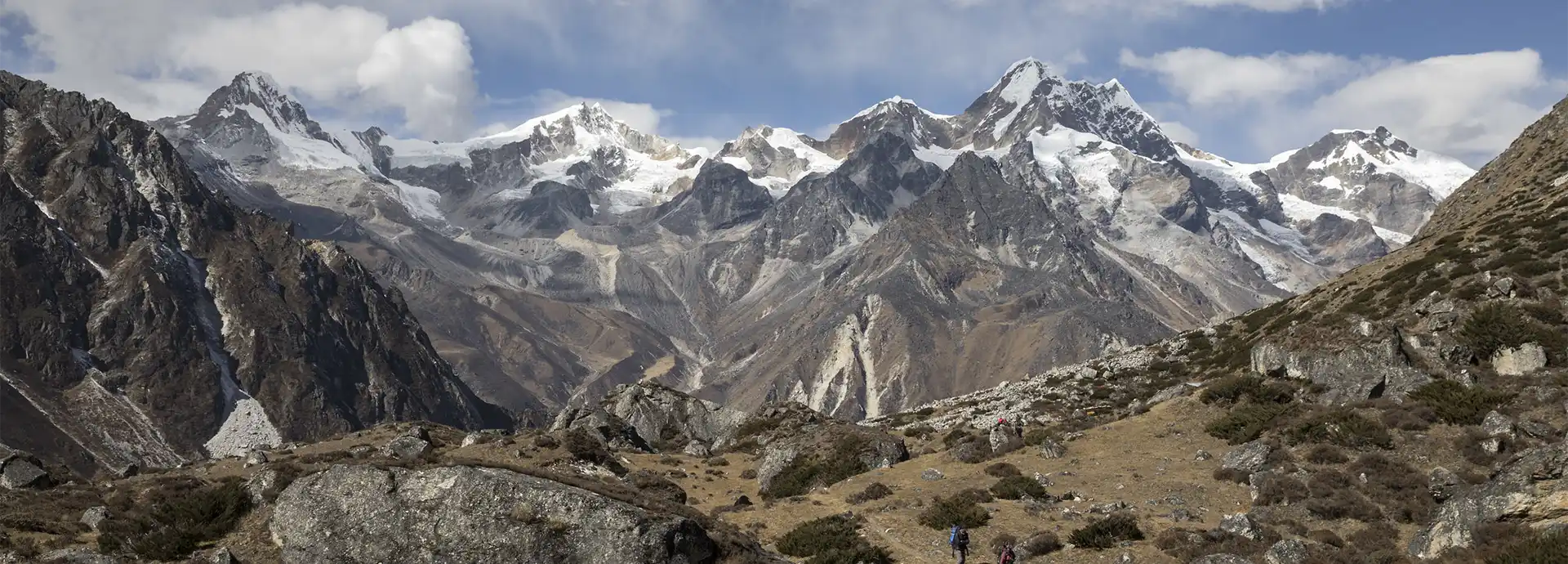
The Kanchenjunga Base Camp Trek takes you deep into eastern Nepal to circle the world’s third-highest mountain at 8,586 meters. Few trekkers walk this route. Fewer still complete the full circuit to both North and South Base Camp areas. Nepal Hiking Company offers this 26-day package for experienced trekkers seeking remote Himalayan terrain, real altitude, and rich local culture without the crowds of Everest or Annapurna.
The route starts in Kathmandu, flies to Bhadrapur, and drives through Ilam and the tea gardens near Kanyam before reaching Taplejung. From Sekathum, the trail follows river valleys through Rai and Limbu villages, climbs into Tibetan Buddhist highland settlements at Ghunsa and Khambachen, reaches Pangpema near the north face of Kanchenjunga, crosses high passes toward the south side, and visits Oktang Viewpoint above the Yalung Glacier. You stay at Hotel Thamel Park in Kathmandu and in teahouses and basic lodges along the trail.
Pack well. Train well. Expect basic facilities, long walking days, cold nights above 4,000 meters, and some of the finest mountain scenery in the Himalayas.
The Kanchenjunga Base Camp Trek is a 26-day remote trek in eastern Nepal. The route covers Bhadrapur, Ilam, Taplejung, Ghunsa, Khambachen, Lhonak, Pangpema, Sele La, Tseram, Ramche, Oktang Viewpoint, Yamphudin, and Bhadrapur. It visits both the North and South Base Camp areas and suits experienced trekkers seeking a long, challenging, less-crowded Himalayan route.
The Kanchenjunga Circuit Trek covers both the north and south sides of the mountain in one complete route. North Base Camp at Pangpema gives glacier-level views of the north face. South Base Camp at Oktang Viewpoint offers views of the Yalung Glacier, Kabru, Rathong, and Kanchenjunga South. No other Nepal trek gives you both angles of the third-highest mountain.
The trek takes 26 days because eastern Nepal is hard to reach. The approach from Kathmandu includes a domestic flight, long road drives, and a multi-day walk in from Sekathum. The route includes two formal acclimatization days in Ghunsa and Khambachen. The high pass section between the north and south valleys adds extra length and difficulty. Return road logistics to Bhadrapur add more time.
Expect teahouses, basic lodges, simple food, shared toilets, cold nights, and long walking days. The Kanchenjunga trek does not offer the lodge comforts of the Everest or Annapurna treks. It offers wilderness, altitude, culture, and the complete circuit experience of one of the world’s greatest mountains.
Quick Facts
| Item | Details |
|---|---|
| Duration | 26 Days |
| Start Point | Kathmandu |
| End Point | Kathmandu |
| Trek Start | Sekathum or an available road point |
| Trek End | Khebang, Taplejung, or an available road point |
| Highest Area | Pangpema / Kanchenjunga North Base Camp |
| Main Viewpoints | Pangpema and Oktang Viewpoint |
| Difficulty | Challenging to Strenuous |
| Accommodation | Hotel, lodge, teahouse, basic lodge |
| Kathmandu Hotel | Hotel Thamel Park |
| Meals | Breakfast in Kathmandu; full board during trek and remote road sections |
| Transport | Domestic flights, private and local road transfers |
| Permits | Restricted Area Permit and KCAP permit |
| Best Season | Spring and Autumn |
| Guide | Licensed trekking guide required |
| Porter | Included or recommended |
Browse every route in our regional trekking guide or see all trekking packages we run. Travellers who like this trip also compare Makalu Base Camp Trek, Arun Valley Trek, Manaslu Tsum Valley Trek.
Before you book, read our Nepal trekking cost guide, check the trekking gear list, and review travel insurance requirements. Still deciding? Plan your trip with a local expert.
For official information, see the Nepal Tourism Board, the Trekking Agencies’ Association of Nepal and the Department of Immigration for visa rules, plus background on Kangchenjunga mountain facts.

Included Meals

Trip staff

Transport

Accommodation

Trip Grade
Group Size
Most Nepal treks take you to one base camp. The Kanchenjunga Circuit Trek covers two—Pangpema on the north side and Oktang on the south side. You see the mountain from completely different angles on the same trip.
The route stays far quieter than the Everest and Annapurna trails. You walk through the Kanchenjunga Conservation Area with genuine wilderness around you. The trek includes proper acclimatization days built into the schedule. The logistics cover flights, road transfers, permits, guide support, and teahouse meals from start to finish.
Hotel Thamel Park in Kathmandu handles your city nights. The package covers the Bhadrapur flight, all eastern Nepal road travel, trekking accommodation, and permit paperwork. You focus on the walk. Nepal Hiking Company handles the rest.
Pangpema sits at the far end of the Ghunsa Valley and gives you the classic north-side experience of the Kanchenjunga Base Camp Trek. You overnight at Lhonak before the hike. The day walk to Pangpema, and back, takes 6 to 8 hours across moraine, rocky terrain, and open glacial flats.
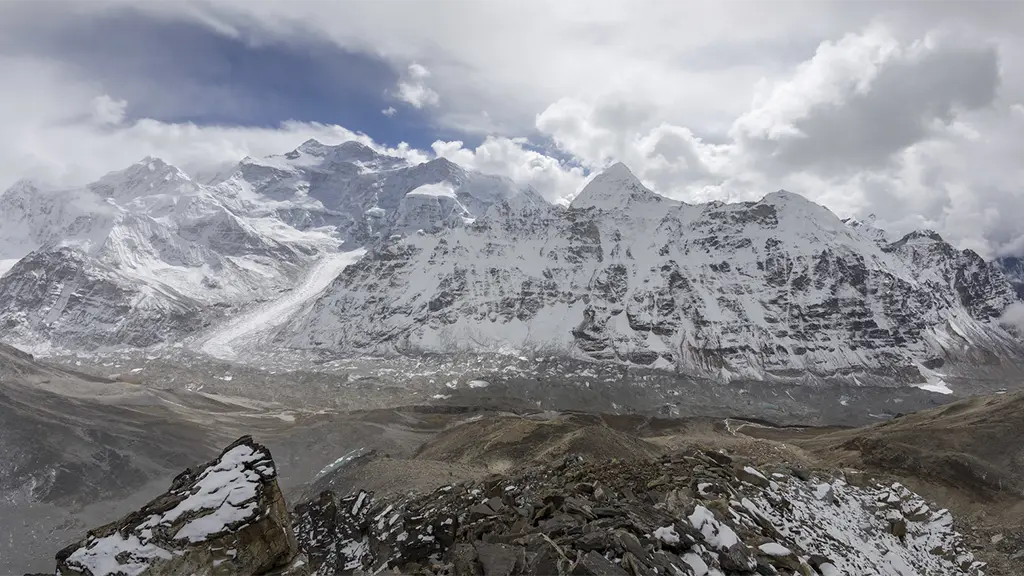
The north face of Kanchenjunga fills your view from Pangpema. The Kanchenjunga Glacier runs below. Cold air, wind, and altitude make the setting feel remote and powerful. The elevation at Pangpema sits close to 5,143 meters.
North Base Camp gives the closest glacier-level experience of the entire route. No technical climbing gear is needed under normal conditions. Your guide checks the weather and snow conditions before you leave Lhonak.
Ramche serves as the main overnight base for the south-side section of the trek. From Ramche, you hike to Oktang Viewpoint to see the south face of Kanchenjunga, the Yalung Glacier, Kabru, Rathong, and surrounding peaks.
The south-side scenery differs completely from the north. Lower glacier valleys, different rock formations, and a wider mountain panorama define the view from Oktang. Skipping this side means missing half the Kanchenjunga story.
The Kanchenjunga South Base Camp section adds meaningful mountain depth to the full 26-day circuit. Together, the two base camp areas give you the complete Kanchenjunga experience that no single-sided trek offers.
Ghunsa sits at an elevation of around 3,595 meters in the upper Ghunsa Valley. The village marks the cultural shift from lower Rai and Limbu settlements to Tibetan Buddhist highland life. Monasteries, chortens, mani walls, and prayer flags line the trail approaching the village.
Local families in Ghunsa herd yaks to high pastures in summer. Stone houses, Buddhist art, and the rhythm of highland mountain life define the place. The acclimatization day in Ghunsa gives you time to explore the village, rest, and adjust to the altitude before moving higher.
Dress modestly in Ghunsa and other highland villages. Ask before taking close-up photos of people. Walk clockwise around sacred structures. Show respect in and around monasteries.
The Sele La, Mirgin La, and Sinion La area connects the Ghunsa Valley on the north side with the Simbua Khola drainage on the south side. The pass section lies above 4,800 meters and involves a long, demanding day of walking.
Snow risk increases on the passes in early spring and late autumn. Wind and cold add difficulty at this altitude. Basic accommodation exists near the pass area, but options remain limited. A licensed guide matters most in this section of the route.
The pass section raises the overall difficulty of the Kanchenjunga Circuit Trek beyond that of a standard teahouse route. The weather can change the plan. Your guide carries the final call on timing and route conditions.
Accommodation and Teahouse Reality
Nepal Hiking Company books Hotel Thamel Park in Kathmandu for your city nights. Hotels or lodges handle accommodation in Ilam, Kanyam, Taplejung, and Bhadrapur. Teahouses serve most of the trekking route. Basic lodges are available in the remote upper sections near Lhonak, the pass area, and Tseram.
Twin-sharing rooms apply where available. Simple bedding, shared toilets, and limited menus define the upper route. Hot showers, Wi-Fi, and device charging cost extra at most lodges and may not work reliably in remote areas.
Kanchenjunga sits more remote than Everest, Annapurna, and Langtang. Lodge count has grown in recent years, but the quality stays basic. Book with flexible expectations. The package provides strong guide and logistics support, not luxury comfort on the trail.
Trip Information
You receive breakfast at Hotel Thamel Park in Kathmandu. Full-board meals cover breakfast, lunch, and dinner during the trek and remote road travel days.
Dal bhat, noodles, soup, rice, potatoes, eggs, porridge, tea, and coffee form the core menu along the route. Options narrow as the trail climbs higher. Fresh vegetables become harder to source above 4,000 meters.
Bottled water, hot drinks, soft drinks, snacks, desserts, and alcohol are not included in the package price unless otherwise stated. Food choices become simpler as the route grows more remote. Value a warm, filling meal over variety in the highland sections.
Nepal Hiking Company arranges airport pickup and drop-off in Kathmandu. A domestic flight connects Kathmandu to Bhadrapur at the start and end of the trip. Road transfers cover Bhadrapur to Ilam or Kanyam, then onward to Taplejung or Suketar, and as far toward Sekathum as road conditions allow.
The trek exits toward Khebang or the nearest available road point. Return drives cover the same eastern Nepal road corridor back to Bhadrapur for the flight to Kathmandu.
Road conditions in eastern Nepal change with the weather and seasonal maintenance. The exact start and end drive points are adjusted based n current conditions. Nepal Hiking Company updates guests on the final transport plan before departure
The Kanchenjunga Base Camp Trek requires two main permits. The first is the Kanchenjunga Restricted Area Permit, which the Department of Immigration in Kathmandu issues through a registered agency. The second is the Kanchenjunga Conservation Area Project (KCAP) permit. The Nepal Tourism Board sets the KCAP entry fee at NRs. 2,000 for foreign nationals, NRs. 500 for SAARC nationals, and NRs. 100 for Nepali citizens.
Nepal Hiking Company handles all permit paperwork. Bring a copy of your passport and two passport-size photos for the permit process. Carry both permits with you during the trek. Checkpoint officers check permits at multiple points along the route.
Permit fees and rules change from time to time. Confirm the current rates and requirements with Nepal Hiking Company before your travel date.
The Kanchenjunga Base Camp Trek rates as challenging to strenuous. The 26-day itinerary covers remote terrain with long daily walking distances. Trekkers walk 5 to 8 hours most days, sometimes more on pass-crossing days.
High altitudes above 5,000 meters, cold mornings, basic lodges, limited food variety, and minimal emergency infrastructure define the route’s remote character. The high pass section adds technical complexity compared with standard teahouse treks.
The Kanchenjunga Base Camp Trek suits experienced trekkers who handle long walking days, basic lodges, remote trails, and high-altitude conditions. Prior multi-day Himalayan trekking experience gives you a clear advantage.
| Season | Months | Conditions | Notes |
| Spring | March to May | Rhododendron bloom, warmer days, clearer mornings | Good mountain views; some snow risk on passes in early spring |
| Autumn | Sep to Nov | Stable weather, best visibility, dry trails | Peak trekking window; strongest conditions for the full circuit |
| Winter | Dec to Feb | Cold, snow risk, limited lodge comfort | High sections become more difficult; not recommended for most trekkers |
| Monsoon | June to Aug | Heavy rain, landslide risk, and leeches in the lower sections | Poor visibility; not recommended |
Nepal Hiking Company recommends spring (March to May) and autumn (September to November) for the Kanchenjunga Base Camp Trek.
Nepal Hiking Company recommends including porter support for the Kanchenjunga Base Camp Trek. The route is long, remote, and physically demanding.
One porter carries up to 20 kg of total luggage for two trekkers. Each trekker should carry a personal daypack with water, snacks, layers, and documents. Extra porter support is available on request.
Optional Add-ons
All trekkers on the Kanchenjunga Base Camp Trek need comprehensive travel insurance. Standard travel insurance policies do not cover remote high-altitude trekking or helicopter evacuation.
Your insurance policy needs to cover emergency evacuation, helicopter rescue from remote areas, medical treatment, trip cancellation, domestic flight delays, road delays, lost baggage, and personal accident.
Choose a policy specifically designed for remote trekking and adventure travel. Nepal Hiking Company can advise on policy requirements but does not sell insurance directly.
The Kanchenjunga Conservation Area protects one of Nepal’s most sensitive high-altitude environments. You enter fragile alpine terrain, active yak pastures, and traditional highland communities.
Nepal Hiking Company assigns a licensed, certified trekking guide to every Kanchenjunga Base Camp Trek group. The guide carries a basic first-aid kit and communicates the emergency plan before the trek starts.
Acclimatization days in Ghunsa and Khambachen reduce the risk of altitude sickness. Keep a slow pace above 3,500 meters. Drink 3 to 4 liters of water per day. Layer up in the mornings and evenings. Check weather forecasts before entering the high pass section.
Any trekker showing symptoms of Acute Mountain Sickness descends immediately. The guide carries the final call on descent decisions. Satellite phone support and helicopter evacuation contacts stay active during the trek. Carry comprehensive insurance before you arrive.
| Trek | Duration | Difficulty | Highest Focus | Main Style | Best For |
| Kanchenjunga Base Camp Trek | 26 days | Challenging to Strenuous | Pangpema and Oktang | Remote full circuit | Experienced trekkers |
| Makalu Base Camp Trek | 18–23 days | Challenging | Makalu Base Camp | Remote wilderness valley | Strong wilderness trekkers |
| Manaslu Circuit Trek | 14–18 days | Challenging | Larkya La Pass | Restricted circuit trek | Remote circuit trekkers |
| Kanchenjunga South Trek | 13–16 days | Challenging | Oktang / Yalung Glacier | Shorter south-side route | Trekkers with less time |
| Kanchenjunga North Trek | 17–20 days | Challenging | Pangpema | North-side glacier route | North Face views |
North Base Camp vs South Base Camp
| Base Camp Area | What It Offers |
| North Base Camp / Pangpema | Close views of Kanchenjunga’s north face and a glacier setting at around 5,143 m |
| South Base Camp / Oktang | Views of Kanchenjunga South, Yalung Glacier, Kabru, Rathong, and Jannu |
| Full Circuit (Both Sides) | Combines both base camp areas for the complete Kanchenjunga experience |
Why This Trek Needs 26 Days
Eastern Nepal takes real time to reach. The trip from Kathmandu involves a domestic flight to Bhadrapur and two long road drives through Ilam and Kanyam to Taplejung. The remote trekking approach from Sekathum adds two to three days of walking before you reach the highland zones.
The itinerary includes a full acclimatization day in Ghunsa and another in Khambachen before the push toward Pangpema. The high-pass section between the north and south valleys makes for a long, demanding day. The south side needs time for Tseram, Ramche, and the Oktang Viewpoint hike.
Return road and flight logistics from Khebang to Bhadrapur add two more days. A buffer day in Kathmandu protects against domestic flight delays. Cut any of these sections, and you compromise safety, acclimatization, or the complete circuit experience.
Teahouse Reality in Kanchenjunga
Lodge coverage on the Kanchenjunga Circuit Trek has grown over the past decade. You find places to sleep on most sections of the route. Expect simple rooms, basic bedding, and shared toilet facilities.
Menus stay short in the upper sections. Wi-Fi rarely works above 3,500 meters. Charging costs extra at most teahouses. Hot showers may not exist at all in the highest sections. Bring a sleeping bag rated for cold temperatures,s even if bedding is provided.
Restricted Area Permit Reality
Kanchenjunga requires a special restricted-area permit issued by the Department of Immigration in Kathmandu. A registered trekking agency handles the full paperwork process. Bring your original passport, a copy, and two passport-size photos for the permit application.
Officers check permits at multiple checkpoints along the route. Keep both the Restricted Area Permit and the KCAP permit accessible at all times. Permit fees change periodically. Nepal Hiking Company confirms the current fees and process before your departure.
Why This Trek Is Not for Beginners
The Kanchenjunga Base Camp Trek covers 26 days in a remote, restricted area with limited access to emergency services. Walking days run long. Nights get cold. Lodges stay basic. High passes above 4,800 meters demand strong fitness and altitude experience.
Beginners who attempt this route without proper preparation face serious altitude risk and physical exhaustion. The distance between rescue access points makes altitude sickness especially dangerous here. Complete at least one multi-day Himalayan trek above 4,000 meters before attempting Kanchenjunga.
The Kanchenjunga Base Camp Trek covers 26 days from Kathmandu to both the North and South Base Camps of the world’s third-highest mountain. You see Pangpema on the north side and Oktang Viewpoint above the Yalung Glacier on the south side. No other Nepal trek offers both sides of Kanchenjunga on a single complete route.
Nepal Hiking Company handles Hotel Thamel Park in Kathmandu, Bhadrapur domestic flights, all eastern Nepal road transfers, teahouse and lodge accommodation, full-board trekking meals, Restricted Area Permit, KCAP permit, licensed guide, and porter support.
Book now to secure your dates. Contact Nepal Hiking Company through the website at www.hikinginnepal.com for dates, pricing, group options, and any pre-trek questions.
The standard Kanchenjunga Base Camp Trek takes 26 days from arrival in Kathmandu to departure. The route includes Kathmandu preparation, the Bhadrapur flight, eastern Nepal road transfers, trekking to North and South Base Camp, and return logistics.
Yes. Nepal Hiking Company designs this 26-day package to cover both the Kanchenjunga North Base Camp at Pangpema and the South Base Camp at Oktang Viewpoint. The complete circuit gives you both faces of the mountain.
Pangpema, the Kanchenjunga North Base Camp viewpoint, sits at an elevation of around 5,143 meters. Oktang Viewpoint on the south side sits at approximately 4,730 meters. The high-pass sections between north and south also reach elevations above 4,800 meters.
Nepal Hiking Company rates the Kanchenjunga Base Camp Trek as challenging to strenuous. Long walking days, remote terrain, basic lodges, high altitude, cold temperatures, and pass crossings define the difficulty. Previous Himalayan trekking experience is strongly recommended.
No. The route is not suitable for beginner trekkers. The length, altitude, remoteness, and basic facilities make it a serious challenge even for experienced hikers. Complete at least one high-altitude multi-day trek before attempting this route.
You need the Kanchenjunga Restricted Area Permit and the Kanchenjunga Conservation Area Project (KCAP) permit. Nepal Hiking Company arranges both permits. Bring your passport, a copy of your passport, and two passport-size photos for the application process.
Yes. A licensed trekking guide is required for the Kanchenjunga restricted area. Your guide handles navigation, safety decisions, permit checks, emergency communication, and logistics on the trail.
You stay at Hotel Thamel Park in Kathmandu. Hotels and lodges are available in Ilam, Kanyam, Taplejung, and Bhadrapur. Teahouses and basic lodges cover the trekking sections. Expect simple rooms, basic bedding, and shared toilets in remote areas.
Yes. You receive breakfast at Hotel Thamel Park in Kathmandu. Full-board meals — breakfast, lunch, and dinner — are included for the trekking days and remote road sections. Bottled water, snacks, hot drinks, alcohol, and desserts are not included unless stated.
Spring (March to May) and autumn (September to November) give the best conditions for the Kanchenjunga Base Camp Trek. Autumn offers the most stable weather and clearest views. Spring brings warmer days and rhododendrons in bloom along the lower route.
Pangpema sits on the north side of Kanchenjunga and faces the north glacier at an elevation of around 5,143 meters. Oktang Viewpoint sits on the south side above the Yalung Glacier at around 4,730 meters. Each gives a completely different view of the same mountain.
The Kanchenjunga Conservation Area ranks among the most remote trekking regions in Nepal. Road access ends before the trek begins. Emergency evacuation depends on helicopter support. Mobile and internet connectivity stay unreliable through most of the route.
Shortening the itinerary risks compromising acclimatization and safety. Nepal Hiking Company strongly recommends the full 26-day schedule. Trekkers who want a shorter trip should consider the Kanchenjunga South Base Camp Trek (13–16 days) or Kanchenjunga North Base Camp Trek (17–20 days).
Yes. All trekkers on the Kanchenjunga Base Camp Trek must carry comprehensive travel insurance. The policy must cover emergency helicopter evacuation from remote high-altitude terrain, medical treatment, trip cancellation, and domestic flight delays.
Nepal Hiking Company builds a buffer day into the Kathmandu schedule to absorb domestic flight delays. If road conditions delay the drive to the trek start, the company adjusts the departure point. Extra hotel nights due to delays sit outside the standard package cost.