
Unbeatable Holiday Offers – Save Up to 20% on Your Next Adventure!


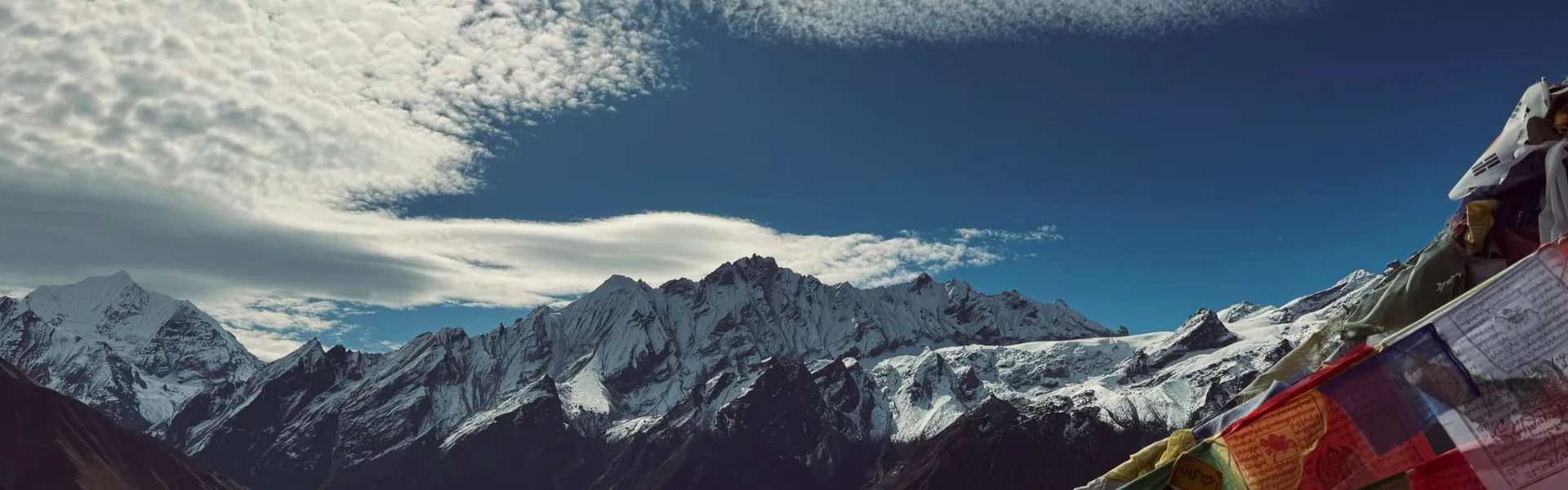
Nepal Teahouse Trekking: 7 Easy Tips for Lodges and Camping
Last verified: 23 November 2026. Room and menu prices are typical 2026 ranges and vary by village, season and route. Confirm booking arrangements with your trekking agency.
Nepal teahouse trekking means sleeping and eating in family-run lodges along the trail instead of camping. We explain what rooms, beds, toilets and showers are like, what lodges cost and why rooms are so cheap, what the dining room and menus offer, how charging and Wi-Fi work, how teahouses differ by region, when to book ahead and how to be a good guest.
What is a teahouse in Nepal?
Short answer: A teahouse is a small lodge run by a local family that offers simple bedrooms, a shared dining room with a stove and a menu of hot meals. Teahouses line the main trekking routes in the Everest, Annapurna, Langtang and Manaslu regions, so trekkers can walk lodge to lodge without carrying tents, food or cooking gear.
The name comes from the early days of trekking, when travelers stopped at village homes and tea shops for food and a place to sleep. Today, teahouses range from a few rooms in a family home in Tsum or Nar to multi-story lodges with attached bathrooms and bakeries in Namche Bazaar and Ghorepani. Most are owned by families from the village, so your spending goes straight into the local economy.
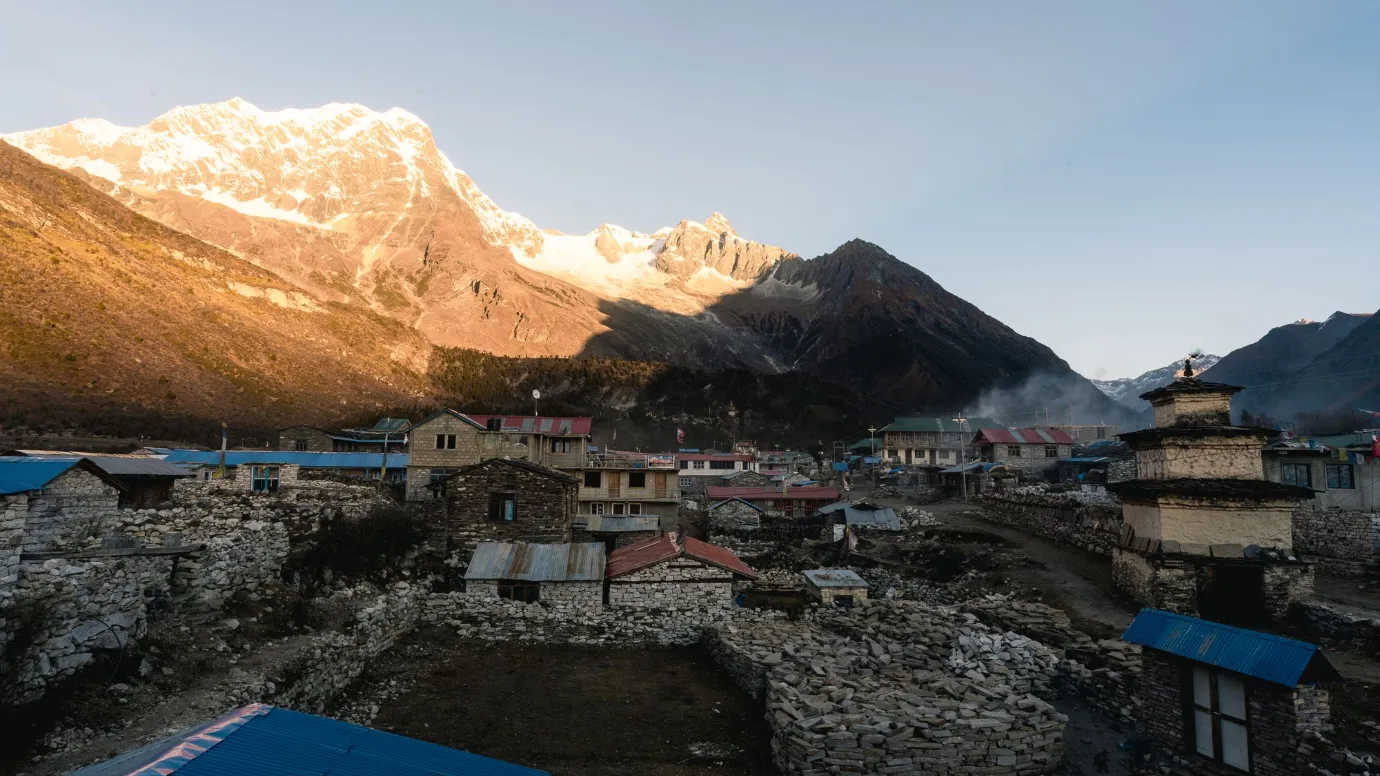
A typical teahouse has a ground-floor dining room with long tables and benches around a stove, a kitchen at the back, and a row of small bedrooms on one or two floors. Prayer flags, a garden plot and a water tap outside are common. In the high Khumbu, many lodges have glass-fronted sunrooms facing the mountains.
What are teahouse rooms like?
Short answer: Rooms are small and plain, usually with two single beds, a foam mattress, a pillow and a blanket, a window and a hook or small table. Walls are often thin plywood, and rooms are unheated, so nights at altitude can drop below freezing inside. Bring a warm sleeping bag and earplugs.
In lower villages, many lodges now offer rooms with an attached bathroom for a little more. Above about 4,000 meters, shared toilets and basic rooms are the norm. Light comes from a single bulb, often powered by solar or micro-hydro electricity. Some rooms have one power socket, but most charging happens in the dining room.
| Feature | Lower villages (below 3,000 m) | High villages (above 4,000 m) |
|---|---|---|
| Beds | Twin beds with mattresses, sometimes quilts | Twin beds, thinner mattresses, blankets |
| Bathroom | Often attached, Western toilet, hot shower | Shared, sometimes squat toilet, limited water |
| Heating | None in rooms, warm dining room | None in rooms, dining room stove in the evening only |
| Electricity | Grid or hydro, sockets common | Solar, limited sockets, paid charging |
| Wi-Fi | Often free or cheap | Paid, slower, sometimes unavailable |
How much does a teahouse room cost?
Short answer: A twin room typically costs about NPR 500 to 1,000 in lower villages and NPR 800 to 2,000 at higher or busier spots. Rooms are cheap because lodges earn most of their income from meals, so they expect guests to eat dinner and breakfast where they sleep. Some lodges charge more for a room if you eat elsewhere.
In many areas, local lodge management committees agree menu and room prices so that lodges in a village charge similar amounts. Prices are often printed on the menu. On an agency package, your guide pays for rooms and the meals included in your package, and you pay for extras such as drinks, snacks, showers and charging.
Attached-bathroom rooms and lodges in Namche Bazaar, Lukla and Ghandruk cost more. Rooms at bottleneck points such as Gorak Shep, Lobuche, Machapuchare Base Camp and Mardi Himal High Camp are in short supply in peak season, and you may share a room with your travel partner or even another trekker of the same sex if the lodge is full. Our Nepal trekking cost guide shows how lodging fits into a full budget.
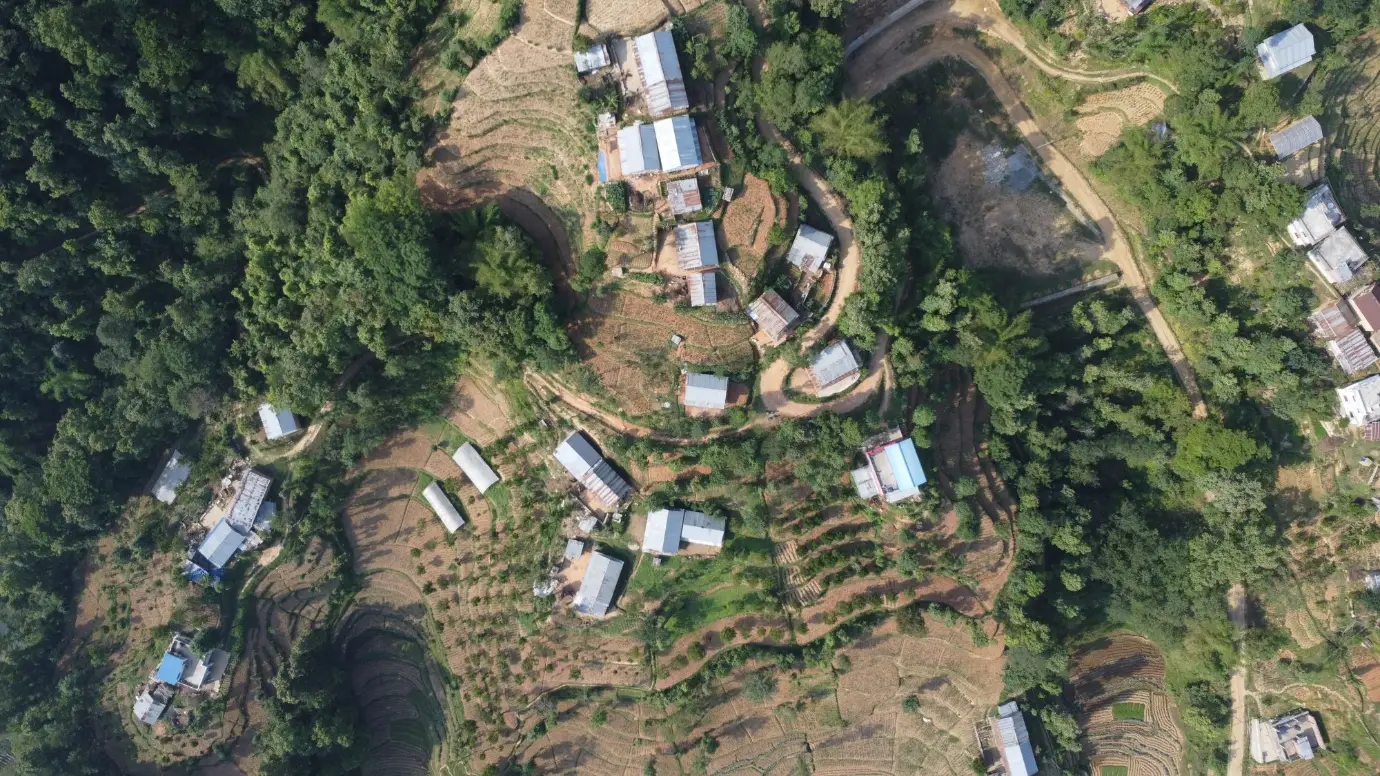
What is the dining room like, and how do meals work?
Short answer: The dining room is the social center of every teahouse. Trekkers order from a menu, often writing orders in a notebook, and meals are cooked to order in the family kitchen. In the evening, the lodge lights a stove fueled by wood, kerosene or, in the high Khumbu, dried yak dung. It is the only heated room.
Give your dinner and breakfast orders together, ideally when you arrive or at least an hour before you want to eat, because one kitchen cooks for everyone. Your guide usually collects orders and passes them to the kitchen. Menus look similar across a region because many are set by lodge committees. Dal bhat with free refills is the best value and keeps you fueled for long days.
| Dish | What it is | Good for |
|---|---|---|
| Dal bhat | Rice, lentil soup, vegetable curry, pickle, refills included | Energy and value |
| Thukpa | Tibetan-style noodle soup | Warmth and hydration at altitude |
| Sherpa stew (shakpa) | Thick stew with vegetables and hand-pulled dough | Cold evenings in the Khumbu |
| Momos | Steamed or fried dumplings | A treat in lower villages |
| Tibetan bread | Fried bread served with honey or jam | Breakfast |
| Porridge and eggs | Oats, muesli, boiled or fried eggs | Breakfast before a big day |
| Garlic soup | Hot soup popular at altitude | Warmth and appetite |
Above the last road or airstrip, meat is carried in from lower areas and may not be fresh. Many guides advise eating vegetarian food above Namche Bazaar or Manang. Our food and water guide explains what to eat and drink for energy and health.
What are toilets and showers like in teahouses?
Short answer: Lower lodges usually have Western toilets and hot showers heated by solar panels or gas. Higher up, expect shared toilets, sometimes squat style, with a bucket of water for flushing, and showers that are limited, extra-cost or unavailable. Carry toilet paper, hand sanitizer and a small towel.
At high altitude, pipes freeze overnight, so water may only flow in the afternoon. Many trekkers skip showers above 4,000 meters to avoid getting chilled and use a bowl of warm water or wet wipes instead. Put used toilet paper in the bin provided where there is one, as many systems cannot handle paper. Hot showers usually cost NPR 300 to 1,000 at altitude, and gas-heated showers run out when the cylinder is empty.
Can you charge devices and use Wi-Fi in teahouses?
Short answer: Yes, in most places. Charging is often free in lower villages and costs about NPR 300 to 800 per device at altitude, usually in the dining room. Many lodges sell Wi-Fi, and paid networks cover much of the Everest and Annapurna routes. Coverage drops in remote valleys, so carry a power bank.
Electricity at higher lodges often comes from solar panels, so charging may be limited on cloudy days. Batteries drain fast in the cold, so keep your phone and power bank in your sleeping bag at night. Nepal uses Type C, D and M sockets at 230 volts, so bring a universal adapter. Our page on cash, SIM cards and power on the trek covers networks and charging in detail.
Do you need a sleeping bag in teahouses?
Short answer: Yes. Lodges provide blankets, but they may not be enough at altitude, and many trekkers prefer their own bag for hygiene. A sleeping bag rated to about minus 10 degrees Celsius suits treks above 4,000 meters in spring and autumn. A liner adds warmth and keeps the bag clean. You can rent bags in Kathmandu and Pokhara.
Rooms are unheated, and frost can form on the inside of windows at places like Gorak Shep, Lobuche, Thorong Phedi and Dharamsala on the Manaslu Circuit. Wear a dry base layer, a hat and warm socks to sleep. Fill a water bottle with hot water at dinner and put it in your sleeping bag.
How do teahouses differ by trekking region?
Short answer: The Everest and main Annapurna routes have the most developed teahouses, with attached bathrooms, bakeries and Wi-Fi in larger villages. Langtang and Manaslu have good lodges along the full route but fewer comforts. Nar Phu, Tsum, Kanchenjunga and Makalu have simpler lodges. Upper Dolpo still needs camping for much of the route.
| Region | Teahouse standard | Notes |
|---|---|---|
| Everest (Khumbu) | High in Lukla, Namche, Tengboche and Dingboche, basic at Lobuche and Gorak Shep | Bakeries, paid Wi-Fi network, luxury lodges in lower villages |
| Annapurna Base Camp and Poon Hill | Good in Ghandruk, Chhomrong and Ghorepani, basic in the sanctuary | Rooms limited above Deurali in peak season |
| Annapurna Circuit | Good in Chame, Pisang, Manang and Muktinath | Thorong Phedi and High Camp fill early on busy days |
| Langtang | Good, rebuilt after the 2015 earthquake | Kyanjin Gompa has many lodges and a cheese factory |
| Manaslu | Teahouses on the full circuit, simple above Samagaun | Dharamsala has few rooms before the Larkya La |
| Tsum Valley | Simple lodges and homestays | Monastery guesthouses in some villages |
| Upper Mustang | Good family lodges, some with heated dining rooms | Lo Manthang has several comfortable guesthouses |
| Nar Phu | Basic lodges in Meta, Kyang, Phu and Nar | Few menu choices, cold nights |
| Kanchenjunga and Makalu | Basic lodges on most stages | Some sections may still need tents |
| Upper Dolpo | Very limited | Full camping crew needed |
Do you need to book teahouses in advance?
Short answer: On most routes you can find a bed on arrival outside peak season. In October, November, April and May, book ahead at bottleneck stops such as Gorak Shep, Lobuche, Deurali, Machapuchare Base Camp, Mardi Himal High Camp, Thorong Phedi and Dharamsala. Agencies phone ahead each day, which is a big advantage of trekking with a guide.
Lodges at the top of popular routes have a fixed number of rooms, and when they fill, latecomers sleep in the dining room or walk on. Starting early, arriving by early afternoon and letting your guide call ahead solves most problems. Our guides and porters page explains how guides manage bookings.
Are there luxury lodges on Nepal’s trekking routes?
Short answer: Yes, on the Everest and Annapurna routes. Lodge chains in the Khumbu, such as Yeti Mountain Home and Everest Summit Lodges, offer en-suite rooms, heated blankets and better food in villages up to about 3,900 meters. The Annapurna foothills have boutique lodges too. Above those villages, everyone uses standard teahouses.
Luxury lodge treks suit trekkers who want comfort after long days, older travelers and those celebrating a special trip. They cost more and fill early. See the Everest Base Camp luxury lodge trek for an example itinerary.
What is a homestay, and how is it different from a teahouse?
Short answer: A homestay means sleeping in a family’s own home and eating meals with them, rather than in a commercial lodge. Community homestay programs run in villages such as Ghandruk, Briddim on the Tamang Heritage Trail and parts of the Tsum Valley. Homestays offer deeper cultural contact and simpler facilities.
Homestays usually serve dal bhat and local dishes with the family, and you may help with small tasks or join an evening of songs and dance. Facilities are basic, and toilets may be outside. Our heritage and community trails guide lists routes with homestays.
How should you behave as a teahouse guest?
Short answer: Eat dinner and breakfast where you sleep, order meals together, keep noise down after about 9 p.m., remove boots before entering bedrooms, ask before photographing family members, and pay your bill the night before you leave. Treat the lodge as a family home, because it is.
- Do not bring your own food to eat in the dining room in place of buying meals.
- Do not wash with soap in streams or at the outdoor tap without asking.
- Do not burn plastic or leave rubbish in your room. Carry batteries and plastic back down.
- Turn off lights and chargers when you leave the room.
- Thank the host family with a namaste and a smile.
Our culture and etiquette guide and responsible trekking guide cover more tips for being a welcome guest.
How do you stay safe and comfortable in a teahouse?
Short answer: Sleep warm in a good bag, drink plenty of water before bed, keep a headlamp by your pillow for night toilet trips, never use gas or charcoal heaters in a closed bedroom, and tell your guide about any headache or breathlessness at night. Lock your room and keep valuables in your daypack.
Altitude symptoms often show up at night, such as headache, poor sleep or breathlessness when lying down. Mention them to your guide in the morning, or wake them if they are severe. Fumes from stoves and heaters in closed spaces can cause carbon monoxide poisoning, so dining rooms should have ventilation and bedrooms should never have open-flame heaters. Theft is rare on the trails, but locking your door and keeping your passport, cash and phone with you is sensible.
How can you make teahouse trekking more responsible?
Short answer: Refill water bottles at safe drinking water stations or with a filter instead of buying plastic bottles, take used batteries and plastic packaging home, limit hot showers where fuel is scarce, choose dishes that use local ingredients and spend money in family-run lodges and shops along the way.
Many lodges in the Everest and Annapurna regions now sell treated water refills, which cut plastic waste. Firewood use has fallen in protected areas as solar and hydro power spread, but forests are still under pressure, so keep hot shower use reasonable. In the Sagarmatha region, the Sagarmatha Pollution Control Committee manages waste, and trekkers are encouraged to carry out what they bring in.
What should you pack specifically for teahouse nights?
Short answer: Pack a warm sleeping bag and liner, earplugs, an eye mask, a headlamp, a power bank, toilet paper, hand sanitizer, a quick-dry towel, warm camp clothes, down booties or camp shoes and a reusable water bottle that can hold hot water. These small items make a big difference to sleep and comfort.
Keep a dedicated set of dry clothes for evenings and sleeping, and never sleep in damp walking clothes. A small bag to hang toiletries keeps things off wet bathroom floors. Our Nepal hiking packing list covers full gear for each season.
Frequently Asked Questions
Can I stay in teahouses without a guide?
Lodges accept trekkers with or without a guide, but Nepal Tourism Board rules since April 2023 require a licensed guide on listed trekking routes, and restricted areas always need one. A guide also books rooms ahead in busy seasons.
Are teahouse rooms private?
Yes, rooms are usually private twins for one or two people. In peak season at small high-altitude lodges, you may need to share with your travel partner or sleep in the dining room if every room is full.
Do teahouses accept card payments?
Most do not. Some lodges in Namche Bazaar, Lukla and large Annapurna villages accept cards or digital wallets, but you should carry enough Nepali rupees for the whole trek.
Is teahouse food safe to eat?
Freshly cooked hot food is generally safe. Avoid raw salads, unpeeled fruit, untreated water and meat above the last road or airstrip. Dal bhat is a reliable choice.
Are teahouses open all year?
Most lodges on popular routes open from autumn through spring. Some high lodges close in the coldest winter weeks or during the monsoon, so ask your agency for your dates.
Can I get a room with an attached bathroom?
Yes, in many lower villages and in larger places such as Namche Bazaar, Ghandruk and Manang. Above about 4,000 meters, attached bathrooms are rare.
About the author: Pradip Karki
Pradip Karki is the Chairman of Peregrine Treks and Tours in Kathmandu and a veteran Himalayan travel specialist with over 20 years of industry leadership. A former TIMS Department Head at the Trekking Agencies’ Association of Nepal (TAAN) with an MBA in Accounting and Finance, Pradip personally scouts routes across Nepal, Tibet and Bhutan to design safe, high-altitude treks and luxury cultural tours.
Reviewed and updated by Pradip Karki on 23 November 2026.
Official Sources Checked
- Nepal Tourism Board: trekking regions and guide rules
- National Trust for Nature Conservation: Annapurna and Manaslu conservation areas
- Department of National Parks and Wildlife Conservation: protected area rules
- Sagarmatha Pollution Control Committee: waste management in the Everest region
Do not hesitage to give us a call. We are an expert team and we are happy to talk to you.
info@hikinginnepal.com- Local Experience
- Financial Protection
- Effortless Travel
- Intimate Group Size
- Bespoken Itinerary