
Unbeatable Holiday Offers – Save Up to 20% on Your Next Adventure!

Nepal Trekking Guide: 9 Easy Steps to Plan the Best Trek
Last verified: 23 November 2026. Permit rules, fees and flight schedules change, so confirm them with your registered trekking agency before you book.
Our Nepal trekking guide shows you how to plan a trek in nine clear steps, in the order most trekkers need them. You will choose a route that fits your days and fitness, pick the right month, sort permits and the licensed guide rule, set a budget, book transport, prepare for altitude and pack. Each step links to a deeper page on this site.
How do you plan a trek in Nepal?
Short answer: Pick a region that fits your days and fitness, then match it to a season. Check which permits and guide rules apply to that exact route, budget for permits, guide, lodging, meals, flights and insurance, and book through a registered agency. Most trekkers need three to six months to plan well, and longer for spring and autumn peak dates.
The table below shows the nine steps and when to complete each one. Use it as a checklist and tick items off as you go.
| Step | What you decide | When to do it |
|---|---|---|
| 1. Group and time | Who is trekking, total days available | 6 months before |
| 2. Region and route | Everest, Annapurna, Langtang, Manaslu or a remote area | 5 to 6 months before |
| 3. Season | Month that suits the route | 5 to 6 months before |
| 4. Difficulty and altitude | Top elevation, daily walking hours, acclimatization days | 5 months before |
| 5. Permits and guide rules | TIMS, park fees, restricted permits, licensed guide | 3 to 4 months before |
| 6. Budget | Total cost per person | 3 to 4 months before |
| 7. Visa and transport | Visa type, domestic flights, jeeps | 2 to 3 months before |
| 8. Health, safety, insurance | Altitude plan, rescue cover, vaccinations | 2 months before |
| 9. Training and packing | Fitness plan, gear list | 12 weeks before |
Step 1: Who is trekking, and how many days do you have?
Short answer: Count trail days separately from travel days. Add at least two days in Kathmandu at the start for arrival, permits and gear checks, and one spare day at the end for flight delays. A group with children, older walkers or first-timers should choose shorter days and lower routes than a fit, experienced pair.
Answer four questions honestly before you look at routes. How many days can you spend on the trail? What hiking have you done in the last year, and did any of it involve multi-day walking? Are you traveling alone, as a couple, with children or in a group? Do you want teahouse comfort with a bed and hot meals each night, or are you happy camping in remote areas?
Your answers narrow the options fast. A first-time trekker with ten days does well on Annapurna Base Camp, Mardi Himal or the Langtang Valley. Someone with three weeks and good fitness can consider the Manaslu Circuit, the Everest Three Passes or Upper Mustang. Families usually enjoy Poon Hill, the Khopra Ridge or a short Everest view trek where sleeping altitude stays below 3,900 meters. Our page on choosing a trek by traveler type matches routes to couples, solo trekkers, seniors and families in more detail.
Build in buffer days. Mountain flights to Lukla, Jomsom and the far west cancel often in poor weather, and a delayed flight can cost one to three days. Trekkers who plan zero spare days end up rushing acclimatization, which raises the risk of altitude sickness.
Step 2: Which region should you choose?
Short answer: Choose Annapurna for variety and easy access from Pokhara, Everest for the highest peaks and Sherpa culture, Langtang for a short trip close to Kathmandu and Manaslu for a quieter circuit. Remote regions such as Dolpo, Kanchenjunga and Makalu suit experienced trekkers with more time and budget.
Each region has a different character, access route and permit set. The table compares the main options on the points that matter most when you are deciding.
| Region | Popular treks | Typical days | Highest point | Access |
|---|---|---|---|---|
| Everest (Khumbu) | Everest Base Camp, Gokyo, Three Passes | 12 to 20 | Kala Patthar 5,545 m | Flight to Lukla |
| Annapurna | Base Camp, Circuit, Poon Hill, Mardi Himal | 4 to 18 | Thorong La 5,416 m | Road from Pokhara |
| Langtang | Langtang Valley, Gosainkunda | 7 to 12 | Kyanjin Ri 4,773 m | Road from Kathmandu |
| Manaslu | Manaslu Circuit, Tsum Valley | 14 to 22 | Larkya La 5,106 m | Road via Soti Khola or Machha Khola |
| Mustang | Upper Mustang to Lo Manthang | 12 to 17 | About 4,200 m passes | Flight or road to Jomsom |
| Dolpo | Phoksundo Lake, Upper Dolpo | 12 to 28 | Kang La 5,350 m (Upper Dolpo) | Flights via Nepalgunj to Juphal |
| Kanchenjunga | North and South Base Camps | 20 to 26 | Pangpema 5,143 m | Flight to Bhadrapur, long drive |
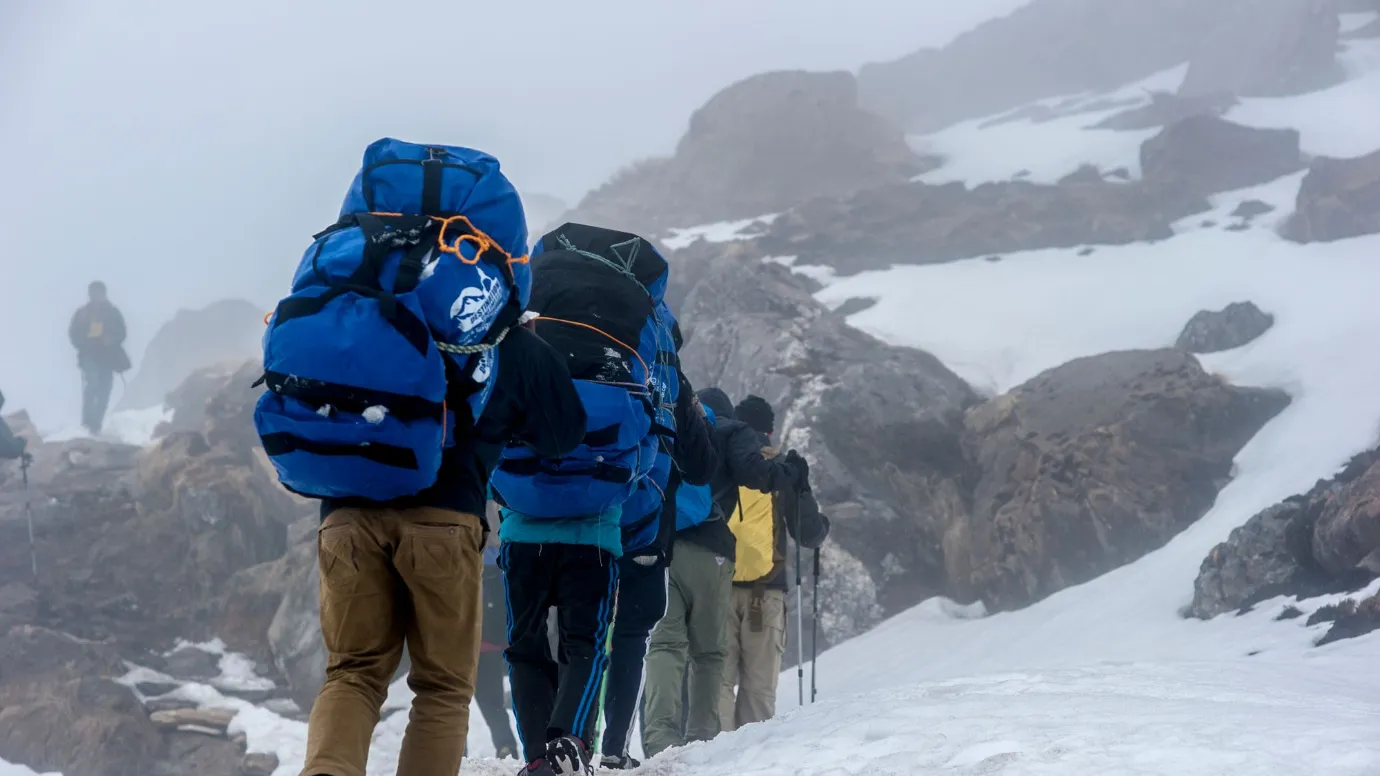
If you want the classic big-mountain views, the Everest Base Camp trek and the Gokyo Lakes trek deliver them, but they need a flight to Lukla and at least two acclimatization days. If you prefer a road start and lower cost, the Annapurna Base Camp trek or the Annapurna Circuit are strong choices. The Langtang Valley trek starts a day’s drive from Kathmandu and suits a one-week holiday. Read our Nepal trek comparison for 18 routes side by side.
Step 3: When is the best time to trek in Nepal?
Short answer: October and November give the clearest skies and most stable weather, followed by March to May, when rhododendrons bloom and days are warmer. December to February is cold but quiet below 4,000 meters. June to August brings monsoon rain to most regions, but rain-shadow areas such as Upper Mustang, Nar Phu and Dolpo stay mostly dry.
Season decides more than the views. It changes trail conditions, flight reliability, lodge availability and price. Autumn and spring are peak seasons, so lodges in the Everest and Annapurna base camp areas fill up and Lukla flights run at capacity. Book these months early.
| Months | Conditions | Best for | Watch out for |
|---|---|---|---|
| September to November | Dry, clear, mild days, cold nights at altitude | Everest, Annapurna, Manaslu, Langtang | Crowds and full lodges in October |
| December to February | Cold, mostly clear, snow above 4,000 m | Lower treks such as Poon Hill and Langtang Valley | High passes such as Thorong La and Larkya La can close after snowfall |
| March to May | Warmer, rhododendrons in bloom, haze by May | Everest, Annapurna, Kanchenjunga | Afternoon cloud and pre-monsoon showers |
| June to August | Monsoon rain, leeches below 3,000 m, landslides | Upper Mustang, Nar Phu, Dolpo | Road blocks and flight delays |
Shoulder months such as early September and late November balance fewer crowds with reasonable weather. Our best time for hiking in Nepal guide breaks down each month and region.
Step 4: How hard are Nepal treks, and how much does altitude matter?
Short answer: Difficulty depends mostly on altitude, daily ascent and the number of days in a row you walk, not on technical skill. Most teahouse treks need no climbing gear. Walking days run five to seven hours. The main risk is acute mountain sickness, which can affect fit people above 2,500 meters if they climb too fast.
Trekking grades on agency websites vary, so look at three numbers instead: the highest sleeping altitude, the highest point crossed and the longest day. A route that sleeps above 5,000 meters, such as Gorak Shep on the Everest Base Camp trek, is a different challenge from one that tops out at 3,210 meters on Poon Hill.
| Level | Highest sleeping altitude | Daily walking | Examples |
|---|---|---|---|
| Easy | Below 3,000 m | 4 to 6 hours | Poon Hill, Ghandruk, short hikes near Kathmandu |
| Moderate | 3,000 to 4,200 m | 5 to 7 hours | Annapurna Base Camp, Langtang Valley, Mardi Himal |
| Challenging | 4,200 to 5,200 m | 6 to 8 hours | Everest Base Camp, Annapurna Circuit, Manaslu Circuit |
| Strenuous | Above 5,000 m or remote camping | 6 to 9 hours | Three Passes, Upper Dolpo, Kanchenjunga |
The Wilderness Medical Society advises that above 3,000 meters you should not raise your sleeping altitude by more than 500 meters a day, and you should take a rest day every three to four days. Good itineraries follow this pattern, which is why the Everest Base Camp trek includes rest days in Namche Bazaar and Dingboche. If an itinerary looks shorter than others for the same route, check whether it has cut acclimatization days.
Teahouse or camping style?
Teahouse trekking means you sleep in family-run lodges and eat in their dining rooms. Rooms are simple, usually twin beds with a shared toilet, and the dining room stove is the warm place in the evening. Everest, Annapurna, Langtang and Manaslu have teahouses along the full route. Camping treks carry tents, a cook team and food, and are still needed on parts of Upper Dolpo, Kanchenjunga and Makalu. Camping costs more because of the extra staff and supplies. Read our guide to Nepal teahouse accommodation for room types, prices and booking tips.
Step 5: Which permits do you need, and must you hire a guide?
Short answer: Most treks need a TIMS card and a national park or conservation area permit. Since 1 April 2023, Nepal Tourism Board rules require foreign trekkers on listed routes to trek with a licensed guide arranged through a registered agency. Restricted areas such as Upper Mustang, Manaslu, Nar Phu and Upper Dolpo also need a special permit.
Permits are route-specific. A trek can cross more than one protected area, and each one charges its own entry fee. The table shows the standard fees for foreign nationals as published by the Nepal Tourism Board and the Department of National Parks and Wildlife Conservation.
| Permit | Fee for foreign nationals | Where it applies |
|---|---|---|
| TIMS card | NPR 2,000 (NPR 1,000 for SAARC nationals) | Most trekking areas, issued through a registered agency |
| National park or conservation area entry | NPR 3,000 | Sagarmatha, Langtang, Annapurna, Manaslu, Makalu Barun, Shey Phoksundo, Rara |
| Kanchenjunga Conservation Area | NPR 2,000 | Kanchenjunga region |
| Restricted area permit | Varies by area and season | Upper Mustang, Manaslu, Tsum, Nar Phu, Upper Dolpo, Kanchenjunga, Humla and others |
| Local municipality fee | NPR 2,000 historically, with some 2026 reports of NPR 3,000, so confirm before you go | For example, the Khumbu Pasang Lhamu Rural Municipality fee in the Everest region |
On 22 March 2026 the Department of Immigration began allowing individual restricted-area permits, but only through a registered agency and with a licensed guide, with a maximum of seven trekkers per guide. Independent trekking in restricted areas is still not allowed. Our Nepal hiking permits guide lists every permit, fee and office, and our page on hiring guides and porters explains licensing and fair pay.
Where does the licensed guide rule apply, and is TIMS still checked?
The April 2023 Nepal Tourism Board notice names 14 trekking areas where foreign trekkers need a licensed guide and a TIMS card: Kanchenjunga, Makalu Barun, Everest, Rolwaling, Panchpokhari Bhairabkunda, Helambu, Langtang, Ganesh Himal and Ruby Valley, Manaslu, Annapurna, Mustang, Dhaulagiri, Dolpo and Humla. Children under 10 and mountaineers holding climbing permits are exempt from TIMS. Trekkers found without a guide or TIMS card can be fined.
In practice, enforcement differs by region. The Everest region’s local government does not use TIMS and issues its own Khumbu Pasang Lhamu Rural Municipality permit instead. On Annapurna routes, TIMS checks have been inconsistent, while national park and conservation area permits are checked everywhere. Your agency issues TIMS where it is required, so the simplest approach is to let them handle every permit for your exact route.
Step 6: How much does a trek in Nepal cost?
Short answer: A guided teahouse trek usually costs between USD 1,000 and 3,000 per person for 10 to 16 days, depending on the route, group size and comfort level. The main costs are permits, guide and porter wages, lodging, meals, domestic flights or jeeps, and travel insurance. Remote and restricted routes cost more.
Your budget has two parts: fixed costs set by the government, such as permits, and variable costs that depend on your choices. Food prices rise with altitude because supplies arrive by porter, mule or helicopter. A plate of dal bhat that costs a few hundred rupees in Pokhara can cost three or four times as much near a base camp.
| Cost item | What drives the price | Tip |
|---|---|---|
| Permits | Route and number of protected areas | Restricted areas add the largest permit costs |
| Guide and porter | Days, experience, group size | Share a guide in a small group to cut cost per person |
| Lodging and meals | Altitude and season | Budget more for meals above 4,000 m |
| Transport | Flights versus road access | Road-access treks such as Langtang avoid flight costs |
| Insurance | Maximum altitude and rescue cover | Cover must include helicopter evacuation |
| Extras | Hot showers, charging, Wi-Fi, tips | Carry enough cash, since ATMs end at the trailhead |
Plan tips for your guide and porter at the end of the trek. Many trekkers set aside about 10 to 15 percent of the trek cost for the crew. Our Nepal trekking cost guide gives six worked budget examples, and our page on cash, SIM cards and charging on the trail explains how much cash to carry.
Step 7: How do you get a visa and reach the trailhead?
Short answer: Most nationalities can buy a tourist visa on arrival at Tribhuvan International Airport in Kathmandu for USD 30 (15 days), USD 50 (30 days) or USD 125 (90 days). From Kathmandu, you reach trailheads by domestic flight, tourist bus or private jeep. Lukla flights often depart from Ramechhap (Manthali) during peak seasons.
Check your passport has at least six months of validity and a blank page. Some nationalities must get a visa before travel, so confirm your status with the Department of Immigration or a Nepali embassy. Our Nepal visa information page covers the process step by step.
Transport choice affects cost and schedule. Flights save days but cancel in poor weather. Roads are cheaper but slow, and monsoon landslides can block them.
| Trailhead | How to get there | Travel time |
|---|---|---|
| Lukla (Everest) | Flight from Kathmandu or Ramechhap | About 30 minutes flying, plus a 4 to 5 hour drive to Ramechhap if used |
| Pokhara (Annapurna) | Tourist bus, private car or flight | 6 to 8 hours by road, 25 minutes by air |
| Syabrubesi (Langtang) | Bus or jeep from Kathmandu | 7 to 9 hours |
| Machha Khola or Soti Khola (Manaslu) | Jeep from Kathmandu | 8 to 10 hours |
| Jomsom (Mustang) | Flight from Pokhara or jeep | 20 minutes by air, a full day by road |
Read our Nepal trekking transport guide for flight booking tips, jeep sharing and airport advice.
Step 8: How do you stay safe at altitude, and what insurance do you need?
Short answer: Climb slowly, follow a route with rest days, drink enough water and descend if symptoms worsen. Know the signs of acute mountain sickness: headache, nausea, poor sleep and loss of appetite. Buy travel insurance that covers trekking to your maximum altitude and helicopter evacuation, and carry the policy number and emergency phone with your guide.
The Himalayan Rescue Association runs aid posts in Pheriche (4,250 m) and Manang (3,550 m) during peak seasons, plus a seasonal clinic at Everest Base Camp. Their staff give free daily altitude talks. Attending one is the best hour you can spend on the trail.
- Never sleep higher with worsening altitude symptoms.
- Descend at once if you notice confusion, loss of coordination or breathlessness at rest. These are signs of high altitude cerebral or pulmonary edema, which can be fatal.
- Treat water with filters, tablets or boiling, and avoid raw salads at altitude.
- Tell your guide about every symptom, even mild ones.
Speak with a travel doctor before you go about vaccinations and altitude medication. Our health and safety page and our trekking insurance and rescue guide cover each point in detail.
Step 9: How should you train and what should you pack?
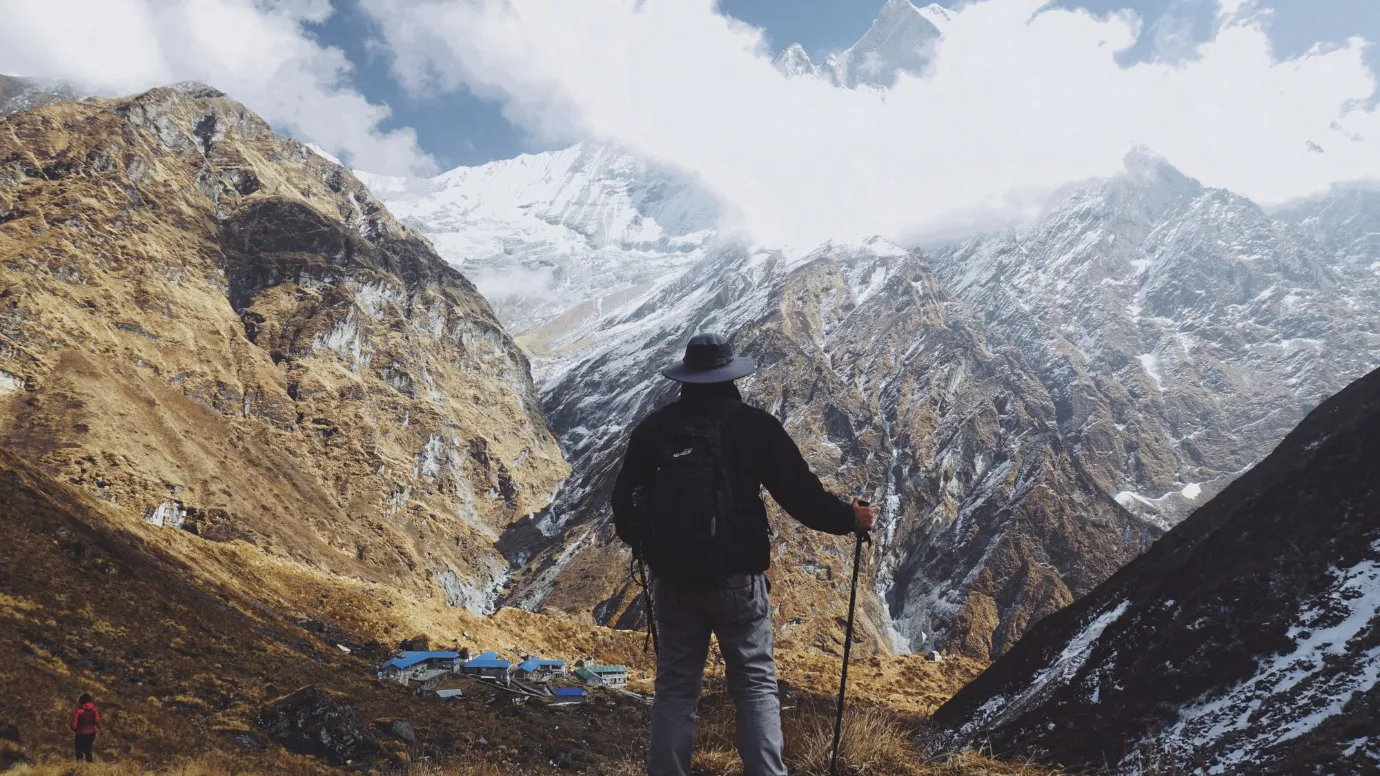
Short answer: Start training at least 12 weeks before departure with three to four sessions a week: long hill walks with a loaded daypack, stair or incline work for leg strength, and steady cardio. Pack layers for temperatures from about 25°C in the valleys to below minus 10°C at night above 4,500 meters, plus broken-in boots.
The best training is the thing you will do on the trek: walking uphill and downhill for hours with a pack. Build up to back-to-back long days in the final month. Our 12-week Nepal trek training plan lays out each week.
Pack light. Porters in Nepal commonly carry loads for two trekkers, and responsible agencies cap each porter’s load, so most companies limit each trekker’s duffel to about 10 to 15 kilograms. Core items include:
- Broken-in waterproof hiking boots and camp shoes
- Base layers, a fleece, an insulated down jacket and a waterproof shell
- A sleeping bag rated to about minus 10°C for treks above 4,000 meters
- Trekking poles, a headlamp, sunglasses and high-factor sunscreen
- Water bottles and a purification method
- A basic first aid kit and any personal medication
You can buy or rent most gear in Thamel in Kathmandu or Lakeside in Pokhara. Our packing list and our guide to food and water on the trail help you prepare.
What does a sample planning timeline look like?
Short answer: Start six months ahead for peak-season treks. Choose the route and month first, book your agency and flights at three to four months, buy insurance once flights are confirmed, start training at 12 weeks and finish gear checks two weeks before departure.
| Time before departure | Task |
|---|---|
| 6 months | Decide group, days, region and month |
| 4 to 5 months | Compare agencies, check licenses, book the trek and international flights |
| 3 months | Buy travel insurance with trekking and evacuation cover, start training |
| 2 months | See a travel doctor, check visa requirements, confirm domestic flights |
| 1 month | Test gear on long walks, confirm permits with your agency |
| 2 weeks | Final packing, copies of passport and insurance, notify your bank |
| Arrival | Visa on arrival, briefing with your guide, buffer day in Kathmandu |
How do you choose a trusted trekking agency?
Short answer: Choose an agency registered with the Department of Tourism and a member of the Trekking Agencies’ Association of Nepal (TAAN). Ask for the guide’s license, the itinerary with rest days, what the price includes, the porter load limit and the evacuation plan. Read recent reviews and get every detail in writing.
Good agencies explain what happens if a trekker gets sick, how they handle flight cancellations and how they insure their staff. Be wary of prices far below the market, which often mean underpaid porters, shortened itineraries or missing permits. Our guide to responsible trekking in Nepal lists questions to ask about porter welfare and waste.
Frequently Asked Questions
Can I trek in Nepal without a guide?
Nepal Tourism Board rules since April 2023 require foreign trekkers on listed routes to trek with a licensed guide arranged through a registered agency. Restricted areas always need a guide. Rules and local enforcement can change, so confirm the requirement for your exact route with your agency before you book.
How fit do I need to be for a Nepal trek?
You need to walk five to seven hours a day for several days in a row, often uphill. No climbing skill is required on teahouse treks. A steady 12-week training plan with hill walks and stair work prepares most healthy adults for moderate routes such as Annapurna Base Camp.
How many days do I need for a trek in Nepal?
Short treks such as Poon Hill take four to five days. Popular routes such as Annapurna Base Camp take seven to eleven days, and Everest Base Camp takes twelve to fourteen days. Add two days in Kathmandu and one spare day for flight delays.
Is Nepal safe for trekkers?
Nepal is generally safe for trekkers who follow a sensible itinerary with a licensed guide. The main risks are altitude sickness, weather, river crossings and road travel. Choose a reputable agency, buy insurance with evacuation cover and follow your guide’s advice on acclimatization.
Can I trek in Nepal with children?
Yes, on lower routes. Poon Hill, Ghandruk and short hikes near Kathmandu and Pokhara suit families. Keep sleeping altitude low, plan shorter walking days and talk to a pediatrician about altitude before you travel.
What is the best first trek in Nepal?
Annapurna Base Camp, Poon Hill, Mardi Himal and the Langtang Valley are popular first treks. They start by road, have good teahouses and reach mountain scenery without crossing high passes.
About the author: Pradip Karki
Pradip Karki is the Chairman of Peregrine Treks and Tours in Kathmandu and a veteran Himalayan travel specialist with over 20 years of industry leadership. A former TIMS Department Head at the Trekking Agencies’ Association of Nepal (TAAN) with an MBA in Accounting and Finance, Pradip personally scouts routes across Nepal, Tibet and Bhutan to design safe, high-altitude treks and luxury cultural tours.
Reviewed and updated by Pradip Karki on 23 November 2026.
Official Sources Checked
- Nepal Tourism Board: TIMS card rules, licensed guide requirement and trekking permit fees
- Department of Immigration: visa fees and restricted-area permits
- Department of National Parks and Wildlife Conservation: national park entry fees
- Himalayan Rescue Association Nepal: aid posts and altitude safety advice
- Wilderness Medical Society: acclimatization guidelines
Do not hesitage to give us a call. We are an expert team and we are happy to talk to you.
info@hikinginnepal.com- Local Experience
- Financial Protection
- Effortless Travel
- Intimate Group Size
- Bespoken Itinerary