
Included Meals
- Breakfast: 10
- Lunch: 6
- Dinner: 6

Unbeatable Holiday Offers – Save Up to 20% on Your Next Adventure!
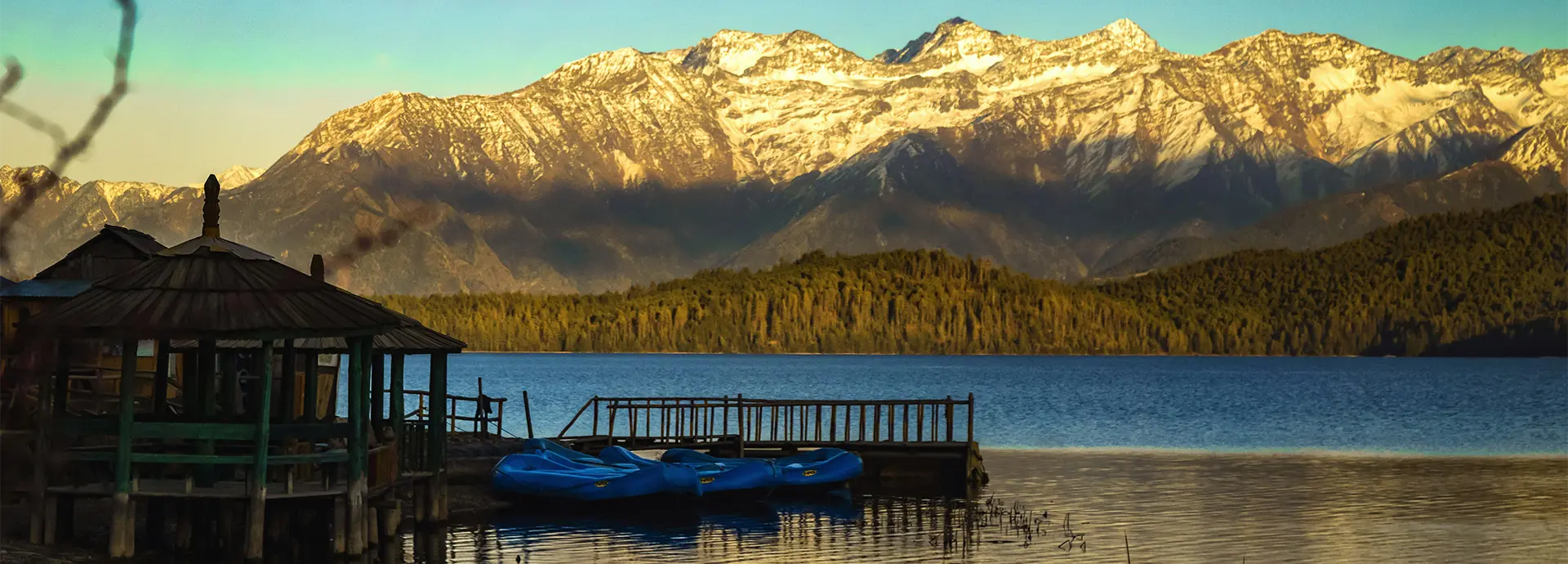
The Rara Lake Trek takes you to the largest lake in Nepal — a wide, clear expanse of water sitting at about 2,990 meters inside Rara National Park in the Karnali region of western Nepal. Rara Lake covers roughly 10.8 square kilometers. On calm mornings, the surrounding pine, spruce, and fir forest reflects on the surface. Snow-capped peaks frame the horizon on clear days. The whole scene is genuinely quiet — few trekkers reach this part of Nepal, and that solitude is half the appeal.
The route flies from Kathmandu to Nepalgunj, then connects to Talcha Airport — a short grass strip in Mugu district that puts you within easy walking distance of the lake. The exit follows the trail toward Jumla, one of Nepal’s most historically significant hill towns, with a connecting flight back through Nepalgunj to Kathmandu. Hotel Thamel Park handles your nights in Kathmandu. Simple teahouses and local lodges cover the trail.
Nepal Hiking Company has been operating treks and tours across Nepal since 2008. We hold registration with the Department of Tourism, the Office of the Company Registrar, the Small Cottage Industry, the Inland Revenue Department, and Nepal Rastra Bank. We are active members of TAAN (Trekking Agencies’ Association of Nepal) and NMA (Nepal Mountaineering Association). Our team in Kathmandu manages the Nepalgunj connection, the Talcha and Jumla flights, all permits, and the teahouse logistics that make the remote Karnali route work.
The Rara Lake Trek is a 12-day scenic trek in western Nepal to Rara Lake — Nepal’s largest lake at about 2,990 m. The route covers Kathmandu, Nepalgunj, Talcha Airport, Rara Lake, Murma village, the Jumla trail corridor, and back to Kathmandu. It suits trekkers who want Nepal’s largest lake, quiet forest trails, remote Karnali scenery, basic lodge accommodation, and no high-pass crossing.
Quick Facts
| Item | Details |
|---|---|
| Duration | 12 Days |
| Start Point | Kathmandu |
| End Point | Kathmandu |
| Trek Start | Talcha Airport |
| Trek End | Jumla or route-based exit point |
| Main Destination | Rara Lake |
| Main Viewpoint | Murma village area or Chuchemara Hill |
| Highest Area | Around 3,600–3,700 m, based on the final route |
| Lake Altitude | About 2,990 m |
| Difficulty | Easy to Moderate |
| Accommodation | Hotel, teahouse, lodge |
| Kathmandu Hotel | Hotel Thamel Park |
| Meals | Breakfast in cities; full board during trek |
| Transport | Kathmandu–Nepalgunj–Talcha flights; Jumla–Nepalgunj–Kathmandu return |
| National Park | Rara National Park |
| Permits | Rara National Park permit; TIMS if required |
| Best Season | Spring (March–May) and Autumn (September–November) |
| Guide | Licensed trekking guide — required |
| Porter | Optional or included based on package |
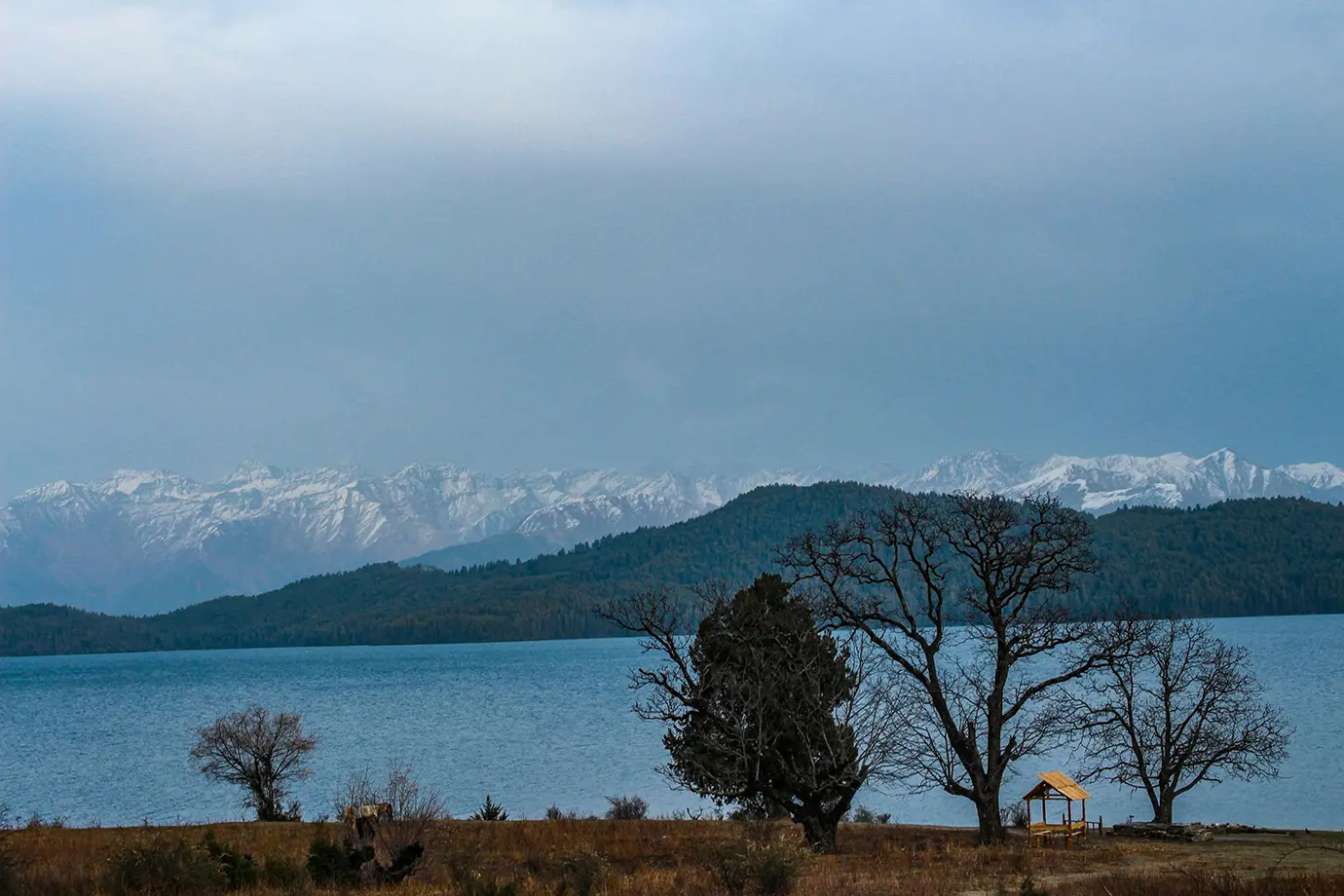
Rara Lake isn’t on the standard Nepal trekking map. Most people who come to Nepal for a trek head straight to Everest, Annapurna, or Langtang — well-organized routes with reliable infrastructure and thousands of fellow trekkers. Rara is none of those things. The Karnali region is Nepal’s most underdeveloped and least-visited. The flights are small, the lodges are basic, and the trail feels quiet even in peak season. That’s exactly why some travelers come.
The lake itself covers 10.8 square kilometers and sits in a forest-clad bowl at an elevation of 2,990 meters. Rara National Park, which the Nepal Tourism Board identifies as accessible through Nepalgunj and Talcha, surrounds it. Nepal’s smallest national park by area, it protects a remarkably complete high-altitude lake ecosystem — pine, spruce, and fir forests, clean lake water, resident bird populations, and a low human footprint. The Nepal Tourism Board lists trekking, boating, birdwatching, horse riding, and mountain biking as park activities.
The 12-day package takes the time the route deserves. It includes an overnight in Nepalgunj before the Talcha flight, a full day at Rara Lake, time at the Murma village viewpoint, exiting the Jumla trail, and a buffer day in Kathmandu for flight delays. Shorter 7- and 9-day packages cut the buffer and the lake exploration day. We think those cuts are mistakes, and we’ve built this schedule to avoid them.
Browse every route in our regional trekking guide or see all trekking packages we run. Travellers who like this trip also compare Khaptad National Park Trek, Dhorpatan Hunting Reserve Trek, Upper Dolpo Trek.
Before you book, read our Nepal trekking cost guide, check the trekking gear list, and review travel insurance requirements. Still deciding? Plan your trip with a local expert.
For official information, see the Nepal Tourism Board, the Trekking Agencies’ Association of Nepal and the Department of Immigration for visa rules, plus background on Rara Lake overview.

Included Meals

Trip staff

Transport

Accommodation

Trip Grade
Group Size
Land at Tribhuvan International Airport. Our representative meets you at the arrivals and transfers you to Hotel Thamel Park in Kathmandu’s Thamel district. The hotel is well located for gear shopping, currency exchange, and a decent dinner before the trek begins. Rest up — the next morning starts early.
Accommodation:
Hotel Thamel Park

Maximum Altitude 1,400m/4,593ft (Kathmandu)
Difficulty
Morning flight from Kathmandu to Nepalgunj — a flat, warm, lowland city close to the Indian border in the western Terai. The flight takes about 50 minutes. Nepalgunj is the main air gateway for the Karnali and Seti regions. Prepare for the Talcha flight the next morning. The hotel in Nepalgunj is comfortable and well-suited for an overnight transit.

Time & Distance 50minutes , 501KM
Accommodation:
Hotel
Meals Breakfast
Maximum Altitude 150m/492ft (Nepalgunj)
Difficulty
Transportation Flight
Early morning flight from Nepalgunj to Talcha Airport in the Mugu district. Talcha is a grass airstrip at roughly 2,980 meters — one of the highest-altitude airports in Nepal. The Twin Otter approach over ridgelines and valleys is genuinely striking. From Talcha, the trail to Rara Lake takes about two to three hours through conifer forest.
The first view of the lake usually appears through a gap in the trees before the trail opens onto the shore. Stop there for a moment rather than walking straight to the teahouse. That first look is the payoff for the whole logistics chain from Kathmandu.
Time & Distance 6Hour, 253KM
Accommodation:
Teahouse/ Lodge
Meals Breakfast, Lunch, Dinner
Maximum Altitude 2,990m/9,810ft (Rara )
Difficulty
Transportation Flight
The day the whole trek exists to support. Start early for the calm water and morning reflections — the lake is typically glassy before 8 a.m. Walk the shore trail in your preferred direction. Visit the Murma ridge viewpoint for the high panorama. Explore the Chuchemara Hill area if energy and time allow. Finish the afternoon sitting at the lake edge.
Ask your guide about the optional boat ride if conditions are suitable. Sunset at Rara is worth positioning for — the western sky reflects off the lake for roughly 20 minutes before the light drops. It’s a reasonable reason to delay dinner.
Accommodation:
Teahouse or lodge
Meals Breakfast, Lunch, Dinner
Maximum Altitude 2,990m/9,810ft (Rara )
Difficulty
Move along the trail toward Murma Village on the ridge south of the lake. The walking distance is short — about 8 kilometers — and this is intentionally a slower-paced day. Murma gives the best high lake view on the entire route. The village itself shows a traditional Karnali hill lifestyle that the lake shore teahouses don’t fully represent.
Time & Distance 2hour, 8KM
Accommodation:
Teahouse or lodge
Meals Breakfast, Lunch, Dinner
Maximum Altitude 3,800m/12,467ft (Murma village )
Difficulty
Continue through pine and spruce forest on the return trail. This section of the route is quiet — genuinely quiet, in a way that trails near Kathmandu or Pokhara rarely are. The birdsong in the conifers and the sound of the Karnali tributary streams crossing the trail are the main soundtrack. Take it at a comfortable pace.
Accommodation: Teahouse or lodge. Meals: Breakfast, lunch, dinner.
Time & Distance 30minutes, 1.5KM
Accommodation:
Teahouse or lodge
Meals Breakfast, Lunch, Dinner
Maximum Altitude 3,130m/10,269ft (3,130 )
Difficulty
Continue through rural farmland and settlements, and along forest trails toward the Jumla approach corridor. The exact overnight stop adjusts based on group pace and lodge availability — our guide confirms the plan each morning based on conditions.
Time & Distance 5Hour, 14KM
Accommodation:
Teahouse or lodge
Meals Breakfast, Lunch, Dinner
Difficulty
Reach Jumla — a historically significant Karnali hill town at about 2,370 meters that once served as the capital of a medieval hill kingdom. The Sinja Valley nearby holds archaeological remains from the Khasa Malla dynasty. The town has a proper bazaar, a small airport, and enough amenities to feel like civilization after the lake-and-forest days.
Time & Distance 6hour, 20KM
Accommodation:
Lodge in Jumla.
Meals Breakfast, Lunch, Dinner
Maximum Altitude 2,514m/8,248ft (Jumla )
Difficulty
Morning flight from Jumla to Nepalgunj. The Jumla flight is more reliable than the Talcha connection because Jumla’s valley is wider and less prone to fog. Still, don’t book a tight onward connection for today. Stay overnight in Nepalgunj.
Time & Distance 55Minutes, 139KM
Accommodation:
Hotel
Meals Breakfast
Maximum Altitude 150m/492ft (Nepalgunj)
Difficulty
Transportation Flight
Morning flight back to Kathmandu. Transfer to Hotel Thamel Park. The afternoon is free — real restaurants, hot showers, and a city that feels genuinely fast after the Karnali pace.
Time & Distance 50Minutes, 501KM
Accommodation:
Hotel Thamel Park
Meals Breakfast
Maximum Altitude 1,400m/4,593ft (Kathymandu )
Difficulty
Transportation Flight
A built-in buffer for weather delays, flight rescheduling, or simply rest. If everything ran on schedule, use the day for optional Kathmandu sightseeing — Boudhanath Stupa, Pashupatinath Temple, or the Thamel market. If the Talcha or Jumla flight caused delays earlier in the itinerary, this day absorbs them without affecting your international departure.
Accommodation: Hotel Thamel Park. Meals: Breakfast.
Accommodation:
Hotel Thamel Park
Meals Breakfast
Maximum Altitude 1,400m/4,593ft (Kathmandu )
Difficulty
Transfer to Tribhuvan International Airport for your international departure. Accommodation not included. Meals: Breakfast.
Difficulty
Nepal has dozens of lakes. Rara is the largest, and it’s the most isolated. The combination of scale — nearly 11 square kilometers — and remoteness creates a lake experience that the more accessible alternatives can’t replicate. Tilicho Lake on the Annapurna circuit gets crowded. Gosaikunda, near Langtang, is popular as a day-trip circuit. Rara has no comparable foot traffic. On the exploration day, you may have the lake trail entirely to yourself.
The 12-day schedule gives the route what it needs. Thovernight in Nepalgunj reduces morning flight stress at Talcha. The full lake day on Day 4 gives proper time to walk the forest edge, visit the Murma viewpoint, and sit with the lake rather than rushing the photography and leaving. The Jumla exit adds a different trail character on the return. The buffer day in Kathmandu accounts for the flight delays that inevitably occur in Western Nepal.
Nepal Hiking Company handles Hotel Thamel Park in Kathmandu, the full flight chain through Nepalgunj and Talcha, all permit paperwork, teahouse logistics, and guide and porter coordination. The logistics in the Karnali region are complicated from the outside. Our team in Kathmandu has run this route repeatedly and manages the variables that shorter or less experienced operators leave to chance.
Rara Lake fills a wide mountain basin at an elevation of 2,990 meters. The water is clear and cold. In the mornings — particularly in October and November — the lake surface sits completely flat and reflects the surrounding forest and sky in a mirror image that holds for maybe two hours before the wind picks up. That window is worth setting an early alarm for.
The lake perimeter trail runs about 12 to 14 kilometers around the full shore. Most trekkers don’t complete the full circuit in a single day, and we don’t recommend trying to if you also want time at the Murma viewpoint. Better to walk two or three of the best sections with attention than rush the full loop without it.
Murma village sits on a ridge above the lake’s south side and gives the best high view of the whole water body — you see the full 10.8 square kilometers in one frame, which the shore-level trail never allows. Chuchemara Hill, northeast of the lake, gives a different angle and slightly higher ground. Both are worthwhile on the full exploration day.
An optional boat ride may be available at the lake, depending on the season and local operator availability. It’s not guaranteed and isn’t included in the standard package price, but it’s worth asking about when you arrive. A 30-minute paddle on the lake at midday, when the water is clear, and the mountains are visible, offers a perspective no trail can.
Rara National Park
Rara National Park covers 106 square kilometers across Mugu and Jumla districts — Nepal’s smallest national park by area, but one of its most ecologically complete. The park was established in 1976 specifically to protect Rara Lake and its catchment forest. The forested slopes inside the park boundary support oak, pine, spruce, fir, and juniper, with higher scrub zones above the treeline.
Wildlife inside the park includes the Himalayan black bear, common leopard, red panda, thar, musk deer, and over 200 bird species. Blue sheep (bharal) graze on the open slopes above the treeline. The lake itself supports several fish species, including the Rara barb and Rara trout. Birdwatching near the lake edge is productive in spring and autumn — the Nepal Tourism Board lists birdwatching as one of the park’s main activities alongside trekking, boating, horse riding, and mountain biking.
The Nepal Tourism Board lists the Rara National Park entry fee at NRs. 3,000 for foreign nationals, NRs. 1,500 for SAARC nationals and NRs. 100 for Nepali citizens. Children below 10 enter free. Nepal Hiking Company handles permit arrangements before your trek starts. Park rules prohibit single-use plastic inside the boundary, require trekkers to stay on marked trails, and restrict campfires and open burning.
Murma sits on a low ridge south of Rara Lake and is part of the wider network of villages that have existed in this part of the Karnali region for centuries. The inhabitants are primarily from the Thakuri and Magar communities, who farm terraced fields, keep livestock, and maintain a way of life largely unchanged by the development patterns seen elsewhere in Nepal.
The village gives the trek a cultural dimension that pure lake-and-forest routes often lack. Houses are stone-built with flat roofs used for drying grain. Older residents may remember when the 1970s national park designation displaced families from the lake shore — a history our guides explain with proper context rather than glossing over. Walking through Murma with that knowledge makes the scenery feel like a place rather than scenery.
Dress modestly and ask before photographing individuals. The guide’s advice regarding private homes, fields, and community areas deserves to be followed — not as a formality, but because respectful behavior in remote communities like this directly affects how those communities receive the next group of travelers who pass through.
The approach trail from Talcha to Rara Lake passes through mixed conifer forest for most of its length. Pine and spruce dominate the lower and mid-elevation sections. Fire appears higher up. In spring, the forest floor carries wildflowers — Himalayan primrose, marsh marigold, and various orchid species,s depending on the exact trail section and elevation.
The broader Karnali scenery within which the route sits is distinct from both the Himalayan high country and the middle hills of Pokhara or Kathmandu—the Karnali River watershed drains western Nepal through deep gorges and wide upland valleys. The light feels different at this longitude — clearer in autumn, warmer in spring, and less disrupted by the haze that settles over the eastern hills in many seasons.
Rara’s forest feels softer and greener than the dry, cliff-framed terrain around Shey Phoksundo Lake in Dolpo. That’s a deliberate comparison, not a ranking. Both lakes are worth visiting; they’re just different experiences. Rara suits travelers who want water, forest, birdsong, and gentle hills. Phoksundo suits travelers who want drama, altitude, and ancient culture. Neither is a substitute for the other.
Hotel Thamel Park in Kathmandu is a clean, comfortable hotel in the Thamel area — walking distance from gear shops, restaurants, and money exchange. Hot showers, reliable Wi-Fi, and proper beds. The Nepalgunj hotel operates at a similar standard for a transit city.
On the trail, accommodation shifts to local teahouses and lodges. Near Rara Lake, expect simple twin rooms with thin mattresses, basic bedding, and shared toilet facilities. Hot water from a heated bucket is available at most lodges near the lake for an additional NRs. 200 to 400 per use. Piped hot showers are rarer — don’t expect them above Talcha.
The Murma and forest trail sections use smaller teahouses with fewer room options. Lodge availability can shift in the middle-route sections between the lake and Jumla — our guide checks ahead and adjusts the overnight stop when necessary. Wi-Fi is nominally available at a few lodges near the lake, but connection quality is poor. Charging costs NRs. 200 to 300 at most teahouses and may not always work. Bring a power bank charged to capacity from Kathmandu.
The Karnali region sits far from Nepal’s main trekking supply chains. Facilities reflect that distance honestly, not through any failure of hospitality.
Trip Information
Breakfast is included at Hotel Thamel Park in Kathmandu and in the Nepalgunj hotel. Full-board meals — breakfast, lunch, and dinner cover all trekking days from Day 3 through Day 8.
Dal bhat (lentil soup with rice, vegetable curry, and pickle) is the main meal throughout. Most teahouses also serve noodle soup, fried rice, potato dishes in several forms, eggs, porridge, chapati, and standard tea and coffee. The Jumla area uses locally grown apples and wheat varieties. The chapati made from local Jumla wheat tastes noticeably different from the standard Kathmandu flour version. Pay attention to it on Day 8.
Lunch and dinner in Kathmandu and Nepalgunj on Days 1, 2, 9, 10, 11, and 12 are not included. Bottled water, additional hot drinks, soft drinks, snacks, desserts, and alcohol are excluded throughout. Use water purification from Day 3 onward — single-use bottles are expensive and leave plastic in a national park.
Nepal Hiking Company arranges all flights: Kathmandu to Nepalgunj, Nepalgunj to Talcha, Jumla to Nepalgunj, and Nepalgunj to Kathmandu. Airport pickup and drop-off in Kathmandu is included.
Talcha Airport is a challenging destination. The airstrip sits at roughly 2,980 meters inside a narrow valley. Twin Otter aircraft operate the route, typically departing Nepalgunj between 7 and 9 a.m. when visibility is clearest. Afternoon cloud buildup makes afternoon operations unreliable. Morning fog in Nepalgunj can delay the entire connection. On groups we’ve run to Rara, a delay of 6 to 24 hours at either Nepalgunj or Talcha is more common than not in the shoulder months.
The Jumla flight out is more predictable than the Talcha connection in. Jumla’s valley is wider and fog clears earlier. Still — the 12-day schedule includes Day 11 as a buffer for precisely the reason that western Nepal flights don’t run like Kathmandu city buses. Plan your international departure connection around that reality.
The Rara Lake Trek requires the Rara National Park entry permit — NRs. 3,000 for foreign nationals, NRs. 1,500 for SAARC nationals, and NRs. 100 for Nepali citizens, as listed by the Nepal Tourism Board. Children below 10 enter free. A TIMS (Trekkers’ Information Management System) card may also be required under current regulations.
Nepal Hiking Company arranges all permits before your trek starts. You need a copy of your passport and two passport-size photographs for the permit applications. Carry both permits on the trek — park entry checkpoints verify them near the Talcha approach and at the national park boundary near Rara Lake.
Local area fees or municipal permits may also apply, depending on the exact route sections used. We confirm the current permit requirement stack before your booking is finalized and arrange all paperwork for confirmed clients. Permit rules in remote western Nepal can change, so always confirm details directly with Nepal Hiking Company rather than relying on outdated online sources.
Easy to moderate. The route doesn’t cross a high Himalayan pass, and the maximum trekking altitude of roughly 3,600 to 3,700 meters on the higher trail sections stays below the threshold where altitude sickness typically becomes a serious concern for acclimatized trekkers. Most fit travelers complete this route without significant altitude symptoms.
The practical difficulty comes from the remote logistics and the length of consecutive walking days rather than terrain steepness or altitude. The Day 8 walk to Jumla covers about 14 kilometers and is the longest single day. The forest trail between Murma and the Jumla corridor involves some sustained uphill and downhill on natural trails — no paved or groomed surfaces. Expect to walk 4 to 7 hours on most trekking days.
Who should attempt this trek? Fit travelers who walk regularly, can manage several consecutive days of 5 to 7 hours on natural terrain, and accept accommodation with limited facilities. Previous trekking experience helps but isn’t required if fitness is solid. This route is not suitable for travelers who need reliable Wi-Fi, menus with extensive options, or guaranteed flight schedules.
| Season | Months | Trail Conditions | Lake Conditions | Recommendation |
| Spring | March–May | Warming days, fresh forest, wildflowers in April | Lake ice-free, good reflections | Excellent — second-best window |
| Autumn | Sep–Nov | Dry trails, best visibility, stable flights | Peak clarity, calm morning reflections | Best overall — clearest conditions |
| Winter | Dec–Feb | Cold nights, possible snow above 2,500 m | Lake is clear but cold; flights are less reliable | Not recommended for most trekkers |
| Monsoon | June–Aug | Rain, slippery trails, landslide risk, flight delays | Lake water level is high; views are often clouded | Not recommended |
Best Time to Visit Nepal. The Nepal Tourism Board identifies February through April and October through November as the best season for Rara National Park. Our team in Kathmandu aligns with that — October and early November give the sharpest skies and the best lake reflections. Mid-March through late April works well for trekkers who prefer warmer walking conditions and don’t mind occasional cloud. Both windows suit the Rara Lake Trek well.
Porter support is available for the Rara Lake Trek and recommended for travelers who prefer to walk without a heavy pack. One porter can carry up to 20 kg in total for two trekkers. Each trekker carries their own daypack with water, layers, snacks, and documents.
Porter employment in the Karnali region directly supports local families in one of Nepal’s lowest-income districts. Nepal Hiking Company ensures our porters receive proper wages, insurance, and appropriate equipment. Additional porter support is available on request.
Optional Add-ons
• Kathmandu sightseeing — Boudhanath Stupa, Pashupatinath Temple, Swayambhunath, Durbar Square
• Extra night at Hotel Thamel Park before or after the trek
• Extra night in Nepalgunj for flight flexibility
• Single room occupancy in Kathmandu and Nepalgunj
• Porter service is not included in the standard package
• Private guide instead of group guide
• Language guide for Karnali cultural context, if available
• Extra contingency day for Talcha or Jumla flight delays
• Personal trekking gear rental — sleeping bag, trekking poles, daypack
• Optional Rara Lake boat ride if locally available
• Rara Lake Jeep Tour extension — road-based approach from Surkhet or Rara
• Shey Phoksundo Lake extension for a combined western Nepal two-lake package
Travel insurance for the Rara Lake Trek must cover trekking in a remote national park, emergency helicopter evacuation, medical treatment in Nepal and abroad, trip cancellation, domestic flight delays in western Nepal, road delays, lost baggage, and personal accident.
Standard travel insurance policies typically do not cover helicopter evacuation in remote Nepal. Verify explicitly with your insurer before departing Kathmandu. Nepal Hiking Company cannot arrange insurance directly, but can advise on coverage terms. Carry a printed copy of the policy with emergency contact numbers throughout the trek.
Clothing
Gear
Documents and Essentials
The Rara Lake Trek stays below 3,700 meters on most sections, which keeps acute mountain sickness risk relatively low for acclimatized trekkers. The bigger health concern on this route is the remote logistics — Rara is far from hospital infrastructure, and any serious medical issue requires helicopter evacuation.
Your guide carries a basic first-aid kit and holds current first-aid certification. The guide monitors the group for cold exposure, dehydration, and gastrointestinal illness — the three most common trail health issues on this route. Cold mornings near the lake catch some trekkers underprepared; temperatures can drop below freezing even in October. Layer up before leaving the teahouse.
Nepal Hiking Company maintains emergency communication lines with our team in Kathmandu throughout the trek. The guide carries the emergency contact and evacuation protocol information. Weather checks before the Talcha and Jumla flights are part of our daily coordination. When delays happen, we inform you immediately and hold backup hotel arrangements in Nepalgunj.
| Trek / Tour | Duration | Difficulty | Highest Focus | Main Style | Best For |
| Rara Lake Trek | 12 days | Easy to moderate | Rara Lake and the Murma area | Forest and lake trek | Lake views and quiet trails |
| Shey Phoksundo Lake Trek | 11 days | Easy to moderate | Phoksundo Lake / Ringmo | Dramatic Dolpo Lake Trek | Lake and Bon Buddhist culture |
| Rara Lake Jeep Tour | 7–10 days | Easy | Rara Lake | Overland road tour | Non-trekkers |
| Upper Dolpo Trek | 20–28+ days | Challenging to strenuous | High passes and monasteries | Long restricted-area trek | Experienced trekkers only |
| Phoksundo and Rara Lake Trek | 16–22 days | Moderate to challenging | Two lake regions | Long lake-to-lake route | Remote lake enthusiasts |
Both are lake-focused western Nepal treks. Both fly through Nepalgunj. Both use basic teahouses and require remote flight logistics. But the experience on the trail is quite different.
Rara Lake sits in a forested basin at 2,990 meters. The scenery is green, soft, and bird-rich. The Karnali region has a gentler visual character than Dolpo’s dry, cliff-framed scenery. Rara suits travelers who want water, forest, hills, and quiet — a restorative rather than dramatic mountain experience.
Shey Phoksundo Lake in Dolpo sits at 3,611 meters, set against vertical cliffs, with no forest visible from the lake shore. Ringmo Village preserves Bon Buddhist traditions not found elsewhere in Nepal. The Phoksundo route is shorter and has slightly more cultural intensity. Rara is longer and has more ecological variety. Neither is better. They’re different trips.
Shorter Rara packages exist. Seven-day versions typically fly to Talcha on Day 2, spend one night at the lake, and exit through Jumla on Day 4 or 5. That schedule turns the lake into a logistics checkpoint rather than a destination.
The 12-day version includes a proper Nepalgunj overnight before the Talcha flight (reduces morning stress), a full exploration day at the lake (Day 4), time for the Murma viewpoint (Day 5), the full Jumla corridor experience (Days 6 to 8), and a Kathmandu buffer day (Day 11) that absorbs the flight delays that western Nepal inevitably produces. Remove any one of those elements, and something meaningful falls out of the schedule.
What Is the Talcha Flight Really Like?
Talcha Airport sits at an elevation of about 2,980 meters in a narrow valley in Mugu district. The Twin Otter aircraft that serve the route carry roughly 19 passengers and operate on visual flight rules — meaning no cloud, no flight. Pilots make the call at the airstrip based on what they see, not a forecast.
On a clear morning, the approach is spectacular — ridgelines below you, river valleys curving away, and a grass strip appearing at the last moment. On a delayed morning, you wait at Nepalgunj airport and watch the sky. The wait is part of the Rara experience. Come mentally prepared for it rather than anxious about it, and the logistics become interesting rather than stressful.
Sometimes, yes. Boat rides on Rara Lake are available when a local operator has watercraft and conditions are suitable — calm water, no strong wind, and a willing boatman. The Nepal Tourism Board lists boating among Rara National Park’s activities. But availability varies by season, operator, and national park permission status at any given time.
We don’t include the boat ride in the standard package because we can’t guarantee it. If it’s available when you arrive, the cost is typically NRs. 1,000 to 2,000 per person for a 30 to 45-minute ride. It’s worth it if it’s available — the lake looks completely different from the water surface than from the shore. Ask your guide on the morning of Day 4.
The teahouses near Rara Lake are family-run operations, typically with four to eight rooms, a shared cooking and dining area, and basic but clean facilities. Hot bucket water is available for washing at most lodges. The cold mornings near the lake — particularly between late October and March — mean that the dining room with a wood stove becomes the social center of the teahouse by early evening.
Food is limited but consistent. Dal bhat is available at every lodge, every day. The Jumla area adds local wheat chapati and apple products to the menu — the region is known within Nepal for its apple orchards. A cup of warm Jumla apple juice or local raksi (a clear grain spirit, not included in the package but available for purchase) on the evening of Day 8 feels like a fitting end to the trail section.
1. Click the Book Now button on the Nepal Hiking Company website.
1. Fill in your travel date, full name, number of travelers, and contact details.
2. Pay the booking deposit or full amount by card. A 4% bank service charge applies to card payments.
3. Receive your automated booking confirmation after successful payment.
4. Send your passport copy and two passport-size photographs to Nepal Hiking Company.
5. Send your flight details — flight number, airline, arrival time, and arrival date. Forward the ticket directly if easier.
6. Arrive in Kathmandu. Our representative meets you at Tribhuvan International Airport. The trip starts.
The Rara Lake Trek covers 12 days from Kathmandu to Nepal’s largest lake and back — through Rara National Park, pine and spruce forest, Murma village viewpoint, and the Jumla trail corridor, with a full exploration day at the lake built into the schedule rather than squeezed out of it.
Nepal Hiking Company handles Hotel Thamel Park in Kathmandu, Nepalgunj hotel nights, all four domestic flights through the Talcha and Jumla connections, Rara National Park and TIMS permits, teahouse accommodation on all trekking days, full-board trekking meals, licensed guide, and porter support. The Karnali region logistics aren’t simple. Our team has run this route enough times to know where the delays happen and how to absorb them without wrecking your schedule.
Contact Nepal Hiking Company at hikinginnepal.com to confirm dates, group size, pricing, and customization options. The Rara Lake Trek runs best in October and spring. Spaces in those windows fill earlier than most travelers expect for a route this remote. Book with enough lead time to avoid disappointment on your preferred dates.
The Nepal Hiking Company standard package runs 12 days from Kathmandu arrival on Day 1 to final departure on Day 12. The trekking portion covers Days 3 through 8. City and flight logistics bracket the trek on both ends, and Day 11 serves as a built-in weather buffer.
Rara Lake sits in the Mugu district of the Karnali Province in western Nepal, at approximately 2,990 meters elevation inside Rara National Park. It covers about 10.8 square kilometers, making it Nepal’s largest lake. There is no road access to the lake — the only practical approach is by domestic flight through Nepalgunj and Talcha Airport.
Easy to moderate. The route doesn’t cross a high Himalayan pass. The maximum trail altitude is roughly 3,600 to 3,700 meters on the higher sections, which stays below the altitude threshold where mountain sickness is common. The difficulty comes from consecutive walking days of 5 to 7 hours on natural terrain and basic remote lodge accommodation.
No. The route follows river valleys, forest trails, and ridge paths without any significant pass crossings. This is one of the primary reasons the trek suits fit beginners and travelers who want remote scenery without high-altitude exposure.
The highest trail sections reach roughly 3,600 to 3,700 meters, depending on the final route plan and whether the Chuchemara Hill viewpoint section is included. Rara Lake itself sits at an elevation of about 2,990 meters.
You need the Rara National Park entry permit — NRs. 3,000 for foreign nationals as listed by the Nepal Tourism Board. A TIMS card may also be required under current regulations. Nepal Hiking Company confirms the current permit requirements and arranges all paperwork before your trek starts.
Hotel Thamel Park in Kathmandu for city nights. Hotel in Nepalgunj for transit nights. Basic teahouses and local lodges for all trekking days. Rooms are typically twin-sharing with basic bedding and shared toilet facilities. Hot bucket water is available at most lodges for a small additional fee.
Breakfast is included at Hotel Thamel Park and in Nepalgunj. Full-board meals — breakfast, lunch, and dinner — cover all trekking days from Day 3 to Day 8. Lunch and dinner in Kathmandu and Nepalgunj are not included. Bottled water, snacks, alcohol, and desserts are excluded throughout the trek.
Autumn (September to November) gives the clearest skies and the most reliable lake reflections. October is the peak month. Spring (March to May) is the second-best window, with fresh forest growth and wildflowers through April. The Nepal Tourism Board identifies February through April and October through November as the recommended season for Rara National Park.
Nepal Hiking Company monitors Talcha flight status and communicates updates immediately. We hold hotel arrangements in Nepalgunj for delayed nights. The 12-day schedule includes Day 11 as a buffer day in Kathmandu specifically to absorb western Nepal flight delays. Delays beyond 24 hours are covered for the first night; additional nights due to delays are not included in the standard package.
Boat rides on Rara Lake are sometimes available depending on local operator availability and national park conditions. The Nepal Tourism Board lists boating as a park activity. Availability varies and isn’t guaranteed — the boat ride is listed as an optional add-on rather than a package inclusion. Ask your guide on the morning of the lake exploration day.
Yes, for fit beginners who prepare physically beforehand. The route doesn’t require prior high-altitude trekking experience. You should be able to walk 5 to 7 hours on uneven natural terrain for several consecutive days. Basic lodge conditions and remote flight logistics require some mental flexibility.
A Rara Lake Jeep Tour is a separate product — a road-based overland route that reaches the lake without trekking. It’s shorter and easier but lacks the forest trail experience and the Murma viewpoint. Nepal Hiking Company offers both options. If walking several hours per day isn’t suitable for you, the jeep tour is worth considering. Contact our team for details.
Rara is greener, softer, and lower. Phoksundo is more dramatic, drier, and culturally distinct, with its Bon Buddhist character in Ringmo Village. Rara suits forest-and-lake travelers. Phoksundo suits travelers who want visual drama and cultural depth. Both are remote. Both use similar flight logistics through Nepalgunj.
Yes. Nepal Hiking Company offers customization for group size, departure dates, pacing adjustments, accommodation upgrades in Kathmandu and Nepalgunj, extended itineraries to include Shey Phoksundo Lake or the Jumla Sinja Valley, and optional additions such as Chuchemara Hill or extended Murma time. Contact our team to discuss your specific requirements.