

Included Meals
- Breakfast: 14
- Lunch: 13
- Dinner: 12

Unbeatable Holiday Offers – Save Up to 20% on Your Next Adventure!
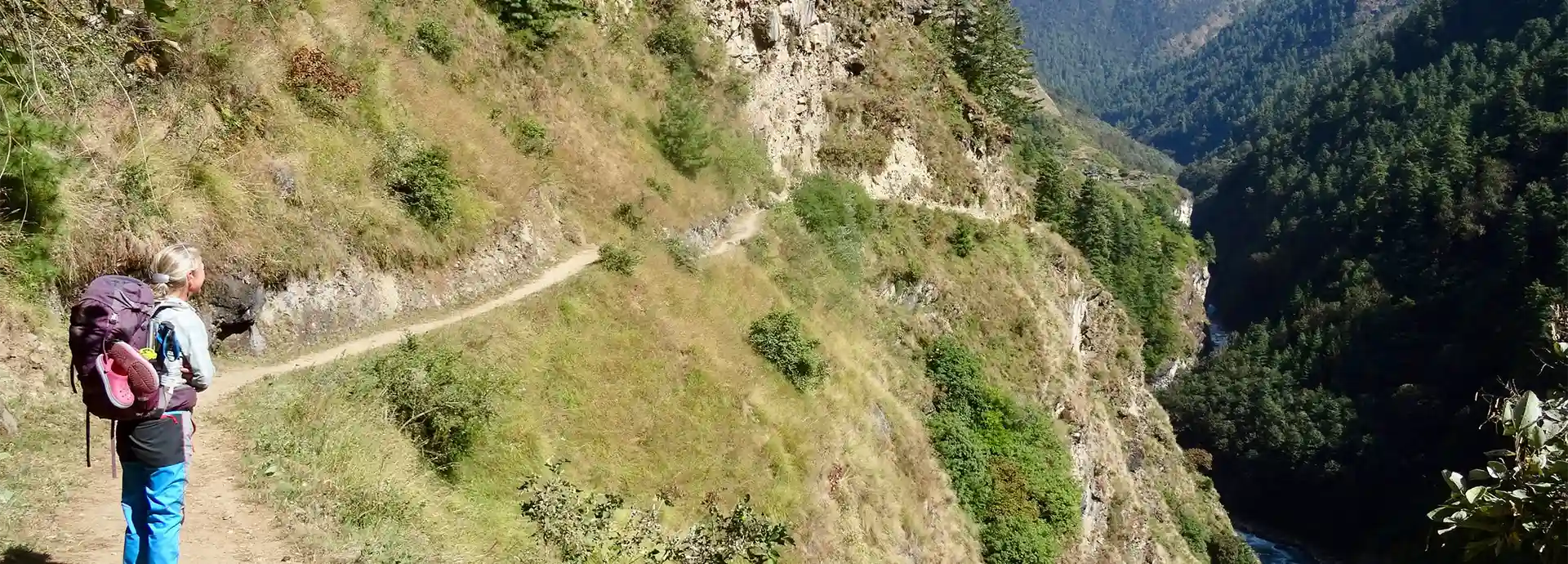
The 15-day Tsum Valley Trek delivers Nepal’s most sacred restricted-area trekking experience in the Manaslu region from Kathmandu, following the Budhi Gandaki River through Machha Khola, Jagat, Lokpa, Chumling, Chhokangparo, Nile, Mu Gompa, Rachen Gompa nunnery, Milarepa Cave, Gumba Lungdang, and Ganesh Himal Base Camp at 4,200 meters. Preserving an ancient Tibetan Buddhist sanctuary through geographic isolation and restricted permit controls, the Tsum Valley Trek combines unique monastery culture and spiritual heritage within the Manaslu Conservation Area. The 15-day Tsum Valley Trek structure provides proper pacing for the route’s cultural depth, allocating dedicated time for Mu Gompa, Rachen Gompa, Gumba Lungdang, and Ganesh Himal Base Camp, which shorter 11-day Tsum Valley Trek packages sacrifice. The comprehensive Tsum Valley Trek package covers Kathmandu transfers, hotel stays, Machha Khola road transport, 12 nights of teahouse and monastery accommodations, full-board meals, a licensed guide, and all required permits, including the Tsum Valley Restricted Area Permit and Manaslu Conservation Area permit.
The Tsum Valley Trek occupies a distinct market position as a self-contained sacred valley route with its own active monastery network and mountain views across Sirdibas, Lokpa, Chumling, Chekampar, Nile, and Chula. Unlike other regional circuits, local communities along the Tsum Valley Trek regard their heritage as sacred, with Mu Gompa, Rachen Gompa, and Gumba Lungdang preserving Tibetan Buddhist traditions in their original form. Reaching Gumba Lungdang monastery, with views of Ganesh Himal, and completing the 4,200-meter base camp approach on Days 10 and 11 requires the extra time built into this full Tsum Valley Trek itinerary.
Quick Answer: What Is the Tsum Valley Trek?
The Tsum Valley Trek is a 15-day sacred cultural trek in Nepal’s Manaslu region covering Machha Khola, Jagat, Lokpa, Chumling, Chhokangparo, Nile, Mu Gompa, Rachen Gompa, Gumba Lungdang, and Ganesh Himal Base Camp. The Tsum Valley Trek focuses on Tibetan-influenced Buddhist villages, ancient monasteries, sacred valley heritage, and views of Ganesh Himal. Restricted permits, licensed guide support, teahouse stays, and full-board meals are included in the Tsum Valley Trek package.
Quick Facts
| Duration | 15 Days (arrival to final departure) |
| Start / End | Kathmandu, Nepal |
| Trek Start | Machha Khola (road access from Kathmandu) |
| Trek End | Machha Khola (road return to Kathmandu) |
| Main Valley | Tsum Valley |
| Main Gateway | Lokpa |
| Main Monastery | Mu Gompa |
| Main Spiritual Site | Rachen Gompa |
| Optional Side Hike | Ganesh Himal Base Camp (~4,200 m) |
| Highest Point | Ganesh Himal Base Camp approach, approximately 4,200 m |
| Difficulty | Moderate to Challenging |
| Accommodation | Hotel in Kathmandu; Teahouse and Monastery Lodge on Trek |
| Meals | Breakfast in Kathmandu; Full board on all trek days |
| Culture | Tibetan-influenced Buddhist culture with Bon elements |
| Permits | Tsum Valley Restricted Area Permit + Manaslu Conservation Area Permit |
| Transport | Kathmandu–Machha Khola–Kathmandu by road (no domestic flight required) |
| Best Season | Spring (Mar–May); Autumn (Sep–Nov) |
| Guide | Licensed trekking guide – required for restricted area entry |
| Porter | Optional or included based on package tier |
Browse every route in our regional trekking guide or see all trekking packages we run. Travellers who like this trip also compare Manaslu Tsum Valley Trek, Langtang Ganja La Pass Trek, Nar Phu Valley Trek.
Before you book, read our Nepal trekking cost guide, check the trekking gear list, and review travel insurance requirements. Still deciding? Plan your trip with a local expert.
For official information, see the Nepal Tourism Board, the Trekking Agencies’ Association of Nepal and the Department of Immigration for visa rules, plus background on Tsum Valley background.

Included Meals

Trip staff

Transport

Accommodation

Trip Grade
Group Size
You arrive at Tribhuvan International Airport. Our representative meets you in the arrival hall and transfers you to your hotel in Kathmandu. Check in, rest after your flight, and spend the afternoon exploring Thamel or preparing the remaining gear. Our guide visits in the evening for a Day 2 briefing that covers the full 15-day Tsum Valley Trek itinerary, the restricted-area permit process, and the road transfer logistics to Machha Khola.
Accommodation:
Hotel

Maximum Altitude 1,400m/4,593ft (Kathmandu )
Difficulty
Day 2 covers processing the Tsum Valley Restricted Area Permit and the Manaslu Conservation Area Permit in Kathmandu. Submit a copy of your passport and passport-size photographs to our team before the Day 3 departure. Your guide walks through the permit checkpoint procedures, the cultural etiquette requirements for monastery visits in the restricted zone, and a review of the gear list for the 12 days of teahouse-and-monastery-lodge trekking ahead.
Use Day 2 to complete any remaining gear purchases in Thamel—warm jacket, trekking poles, and trail snacks are all available at competitive prices near the hotel. Confirm that your travel insurance covers trekking in Nepal and emergency evacuation before the briefing ends.
Accommodation:
Meals Breakfast
Maximum Altitude 1,400m/4,593ft (Hotel)
Difficulty
The Kathmandu-to-Machha Khola road trip takes 7 to 8 hours through Dhading district, Arughat Bazaar, and the progressively narrowing Budhi Gandaki River valley. The road quality improves from the Kathmandu valley exit to the Dhading highway, then becomes more rural on the final stretch from Arughat to Machha Khola. The drive delivers the first river-gorge scenery of the trip—the Budhi Gandaki narrows between steep forested walls before the overnight at the Machha Khola.
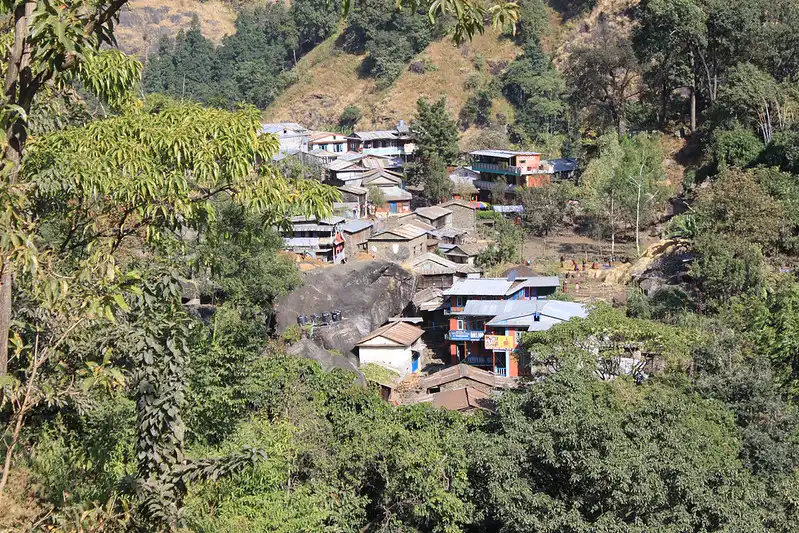
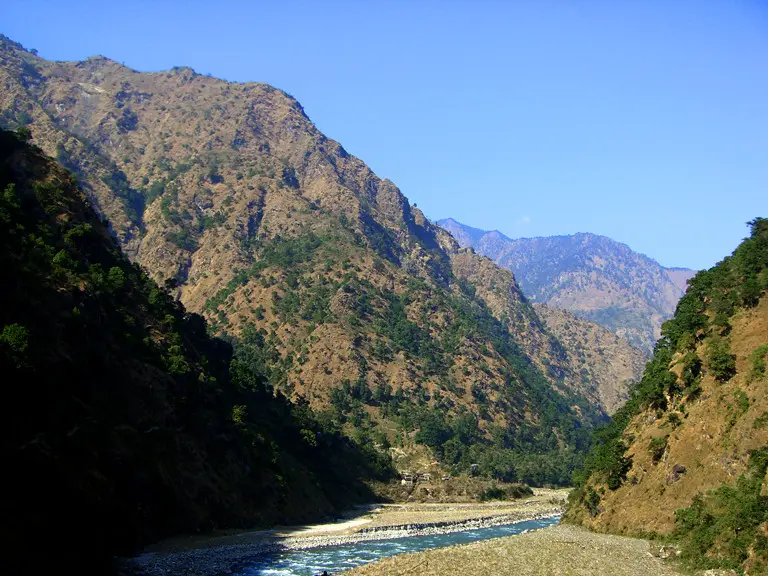

Time & Distance 8Hour, 160KM
Accommodation:
Teahouse
Meals Breakfast, Lunch, Dinner
Maximum Altitude 930m/3,051ft (Machha Khola)
Difficulty
Transportation Bus/Jeep
The first trekking day follows the Budhi Gandaki River northward through villages, suspension bridge crossings, and narrow valley trail sections to Jagat at approximately 1,340 meters. The walking time is approximately 5 to 6 hours. The Budhi Gandaki Valley trail establishes the route’s early character—river-gorge forest sections, small village teahouses, and the gradual altitude gain of the Manaslu approach corridor.
Time & Distance 6Hour, 22KM
Accommodation:
Teahouse
Meals Breakfast, Lunch, Dinner
Maximum Altitude 1,340m/4,396ft (Jagat)
Difficulty
Day 5 continues north through the higher Manaslu Conservation Area and branches east at the Lokpa trail junction toward the Tsum Valley restricted entry. Walking time runs approximately 6 to 7 hours. Lokpa, at approximately 2,240 meters, marks the permit checkpoint and the first village in the restricted valley with its distinct Tibetan-influenced cultural character. Your guide manages the permit inspection and introduces the group to the specific cultural protocols that apply from Lokpa onward.
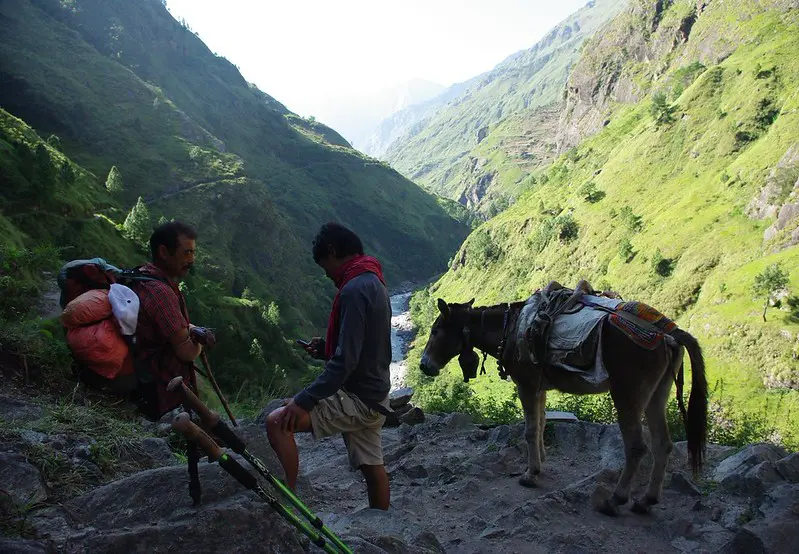
Time & Distance 7Hour, 22KM
Accommodation:
Teahouse
Meals Breakfast, Lunch, Dinner
Maximum Altitude 2,240m/7,349ft (Lokpa)
Difficulty
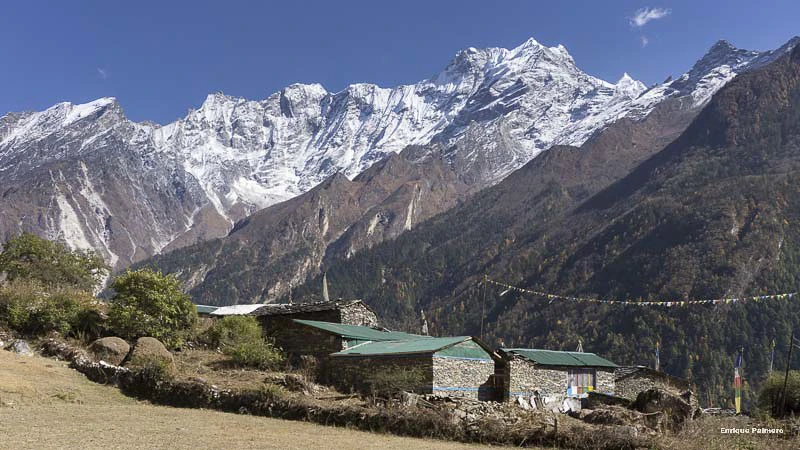
The Day 6 trail from Lokpa enters the lower Tsum Valley through forest sections, river crossings, and the first Tibetan-influenced villages, which define the route’s character over the next five days. Chumling, at approximately 2,386 meters, offers the first deep cultural overnight in the restricted valley—monastery compound visible above the main settlement, barley terraces running below the trail, and the distinct quiet of a village that commercial trekking has touched but not transformed. The walking time is approximately 4 to 5 hours.
Time & Distance 5Hour, 11KM
Accommodation:
Teahouse
Meals Breakfast, Lunch, Dinner
Maximum Altitude 2,386m/7,828ft (Chumling)
Difficulty
Day 7 climbs through the middle Tsum Valley from Chumling to Chhokangparo through village paths, open agricultural sections, and the progressively widening valley floor that gives the upper Tsum its characteristic open highland character. The walking time is approximately 5 to 6 hours. Chhokangparo provides the first clear views of the Ganesh Himal and Sringi Himal ridge systems to the north—the mountain profiles that the Gumba Lungdang and Base Camp section will bring into close range on Days 10 and 11.
Time & Distance 6Hour, 12KM
Accommodation:
Teahouse
Meals Breakfast, Lunch, Dinner
Maximum Altitude 3,031m/9,944ft (Chhokangparo)
Difficulty
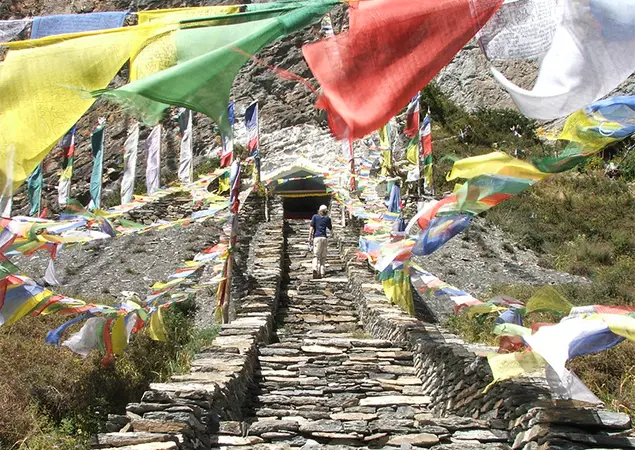
Day 8 continues through the upper Tsum Valley toward Nile at approximately 3,361 meters through Tibetan-influenced villages, mani walls, chortens, and monastery sites. The route passes the Milarepa Cave site—your guide arranges a visit if time and current trail conditions allow. The walking time to the Nile is approximately 5 to 6 hours without the Milarepa Cave detour, and 6 to 7 hours with it.
Nile’s mani wall—one of the longer sections in the valley—lines the trail approach with prayer wheels set into the stone face at regular intervals. The Day 8 arrival at the Nile at the correct altitude positions the group for the next morning’s Mu Gompa hike without excessive fatigue from a combined Milarepa Cave and long-valley-walk day.
Time & Distance 6Hour, 15KM
Accommodation:
Teahouse
Meals Breakfast, Lunch, Dinner
Maximum Altitude 3,500m/11,483ft (Milarepa Cave)
Difficulty
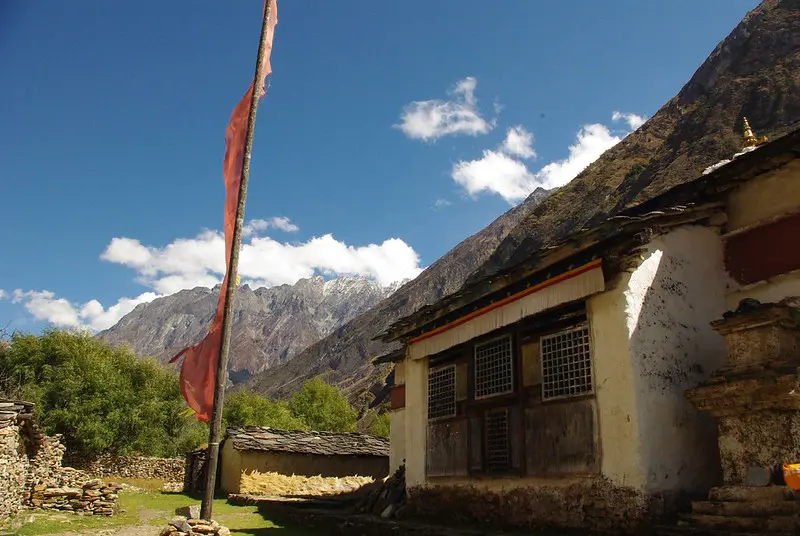
Day 9 begins with the morning hike from Nile to Mu Gompa—the highest and most spiritually significant monastery in Tsum Valley. The ascent takes approximately 2 to 3 hours on a clear trail above the Nile teahouse. Your guide coordinates the visit to the monastery’s interior with the resident monk community. Spend 45 to 60 minutes at the monastery for the visit and photography before beginning the return to Rachen Gompa.
After returning to Nile, the trail continues to Rachen Gompa—the valley’s main Buddhist nunnery. The Day 9 afternoon and overnight at Rachen Gompa’s teahouse or monastery lodge provides the second major monastery cultural encounter of the upper valley section. Total walking time for Day 9 is approximately 6-8 hours, including the ascent and descent of Mu Gompa.
Time & Distance 4Hour, 12KM
Accommodation:
Teahouse or monastery lodge
Meals Breakfast, Lunch, Dinner
Maximum Altitude 3,700m/12,139ft ( Mu Gompa )
Difficulty
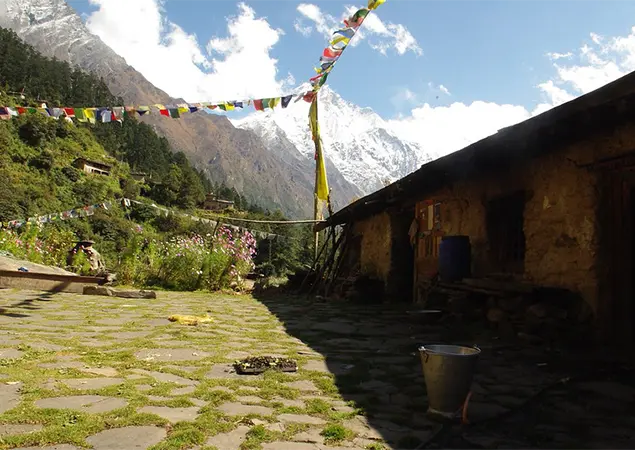
Day 10 descends from Rachen Gompa through the valley and takes the trail branch toward Gumba Lungdang—a quiet monastery area with direct views of Ganesh Himal that most short Tsum Valley packages miss. The walking time is approximately 5 to 6 hours. The Gumba Lungdang monastery’s position above the main valley gives the overnight setting a visual character different from the enclosed village settings of the previous nights.
Time & Distance 6Hour, 15KM
Accommodation:
Teahouse or monastery lodge
Meals Breakfast, Lunch, Dinner
Maximum Altitude 3,540m/11,614ft (Gumba Lungdang)
Difficulty
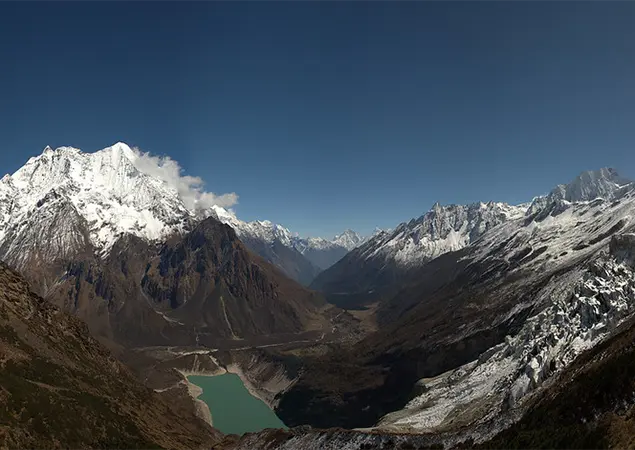
Day 11 is dedicated to the approach to Ganesh Himal Base Camp—the most physically demanding single day of the 15-day trek. The hike from Gumba Lungdang to approximately 4,200 meters gains significant altitude on a trail that passes through open alpine terrain, moraine sections, and the high pasture zone leading up to the Base Camp viewpoint. Ganesh Himal (7,422 m), Sringi Himal (7,161 m), and Himal Chuli (7,893 m) all appear in the northern panorama on clear mornings.
Your guide assesses weather conditions on Day 11 in the morning before the Base Camp departure—cloud, wind, or precipitation in the higher approach section can reduce viewpoint quality and increase trail difficulty, making it a demanding day that requires clear conditions to justify the altitude gain. Return to Gumba Lungdang for the second overnight. Total Day 11 walking time runs approximately 6 to 8 hours round-trip.
Time & Distance 7Hour, 10KM
Accommodation:
Teahouse or monastery lodge
Meals Breakfast, Lunch, Dinner
Maximum Altitude 4,200m/13,780ft (Ganesh Himal Base Camp)
Difficulty
Day 12 begins the return to Machha Khola via the main Tsum Valley trail, descending from Gumba Lungdang through forested sections, village paths, and river crossings, back toward Lokpa at approximately 2,240 meters. Walking time runs approximately 6 to 7 hours. The return descent covers terrain familiar from the approach days, but in the opposite direction—the valley views open differently on the descent, and the familiar mani walls and chortens take on a different meaning after encounters with the upper valley’s monasteries.
Time & Distance 7Hour, 14KM
Accommodation:
Teahouse
Meals Breakfast, Lunch, Dinner
Maximum Altitude 2,240m/7,349ft (Lokpa)
Difficulty
Day 13 retraces the approach route from Lokpa through the Manaslu Conservation Area toward Jagat, at an elevation of approximately 1,340 meters. The walking time is approximately 5 to 6 hours. The return through the lower approach corridor provides the physical decompression from the upper valley’s altitude that the body welcomes after five consecutive days above 2,500 meters.
Time & Distance 6Hour, 14KM
Accommodation:
Teahouse
Meals Breakfast, Lunch, Dinner
Maximum Altitude 1,340m/4,396ft (Jagat)
Difficulty
The final trekking day returns from Jagat to Machha Khola through the Budhi Gandaki Valley trail. The walking time is approximately 5 to 6 hours. Arrive in Machha Khola for the final overnight on the trail—celebrate the completed Tsum Valley Trek with your guide and porter over dinner, and organize tips before the Day 15 road return.
Time & Distance 6Hour, 22KM
Accommodation:
Teahouse
Meals Breakfast, Lunch, Dinner
Maximum Altitude 870m/2,854ft (Machha Khola)
Difficulty
The return from Machha Khola to Kathmandu takes 7 to 8 hours on the same Budhi Gandaki and Dhading district roads as the Day 3 approach—in reverse. Our pre-arranged vehicle departs in the morning, with a mid- to late-afternoon arrival in Kathmandu. Transfer to your hotel or onward travel connection. Day 15 marks the end of the 15-day Tsum Valley Trek package.
Time & Distance 8Hour, 160KM
Meals Breakfast, Lunch
Maximum Altitude 1,400m/4,593ft (Kathmandu)
Difficulty
The Tsum Valley Trek offers cultural depth that the Manaslu Circuit Trek—despite covering the same region—does not. The Manaslu Circuit focuses on Larkya La Pass at 5,106 meters and the high-altitude circuit logistics that a serious mountain pass demands. The Tsum Valley Trek focuses on the sacred valley’s monastery culture, village spiritual life, and the specific Buddhist cultural heritage protected by the restricted-area permit system. Both routes use the same Machha Khola approach. They diverge at Jagat—the Manaslu Circuit continues northward toward the high passes while the Tsum Valley route branches east into the restricted valley.
Mu Gompa and Rachen Gompa together represent the kind of active monastery culture that few Nepal trekking routes deliver at this level of authenticity and accessibility. Mu Gompa in the upper valley offers a high-altitude, monastic spiritual setting—remote, wind-exposed, and presided over by a monk community that maintains the valley’s Buddhist tradition in its most intact form. Rachen Gompa provides the nunnery counterpoint—a community of Buddhist nuns whose practice and community life give the return route a specifically different cultural character from the outward approach.
The Gumba Lungdang and Ganesh Himal Base Camp additions on Days 10 and 11 raise the 15-day package above short Tsum Valley routes by adding a mountain-view destination alongside its cultural content. Ganesh Himal (7,422 m) is visible from the Gumba Lungdang ridge and the Base Camp approach at approximately 4,200 meters, providing the Himalayan visual scale that a purely cultural village walk cannot deliver, and the physical demand of the Base Camp side hike earns its place in the 15-day schedule through the mountain panorama reward.
The road-based access on both ends—Kathmandu to Machha Khola and return—removes any reliance on domestic flights from the 15-day schedule. No Lukla weather uncertainty, no early morning mountain airstrip departure, and no international connection risk from a delayed domestic flight. The Kathmandu to Machha Khola drive takes 7 to 8 hours on roads that become progressively more scenic as the route climbs into the Budhi Gandaki valley system.
The Tsum Valley communities maintain a Tibetan-influenced Buddhist cultural tradition that the restricted-area permit system’s visitor controls actively protect. The sacred identity the valley holds in Buddhist tradition—described in ancient Tibetan Buddhist texts as a ‘beyul’ (hidden sacred valley)—gives Tsum a spiritual significance that the broader Manaslu Conservation Area’s trekking culture lacks. The cultural markers of this sacred identity appear at every trail junction throughout the valley: mani walls inscribed with Buddhist mantras, chortens marking the boundaries between sacred zones, prayer-flag lines connecting monastery ridgelines, and prayer wheels at every village entrance.
The villages of Chumling, Chhokangparo, Nile, and Chule all maintain the flat-roofed stone-house architecture characteristic of the Tibetan highland building tradition at altitudes where pitched roofs serve no drainage function. The households’ courtyards face south to maximize solar gain during the cold, highland winters. Barley, buckwheat, and potato cultivation occupy the terraced fields below each village. Yak and cattle move between the lower valley grazing areas and the upper pastures on a seasonal schedule that your guide explains at each village stop.
Respectful behavior in Tsum Valley’s villages and monastery areas follows the standard Tibetan Buddhist cultural protocol: walk clockwise around all chortens, mani walls, and monastery circuits; remove footwear before entering monastery and temple interiors; keep voices low during active puja ceremonies; ask before photographing monks, nuns, and community members at work in household or field settings. Your guide provides specific cultural protocols before each monastery visit and manages any cultural misunderstandings that arise between the trekking group and community members.
Tsum Valley is not simply a side trip from the Manaslu route. The valley carries its own sacred identity, a network of monasteries, and a community’s spiritual life, giving the Tsum Valley Trek a cultural depth that the Manaslu Circuit’s high-pass focus lacks.
Mu Gompa sits near the upper end of Tsum Valley at approximately 3,700 to 3,800 meters—the highest and most spiritually significant monastery in the valley’s religious network. The monastery’s position above the main valley settlements, its monk community’s consistent preservation of the Tibetan Buddhist tradition, and its proximity to the Ganesh Himal glacial system give Mu Gompa the unique combination of spiritual and geographical character that makes it the Tsum Valley Trek’s primary destination.
The Day 9 approach to Mu Gompa, after the overnight on the Nile, follows the upper-valley trail through increasingly open, alpine terrain. The monastery complex appears on the ridge above the valley floor with prayer flags marking the compound perimeter and the sound of morning puja horns audible from the lower approach trail. Your guide coordinates the monastery visit with the current ceremony schedule. It introduces the group to the monastery community in Nepali and Tibetan, the languages required for village visits in the restricted zone.
The Mu Gompa visit gives the Tsum Valley Trek its cultural high point in both geographic and experiential senses—the monastery’s altitude, its remote upper-valley position, and its active religious community create an encounter that the lower valley’s village stops approach but do not replicate. The view from the monastery compound across the upper Tsum Valley toward the Ganesh Himal range provides the visual backdrop that makes Mu Gompa’s setting as photographically distinctive as it is spiritually significant.
Mu Gompa is the Tsum Valley Trek’s most significant spiritual marker. Without the Mu Gompa section, the route is a cultural village walk with visits to monasteries. With Mu Gompa, the trek becomes a pilgrimage-quality cultural experience anchored by one of Nepal’s most remote and active high-altitude Buddhist monasteries.
Rachen Gompa occupies a distinct position in the Tsum Valley’s religious geography as the valley’s primary Buddhist nunnery—a community of nuns whose Tibetan Buddhist practice complements the monk community at Mu Gompa, making the complete Tsum Valley circuit culturally richer than a Mu Gompa-only itinerary. The nunnery’s buildings sit in a valley position accessible from the return route between Nile and Chhokangparo, making it a natural inclusion in the 15-day schedule without requiring a separate detour day.
The Rachen Gompa visit offers a cultural encounter distinct from that of Mu Gompa. The nunnery community’s religious practice, daily schedule, and community organization reflect the specific character of Tibetan Buddhist nun communities—a distinct tradition with its own visual, ceremonial, and community-life markers that monastery-only itineraries do not include. Your guide manages visit etiquette, arranges access to the monastery’s interior as permitted by the community’s schedule, and provides cultural context on the nunnery’s specific role in the valley’s religious life.
The Day 9 schedule covers both Mu Gompa and Rachen Gompa—the morning hike to Mu Gompa, followed by the return and the continuation to Rachen Gompa for the overnight. The combined day makes the Buddhist religious culture of the upper Tsum Valley accessible without requiring two separate days allocated to monastery visits. The Rachen Gompa teahouse, or monastery lodge, provides basic accommodation and is managed by the nunnery community as part of the trekking hospitality tradition.
Milarepa Cave is one of several sacred sites in the Himalayan region associated with Milarepa—the 11th-century Tibetan Buddhist yogi whose life story and meditation practice define a specific tradition of ascetic mountain spirituality within Tibetan Buddhism. The cave in Tsum Valley connects to the broader network of Milarepa sacred sites across the Himalayan range—sites that pilgrims visit as part of the tradition honoring Milarepa’s meditation legacy.
The cave visit on the Day 8 route from Chhokangparo to Nile depends on current trail conditions and the group’s pace, given that it is already a full walking day through the upper Tsum Valley’s Buddhist cultural scenery. Our itinerary notes Milarepa Cave as an option ‘if time and trail conditions allow’ rather than a guaranteed stop. This honest representation avoids the disappointment of arriving at the cave approach too late in the day for a proper visit or finding the trail section temporarily closed.
When the visit is possible, your guide provides the specific Buddhist cultural context that makes the cave encounter meaningful rather than generic—the specific meditation tradition Milarepa represents, the cave’s particular significance within the broader network of Himalayan sacred sites, and the respectful approach that a site of this spiritual significance requires from visiting trekkers.
Gumba Lungdang provides the Tsum Valley Trek’s second major monastery area—a quieter, more isolated compound than either Mu Gompa or Rachen Gompa, situated above the main valley with direct views of Ganesh Himal’s main massif. The Day 10 approach from Rachen Gompa follows the valley trail to the Gumba Lungdang monastery area, where the basic teahouse or monastery lodge provides the overnight base for the Day 11 Ganesh Himal Base Camp side hike.
The Ganesh Himal Base Camp side hike on Day 11 covers the most physically demanding single day of the Tsum Valley Trek. The approach from Gumba Lungdang to approximately 4,200 meters involves significant elevation gain along a trail that traverses open alpine terrain above the valley’s upper cultivation zone. The Base Camp viewpoint offers the closest approach to Ganesh Himal’s southern glacier system on the Tsum Valley route—a mountain panorama that includes Ganesh Himal’s main summit (7,422 m), Sringi Himal (7,161 m), and Himal Chuli (7,893 m) — in clear conditions.
The Gumba Lungdang and Ganesh Himal Base Camp combination sets the 15-day Tsum Valley Trek package apart from shorter 11- or 12-day versions that turn back from the valley without reaching this section. The monastery’s peaceful ridge setting, the open view of Ganesh Himal, and the physical achievement of the Base Camp approach all contribute to a day that most trekkers identify as one of the 15-day route’s strongest individual experiences.
Gumba Lungdang and Ganesh Himal Base Camp add mountain drama and physical challenge to the cultural scenery of the Tsum Valley. Without this section, the trek offers strong cultural encounters but limited mountain views. With it, the route provides both the sacred valley’s monastic depth and the Himalayan visual scale that the Ganesh Himal range delivers up close from the Base Camp approach.
Lokpa – Gateway to the Sacred Valley
Lokpa marks the specific point where the main Manaslu Conservation Area trail branches into the Tsum Valley restricted zone. The permit checkpoint at Lokpa requires documents from every trekker entering the valley—your guide conducts the inspection in Nepali without delay or confusion, as all permit documentation is prearranged in Kathmandu. The village itself provides a first cultural introduction to the Tsum Valley character: stone-walled houses with flat roofs, a small monastery above the main settlement, and the change in trail atmosphere that marks the transition from the Budhi Gandaki main route to the sacred valley corridor.
Chumling – First Deep Cultural Stop
Chumling, at approximately 2,386 meters in the lower Tsum Valley, offers the first overnight, with the complete Tibetan-influenced village character that defines the rest of the route. The forest and river approach from Lokpa gives way to the more open village setting at Chumling—barley terraces, flat-roofed stone houses, a monastery compound with prayer flags, and the specific hospitality of a village community that has hosted Buddhist pilgrims and trekking groups within its cultural framework for generations rather than purely on commercial terms.
Chhokangparo – Key Upper Settlement
Chhokangparo represents the upper Tsum Valley’s main settlement hub—a larger collection of households than Chumling, with open valley views toward the northern mountain ridges and the traditional home-and-farmland scenery that the valley’s agricultural economy produces. The Day 7 approach from Chumling through the open valley terrain gives the first clear views of the Ganesh Himal and Sringi Himal ridge systems to the north—mountain profiles that become progressively more detailed as the route climbs toward Nile and the Mu Gompa approach.
Nile – Upper Valley with Monastery Culture
Nile sits in the upper Tsum Valley at approximately 3,361 meters—the last major village before the Mu Gompa approach trail on Day 9. The village’s mani wall runs for a long length along the main trail approach, with prayer wheels set into the wall face at intervals for trekkers to rotate as they pass. Chortens mark the village boundaries and the trail junctions above the Nile toward the Mu Gompa approach. The Day 8 overnight in the Nile positions the group for the next morning’s Mu Gompa hikes at a comfortable starting altitude, reducing the Day 9 altitude gain to a manageable morning climb.
Hotel accommodation at your Kathmandu hotel on Days 1 and 2 provides city-standard comfort and breakfast before the trek begins. Teahouse accommodation covers the main Budhi Gandaki approach section from Machha Khola through Jagat and Lokpa—facilities at the standard Nepal mountain teahouse level with twin-sharing rooms, shared bathrooms, and basic bedding. The Tsum Valley section from Chumling through the upper valley uses the same teahouse infrastructure at generally simpler facilities than the main Manaslu approach.
Monastery lodge accommodation at Rachen Gompa and Gumba Lungdang provides the most distinctive overnight experience of the 15-day route. Monastery lodges typically offer simple twin rooms adjacent to or within the monastery compound, shared bathroom facilities, and the specific atmosphere of sleeping in an active religious site—prayer horns audible from the morning puja, butter lamp smell from the temple building, and the quiet of a community whose daily schedule runs on Buddhist ritual time rather than trekking group convenience.
Hot showers cost extra at most Tsum Valley teahouses—typically NPR 200-500. Wi-Fi functions unreliably above Chumling and does not work at the upper valley stops near Nile, Rachen Gompa, or Gumba Lungdang. Device charging is available at most lower valley stops and some upper valley teahouses, but may not be available at the monastery lodges.
The Tsum Valley Trek uses simple teahouses and monastery-style lodges along the trail. Guests should expect local hospitality, basic rooms, shared bathroom facilities, and limited commercial amenities in the upper sections of the restricted valley. Hotel Kathmandu frames both ends of the trek with city-standard comfort.
Trip Information
Full board meals cover all 12 trekking days from Day 3 through Day 14. Hotel breakfast is included in Kathmandu. Day 15 includes breakfast and lunch before the return to Kathmandu. Lunch and dinner in Kathmandu are not included in the package.
Tsum Valley teahouse food reflects the highland agricultural economy of the restricted zone. Dal bhat, using locally grown lentils, barley flour preparations, and seasonal vegetables from the village fields, provides the most authentic local food experience. Noodle soup, potato dishes, egg preparations, Tibetan bread (roti), and standard mountain teahouse menu items supplement the local staples at most stops. Monastery lodge meals in the upper valley may move closer to the standard highland subsistence diet—dal bhat and tea, with limited menu variation.
Food choice decreases with altitude and remoteness. Machha Khola and Jagat teahouses offer the widest menus. Chumling and Chhokangparo provide adequate standard options. Nile, Rachen Gompa, and Gumba Lungdang focus on the essential energy food that remote highland teahouses provide. Bottled water, soft drinks, alcohol, and snacks carry additional fees at all stops.
The package covers airport pickup and drop-off in Kathmandu, road transfer to Machha Khola on Day 3, and road return from Machha Khola to Kathmandu on Day 15. Private jeep or shared local transport depends on the package tier. The 7 to 8-hour road trip each way passes through the Dhading district and the Arughat approach—long but scenic in the upper sections. Private jeep upgrades offer greater comfort and scheduling flexibility across both road segments.
The Tsum Valley Trek requires two permits. The Tsum Valley Restricted Area Permit applies to the specific corridor from Sirdibas to Lokpa, Chumling, Chekampar, Nile, and Chule. The Nepal Tourism Board lists the permit fee as USD 40 per person per week from September to November and USD 30 per person per week from December to August, with USD 7 per day for each additional week in each season. The Manaslu Conservation Area Entry Permit costs NRs. 3,000 for foreign nationals.
Both permits come included in the package price. Our team arranges all documentation in Kathmandu before Day 3 departure. Bring two passport-size photographs and a clear copy of your passport to our team on Day 2. Your guide carries permit documentation for all checkpoint inspections throughout the 12 trekking days.
The TIMS card may apply under the current Nepal Tourism Board policy. Our team confirms the current TIMS requirement at the time of booking and, if applicable, includes the card. Permit fees are subject to annual government revisions—our team confirms the exact current pricing at the time of the booking inquiry.
The Tsum Valley Trek rates as moderate to challenging. The moderate rating applies to the Budhi Gandaki approach section and the main valley trail between the lower villages. The challenging elements include the longer walking days (5 to 8 hours, depending on the section), the remote-village trail terrain in the upper valley, the basic accommodation at Rachen Gompa and Gumba Lungdang, and the Ganesh Himal Base Camp side hike at approximately 4,200 meters on Day 11.
No technical climbing, no high-altitude pass crossings, and no glacier travel appear on the route. The Day 11 Ganesh Himal Base Camp hike represents the most physically demanding single day, with significant altitude gain on an unmaintained trail above the upper cultivation zone. Fit trekkers with basic multi-day hiking preparation can handle the route comfortably. Trekking poles provide a clear benefit on the long descents on Day 12 and Day 13 back toward Machha Khola.
| Season | Months | Conditions | Best? |
| Spring | March to May | Mild temperatures, rhododendron blooms on the lower Budhi Gandaki approaches, clear morning views from Mu Gompa, and Gumba Lungdang. One of the best seasons for the full Tsum Valley circuit. | Yes |
| Autumn | Sep to Nov | Best mountain visibility and most stable weather for the complete route. October offers the clearest views of Ganesh Himal from Gumba Lungdang and the Base Camp approach. | Yes – Best |
| Winter | Dec to Feb | Cold mornings, possible snow on higher sections near Mu Gompa and Gumba Lungdang. Quiet trails with few trekkers. Manageable with full warm gear. | Possible |
| Monsoon | Jun to Aug | Rain, landslide risk on road and lower trail sections, slippery village paths, and clouds blocking mountain views. Not recommended for most travelers. | No |
Spring and autumn provide the strongest trekking conditions. Spring brings rhododendron blooms in the lower sections of the Budhi Gandaki forest between Machha Khola and Jagat. Autumn delivers the clearest mountain views from Gumba Lungdang and the Ganesh Himal Base Camp approach. Book October departures at least 4 to 5 weeks in advance—peak season fills rooms at Chhokangparo and Nile teahouse quickly.
Porter service is optional in the base package and available as a paid upgrade. The Day 9 combined Mu Gompa hike and Rachen Gompa approach, and the Day 11 Ganesh Himal Base Camp side hike both represent sections where the main bag weight most directly affects walking comfort and enjoyment. One porter carries a maximum of 20 kilograms shared between two trekkers. You carry your own daypack with water, camera, snacks, and personal items throughout the trail.
Optional Add-ons
Travel insurance is compulsory. Your policy must cover trekking in Nepal, emergency helicopter evacuation, medical treatment, road delays, trip cancellation, and lost baggage. The Tsum Valley Trek reaches approximately 4,200 meters at the Ganesh Himal Base Camp approach—confirm your policy’s altitude coverage before purchase. Helicopter evacuation from the upper Tsum Valley costs USD 2,000 to USD 4,000, depending on the specific pickup location.
The remote, restricted-area character of the route makes insurance more important than its maximum altitude suggests—limited road access to any section above Machha Khola means helicopter evacuation is the primary emergency extraction option throughout the 12 trekking days.
Pack for temperature conditions from warm Machha Khola afternoons to cold Gumba Lungdang mornings and the Ganesh Himal Base Camp approach:
Walk clockwise around all chortens and mani walls in the restricted valley—the Buddhist convention applies throughout the Tsum Valley from Lokpa through Gumba Lungdang. Spin prayer wheels clockwise at every monastery perimeter where they appear. Remove footwear before entering the interiors of the monastery and temple complexes at Chumling, Chhokangparo, Mu Gompa, Rachen Gompa, and Gumba Lungdang.
Dress modestly in all Tsum Valley village and monastery settings. The sacred valley’s cultural identity makes modest dress more important here than on standard Nepal trekking routes, where commercial tourism has normalized more casual visitor dress codes. Your guide provides specific dress guidance before monastery visits.
Support local teahouses throughout the trek rather than carrying pre-packaged commercial food from Kathmandu. The Tsum Valley’s restricted-area status means the community economy receives less trekking tourism income than the main Manaslu approach corridor. Your meal spending at Chumling, Chhokangparo, Nile, and Gumba Lungdang generates direct income for households in a restricted zone, where the permit-based visitor controls limit overall income potential.
Safety and Health
Your licensed guide manages safety across all 12 trekking days. Safety responsibilities include pace management on the longer walking days (especially Days 9 and 11), permit checkpoint management at Lokpa, Milarepa Cave timing assessment on Day 8, and weather assessment for the Day 11 Ganesh Himal Base Camp approach.
The Tsum Valley Trek’s highest point, at approximately 4,200 meters on the approach to Ganesh Himal Base Camp, lies below the altitude threshold at which serious acclimatization management is necessary for most healthy adults. Mild fatigue and mild headache in the upper valley are manageable with hydration, rest, and a full dinner. Symptoms that worsen rather than improve after rest and hydration require you to communicate with your guide before proceeding.
Road travel for Day 3 and Day 15 transfers follows standard Nepal mountain-driving safety considerations. Our pre-arranged drivers are familiar with the Kathmandu-Machha Khola road and maintain appropriate speeds on the rural approach sections. Road delays from occasional landslides on the upper Budhi Gandaki approach road are manageable seasonal occurrences rather than regular disruptions.
Anyone who wants a complete sacred Nepal trekking experience in a restricted valley without camping logistics, high-altitude pass risk, or domestic flight dependency
| Trek | Duration | Difficulty | Main Style | Highest Focus | Best For |
| Tsum Valley Trek | 15 Days | Mod–Challenging | Sacred valley, monasteries | Ganesh Himal Base Camp | Cultural trekkers |
| Manaslu Circuit Trek | 14–18 Days | Challenging | High-pass circuit | Larkya La Pass | High-pass trekkers |
| Manaslu Tsum Valley Trek | 19–24 Days | Challenging | Culture + high pass | Mu Gompa + Larkya La | Long-route trekkers |
| Tamang Heritage Trek | 9 Days | Moderate | Tamang culture | Nagthali (~3,165 m) | Short cultural trekkers |
| Nar Phu Valley Trek | 10–15 Days | Challenging | Restricted valley | Kang La Pass | Remote valley trekkers |
Our guides for the Tsum Valley Trek carry specific restricted area experience—current knowledge of the Lokpa permit checkpoint procedures, direct relationships with the Chumling, Chhokangparo, and Nile teahouse operators, familiarity with the Mu Gompa and Rachen Gompa monastery visit protocols, and the Day 8 Milarepa Cave timing assessment that requires current local knowledge rather than standard itinerary scheduling.
Permit fees stated in this package reflect current Nepal Tourism Board pricing for the Tsum Valley restricted corridor and the Manaslu Conservation Area. Both fee structures are subject to annual government revision. Our team confirms the exact current pricing at the time of the booking inquiry rather than publishing potentially outdated figures. All permit processing runs through official government channels, with documentation reaching your guide before the Day 3 Machha Khola departure.
The Manaslu Circuit Trek focuses on Larkya La Pass at 5,106 meters—a serious high-altitude pass that the circuit’s 14 to 18-day schedule builds toward as its primary physical achievement. The Tsum Valley Trek focuses on the sacred valley’s monastery culture, village spiritual life, and Tibetan-influenced Buddhist heritage as its primary purpose, with the Ganesh Himal Base Camp side hike adding mountain views at approximately 4,200 meters without a technical pass crossing. Tsum Valley suits culture-focused trekkers. Manaslu Circuit suits high-pass trekkers.
Mu Gompa is the primary spiritual destination of the Tsum Valley Trek. This high monastery anchors the sacred valley’s religious identity and provides the cultural high point no lower-valley village stop can match in altitude, remoteness, or spiritual significance. Without Mu Gompa, the Tsum Valley Trek is a cultural village walk with visits to monasteries. With Mu Gompa, the route delivers a genuine high-monastery pilgrimage destination alongside the village cultural encounters.
Rachen Gompa adds a Buddhist nunnery cultural dimension, making the complete Tsum Valley circuit more meaningful than a Mu Gompa-only itinerary. The nunnery’s specific community character—different from the monk communities at Mu Gompa and Gumba Lungdang—provides a cultural encounter that monastery-only routes do not include. The return route’s overnight stop at Rachen Gompa converts Day 9’s schedule from a challenging single-monastery day into a complete upper-valley Buddhist cultural circuit.
Gumba Lungdang’s quiet monastery-ridge setting and the Ganesh Himal Base Camp side hike set the 15-day Tsum Valley Trek package apart from shorter 11- to 12-day versions that turn back from the valley before reaching the northern section. The Gumba Lungdang monastery adds a third cultural encounter to the monasteries of Mu Gompa and Rachen Gompa. The Ganesh Himal Base Camp approach at 4,200 meters adds physical challenge and the mountain-view scale that transforms the route from a purely cultural walk into a complete Nepal trekking experience.
The Tsum Valley restricted-area permit requirement is not a mere formality—it establishes visitor controls that preserve the valley’s cultural environment. The permit fees—USD 40 per person per week in peak season and USD 30 per person per week in the off-season—reflect the Nepal Tourism Board’s seasonal pricing structure for the specific restricted corridor. Both the Tsum Valley permit and the Manaslu Conservation Area permit require agency handling and the presence of a licensed guide throughout the restricted zone. Our team manages all documentation prior to departure, and your guide carries complete records of all checkpoint inspections.
The booking process completes in under 10 minutes:
The Tsum Valley Trek 15-day package delivers the most complete sacred valley cultural trekking experience available in the Manaslu region—Tibetan-influenced villages of Chumling, Chhokangparo, and Nile; Mu Gompa and Rachen Gompa monastery and nunnery cultural encounters; Milarepa Cave when conditions allow; Gumba Lungdang’s monastery ridge setting; and Ganesh Himal Base Camp at approximately 4,200 meters—with guide support, permit handling, teahouse and monastery lodge accommodation, full board trek meals, and road transport on both ends.
The route suits culture-focused fit trekkers who want the Manaslu region’s most sacred and culturally authentic restricted-area experience without the commitment to the Larkya La Pass. The 15-day structure provides the complete circuit that shorter versions cannot—both the upper valley’s monastery spiritual depth and the Gumba Lungdang section’s mountain-view achievement in a single well-paced itinerary.
Book now to secure your permit processing timeline and teahouse reservations before spring or autumn peak season fills available slots. Contact our team for group pricing, itinerary adjustments, or Manaslu Circuit extension options. We respond within 4 hours.
The full package runs 15 days from arrival in Kathmandu on Day 1 to Day 15, from Machha Khola to Kathmandu road return. The active trekking section covers 12 days from Day 3 through Day 14. Days 1 and 2 cover the Kathmandu hotel stay and permit processing. Day 15 covers the road return.
Yes. Nepal’s Tourism Board designates Tsum Valley as a restricted trekking corridor, requiring a separate permit from the standard Manaslu Conservation Area entry permit. The restricted corridor covers Sirdibas, Lokpa, Chumling, Chekampar, Nile, and Chule. Independent trekking without a licensed guide and agency-arranged permit is not permitted.
Two permits apply: the Tsum Valley Restricted Area Permit and the Manaslu Conservation Area Entry Permit. The restricted area permit costs USD 40 per person per week from September to November and USD 30 per person per week from December to August, with USD 7 per day beyond one week in each season. The Manaslu Conservation Area permit costs NRs. 3,000 for foreign nationals. Both come included in the package price.
The trek rates as moderate to challenging. The most demanding single day is Day 11’s Ganesh Himal Base Camp side hike at approximately 4,200 meters—approximately 6 to 8 hours of walking with significant altitude gain on an unmaintained upper trail. On other days, run 5 to 7 hours on the village trail terrain. Fit trekkers with basic multi-day hiking preparation can handle the route comfortably.
No. The Tsum Valley Trek does not include the Manaslu Circuit’s Larkya La Pass crossing or the full circuit route. The trek shares the Machha Khola to Jagat approach section with the Manaslu Circuit before branching east into the Tsum Valley restricted zone at Lokpa. A Manaslu Circuit Trek extension is available as an optional add-on.
Mu Gompa is the highest and most spiritually significant Buddhist monastery in Tsum Valley, located near the upper end of the restricted valley at approximately 3,700 to 3,800 meters. The monastery houses an active monk community, maintains the valley’s specific Tibetan Buddhist tradition, and serves as the primary spiritual destination of the Tsum Valley Trek. Your guide coordinates a visit to the monastery interior on Day 9.
Rachen Gompa is the Buddhist nunnery of Tsum Valley—an active community of Buddhist nuns whose practice tradition complements the monk community at Mu Gompa. The nunnery sits on the return route from the upper valley and provides the overnight accommodation for the Day 9 return from Mu Gompa. The visit adds nunnery cultural depth to the standard monastery-focused Tsum Valley itinerary.
Yes, when trail conditions and Day 8 timing allow. Our itinerary includes Milarepa Cave as a stop on the Day 8 route from Chhokangparo to Nile, if time and trail conditions allow.’ Your guide assesses the timing on Day 8 morning and includes the cave visit when it fits comfortably within the full walking day.
Yes. The Ganesh Himal Base Camp side hike is included in the 15-day itinerary on Day 11 from the Gumba Lungdang overnight. The hike reaches approximately 4,200 meters and represents the most physically demanding single day of the trek. Your guide assesses weather conditions on Day 11 in the morning before departure—cloudy or poor visibility reduces the viewpoint value and may affect the schedule.
Two nights at a Kathmandu hotel with private bathroom, hot water, Wi-Fi, and breakfast. On the trail, teahouses from Machha Khola through the lower valley and teahouses with monastery lodge options at Rachen Gompa and Gumba Lungdang for 12 nights.
Yes. Full board—breakfast, lunch, and dinner—comes included on all 12 trekking days from Day 3 through Day 14. Kathmandu hotel breakfast is included on Day 2 and Day 3 mornings. Lunch and dinner in Kathmandu are not included. Bottled water, soft drinks, and alcohol carry additional fees.
Porter service is optional in the base package and available as a paid upgrade. One porter can carry a maximum of 20 kilograms between two trekkers. Adding a porter is particularly valuable for the Day 9 combined Mu Gompa and Rachen Gompa day and the Day 11 Ganesh Himal Base Camp approach.
Spring (March to May) and autumn (September to November) both provide excellent conditions. Autumn’s October window delivers the clearest Ganesh Himal views from Gumba Lungdang and the Base Camp approach. Spring adds rhododendron blooms on the lower Budhi Gandaki forest approach section.
Yes. Your policy must cover trekking in Nepal, emergency helicopter evacuation, medical treatment, road delays, and trip cancellation. The restricted valley has limited road access for evacuation—helicopter extraction is the primary option from the upper valley sections.
Yes. Our Manaslu Tsum Valley Trek package covers the combined route, combining the Tsum Valley cultural circuit and the Manaslu Circuit’s Larkya La Pass crossing, in a 19 to 24-day format. Contact our team before booking if you want the combined package rather than the Tsum Valley standalone.