


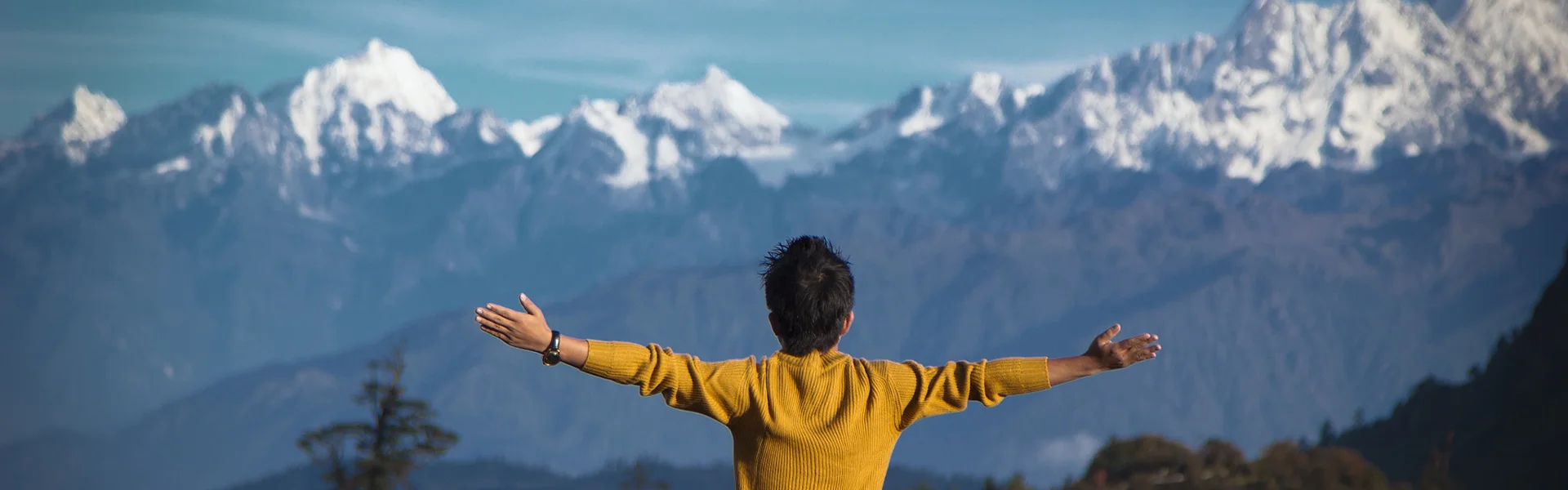

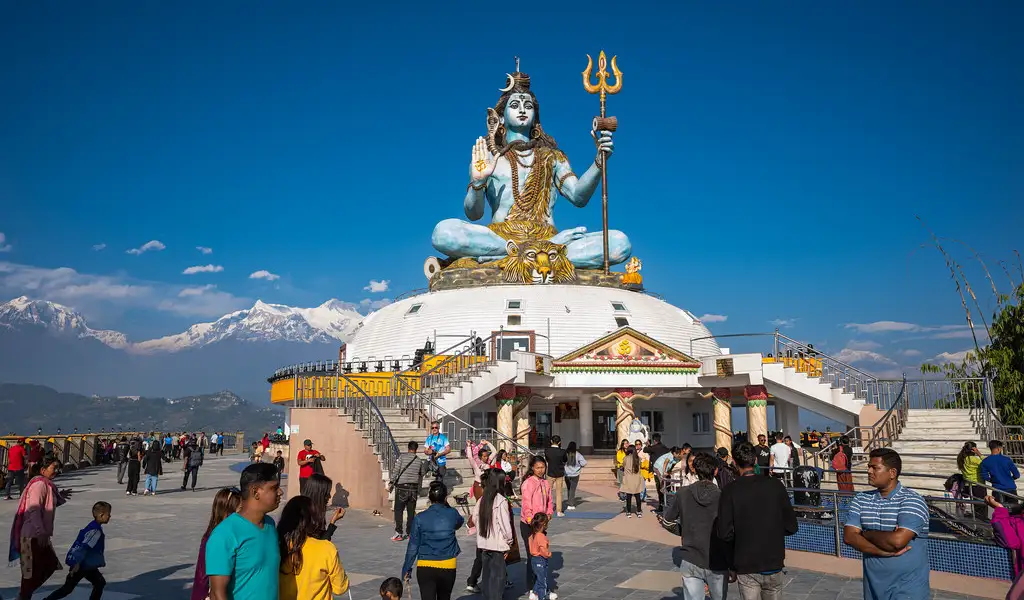
The 108-foot-tall statue of Lord Shiva on the ridge of the Pumdikot hill near Pokhara is the second-tallest Shiva statue in Nepal. The figure looks towards the Annapurna range, blending scenery with spirituality. Visitors can pause, relax, and enjoy the stunning views of Phewa Lake and the expansive Pokhara Valley here. Landscape paths and towers surround the hill. This statue is sacred for pilgrims and a quiet escape with the views of the Himalayas for travelers.
Where Is Pumdikot Hill?
Location: Pumdikot sits in Pumdi Bhumdi Village. It is about 10-13 km south of Pokhara’s Lakeside and on the east side of the highway to Pokhara. The hilltop is approximately 1,500 meters above sea level. There is Begnas Lake in the northeast and Phewa Lake in the northwest.
How to get there: The easiest option to reach Pumdikot Hill is to hire a taxi from Lakeside. This 20–30-minute drive costs about NPR 800-1200 one way. You can say “Shiva temple at Pumdi Bhumdi” or “Pumdikot” to the driver, and they’ll take you. You’ll ascend through a pine forest, then arrive at the base parking area after turning onto a narrow hill road. You must walk from the parking lot to the temple steps.
You can also rent a motorbike for NPR 300-500 per day. The paid road is steep, so ride carefully and wear a helmet. Alternatively, you can take local buses or tempos towards Dhikurpokhari or Halchowk pass near Pumdi Bhumdi village. After dropping there, you can hike 20-30 minutes along the village path to reach the statue.
If you don’t want to take the road vehicles, hike to the hill. One trail starts at Peace Pagoda, crosses Queen’s Forest, and reaches Pumdikot in about 45 minutes. Another begins from the southern end of the Lakeside. The trail climbs through farmland and villages, taking about 2 to 3 hours. Both trails are steep but rewarding.
Accessibility: You’ll climb 108 concrete steps to reach the statue’s base. There’s a small ramp for wheelchairs, but it’s very steep. There are benches and shaded areas at two levels where you can enjoy the shrine and views without climbing up.
Spiritual Significance of Pumdikot Shiva Statue
Nepal’s Second Tallest Shiva: After the 143-foot Kailashnath Mahadev near Kathmandu, the Pumdikot statue is the second-tallest Shiva statue in Nepal. Locals see it as a symbol of devotion and cultural identity of Pokhara.
The 108 Feet Statue: The Shiva statue stands 51 feet tall, placed on a 57-foot pedestal, making its total height 108 feet. In Hinduism, this number carries deep meaning, symbolizing spiritual wholeness and harmony. It features Shiva’s third eye, the crescent moon, the trishul (trident), and a calm smile from Shiva, symbolizing divine compassion.
Shiva Lingam and Sacred Objects: 108 smaller Shiva lingams encircle the base. Devotees perform rituals by pouring milk or water as a blessing here. There’s also a massive carved Shiva damaru, believed to be the largest in Asia.
Temple and Rituals: Currently, people are building a white marble shrine just behind the statue. The resident priest who performs daily puja tends to it. This site is vivacious during Maha Shivaratri in February or March. Pilgrims light hundreds of clay lamps, do jalabhisek (pouring milk and honey on lingams and the central statue), and share free vegetarian meals.
Village Culture: The surrounding community is mainly Hindu. You can see families arrive for morning prayers with red tikes on their foreheads. Local schools also bring students here to learn about their faith and heritage.
Historical Note: Pumdikot once held a small fortress and temple during ancient Nepal. The statue was completed recently with funding from community donations and local labor. Today, it stands as a sacred monument and a landmark for Pokhara.
What to Expect at Pumdikot Hill
The Ascent: The trail to Pumdikot passes through corn, millet, and banana grove farmland. You’ll see small prayer wheels in the paths and can spin them for blessings. Many people pause at every 20th or 50th step when climbing the 108 steps.
Arrival: The white-marble plaza opens wide at the top. There’s a towering statue of Lord Shiva in the centre. Worshippers drape the statue with red or yellow shawls. There are two brightly painted drums at his feet that visitors often spin after placing a coin inside.
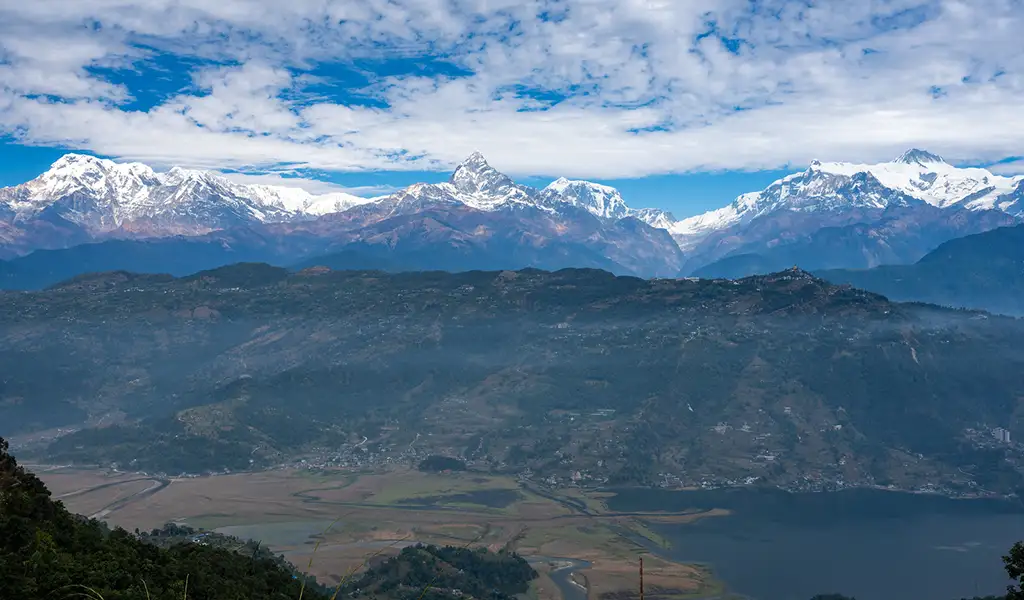
Panoramic Views: The landscape is beautiful in each direction. You can see Annapurna South, Hiunchuli, and Gangapurna to your west and Machhapuchhre to the north, behind the Shiva statue. Phewa Lake shines below to your southeast.
Sunrise and Sunset: Pumdikot is popular for its golden hours. The first ray of light strikes Shiva’s face directly during sunrise. You can see the orange hills and the statue glowing in the fading light during sunset. Even on cloudy evenings, the colors are beautiful during the sunset.
Atmosphere: Unlike many busy shrines, Pumdikot often feels quiet. Pilgrims murmur, and you may even hear the sound of a flute. Local children run around the plaza. The blend of quiet devotion and village life balances the hill.
Wildlife: Watch out for Himalayan vultures and eagles circling overhead in the sky. You can also see a small Himalayan Bulbul between the trees. You may come across a temple cow wandering on the ground, and monkeys may occasionally appear.
Photography Highlights: The 54th step offers one of the best photo angles. You can click the valley below with the Shiva frame. The huge carved damaru is a one-of-a-kind detail worth capturing.
Quiet Reflection: The plaza features benches and steps where you can sit, meditate, or reflect. Some bring incense or flowers to place at Shiva’s feet.
Family-Friendly Touches: Although the climb may be challenging for younger children, most enjoy the adventure of spotting the statue. Local school groups often visit for religious recitations and are happy to sing or chat with visitors.
Practical Notes: The steps can be slippery with moss in the monsoon, and winter may bring frost before sunrise. You need shoes with a good grip when hiking to the top. Villagers sell seasonal fruits, such as guava, plum, or orange, at the base. It’s a refreshing treat after the climb. You can add a string of prayer flags to the tall poles for around NPR 100. Make a wish while tying them.
Visitor Reflections: Many visitors describe Pumdikot as a miniature Himalayan trip. The combination of farmland, sacred steps, monumental structure, mountains, and village makes the place feel like home.
Activities
Temple Offerings: A small shrine with a consecrated Shiva lingam is located behind the great Shiva statue. You can pour milk, water, or yogurt over it as an act of devotion. If you find a damaru nearby, you can spin it and hear the sound. Local priests sometimes drape a (khata) around a pilgrim’s shoulders.
Ring the Damaru Bell: You’ll see a bell beside Shiva’s massive trishul. You can twit or ring it to hear a deep, sonorous chime. Locals believe the sound drives away negative energy and invites divine protection.
Climb the Viewing Tower: You can ascend a little on the short steel tower to rise above the trees and get a panoramic view of Pokhara Valley and the Annapurna range. On the tower’s ceiling, you’ll also notice a carving of Mount Sumery, the mythical world’s mountain.
Meditation and Yoga: The quiet setting makes Pumdikot a natural place for reflection. Some visitors meditate facing east while others practice gentle yoga.
Evening Walks: You can arrive at the place at dawn, around 5:30 PM, to see the lights illuminate the Shiva statue. Walk as the light shifts from sunset to spotlight.
Photography: Pumdikot offers beautiful views in any weather. On clear days, you can use a polarizing filter to sharpen the sky and mountains. Many visitors playfully pose with Shiva’s towering feet as a backdrop.
Souvenir: Small stalls sell prasad (blessed sweets) and orange silk shawls for about NPR 100-200. You can purchase from them to support the site’s upkeep and wear the shawl to add a special touch to the visit.
Volunteer Efforts: Occasionally, trekking groups organize clean-up drives or repaint the steps. You can join in if you see locals or volunteers working.
Evening Lamp Ceremony: The shrine glows with hundreds of clay lamps during festival nights or special occasions. Many visitors say it’s one of the most magical monuments they have ever visited.
Best Time to Visit Pumdikot Hill
Season: Late autumn and winter offer the sharpest views, accompanied by crisp air and clear skies. The hills are lush and green in summer, but the haze hides the mountains. You can visit the statue from October to November or from December to February for the best conditions.
Time of Day: Early morning, from 5:00 to 7:00 AM, feels magical. You’ll climb the steps under lamplight and teach the plaza just before sunrise. Late afternoon, from 3:00 to 5:30 PM, brings golden light and thinner crowds. Midday can be harsh with the white statue glaring under the sun.
Weather: You’ll see the beautiful Himalaya vista on clear days, but fog and mist can block it quickly. If the sky is clear, you’ll get rewarded with cool air and a peaceful walk. Use a light raincoat during rainy months.
Festivals: Pumdikot receives many devotees during Maha Shivaratri and Dashain. Rituals, lamps, and music transform Pumdikot into a festive site. These times are vibrant, but the crowds can be substantial. For a quieter experience, consider visiting on weekdays or during non-festival periods.
Day or Night: Evening visits are especially memorable. Floodlights make the statue shine against the dark sky. Bring a flashlight if you plan to stay past sunset, as the stairway may not have sufficient lighting.
Practical Tips for Visiting Pumdikot Hill
Footwear: Wear comfortable clothes with good walking or hiking shoes. Dress in layers as mornings and evenings may be cold. Cover your shoulders and knees when visiting, and wear a sun hat or a cap. You’ll need rain gear if you’re visiting during the monsoon.
What to bring: Carry about 2L of water and some light snacks. If you’re thinking of clicking pictures, bring a camera or a phone with extra batteries. You also need sunscreen, sunglasses, and a small first-aid kit. Pack an umbrella or proper rain gear if you visit during the wet season.
Costs: There’s no entrance fee. If you’re taking a taxi, it’s best to agree on the round-trip price in advance, as drivers often wait for about two hours. Parking is about NPR 200-200. You can leave donations in the temple boxes and buy small items in cafes and stalls at the base.
Etiquette: Stick to one side when climbing stairs to allow others to pass. Speak softly and avoid interrupting worshippers or monks. If the bins are full, you should carry your trash and keep the shrine clean.
Safety: The 108 stairs are easy to navigate, but watch out for loose gravel. The steps may be slippery after rain, so use railings or ropes for support. Following the trail markers carefully if you’re trekking up instead of driving.
Facilities: You can buy tea, Tibetan bread, and snacks for NPR 150-300 at the small cafe at the base. You can also refill your bottle here. A single squat-style toilet is in the parking area.
Guides: You don’t need a guide as the path is simple. However, local guides can share stories about Shiva, Pumdikot’s history, and village customs. You can pay them an appropriate amount to show your appreciation.
Other tips: Mobile phone reception is generally reliable. If you plan to climb before dawn, arrange for return transport in advance or descend before dark.
Nearby Attractions to Combine with Your Visit
Shanti Stupa (World Peace Pagoda): Located about 7 km west of Pumdikot, this Buddhist stupa is one of the most iconic landmarks of Pokhara. You can hike there for 1 to 2 hours through forest trails or take a 15-minute taxi. It also offers views of the Annapurna range and a peaceful Buddhist atmosphere.
Phewa Lake: After climbing, you can relax with a boat ride on Phewa Lake. Visit the Tal Barahi Temple on the island or take a lakeside walk.
Devi’s Falls and Gupteshwor Cave: These two sights are a 20-minute drive north. Devi’s Falls flows underground, and Gupteshwor Cave is a sacred cave with limestone formations.
Sarangkot: Sarangkot is 15km from the Lakeside and is one of Nepal’s most popular sunrise viewpoints. Many travelers combine sunrise at Pumdikot with the morning at Sarangkot to compare the views.
Tashi Palkhel Tibetan Camp: Located in Hemja, about 8 km away, this Tibetan refugee camp offers Tibetan tea, snacks, and handicrafts. It’s a good cultural stop to learn about Pokhara’s Tibetan community.
Begnas and Rupa Lakes: These twin lakes are quieter than Phewa Lake. You can take a boat ride in Begnas Lake or stay overnight at the Lakeside to get a break from the city.
Bijayapur Cave: You can detour to Bijayapur Cave (Jhule), a small, less-visited cave with natural formations and shrines. It offers a peaceful contrast to Pokhara’s busier sites.
Local Villages: You can visit the lol villages to see re-roofed homes, terraced fields, and forest trails. These villages, located near Pumdi Bhumdi and Ajambari, offer a glimpse into everyday rural life.
Community and Environmental Impact
Pumdikot is a pilgrimage site with a story of community development. The statue project created jobs for local villagers as masons, carpenters, and metal sculptors. Local labor built the steps and paths of the site. Part of the donations collected today supports village schools and development programs. School children plant trees around Pumdi Bhumdi every year to help restore the area.
The villagers see themselves as custodians of the shrine. Students also often sweep the steps as part of the temple service. The entire village gathers to clean and organize the festivities during Maha Shivaratri. They follow the local saying, “We protect the sky for our children’s future.” Pilgrims’ offerings also support a new community hall at the base. The temple trustee arranges communal meals to feed visitors during festivals, thereby strengthening social bonds.
Sustainability is a part of the site. The authorities ban plastic bags on the hill, and the stalls provide cloth bags for customers to use during purchases. Plenty of recycling bins and solar panels power the statue’s evening lights. Volunteers clean up the area and help maintain its beauty.
Logistics and Accommodation
Getting There: The easiest way to reach Pumdikot is by a tachi from the Lakeside. Budget travelers can take local buses to Dhikur pokhari or Naudada, then hike uphill. You can also rent motorbikes at Lakeside. The temple parking lot fits about a dozen cars. The buses and jeeps also drop off groups here. If the parking lot is full, you can use the roadside parking space with the passing traffic in mind.
Food and water: A simple cafe sells tea, Tibetan bread, and light snacks at the base. You can stop at a Nepali restaurant for a proper meal. You can refill your bottle at the cafe tap.
Restrooms: The only toilet is at the parking area with an NPR 20 fee. There are no facilities higher up, so plan.
Accommodations: There are no lodges in Pumdikot. You can stay in Pokhara’s Lakeside area. Prices range from $10 to $ 20 for budget hotels, $30 to $ 60 for mid-range hotels, and $ 100 and above for luxury hotels. For a rural experience, consider staying in homestays near Pumdi Bhumdi, where villagers are beginning to welcome guests.
Combine Itinerary: Most travelers pair Pumdikot with nearby attractions. A typical plan is to climb Pumdikot at dawn, then visit Pokhara Peace Stupa by mid-morning. Alternatively, you can watch the sunrise at Sarangkot one day, then at Pumdikot the next.
Guide: There are no official guides yet. Taxi drivers often double as informal guides, and some NGOs offer volunteers to explain the site’s symbolism. You can make a small donation for their work.
Time Needed: A visit to Pumdikot takes 1 to 2 hours without the hike. If you combine it with other sights, you should allow at least half a day for Pumdikot.
Conclusion
Pumdikot Hill is a viewpoint and a meeting place of devotion and discovery. The statue of Shiva sits calmly against the backdrop of the Annapurna range. You’ll learn patience, perspective, and the vastness of nature here.
Each step here supports ecocultural tourism. Local donations help improve schools, temples, and village life. You don’t need to stay at the place for a long time to get a meaningful experience. Whether you come alone or with your family, Pumdikot offers a pause from daily life and a chance to find quiet strength.