



Last verified: 23 November 2026. Restricted permit rates for Tsum and Manaslu change by season. Stage times and altitudes are approximate. Confirm current fees and conditions with your registered trekking agency.
Use this Tsum Valley trek guide to plan a restricted-area trek into the quiet Buddhist valley north of the Manaslu route. We walk through each stage from Machha Khola to Mu Gompa and back, side trips to Gumba Lungdang and Ganesh Himal Base Camp, how to combine Tsum with the Manaslu Circuit, permits, lodges and homestays, acclimatization and the valley’s culture. For a regional overview, see our Manaslu and Tsum guide.
What is the Tsum Valley trek at a glance?
Short answer: The Tsum Valley trek follows the Budhi Gandaki gorge from Machha Khola to Lokpa, then turns east into Tsum, climbing through Chumling, Chhokangparo and Nile to Mu Gompa at about 3,700 meters near the Tibetan border. It takes about 12 to 16 days from Kathmandu, needs a restricted permit and stays below about 3,800 meters.
| Fact | Details |
|---|---|
| Start and finish | Machha Khola or Soti Khola, by jeep from Kathmandu |
| Trail days | 10 to 14 for Tsum only, 20 to 24 with the Manaslu Circuit |
| Highest point | Mu Gompa about 3,700 m, viewpoints higher |
| Difficulty | Moderate |
| Accommodation | Simple lodges, homestays and monastery guesthouses |
| Permits | Tsum restricted permit, Manaslu restricted permit for the lower route, MCAP, TIMS |
| Best months | March to May, September to November |
The Manaslu and Tsum Valley trek combines both in one itinerary.
Day 1: How do you reach Machha Khola?
Short answer: Drive from Kathmandu to Machha Khola at about 930 meters, or Soti Khola slightly lower, in eight to ten hours by jeep via Dhading Besi or Arughat. Roads are rough and can be blocked by landslides. Some itineraries now drive further up the valley as the road extends.
Machha Khola, meaning fish river, is a small village with several lodges beside the Budhi Gandaki. Private jeeps allow an early start and fewer delays. Our transport guide explains jeep options.
Day 2: What is the walk from Machha Khola to Jagat like?
Short answer: The trail follows the Budhi Gandaki gorge past Khorlabesi, the natural hot springs at Tatopani and Dobhan to Jagat at about 1,340 meters. The walk takes about six to seven hours, with suspension bridges, steep stone steps and a few exposed sections. Jagat has the first restricted-area checkpoint.
The lower gorge is warm and green, with waterfalls and terraced fields. Stop at Tatopani to soak tired legs if time allows. Jagat is a stone-paved village where permits are checked, so keep your documents handy for your guide.
Day 3: How do you reach Lokpa and the entrance to Tsum?
Short answer: From Jagat, walk past Salleri and Philim, then leave the main Manaslu trail near Ekle Bhatti and climb east to Lokpa at about 2,240 meters, the first village in Tsum. The walk takes about six to seven hours. The trail into Tsum passes through a narrow gorge with forest and waterfalls.
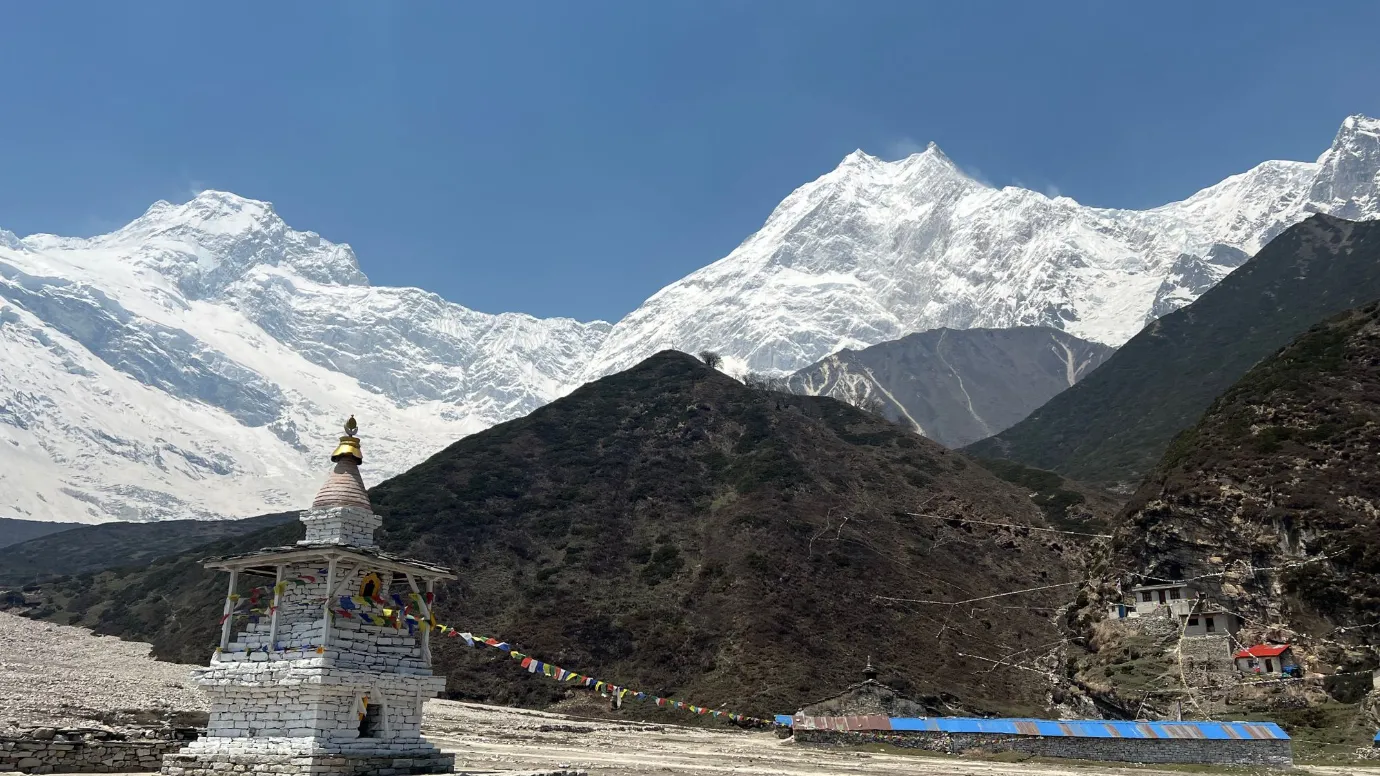
Philim is a large Gurung village with a school and lodges. After the turn-off, the trail feels quieter, and the culture shifts toward Tibetan Buddhism. Lokpa has simple lodges and homestays and gives the first views into the Tsum valley.
Day 4: What is the stage from Lokpa to Chumling like?
Short answer: From Lokpa, the trail descends to the Lungwa Khola, climbs steeply through pine and rhododendron forest and follows the Siyar Khola valley to Chumling at about 2,386 meters in Lower Tsum. The walk takes about four to six hours. Chumling has an old monastery, stone streets and views of Shringi Himal.
Chumling is a good base for a side trip to Gumba Lungdang, a nunnery high on the slopes of Ganesh Himal, and further to Ganesh Himal Base Camp. Many itineraries add one or two days for this detour. Lodges and homestays in Chumling are simple but welcoming.
Day 5: How do you climb to Chhokangparo?
Short answer: Cross a suspension bridge from Chumling and climb through villages and terraced fields to Chhokangparo at about 3,031 meters, the main village area of Upper Tsum. The walk takes about five to six hours. On clear days, Himalchuli and Ganesh Himal rise above the valley.
Chhokangparo combines two villages, Chhokang and Paro, on a wide plateau. Barley and buckwheat fields, stone houses and prayer flags make it a fine place to see daily life. The altitude gain is noticeable, so walk slowly and drink well.
Day 6: What is the walk from Chhokangparo to Nile or Chhule?
Short answer: Continue north past Lamagaun, Rachen Gompa and Phurbe, crossing the river to Chhule and Nile at about 3,361 meters, the last villages before the Tibetan border. The walk takes about five to six hours. A short detour leads to Milarepa’s cave at Piren Phu, a sacred site linked to the Tibetan saint.
Piren Phu, near Burji village, holds footprints and relics associated with Milarepa, who is said to have meditated here. Rachen Gompa, a nunnery, sits beside the trail and welcomes respectful visitors. Nile and Chhule face each other across the river, with mani walls and chortens between them.
Day 7: How do you visit Mu Gompa?
Short answer: From Nile, walk about two to three hours to Mu Gompa at about 3,700 meters, the largest monastery in Tsum, set on a ridge near the Tibetan border. Many trekkers stay overnight in the monastery guesthouse or return to Nile the same day. A side trip to Dhephu Doma Gompa nearby is worthwhile.
Mu Gompa houses monks, prayer halls and fine thangka paintings and offers wide views over the upper valley toward Tibet. Dress modestly, remove shoes and hats inside, walk clockwise and ask before photographing. Nights are cold, so bring warm layers. Leave a donation if you stay.
Days 8 to 12: How does the trek return?
Short answer: Return south via Rachen Gompa and Chhokangparo to Chumling, then down to Lokpa and back along the Budhi Gandaki to Jagat and Machha Khola, or continue north on the Manaslu Circuit from Deng. Allow four to five days to return to the road, or more with side trips.
| Day | Route | Approximate overnight altitude |
|---|---|---|
| 8 | Mu Gompa to Rachen Gompa or Chhokangparo | About 3,000 to 3,240 m |
| 9 | Chhokangparo to Chumling | About 2,386 m |
| 10 | Chumling to Lokpa or Philim | About 1,570 to 2,240 m |
| 11 | Philim to Machha Khola | About 930 m |
| 12 | Drive to Kathmandu | About 1,350 m |
What is the Gumba Lungdang and Ganesh Himal Base Camp side trip?
Short answer: From Lower Tsum near Chumling, a side trail climbs to Gumba Lungdang, a nunnery at about 3,200 meters on the slopes of Ganesh Himal, with views of the Ganesh range. A further day hike leads toward Ganesh Himal Base Camp at about 4,200 meters. The detour adds two to three days.
The nuns at Gumba Lungdang hold daily prayers that visitors may observe quietly. Simple rooms are available at the nunnery. The base camp hike is long and steep, and the trail can be faint, so go with your guide. Turn back if weather closes in.
How do you combine Tsum with the Manaslu Circuit?
Short answer: After visiting Tsum, return to the main Manaslu trail near Lokpa and continue north via Deng, Namrung, Lho and Samagaun toward the Larkya La. Tsum adds about six to eight days and gives useful acclimatization before the pass. The combined trek takes about 20 to 24 days from Kathmandu.
The combination needs both the Tsum and Manaslu restricted permits and the Annapurna Conservation Area Permit for the exit via Dharapani. See our Manaslu Circuit trek guide and the Manaslu and Tsum Valley trek.
Which permits do you need for Tsum Valley?
Short answer: You need a Tsum Valley restricted area permit, a Manaslu restricted area permit for the lower Budhi Gandaki section, a Manaslu Conservation Area Permit (NPR 3,000) and a TIMS card, all through a registered agency with a licensed guide. Add an Annapurna Conservation Area Permit if you exit over the Larkya La.
The Nepal Tourism Board lists the Tsum permit at USD 40 per week from September to November and USD 30 per week from December to August, plus USD 7 per extra day. The Manaslu permit for the lower section costs USD 100 per week in autumn or USD 75 per week in other months, plus a daily fee for extra days. Since 22 March 2026, individual restricted permits are allowed through an agency with a licensed guide, with up to seven trekkers per guide. Our permits guide has details.
What are lodges and homestays like in Tsum?
Short answer: Tsum has simple lodges, family homestays and monastery guesthouses at Rachen Gompa, Mu Gompa and Gumba Lungdang. Rooms are basic, toilets are often shared or outside and meals are mainly dal bhat, potatoes, Tibetan bread and noodles. Expect fewer comforts than on the main Manaslu Circuit and a warmer cultural welcome.
Many families in Tsum follow a tradition that discourages killing animals, so vegetarian meals are the norm. Bring a warm sleeping bag, snacks and a power bank. Our teahouse and homestay guide explains what to expect.
What culture will you meet in Tsum?
Short answer: Tsum’s people, the Tsumba, are of Tibetan heritage, speak their own dialect and follow Tibetan Buddhism. The valley is regarded as a beyul, a sacred hidden valley. Many households follow a long-standing community agreement against hunting and animal slaughter. Monasteries and seasonal festivals are central to traditional life.
Monasteries and nunneries such as Mu Gompa, Rachen Gompa and Gumba Lungdang shape daily rhythms. Festivals such as Lhosar, the Tibetan New Year, and local horse festivals bring the community together. Respect customs by walking clockwise around religious sites, asking before photographing people, dressing modestly and avoiding meat requests. Our culture and etiquette guide explains more.
What wildlife and landscapes will you see?
Short answer: The lower Budhi Gandaki gorge has subtropical forest, waterfalls and monkeys. Tsum’s middle valley has pine and rhododendron forest, and the upper valley opens into barley fields, pastures and arid slopes beneath Ganesh Himal and the Tibetan border ridges. Blue sheep and Himalayan tahr live on high slopes, and snow leopards range in the area.
Because hunting is discouraged in Tsum, wildlife can be less shy than elsewhere. Keep to trails, never feed animals and keep noise low. The views of Shringi Himal, Himalchuli and Ganesh Himal from Chhokangparo and Mu Gompa are among the trek’s highlights.
What should you pack for Tsum Valley?
Short answer: Pack layers for warm lower valleys and cold nights near 3,700 meters, a sleeping bag rated to about minus 10 degrees Celsius, rain gear, sun protection, trekking poles, water treatment, a headlamp, a power bank, toilet paper and enough cash, since there are no ATMs on the route.
If you continue over the Larkya La, add the extra cold-weather gear listed in our Manaslu and Tsum guide. Our packing list covers each season.
How much does the Tsum Valley trek cost?
Short answer: A guided Tsum Valley trek of about 12 to 16 days typically costs about USD 1,100 to 1,700 per person in a small group, excluding international flights. Combined with the Manaslu Circuit, costs rise with extra days and permits. Jeep transport, two restricted permits, crew and lodging make up most of the cost.
Our Nepal trekking cost guide explains how restricted treks are priced.
How do you trek responsibly in Tsum?
Short answer: Respect the valley’s non-violence tradition and monastery rules, stay in local homestays and monastery guesthouses, carry out plastic and batteries, keep to your permit route and support local businesses. Tsum opened to trekkers only in 2008, so careful visitors help protect its culture and environment.
Our responsible trekking guide explains low-impact trekking.
When is the best time to trek Tsum Valley?
Short answer: March to May and September to November are the best seasons, with clear skies and stable weather. Spring brings rhododendron blooms in the lower forests. The monsoon brings rain and landslides to the Budhi Gandaki gorge. Winter is very cold in Upper Tsum, and some lodges close.
Tsum is lower than the Larkya La, so it can be trekked a little later into the cold season than the full circuit, but snow can still affect Mu Gompa. Check conditions with your agency.
How do you acclimatize on the Tsum trek?
Short answer: Tsum’s gradual climb from about 2,200 meters at Lokpa to about 3,700 meters at Mu Gompa over several days suits most trekkers. Walk slowly, drink well, spend a night at Chhokangparo or Nile before Mu Gompa and tell your guide about any symptoms. Altitude problems are less common than on the Larkya La but still possible.
Our health and safety page explains altitude sickness.
Who is the Tsum Valley trek best for?
Short answer: Tsum suits culture lovers who want monasteries, village life and quiet trails without high passes, and trekkers who plan to cross the Larkya La and want extra acclimatization first. It suits fit beginners with good preparation, since altitude stays below about 3,800 meters, but lodges and homestays are basic.
Photographers enjoy the upper valley’s monasteries and views of Ganesh Himal. Our trek by traveler type page compares cultural routes.
Frequently Asked Questions
How many days does the Tsum Valley trek take?
About 12 to 16 days from Kathmandu for Tsum only, or 20 to 24 days combined with the Manaslu Circuit.
Is Tsum Valley difficult?
It is moderate. Days are five to seven hours, and the highest overnight is about 3,700 meters at Mu Gompa.
Do I need a guide for Tsum Valley?
Yes. Tsum is a restricted area, so you need a licensed guide through a registered agency.
Can I stay in monasteries in Tsum?
Yes. Mu Gompa, Rachen Gompa and Gumba Lungdang offer simple rooms to visitors. Follow monastery rules and leave a donation.
When did Tsum Valley open to trekkers?
Tsum Valley opened to foreign trekkers in 2008.
Quick Answers
Is there phone signal in Tsum Valley?
Coverage is patchy and often absent in Upper Tsum. Some villages have limited Wi-Fi. Plan for days without contact.
Is Tsum Valley good for vegetarians?
Yes. Vegetarian meals are the norm in Tsum, where local tradition discourages animal slaughter, so dal bhat, potatoes and vegetable dishes are standard.
Can I visit Milarepa Cave on the Tsum trek?
Yes. Piren Phu, the cave linked to the Tibetan saint Milarepa, sits near Burji in Upper Tsum and is a short detour from the main trail between Chhokangparo and Nile.
How cold is Mu Gompa at night?
Nights at Mu Gompa, at about 3,700 meters, often drop below freezing in spring and autumn. Bring a warm sleeping bag, a down jacket, a hat and warm socks.
About the author: Pradip Karki
Pradip Karki is the Chairman of Peregrine Treks and Tours in Kathmandu and a veteran Himalayan travel specialist with over 20 years of industry leadership. A former TIMS Department Head at the Trekking Agencies’ Association of Nepal (TAAN) with an MBA in Accounting and Finance, Pradip personally scouts routes across Nepal, Tibet and Bhutan to design safe, high-altitude treks and luxury cultural tours.
Reviewed and updated by Pradip Karki on 23 November 2026.
Official Sources Checked
- Department of Immigration: restricted area permits
- National Trust for Nature Conservation: Manaslu Conservation Area
- Nepal Tourism Board: TIMS and licensed guide rules