
Included Meals
- Breakfast: 6
- Lunch: 1
- Dinner: 0

Unbeatable Holiday Offers – Save Up to 20% on Your Next Adventure!
The Lhasa to Kathmandu Overland Tour connects two of Asia’s most iconic cities in 7 days of road travel across the Tibetan plateau. A Tibet-to-Nepal overland tour from Lhasa starts with three days of cultural sightseeing in Lhasa before moving west through Yamdrok Lake, the Karola Glacier, Gyantse, and Shigatse. Day 5 reaches Everest Base Camp on the north side for an overnight stay with views of the world’s highest peak.
Day 6 descends through Gyirong Valley toward the Nepal border. Day 7 crosses into Nepal at the Gyirong checkpoint and continues to Kathmandu. The trip suits travelers who want deep insight into Tibetan culture, a proper Everest Base Camp experience, and a dramatic cross-border finish into Nepal without a single trekking day.
Seven focused days offer travelers the best of Tibet, from east to west, before crossing into Nepal. Here is why this route works so well.
This trip suits:
This trip may not suit:
Physical condition matters more than age. Healthy adults of any age who prepare properly can handle this tour well. Consult a doctor if you have any concerns about altitude or physical readiness.
The Lhasa to Kathmandu Overland Tour covers seven days of the most dramatic and culturally rich territory in Asia. From Potala Palace and Jokhang Temple in Lhasa to the north face of Everest at Rongbuk, to the green descent into Gyirong and the final border crossing into Nepal – every day of this Tibet to Nepal Overland Tour from Lhasa delivers something new.
Contact the team today to check departure dates, ask about private trip options, or get a detailed cost breakdown for your group size. Reach out through the inquiry form or send a message directly. The team responds within 24 hours with full permit and departure details.
A Lhasa to Kathmandu Tour via Everest Base Camp covers the following key sights. Each one offers something distinct from the last.

Included Meals

Transport
Private tourist vehicle (5 to 29 seats by group size)

Accommodation
3-star hotels in Lhasa and Shigatse; basic guesthouse at EBC; standard hotel in Gyirong

Trip Grade
The day-by-day plan below follows the 7-day Lhasa-to-Kathmandu Overland Tour route, with full details for each stop. Every day uses the same format for easy reading.
The guide meets all travelers at the airport or station on arrival. The transfer to central Lhasa takes about 1 hour. The hotel sits in or near the old city, offering easy walking access to local streets and restaurants. Day 1 is a rest day. The body needs time to adjust to 3,658 m. Even healthy travelers often feel light-headed, short of breath, or tired on the first day. A quiet afternoon and early sleep make Day 2 far more comfortable.
Travel Tip: Avoid alcohol, heavy food, and exercise on Day 1. Drink plenty of water and go to bed as early as possible.
Highlights
Accommodation:
3-star hotel in Lhasa

Maximum Altitude 3,658m/12,001ft (Lhasa)
Difficulty
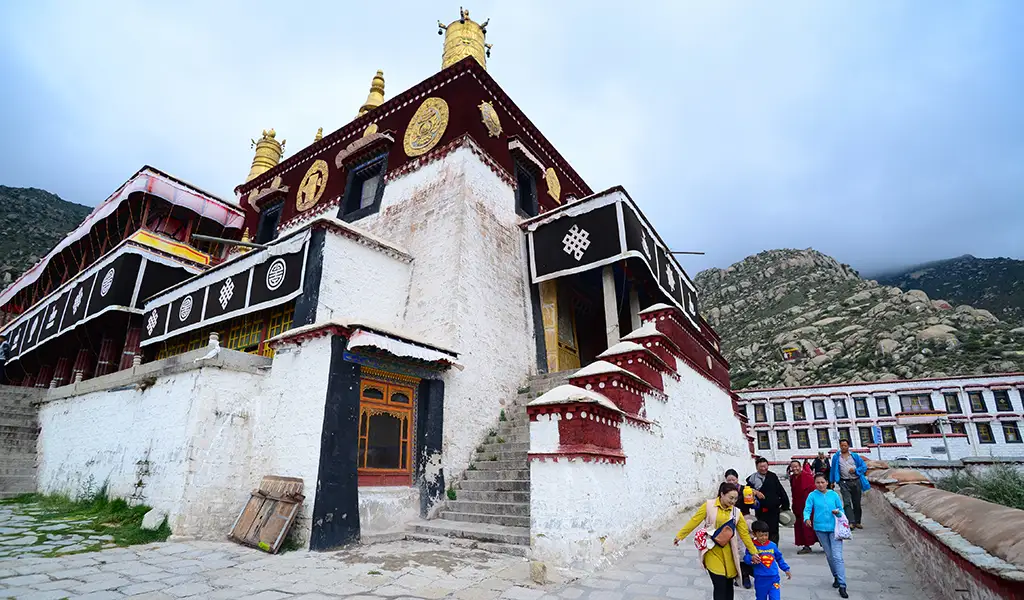
Drepung Monastery sits on Gephel Utse Hill about 8 km west of central Lhasa. At its historical peak, the monastery housed more than 10,000 monks. The complex covers a hillside with whitewashed buildings, narrow lanes, and dozens of prayer halls. The main assembly hall stores large statues and silk thangkas.
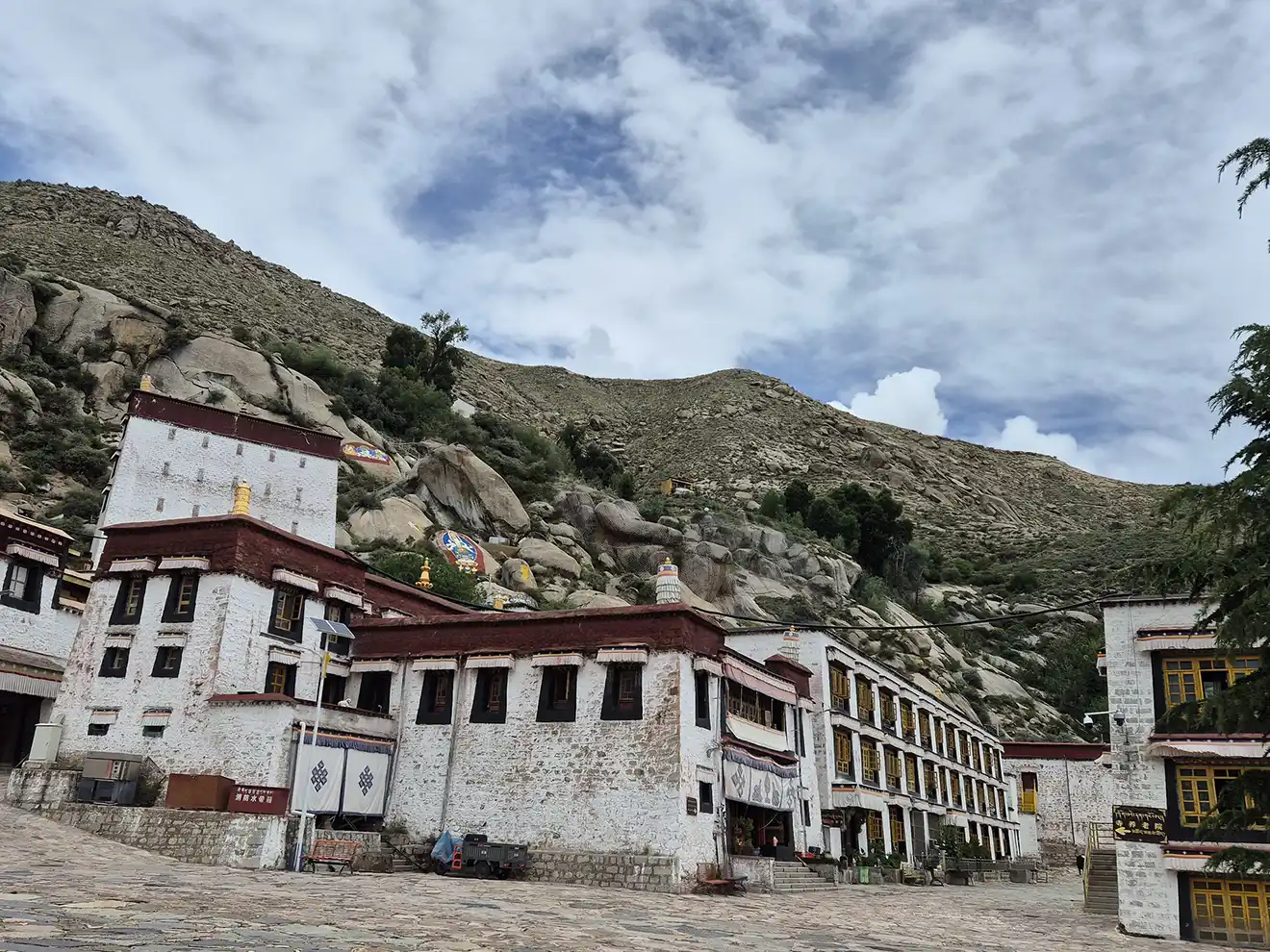
Sera Monastery attracts visitors every afternoon for its famous debate session. Monks sit in the courtyard in pairs or small groups, clapping hands and raising philosophical challenges in rapid Tibetan exchanges. The practice is lively and feels completely different from silent prayer. Visitors watch from the courtyard’s edge.
The two monasteries cover most of the day, with travel time between them. An optional evening walk through the back lanes near Jokhang gives a taste of Lhasa’s old quarter without a full temple visit.
Travel Tip: Wear comfortable walking shoes. Both monasteries involve walking on uneven stone paths and some climbing between courtyard levels.
Highlights
Accommodation:
3-star hotel in Lhasa
Meals Breakfast
Maximum Altitude 3,658m/12,001ft (Lhasa)
Difficulty
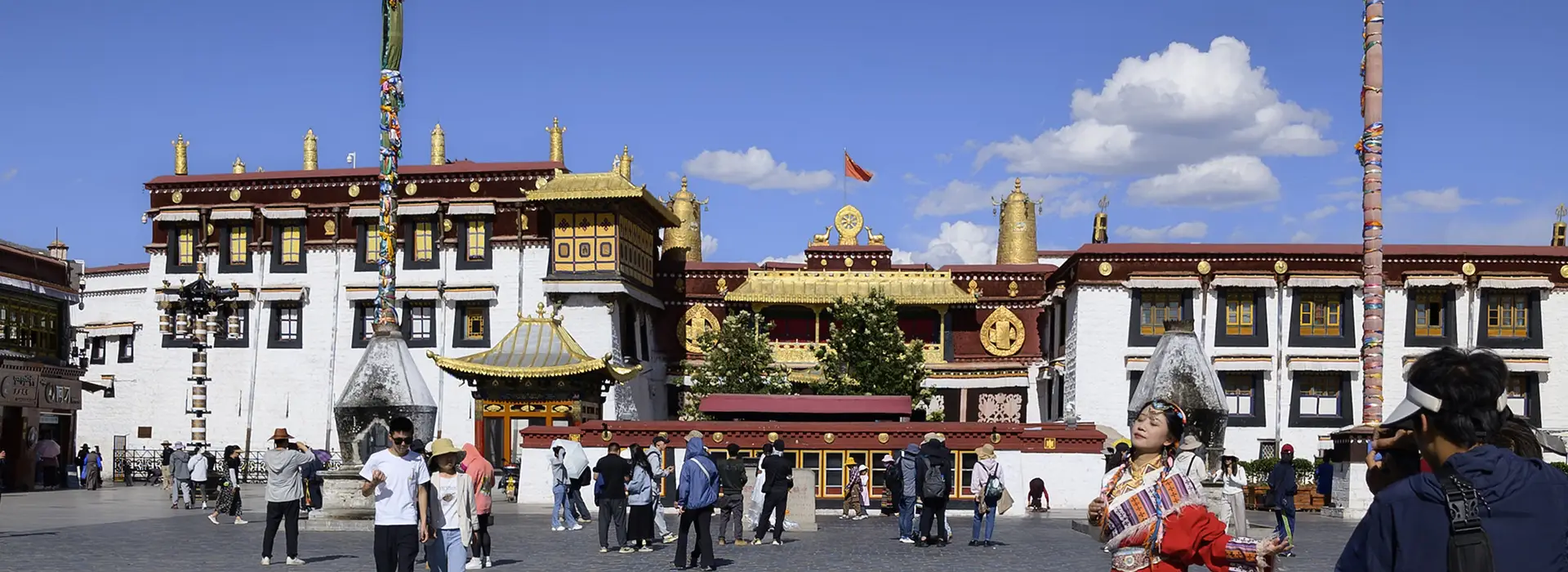
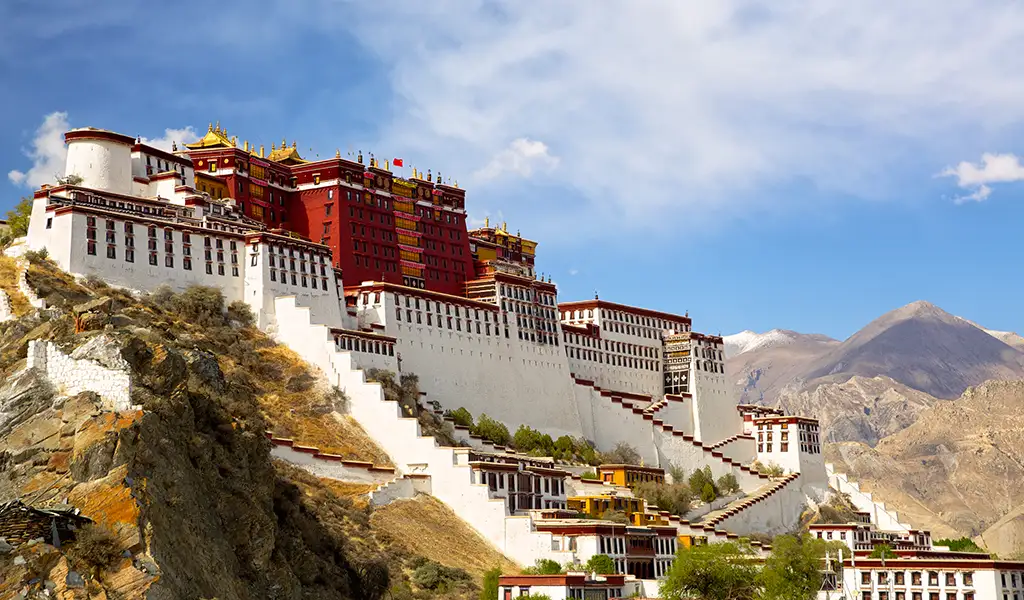
Potala Palace rises sharply from Red Hill at the center of Lhasa. The white outer walls and red central section create one of Asia’s most recognizable skylines. Entry requires pre-arranged tickets via the guide. Inside, golden chapels, preserved mummies of past Dalai Lamas, and thousands of butter lamps fill the rooms.
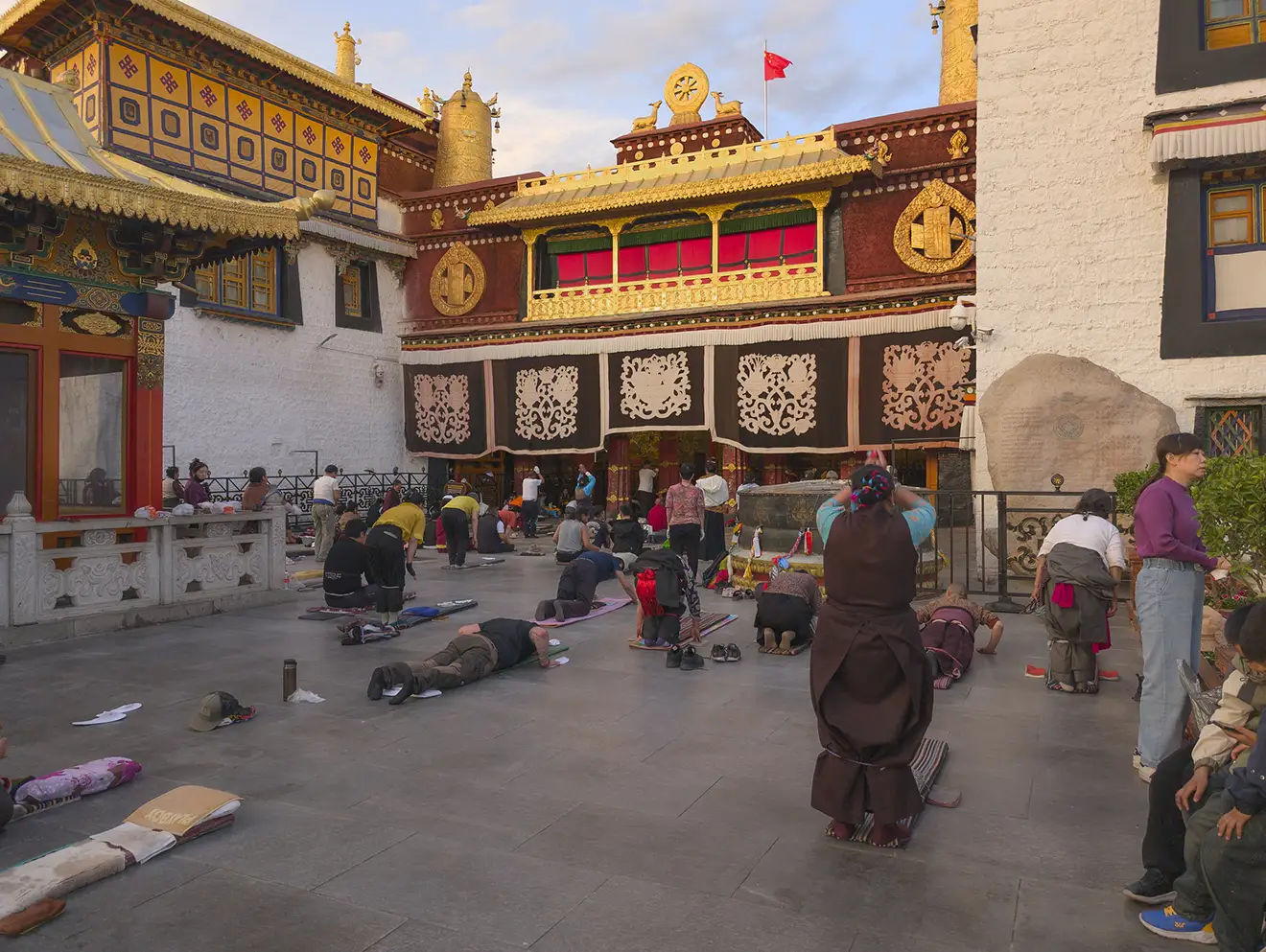
Jokhang Temple draws pilgrims from across Tibet and beyond. The line outside starts before dawn as devotees prostrate their full bodies on the flagstones. Inside, the Jowo Rinpoche statue of young Buddha sits at the center of the main chapel, dressed in silk robes and surrounded by offerings.
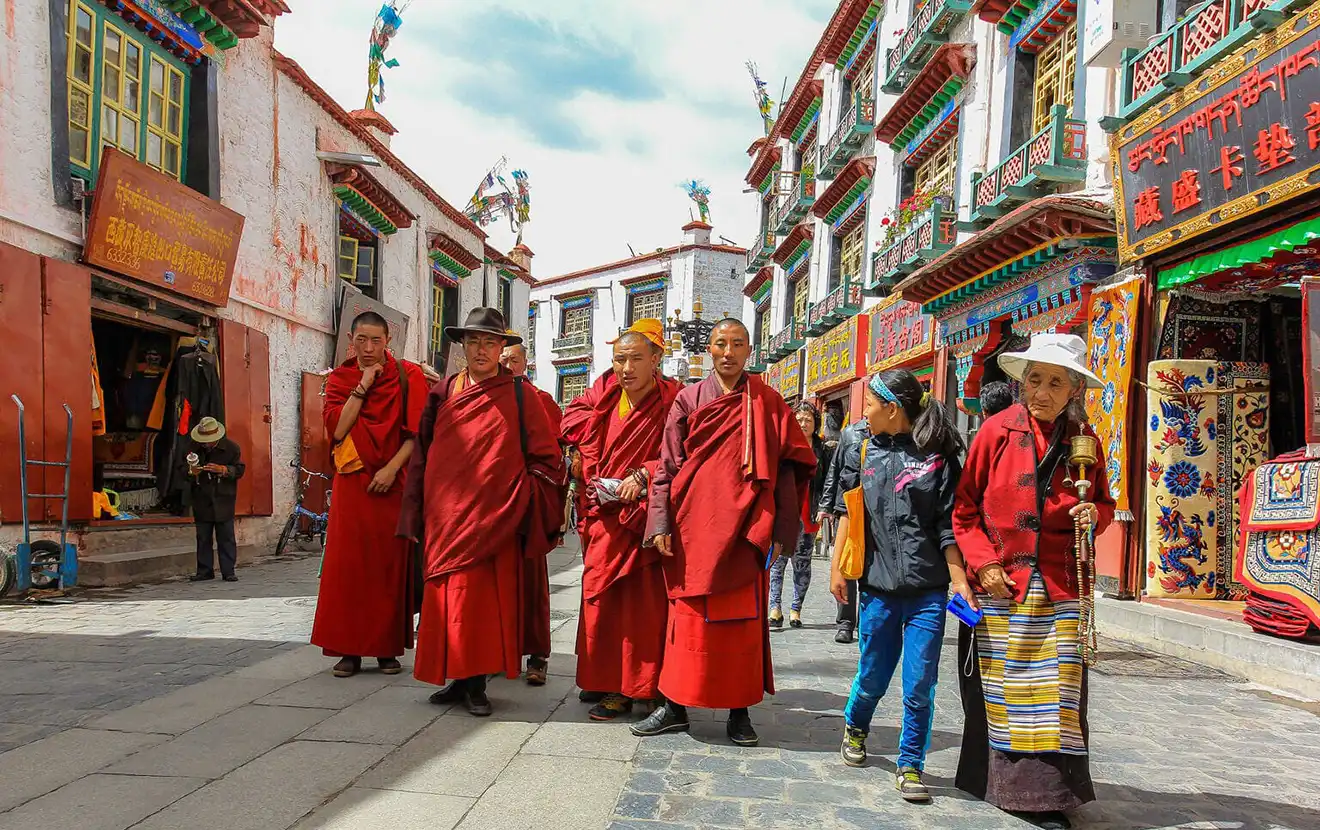
Barkhor Street encircles Jokhang Temple clockwise. The covered market stalls sell prayer beads, thangka paintings, yak wool scarves, incense, and Tibetan jewelry. Local teahouses serve yak butter tea and tsampa. The street fills with both pilgrims spinning prayer wheels and photographers watching the human flow.
Travel Tip: Book Potala Palace tickets in advance through your guide. Entry slots fill quickly, especially in peak season. Bring a small daypack with water and your camera.
Highlights
Accommodation:
3-star hotel in Lhasa
Meals Breakfast
Maximum Altitude 3,700m/12,139ft (Jokhang Temple)
Difficulty
The drive over Kamba La Pass delivers the first major viewpoint of the trip. The road climbs to nearly 5,000 m and then opens onto a sweeping downhill view of Yamdrok Lake far below. The lake stretches across the valley in shades of deep blue and turquoise. This view alone makes the early start worthwhile.
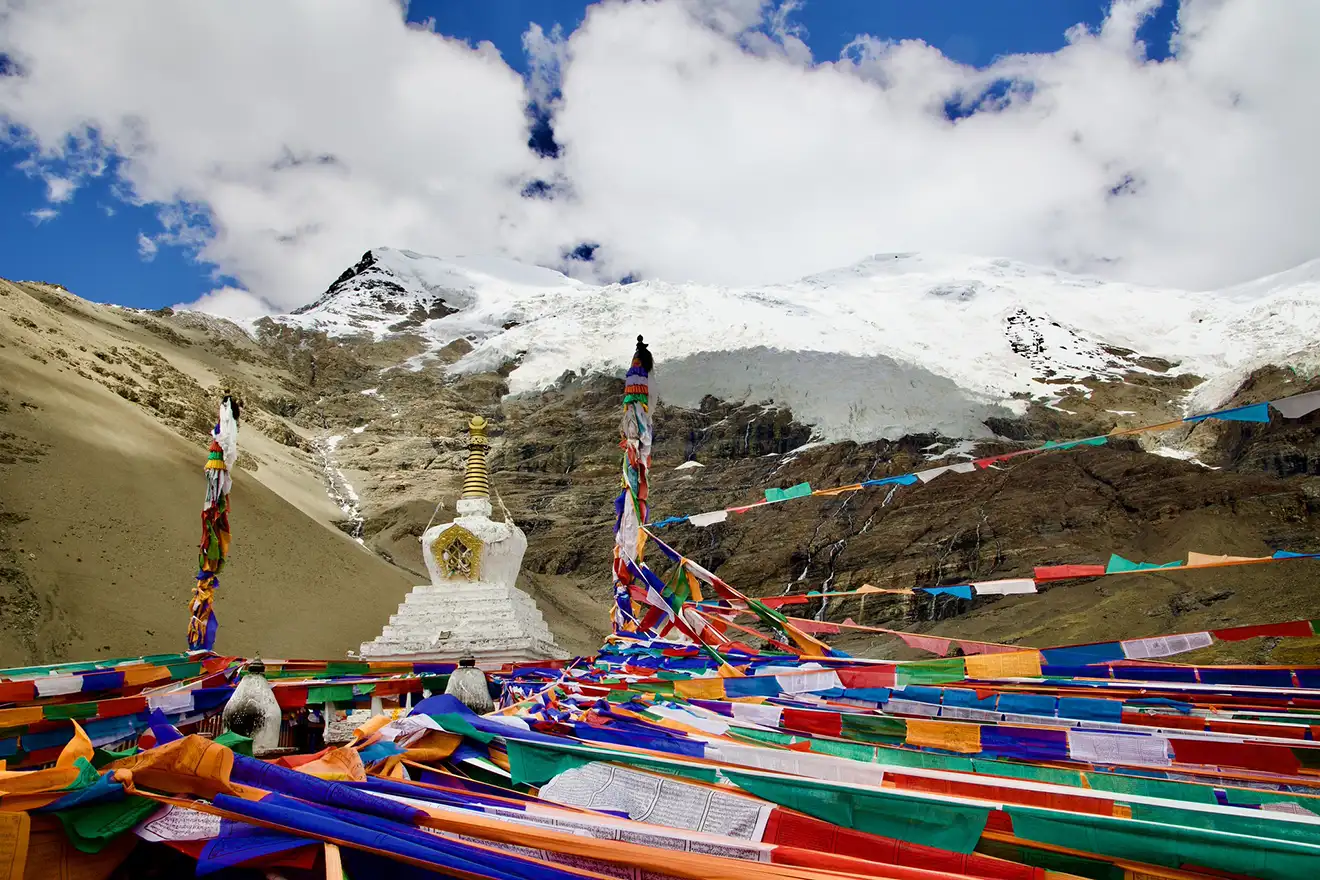
Karola Glacier appears directly above the road about an hour before Gyantse. A short walk from the vehicle takes you to the toe of the glacier. The ice surface is deeply cracked and blue-white. The glacier has retreated over the decades, but it remains one of the most accessible glaciers in Tibet.
Gyantse preserves the Kumbum stupa, a 15th-century mandala tower with 108 doors and dozens of painted chapels inside. The nearby Pelkhor Chode Monastery forms a complex that includes a stupa within its walls.
Tashilhunpo Monastery in Shigatse houses the golden Maitreya statue, which stands over 26 m tall. The monastery complex remains active with monk communities and gilded architecture.
Travel Tip: Carry snacks and water. Day 4 covers a long distance with many photo stops. The village lunch near Yamdrok Lake is a simple but enjoyable local meal.
Highlights

Time & Distance Approx. 6 to 7 hours with stops
Accommodation:
3-star hotel in Shigatse
Meals Breakfast, Lunch
Maximum Altitude 4,998m/16,398ft (Kamba La pass)
Difficulty
The drive from Shigatse heads south through an open plateau before ascending Gyatso La Pass. The pass reaches 5,220 m and offers wide views of the Himalayan border range between Tibet and Nepal. The descent leads into the Rongbuk valley, where Everest slowly comes into view ahead.
Rongbuk Monastery sits at 5,000 m and serves as the spiritual anchor of the EBC area. A small community of monks and nuns maintains the monastery. The museum’s exhibits document the history of Everest expeditions from the north side.
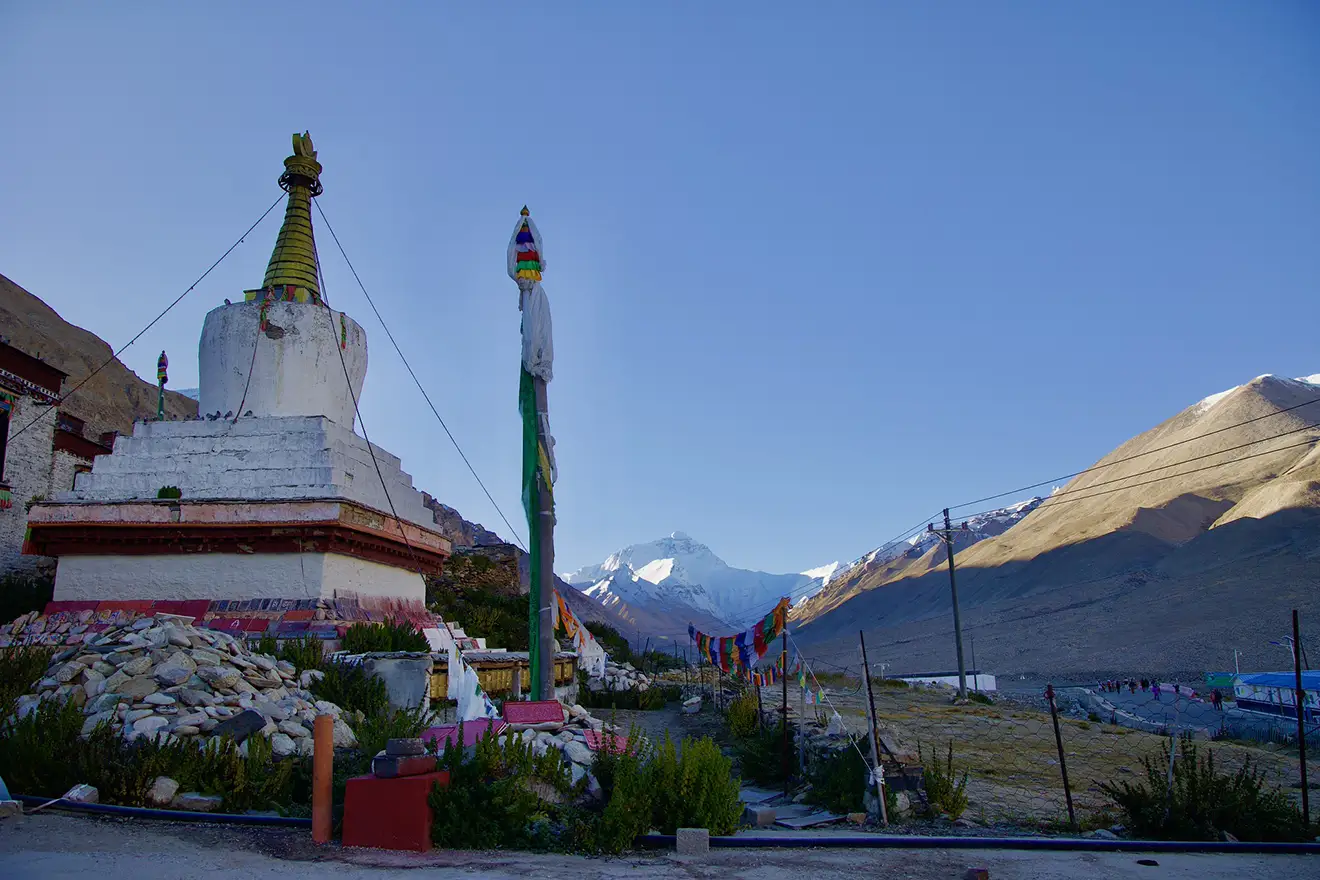
Everest Base Camp on the north side sits at about 5,200 m. In clear conditions, the full pyramid of Everest is visible straight ahead with the North Col ridge leading to the summit. The site is reached by a short drive or walk from Rongbuk. Sunset and sunrise here are among the best moments for photography in all of Tibet.
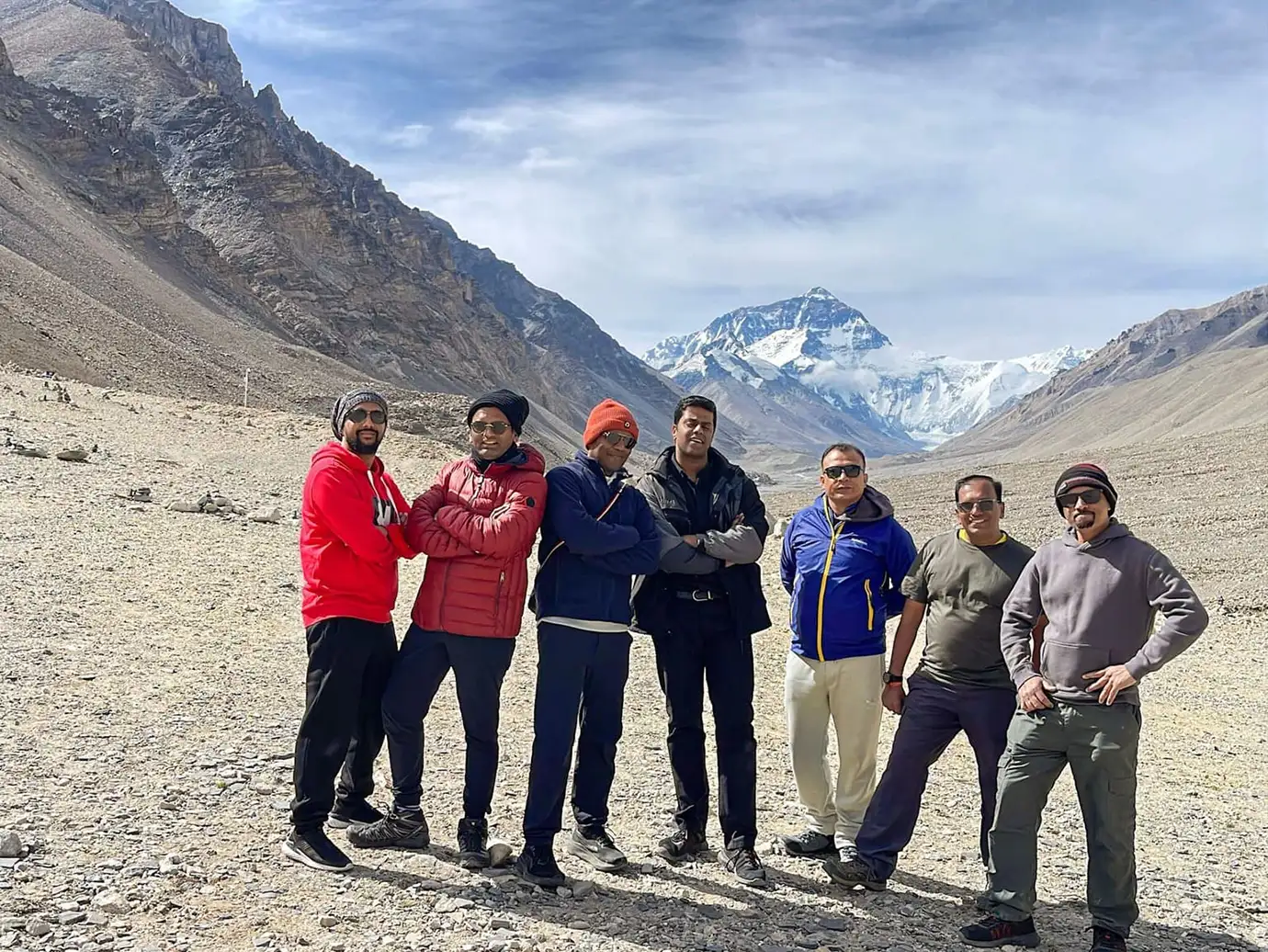
The overnight stay at Rongbuk is in a tent hotel or a basic guesthouse. These facilities provide beds, blankets, and basic meals. Rooms are simple and cold at night. The Lhasa to Kathmandu Overland Tour via Everest Base Camp earns its reputation on this night alone.
Travel Tip: Bring a warm sleeping bag or liner for the EBC night. Temperature drops sharply after sunset, even in summer. Headaches are normal at this altitude. Drink plenty of water and rest as much as possible.
Highlights
Time & Distance Approx. 6 to 7 hours
Accommodation:
Tent-hotel or basic guesthouse at Rongbuk
Meals Breakfast
Maximum Altitude 5,220m/17,126ft (Gyatso la pass)
Difficulty
The morning at Rongbuk offers a final sunrise view of Everest before the vehicle leaves. The road heads west along the base of the Himalayan range. Shishapangma appears to the south after about an hour. At 8,027 m, it holds the distinction of being the only 8,000 m peak located entirely within Tibet.
Pelku Tso appears without warning after a flat stretch of plateau road. The lake reflects nearby peaks and sits in silence with no towns or infrastructure in sight. Few other vehicles stop here. It is one of the best photo stops on the entire route.
Gawula Pass marks a major shift in the landscape. The road begins a long descent from the plateau into the Gyirong Valley. The vegetation changes rapidly from dry grassland to pine forest, then to subtropical vegetation as the altitude drops below 3,000 m.
Gyirong sits at approximately 2,800 m in a deep river valley. After days on the high plateau, the warmer air and green surroundings feel like a completely different world. The town offers the best sleep quality of the trip due to lower altitude and a warmer climate.
Travel Tip: Day 6 is one of the most scenic drive days of the trip. Keep the camera accessible throughout. The descent into Gyirong Valley is one of Tibet’s most dramatic road journeys.
Highlights
Time & Distance Approx. 5 to 6 hours
Accommodation:
Standard hotel in Gyirong
Meals Breakfast
Maximum Altitude 5,200m/17,060ft (EBC)
Difficulty
The drive from Gyirong town to the border takes about 30 minutes. The Tibetan guide accompanies travelers to the Gyirong Port exit checkpoint. At this point, the guide’s service ends. Travelers handle their own bags through the Chinese exit and walk across the border to the Nepal immigration side.
Nepal issues a visa on arrival at the Gyirong border. A 15-day visa costs USD 30 in cash. Bring exact change or small bills. A passport photo is required. The process takes about 20 to 40 minutes, depending on the queue. The guide briefs travelers on all required documents the evening before.
The border transfer from Gyirong to Kathmandu is not included in the Tibet package price. Travelers can arrange a Nepal-side transfer vehicle through the operator for USD 60 per person. Public shared jeeps and local buses also run from the border toward Kathmandu, though journey times vary. The drive from the border to Kathmandu takes approximately 6 to 7 hours on a winding mountain road.
Kathmandu sits at 1,400 m above sea level in the Bagmati Valley. After a week on the Tibetan plateau, the city feels busy and warm. Hotels range from budget guesthouses in Thamel to luxury options in Durbar Marg. Arrange Kathmandu accommodation separately before the tour starts.
Travel Tip: Keep your Chinese visa, Tibet permits, and passport easily accessible on Day 7. Do not pack them deep inside your luggage. Carry the Nepal visa fee in USD cash before reaching the border.
Highlights
Time & Distance Approx. 30 min to border; then 6 to 7 hours to Kathmandu
Accommodation:
Hotel in Kathmandu (not included in Tibet package price)
Meals Breakfast
Maximum Altitude 2,800m/9,186ft (Gyirong)
Difficulty
Accommodation on this Lhasa to Kathmandu Overland Tour varies depending on the location. Below are honest descriptions of each stop.
Lhasa – 3 Nights
Hotels in Lhasa use 3-star standard accommodation with private rooms, en-suite bathrooms, consistent hot water, heating, and on-site restaurants. Options sit near Jokhang Temple or along Tibetan streets. Internet access is available. These three nights give the most comfortable sleep of the trip.
Shigatse – 1 Night
Hotels in Shigatse match those in Lhasa in terms of standard. Private rooms with bathrooms, hot water, and standard amenities are available. The city offers a range of restaurants near the hotel. This is the last comfortable city-hotel night before the altitude push.
Everest Base Camp – 1 Night
EBC accommodation is a tent-hotel or basic guesthouse near Rongbuk Monastery. Rooms use simple metal frame beds with blankets. Bathrooms are basic and shared. Hot water for showering is limited or unavailable. Heating is minimal. The temperature at night drops well below zero in all seasons. Set practical expectations for this night. The views of Everest make every limitation worthwhile. Tent-hotel EBC facilities close in winter (November to March). Check the current status with the operator if planning a shoulder-season trip.
Gyirong – 1 Night
Gyirong offers standard local hotel accommodation. Rooms are clean and functional with basic en-suite or shared bathroom facilities. The lower altitude makes sleep easier here than at any other point since Lhasa. Hot water availability varies. Gyirong has fewer restaurant options than Lhasa and Shigatse, but local food is affordable and fresh.
Understanding altitude helps travelers prepare properly. The table below shows key altitude points along the route.
| Location | Altitude |
|---|---|
| Lhasa | 3,658 m |
| Kamba La Pass | 4,998 m |
| Yamdrok Lake | 4,441 m |
| Shigatse | 3,850 m |
| Gyatso La Pass | 5,220 m |
| Everest Base Camp (North) | 5,200 m |
| Rongbuk Monastery | 5,000 m |
| Gawula Pass | approx. 5,000 m |
| Gyirong | approx. 2,800 m |
| Kathmandu | 1,400 m |
How Difficult Is This Tour?
Below is a clear meal breakdown for each day. Understand what the package covers and plan your own budget for uncovered meals.
| Day 1 | Welcome dinner included |
|---|---|
| Day 2 | Breakfast included |
| Day 3 | Breakfast included |
| Day 4 | Breakfast + village lunch near Yamdrok Lake included |
| Day 5 | Breakfast included |
| Day 6 | Breakfast included |
| Day 7 | Breakfast included |
Four separate documents are needed for this trip. The guide handles permits on your behalf, but the Chinese visa is your responsibility before the trip starts.
Chinese Visa
All foreign nationals must have a valid Chinese visa to enter Tibet. Apply at the Chinese Embassy or Consulate in your home country. The operator cannot apply for a Chinese visa on your behalf. Obtain this before booking.
Tibet Travel Permit (TTP)
All foreign visitors to Tibet need a Tibet Travel Permit. The guide applies after booking using your passport and visa details. Processing takes 7 to 14 working days. Book at least 30 days before departure.
Alien’s Travel Permit (ATP)
The Alien Travel Permit covers travel outside Lhasa to destinations including Shigatse, Gyantse, and the Everest region. The guide arranges this as part of the group permit for the full route.
Nepal Visa on Arrival at Gyirong
Nepal does not require a pre-arranged visa for most nationalities at the Gyirong border. A 15-day visa costs USD 30 in cash at the border. Bring a passport photo and the exact fee in USD. The immigration process takes 20 to 40 minutes.
Indian passport holders and some other nationalities follow a different permit process for Tibet. Contact the operator directly for guidance specific to your nationality.
The Gyirong border to Kathmandu tour section is one of the most important parts of the trip to understand before arrival. Below is a step-by-step guide to what happens at the border.
Before You Reach the Border
At the Chinese Exit Side
At the Nepal Entry Side
Border Transfer to Kathmandu
The transfer from the Gyirong border to Kathmandu is not included in the Tibet package price. Two options are available.
The drive from the Gyirong border to Kathmandu takes 6 to 7 hours on the Prithvi Highway. The road passes through the Bhote Koshi river gorge and into the Kathmandu valley.
April to October covers the full operating window for this route. Each season within this window has different strengths.
| April – May | Clear skies, fresh spring light, warming temperatures. One of the best months for Everest views. Saga Dawa falls in May or June, adding spiritual significance. Book early. |
|---|---|
| June – August | Peak summer season with warm plateau days. Some monsoon clouds on the Nepal-side mountains. EBC and Rongbuk are fully accessible. Most popular months overall. |
| September – October | Post-monsoon clarity brings the best mountain visibility of the year. Cool nights, warm days, and sharp blue skies make this ideal for photography. Most recommended months. |
| November (Shoulder) | Colder temperatures and some road risk near the border area. EBC tent hotels may close. Not recommended unless the operator confirms road and facility availability. |
| December – March | Winter closure. Roads to EBC and toward the Nepal border are subject to snow and restrictions. This tour does not operate in winter. |
Best Overall Months
The best time for a Tibet Lhasa tour depends on several factors. September and October offer the clearest mountain views, as the monsoon leaves the air clean and crisp. Meanwhile, May offers a rich cultural experience during the Saga Dawa festival, adding depth to the pilgrimage atmosphere. Both periods work very well for this route.
The road conditions on this route affect daily comfort. Knowing what to expect helps travelers prepare physically and mentally.
Vehicle Type
The tour uses a comfortable private tourist vehicle sized for the group. Options range from a 5-seat 4WD for small private groups to a 29-seat minibus for larger group departures. The vehicle follows the group for all 7 days.
Road Conditions by Section
Drive Comfort Notes
Pack light for vehicle travel, but make sure the key items are covered. The EBC night requires specific cold-weather preparation.
Documents and Cash
Clothing Layers
Cold-Weather Layers for EBC Night
Footwear
Sun Protection
Medicine and Health
Snacks and Nutrition
Electronics
Fixed group departures run from April to late October each year. Dates are set at the start of each season. Shared departures offer a cost-effective option for solo travelers and small groups who want to travel with others.
Contact the team to check current departure dates, request a private custom itinerary, or download the trip PDF. A detailed route map is available to help visualize the route from Lhasa to Kathmandu over all 7 days.
The 7-day itinerary starts in Lhasa with 3 days of sightseeing at Drepung, Sera, Potala Palace, Jokhang Temple, and Barkhor Street. Day 4 drives west to Shigatse via Yamdrok Lake, Karola Glacier, and Gyantse. Day 5 reaches Everest Base Camp on the north side for an overnight stay. Day 6 heads to Gyirong via Shishapangma and Pelku Tso. Day 7 crosses the Gyirong border into Nepal and continues to Kathmandu.
Yes. A Tibet Travel Permit is mandatory for all foreign nationals entering Tibet. The guide applies for this permit on your behalf after booking. Processing takes 7 to 14 working days. Book at least 30 days before departure. Indian passport holders follow a different application process and must contact the operator for specific guidance.
Most nationalities receive a Nepal visa on arrival at Gyirong border. A 15-day visa costs USD 30 in cash. Bring the exact amount, one passport photo, and your passport. The process takes 20 to 40 minutes at the Nepal immigration counter.
No. The transfer from the Gyirong border to Kathmandu is not included in the Tibet package price. The operator offers a private Nepal-side vehicle transfer for USD 60 per person. Public jeeps and buses are also available from the Nepal side of the border at a lower cost.
EBC accommodation uses tent-hotel or basic guesthouse facilities at Rongbuk. Rooms have simple beds with blankets. Bathrooms are basic and shared. Hot water for bathing is limited or unavailable. Temperatures drop well below zero at night. Bring a sleeping bag or liner and extra warm layers.
The tour is graded Easy to Moderate. No trekking is required. All travel is by vehicle with short optional walks at monasteries and viewpoints. The main challenge is altitude. The highest overnight point is Rongbuk/EBC at 5,000 to 5,200 m. The route descends toward Nepal from Day 6, making the final days physically easier.
The highest point on the tour is Everest Base Camp at approximately 5,200 m on the north side. Other high points include Gyatso La Pass at 5,220 m and Gawula Pass at approximately 5,000 m. Gyirong drops to 2,800 m, and Kathmandu sits at 1,400 m.
Yes. Fixed group departures welcome solo travelers. The shared vehicle and guide make solo travel comfortable and social. Solo travelers pay a single-room supplement for private accommodation or may be matched with another same-gender traveler in shared rooms depending on availability.
Book at least 30 days before departure. Permit processing requires 7 to 14 working days and peak season dates fill quickly. For Saga Dawa departures or peak months like September and October, book 45 to 60 days ahead.
Most roads on this route are paved. The Lhasa-to-Shigatse section follows the well-maintained Friendship Highway. The Shigatse-to-EBC road combines paved main road with gravel approach near Rongbuk. The EBC-to-Gyirong section has some rougher gravel stretches and a winding descent into Gyirong Valley. Road conditions are best in summer and autumn.
The package price covers permits, transport, listed meals, accommodation in Tibet, guide service, entrance fees, oxygen, and taxes. It does not cover your Chinese visa, international flights, the Nepal visa (USD 30 cash), the border-to-Kathmandu transfer (USD 60 if arranged through operator), Kathmandu hotel, personal expenses, or uncovered meals. Contact the operator for current per-person pricing based on group size.